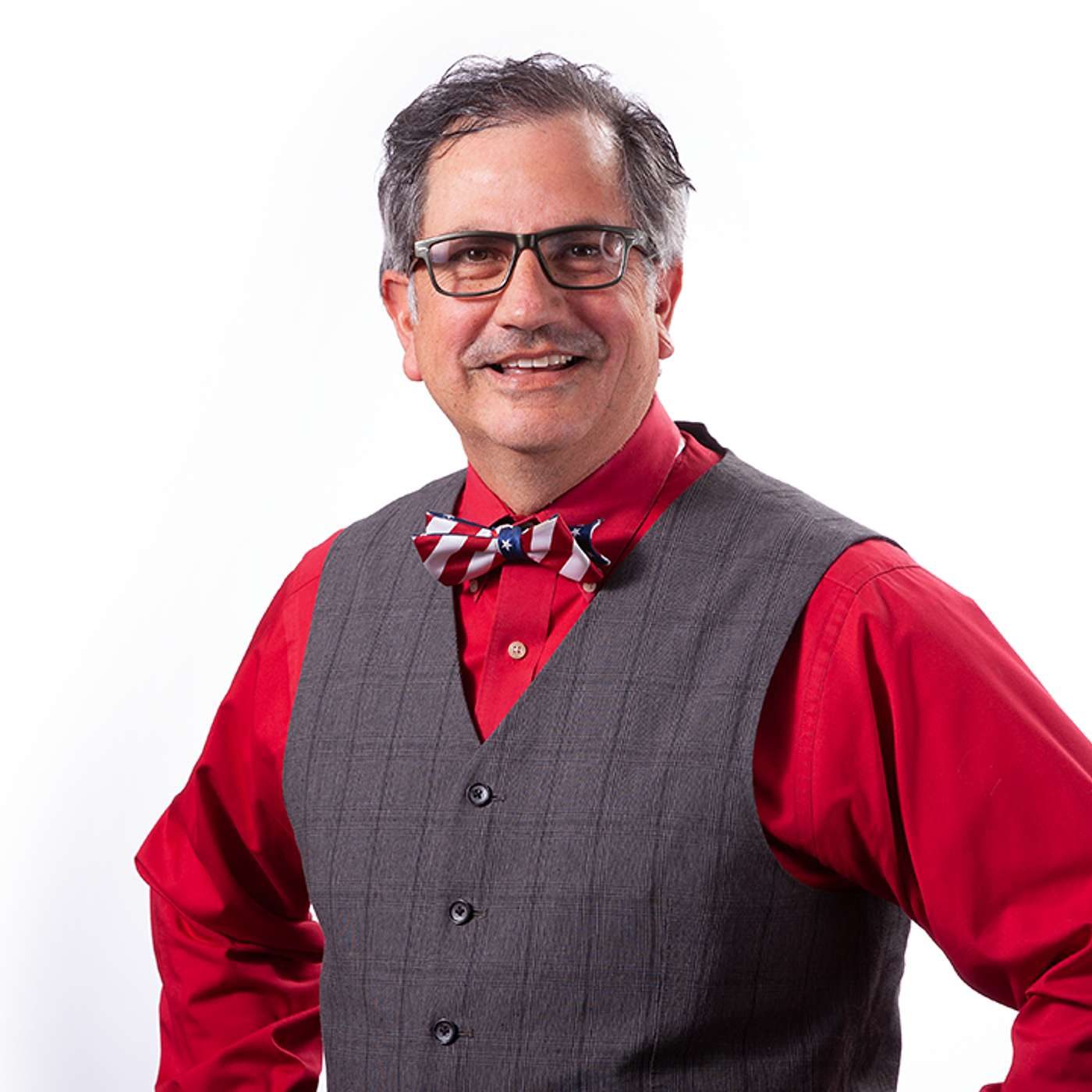

In this engaging episode, Greg Nieto revisits memories of working in the newsroom and dives into his passion for storytelling. Greg and Rachel reflect on the necessity of internships and volunteer work in carving a successful media career. Through candid discussions, they unravel how personal faith and experiencing humanity’s many facets help news professionals navigate their thrilling yet demanding jobs.
SPEAKER 02 :
Welcome to the Corner Cafe.
SPEAKER 03 :
About the things. Welcome to Corner Cafe. I am your host, Rachel Maines. And today I have with me a past coworker. I used to work with him at Channel 2 News and Fox 31, reporter Greg Nieto. Welcome, Greg Nieto, to the studio.
SPEAKER 01 :
Good morning, everybody.
SPEAKER 03 :
Good morning. Well, it’s great to have you back in studio. You’ve been in the studio before, way back when, and we worked in news together way back when.
SPEAKER 02 :
Yeah.
SPEAKER 03 :
And we were discussing prior to doing the show when that was. We think it’s around 2007 or 2008.
SPEAKER 01 :
Yeah, I’d be guesstimating. And you look, I mean, in a great way, like exactly the same. Oh.
SPEAKER 03 :
So do you, Greg.
SPEAKER 01 :
Yeah, okay, thank you.
SPEAKER 03 :
Yeah, so I was a floor director, for the listeners who don’t know, for Channel 2, and then worked a little bit on your show, AM Sunday. And I forgot to ask, is AM Sunday still going on right now? Yeah.
SPEAKER 01 :
It is not. On the Fox 31 end, they have a political show. And if you kind of remember AM Sunday, Bev Martinez was the one that ran the show, and she kind of dabbled in some politics. But it is not. It went away when Channel 2 merged with Fox back in, I think, right after you left.
SPEAKER 03 :
Yeah, so Channel 2 used to be off the highway there, I-25 and Orchard. It was a great location, but then when you merged, you went down to downtown Denver. Explain the merge for the listeners who are kind of curious how that all happened and why that took place.
SPEAKER 01 :
Well, I think, I mean, the bigger picture story is I just think sometimes companies look at a TV market and see, you know, having more than one station in the same market would be profitable. I think it’s more of a business decision than a journalism decision or a coverage decision. And we’re kind of seeing that once again now here in Denver with Tegna and Channel 2, Fox 31 and Channel 9.
SPEAKER 03 :
Yeah. Well, you know, you’ve been in news for, I think you said 25 years when we were talking before the show. 25 years, Greg.
SPEAKER 01 :
Yeah.
SPEAKER 03 :
That is exciting. Yeah.
SPEAKER 01 :
Exciting. And I mean, it really, yeah, it goes by, especially as you get older. I mean, and especially in news because it’s deadline driven. Right. Right. So, I mean, the days and the weeks, they just seem to go. It’s hard to believe, you know, it’s we’re almost to fall.
SPEAKER 03 :
I know. I was talking with a friend last night how as you get older, time crunches and it’s just shorter. So to me, it seems like a month’s a week, you know, a year’s a month.
SPEAKER 02 :
Sure.
SPEAKER 03 :
So yeah, that’s definitely true with getting older for sure. Not that we want to confess that we’re getting older.
SPEAKER 01 :
Yeah.
SPEAKER 03 :
It’s a good thing. When you get older, that means you’ve been blessed to live longer on the earth.
SPEAKER 01 :
Sure. Sure.
SPEAKER 03 :
So Greg, how did you get started in news?
SPEAKER 01 :
I just ran out of college. It was just something I wanted to pursue. And I think journalism is one of those where there’s no I think there are a lot of college majors where you graduate and maybe there’s an internship you can take. And it seems like there’s more of a prescribed plan or equation. A lot more people I think you can follow their map. But I think journalism is just, you know, passion. Passion to pursue the career and then, you know, passion to thrive in the career, i.e., you know, every day trying to, at the bare minimum, report on facts, report a bit of daily history is the way I kind of like to look at it. But there was no straight line. I kind of bounced around, did a lot of internships right out of college and internships slash meaning, you know, doing stuff for free right just to get that experience and and uh it seems so long ago but uh it was well well worth uh and what was crazy at the time even when i was a much younger person um yeah it was a lot of it was a lot of uh stuff to do but i knew in the moment that all of it would pay off in some form or fashion right experience you know at some point you know they’ll pay you for experience so
SPEAKER 03 :
Right. Good point. I think a lot of young people maybe don’t realize, you know, the internships and doing something for free. If you have a passion for something, go volunteer, do an internship, because eventually that’s going to really pay off.
SPEAKER 01 :
Right. Right. Yeah. I can remember I graduated from UC Santa Barbara and then I moved down to L.A. and I worked for a little bit and I remember working a normal job. And then I found some TV station way out in San Bernardino, which is well east of L.A. And so at the time it was go do that, you know, get some experience, then drive all the way back to L.A. in traffic and go to work. But yeah, it was all about the passion. I never thought, oh, geez, what am I doing? It just felt like it’s all going to pan out and it’s going to pay off. And, you know, on some level it has.
SPEAKER 03 :
Yeah, definitely choose a career where you do have that passion, where you would work for free in order to be able to go into the career. That’s always, I feel like, when you know you’re on the right track in life.
SPEAKER 01 :
Right.
SPEAKER 03 :
What drives you every day when you get up before you go to the news station? What’s the thing that’s like, you know what, I’m just so excited for this? And you talked about passion, but what specific thing is that?
SPEAKER 01 :
Oh, I don’t know if I can tap into one thing. I mean, I I’ll use today as an example. I mean, I think the events of yesterday, the people I met, how I reported the story, I think in many way fuels me for the next day because I look back on how in my little small life, portion of the world, how I reported this particular story, how I recorded those events, if you will. And as I’m getting ready for the next day, I’m still looking back on the day behind me in the sense of, you know, what could I have done better? What questions could I have asked? But then I also reflect on how, you know, I always try to find even… Yesterday was not a good day in news, for me at least, in terms of the process and whatnot and the end result. But I always try to look at what was the best thing that happened during the day. Now, it may have been a personal thing, right? Maybe I picked up a puppy or something like that. But I try to look back on maybe a relationship that I’ve begun… Somebody I’ve interviewed, someone I met randomly. And it fuels me for the next day because I’m still kind of jazzed about what happened yesterday, knowing that, you know, I have no idea what’s going to happen today. I have no idea what story I’m going to cover. And, you know, I try my best to be prepared for whatever is thrown my way. So that keeps me going, knowing I’ve got to stay on top of things.
SPEAKER 03 :
Right. Definitely not a dull moment in news, for sure. It’s kind of adventurous in that way that you never know what each day is going to be. Right. And then there’s also the dynamics of the good and the bad, the great, amazing stories. You know, the puppy stories were, you know, that’s great. But then the sad stories, too, covering fires and the people that you meet along the way. I’m sure that there are some very lasting memories of these people as you’re out on the field.
SPEAKER 01 :
Yeah, and I try to find those type of people. We call them, if you remember, storytellers. You could be doing a story about this white wall in the studio, and I may try to find the person who painted it or the person who’s looking at it. And, yeah, it’s totally true. Everybody has their unique personality about them, the way they look, sound, talk, how they make you feel. So yeah, I remember the people as much as I do the stories.
SPEAKER 03 :
Yeah. Do you have a specific story that comes to mind where there’s just tragedy and you had to kind of struggle to look for that positive thing? How did you handle that?
SPEAKER 01 :
Um, actually, this is probably the, a great example. It’s been a few years back, but there was a huge, um, crash on I-70 heading toward the foothills. It was a big rig that was out of control and ended up hitting, you know, an overpass and started a fire. And there were other people that, their cars caught on fire and this and that. And there was a… A gentleman who had claimed at the time that he was helping people get out of cars and that sort of thing. And we found him. And I still remember when we found him, we started that process of talking to him on live television. You know, the bigger stories, it’s wall to wall. You know, there’s no… They don’t go back to you. They stay on you. And… His name was Darren, the guy that was helping folks. But what I really remember about that big story, it was horrific. Some folks had passed away. Obviously, the highway was closed down for, I want to say, at least a couple of days. But at one moment, we were going back. The anchors had said, hey, let’s go back and talk to that guy you were talking to. So I’m going back to look for him. And in that moment, he’s standing, if I remember correctly, with a gentleman who – I think was a pastor, wasn’t dressed as a pastor, but was a pastor and was holding a prayer session along the side of I-70. And so you think about that in that moment and how horrific it was and still is to remember. But in that moment, it was such a great moment that, you know, someone found… God to try to bring it into this situation. And it was on live television. So we literally put the microphone up to the pastor and just let it breathe, if you will, for a second, right? Let the viewer hear this prayer for a second. And that’s one of many different examples, but it was just a, it was a… It was a moment sometimes in television I feel because you got to hurry up and do this and move on to go to the next story. Again, you’re allowing it to the moment to just breathe and let the viewer just kind of sit there and really soak in the gravity of not only how bad the crash was, but, you know, humanity, people, people that were coming together to help other people that kind of all tied it in just in listening to this prayer.
SPEAKER 03 :
Yeah, that is beautiful, and I remember that news story. I was actually in the area that day. I had a client called Wild Planet, and I could have been actually on I-70 with timing and stuff, but thankfully I was not because I had to travel to a store out there. Very sad. But your job really is, you said humanity. You get to see the different aspects of humanity every day from a crime story to a wildfire to an accident to somebody saving somebody’s life. How has your faith, you’re a Catholic, how has that helped you with your career and been a source of comfort?
SPEAKER 01 :
it’s funny. It’s tested. I’m not going to lie to you because, you know, a lot of times you’re out in the store and, and, um, the people don’t want you there or someone’s angry that you’re there. You’re just trying to do your job. And unfortunately having to do your job requires you to do things. I don’t want to say that you wouldn’t ordinarily do, but you know, it’s, you, you gotta try to go after the story and, and in the most respectful way. But it’s funny cause there are plenty of times on a Sunday, I’ll hear the sermon and whatnot. And you know, it’s usually the same type of themes if you will. But, you know, you’re taught to, you know, pass along the love of God and Jesus and that sort of thing. But there are trying moments during the week where it’s tough to do. And you have to try to see through someone’s anger for a second, not overreact. But it’s, you know, again, I’m not perfect. There are times where I’ve just gone to mass on a Sunday and then Monday I’ve got to do some story and someone’s not happy I’m there. And Things get a little heated, if you will, but I try to do my best to acknowledge that I’m human and I’m doing my best in that moment. Right.
SPEAKER 03 :
We can all relate to that. That’s the beautiful thing of why Christ came, because we don’t have to be perfect. And he knows that. We’re not perfect. We’re humans. That’s why he came. So that’s beautiful. You know, I remember being in the newsroom as a floor director. And of course, when I produced AM Sunday as well. But, you know, even in the newsroom, it could get heated. There’s a lot of stress because it’s fast paced. You know, the people are great, though. I remember just the memories of the people I worked with, the co-workers. But within that. It can get heated and there is a lot of stress. Explain to the average person who has never been in a newsroom kind of the fast pace and what the day looks like when Greg Nieto enters into the news building. What does it look like?
SPEAKER 01 :
Well, it’s already I work nights now when you and I work together. I work the morning show, which means at least back in the day, I think we’re getting it at 4 a.m. Yeah. Now I get in. I’m part of an editorial meeting, but it’s already the closest analogy I can think of is kind of like a Wall Street environment. You walk in and it’s because the news has already been on since four in the morning. It’s just it’s already frenetic. I mean, you have people, you know. going back and forth and not running, but it’s just, I don’t even want to say stressful, but it’s definitely very energetic. You have different conversations going on about a different news story or, you know, people yelling out. The assignment desk, if you remember the concept of the assignment desk, kind of the brains of the operation, you’ll have someone on the assignment desk, you know, yell out, we’re hearing reports of a wildfire, you know, above Boulder, you know, this road, check in. And you just hear the inner workings of, should we send Nieto? Let’s see. Yeah, let’s just send him anyway. And I’m like, hello, I’m right here. I can hear you. But it’s – I really – actually, the more you bring that up, I actually really do like that because you’re just walking into the fire and it’s almost like a – I don’t know, maybe a verbal slap, if you will, to get you going, like the game started. So, you know, get ready to jump in there. And so it’s pretty cool. The Fox Channel 2 newsroom is a lot bigger than our old Channel 2 newsroom was. And it’s straight out of Central Casting. It looks like something you’d see, you know, in a movie. I mean, I’m dating myself, but there was this movie in the 70s, even before, you know, I was really around, called All the President’s Men. And it reminds me, that was a newspaper newsroom, but it reminds me of that, of just the fast pace and how many intelligent people are in there and how many people have the same passion. It’s invigorating to be around that and to, you know, kind of trade wits about a story with other people from different… Your coworkers, I think in journalism, perhaps more than most industries, you have folks from different walks of life, different ethnicities, different colleges, different parts of the country. And I think that’s what makes it great.
SPEAKER 03 :
Yeah, I agree. Yeah, definitely high energy for sure. I have a funny story real quick about the newsroom in terms of, you know, just the excitement and stuff. But kind of it could have turned into a tragic story is that I choked actually in the newsroom. I was not in the newsroom, but I was in the kitchen. I was eating a fun noodle bowl. Well, I choked on it. Literally, the water went out my nose. Nobody was in there. It was because I just got done with the newscast, and I was starving. And, of course, a little break before the next newscast, so I was hurrying. Anyways, I ran out to the newsroom. And James, he had been in the Army. He knew the Heimlich, so I got the Heimlich, which was amazing. I think God definitely intervened with that because he was looking for me anyways. But long story short, just in case, they called the fire department. The paramedics. And once they figured out that, oh, she’s fine, they were just awestruck. And I get to see them like, oh, look who’s over there. And just taken in by the energy of the room and stuff. It was kind of fun to see.
SPEAKER 01 :
That was Channel 2?
SPEAKER 03 :
That time I was working for Fox and 2 as the downtown.
SPEAKER 01 :
Gotcha, gotcha.
SPEAKER 03 :
Because after Argentina, so I had left News 2 when we were downtown. off the orchard. I had left to go to radio, which is here. And then I left radio to Argentina. But then when I came back, I went back into news for a little, little moment there. Angie Austin, our friend, she knew I was looking for a job. So she just said, you know, come by the station. And I came by and they hired me that day. I was like, okay, well, thank you. So yeah, definitely, definitely really fun to work in news and very thankful for those opportunities. Um,
SPEAKER 01 :
Yeah, I know you mentioned Angie. I know a lot of viewers still ask about her on the Channel 2 side.
SPEAKER 03 :
I’m sure they miss her. Well, now she’s on KLTT, this station, and she has a show Monday through Friday at 2 p.m. It’s called The Good News with Angie Austin.
SPEAKER 01 :
That’s great.
SPEAKER 03 :
Yeah, it’s just great that the people you meet. So Corner Cafe has gotten a new brand. It’s called Influencers TV and the whole theme of Influencers TV is to be a positive influence. So Greg, what is a positive influence to you in the generic sense?
SPEAKER 01 :
Well, I mean, I think it’s someone you can turn to when you have questions or maybe you just are having a bad day and they pep you up. Maybe it’s even just with a smile. I think a good example is an influencer, someone maybe you don’t even necessarily talk to, but you see the way they carry themselves. And to me, I think a lot of times the best example is someone who does but doesn’t necessarily say.
SPEAKER 03 :
Right. I agree 100%. Has there been someone in your past, maybe a mentor, maybe a family member that you really looked up to and said, you know, that’s a positive influence to me and they shaped you and you are who you are today because of that person in your life?
SPEAKER 01 :
Um, yeah, I mean, a lot of folks professionally and friendship wise, I think probably just my parents, I mean, just seeing what, how they carry themselves. Um, In the workplace, obviously, as parents, but I mean, you know, they were really big, and like a lot of parents are, you know, they did everything from the little league to youth soccer and popcorn or football and all that, but it just, it seemed like we were always volunteering to do something, and it was never a case of we have to go do this. We just did it, and That’s kind of carried over to today where I don’t even think twice about, you know, if you do something for a charity event, that sort of thing in terms of like it being work or why am I doing this? It’s just kind of like it’s just the way it should be.
SPEAKER 03 :
Right, second nature. That’s great. I love parents who train up their kids to volunteer. And it’s a great family activity. And then you learn, too, as a kid, wow, there’s so much need out there. You can become more grateful for what you have. But then also just the joy of helping people. You get to learn that as well.
SPEAKER 01 :
Yeah. We just did an event with this group called Friends Broomfield. And it’s a school for folks that may need a little bit of help. And they had a fashion show, Taylor Swift theme. And we all dress up and you’re walking down the runway with your model. And, oh, my gosh. I mean, it was just… stuff like that just floors you. You know, it really floors you. And again, it’s not even something, as you well know, that you verbalize as you’re a part of it. You’re just, I think you’re just in awe of the moment of how cool this is. And like you mentioned, how much need there is out there. And, you know, I mean, you’re a better person for doing it. And I don’t know, extra pep in your step after you’ve done it. I don’t know. Everything about it is just, I realize it takes time and sometimes you don’t have the time, but it’s until I, you know, I can no longer,
SPEAKER 03 :
walk talk that sort of thing that’ll be a part of my life yeah that’s so beautiful greg so younger greg looking at his career in news what would you say would have surprised him now as you’re you know you’ve had many years in news what would be a surprise to you as your younger self
SPEAKER 01 :
I think it’s more on a personal level. I mean, there were decisions I made as a younger journalist when you’re still kind of coming up through the system and you’re moving from town to town. You’re not necessarily asking this question, but I would say a regret that I have is that I didn’t kind of punch my ticket a little bit earlier in terms of marriage and kids and whatnot. I would have… This Greg would have told that Greg, you know, that should have been if it wouldn’t have superseded your career, it should have been parallel with where you’re at right now. So that would be the biggest thing. I’m not necessarily I don’t surprise at anything. I guess the only thing I might be surprised is is this and how much technology has taken over. And initially, I think I kind of. was like, ah, you know, I’m old school. I don’t need to do any of that. But it really has helped me on the fly. I mean, you know, you quickly – I don’t have to tell you or the listeners. You quickly Google a story. I’ve become a huge fan of screenshotting stuff so that when it comes down to deadline and I’m double and triple checking my facts, I just quickly look and, yeah, that’s how you spell Rachel. Yep, M-A-I-N-S. Yep, got it. So that is definitely surprising because when I first started the business, it was – Geez, we’d use two-way radios in the cars. And if it was breaking news, sometimes I would do my live reporting from a payphone.
SPEAKER 03 :
Wow. Wow. First, you’ve got to find a payphone.
SPEAKER 01 :
There are plenty of times I’d go to a 7-Eleven and ask the guy if I could use his phone to file a live report. Yeah.
SPEAKER 03 :
And back then, you can’t ask Siri, where is a payphone?
SPEAKER 01 :
Yeah, in L.A., you used to have these things called the Thomas Guide. You had to look in this big book to see where you were going versus, yeah, just punching it in, tower number two.
SPEAKER 03 :
Right, right. Yeah, phones sure have taken us a long way, the technology. There’s the good and bad to it, right? Yep, yep. So that’s funny. So someone who’s listening who is like, you know, I’d love to work in news, either young or old, what’s some advice you would give them how to get started?
SPEAKER 01 :
Again, getting back to your original first question, I don’t think there is any prescribed way to do it. I mean, you know, there used to be a time, you can remember, where we had an internship program, and I don’t think we formally have that anymore. I would say any opportunity from radio. When I first started out, I was doing everything. And I mean everything meaning like for free. And I used to internship for a national public radio station out of Santa Monica. And I’d get up at four in the morning and I’d go and I wasn’t on the air. He’d have me go around and grab tapes, you know, rip copy. Right when they used to read copyright off here, the top headlines. I would just… pick a medium and do whatever you can off the grid, if that makes sense. It won’t be part of a formal internship. But I just think radio stations, especially smaller ones, Especially, you know, if it was a Denver individual, you know, maybe go to a smaller town, if you will, and see if they have a radio station. Obviously, you can Google it, you know, pick one of the periphery towns. A lot of them have radio stations and a lot of them, as you well know, are two or three people that run the whole thing from on air to taking out the garbage to vacuuming the floors, you But out of those three, I mean, newspapers, I just even though I try to read them as much as I can until my dying day, I’ll be reading them. I just I don’t know how much longer newspapers are going to be a part of, you know, I feel like I’m older than you are. I feel like my my age level may be the last generation that reads newspapers.
SPEAKER 03 :
So interesting. Yeah.
SPEAKER 01 :
Radio, I think, you know, has legs, so to speak, and obviously television. But younger people, I mean, again, you would know this better than I would, but anything that between the, you know, social media apps and TikTok and all that that are out there and social influence or anything that gets you experience, I think, anything that, you know, increases your communication skills with the public.
SPEAKER 03 :
Right. Yeah. Great advice for sure. Do you use chat GTP yet? Are you guys utilizing that in news or because, you know, in my industry, I’m seeing it, you know, people are starting to really in some aspects of their daily life or work life use it.
SPEAKER 01 :
Yeah, I’m familiar with the overall concept. No, I don’t. I don’t personally. I don’t think I don’t think we do. I mean, we have a graphics department and anything that says, you know, write it for you and whatnot wouldn’t be something I’d be interested in. So, no, I haven’t. I haven’t done. I mean, I just barely got off AOL.com like two years ago.
SPEAKER 03 :
Well, you have your phone. You have my phone. Yeah, yeah, yeah. To be a great reporter, it’s best, I would say, to not use it. I mean, there’s some aspects of it, but yeah, just kind of going back to the old school. I did try it out over the weekend just for graphics. I said, hey, here, use these color codes and put this in there, this verbiage. So I might become a paying user here soon. It’s only $20 a month. Just out of curiosity, too.
SPEAKER 01 :
Yeah, I mean, if you feel it helps you do your job better or enhances it, you know, why not? I just think journalism, at least as far as I’m concerned, I just like to keep it as old school and, you know, I mean, and as raw as possible. It’s not a great analogy, but, you know, I don’t know if you remember this phrase, look live. So let’s say I’m way out east, west, north, south, and, you know, you report at 9 and then – Basically, you’re shooting something on tape for 10, right? Right. Even though to the viewer, it appears like it’s live.
SPEAKER 02 :
Right.
SPEAKER 01 :
There’s sometimes they’ll say, hey, because you’re up in Wellington. I was up in Wellington the other day. Do you want to do a look live at 9? And yeah, it would save us time, but I like… Bring it back to your original question. I like the rawness of a live shot because it’s not canned. Something could go wrong. Right. I may not say my sentence the way I wanted to say it, but it’s raw and it’s live and it’s interacting with the anchors a little bit. Right. Where it’s on tape, yes, it’s clean and it sounds perfect. I don’t know. I just kind of feel like, I don’t want to say cheating, but I just rather have the raw moment versus something that’s, you know, I don’t know, I want to say prepackaged. Right.
SPEAKER 03 :
More canned. More canned.
SPEAKER 01 :
More can. I would just rather have it, you know, to me it’s like journalism. It’s just kind of raw and it’s out there and here are the questions. You don’t know them. I don’t know what your answer is going to be. Same with that, too. I would rather do as much of the process as I can on my own.
SPEAKER 03 :
Yeah. And I’m sure the viewers appreciate that because you can even subtly tell. I think so. Well, Greg, I’m going to have to have you back in studio just to touch base with what you’re doing at the news station and hear more of your story. The time went by so quickly. Thank you so much for coming in studio. I want to ask you, do you take viewership story ideas? And if so, then how can our listeners get in touch with you?
SPEAKER 01 :
The answer is yes. And I mean, you get your story ideas from a myriad of places. A lot of our younger journalists, a lot of their pictures will come from, you know, Nextdoor, TikTok, fill in the blank, Instagram. So I would say email is good. And that’s probably the best place to… It’s gregory.nieto at kdvr.com, which is Gregory and then dot my last name, N-I-E-T-O, at our call letters for Fox 31. K, D as in dog, V as in Victor, R as in Randy.com. But I… I answer all story ideas. I get a lot of folks who will call me based off Facebook with a story I did. I can’t do them all. And some stories are just stories we won’t necessarily pursue, but love to hear different story ideas from different communities. I mean, if it’s important to you, it’s an important to us. Um, so I’d love to, and then, you know, the usual ones, Instagram and Facebook and whatnot. Um, I’m on those, um, actually Instagram. It’s a funny story. Um, my moniker is news dude and WZ D U D E. And I got that from, I don’t know if you remember if she was still there when you were there, but I didn’t know you have to wrap this up, but, uh, former evening reporter, a long time at channel two, her name is Jan Tracy. Um,
SPEAKER 03 :
Yep, I remember her.
SPEAKER 01 :
She used to have this really cool Corvette personalized plate, and it was NWZ Babe, News Babe.
SPEAKER 03 :
News Babe, yeah.
SPEAKER 01 :
And so that’s where I got that.
SPEAKER 03 :
Yeah, I love that. Well, Greg, it’s been a pleasure. We’re going to have you back. Thank you so much.
SPEAKER 01 :
You’re welcome. Thank you.
SPEAKER 03 :
And thanks for tuning in to The Corner Cafe. I want to remind you that I just came out with a course on radio. It’s how to have your own unique radio program that will stand the test of time. It’s an online course so you can go at your own pace. To learn more, just go to InfluencersTV.com forward slash radio. That’s InfluencersTV.com forward slash radio. And to check out all our episodes of The Corner Cafe, just go to cornercaferadio.com. See you at The Corner Cafe next week.
SPEAKER 02 :
Over coffee We’ll chase the day away