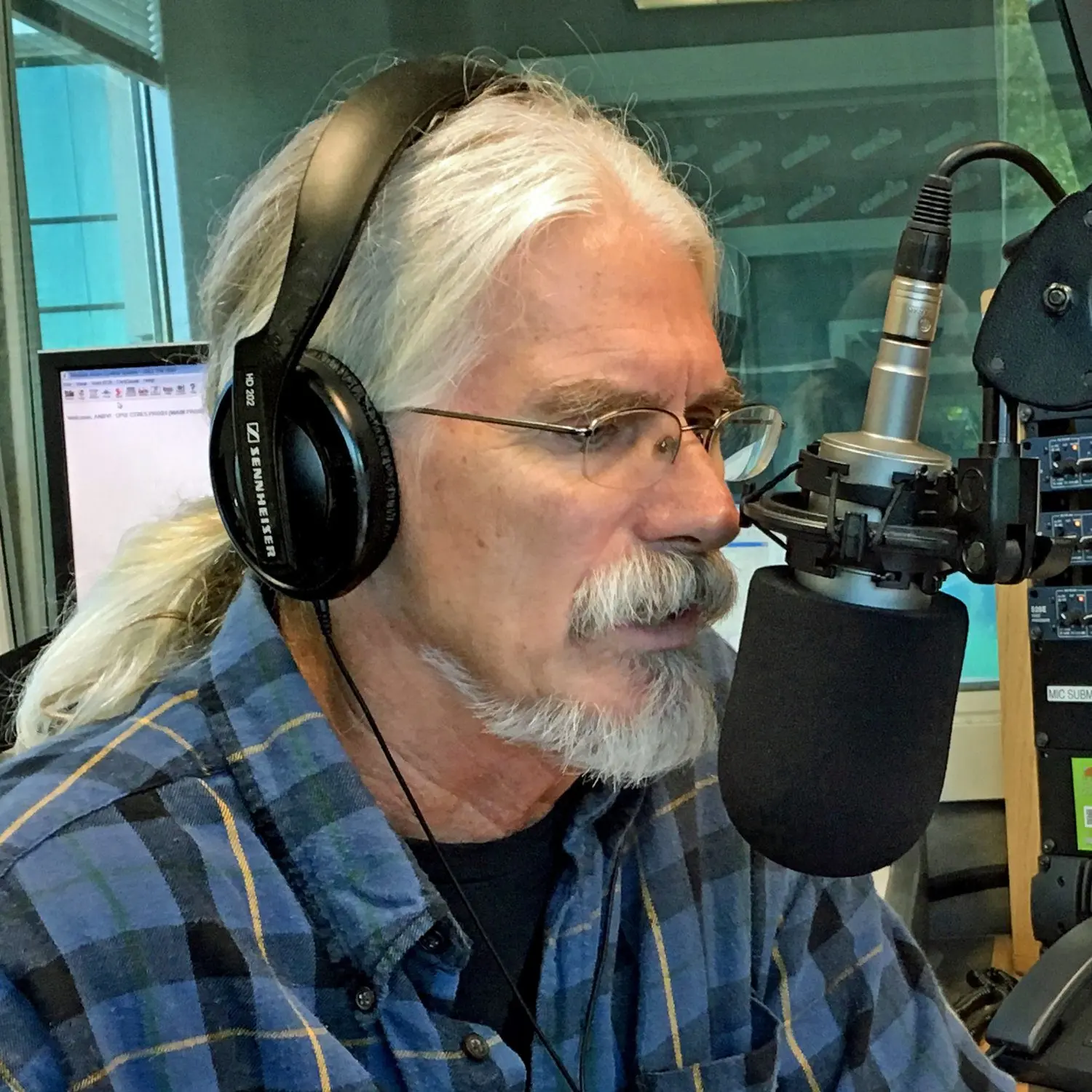

Mike Triem of KLTT speaks with Steve Gregg, host of The Narrow Path, about a growing evangelical movement associated with figures like Brian McLaren and Peter Enns that seeks to reinterpret Scripture through the lens of modern cultural sensibilities. Gregg contrasts this approach with his conviction that the Bible reveals unchanging moral truths rooted in God’s unchanging nature, arguing that Scripture should shape believers’ lives rather than be reshaped to fit contemporary preferences. He traces this trend to long-standing liberal theology that prioritizes cultural acceptance over biblical authority, warning that redefining truth, morality, and even core institutions like marriage
SPEAKER 02 :
It’s Mike Triem with KLTT. We’re joined today by Steve Gregg of The Narrow Path, heard 3 p.m. Mountain Time to 4 p.m. Mountain Time on 670 KLTT and also on Sister Station KLDC, 4 to 5 p.m. to give you a chance if you just can’t make the three some days. Steve, thanks for taking the time with us. Yeah, I’m glad to be here. It’s always a joy to have time with you. Steve, one of the topics I’d like to talk to you about, and this may take our whole interview, is this new evangelical movement, they call themselves, of people like Brian McLaren, Peter Enns, the Bible for Normal People podcast, which is an interesting name given the actual content of the podcast. But this group of people that… from a layman’s perspective, seem to say, okay, the Bible has to fit our lives because it’s really not relevant unless we do that. What do we do with people like this kind of group and also folks that are starting to get into that really believe in what they’re teaching?
SPEAKER 01 :
Yeah, I’ve read a little bit of Peter Enns. I’ve read a little bit of Brian McLaren. Although what I’ve read of McLaren is fairly old. I read him years ago and he may not have been saying these things then because he has gone through some permutations in his emphases too. But he was always a little on the edge of what evangelicals felt comfortable with. Kind of one of the leaders in the emerging church back in the but in the 80s or 90s, or somewhere like that, maybe in the early 2000s. Honestly, some of the things that McLaren wrote back in those early days, while I had my disagreements with him, I thought he made some good observations. But there has been a movement, and I haven’t followed him in this movement. I’m not surprised he’s in it. I’ve read only a little of Peter N., so I’m not real familiar, but I do know that These guys are trying to, I think they seem to be incorporating the trend toward wokeness in society into an acceptable range of understanding what the Bible is. And I think their philosophy is just kind of the opposite of mine. I believe that there are certain absolute truths that reflect God’s nature, his purposes, his desires for mankind, and that these are revealed in the Bible. And they’re essentially the same now as they always were. I don’t believe that God… has personality changes. I don’t think he has moral changes in his character. What was an abomination to him at one time has still got to be unpleasant to him, except I will make this exception. In the Old Testament, you know, eating unclean meats was said to be an abomination to God, but the abomination in that case was that it was a violation of covenant, a covenant that I believe is no longer in place, the Sinaitic covenant. And to flagrantly and voluntarily violate that covenant in a way was abominable. But as far as what New Testament teaching would clarify our moral issues and fundamental issues. I don’t believe that anything’s changed about that. Jesus said heaven and earth will pass away, but my words will not pass away. There’s always been liberalism in the church, and one of the tendencies of liberalism is to read the Bible critically, to find a way to say the Bible isn’t really sane, or God doesn’t still feel that way about these unpopular things. It’s a different mindset than mine, but to my mind, I’ve always, as a teacher, felt like the authority is Scripture, and that I don’t have the right as a Bible teacher to mold scripture into whatever is more acceptable to a changing ungodly society. I mean, this goes all the way back to things long before these guys. In my opinion, I don’t even know how you feel about this, but in my opinion, the rise of the feminist movement was a revolt against biblical family and biblical Christianity and biblical roles of men and women. And that was way back, you know, that was back in the early 20th century. And And yet it was rejected. Many of the feminist tenets were rejected by the concerted churches. But more and more, especially in this new century, a lot of groups that call themselves evangelicals have found ways to read the relevant scriptures through a lens that’s sympathetic toward the popular faith. way of looking at things, which has been ingrained in our culture. If this is true of women’s roles, it can easily be true of everything else that our culture is changing about as the culture moves far from faith in Scripture and far from belief in Christ. Now, I’m not saying these people don’t believe in Christ. I’m not saying that they don’t think Scripture is… I don’t know what they think about Scripture, honestly. I mean… But let’s just say they think Scriptures are more or less authoritative, but that we should interpret them in a much more loose way, to be more sympathetic toward the trends of our modern culture. I don’t think we are at liberty to do that. I mean, the fear of God is the beginning of wisdom, and in my opinion, One who fears God wants to know how God feels and doesn’t want to pretend that God feels as we do so that we can be more, let’s just say, less persecuted. And, you know, I… That’s not maybe a full assessment of the men you’re asking about, but it’s kind of a different mentality. My mentality has always been, as the Bible says it, my obligation is to find out what the Bible means, what God meant, and to conform my life to what He meant, even if that’s very contrary to the way the world thinks. After all, Romans 12.1 said, Do not be conformed to this world, but be transformed by the renewing of your mind. That’s actually Romans 12.2. And so to not be conformed to the world is a direct command. And yet I think… I don’t know if they’re consciously doing this, deliberately, maliciously, or innocently because they’re not thinking clearly. I don’t know what’s in their hearts. But I think what the effect is that many people are allowing the world to shape their sensitivities. And then they’re finding a way to either eliminate from the Bible the things that are contrary to those sentiments, or simply just reinterpret them in a way that would never have been suggested or thought to be valid if there weren’t already this cultural agenda accommodating.
SPEAKER 02 :
We’re speaking with Steve Gregg. Steve is the host of The Narrow Path, heard 3 p.m. to 4 p.m. Mountain Time on 670 KLTT and then repeated 4 p.m. to 5 p.m. on 1220 KLDC. And Steve, I think you hit it in that word sensitivities to be more sensitive to a kinder, gentler gospel message. We hear that with people that seem to be with this crowd and this type of thinking that, gosh, the Bible’s just so harsh. Well, that can’t be true because we have a loving God, and that loving God can’t truly be saying, let’s see, somebody who’s gay, that that’s biblically not correct. And again, I may not be using the best words, and you’ll say it much more perfectly, but still, those biblical truths that we evangelicals most often say, Yeah, the Bible says that. Okay, it’s true. My life has to fit that. Well, they want to fit their lives to the Bible.
SPEAKER 01 :
Yeah. People have become pretty loose about the word truth. To my mind, truth simply means what conforms to reality. Now, reality has hard edges. They may seem harsh if we want to violate them, but if we’re not trying to violate them, we recognize there’s hard edges. I mean, if somebody gives me back the wrong change in a sales transaction— I can say that’s the wrong change, and we both agree on mathematics. We can figure it out who’s right and who’s wrong because we’re both subject to the truth, and therefore we can correct ourselves by appeal to the truth. Now, mathematics is maybe different than moral truth, but truth is truth. If God says certain things are wrong, certain things are sinful, Well, then they are. That’s the truth. And if I don’t want to conform to it, I might say that truth is very harsh. And I suppose it is. So the truth can be very harsh on my deceptions. Now, people say, but what if it’s very hard for someone? You took the example of someone being gay or someone who maybe they identify as the opposite gender or something, and let’s just say they have this literal aberration in their normal thinking processes. There are lots of different ways that people deviate from normal thinking processes, and they go wrong in different ways. uh well okay you don’t we say well we have to love them the bible says love is the most important thing so that must mean some people would say that we can’t criticize them we can’t tell them they’re wrong because that really hurts their feelings that’s not very loving yeah but you don’t lie to people you love uh telling the truth in love is the only real possibility because you can’t tell a lie in love. That is, you can’t tell somebody, you can’t affirm a lie that they’re living by in love because if you live by a lie, there are unintended consequences that are not always foreseen. And societies and people who have more or less form themselves by what the scripture actually teaches, much as that presents difficulties for those who are strongly tempted to do other things. Those societies, to the degree that they follow what God said, they don’t run into the complications that we have run into. Now, obviously, in a society, let’s just say a society where gays who want to live together are not permitted to have a sanctioned marriage. I mean, perhaps they’re not forbidden to live in the sins they choose, but there’s not going to be a sanction. There’s not going to be a marriage that the church will recognize between them. Now, You know, actually, they’re not being persecuted. There’s nothing unloving toward them. This is simply saying marriage is something. It’s a word that has a meaning. Changing that meaning is not really a possibility unless God has no preferences about it. God is the one who defined what marriage is, and we don’t really have… We don’t really have the power or the competence to change that definition. I remember back when, before same-sex marriage was universally approved in this country, The argument made by those who are pro-same-sex marriage are saying, well, you know, homosexuals have the same human rights we do. They just want equal rights with us. We can get married, and so they should be able to get married. Well, my position is, yeah, they do have the same rights we do, but not more rights than we do. if they don’t meet somebody that they want to marry, which would mean someone of the opposite sex, because that’s what marriage is, then they’re in the same position as a straight person who doesn’t meet somebody they want to marry. They don’t get married. They can get married to someone they’re not attracted to, but that doesn’t seem very wise. But that’s everybody’s option. If a gay person is not attracted to the opposite sex, well, they don’t have to marry them. Now, what if they want to have sex anyway? Well, lots of people sin in that way, and they can take their chances with God on that. But they don’t have the right to change the definition of marriage because I don’t have that right and nobody else does. It’s not like they want equal rights. Nobody has the right to redefine what God has called marriage. So I don’t have that right, and they don’t either. They want special rights. They want rights that nobody else has, namely that they can change the meaning of words that God defined and impose that meaning on everybody else. I don’t have to be affirming of that in order to love them. And it isn’t unloving on my part to say, well, that’s not right. I would say it’s unloving on their part to impose their novelties on the rest of us. If they want to live in a way that the Bible disapproves and even that society as a whole may disapprove, that’s their option. No one’s going to put them in jail for it. But for them to insist that people who are following God’s way have to bend and have to accommodate and have to change what God said so that they themselves won’t feel uncomfortable, that’s simply, that’s unloving. And so I think that people who, I think the people that you’re talking about who want to change morality, want to change norms of the Bible, these are people who are placing an emphasis on the biblicals requirement that we love everybody and i place emphasis on that too but it’s a different definition i don’t i don’t lie to people i love if someone says if my son says i think i’m a girl i’m going to say well you’re not you know I mean, I love you, but you’re not a girl. I’m not going to come around and say, yeah, if you say so, you are. Well, that’s lying to them. They’re not. No matter how much someone thinks they’re Napoleon, they are not Napoleon. And if a boy thinks he’s a girl, he’s not a girl. So to lie to them is not loving. It’s just cowardly.
SPEAKER 02 :
Well, Steve, you bring such scriptural clarity and deep thought to these topics. And thank you. You help us so much with these teachers, some of which are not emerging. As you said, McLaren’s been around for quite some time. So the narrow path is, you know, opportunity for people to call in, our listeners, if they have questions like this, where it’s, you know, what do I think about this approach or other? Again, 3 p.m. to 4 p.m. Mountain Time is when we’re able to carry The Narrow Path live on 670 KLTT. So, Steve, thanks for taking the time with us. It’s always wonderful to hear your perspective and so helpful to us.
SPEAKER 01 :
God bless.