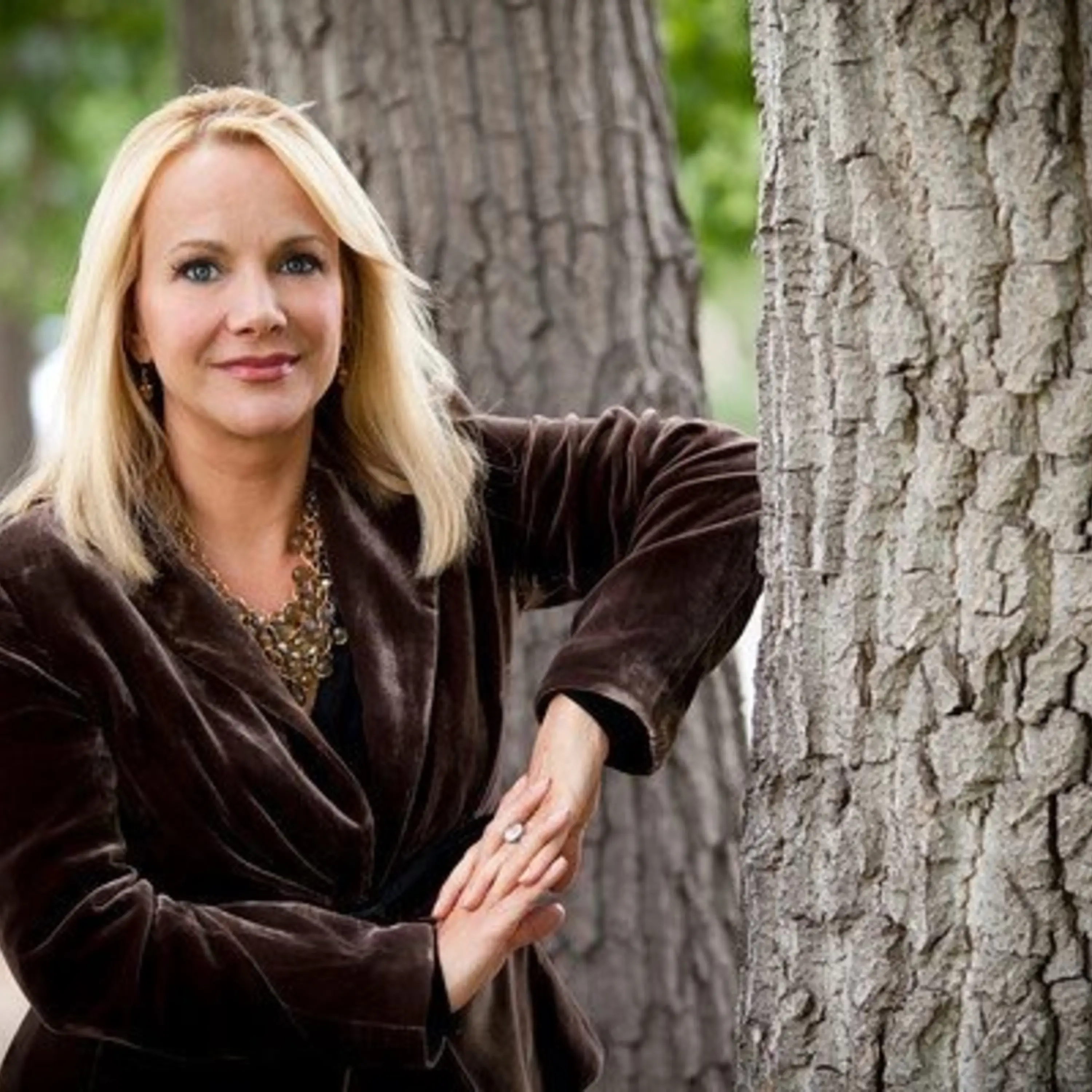

Join Angie Austin as she sits down with Grace Fox to discuss reflections on life’s changes and transitions. Grace shares insights on embracing new seasons and finding joy and purpose despite challenges. She elaborates on the concept of ‘Re-Framed,’ drawing from biblical inspirations that encourage reframing negativity into positivity. Through her experiences of moving from a boat to a home, Grace exemplifies how faith can guide personal and familial decisions, creating a warm environment for loved ones amidst life’s constant shifts.
SPEAKER 01 :
Welcome to The Good News with Angie Austin. Now, with The Good News, here’s Angie.
SPEAKER 06 :
Hello there, friend. Angie Austin here at Ed Novak with The Good News with Angie Austin. Ed is a good friend of mine, known in many years. I actually had my wedding at his restaurant, The Broker. He’s been a restaurateur for decades, and even though he’s quote-unquote retired, I still see his face around one of his restaurants here and there with his name. And Ed, even though you sold the broker many years ago, you’re still very active in the community, and I see you at philanthropy events here and there. But I wanted to start having you join my show to talk about some of the life lessons you’ve learned as a businessman, father, grandfather over the years, running a wildly successful business. the broker and other restaurants as well. And that’s not an easy business to succeed in. And so I just kind of want to get your expertise. And I have a particular story I want to talk about today.
SPEAKER 03 :
But how does that sound to you in general? Sounds wonderful. Wonderful. Thank you for the nice compliments.
SPEAKER 06 :
Well, I just get a kick out of your stories. And I was sitting with you at a Grandview football game and we were watching your grandson play. And I’m friends with your daughter, Julie, a lot of kids and a lot of grandkids. And somehow you and I sitting in our little, you know, lawn chairs just started talking about how once you went to Europe and And you had a big plan and you were going with an organization and everything fell through. And you were in another country and you didn’t have a job. Then you didn’t have a place to go. You didn’t really have any money. And you were a sophomore in college. Now, here’s what I got from this story. You are a man who seems to me to almost always make lemonade out of lemons. And when you went through this story to me as we were sitting there watching the game, I just kept laughing like I could not believe how well you made this disaster trip turn out. Thank you so much. Well, explain what it was all about.
SPEAKER 03 :
Well, I tell you, President Eisenhower started a wonderful program called People to People. Now, I’m a sophomore in college at the time. And his idea was to have young people from Europe come to America and young Americans go to Europe together. for like two or three months to experience the difference, you know, and sort of realize what this world is all about. I love it. And so we flew to Brussels, and there were 300 of us in this particular trip, okay? But the way that this was sold to us was that – that you don’t have to bring a lot of money because we’re going to have a job. Every one of you is going to have a job, and you’re going to get a paycheck. and you’re going to live with a European family, whether it’s in France or Germany or Spain, you’re going to live with them, and then you’ll have a job with somebody, okay? Okay. And so he said, let’s get going, and he handed out all the packets. And then he said, you know, there’s four people I need to talk to, and he listed these four people, and I was one of the four. Okay. And so we went forward, and – He said, I have some bad news for you guys. He says, as your jobs sell through, and he said, so I’m sorry to tell you this, but what you need to do is just be on your own for the next two and a half months. But you need to come back here in this room on a certain date, and then we’ll fly you home. So you’re already in Europe. I’m already, we’re in Brussels. We’re in this big banquet room in Brussels. There’s 300 of us there. And I said to this guy next to me, I said, wow, what are we going to do? And it turned out that he and I created the greatest relationship, and we still exchange Christmas cards and talk. His name was Chuck Leik, is Chuck Leik, L-E-I-K. And so what we did, I only had $300 on me for this because I was not planning on needing money. And so I had $300. So what we did was we went out and we bought a sleeping bag and we bought a backpack. And then we just – so all I had was – You know what I could carry. And so then we decided that we would just tour Europe together, the two of us. And so we ended up and it’s called Auto Stop, which is really hitchhiking in the U.S. But Auto Stop in Europe is Auto Stop. Now, during that period, it was very, very safe. I mean, there were a lot of people traveling with auto stop. You stand out on the road, you raise your thumb, the people stop, and then you ride with them. And so for the next three months, we averaged 11 auto stops a day, 11 rides. What?
SPEAKER 06 :
And is this, what year, decade was it? Was this 60s? This is 62. Okay, okay.
SPEAKER 03 :
Wow. And so we ended up. We ended up going to nine different countries. We went to England, France, everywhere. But what we did was every night we would look for like a barn or a cornfield or something, and we would go out there. And then if it started raining, we’d try to find some cover, you know. But we slept out with our sleeping bags out in the middle of a cornfield. We just went off the road as soon as it got dark. and slept there. And then it just was an amazing, amazing, amazing experience. And then every Saturday we would find, and at those times the hostels, a hostel was very popular. And so on Saturday we would go to whatever city we were in, we would ask them where the hostel was. Hostels cost in 1962, hostels were 25 cents a night.
SPEAKER 05 :
Oh, wow.
SPEAKER 03 :
And so we would go to the hostel. We would actually have a cot. We would then and we got to take a shower. And so that was the way that all worked. And the crazy thing is that. We ended up in Germany in 1962, and a family picked us up and said, why don’t you stay with us for a few days? And so we went to their home and stayed with them. And then this person said, did you know that Kennedy is going to speak here in Berlin? We were in Berlin. And Kennedy is going to speak here tomorrow. I said, you’ve got to be kidding. And so the young person, their daughter said, I’ll take you on the train, and I’ll take you down to where Kennedy is speaking. And so we went downtown by the mayor’s building, where the mayor had his offices. The outside they had, and the people that were there, Let me tell you, there was two city blocks wide and six city blocks long. There was no trees in that whole area. There were just paths and benches and lights, you know, streetlights. And that 12 square blocks was completely full of people standing nose-to-nose. And then Kennedy, we could see Kennedy. He got up on the podium. It was very high. And that’s when he did his speech, I am a Berliner. And I tell you, that crowd just went crazy. Oh, my gosh. They loved him so much because, you know, when Russia isolated them and cut off all the – then, you know, Kennedy flew those planes in every day bringing food to West Berlin. Wow. And that’s the only way they survived was those planes that he sent in there every day. And I tell you, those German people just loved him, just loved Kennedy. And then, obviously, in November of 62, then he was killed in Dallas, you know. But, boy, it was so amazing to be there and to see that and to hear his speech.
SPEAKER 06 :
unbelievable just the way these dominoes yeah highlight of your life highlight of your life and just the way like the dominoes of everything fell together for you to be in that area and for the family to invite you and the daughter to drive you know to get you to a train and then did other families invite you to stay with them sometimes too you didn’t always have to sleep in the cornfield no sometimes i mean they were very hospitable
SPEAKER 03 :
Whether it was in Spain or in France or wherever, Italy, sometimes they would say, where are you going to stay tonight? And we said, well, we actually just sleep out in the – we have a sleeping bag and we just find it under a tree somewhere or something. Yeah. And he said, well, why don’t you stay with us tonight? And then they would invite us over and we’d have dinner with them and we’d talk about the U.S. of A. and talk about Italy and just the relationship. And so it just worked out. It worked out so phenomenal. It was one of the highlights of my life, to be honest with you, to actually be able to do that.
SPEAKER 06 :
And to turn it into what you turned it into when you arrive in Brussels and you’re told, hey, the four of you don’t have a home and you don’t have jobs, but you’ve got to be back here in a few months. So just go make the best of it. Now, were you able to work or earn any money or were you able to use that $300 at the time was quite a bit of money?
SPEAKER 03 :
That $300, I didn’t even spend all of it during that two and a half months. You know, because we slept outside at night or somebody would take us to their house or You know, we just didn’t have a need for much money. And food?
SPEAKER 06 :
Were you able to find, like, reasonable food, you know, to purchase or, you know, eat at other people’s houses?
SPEAKER 03 :
We would go into these little grocery stores and things like that and just pick up a sandwich or something, you know?
SPEAKER 05 :
But, like, working, you didn’t work, you just toured, right?
SPEAKER 03 :
And I remember when we went to Monte Carlo, okay? Wow. And so we go into this beautiful hotel in Monte Carlo, you know, all the gambling going on and everything. And he and I ordered a Coke, okay? The Coke was $4, and Chuck said, we got to get out of this town. Okay.
SPEAKER 05 :
Oh, that’s so funny.
SPEAKER 03 :
But I got $4 in 1962 for a Coke. I mean, we couldn’t even believe it, you know.
SPEAKER 06 :
Yeah, it’s probably like $25 now.
SPEAKER 03 :
No, but it was just, you know, it was probably 50 cents back in Denver at the time, you know. Right, right, right. Anyway, $4. So what did that teach you? Chuck and I still talk. And we got together a couple years ago. He works for the U.S. government in Washington, D.C. And so I was in Washington, and I called him, and I said, hey, I’m here. And he said, let’s have lunch. And so we had lunch. And we still exchange Christmas cards and so forth. But it’s just wonderful. What did that teach you?
SPEAKER 06 :
Obviously very resourceful. What did that teach you about yourself or just in general? What were some of the, like what’s the biggest lesson you learned through that?
SPEAKER 03 :
Well, you know, I think that, I think we had the better time than anybody that went, you know, I don’t know how anybody could have had more fun than us. And then getting to nine different countries. And I mean, it just was a really highlight for me to do that as a, As a young, you know, as a sophomore in college.
SPEAKER 06 :
Any favorite countries, like your top two of those that you went to?
SPEAKER 03 :
Well, it turned out Germany really because of Kennedy, I think. Right. And also the German people treated us so well. I mean, that’s probably where we got most of our time. And, you know, I remember meeting this one man in Germany once. And he had wanted to remind me that he was a German soldier and that he fought the United States in the war. Interesting. And he said that he just wanted to tell me how much he appreciated us coming to his country.
SPEAKER 06 :
That’s cool. Oh, Ed, I love your stories. We’ll have to think about what our next life lesson will be. I’m calling this one making a lot of lemonade out of lemons. Ed Novak, thank you so much, friend. God bless you.
SPEAKER 03 :
Thank you for everything, Angie. All the best.
SPEAKER 02 :
We’ll be right back. All the holiday shopping at Arc Thrift, they now need your donations. As long as your items are gently used, Arc Thrift will take them and give them a new home. You may have gotten some new clothes, and now you need to clear out some room in that dresser or closet. Just donate at one of Arc Thrift’s 38 locations or their 15 donation centers. They always need donations, so why not start out the new year with downsizing the items you no longer need? You can find any Arc Thrift store or donation center on their website at arcthrift.com.
SPEAKER 04 :
Golden is listening to the mighty 670 KLT Denver.
SPEAKER 06 :
Hello there, friend. Angie Austin here. We’re talking to Grace Fox about her book, Keeping Hope Alive. And we’re talking today about a devotion titled Re-Framed. Hello there, Grace Fox.
SPEAKER 04 :
Hi, Angie. Good to talk to you again.
SPEAKER 06 :
Good to talk to you. Anything exciting going on? I know you guys took a big trip out of the country. Your husband stayed longer, and then you had the holidays, and you were working on your nonprofit, on your ministry. Oh, just books coming out. I mean, you’ve got a lot going on. And living on that boat, which is like always an adventure, I’m sure, in Vancouver, British Columbia in the winter.
SPEAKER 04 :
Well, Angie, here’s the big news for us. You know, as we think about the new year, I always like to think about that word new. And God is putting us into a new season. And so… uh we’ve been on this boat just shy of eight years we moved on to it because we just knew that god was asking us to to do this and it turned into a place of ministry in the marina so we’ve loved it we have loved loved being here but we know now and this is a surprise to you because i haven’t mentioned anything to you about this behind the scenes but We have sensed for about a year that a change is coming on, and it is happening. So we’re going to hang on to the boat for at least two years and use it for other purposes now, but it won’t be our main residence. Oh, wow. So we’re moving back to the townhouse that we bought back in 2007 when we moved into this area, and we’re going through remodeling right now because we’d rented it out, and boy… Boy, when we got back into it and saw the shape that it was in, we were like, you’ve got to be kidding.
SPEAKER 06 :
It’s shocking, isn’t it?
SPEAKER 04 :
A lot of tender, loving care is what needs to be poured into that place right now. So we basically gutted it. Oh, wow. We have a group of tradesmen working in it right now and putting it back together again for us so that we can go back. So it might be another month or five weeks. We’ll see. But that’s what’s happening now. That’s the exciting adventure that we’re heading into once again and looking forward to seeing what God has in store for us in this new season, even while we do get to hang on to the boats.
SPEAKER 06 :
It’s interesting when you talk about getting into it after all those years of renting it since 2007 or thereabouts. And we have a rental property, and college students live in it, and it’s already been remodeled. So it was already flipped. It was taken down to the studs. So new lighting, new flooring, new walls, new everything. Okay, so… And we have the advantage of so they’re all home on Christmas break. And then so my son said to all of them, hey, my parents want to come up and do the carpets and the floors and clean everything. So four of us went up there and we spent like probably three hours or like 12 hours of cleaning. you know all the carpeting and mopping the floors and i cleaned every cupboard and cleaned out the refrigerator and you know the front of every cupboard and every inch of the place which you can’t do when someone’s like regularly living in there unless you make a deal like hey i’m sending a cleaning person over once every couple of months but for us it’s kind of an advantage so we can do a deep clean several times a year because we also get to get in there during the summer some of them should stay and some don’t even though they’re paying rent so once we tell them we’re coming in to do things you really can keep it from getting into like a complete you know state of disarray like our fence got blown down twice with a big windstorm in boulder that was like 100 mile an hour plus winds and so now we’re putting it up the second time because it’s a Second time it blew down and we’re having to put cement in, et cetera, in order to, you know, keep it this time, maybe do a little bit better job. But we can keep doing these repairs like as the kids live there because it’s different than like having a family or a couple or, you know, rent it long term. So I guess there are some advantages to it, but I wouldn’t say college kids are like the neatest group.
SPEAKER 04 :
I wouldn’t think so either, but I’m glad that you’re able to get in periodically and check on it.
SPEAKER 06 :
Yeah. Yeah. We definitely had our work cut out for us, and it had only been, you know, what, four months or so that they’d been in it. It was like a brand-new house. So, yeah, it’s interesting. Okay, so now is there anything that precipitated this, you know, moving out of the boat? It’s a lot, you know, living on that boat. There’s a lot to contend with, with, you know, storms and such, I would think, as well.
SPEAKER 04 :
Well, I think one of the main reasons that has just been really impressed on our hearts recently is the need to have a space for our family to land when they come to visit. So, you know, it’s just too crowded. And so we have at Christmas time, we had the one daughter come with her three kids. And I mean, we were walking on top of each other. And to me, that was just amazing. the confirmation that yep we’re doing the right thing by going back to a place where we’ll have a couple of guest rooms and a place for the the grandkids to play again and to run and we won’t have to leave the house to make a visit possible for them or comfortable for them right i think that’s the best idea you could come up with and how many grandkids now do you have Well, we have 14 with another one on the way. So, you know, my heart as a mother and a grandmother is ready to say we need that space for them to feel welcome in our home again and not like they’re going to be put up with or something. So that’s the main reason.
SPEAKER 06 :
I love that. I can’t think of a better reason. We just did this family vacation, and I think we’re going to do another one. We did a family cruise. We were gone for a few weeks and went down to the ABC Islands, Aruba, Bonaire, Curacao, a couple of other stops, and stayed in Miami as well. You’re in one cabin, so it’s a pretty tight quarter. So every morning we’d have breakfast together and my son would be up on the bunk and I’d pass him his eggs and he’d want three orange juices. And then my husband and I would be on the bed and one of the girls would be on, you know, they had a separate side bed. So we’re all sitting like crisscross applesauce eating our breakfast and talking about, you know, where we’re going and what we’re doing and getting the towels ready and our snorkel gear and everything. It’s just really fun, and one of my girlfriends saw our post about all our adventures, and she said, oh, pretty soon, she said, enjoy this now. You think it’s hard to do this when they’re in college and in high school. Wait until they get married, and then they have their kids, but then also the in-laws, and you’re trying to schedule who gets Christmas and the other, and my husband goes, oh, well, I know what we’ll do. He goes, we’ll either buy or rent a giant vacation home someplace near water in a warm climate, even if we just rent it during the holidays. And then everyone gets invited. Then you have like the carrot on the stick where, oh, well, who wouldn’t want to go to some tropical place and stay in some giant house with all of your extended family? So that’s our plan to maybe lure them towards us. But who knows? My kids could end up marrying some billionaire that they’re going to be the ones that have the power and go, hey, why don’t you all come here but I just think it’d be nice if you could get big groups of people together like that and you’re not fighting over the kids and grandkids yeah yeah when they get married and you’ve got in laws and especially in in one of our kids cases
SPEAKER 04 :
the in-laws are divorced and so now you’ve got you’ve got mother and then you’ve got you’ve got a whole other layer so it gets complicated so i’m just like let’s get this a little bit simplified here so that they feel like they have this option when they come down this way and uh you know whereas the boat’s just getting too tight for that well you might have the boat available too right you could have two places Well, it’s an hour away, so it’s not convenient. Okay. But the one family with the three kids, even though they were here for Christmas, they were already saying, well, maybe we could spend a few days with you on the boat sailing this summer. And you know what? That’s a whole different thing. Our stuff will be out of here. There’s going to be more space because we won’t be living on it anymore. So that’ll open things up a little bit, and I think we can do that. Okay. But on the whole, it’s just fine.
SPEAKER 06 :
It’s interesting. These changes that, you know, come about as we get older that, you know, I’ve still got Mark’s parents and my mom and my stepmom alive. So five, four grandparents, but just the changes in like how we travel. And I parked on the wrong side of the airport and my mom had her cane and I I have a wheelchair for her, but my brother doesn’t use the wheelchair. So all she had was the cane. And I’m like, oh, my gosh, like the wrong side of the airport. I thought it was just like a short walk over. But we had to walk the length of the airport to go over the little bridge to the other side of the airport. And I’m like, oh, my gosh, mom, I’m so sorry. Like things like that where, you know, just life in general.
SPEAKER 04 :
is changing and you’ve got to adapt and i love how you’re adapting so that it’ll be more convenient for your family to come and stay with you all right well we’ve covered life let’s talk about your devotion well you know it’s funny as as we were talking i realized that the title of this devotion is reframed so talk about stripping a townhouse down to the studs and and putting it back together again this title is really appropriate i didn’t plan that but But this one is taken from 2 Corinthians 6.10. It says, sorrowful, yet always rejoicing. Poor, yet making many rich. Having nothing, and yet possessing everything. And that was, those words are from the Apostle Paul, who I wrote how he took a beating in ministry, physically and emotionally. And so we read about his hardships listed in the verses here. prior to the one i just read if we were to open a bible you know we’d go whoa what happened how could anybody endure all this stuff without throwing in the towel but but he he summed it all up in this verse and then he said yet three times so he could have said sorrowful full stop But he didn’t. He said, yes, always rejoicing. He could have said poor, you know, full stop. But he didn’t. He said, yes, making many rich and so forth. And I think he reframed what was really hard in his life into something that was positive on the flip side of the coin. And I think there’s a lesson for us to be learned in that, that we can say, whoa, I’m feeling good. Like somebody just said something to me that’s ripped my heart to shreds, full stop. Or we can say, this person just said something that was really hurtful verbally, yet I know who I am in Christ, and their words are not going to strip me of that identity. We can just take and reframe the hurtful things that happened to us with that word yet. And on the opposite side of yet, how can we look at what What is truth? What is truth?
SPEAKER 06 :
I like that idea of reframing too, you know, putting things into context and really kind of sitting down and saying, you know, how does this affect me? Is it true? Does it really matter? Will it matter in a month? Will it matter tomorrow? Will it matter in five years? I think that there’s so much importance placed on things that really don’t matter that very much. And I don’t know if it’s like our controlling nature that we want to control what people say, what people think, what people do. You know, in order for it to meet our standards or the way we think things should be. I’ve gotten pretty good maybe as I’ve gotten older at kind of letting things roll off my back. And I have one kid that’s pretty good at that where I’m shocked at the whole like the duck, you know, and how the water just, you know, bounces right off the back. It’s like waterproof. and how she can forgive people. And sometimes it seems almost naive, but to me, when I discuss it with her, I’m like, you know, that teammate, I mean, it kind of got you kicked out of the game and went to the coach and said some things about you and said, try so-and-so because, you know, hope isn’t blocking well today or whatever. And then wasn’t very nice to my daughter, made some yucky comments. Well, then later on when I called, um, They didn’t have dinner that night. They’d eaten earlier and they were all starving. And I said, oh, my gosh, I just can’t. You know, some of the girls from out of the country and some of them don’t have a lot of money. And I said, oh, I just can’t bear to think of all these girls being hungry and going to bed with a hungry stomach. I said, order a bunch of pizzas. I said, I know it’s not that healthy, but they’ll deliver to the hotel and blah, blah, blah. So then I said, FaceTime me when you get it, because I love to see happy kids eating pizza. And so there she is right on my daughter’s bed, the girl that had been, you know, such a stinker to my daughter. And then later on, I said, oh, I saw, you know, I’ll just call her Susie. Susie was on the bed eating pizza with you. I said, so you guys made up. She goes, oh, mom, I forgive people. It’s just it’s a waste of energy. You know, she’s my teammate. I’m going to keep playing with her. And I know there’s a time, though, Grace, too, where you have to kind of stand up for yourself and maybe assert, you know, what you think is right or wrong. But a lot of times she just moves on.
SPEAKER 04 :
Yeah, not everybody can do that. But that word yet, when we go through those hard times, again, that’s the thing that helps us to reframe. And I think in the case of the world right now, it just looks like it’s going wonky. And we could say, this is the world is going messy right now. Yet, I know that God is in control. I like that. And that can just help take our fear notch down. I agree. I like that.
SPEAKER 06 :
Yeah, God is in control. Oh, I appreciate you, friend. I always get a kick out of talking to you. Your life cracks me up that you just think you’re a normal grandma, and I just think you’re a whirlwind traveler writing books and doing things for ministry and spreading the word of Christ. So I think you’re doing great. Thank you, GraceFox.com. Thank you, friend. You bet.
SPEAKER 04 :
Talk again.
SPEAKER 01 :
Thank you for listening to The Good News with Angie Austin on AM670 KLTT.