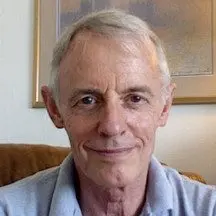

Colin highlights the often misunderstood concept of repentance and how it relates to our perception of sin and salvation. Are we truly free, or do our addictions and guilt rule over us more than we realize? He draws captivating parallels between addiction recovery programs and the gospel’s approach to sin, emphasizing how the real battle is changing our mindset. As Jesus took our guilt and fear to the cross, understanding this act shifts the power dynamics of sin over our lives. Dive into this gripping narrative of hope, rescue, and spiritual liberation.
SPEAKER 01 :
So what kind of conclusion is Paul coming to in Romans chapters 1, 2, and 3? Well, we get nearer to that conclusion as we look at chapter 3, verses 9 through 21. Remember, he’s been talking about the paganism or the brokenness of the pagans under their idolatry. But then, that’s chapter 1, then he talks about the brokenness of the religious world in chapter 2, speaking about the Jewish people, of course, but by extension we can take it to the Christians also. That this is a description, as I pointed out the other day, Romans chapter 2, of religious life without Jesus. Religious life without Jesus is a torment. Let me tell you why. You see, the religious life, that is the message of the Old Testament, reveals the law. And it reveals that thou shalt not kill, thou shalt not steal, and so on. But Jesus makes the point of a deeper level of that law. He says, whoever hates his brother has killed. Whoever covets has stolen. Whoever lusts. whoever has committed adultery, and so on. So what Jesus does is to go into the depths of the law and reveal the utter brokenness of humanity. Well, if you stop there, what happens? Well, then you try to straighten up, don’t you? You try to live a good life. You try to be obedient. You try to keep the commandments. And what is the result? Guilt, shame, fear, uncertainty of God’s salvation, it is a real torment. Well, you say, wait a minute, what’s the point of Christianity then? Well, do you see where I stopped at? I stopped at the Ten Commandments. If you stop at the Ten Commandments, all you have is judgment. That is why life, Christianity without Jesus, is a torment. And there are millions of Christians living without Jesus. Now what an irony that is, to be a Christian without Christ. To be a Christian just because you think that being a Christian is being nice and good. And if that’s all you think it is, then you don’t have Jesus. You have just the commandments. You just have morality. And let me tell you, moral Christians are rather miserable people. They’re not very pleasant to be around because they are very judgmental. They are judgmental of others because they’re projecting upon others the judgment they feel upon themselves. So this is why Paul is against religion without Jesus, religion without Christ. So this is what brings him to the conclusion in chapter 3, verse 9. What then? Are we any better than they? That is, are we Jewish people any better than the pagans? And by extension, we would say, are we Christians any better than the non-Christians? And what is his answer? Are we any better than they? Not at all, for we have previously charged both Jews and Greeks that they are all under sin. Now, I want you to notice something very significant about this verse. Did you notice that Paul did not say that Jews and Greeks are all sinners? No, he didn’t, did he? What did he say then? He said, Now, why would he say such a funny, strange thing as under sin, as if sin were on top of us? Well, that’s precisely what he’s trying to get at. He’s using the preposition under, because he’s trying to paint a picture of you and I and of all humanity being utterly covered by the power of sin on top of us. In other words, Paul is using the preposition under to express, listen now, that sin is like a kingdom reigning over us. You say, well, what’s the point of that? because we make light of sin and we assume that it’s something that we can either do or not do. You know, preachers call people to repentance, and what they think they’re saying is, stop sinning and change your heart. But that cannot possibly be what Paul is saying, because how can you stop sinning if you are under it and it’s raining over you? When sin is reigning over you, you don’t have the choice to either sin or not sin. The truth of the matter is that you cannot stop sinning. I mean, that’s a scary idea, isn’t it? But what Paul is getting at is this. that we are trapped. We are under a situation. It’s as if a building has fallen on top of us. It’s as if there had been an earthquake and we were in a 10-story building or something and the whole building collapsed and we are trapped in the basement somewhere. Well, you can’t choose to get out or not, can you? You’ve got to be rescued. And that is where Paul is moving towards. We haven’t got there yet, but he’s moving towards that idea. You and I have to understand that repentance is not stopping doing a sin, but changing your mind, because that’s what the word repentance means, turning, changing your mind in relation to that building on top of you. Is it going to kill you, or do you believe that there’s going to be a rescuer? That’s what repentance is. There is going to be a rescuer. We are trapped, and we have hope and faith that somebody’s going to bail us out. That’s not the word I want right there, but come with all the equipment and pull us out of the mess. This is not an accident that Paul uses the preposition under. You will find as we study this book of Romans that he’s talking about being under the power of the law, under sin, under death. We’re trapped, you see. That’s what Paul says in chapter 11, verse 32. God has imprisoned everyone under sin. Imprisoned. Now, let’s suppose you’re a drug addict. Let’s suppose you’re an alcoholic. Let’s suppose you’re addicted to pornography. Anything. Let’s suppose it’s gambling or whatever. You don’t choose to stop doing this or that, do you? You recognize you’re stuck and you’re trapped, and you go to AA meetings. Well, what do they do? Do they tell you, do they give you an idea on how to stop doing your thing, how to stop drinking? No, they don’t. Oddly enough, Alcoholics Anonymous does not directly tell you how to stop drinking. Well, what do they do? They tell you how to change your perception of life, how to change your position in relation to alcohol, how to consider what’s really going on behind the alcoholism. Maybe it’s control of others. Maybe it’s a sense of anger towards the world that you can never resolve. Maybe your parents were abusive, and they give you the background to all of what’s going on in your drinking. That is precisely what the gospel does in regard to sin. It doesn’t simply say, repent and stop sinning. Paul shows you that you are under it, and prepositions are known for expressing the relationship of the object to the subject, which is why he says under, because we want to know our relationship to the subject of sin. And the answer is that sin is a ruler. It is reigning over you. Sin is not something you do. It’s something that does you. And it’s not about morality. It’s about, and I’m jumping ahead here, whose kingdom are you in? If it’s reigning over you, it implies a kingdom, right? What kingdom is that? According to Romans chapter 5, it’s the kingdom of sin and death. Adam brought in a whole chaos of sin and death, and you and I found ourselves in it the day we were born. We didn’t choose to sin. We found ourselves sinners before we even knew what sin was all about. That is what you need to begin to understand in regard to the gospel. If you don’t understand this, you will treat Christ’s death on the cross as something trivial. In fact, you’ll treat it as something incomprehensible, something that doesn’t make any sense. Why did Jesus have to die? If we just can stop sinning, why does Jesus have to die? Well, he has to die because we can’t stop sinning, because we’re under its power, because a kingdom is ruling us, and Adam is the ruler of that kingdom. Actually, we should say Satan is ruling under the power of Adam in that kingdom. We need a new ruler. one who’s kind and compassionate and merciful and good, and who can say to you, I release you from the power of sin. You say, but I am a Christian, and I’m still an addict. I still drink. I’m still addicted to cigarettes. I’m still addicted to porno. And you say, so I’m not freed at all. But listen, do you know what the real trap of addiction is? It is not the drug of choice. It is not drugs or smoking or alcohol or pornography or gambling addiction or even work addiction. The real power behind addiction is is guilt and shame and fear. In other words, the real power behind addiction is not a drug of choice, but a state of mind. If you have voices in your head, and I don’t mean literal voices, though of course there are some people in schizophrenia who have literal voices, but if you have a voice in your head that says, I’m no good, I can’t do anything right, what’s wrong with me? I don’t measure up. Those voices in your head are telling you the very states of mind that will drag you down into addiction. You need to be freed from that. And that is what the cross of Jesus Christ does for you. Because when Jesus died upon the cross, he took your guilt, he took your shame, and he took your fear, and he crucified it in himself. He died as a representative of you. That is just so awesome. And so when in the middle of the night you have all these negative feelings, you wake up and you can’t sleep and you’re troubled about your mess, You lift up your heart to God and you say, Father, I thank you that there is no power in these voices that are talking to me. Don’t let the voices talk to you. Talk to them by the good news of the gospel, that there is no condemnation. And since there is no condemnation, then the powers of accusation, the voices of accusation are powerless. This is what Paul is moving towards. We haven’t got there yet. I’ve jumped ahead of the story somewhat. But this is what helps us to know the power of Jesus in our lives. Thank you for joining me today. Colin Cook here, and you’ve been listening to How It Happens, this program that you may be listening to on the radio, but did you know you can hear it on your smartphone? You can download a free app, soundcloud.com or podbean.com or Apple or Google or wherever, and key in How It Happens with Colin Cook when you get there. Now, it’s listener-supported radio. Each program costs $39 per 15 minutes, or $200 for a week’s programs, or $850 to $900 for a month’s programs. Well, that costs me. But would you like to help out? Please do. You can send a donation online very quickly, very easily. Go to faithquestradio.com. Thanks so much. I’ll see you next time. Cheerio, and God bless.