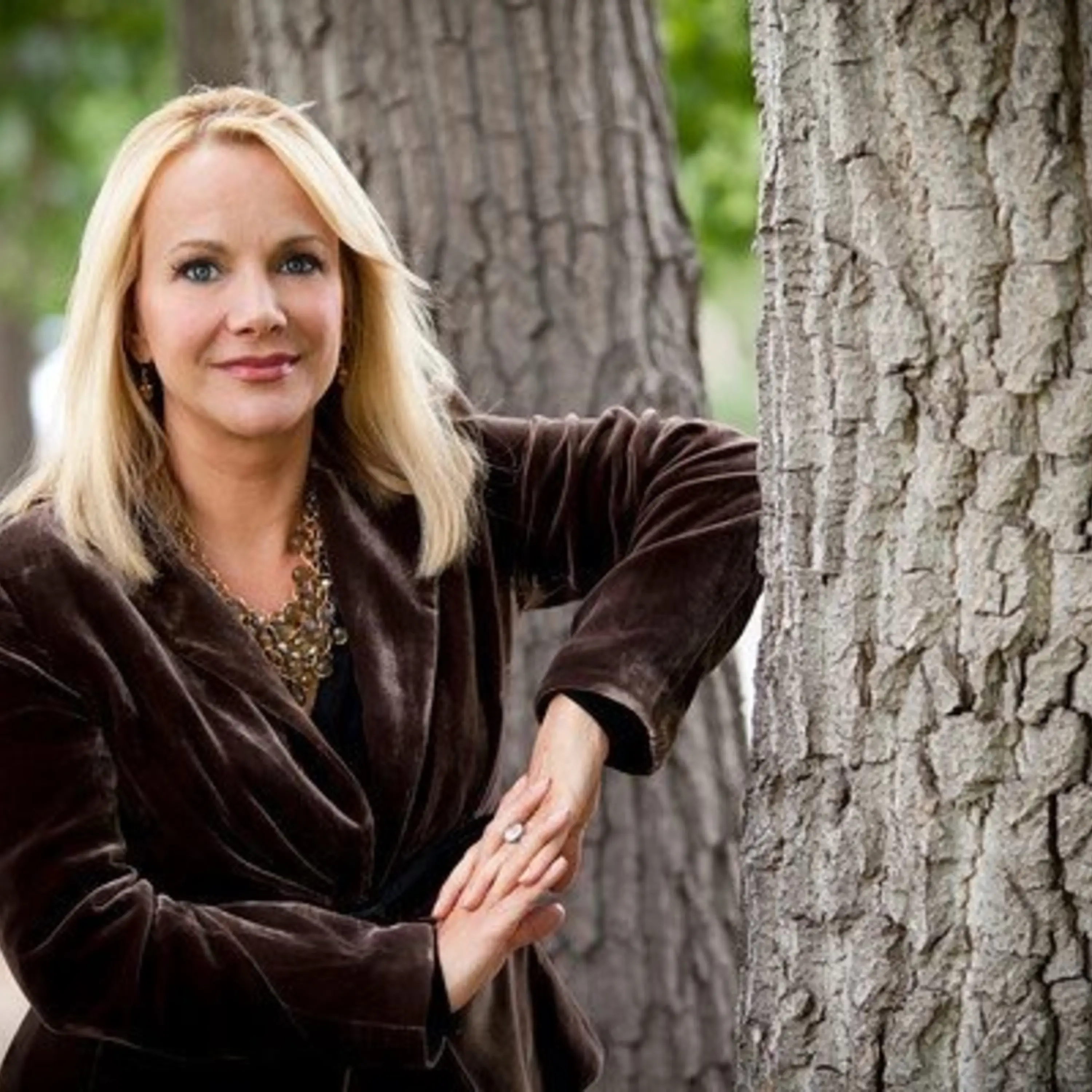

Join Angie Austin as she sits down with Jim Stovall to discuss the remarkable journey from innovations once considered impossible to the technology we embrace today. Listen to fascinating stories from Jim’s past, including his experiences with early communications technology and collaborating with visionary entrepreneurs like Mark Cuban. Learn how initiatives like the Narrative Television Network have made media accessible to millions and why dreams that seem preposterous today could be tomorrow’s reality.
SPEAKER 01 :
Welcome to The Good News with Angie Austin. Now, with The Good News, here’s Angie.
SPEAKER 06 :
Hello there, friend. Angie Austin and Jim Stovall here with the good news. The good news is Jim Stovall is joining me on another day that I just appreciate.
SPEAKER 03 :
Well, the good news is I get to be with you again. And I don’t know how many years we’ve been doing this, but it’s always fun every week. And it’s great. So I appreciate it. And today we’re talking about all the things in our life. that we take for granted that used to be absolutely impossible. And I remember it wasn’t that long ago, I got my first cell phone. Oh, yes. And it was a giant thing. The battery was the size of a paperback book. I remember I was walking down the street holding this thing, talking on the phone, and people would stop and point and say, wow, the guy’s got a car phone with no car, you know, kind of a thing. And all the things that we thought were absolutely impossible that now are just normally, you know, I… My grandfather lived in Missouri, and as a little baby, they came to Missouri from Kentucky, across the river and all of that, in a covered wagon. Wow. So he arrived in a covered wagon, and then in his lifetime, I remember sitting on the sofa with him as we watched a man walking on the moon. And I’m thinking, okay, here’s a guy that rode in a covered wagon, which was all they had, and now there’s a guy landing on the moon. And so, you know, we think about all those things, but when you have a new idea or a concept or something, you know, people will tell you, well, that’s preposterous. Well, everything that was preposterous was becomes possible, then plausible, then practical. And, you know, that’s just the normal thing. So the fact that somebody says something’s impossible really doesn’t matter. It means it’s impossible today. When I started my company, Narrative Television, and we wanted to make movies and television accessible for millions of blind people, on network TV, and the digital age wasn’t even here yet. And they said, Jim, that’s not even possible. There’s no way to do that. And now it’s available on every major network primetime show in the country, and every first-run movie has it, and it’s become normal.
SPEAKER 06 :
Now, the column this week, by the way, is titled Preposterous to Plausible. And Jim, when you talk about the Narrative Television Network, and a lot of people have not seen how this works for blind people. They’ll offer it like at the movie theater or, you know, it’s on your shows at home. Can you explain to people how it works? Like if you close your eyes, what we would see, what we would hear?
SPEAKER 03 :
Oh, they would say Angie slowly walks across the room, picks up the phone and dials. And then you and I would talk a little, and then it would just tell you what’s going on. Or they’re driving in a red car, and she looks out the window. And, you know, all the things, it just helps people hear what they can’t see. And if you’ve ever heard old-time radio, it’s very similar to that. It just fills in the blanks. And it’s available on, well, Netflix, for example, has a whole series. called Described Movies. Hundreds and hundreds of movies you can watch with it. And then all the major networks, TV networks, have it in all their primetime shows. And there’s a button on your TV or your device that’s called a second audio program or languages. And you hit that button and you’ll be able to hear that voice. It doesn’t cost anything. It’s available everywhere.
SPEAKER 06 :
And is it one voice for the whole show or movie that does the description so it’s less confusing?
SPEAKER 03 :
Yeah, generally speaking, it’s one voice. So you get very clear on who’s the narrator versus the voices of all the characters. Yeah, there’s usually one voice.
SPEAKER 06 :
Well, I know people work for you for decades, but if there’s an opening for that, I would move to Oklahoma to do that. My kids are raged, Jim. That’s like the dream job for Angie Austin. But people are like, well, what would you do next? I’m like, well, I really have one skill. It’s speaking.
SPEAKER 03 :
Well, you know, it is interesting. It is interesting how much of the business now has gone overseas or to AI. Oh, yes. But in my studio, we always joke, this is where old radio people come to retire. Because, you know, I mean, people who have done radio at a fairly high level love the fact that they’re on network TV helping millions of blind people see the program. Yes. You know, hey, it’s cool. But, you know, and there was a time when that was absolutely preposterous. People laughed at me just how ridiculous that was. And now here it is. And, you know, and I try not to let those things bother me. You know, I’ve made my living writing books I can’t read that are turned into movies I can’t watch. Impossible really doesn’t bother me because, you know, every book I’ve written of 65 books, they all start with a blank page and an idea. And that’s where it starts. So, you know, Napoleon Hill said, anything the mind can conceive and believe it can achieve. And, you know, if you can get the idea, it becomes, you know, preposterous to plausible. And then the next thing you know, it’s a reality. Mm-hmm.
SPEAKER 06 :
I love it. I love it. Now, when you’re going through, you know, preposterous applause, I love the example of your grandfather. And I remember once you telling me that, oh, the big wig that owns the he’s on Shark Tank and he owns a sports team that he called you and had some idea. And you’re like that. That sounds preposterous. Like, how do we do that?
SPEAKER 03 :
Yeah. Mark Cuban called me and we had just started narrative television. And he said, I have this new thing. It’s streamed on the internet. I mean, I had heard of the internet. I didn’t know what streaming was. And he said, it’s broadcast.com. And I said, well, good for you. I’d never heard of it. And I said, what does this have to do with me? He said, well… And someday people will get their TV and movie programming via streaming, but it’s a ways away. And he said, so I have this broadcast.com now, and the pictures are not good, but the sound is good. And he said, this could be a godsend for your audience. and i said tell me more and uh we formed a partnership at that time and a lot of our programming was available then through broadcast.com and then eventually we got to digital cable and the world changed and you know now there’s plenty of bandwidth and mark went on to sell his uh his thing and now he’s uh he’s in the basketball business among other things but uh You know, it was a great thing, and he, I will give it to him, he was visionary enough to know, okay, someday this is going to be practical. But right now, it’s going to be useful for somebody. And I just talked to a friend of mine, and he and a group had brought a huge apartment complex, and O’Hare Airport in Chicago had extended a runway, and nobody wanted to live there anymore because, I mean, it’s loud. And they went in and made it so that when you push the doorbell, the lights go on and off. And they put in these things for deaf people. And, you know, the special telephones and everything. And it’s fascinating. And, you know, they rent it now for more than a normal apartment because it’s got all these amenities that this constituency wants. And it’s just a win-win deal.
SPEAKER 06 :
You know, sometimes, Jim, when I’m… I try to not spend too much time on social media looking at those reels like the kids do, but they do lure you in because they know what you’re interested in. Just today, I was watching this guy who’s a genius. He was talking about how high his IQ is. I’ve been a teacher, professor for 20 years, and all these students I’ve taught who maybe aren’t nearly as intelligent as I am have gone on to success. He said, And success isn’t intelligence. He said, I’ve got books that I haven’t finished. I’ve got great ideas and I have a really hard time going from ideas to making something come to fruition. Like my husband can do all the follow through and make something come to fruition. And he gets completely irritated in one of the meetings at his company where people have all these ideas to change something that he’s already made come to fruition that they think they could make it better. But then no one like one guy goes, well, I’m an ideas guy. Well, everybody’s an ideas guy. We’ve got, you know, those are a dime a dozen. We need somebody that can actually make the idea come to fruition, like really do the legwork to me. That’s the hard part, making it work. So anyway, this guy was talking about how he has that missing link towards what he wants to do and what he actually gets done, even though he’s a genius. Now, I think that he was probably selling something some way. I don’t turn up the volume when my husband’s sleeping. So and I didn’t have my headphones there. So I think he was trying to explain ways that you take a quiz to see what it is in you that’s deficient or lacking or what is the process in making your dreams come true. Where’s the missing link that you can fix? And I, you know, and. You learn so much watching some of these really accomplished people talk about how you make it. And one guy was saying, another guy that I watched yesterday, it’s not how smart you are. It’s not how intelligent you are. It’s your ability to follow through, to have a plan, to keep a calendar. Like you, you talked to me about all your various lists. You have the list for the year. You have the list for the day. You have the list for the week. And I used to have an assistant that even if it was done, she’s like, no, I am writing it on the list because we did it today and I want to cross it off.
SPEAKER 03 :
Absolutely. And unfortunately, we live in a world when it’s all said and done. There’s an awful lot said and very little done. And everything’s impossible, but then once you do it, then everybody thinks, oh, they can do it. I was reading a book about, it was written in the year 1953, and they were listing all the things that were impossible. One was to climb Mount Everest. There’s not enough air. There’s no way you could ever do it. It’s impossible to climb Mount Everest. And the other one that they listed was run a mile under four minutes. The human heart would explode if you did that. And then they list several other things. Within a year, Roger Bannister ran a mile in three minutes and 58 seconds. And Sir Edmund Hillary climbed Mount Everest within a year of that time. But what’s amazing about it is right after Roger Bannister ran the four-minute mile, over the next two years, dozens of people did it. And even kids in high school at high school track meets were doing it. And after Sir Edmund Hillary climbed this mountain, they said it was impossible, over the next several years… Dozens of people and then hundreds of people have climbed Mount Everest. And now it’s commonplace. I mean, you know, it’s just, you know, but somebody makes it possible. And once they do that. then it becomes possible in everyone else’s mind. That’s why when I meet blind people or other people dealing with challenges, whatever it may be in their life, support groups are really important. Because you’re sitting here with a group of people, they’ve been through this. You’re sitting here today thinking, there’s no way I can deal with this. And then you sit there and say, well, if he can, I can. You know, and I deal with a lot of kids at the Stovall Center at the university, and they’re always, you know, Mr. Stovall, I do not know how I’m ever going to get through humanities. This course is killing me. Because this is a thing you have to take when you’re a sophomore. And I said, in your dorm, you know, you have some junior and senior friends there, yeah? Don’t you? And they go, oh, yeah, yeah, yeah. Any of them don’t seem like the brightest people you ever met? Yeah, a couple of them. Well, somehow, if they’re a junior or senior, they got through this course you’re taking right now. And I want you to keep in mind that somehow that guy that doesn’t seem that bright to you got through this course, and you’re going to get through this course. And once they realize, wow, everybody got through this course, you’re going to get through this course. But the people, the visionaries, are the people that were the first to do it. I always look at what happened today in history. Today in history, in 1880, Thomas Edison made an incandescent light bulb. I mean, he took electricity and turned it into light. And, you know, people had thought that is completely impossible. And now, you know, that’s how we live our lives. And we have them in our home. And it was impossible until somebody did it. And then it’s just it’s the routine. It’s how we all live.
SPEAKER 06 :
I think it’s a way to weed out people, too. Like there’s this course that is heavy math oriented that my son had to take. There were a couple. One was like spread Excel spreadsheets and then another stats or something. And actually stats, he was fine. But there was one math type class that you could not get below a B class. And so he barely had a B minus like it was one point. And he has a very good GPA. I think he has like a three, eight or three, nine. And so that meant he couldn’t get into business school. Well, he retook it right away. And they said, if you get a B in that class. then you’ll get into business school. And he did. So now he’s in the business school. And it’s a really competitive business school to get into it. Right. Lee’s Business School at University of Colorado to get in right out of high school. The kids are between like a three, eight and a four, one. You know, a lot of the kids are straight A students that have never even gotten B’s to get in there. So he didn’t, you know, during COVID, he really struggled. And He was kind of bullied at school and just didn’t have a good couple of years. So for him to have then moved on where he’s matching now the kids who were graduating with honors from his high school and to be in class with them. And he said, Mom, I make sure all my study groups, I’m with the smartest kids. He goes, all my study groups, I only study with the smart kids.
SPEAKER 05 :
And I’m like –
SPEAKER 06 :
That’s the way to go, man. That’s what I always did, too. I was a straight A student, but I also wanted to study with other straight A students. I didn’t want to, you know, have somebody riding my coattails and always borrowing my notes. So, oh, Jim, we’re out of time. Always a blessing to have you on the good news. Jim Stovall dot com. Thank you, friend. Be well.
SPEAKER 02 :
Arc Thrift loves your gently used clothing, furniture, and household items. But did you know they also accept non-perishable food donations year-round? Arc Thrift partners with Volunteers of America to help supply more than 70 food pantries across Colorado, from Pueblo to Northern Colorado and all the way to Grand Junction. So when you head to the store, be intentional. Grab a few high-protein items like peanut butter, canned beans, tuna, chicken, soups, or pasta, and bring them with you when you donate or shop. Instead of cleaning out your closet, clean out your pantry. Plus, Arc Thrift always has great deals, like their 99-cent sweater sale on Friday, February 6th from 9 a.m. to 9 p.m. When shopping at or donating to Arc Thrift, you’ll be helping families in need, supporting people with intellectual and developmental disabilities, and keeping good items out of landfills. Find locations, donation centers, and details at arcthrift.com. Arc Thrift, giving items a second life and giving people real hope.
SPEAKER 05 :
Elizabeth is dialed in to the mighty 670.
SPEAKER 06 :
Well, if you are just joining us, this is Angie Austin with the good news. And today we are talking about responsible use of artificial intelligence. And joining us is Brianne Shaw, director at Glue. Welcome.
SPEAKER 04 :
Hey, thank you so much for having me, Andy. Andy, it’s great to be here.
SPEAKER 06 :
I feel like you’re part of my circle already. My daughter was offered a scholarship at Tabor, and we loved that school. She plays volleyball, and she ended up going to a small school in Tennessee, Freed Hardeman, and a small Christian school. And so when I saw Tabor, I was like, oh, I love that little school in Kansas. And I understand that you went to also school not far from me. I’m in Centennial, and it looked like you went to school in Ken Carroll as well.
SPEAKER 04 :
I did. Yeah, I’m from Denver. And yes, you are correct. I went to Tabor. Small, small world, small, small school. So yeah, great fun conditions. And Glue is actually in Boulder. So we have lots of crossover there. Oh, my goodness.
SPEAKER 06 :
My son goes to school there. I was just there yesterday. Yeah, I’d love to see you, Boulder. He’s fourth generation. So yeah, you’re part of my tribe. Let’s talk about what you do and tell us a little bit about Glue and your work. And then let’s get into the responsible use of AI.
SPEAKER 04 :
Yeah, I work for Glue, as you said, director here. And Glue is a leading technology platform for the faith ecosystem. So we like to say that we serve those who serve. So we bring technology to people really on the front lines, be it churches, ministries, nonprofits. organizations that are bringing what we call human flourishing, human well-being to this world.
SPEAKER 06 :
Let’s talk a little bit about responsible concerns about using AI, because I know that there are concerns that it could, you know, kind of outpace us or out-advance us. So let’s start there.
SPEAKER 04 :
AI is most definitely one of the most powerful and transformative technologies that we have seen maybe to date. And like all technologies, there’s a huge upside and there’s a huge downside, right? So, you know, if we go all the way back to the Roman road, the Gutenberg printing press as early technologies, there were great upsides and there were downsides. If we go to the more recent social media revolution, there was upsides of networking connection and there were downsides. And the same is true with AI. You know, as we see this powerful technology become more and more a part of our daily life, there is an upside. And the upside is increased productivity and access to information and several other things. And then there’s the downside, which is misinformation. Really? Access to harmful things that we’ve said, sad things that we’ve seen in our world and increasing, you know, AI pornography and these things that are harmful to our society. And so we’ve been on a mission to shape technology for good. And we really do believe that that is a mandate that we hold and a part of everything we do. now in terms of the surveys done and how the church feels about using ai can you tell us about that yeah we recently uh got some in partnership with barna there was a survey done and uh you know we see that nearly half of us adults are worried that ai is really going to either threaten their jobs or increase isolation we’ve already seen some of this obviously in our culture with the job market we We also see in churches specifically that about a third of church goers want their pastors speaking about AI. They want them talking about how to use it, how to be trained on it. Some of them are really curious about how AI has already been used in their churches. And then most of them, or maybe half to a little more than half, I think it’s not really the best idea to use AI when you’re looking up, you know, whether it’s scripture or resources or those kinds of things. So those are some of the high-level learnings we’ve had.
SPEAKER 06 :
Now, in the surveys, were there any surprising results for you?
SPEAKER 04 :
What surprised us in a good way really was the, not optimism, but the openness to AI. That there was a willingness to engage, to use, to, you know, the adoption of AI was surprising.
SPEAKER 06 :
Now, in terms of specific examples of how AI engines are biased or not values aligned, I never even thought about that. Can you talk to us about that?
SPEAKER 04 :
Yeah, so Glue has developed what’s called the Flourishing AI Benchmark, And we have taken the seven dimensions of human flourishing. So things like meaning and finances and relationships and faith. And we have asked every large language model a series of questions. And then we have scored those large language models in kind of an ABCDS format. And nearly all of the AI large language models do not pass. They get a C or a D. In areas of meaning and faith, they get a D or an F. And so what we have done is we have wrapped ethics, security, benchmarks, and values around these large language models. And we’ve actually seen these scores increase with Glue AI. We’ve seen them move closer to an A and a B. And so it really, there’s a kind of duality of being aware of what’s behind the AI tools you’re using, but then also being a part of the conversation to bring this
SPEAKER 06 :
What advice would you give people of faith who want to use AI?
SPEAKER 04 :
First and foremost, practice discernment. So, you know, with all things, this is a technology. It is net neutral, as it were, but it has social ramifications. And so practice discernment. Is this true? Where are these sources coming from? You know, AI only speaks on what it’s been trained on. So what is it trained on? And then teach discernment to your people, whether it’s in churches, to your families, whether it’s in your home. Are you training your kids? This is a tool. It’s a tool to be used with wisdom. And how do we vet the information that’s coming out of it? And then second is, as I’ve said already, is become aware. Become a part of the conversation. You should know what’s going on in the AI world. You should know what’s going on when it comes to ethics and security and standards. standards, be a part of that conversation. And you can find out and be a part of that all on our website.
SPEAKER 06 :
Well, let’s talk more about Glue and the mission of Glue. I’ve been on your website. So tell us how we can benefit from the work you’re doing and, you know, what your goals are.
SPEAKER 04 :
Our goal is, I mean, as I stated in the front end, our goal is to shape technology as a force for good. We truly believe that there is a lot of hope that AI can bring So much good to the world. Like, we’ve seen language translation accelerate at such a high level because of AI. We have seen access to impoverished nations of information. There has been so much good already that has happened. And so we would just encourage, like, there is hope in it. But as there is hope in it, you know, we really seek to bring solutions forward. that are safe, they’re ethical, they’re values aligned. And so whether you’re using a daily AI experience or you’re building with AI, we would encourage you to use values aligned AI as much as possible.
SPEAKER 06 :
Now, if you go, it is glue, by the way, G-L-O-O.com. And when you go to the website, there are things like Glue Workspace and Glue 360. So explain how we would use Glue Workspace. Okay.
SPEAKER 04 :
Yeah, so Glue Workspace is our solution for our churches and frontline ministry organizations. So within Glue Workspace, you’ll find things like Content Studio, which is an AI content generator that helps you generate social media clips. And we have Blue Communications, which is a texting and email software. We have things that coming soon, we are going to be releasing in March a new product in Glue Workspace. And so excited to show that off here soon. But there are various solutions. Glue offers things from marketing services to IT to consulting all the way into the AI space. So there’s very…
SPEAKER 06 :
you can do the AI clips and know that you’re doing, you know, something that is faith-based and that, you know, won’t have anything in it that’s questionable in terms of, you know, your values. How about Glue360? What is that all about?
SPEAKER 04 :
Glue360 is our IT services department. So we serve enterprise-level organizations with managed IT services. So, you know, organizations such as a Wycliffe or a Crew or several other organizations would be examples of types of organizations that we would come in and help modernize with the power of AI, their infrastructure to allow them more time to use their mission. So, you know, none of these people started the work they were doing because they wanted to become technologists. They started it because they believed in a mission. And so our job is to give them time back to invest in that mission, to invest in people, and to really take care of the behind the scenes stuff that ends up taking so much time.
SPEAKER 06 :
You know, my kids being, you know, in school, all of them, you know, there’s a lot of concern about jobs being taken over by AI and things like that. I’m sure that there’s still going to be oversight, you know, with like, let’s say it’s an airplane, like you’d still probably want your main pilot, you know, in the cockpit. And then like lawyers, my daughter wanted to be a lawyer and my husband’s like, you know, a lot of that’s going to be taken over by AI. And what’s interesting is recently he received some information back. He has a company now. And there was a lawsuit and he received from their attorneys a bunch of info and he read through it. He’s like, oh, my gosh, did no one proofread this? This has nothing to do with our lawsuit. It’s like all this information that like it completely seemed like they used. And he’s like, it’s not even like accurate. I mean, like it was so wrong. It was unbelievable. So he calls up the attorney and said, like, what’s going on? This isn’t even like what our lawsuit is about. This is this is all inaccurate. And he said, oh, you know, I had one of the younger guys take a shot at it. It’s like, oh, come on. I mean, even a younger attorney couldn’t get all the facts incorrect. You can see that there’s still a long way to go for AI to take over jobs, but I know that kids are already starting to look at what they would do in order to avoid AI taking over their career choices. What have you found in that arena? What are you seeing there?
SPEAKER 04 :
Yeah, AI, you know, just like all technology, AI, it does pose some threats to some jobs. What I encourage young people in all the time is to say, you know, AI is not going to take your job, but someone who knows AI will take your job. Ah. So if you are not fluent or proficient in AI, someone else will be, and they will end up taking your job. And so I would say the more up-to-date you can be on technology, the more fluent you can be in these tools, the more aware, I would say the more hireable you are. Because you now are a more productive generalist. I think we’ll start to see a lot of jobs become generalists rather than specialists. and you can become a, you know, a real force in the workforce, especially as a young person coming straight out of college.
SPEAKER 06 :
You know, one of the cool things I get to do, you know, being in news now for like three decades, is ask people, you know, how they got a passion for what they do. So talk about, you know, this whole faith-based AI. I mean, you wouldn’t even have thought of this career five years ago, you know? And so talk about how you got a passion for entering, you know, this faith-based area and then starting to focus on AI.
SPEAKER 04 :
I’ve always, you know, from a young age, knew that I wanted to serve churches and ministries. I have a real passion for life transformation and being on the front lines of that. And so for a long time, I did that as a localized pastor. I’m still bivocational. And then, you know, as I started to, I built a marketing company. And as I started to work for Glue, you know, there’s an intersection where, you know, The stuff that happens behind the scenes, the powerful technology really does affect life day to day. And so, you know, it began to be one step after the other of learning about AI and understanding kind of where things were falling, how pastors and church leaders were interacting with it, how kids and consumers were interacting with it. And I began to really develop this passion around AI. a need to not only inform, to bring information, but also to bring this idea of hope. You know, we hear a lot of doomsday. We hear a lot of negative context when it comes to AI. And at Google, we really don’t see it that way. We really see it as a hope-filled space where we have a mandate, and that mandate is to shape that technology. So it’s a little piece of it for sure.
SPEAKER 06 :
Yeah, it’s a really cool purpose. And again, it’s G-L-O-O, glue, G-L-O-O.com. Thank you so much. Really great information, Breanne.
SPEAKER 04 :
Thanks for having me. Great to be with you.
SPEAKER 01 :
You bet. Thank you for listening to The Good News with Angie Austin on AM670 KLTT.