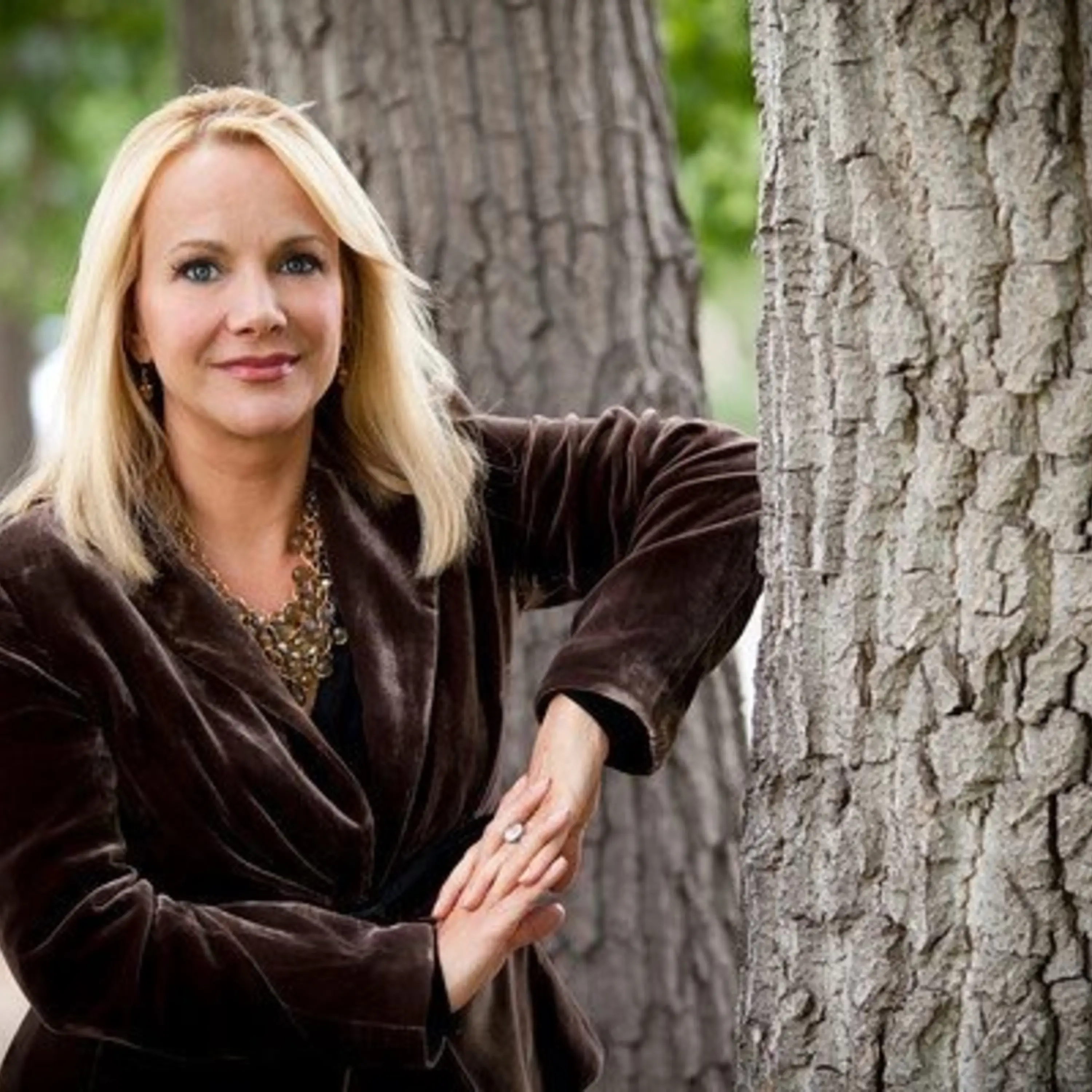

Join Angie Austin and Grace Fox as they delve into the theme of ‘Finding Hope in Crisis’ through Grace’s devotional book. From their candid discussion, discover how Grace navigates life’s chaos and offers devotions that encourage spiritual grounding in turbulent times. Highlighting personal stories from missions to everyday life, this episode is a refreshing take on clarity and calm in a frantic world.
SPEAKER 01 :
Welcome to The Good News with Angie Austin. Now, with The Good News, here’s Angie.
SPEAKER 06 :
Hello there, friends. Angie Austin and Grace Fox here with the good news. Today we are talking about her devotional titled Finding Hope in Crisis. That is the book Devotions for Calm and Chaos. And we’re focusing on the specific devotion, Prevent Stumbling. But first, we’ll talk about stumbling through the last month. Grace Fox, you’ve been through quite an adventure.
SPEAKER 07 :
No kidding. We’ve done two weekends of missions conferences. One of them was local, but the other one we had to fly to several provinces away. And then we took four days off for our anniversary. That was good. That was planned. It’s an annual thing, so we knew that was coming. But we returned, actually, on our anniversary, because that was the day that our reservation ended at this place where we were, and just started moving. So we moved… And anybody knows what that takes out of you. It’s just a lot of work.
SPEAKER 03 :
So much.
SPEAKER 07 :
Oh, and then in the middle of that, I had a commitment that I’d made last fall to go speak in Jackson, Tennessee. So I had to stop unpacking, board a plane, and fly to Nashville, rent a car, drive to Jackson, there and back in a day to speak. 220 women showed up at that event, and it was just so much fun to be there. But then, you know, I spent my whole day flying back on Friday and continued unpacking. So… Here I am, but I’m still standing. And that’s just the way life goes sometimes.
SPEAKER 06 :
And what a small world. My daughter goes to school not far from Jackson and her boyfriend plays baseball in Jackson. He’s a college student there. And so she goes there, you know, a lot because she’s just maybe 20 minutes away. But if you would have been there longer, I definitely would have tried to get you together with her for lunch. But she goes to a little Christian school in Henderson right outside of Jackson. It’s a uh, small, uh, Christian school, freed hard to bend for a lot of pastors train there. But, um, yeah, that’s so, that’s so cool. And for people that don’t know, you’ve been living on a sailboat and Vancouver, British Columbia for quite some time. And so you had to move back into a condo that you’ve been renting for a long time. You had to remodel it, move out of the boat and move into the condo. And, you know, a lot of my friends are talking about doing this now that are, you know, in their fifties and sixties and saying like there, They need to do it before they don’t have the energy to do it because it takes so much energy. One of my girlfriends is moving from Tucson to South Carolina, and that’s a huge move. She’s like, I’m 67. Do I want to do this in my 70s, or do I want to do this now? There comes a point where you’re too tired to do it.
SPEAKER 07 :
That’s exactly right. And that’s why when we felt the Lord nudge us to get onto the sailboat, it wasn’t just a, hey, let’s go live the dream. It wasn’t that. It was a calling and it turned into ministry in the marina. But the thing that we discussed at the outset of that was, hey, if we don’t do it now, we’re not going to have the energy or the strength that it takes to do this. So let’s do it now while we’re healthy and strong. So, yeah, that was eight years ago. And yeah, eight years on the boat. So yeah, making major changes. You do want to do it when you’re healthy and able to do it. Don’t wait too long. I just hate it when I hear people say, someday I’m going to do such and such. But they leave it at someday and then something happens. They end up sick or their spouse dies or something happens and they never get to do that thing that they wish they could do.
SPEAKER 06 :
I’ll bet you the marina people are so sad to see you move out of the sailboat because you have had quite a ministry there, and you’ve really created a community there and gatherings and ministered to people. So I’ll bet you they’re sad to see you move.
SPEAKER 07 :
Well, we are going to keep the boat for a couple of years at least and just leave it right where it is in the exact same slip. So neighbors do come and go. At times there’s a lot of moving in and out of there. But the guy that’s our closest neighbor has been there for 30 years. Wow. Yeah, I know. Just a real sweet relationship with him. So he’ll keep an eye out on our boat. And we plan to go back every three weeks or something just to see how things are going. We’ll see them again.
SPEAKER 06 :
How far do you live from your boat now?
SPEAKER 07 :
An hour. Well, not too bad.
SPEAKER 06 :
Not too bad. So you’ll keep that door open for a little bit longer and be able to share your boat with your kids and grandkids for a few more years.
SPEAKER 07 :
Absolutely. We actually have plans for the summer to do that. But I left a coffee pot on the boat. I left some baking pans and that type of thing. Cause I’m thinking, you know, we used to be able to call people in once a quarter or something and say, Hey, let’s do come and go coffee. And I would bake scones or muffins and put the coffee on and people would come. We’d have five or six people at a time sitting around our table in the galley and talking about life. And so we want to continue doing that. So I’ve, I’ve got that in my head. You know, I, what the things that I packed, um, I know that I need here, but things that I left, I know that I will need there so that we can show up on a weekend and, you know, show up on a Friday or something. Exactly. We want to keep doing that. Just because we live here doesn’t mean we can’t do that. And I think it’ll make it more special to keep.
SPEAKER 06 :
I know. I love it. I love like the idea of like once a month, come and go coffee or quarterly for like, you know, holiday things and, you know, different get togethers. I think that will be a cool way to keep your ministry kind of going in the marina.
SPEAKER 07 :
I’m looking forward to it.
SPEAKER 06 :
All right. Let’s talk about prevent stumbling. What is this devotion all about?
SPEAKER 07 :
Okay. So back to the Marina story. Gene and I had flown in from overseas. And some friends had picked us up. So they were helping us bring our suitcases down the dock to our boat. That night was rainy. It was dark. The dock was slippery. And I fell. I was wearing little boots, you know, with like a one-inch heel, little Jesse boots. And my ankle just slipped. It was a wonder I didn’t just snap it on the spot because of how it just went right underneath me. And I went down face first, just did this face plant right on the wooden dock. And for one, I was, it kind of terrified me for a second because the dock at that point, it was an older dock and it wasn’t that wide. And boy, if you ever fell in the river, you would be hard pressed to get out of the river and, and, you know, people drown easily. And you go in that river and boy, it’s just not a good thing. So there was that, but also just the fact of doing a face plant. And thankfully I didn’t, I didn’t get injured. That was the amazing thing. And I was able to get up, collect myself, and continue on down the dock. But I just wrote that, just thinking about life. Sometimes in the middle of those storms of life that come, oh, my word, it just feels like the whole earth is on fire right now and storms everywhere. But, you know, people’s lives being affected in so many ways. And I think how we can… stumble easily we can stumble into fear we can stumble into uh you know uncertainty we stumble into all those types of things or those things can cause us to stumble but um but we can maintain our stability when we stay in the truth of the word of god and stay banked on his promises to be faithful and to be with us those are the things that’ll keep us uh stable and steadfast when we’re on slippery turf if you want to put it that way
SPEAKER 06 :
Yes, yes, yes. I think that many of your devotions have to do with remaining stable on slippery turf. And I know that God kind of puts a lot of these ideas in your head. It’s kind of cool how you can link these stories back to Scripture and make them relate to people’s lives. That’s really neat. Do you feel like lead when you write these? Do you get little ideas that you keep in a notebook and you keep putting little peas, little kernels of ideas down before you write a book?
SPEAKER 07 :
Absolutely. I’ve got my little ID file on my computer. And so when things like this happen, I just write down in a sentence what it was that happened and then a little note of how that could connect on a spiritual plane. And it is amazing when we go through life how many of those things we can tie back to life.
SPEAKER 06 :
I love your ponder section, too. What’s one action you can take to protect your heart from stumbling into fear? What do you do?
SPEAKER 07 :
Well, I think when I stumble into fear, I have to… pay attention to where I’m going with my thoughts. Because if I’m afraid, if I’m in a situation that is really fearful for me, my thoughts automatically head down the wrong path. And it’s a, what if, Oh no, Oh no, then this is going to happen. And before I know it, I’ve got a whole situation contrived in my head. That’s not even happening. I’m just thinking it’s going to happen. And that just breeds more fear because, So the moment I realize where my thoughts are going, I have to reel them in and just say, God, you know, let me bring my thoughts into captivity, unto the obedience of Christ. And then I start recalling promises of God that will sustain me during that fear.
SPEAKER 06 :
Yeah, and I think that you have the benefit of, you know, your quiet time and your routine, that you’re very ensconced in a routine that keeps you in Scripture. And I kind of feel like I have this… I don’t know, like built in perk of my job that I kind of get like, you know, half an hour or to an hour of church every day because of all the interviews I do with Christian authors, Christian speakers, you know, experts in, you know, psychology and, you know, pastors. And it’s kind of cool because my my time, like in the word is different than yours. I’m kind of like more spoon fed it where it’s like you’re feeding yourself. You’re like on your own. Like I have somebody that’s like giving me all the info.
SPEAKER 07 :
Yeah. Yeah. It’s nice to be able to have that being, getting into it on our own is something we can never fully replace, but no, I agree. Like go to church yesterday. We were able to, you know, be in church. We’ve been gone so many weekends this year already for ministry, but to be able to plug into our church and be in that body of Christians and wow, just soak in the worship with the singing. And then we did communion and it was,
SPEAKER 06 :
Now, when you did your talk in Jackson, Tennessee, and you were just in and out of there so fast, I know that’s like a good two-and-a-half-hour drive or so from Nashville. Memphis, I think, is a little closer, but it’s harder to fly in and out of Memphis. They don’t have as many flights, so I always fly into Nashville like you do too. What was your topic? What are the 200-plus women come to hear you talk about?
SPEAKER 07 :
evangelism. Their church’s theme this year is evangelism and sharing Jesus with people. And so they asked me if I would come and speak on that. And how how do I do that? How do I share Jesus with people just in my everyday world? And so it was fun. It was 30 minutes. Boom. You know, 30 minute talk on that. And then a table talk. And, yeah, it was marvelous. I have spoken like this at events for over 20 years, and this is the first time in over 20 years that I have been invited to come and speak specifically on evangelism and have over 200 women show up. Really? Yeah.
SPEAKER 06 :
You know, it’s part of why I wanted my daughter to go to school down there because, you know, like on – certain volleyball team she’s been on or whatever with, you know, 10 or more girls that maybe she’d be the only Christian. And it was such a unique circumstance to put her in where she would be, you know, where everybody on the team is a Christian. And it’s so common down there in the Bible Belt for so many people to be Christians. I can see that you’d get that kind of, you know, following. By the way, what’s the name of the church? Because my daughter actually goes to church in Jackson.
SPEAKER 07 :
Jackson Fellowship Church, I believe it was.
SPEAKER 06 :
Okay, okay. Yeah, that’s pretty impressive to have 200-plus women show up and the fact that you’ve been speaking for that many years and it’s the first time that you’ve spoken on this topic. And then when you had the breakout sessions, did you have a good response? Was there a common theme of questions?
SPEAKER 07 :
Right, yeah, they put the questions on the table ahead of time. And really the question that they focused on as I presented at the end was, what’s in your hand? What is in your hand? Because God has gifted you in a unique way. He’s placed you where you are in it for this unique time. So what is like Moses had the staff in his hand and that represented the power of God. I have a niece who owns a beauty salon. She has a pair of scissors and a comb, you know, her hand, and she can use that to minister to people and develop relationships with unbelievers who come in. I happen to have my laptop, so I communicate truth and, you know, engage people through my writing, but I also have a coffee pot and a muffin pan. And so, you know, what do you have that you can use to engage people in life, in life conversations? And so they sat in tables and talked about about what’s in their hands and what could they do to develop relationships with those who don’t know Jesus yet.
SPEAKER 06 :
Yeah, I love that people share so readily and that it’s so common to be Christian and that people are so outspoken about their faith and comforting to each other and come together as a community. I’ve really liked seeing that for my daughter. It’s a wonderful area of the country. All right. If you want to find Grace, GraceFox.com. And again, the book is Finding Hope in Crisis, Devotions for Calm in Chaos. Thank you, friends.
SPEAKER 07 :
You bet. Take care.
SPEAKER 02 :
Arc Thrift loves your gently used clothing, furniture, and household items. But did you know they also accept non-perishable food donations year-round? Arc Thrift partners with Volunteers of America to help supply more than 70 food pantries across Colorado, from Pueblo to Northern Colorado and all the way to Grand Junction. So when you head to the store, be intentional. Grab a few high-protein items like peanut butter, canned beans, tuna, chicken, soups, or pasta, and bring them with you when you donate or shop. Instead of cleaning out your closet, clean out your pantry. When shopping at or donating to Arc Thrift, you’ll be helping families in need, supporting people with intellectual and developmental disabilities, and keeping good items out of landfills. Find locations, donation centers, and details at arcthrift.com. Arc Thrift. Giving items a second life and giving people real hope.
SPEAKER 06 :
Hello there, friend. Angie Austin and Ed Novak here. Ed is my dear friend, restaurateur, a friend of many years. I actually had my wedding at his restaurant, The Broker, 20 some odd years ago. And he tells such great stories. I decided that I wanted to have Ed join me to share Ed’s life lessons. And today we’re going to talk about your grandmother and her Bible time, her quiet time and her devotion to, you know, her Christian faith. Absolutely. Excellent. Well, I am thrilled to have you, Ed. So where should we start? Tell me a little about her.
SPEAKER 04 :
Okay. My grandmother, I loved her first name. Her first name is Cecil. I’ve never met another Cecil. No, me neither. Her name is Cecil Pounds, and she’s my mom’s mother. And she lived in Rosalie, California. As you know, I told you Rosalie has, at that time, it had 119 people live there. And a little town in our farm where we lived was right next door, literally bordered the town of Rosalie. What I wanted to talk about, as far as my grandmother goes, is that when mom and dad would go on different things that they needed to take care of or do, they would leave us at all the kids would go to grandma’s house in Rosalie. And it was just a highlight of my youth, I think, because… My grandmother had the best Bible, the most amazing Bible. It was a padded white cover, and it had the word Holy Bible on it. It was about 16 inches high and about 10 inches wide and about 4 inches deep. It was a huge book. And it had larger print. It had… unbelievable number of beautiful four-color pictures in there. And so every time Mom would drop us off at Grandma’s house, she would say, okay, you kids, come here on the sofa. I want to read the Bible to you. And so what she would do is she would show us the pictures. Sometimes she would, you know, she talked about David and Joseph and Paul and obviously a huge amount of time about Jesus. And what she would do is sometimes she would explain to us the story. You know, she would tell it in her own words and then show us the pictures. Otherwise, other times she would read the Bible to us and say, I want to read this part of the Bible to you. And it became… I think it was all of our kids’ inspiration, you know, to accepting Jesus Christ. You know, I really think that she was one of the most inspiring moments for us and got us on the right path, if you will. And so it was just, it was really, really phenomenal. I can’t, I can’t tell you enough about her impact on our lives. And I loved her.
SPEAKER 06 :
You know, isn’t it amazing how one person can have such an impact on someone and how grandparents with influence that they can have on their grandkids. And I think about, I’ve always thought, cause you know, Ed, I had a very rough upbringing and I lived in foster care at times and live with relatives, some not so nice people. And and then on my own from about 16 on and then back in with my mom and low income housing. And, you know, at one point, my brother who’d been in the Marines, he kicked me in the face with combat boots on. And I could not believe that later on down the line, like the police said he couldn’t live there anymore. you know that it was and my mom’s like well we don’t want to press charges and the boulder police department said well we don’t allow you know 21 year old men to kick 16 year olds in the face with combat boots so we don’t allow you not to to press charges well then later on because my mom had been an abused wife later on she let my brother move back in and i’m like i was in college then and forced then i moved out again because i’m not going to live with this person right So so I just couldn’t believe that no one was like keeping me safe. And I always have thought as a grown up, like all these kids that come from these backgrounds need if they have one solid grandma like you had, if they had one really good roommate. role model, one person that they can aspire to be like. And I had a brother, Ted, and you’ve met him a couple of times. He’s come to some of your Halloween parties and such with your lovely wife, Gail, because she and I were such good friends. And my brother went to West Point Military Academy, and he’s like a certifiable genius. So he never used drugs. He never used alcohol. He was not a Right. If they can just find one person, that’s why I love these boys and girls clubs or mentor programs. If you can help a kid that you know is in need find a person, a person can really change their world. Absolutely. You’re all over it, Angie. So let’s talk about some of the other things that you think you learned from your grandma, some of the life lessons.
SPEAKER 04 :
Well, here’s the thing. You know, my grandma and grandpa, you know, like I said, lived in Rosalie in this very nice home, I thought, very nice home. But the only running water they had was at the kitchen sink. They had one faucet.
SPEAKER 05 :
Oh, wow.
SPEAKER 04 :
And they had no bathroom in the house. And so what you would do is you’d go out. If you wanted to go to the bathroom, you’d go out the back door. There was a very, like an 18-inch wide sidewalk there. to the alley, and on the edge of the alley was the outhouse, you know, the potty, okay?
SPEAKER 05 :
Yes.
SPEAKER 04 :
And it was a building that was about, I want to say, four foot wide and six foot long, you know, and then they had a door, so you would go in there and sit down to go to the bathroom, okay? Okay. And about, this is in the, we’re talking about in the late 50s, but I want to say about even the 119 people that lived in Rosalie, about a third of them had outhouses. Only two-thirds of them had indoor bathrooms, you know?
SPEAKER 05 :
Uh-huh.
SPEAKER 04 :
And so, you know, one of the big holidays, one of the biggest holidays I remember was huge, was Halloween, right? Every Halloween, all the kids in town and from the farms, they would have a big bag and they would go to every door in Rosalie and they would get candy or they would get apples and, you know, all kinds of things that they, you know, that the people would give. But it was a big, big deal. And every kid did trick-or-treating on Halloween, you know, in Rosalie.
SPEAKER 05 :
I love it. How fun. Great memories. Yeah.
SPEAKER 04 :
And then in this, and some older boys, okay, some older boys about, I want to say that I heard that it was around 2 and 3 o’clock in the morning. What they did is they had a pickup truck, and they went to these outhouses. They tipped the outhouse onto the back, into the pickup truck, Oh, my goodness. And then what they did is they went, then they drove down. We had a railroad track that went through Rosalie. And they went down to the railroad station, and they opened up a boxcar, and they put four of those outdoor toilets in that boxcar. And then two days later… The station manager got a call. I don’t know how they figured it out. But all four of those outhouses ended up in Omaha, Nebraska.
SPEAKER 05 :
Oh, my goodness.
SPEAKER 04 :
And so there were four houses in town that didn’t have an indoor bathroom and they didn’t have an outdoor bathroom.
SPEAKER 06 :
Oh, my goodness. Did they get in a lot of trouble? Did they figure it all out?
SPEAKER 04 :
Well, you know, ultimately they got, you know, some way they got the outhouses back to Rosalie, you know. It had to be just an absolute disaster, you know, all the way around. I mean, the timing and… Anyway, it was really, really, it was really something to talk about. I remember during that period, you know, during the, I don’t know, I would have probably been in eighth grade or something like that, you know, but it was a big conversation around town about these four people that didn’t have a bathroom anymore.
SPEAKER 05 :
Oh, my goodness.
SPEAKER 06 :
That cracks me up. That is so crazy. You know, I who who do you think you got your you know, you’re such a good story teller and you have such charisma. I remember your daughter, Julie, telling me that you were visiting her in New York City and she had to meet some clients and you met up. And then she brought you to dinner with the clients and you charmed all the clients. They all loved you and you guys stayed out, went other places and it became a big party. And, you know, she’s like, boy, what?
SPEAKER 04 :
I took them out on the town and we were out till three in the morning. I believe you. I know you. I don’t know. And we went to all of these wonderful places that I knew in New York that I like so much. And, you know, mostly piano bar type of places. And then we and I remember the last one we were at, they were the guy he was supposed to be off at two o’clock. And I said, you know, I’m going to give you some extra money if you can stay another hour. And I said, how much would be comfortable with? So I gave him the cash and then he played another hour. There were about six or seven of us, you know, at the piano bar.
SPEAKER 05 :
Oh, my gosh.
SPEAKER 06 :
That is hilarious. We had a ball. We had a ball. I wish I could go to New York with you. I’ve never been in the city. You’d be the greatest tour guide. You would.
SPEAKER 05 :
I love New York.
SPEAKER 06 :
You’d be the greatest tour guide. Yeah, Mark likes it, too. I want to take the kids one of these days. All right, so, yeah, all the places we’ve been.
SPEAKER 04 :
And, you know, the theater is such a, I mean, what a treat to go to the Broadway shows, you know? I know. You and your wife always loved the theater. And great, great restaurant. Great restaurant. Boy, oh, boy. Well, and that’s your thing. I mean, that’s your thing. Oh, I tell you, we found them. We found them.
SPEAKER 06 :
I love it. All right. So where do you think you got your story taping? Like who else in your family? Like who do you take after your dad, a grandfather, a grandmother? Who else could really tell stories like you and, you know, and entertain people?
SPEAKER 04 :
All of my brothers and sister can. They’re all storytellers. Let me tell you that.
SPEAKER 06 :
Oh, I have met some of your brothers. I could see that.
SPEAKER 04 :
You know, because I’m the oldest. And then then I had three brothers and one sister and my sister Cheryl was the youngest sister. But the five of us, boy, we had the best time. And, you know, and we, I mean, another crazy thing was every year, each of us got a one-week vacation with Grandma. Okay, Grandma and Grandpa. We got a one-week vacation. At their house?
SPEAKER 06 :
Or they took you somewhere?
SPEAKER 04 :
No, we went from our farm, and then we stayed for a week at Grandma’s house. Okay? Okay. Okay. And the rule was that during that week, I didn’t have to milk any cows or take care of any chores. I just stayed there and I rode my bike around town with some of my buds, you know. But the other rule we had was that if I’m there for a week with Grandma and Grandpa, none of the other kids could come and visit Grandma. In other words, I had them all by myself. And so then when my brother got his week, we honored it the same. He didn’t have to do any farm chores, and we could not go to Grandma’s house because he was there by himself for one week. And we weren’t allowed to be there at all.
SPEAKER 06 :
What a cool tradition.
SPEAKER 04 :
Yep, it was one week every summer. And so all five of us got one week with Grandma’s.
SPEAKER 06 :
What a blast. I mean, what a great way to bond, but also to really give you a vacation from your, you know, farm kid chores and everything. Oh, Ed, I love having you on for your life lessons. You know, I’ve got a few trips coming up, so we’ll probably not talk for a few weeks. But when I come back, I definitely want to do our dinner out on the town here in Denver.
SPEAKER 04 :
You got it. I’ll look forward to it. And hi to Mark. Hi to Mark. I love you. Congratulations on a great show and talk to you soon. All right. Love you too, friend.
SPEAKER 01 :
Thank you for listening to The Good News with Angie Austin on AM670 KLTT.