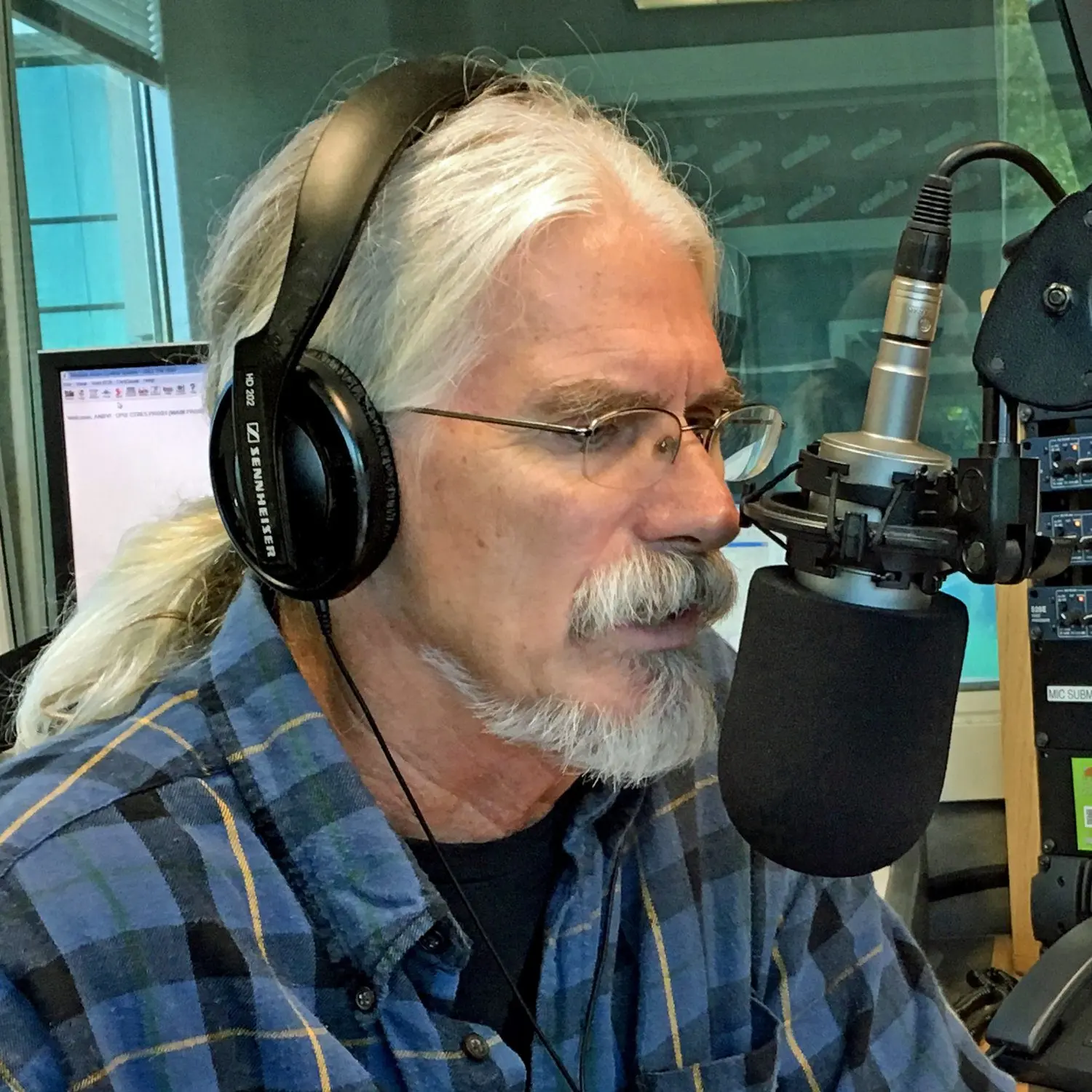
In this episode, host Steve Gregg delves into the rich theological debates surrounding Ephesians 4:10, discussing interpretations of ‘leading captivity captive’ and its implications. Steve takes insightful calls from listeners, discussing captivating theological concepts such as the roles of demonic powers and the esoteric nature of the verse. The episode serves as a beacon for understanding complex biblical texts by breaking down the nuances of Apostle Paul’s letters to early Christians.
SPEAKER 1 :
Thank you.
SPEAKER 06 :
Good afternoon and welcome to the Narrow Path radio broadcast. My name is Steve Gregg and we’re live for an hour each weekday afternoon to take your calls. If you have questions you want to ask on the air about the Bible, about the Christian faith, or you have something to say that’s contrary to what you’ve heard the host say, you want to balance comment, correction, bring correction, feel free. We’ll welcome all sorts of calls of that kind. The number to call is 844-484-5737. Now, I’m looking at a full switchboard, so don’t dial that number right now. But do, if you have a question, punch in that number at some point in the next hour, preferably early in the hour, and we will have lines that are opening up the whole time. Now, the number is 844-484. 5737. And our first caller today is Daryl calling from Sacramento, California. Hi, Daryl. Welcome to The Narrow Path.
SPEAKER 08 :
Hi, Steve. There are a couple of teachings on Ephesians 2, 8 through 10. Could you give a convincing interpretation of the correct view? I’m sorry.
SPEAKER 06 :
What are the two teachings you’re talking about?
SPEAKER 08 :
One is that who led captivity captive is that he took things out of Hades or something and gave gifts to men. The other is that he bound or he captivated sin, death, hell, Satan, and so forth.
SPEAKER 06 :
Yeah. Well, it is true that Ephesians 4.10 has both of those interpretations that have been floated. And perhaps we can’t be certain which one Paul has in mind. For those who don’t know the passage, it is in Ephesians 4, 8, that Paul quotes from the psalm that says, when he ascended on high, he led captivity captive. And in the psalm it says, and received gifts from men. But in Paul’s quotation, he changed it to, and gave gifts to men. So… Paul sees this as a reference to Christ’s ascension to heaven and giving gifts to the church, which he identifies in verse 11 and following as apostles, prophets, evangelists, pastors, and teachers are the gifts he’s talking about. Now, there is a line in that citation from Psalm 68, 18, where it says he led captivity captive, or modern translations often will render it he led a host of captives. Now to say he led captivity captive, if that’s the correct statement, may in fact mean that captivity in Hades had prevailed over mankind because mankind was alienated from God and could not go to heaven at death because of what sin had done to man’s relationship. But when Jesus died and rose and then ascended into heaven, He had accomplished, as it says in Hebrews chapter 10, made a new and living way into heaven itself, which was not available before that. And so that he took the captives out of Hades, that is the people who had died in faith, people who had died saved, and he took them to heaven with him. That’s what some people think it means, so that the captivity that had captured them is now itself defeated and taken captive and they are set free. This note echoes the language of some other Old Testament passages where God says that he will cause those who took Israel captive to be taken captive themselves. But in this case, probably referring to the captivity of Hades, the place of souls before the resurrection of Christ, and so that he took Hades captive, as it were, and released its prisoners and led a host of captives, as it were, spiritually. You know, their souls out of Hades into heaven. This is the way that many have understood it. On the other hand, of course, we know from some other passages, including one that’s not very different from it in Colossians, that something happened to the demons when Jesus died and rose again, too. Now, this is not made crystal clear. But it is an interesting thing that Paul says in Colossians 2. It says that, verse 15, having disarmed principalities and powers, he made a public spectacle of them, triumphing over them in the cross. Now, what is he talking about there? He disarmed principalities and powers. Principalities and powers might mean angels in some context, but this is obviously angels that were contrary to him because he disarmed them. So this would be demonic powers. Over in Ephesians 6, Paul also talks about that we wrestle against principalities and powers and rulers of the darkness of this age and of spiritual wickedness in the heavenly places. So Paul in Colossians and Ephesians has some overlapping terminology and some overlapping thoughts, to be sure. Quite a few, in fact. So something happened at the cross. which I think at the cross, we’d have to say the whole event of death and resurrection of Christ and ascension, all those, that whole complex event is where the change took place. But Paul does say that in the cross, he disarmed the apparently demonic principalities and powers, made a show of them openly and triumphed over them in the cross. Now, the word triumphed over them, the Greek word that Paul uses was in use in the Greek language with reference to how Roman generals would capture the leaders, the generals and so forth, that survived battles against them, and would bring them alive in chains to Rome. And in the celebration of the victory over these foreign resistors, Rome would set up an arch of triumph, and the Roman general would lead his captives in an arch of triumph, or in a parade of triumph, under this arch, and the streets would be lined with all the citizens of Rome jeering at the captives and cheering the general. In other words, there’s a great triumph, a great publicly displayed, you know, humiliation of the enemies that had been conquered. And the word that Paul uses where he says he triumphed over them in Colossians 2.15, right after he says he made a show of them openly, he’s using imagery of that, of a triumphal victory. entry into Rome in the secular sense, but he’s using it more apparently of Christ when he ascended into heaven. It’s as if there was an arch of triumph awaiting for him, and he paraded these principalities and powers that he had disarmed, so to speak, through the streets of heaven as demonstrating his triumph over them. Now, it’s not likely that we have to take this very literally. I don’t know if heaven has streets or that there was an arch of triumph set up, but rather he’s calling upon the Colossians to be aware of what Rome regularly did with their successful generals and so forth, and saying that God has done the same thing, or Christ has accomplished the same thing, humiliating the principalities and powers, disarming them, and so forth. Now, that suggests that in the verse you asked about initially, which was Ephesians 4.10, where it says he led a host of captives, that it may not be talking about the captives that were in Hades, the saved people from Old Testament times, who finally got to escape from Hades and go to heaven with Jesus when he ascended. It could mean that, and there’s no reason theologically that it couldn’t. But this verse in Colossians, which could be said to be related to the same subject, is definitely referring to demonic captives, demonic principalities and powers that were defeated by Christ at the cross, and that he demonstrated his victory over them in a way analogous to the way a Roman general’s victory would be put on display over his enemies in a triumphal march in Rome. So he’s basically using picturesque language in the Greek that would call to mind this kind of a triumph of a Roman victor, and he’s saying, yeah, Jesus had that kind of a triumph over the demons too. So if we read that back into Ephesians, chapter 4 verse 10 we could say well the host of captives he led when he ascended could be these demonic captives that he disarmed and led them forth in chains as it were now those are the two views and you asked me for my view I don’t know I just I’ve allowed the audience to know what you apparently already knew and that is that there’s two opinions about this and they both seem to be arguable that is if someone wished to take one or the other they could argue it now But when the evidence is so evenly divided, I don’t think that taking one opinion and arguing for it is a very sensible thing. You almost have to flip a coin because it’s not as if the evidence really is stronger one way or the other. It could mean either one equally. So either one of them, to my mind, could be true. In fact, maybe both of them are true, whether Paul meant both of them in this one statement or not. It is true that he… you know, led the demons captive, as it were. It is also true that he released those who were prisoners of death. I believe it’s true that he took them to heaven at that time when he ascended. So both interpretations would be expressing a truth, though it’s not likely that both truths are intended by Paul when he made the statement in that one place. So you could go either way, and I think Paul would not… I mean, if you’d met Paul and said, you know, I understood him to mean… you know, position A, or alternatively, you met him and I understood you to mean position B, I think he’d say, oh, well, what I meant was this position, but yeah, both are good. They’re both true. And that’s, I really believe that that would be the case.
SPEAKER 08 :
To me, it sounds like the Hades, taking the people of Hades into heaven, mentions about paradise. Paradise and Hades are a shield. But paradise is not in Hades. Paradise is in heaven, as Paul said, that I sent it to the third part of heaven, or paradise, he said.
SPEAKER 06 :
Yeah, well, I mean, what I’m saying is all other things considered, either view. I mean, if we wish to talk about whether Christ led people out of Hades into heaven when he ascended, we could probably… we could probably make that case with or without that passage. And we could also, if we saw the passage in that light, use that as part of our case. If we wanted to make the case about Jesus conquering Satan and binding the demons and so forth and humiliating them in his ascension, and we wanted to use this verse to support that, we could get away with that. In one case or the other, we’d probably be making a mistake about what Paul is saying in that verse. But we would not be making a theological mistake. I think both views are views that Paul held and taught elsewhere. But as far as which of those two he meant in this verse, in my opinion, he says too little about it in this verse for us to know which concept to attach it to. So I’m good either way.
SPEAKER 08 :
Thank you.
SPEAKER 06 :
All right. I appreciate your call. Let’s talk to Rich in Hawaii. Hi, Rich. Welcome to The Narrow Path.
SPEAKER 03 :
Hi, Steve. I want to tell you I greatly appreciate your marine approach to the Scripture. I, too, was incubated in the Calvary movement, and I love the challenges that you present to that thought process. My question is about the canon of Scripture, the people who— who orchestrated that and made those decisions about the books that would be included in the canon of scripture. And I wonder if, you know, Constantine having orchestrated that Council of Messia, was she genuine in desiring to create the accurate canon, or was there a little bit of control there? involved, you know, like Catholic Church. Was there a little of that involved in their decisions? So, yeah, just a question about some of those books that many have Thomas and the other ones that Enoch, that they say weren’t included. So, yeah, I know it’s a broad question, but maybe you can clarify that a little bit.
SPEAKER 06 :
Okay. Well, many people think, and I know that Dan Brown’s book, the Da Vinci Code made this claim that Constantine, the emperor who became a Christian and did exercise some political influence, of course, over the church, though the church also exercised political influence over him since he had become part of the church. But, yeah, there was some overlapping influence, I’m sure. Dan Brown claims that there were a whole lot of books published that were previous to Constantine regarded to be Scripture by the church, but that Constantine trimmed it down to include only the books that we now have. In other words, what we call the canon of Scripture, which for those who don’t know that term, that just means the approved list of books that belong in Scripture as opposed to those books that do not. The canon of Scripture was not decided by Constantine. In fact, Even the Council of Nicaea did not determine the canon of Scripture. That’s where Dan Brown seemed to have absolutely no knowledge of church history at all. The Council of Nicaea in 325 A.D. did not convene to decide which books belong in the New Testament. It convened to discuss a Christological theological controversy between those who believed that Christ was God in the flesh and which is the view that prevailed, and I think rightfully so, on the one hand, and the Arian view, which was also very popular in the early church, that Christ was not God in the flesh, but he was a divine being who was created by God and created before everything else, and through whom everything else was created. So the most exalted of all divine beings that are created, Arius would believe, was Christ, but that But he was part of the creation of God, just the first created thing. This is today the view that the Jehovah’s Witnesses hold about it. Now, both of those views were around for the first 300 years of the Christian church, and apparently arguments between the two camps became so unpleasant that Constantine, who had an interest in the unity of the Christian movement in his domain, called the bishops together. From lots of different places. Now, this is before there was a pope. This is before there was a Roman Catholic church. This is just bishops from all over the Mediterranean world were called in. I forget how many, 200 or 300 of them, something like that. And he said, listen, I want you to sort this out. Now, he didn’t tell them how to come down on it. As far as I know, Constantine didn’t even have a vote at the council. He didn’t want the church divided over this issue. So he said to the bishops, you need to get your act together and tell us which one is correct. And so they had the council, and they came out on the side of Christ being God in the flesh as opposed to a creation of God. And that put the Arians on the outside. Now, that’s what was decided at the Nicene Council. And Constantine, as far as I know, had very little to say about things except that he called the council together in order to have the church nail down an official position. And he let the bishops do that. He did not make any decisions about which books belong in the Bible. And I don’t even think, I’m not sure those were even discussed, even as a secondary issue at the Nicene Council. I could be wrong. It may be that every time the church met together, they had some peripheral discussions about that. But the real decision about which books belonged in the New Testament was not formally nailed down until the Council of Carthage in 397 AD. Now, that’s over 50 years after the Council of Nicaea, Constantine no doubt being dead at that time. So, you know, Constantine had nothing to do with the canon of Scripture. And, by the way, the Gospel of Thomas, the Gospel of Philip, and lots of these what we call Gnostic Gospels were very well known at that time, but they were never thought to be Scripture. There was never any of the church father’s. who thought that Thomas wrote the Gospel of Thomas, or Philip wrote the Gospel of Philip, or that the Gospel of Peter was written by Peter. Everybody knew those were Gnostic writings. Gnosticism was like a heresy, let’s just say like evangelical Christians would view perhaps Mormonism. Now, Mormonism isn’t the same as Gnosticism, but it’s a fringe group that changes some of the Christian doctrines and most doctrines. Evangelical Christians might even say that Mormons are not Christians. But they’re viewed as a cult or a heretical group. And that’s what Gnostics were in the early St. Church. And the Gnostics, just like Joseph Smith wrote the Book of Mormon, and it had books allegedly that he thought were kind of as good as biblical books in it, the Gnostics wrote their own books, too, of different Gospels, different stories of Jesus. Now, Dan Brown… in the Da Vinci Code said there were over a hundred of these Gospels and that Constantine trimmed down their number to the four that we have. This is totally a statement made without any knowledge of history and quite contrary to it. The four Gospels were already universally recognized early in the second century. Constantine didn’t exist until the third century and fourth. He was prominent in the fourth century. But the Irenaeus wrote about 150 years before the Nicene Council, in other words, before Constantine started working in this area. And Irenaeus said that the four Gospels, Matthew, Mark, Luke, and John, were universally accepted by the whole church worldwide, and no others were. So the fact that these four Gospels, and only these four, were recognized as belonging to the canon, that was a universal view of the church long before they nailed down the complete canon of Scripture again. at a later date. Only a few books were questioned. Out of the 27 New Testament books we have, there were about seven of them that some people doubted their authorship. Hebrews, because it was anonymous. Revelation, because it was said to be written by John, but the style seemed to them too different in Greek to be that of the Apostle John. 2 and 3 John, the small epistles. 2 Peter. these were pretty much the books that were held at arm’s length, and Jude. So almost all the books of the New Testament were accepted by the whole church, essentially the moment they came from the author’s hands. It’s just a few books, and not the ones that are the most important ones for determining what the gospel is or what we believe. A few books they weren’t sure about for a while, and they argued it out, and the books I just named ended up making the cut and were recognized officially as belonging to the New Testament in the Council of Carthage. So that’s like almost 400 years after Christ. But the books were around the whole time. They weren’t new books. And all of them were books that some Christians— thought should be in the New Testament, and there were some who weren’t so sure, so that they were disputed. But about 20 of the 27, no one ever disputed any of them. And those are the most important books we have as far as determining Christian doctrine and so forth. So the canon of scriptures is not precarious, and Constantine had nothing to do with deciding any of it. Now you asked about Enoch. Enoch was written before Christ came, 200 years before Christ came, and was not considered a New Testament book at all. Some Christians considered it as belonging to the Old Testament canon. For example, the Ethiopian Bible includes Enoch. The Catholic Bible does not, though the Catholic Bible does include about seven books that the Protestant Bible doesn’t have. All of those are references to Old Testament books, and that was… largely decided among the Jews. I mean, the Christians didn’t make much in the way of decisions about Old Testament books. Those were chosen by the Jews. Before there was Christianity, they were Jewish books. And for the most part, Jesus and the apostles simply accepted the Jewish canon. Now, the book of Enoch was not part of the Jewish canon. It was around before Jesus’ time, but it was not viewed as a book of Scripture by the Jews, and certainly the majority of Christians for very good reason. decided that it doesn’t belong in the Bible. For the one thing, it claims to be written by Enoch, and it wasn’t. So if the first line in the book lies to you, and the author claims to be somebody that he isn’t, you know, I think you’ve got a pretty good reason to believe this is not an inspired book, if it starts with a lie on the first page. That suggests there might be any number of false things on the later pages, too. All right. Thank you for your call. John in Salyersville, Kentucky. Welcome to The Narrow Path.
SPEAKER 09 :
Hi, Steve. Hi. I was calling about a question from yesterday’s program on whether you could be saved after death. Some scriptures, I seem to believe that you can’t be saved after death according to Hebrews 9.27 and John 5.29.
SPEAKER 06 :
John 5.29 says that the wicked will be risen to a resurrection of condemnation, which I believe. And I think even those who believe that repentance after death is a possibility, I think they would agree that at the time of the resurrection when Jesus comes back, there are those who are going to go to the judgment and be condemned. And that’s, of course, what Hebrews 9.27 says. It says it’s appointed unto man once to die, but after this is the judgment. Okay, so what I’m reading there, and I’m not saying I have any knowledge of whether people can repent after death or not, because I don’t have any information about that in the Bible. But what I’m reading in those verses is that when Jesus comes back, all the dead people are going to be brought to judgment. You die, and then you go to judgment again. And some will be condemned in that judgment, and some will be acquitted. Jesus said in John 5, 28 and 29, Do not marvel at this, the hour is coming in which all who are in the graves will hear his voice and come forth. Those who have done good to a resurrection of life, those who have done evil to a resurrection of condemnation. So obviously, just like when you go to court and there are charges brought against you, you’re either acquitted or you’re condemned. Now, if you’re acquitted, you walk free. if you are condemned, then there’s going to be a penalty. There’s going to be a sentence of some kind. And, you know, of course, just because you’ve gone to court, and even if you know you’re going to be found guilty, you don’t know what the sentence is going to be until that’s declared at the court. Now, it’s a point a man wants to die, okay, and then we’re going to have the judgment when Jesus comes back. There’s that. And some people will be condemned. And they’re going to be condemned in court. Now, Of course, what’s the penalty? Well, the penalty, the Bible says, is they’ll be thrown into the lake of fire. Okay, so I got that. That’s all stated in Scripture. What isn’t stated in Scripture is after that, when they’re in the lake of fire, what next? Are they consumed? Are they kept alive supernaturally forever so they can suffer forever? Or are they continually pursued by God? Who wants them to still repent and be saved? Now, that last point is a very minority point in the modern church, although it was a majority position in the first four centuries of the church. It was Augustine that got that one pretty much thrown out and called a heresy. But the church fathers, many of the church fathers in the first four centuries believed that that’s what the Bible taught. And so there are different views on that. The question is not, are some people condemned? Of course they are. The question is, if they’re condemned, what is the sentence? And that is what’s up for question. Hey, I appreciate your call. Our website’s thenarrowpath.com. We’re taking a 30-second break, and I’ll be back with another half hour of calls.
SPEAKER 05 :
In the series, When Shall These Things Be?, you’ll learn that the biblical teaching concerning the rapture, the tribulation, Armageddon, the Antichrist, and the millennium are not necessarily in agreement with the wild sensationalist versions of these doctrines found in popular prophecy teaching and Christian fiction. The lecture series entitled, When Shall These Things Be?, can be downloaded without charge from our website, thenarrowpath.com.
SPEAKER 06 :
Welcome back to the Narrow Path radio broadcast. My name is Steve Gregg, and we’re live for another half hour, taking your calls. Our lines are full at the moment. If you want to try to get through a little later, The number to call is 844-484-5737. All right, and we’re going to go to the phones now and talk to David in Orlando, Florida. Hi, David. Welcome to The Narrow Path.
SPEAKER 11 :
Thanks, Steve. Yeah, my question had to do with the organization called the Odd Fellows. I have some friends in church that are involved in this group, and from what I’ve read, it sounds very similar to the Masonic Lodge, which I know a lot about already. And I know that they seem to be kind of a group that would conflict with a lot of Christian doctrines. But I kind of wonder more about the Oddfellows, if you know anything about them, and would you say that it’s okay for a Christian to be involved with that particular group, if you know anything about them?
SPEAKER 06 :
Well, I’ve known of the existence of the Oddfellows since I was not really young, but yeah, I guess it was in my early 20s. From time to time, the Oddfellows Hall was rented by Christian groups to conduct Christian events and stuff like that, sort of like the Grange Hall might be in some places or something. But I never knew who the Oddfellows were. It’s like the Moose Lodge. There’s these various ones, and you’re right, the Masonic Lodge is the one that’s probably the best known. I don’t know how much these different lodges and halls have in common with each other in terms of their belief systems. It would seem, now I can’t say, in answer to your question, no, I don’t know really anything about the Oddfellows, their characteristic. I don’t know if they’re more Christian than, say, the Masons are, or if they’re less so. I just don’t know anything about their beliefs. My suspicion is that they market themselves, as the Masons typically do, too, as an essentially secular service organization. Now, you know, I’ve known lots of Christians who are Masons, though I’ve heard enough about the Masons to think, why? Why would a Christian want to be in the Masons? It’s very controversial, and it is argued that when you get to the highest levels of the Masons, you learn all kinds of dark secrets about the organization, which would be incompatible with Christianity. On the other hand, I’ve known people who said, well, my grandfather or my uncle was a 36-degree Mason or whatever it is, and he was a pastor of a church, and he’s a good Christian man. So, I mean, I don’t know what to make of it. I’ve never been in the Masons. I would never join them or the Odd Fellows or the Missoula. And I’m not saying that they’re bad groups. I’m just saying I would have no reason to. If they are service clubs that are doing good works, it seems to me as a Christian I’m supposed to do good works regularly. in the name of Jesus, not in the name of a mixed group, some of them believers, some non-believers or whatever. You know, I believe the church, the body of Jesus Christ, glorifies God by doing good works in his name. But when you’re in a secular organization or one that doesn’t hold Jesus up as the primary identification for their group, Well, then an organization, ostensibly a secular one, is going to get the credit for whatever good works are done. Jesus said to his disciples in John chapter 5, he said, Let your light shine before men, so men will see your good works and glorify your Father, which is in heaven. Now, there’s a lot of service organizations that might even have some overlap in the membership and the concerns that the church would have. But, I would not say that the works they do are done in the name of Jesus, and partly because a lot of the memberships probably aren’t even Christians. So, you know, any good works that they do, I think, could be done by the church instead. And I’m not saying that the Odd Fellows or others shouldn’t do good works, but I’m saying that as a Christian, if I were to want to participate in you know, some corporate entity doing good works, I’d want to do it with an organization that specifically is acting in the name of Jesus. So as Jesus said, your father will be glorified by those good works. And I believe the church is supposed to do those things. So I think a lot of organizations that are not churches have formed, some of them are Christian and some are not specifically so, to do works that the church should do. And that’s partly because the church in many cases, doesn’t do them. In many cases, the church is more concerned about building a congregation, uh, building a building, uh, you know, building the reputation of the pastor. Um, you know, in others, it’s, it’s kind of like a religious club in some ways that does its own things, mainly give religious lectures and, uh, and peddle a religious product. Uh, and, uh, and take the money of the people who participate in exchange for peddling that product. Now, I’m not saying something against the Church of Jesus Christ. The Church of Jesus Christ is a radically righteous community of people who follow Jesus without compromise. But churches sometimes are and sometimes are not comprised of people You know, that kind of Christian membership. And so there are churches that are no more literally the church than maybe the Masons Riyadh fellows are. At least churches are usually doing things in the name of Jesus. But, of course, typically organized churches have limits to what they do. Now, maybe not so much as it used to be when I was younger. When I was younger, it seemed like most of the Protestant churches I knew were mainly running worship services and trying to grow their membership. But a lot of the good works, helping the poor, helping the sick, and so forth, were being done by government programs or other secular organizations. There was a time, though, when those secular organizations didn’t work and when government didn’t provide those services to people, that the church in Europe and in America – was the main agency to help widows and orphans and to make sure people didn’t starve. It was a service organization because they served humanity. They served Christ by serving humanity in his name. So, I mean, the Oddfellows, whatever, Masons, any of those groups, I’m not going to say how sinister they are because I don’t know that they are sinister. I’ve certainly heard some things, especially about the Masons. But I have no firsthand knowledge of that. But I do know that any good works they do could be done by Christians in Christ’s name. And, you know, Paul said, you know, not to be unequally yoked together with unbelievers in 2 Corinthians chapter 6. And I think by that he means that, you know, what we’re doing for Christ, we shouldn’t be recruiting unsaved labor for it. It’s the body of Christ. The members of his body are supposed to be doing this stuff. And so let’s just say if I was invited to be part of one of these service clubs, I’d say, well, what would we do? And what are we there for? What do you accomplish? And if they said, well, we – I mean, I don’t know what they’d say. They might say, well, we help get eyeglasses for people who can’t afford them. Or we help, you know, widows and orphans or whatever. I’d say, oh, I love – I like doing those things. But – I can do that as a Christian through the agency of the body of Christ, and then Christ will get their glory instead of an organization. So that would be how I would look at that whole subject of the Odd Fellows or the Moose Lodge or any of those groups. All right. Let’s talk to Daniel in New Rochelle, New York. Hi, Daniel. Welcome.
SPEAKER 02 :
Hey, Steve. Hey, how are you?
SPEAKER 06 :
Good.
SPEAKER 02 :
Yes, Steve. Uh, today I want to, I’m going to, I’m going to say, uh, today I want to say, uh, you know, like, uh, I know time is very precious, right? And, uh, yeah, but I, yeah, yeah, yeah. But I feel like, uh, I wasted a lot of my time in my life. Like, you know, I, I didn’t really accomplish all that I wanted to. So, and, you know, and, and, and I think in Proverbs it says that, you know, God restores the days of, of, you know, he restores our days. But, um, I want to ask you, uh, Just because I wasted certain time in doing whatever I was doing, does that mean that I’m careless and neglecting? Or does it mean like I’m human like anybody else and I just made a mistake? And also, how does God restore our time?
SPEAKER 06 :
Well, I suppose everybody has wasted some time unless they just served, you know, they were born and hit the ground running serving God, which I don’t know if anyone ever does. There are people who were raised as Christian and then even from an early age You know, they’re very dedicated to serving God. I think John and Charles Wesley, for example, might be examples of that kind of person. But most people got converted later in life. And they can say, okay, now if I serve Jesus with every moment, every breath I have left, I still have some time I can’t recover. You know, those years that I wasn’t serving Christ. I can’t go back and undo that or redo that. You just have to recognize that if any man’s in Christ, he’s a new creation. But from here on, do serve God. And no, you’re not going to go back and do something different with those years that are past because they’re not coming back. But God, if you’re saved a few years before you die, you can use those years for serving Christ. And yes, it may be that you’ll have less to show for it when you stand before God, but that’s kind of a consequence of having done less. I mean, you might say, well, I never heard of Jesus until I was later in life. Well, if that’s true, God knows that too. God’s not going to hold you accountable for what you don’t know. But most of us have known far more than we’ve acted upon earlier in life. Some people never hear of Christ until they’re older, but in America, that’s probably pretty rare. I think most people have heard of Christ at some point in their growing up years, and made some kind of decision either to follow and serve Christ or to kind of ignore him. Now, even if those people who ignore him early in life change their mind, let’s say when they’re 65 or 70 years old, they say, you know, whoa, I’ve been ignoring Christ and he’s important. You know, he’s God. You know, I should have been following him the whole time. Well, God knows their repentance. they’re obviously probably not going to get any special reward for what they didn’t do in those years, but they can also be forgiven for what they did do. And Paul said in Philippians chapter 2 or 3, he said, forgetting the things that are behind and looking to things that are before, I’m pressing on toward the mark of the high calling of God. God in Christ Jesus. And that’s, you know, Paul didn’t get saved as a child. He got converted as a young adult. And he looks back at his life before then and said, you know, he counts that to be nothing. He said he counts it to be dung. What he did before, it was dung. But he says, but now I’m pressing on to the mark. And I’m not thinking about the things before. I mean, what’s the point of thinking about the things before? You can’t change them. Move forward and serve Christ with all your heart, soul, mind, and strength. And you’ll be glad you did. You might be sorry that you waited, but it won’t be like you’re going to be kicking yourself forever. It’s just that when you stand before God, you’ll no doubt think, wow, I wish I had been able to give you more in the short life I had. I think everyone who loves God at all will feel that way. I know I will. And I’ve been serving Christ since I was quite young, but I know there’s been days and periods of time that I was doing very little when I could have been doing better. I think everyone’s going to look at Jesus and say, wow, I really, really wish I’d devoted more to you and less to, you know, my own things. But you’re about average if you haven’t done that. And so just don’t add more to regret between now and the day you die, you know. David in Greenfield, Massachusetts. Welcome to The Narrow Path. Thanks for calling.
SPEAKER 10 :
Hey, thanks. Thanks for doing the show. Before I ask my question, I just want to say above all else, I just appreciate my Christian family and appreciate and encourage you all to keep pushing because things get hard for everybody. No matter how far we go, there’s always another hurdle. But I was curious about… You mentioned something about Enoch, and, like, I’m just, you know, I’m always like, oh, should I read this? Should I not read this? You know, I’m very curious because it references it in the Bible at times. But, you know, above all else, I reference the scripture, no one enters the Father besides through me. So no matter what, with all these questions, like, cling unto Jesus, and I encourage you all to do the same.
SPEAKER 06 :
Okay. So you wonder if you should read the book of Enoch, it sounds like. To me, that’s very similar to saying, should we watch the Chosen series on TV? Well, I don’t know. I don’t know if you should watch it or not. There’s perhaps good things about it and perhaps other things not so good. For example, if you read the book of Enoch, as you mentioned, Enoch mentions some of the stories in the Bible. The flood, for example, and so forth. But it also talks about a lot of things that aren’t in the Bible. And that’s how I feel kind of like about The Chosen. Well, The Chosen has some things in it that are in the Gospels. It has a ton of things that aren’t. So I guess the question is, how should you view, if at all, such material? Well, I would just say, realize this is not the Gospel. This is not the Bible. This is not inspired. This is a man who wrote a book. He was familiar with the Bible. And he wrote a script or he wrote a book or whatever. And he intentionally caused it to overlap in subject matter with the Bible. It’s kind of a biblical epic. It’s like if you went to see that horrible movie about Noah that Russell Crowe starred in several years ago, probably about ten years or so. It was the worst movie about Noah that could possibly be because nothing in it except the fact that there was a flood and a man named Noah died. Nothing in it had any connection with the Bible, and much of it was just actually contradicting the Bible. But people who see these things, people who read Enoch, people who watch The Chosen, people who watch a movie like Noah’s Ark, you know, so forth, if they don’t know the Bible, they won’t know how much of that, since in every case they profess to be telling stories that are also from the Bible, but they’re full of information that isn’t in the Bible, and some of it contrary to the Bible, how are they not going to get confused? Now, if you know the Bible really well, and certainly it is possible to do so, then you can watch something like that and not be deceived by it, although you’d probably be grieved by it somewhat. I’ll tell you, most of the Bible epics I’ve watched on television or movies, I’ve watched them with a certain degree of grief involved. because I do know the Bible, and I know that they’re not following it very good. And the same thing would be true if I read the book of Enoch. It’s not the Bible. It’s written by uninspired persons who pretend that some of these Bible stories had the details that they’re including. So should you read them? I don’t see why not. But I certainly would not read it with any idea that it’s authoritative like the Bible is. And I would not really want to read it until I knew what the Bible said first pretty well. I certainly suggest that if you’re not very expert on the Bible itself, I can’t see any way of arguing for watching or reading these fictions that are loosely connected to biblical stories. If you know the Bible really well, it won’t hurt you to read them or watch them. So that would be my thoughts on that. Thank you for your call. Let’s talk to James from Memphis, Tennessee. Hi, James. Welcome to The Narrow Path.
SPEAKER 01 :
Yes. Thanks for taking my call, Steve. Steve, on the – what you talked about yesterday about Mary, when she went to embrace Jesus, he said, don’t touch me – Could that be, and you explained another version of him saying, don’t cling to me. Could that be, he meant like, don’t embrace me and don’t hug me. Jesus being the first fruit unto the Father. That’d be like the Father having the privilege of being, Jesus being resurrected. The first one to, you know, embrace him, welcome him would be the father.
SPEAKER 06 :
Well, that’s suggesting that Jesus wouldn’t let anyone do that until he went to heaven and let the father do it first. I don’t think what Jesus said is suggesting that he’s going right now to see the father. And don’t touch me or hug me before that. I’ll be back and then you can. Because clearly later the same day, not very much later, it would appear to be minutes later, He appeared to the women who had left the tomb and were going to tell the apostles about what they’d seen there. He appeared to them, and he quite allowed them to hold onto his feet and worship him and things like that. So, you know, unless he made a rapid trip up to heaven, gave his dad a hug, and then came back down, and, you know, 15 minutes later, he said, okay, now you can hug me. I wouldn’t think that to be likely, and I don’t think that is what he’s implying. When he says, do not cling to me, I have yet to ascend to my father. I think don’t cling to me would be like if you told somebody, don’t cling to your money or don’t cling to something else, especially that’s going to be taken from you. Don’t cling to your kids when they’re adults and they want to go move away. It’s kind of an emotional clinging it’s referring to and saying, well, they’re not going to be here. They’re not going to live with you forever. Let them go because they’re going. And don’t try to cling to them. It’s unhealthy. And I think that’s what he’s saying. Don’t cling to me in that sense because I’m going again. And he was going to go, but not that day. Forty days later, he was going to ascend to his father, and he’s letting her know that though she thought he was back for good. I mean, who wouldn’t think that? You know, I mean, you saw him die. You figured he was gone for good. Three days later, you see he’s back. Oh, great, he’s back for good. And you say, no, I’m not back for good. I’m only here for a little while, then I’m going to ascend to my father, and then you won’t see me anymore. So don’t cling to me. Personally, I believe that’s what he meant. A person can certainly have a different view if they feel the evidence points that direction for them. I appreciate your question, but I need to take another call. We’re almost out of time here. Let’s see, we’ve got Fritz from Berlin, Germany, calling. Hello, Fritz. Welcome to The Narrow Path. Thanks for calling.
SPEAKER 07 :
Howdy, Steve. I was just curious if you’ve ever heard of a cult called the World Olivet Assembly, led by a fellow named David Jang.
SPEAKER 06 :
No, I have not.
SPEAKER 07 :
Well, he’s a Korean. It claims to be Presbyterian, but it’s actually, it seems he was formerly… a disciple of Sun Myung Moon. And he also, although it’s not taught publicly apparently, he secretly taught that he was the second coming Christ. Not the second coming of Christ, but the second coming Christ who was supposed to fulfill some things that Christ didn’t accomplish in his first incarnation. He also has mass marriages. But it turns out a couple of his former disciples… own Newsweek magazine. And he has something called Olivet University out in Anza, California, out in Riverside County, which has been shut down. And also in New York, a lot of money laundering and fake diplomas and people trafficking and control and so forth. But just in case you In case you chance into it, there’s a site on the internet called Olivet, O-L-I-V-E-T, Olivet Watch, which exposes some of it and has some testimonies by some of the former people.
SPEAKER 06 :
Well, Anza is only a few miles from where I live, but you say it looks like it’s closed down there. I’ve never heard the man’s name. I know there are a number of cults that have come out of South Korea, Sun Myung Moon being one of them, but but also there was a group in the 90s, it might have been his group for all I know, that were predicting the second coming of Christ before the coming of the year 2000. They had a date set and so forth, as so many fools often do, set dates. But I never knew who the group was. I don’t know that they had much of a presence in the States. I’m not sure that he does, but it is interesting to know that. I will tell you this, though. There’s so many cults out there, and he’s certainly not the first to claim to be that he’s Jesus and to do crazy stuff like that. Many of these cults never get off the ground very far. The ones that do are not very deceptive to anyone who knows the Lord or knows the Bible. I mean, for example, nobody who knows the Bible would believe that Jesus failed to do everything the Messiah is supposed to do. And that’s what, you know, apparently what he’s saying. I appreciate the heads up, Fritz. No, I never heard of him. Thank you very much. Okay, John from Philadelphia, PA. Welcome. Hey, Steve. How are you? I’m good. Thanks.
SPEAKER 12 :
Yeah, just a quick question about the hell topic, the third view that you were talking about yesterday. Restorationism, yeah. Yeah, that’s really interesting. The only thing I was wondering is, this is a question, is so we know when Jesus or God says, depart from me, I never knew you. Is that kind of being banishing after that? Like he’ll still be wanting to save people after that?
SPEAKER 06 :
Well, I would think so. I mean, there’s lots of people in this life that he never knew who are separated from him. But that doesn’t mean he doesn’t want them saved. Yeah, when he says, depart from me, you cursed into everlasting fire. Prepare for the devil and his angels. You know, I mean, that or, you know, he says, I never knew you. Depart from me. Those statements, no doubt, refer to being thrown into the lake of fire, which we read about in Revelation 20 at the final judgment. Those whose names are not found written in the books of life are cast into the lake of fire. So I would take all statements like that as being relevant to that. The three different views of hell, and by the way, if you’re curious, my book, Why Hell, goes into all three of these views very detailed, and I don’t advocate one. But it’s called Why Hell. You can get it at Amazon if you want. But the three views of hell, none of them deny hell. that people are thrown into the lake of fire after they’re condemned. The question is, what happens there? You know, and there’s three possibilities. One is hell is just, you know, the lake of fire is just a place where God ventilates an unending wrath by torturing them forever and ever. And that seems to be the favorite view of many Christians, so I can’t imagine why it would be. It seems like the least favorite to God. God wants everyone saved. He loves sinners. He has no pleasure in the death of the world, so I can’t imagine why he would like that one. And I don’t think he does. And I don’t think it’s true because I don’t think the Bible teaches it. But the church has traditionally taught it for a long time. The other two views both are much more reasonable and have more scripture in their favor. One is that in hell or in the Galatian fire, people are eventually burned up. Some hold the view that they’re instantly burned up. Others hold the view that they’re punished proportionately as a person going to jail would be. And then they’re burned up. But they don’t suffer forever. And then the third view is in the lake of fire, God continues to give them opportunities to repent and would accept their repentance just as he would before they died. Why wouldn’t he accept it after he died? So this is… Some people say, well, but that’s no fair because they get to see him first and then believe. Yeah, so you’re saying that God really doesn’t want people to be saved? And he’s going to bust them because, like Thomas, they didn’t believe until they saw? You know, well, no, I… I think God wants people to be saved. The question is, is that how he does it or not? I don’t know. I don’t take the position. But I appreciate your call. I’m out of time. You’ve been listening to The Narrow Path radio broadcast. The Narrow Path is a listener-supported broadcast. You can write to The Narrow Path at The Narrow Path, P.O. Box 1730, Temecula, California, 92593, or go to our website, thenarrowpath.com.