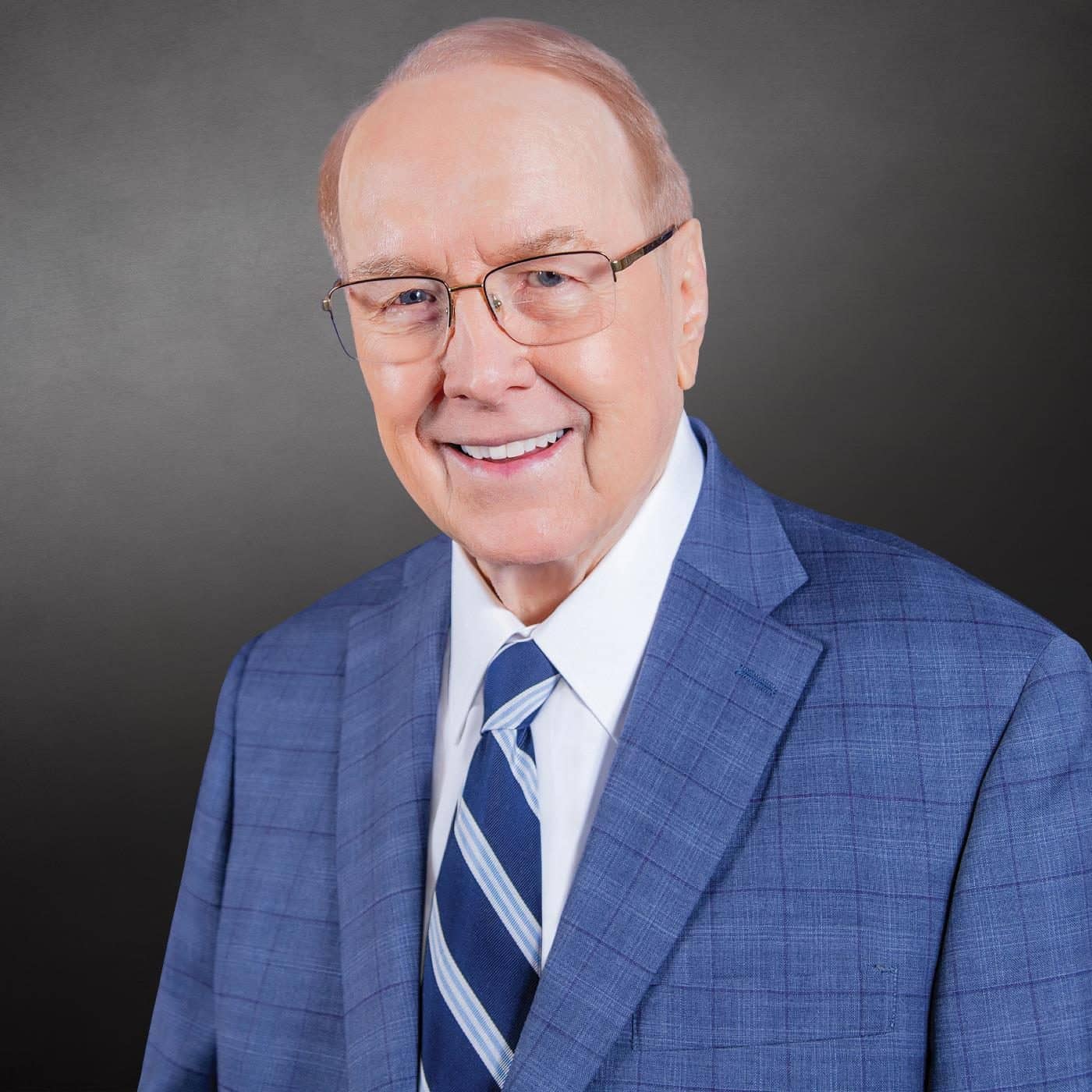

Join us in a poignant episode of Family Talk as we honor Dr. James Dobson’s unwavering commitment to family values and parenting wisdom. As we reflect on what would have been Dr. Dobson’s 90th birthday, we delve into the challenges faced by parents raising boys in today’s complex cultural landscape. Explore the insights from Dr. Dobson’s ‘Bringing Up Boys’ DVD series, highlighting the pervasive influences of media and societal shifts on our young men’s psyches.
SPEAKER 02 :
Welcome everyone to Family Talk. It’s a ministry of the James Dobson Family Institute supported by listeners just like you. I’m Dr. James Dobson and I’m thrilled that you’ve joined us.
SPEAKER 01 :
Well, welcome to Family Talk, the broadcast division of the Dr. James Dobson Family Institute. I’m Roger Marsh, and for the next couple of days here on the broadcast, we have a special treat for you. As many of you know, tomorrow, April 21st, would have been Dr. James Dobson’s 90th birthday. Of course, Dr. Dobson went home to be with the Lord last August 21st. But today and tomorrow here on the Family Talk broadcast, we’re going to honor the legacy of Dr. James Dobson yet again by featuring for you a classic presentation from the Bringing Up Boys DVD series. If you’re raising boys in today’s culture, you already know the battlefield is real. From screens to classrooms to the entertainment industry, there are forces competing for your son’s heart and mind, and they are relentless. On today’s edition of Dr. James Dobson’s Family Talk, we’re going to hear a compelling excerpt from Dr. Dobson’s Bringing Up Boys DVD series, where he lays out the dangers facing our young men and what parents can do to fight back. Here now is part one of Raising Boys, Ultimate Priority, on today’s edition of Dr. James Dobson’s Family Talk.
SPEAKER 02 :
I want to talk to you today about the great struggle that’s going on for the hearts and minds of kids. Maybe a better analogy would be to talk about the tug of war that’s taking place with the culture on one side and parents on the other, and children being the prize to the winner. Because children are being targeted now by those who would exploit them. for financial gain, or usually more importantly, to change the way the world ought to be and to make tomorrow different from today. Abraham Lincoln saw this 150 years ago when he said the philosophy in a classroom of one generation is the philosophy of the government in the next. This is why wherever the interest of children collide, there is conflict. This is why homosexual activists focus on children. This is why in the state of California now, the leftist-leaning legislature, the government there, has changed the curriculum for kindergarten through grade 12, 13 years. They will hear homosexual propaganda. because if you can control what they think and hear, if you gain access to the hearts and minds of the kids at that time, a high percentage of them will be like that. And it is a major concern about what’s taking place today because there are those out there who want to use children And as parents, you have to be aware of it. And we’re not just talking about homosexual activists. We’re talking about the pornographers. They make billions of dollars from selling pornography to adolescents. Adolescents are the number one purchasers of pornography. Furthermore, they know that if they can capture a 13-year-old boy with obscenity, they can probably hold him for life. And so there is this effort. I mean, on the Internet, there’s all this freebie stuff to get kids involved in. But there’s also the drug pushers and there are the sex abusers. There are the safe sex gurus who want to teach immoral concepts to children. There are all kinds of them. And then, of course, there is the wretched stuff produced by the entertainment industry, which is scandalous. specifically designed for teenagers. I mean, you look at the movies that are coming out. They specifically prepare them for teenagers because there’s a great market. There’s much money to be made and you can manipulate the future by doing this. And so many parents today are aware that this is going on, but they have no idea what to do about it. I mean, they’re overwhelmed by the evil that’s out there that’s aimed at their kids. And they try to fight it and they try to prepare for it. But it’s like being in a river. You’re carried by the river. You can try to oppose it and hope your kids do. But it is very, very difficult because it is so pervasive today. And some parents choose not to notice it. I mean, they’re so busy anyway, and we’ve all got so much work to do, and it’s just easier not to know that it’s going on. But your kids are targeted. The MTV phenomenon concerns me particularly. Are you aware that in the demographic between 12 and 24, MTV is the number one channel watched in the entire world? 352 million households. Little Masai Mara children sitting in mud huts in Kenya sometimes watch MTV by way of satellite transmission. It is everywhere. It’s pervasive. What does MTV want to do? They’ve told us. They don’t want just to entertain our kids. They want to shape a generation. And that’s what they are very rapidly doing. And the stuff they put on is wretched. A while back, I contacted our youth culture department. And I said, send me the lyrics that the kids are listening to. Send me the popular stuff, the things that the majority of kids are listening to. But I want to see how bad it is. You just cannot believe the stuff they sent over to me. One of them, I have the lyrics here, or at least a few of them, as much as I can use by fair use. And it’s called Korn, K-O-R-N. That’s the name of the group. You may have heard of them. And the lyrics go like this. Your throat I grasp. Can you feel the pain? Then your eyes roll back. Can you feel the pain? Your heart stops beating. Can’t you feel the pain? I kiss your lifeless lips. Can’t you feel the pain? There you are, my precious, with your broken soul. Does that sound like a fringe song? That was called My Gift to You by Korn. It premiered, number one, sold two million copies. And parents don’t even know it, and sometimes I wonder if parents care. We’re living with such violence. The kids who were responsible for the Columbine killing, just up the road from here, at Columbine High School in Littleton, were into the Gothic scene. And that concentrates on vampirism, sexual perversion, morbid music, and black clothing. This is what they live with. What happens when kids grow up in that kind of world? They see that kind of violence on television. They see it on cable. They see it in their rock music videos. They see it in the movies. They see it everywhere. Violence is everywhere. What does it do to them? to experience that in the stem cell era. Well, I had a man here not too long ago named David Grossman. He is a professor of psychology in Arkansas. He’s written a book called On Killing, The Psychological Costs of Learning to Kill in War and Society. The book was co-written by my good friend, Mike Huckabee. And the theme of this book is killology. You know what killology is? Killology is the study of killing. And he used to be an officer in the Air Force, and his responsibility was to study killology. Because, as you know, military people have to learn to kill. That’s what it’s all about. I mean, combat is why the military exists. So it’s a study about how to teach them to not only kill, but to handle their emotions, to learn to deal with violence, learn to deal with killing. And he said that the way you do that is threefold. First, it’s with overexposure. You see anything enough times, you get used to it. I mean, medical students will enter a medical school and be kind of turned off by some of the things they see. Four years later, doesn’t bother them at all because of overexposure. And then the next step is desensitization. You gradually desensitize them to the things that would have bothered them before. And thirdly, you’re given a rationale for what they’re doing. This is what we do with pilots of airlines where they have to go through those simulators. They put them in a situation where terrible things are simulated. And they teach them not to panic. They teach them what to do and how to deal with it so they can go through that without their heart rate jumping. That’s the way killology works. And Professor Grossman said, this is exactly what we’re doing with our kids. We’re overexposing them. We’re desensitizing them. And we are giving them a rationale for the violence that they see. And they get to the point that they don’t feel for other people anymore. And especially the boys, they’re the ones who do these shootings and killings on school campuses. Basically, it’s the boys who don’t have a relationship with their fathers, they come from dysfunctional families, and they don’t have anybody to hold them steady, and they gravitate to the goth scene or to something like that, and then violence is almost inevitable. It doesn’t come out of a vacuum. You know, it is developed. We’re producing killers by these methods, and it’s called killology. So this is the kind of world that our kids live in. And, you know, I was thinking about this the other day. Shirley and I had an opportunity to go to Kenya some time ago when our son was 17. He went with us. We went on a missions trip, and we worked and helped build a school there, a seminary. And while we were there, we had the opportunity to go out to the Masemara Game Preserve there in Kenya. And it was just a wonderful experience, if you haven’t had a chance to do that, to see all those wild animals there. And we got there late in the afternoon, and it rained all day in the morning. Roads are not paved, and it was very, very muddy. And about 4.30 in the afternoon, we slid off the road and we got stuck. And we were mired up to the axles. And, you know, what in the world are we going to do now? Fortunately, a native came along with a big double-wheeled truck, and he pulled us out. And he went on, and we went on. We sure did not want to have that happen again. So we’re trying to be very, very careful. And we were in this little station wagon and we came to a place in the road where there was a fork and the roads ran along parallel and we could see a hundred yards down there, they came back together. So obviously there was a mud hole on one of the two and somebody had gone around it and we didn’t know which one. And we were kind of sitting there trying to decide which one to take. And our son Ryan was in the back seat and he said, why don’t you let me just run ahead and I will look at the road and then I’ll point to which one you should take. That seemed like a good idea to me. And I was about to let him go. And the missionary we were with says, ah, now, wait a minute. She said, I don’t think this is a good idea. You do not know what’s out there. And we chose one of the two roads and we were able to get through it. And would you believe, 100 yards down where those roads came back together, there was a big yellow-eyed lion sitting four feet off the road in the grass. Just waiting, and they consider a human being just another meal ticket. I mean, they would have had Ryan for dinner that night if he’d got, I mean, he looked at that lion and decided it was a good idea that he didn’t get out of the car. I’ve thought of that many times. with reference to the subject we’re talking about today. There are predators in the pathway of your kids. They’re out there. They’re waiting for your kids. They have designs on your kids. If you’re not paying attention, they will be vulnerable to them. And I tell you, it is very, very naive to think that as Christians who are raising your kids in the church, who go to church once a week and who are trying to live by that standard. It is very naive to think that your kids will not fall victim to that because the dangers are too great, the predators are too strong. My parents, many years ago, dealt with the problems with the culture with rules. You know, they had a million rules. They had rules for everything. I mean, we don’t do this and we don’t do that and we don’t go there and you’re not going to go either. And I didn’t. I didn’t. Because in those days, if your parents insisted on it, for the most part, you played along with it. You broke the rules a little bit, but it was usually pretty minor because the culture supported it. the things that the Judeo-Christian ethic demanded. My friends went along with it. I went to a racially mixed high school. It was 50-50. There were no drugs there. Just very little alcohol. And most people, you know, tried to do what was right for the most part, and they studied enough to get by. I mean, there just wasn’t a great deal of rebellion. It was a totally different world. But that world is gone and rules won’t get it done anymore. You still have to have rules, but that’s not enough. And I want to make just some quick suggestions to you for how to cope with this culture that has your kids in the gun sites and has plans for them. The first is certainly not a new idea. I’ve been writing about it for a long time, but it has to do with the establishment of authority. your leadership early in life. It may be, for many of you who are here, it’s too late to do that, but you’ve got a narrow window of time to let it be known that you’re in charge. Not only are you in charge, but you love those kids enough to die for them. It’s those two factors together. On the first copy of Dare to Discipline, going way, way back, there’s a little scale like this with a line that goes across. And the word control on one side and love on the other. And what needs to be done is to get those two in balance. You tip it either way and you get into difficulty. And to establish that relationship of authority very early on. Now, I’ve talked about that in books. The new discipline in The Strong-Willed Child and Parenting Isn’t for Cowards and other books. I’m not going to go back through all that again, but you know what I’m talking about. The second suggestion that I have is very, very important and just about as important as the first. And it is to build bridges to those kids, to build relationships with those children when they’re very, very young. Because you have to have a kind of relationship that makes them want to do what you’re asking them or demanding that they do in adolescence. And if you’re too busy and if you’re off doing your own thing and if you hardly know their names and you’re gone all the time and dad’s on a road all the time and there’s just no opportunity to build those relationships, then the storms of adolescence get pretty scary. Rules? without relationship leads to rebellion. It didn’t come from me, it came from Josh McDowell. There’s great truth in that. If you haven’t taken the time to build relationships with those kids, and then you lay down a bunch of rules, I guarantee you, you’re gonna have a fight on your hands. And you’ve gotta take the time to do that in those early days. Shirley and I attempted to do this, not perfectly, but we worked on it pretty hard during those early years so that adolescence was smoother. But in our backyard, we had a ping pong table that was up there. most of the year out there in California. And I’d come home from a hospital and we’d play ping pong, we had croquet out there, we played volleyball, we did other things. Did a lot of fun things, a lot of laughter, a lot of trips that we took together. Got into skiing, primarily for this reason, trying to build a relationship. I wanna ask you all who are here, what price are you willing to pay to protect your kids from the culture? Are you willing to go through quite a bit of inconvenience to do this? When I was five years of age, almost six, my father was an evangelist. He felt that’s what God had called him to do. And I could travel with them up until that time. But when I hit school, there was a problem. What were they gonna do with me? My dad and my mother were very close and my dad did not feel like he could go without my mother. And so he left me, they left me with my great aunt and my great uncle for as much as six weeks at a time. And I remember the night that they pulled out and left me sitting on the floor. I remember the sun going down And I remember sitting there feeling abandoned and feeling lonely. I was in a completely new environment. I was not with my parents. My family was somewhere else. And that was very, very difficult for me. And my parents came home, oh, after four, five, six weeks, and then they’d leave and then they’d come back. After about five months of that, they came home And my dad looked at me and he said to my mother, Jim is becoming more like them than he is us. And he bought a home in Oklahoma City and left my mother at home. Tremendous sacrifice he made. And let me have her. We both needed her. Let me have her. And she stayed home with me for the next 10 years and my dad would come and go as he was able. The reason that that worked is because when he was home he was mine and we did all kinds of things together. And he built the relationship when he was home. But he made an incredible sacrifice for 10 years alone out there when the woman he needed and the woman he loved was at home with me. Then when I turned 16, I got testy like most 16 year olds do. And I started giving my mother a hard time. And I never really got into a great deal of trouble. I never did anything really bad. Shirley and I both were virgins when we got married. I’m very grateful for that. I never drank. I never took drugs, weren’t eating drugs. And I never did those things, but I was starting to really bang on the walls. And I remember the night that it came to a head and she wanted me to do something. And I just more or less said, If you don’t like it, that’s too bad. And I was, I had just challenged her authority in a way I’d never done before. I’ll never forget what she did. I went into my bedroom. You know, I knew I’d really pushed the envelope. And I, you know, kids are smart enough to say, well, let’s find out. I found out. I was around the corner listening to her. My mom went to the phone, called my dad. And she had a very simple message for him. She said, I need you. And I was absolutely shocked by what my dad did. He had a four-year slate of meetings. He was the prominent evangelist in our denomination. He has stood in one place and slated four years ahead. He canceled every bit of that. He came home, put our house up for sale and took a church 700 miles away and moved our family to South Texas and was at home with me during my last two years of high school so he could be with me. One encounter and my dad flat out canceled his life and changed everything. and became a pastor for two years so that we could be together. And when I talk about him with this reverence, with this love, the fact that this ministry here is dedicated to him, this is the reason. Because of the sacrifice that he made. You know that he never really recovered from that professionally. By the time he went back to his old assignment, Some of the people he had known had retired and others were new and didn’t know him and he never really recovered from it. Oh, he went on with what he was doing, but it was never like it was before. He paid an enormous price for me at a time when I needed him and he saved me. He saved me. Who knows what I would have done? I was heading in the wrong direction. I was going over the cliff and he pulled me back. because He cared enough about me to make that kind of sacrifice. Are you willing to do that?
SPEAKER 01 :
Well, Dr. Dobson didn’t sugarcoat it, and that’s exactly why this message is still so relevant today. The threats targeting our boys are real, but so is the power of a parent who shows up and stays engaged. You’re listening to Dr. James Dobson’s Family Talk, today’s program featuring an excerpt from Dr. Dobson’s Bringing Up Boys DVD series, the title of the presentation, Raising Boys, Ultimate Priority. Keep in mind that tomorrow, April 21st, We are celebrating what would have been Dr. Dobson’s 90th birthday. He was with us for 89 years, and trust me, working here at the James Dobson Family Institute, Dr. Dobson was actively engaged in this ministry every step of the way, right up until he crossed the finish line and received his eternal reward last August 21st. I encourage you to go to drjamesdobson.org today and tomorrow. Check out the resources that we have online for you. to commemorate Dr. Dobson’s 90th birthday, and also drop us a line. Let us know how the ministry of Dr. James Dobson and the James Dobson Family Institute has helped you and your family. Well, I’m Roger Marsh, and on behalf of all of us here at Family Talk and the Dr. James Dobson Family Institute, thanks so much for listening today. Be sure to join us again next time right here for the conclusion of Dr. Dobson’s powerful presentation on raising boys, ultimate priority. That’s coming up right here on the next edition of Dr. James Dobson’s Family Talk, the voice you trust for the family you love. This has been a presentation of the Dr. James Dobson Family Institute.