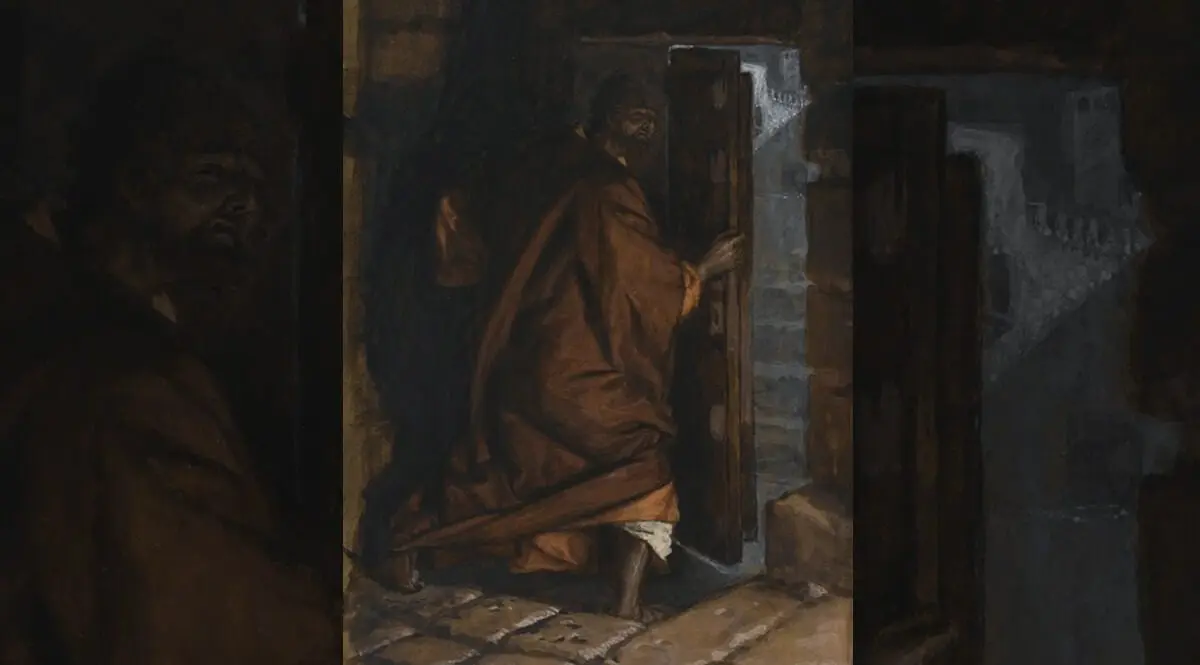
One of the saddest things about the ministry of Jesus is the number of people who believed him, believed his message, believed what he said about who he was, believed on him, but could not openly confess any such thing. John told us about them in chapter 12:
Nevertheless among the chief rulers also many believed on him; but because of the Pharisees they did not confess him, lest they should be put out of the synagogue: For they loved the praise of men more than the praise of God.
John 12:42–43 KJV
This is staggering, because it isn’t being said about
SPEAKER 01 :
The CEM Network is pleased to present Ronald L. Dart and Born to Win.
SPEAKER 02 :
One of the saddest things about the ministry of Jesus is the number of people who believed him, believed his message, believed what he said about who he was, believed on him. but who could not openly confess any such thing. John told us about them in John 12, verse 42. Nevertheless, among the chief rulers, the chief rulers, many believed on him, but because of the Pharisees they did not confess him, lest they should be put out of the synagogue. For they loved the praise of men more than the praise of God. This is staggering because it isn’t being said about leaders in secular society, but about religious leaders in the very religion of Jesus himself. And, you know, it’s in this context that you can best understand what Jesus said on another occasion. It’s recorded in Matthew 10, verse 32. Jesus said, Whoever therefore shall confess me before men, him will I confess also before my Father which is in heaven. Whoever shall deny me before men, him will I also deny before my Father which is in heaven. Think about this. Here is a group of men who all their lifetime have believed in God. All their lifetime have believed in the God of the Scriptures. All their lifetime have served the God of Abraham and Isaac and Jacob. All their lives they have been committed to this faith. And along comes the one whom God, that God whom they had always worshipped and always believed in, that God had sent to them as his own son. They actually believed him. But they were afraid to confess him, lest they be put out of the synagogue. Now, I will say this. Being put out of the synagogue then was a lot bigger deal than being put out of or having to leave, let’s say, your local Baptist church. Here in my town, if you got thrown out of one Baptist church, you could walk two blocks, literally, in one place in town and go to another Baptist church. And, of course, there were synagogues all over Jerusalem at the time, but the loss of the synagogue lost so much in terms of social connections and societal connections in one’s place in society, it was just impossible for them to even consider the possibility of losing all of that because they loved the praise of men more than the praise of God. And Jesus said that when the time will someday come that he will deny these same people before God because they denied him here and now. Jesus went on to say, don’t think I’m come to send peace on the earth. I’m not come to send peace. I’m come to send a sword. I’m not come, he said, to make life easier for you. It’s not going to be easy. He said, I’m come to set a man at variance against his father. A daughter against her mother, the daughter-in-law against her mother-in-law, and a man’s foes shall be they of his own household. So don’t worry about getting thrown out of the synagogue. This kind of division can go right down to the core of your family. He that loves father or mother more than me, he said, is not worthy of me. He that loves son or daughter more than me is not worthy of me. So what about the guy who loved his synagogue more? More than Jesus. He that takes not his cross and follows after me, Jesus said, is not worthy of me. He that finds his life shall lose it. He that loses his life for my sake shall find it. He that receives you receives me. And he that receives me receives him that sent me. Wow. This is pretty strong stuff. Because what Jesus is saying is… that those people in that society at that time who were able to receive him were receiving the Father. And those people who were not were actually not receiving the very God in heaven whom they thought they had worshipped all their lives. Returning to John 12, verse 44, after Jesus said, They love the praise of men more than the praise of God. He said, He that believes on me… does not believe on me. He believes on him that sent me. And he that sees me sees him that sent me. One thing Jesus does, he absolutely equates the acceptance of, the reverence of, or reverence toward himself with to the reverence toward the acceptance of Almighty God Himself. And, of course, so many of the people to whom he was speaking, even though they believed, and this is the condemnation, even though they believed, could not confess him. I am come, Jesus said, a light unto the world, that whoever believes on me should not live in darkness. If a man hear my words and believe not, I’m not going to judge him. I haven’t come to condemn the world. I’ve come to save the world. He that rejects me and receives not my words has one that judges him. Oh, what’s that? The answer? The word that I have spoken, the same shall judge him in the last day. Wow, that means that whenever the day of judgment comes, what is going to sit in judgment of us, sit opposite us to condemn us, will be the words that Jesus has spoken. Why would that be so? Well, Jesus says, for I have not spoken of myself, but the Father who sent me, he gave me a commandment, what I should say and what I should speak. So when you reject what I’m saying, you are rejecting the Father himself. And I know that his commandment is life everlasting. Whatever I therefore speak, even as the Father said unto me, that’s what I’m going to tell you. Now we come to John the 13th chapter. It’s just before the feast of the Passover. When Jesus knew that his hour was come that he should depart out of the world to the Father, having loved his own which were in the world, he loved them right to the end. This is a fascinating section that we’re beginning now in John 13 because here is where Jesus, with full knowledge of what he was about to face— with full knowledge of the awful night in which he was going to suffer and endure betrayal, torture, suffering, and finally death the next day, knowing that all this stuff was coming, he loved his disciples right to the end. And on that night of the Last Supper, it appears that they had had a supper, and then after the supper, Jesus did something more than that. He went on to the bread and wine of what we call Holy Communion, the Lord’s Supper, Passover service, or whatever you may want to call it. But before that, he got up from the table. This is a really unusual thing to be doing after supper. He got up from supper and laid aside his garments and took a towel and girded himself with it. And he poured water into a basin, and he began to wash the disciples’ feet and to wipe them with the towel he had wrapped around himself. Washing his feet? Well, washing of feet was a very important thing in that time because, you know, people wore sandals. They didn’t have nice shoes and socks and get where they were going with clean feet. It was a dirty time. They were walking dirt roads. They wore sandals. Their feet were dirty and sometimes uncomfortable. And so when you got to a house, normally you’d go in. You would have a servant meet you, and the servant would wash your feet for you and wipe them off with a towel, and you’d go in not wearing your sandals but barefoot into the house so that the place was clean. Jesus now does this and begins to wipe, washes their feet and wipes them with a towel. And he came to Simon Peter, and Peter said to him, Lord, are you going to wash my feet? Jesus said, look, you’ll not understand it now, but you’ll understand it later. Peter says, no, you’ll never wash my feet. And Jesus answered, if I don’t wash you, then you have no part with me. I don’t know what Peter thought exactly about that statement, but at least he accepted it. And he said, Lord, not my feet only, but my hands and my head. Jesus very patiently said, he that is washed needs not save to wash his feet, but is clean every wit. And you are clean, but not all of you. What he says is, I understand you people are all clean. You washed before you came here tonight, and I’ve washed your feet for a reason. You are all clean, but not all of you. For he knew who should betray him. Therefore he said, You are not all clean. Well, after he had washed their feet and had taken his garments and sat down, he said to them, Do you understand what I’ve done to you? You call me Master and Lord, and you say, Well, for that’s what I am. Now if I then, your Lord and Master, have washed your feet, you ought to wash one another’s feet. For I have given you an example that you should do what I have done to you. What does that mean? Well, he explains. He said, I have given you an example that you should do what I have done to you. The servant is not greater than his Lord, neither is he that is sent greater than he that sent him. If you know these things, happy are you if you do them. Well, down to this day, there are many people in churches hither and yon who, at this season of the year, when they take the Lord’s Supper, wash one another’s feet. Even the Pope, I understand, on Passover season or the time of Easter season, will actually gather 12 priests around him, and he will systematically wash each of their feet and exercise in humility. That would mean more to me, actually, if I hadn’t stood in St. Peter’s and watched the Pope carried in on the backs of several men in a sedan chair, because it does seem to be somewhat anomalous to washing his disciples’ feet. I would have been perhaps more impressed if he had, like Jesus, ridden into St. Peter’s on a donkey, but maybe that would have been a little too messy. We’ll talk more about what Jesus had to say on this important occasion. when I come back after this brief message.
SPEAKER 01 :
Asking yourself, what would Jesus do, may not be the right question. It may be more important to ask, what does Jesus tell us to do? You can be sure of that. For a free introductory CD titled, The Words of Jesus, write to Born to Win, Post Office Box 560, White House, Texas 75791. Or call toll free 1-888-BIBLE44.com.
SPEAKER 02 :
That is free of charge with no obligation. So grab a pencil and a piece of paper. We’ll give you the address and phone number again at the end of the program. All that is paid for, just like this program is, by contributions from our listeners. Continuing with Jesus, he said, I speak not of you all. I know whom I have chosen, but that the Scripture may be fulfilled, quote, He that eats bread with me has lifted up his heel against me. End of quotation. Now, this is very disturbing. I know many people ask this question constantly about Judas. What about this man? What’s going to happen to this man? And, of course, we really don’t know. But the most sobering thing of it all is that Jesus knew from the start who it was who would betray him, and he went right along with him anyway. He calls him, in one case, my own familiar friend in whom I have trusted. And that’s troublesome because you think, well, why on earth would anyone trust a man that he knew was going to betray him? Well, it’s a little funny use of the word trust. What it means essentially is I have placed my trust in him even though I knew he would betray him. Trust in that case does not mean that I think he’s going to be faithful. It’s talking about a placing of a trust because he had. He had actually put the trust of the treasury in the hands of Judas Iscariot. And he knew. You know, there’s something I often wonder about on this. And it’s almost as though there’s a comparison, because you see these references in the Psalms to this person that David had to deal with, and then Jesus comes along and deals with it. And you begin to realize that somewhere back in the recesses of time, Almighty God had to deal with Satan the devil, who had once been a bright angel, apparently who was with him and on his side, whom the translations often call Lucifer. The Hebrew word for him is Helel. He is actually one very close to God, who turned away from God and rebelled. And you find this theme of betrayal here. reflected down through the scriptures. And here it is with Jesus himself, who has selected 12 disciples, knowing full well not only that one of them would betray him, but which one? He told the disciples here, he said, Now I tell you before it comes, so when it comes to pass, you will believe that I am he. I’ll tell you the truth. He that receives whoever I send, receives me. And he that receives me, receives him that sent me. So actually, whenever you receive the one that Jesus has sent, you are receiving God. It’s a strange statement that he’s making here, but apparently that’s the way he wants it to work. Now there was leaning on Jesus’ bosom, as the King James says, basically what it means is that in front of Jesus as they lay against the table because they reclined against table to eat. They weren’t sitting in chairs up against the table like the famous painting of the Lord’s Supper has it. That was not the custom of the time. But Peter wanted to know who he was talking about, so he gestured over to that disciple and says, you know, ask him who it is. So the one then lying just at Jesus’ front said to him, Lord, who is it? Jesus answered, He it is to whom I shall give a sop when I have dipped it. And when he had dipped the sop, he gave it to Judas Iscariot, the son of Simon. And after the sop, Satan entered into him. Now, this really poses some serious questions, theological, and some problems, because you have to ask yourself then, just how responsible was Judas… When Satan entered into him, was it Satan that betrayed him? Was it Judas that betrayed him? Actually, Jesus does not seem to leave room for Judas in any way, because later he will say, It would have been good for the man who betrays me not to have even been born. Now, it’s really hard to imagine that, but no matter how bad your life has been, you had a good life, that it would have been better for you never to even been born, especially if you can then be in God’s kingdom later. It sounds like in that situation Judas might be there, but he doesn’t say that. He says it would have been better for him never to have been born. Satan entered into Judas. You know, there’s a question oftentimes that comes in people’s minds about there is such a thing as mental illness and there is such a thing as demon possession. And one has to ask the question when you deal with this, is this a person demon possessed or is this person possessed? mentally ill. And one authority on this subject indicated, and one who believes actually in such a thing as demon possession, said that, generally speaking, his belief was that people who become demon possessed were mentally ill, and that’s the reason why they became demon possessed. That’s an interesting theory. But at the same time, in this case, you have a person who has already corrupted himself and He is already a thief and a liar and a hypocrite. He is already living a lie, and therefore he has made himself available on this occasion for Satan to enter him. Then Jesus said, What you do, do quickly. Get it over with. Nobody at the table knew for what intent he spoke this to him. They thought, well, maybe because Judas had the bag that Jesus had said, go buy the things we have need of against the feast, or that he should go give something to the poor, which was a custom at the time. And he then, having received the sop from Jesus, went out immediately, and it was dark. Therefore, when he was gone out, Jesus said, Now is the Son of Man glorified, and God is glorified in Him. And if God be glorified in Him, God shall glorify Him in Himself and shall straightway glorify Him. Now the translators, and to some extent John, who present this to us, create a really difficult sentence here. What he is saying is we’ve now come to the time when it must happen. My glorification must now take place. And it’s pretty hard to think about what Jesus is about to go through as glorification. This is really going to be a hard night. But at the end of it all, he will be glorified. Little children, I’m only going to be with you a short time. You’re going to look for me, just like I said to the Jews, where I go you cannot come. Now I’m going to say the same thing to you, and I give you a new commandment, that you love one another as I have loved you, that you also love one another. My, that’s a tough saying, because he will also say, Greater love has no man than this, that he lay down his life for his friends. And here Jesus says to his disciples gathered around this table, and I have to presume that this same commandment will rattle on down through the ages and fall on our shoulders as well, that you should love one another as I have loved. We all have that obligation. Simon Peter says, Lord, where are you going? Jesus answered, you can’t go. You can’t follow where I’m going now. You’re going to follow me later. And Peter said, Lord, why can’t I follow you now? I will lay down my life for your sake. And Jesus answered him, Will you lay down your life for my sake? Verily I say unto you, The cock will not crow until you have denied me three times. You know, it happened exactly like that, and that is an odd thing in a way. Was Jesus saying this? Did he predict this, and therefore Peter had no choice but to die him? I don’t think so. I think Jesus knew Peter so well that he knew that brash Peter would follow so closely that he would face the challenge, but that he was also so weak that that when the challenge faced him, he would deny Jesus Christ. Not once, not twice, but three times. Be sure and get a pencil and pad. We’re going to give you that phone number and address.
SPEAKER 01 :
I’ll be right back. Music If you would like to share this program with friends and others, write or call this week only and request your free copy of The Gospel of John, number 9. Write to Born to Win, P.O. Box 560, White House, Texas 75791. Or call toll free 1-888-BIBLE44. And please tell us the call letters of this radio station.
SPEAKER 02 :
We don’t know how Peter’s face looked when Jesus told him that before the cock’s going to crow, you’re going to deny me three times. But I’m sure he looked like someone hit him. Jesus then hastily came on to say, don’t let your heart be troubled. Believe in God. Believe also in me. You’ve got to trust in this situation. Now, there’s every reason in the world why these fellows should be troubled that night. It was not going to be a very pleasant night for them at all. But he said, don’t be troubled. Do you believe in God? Believe in me. In my Father’s house there are many rooms. If it were not so, I would have told you. I go to prepare a place for you. And if I go and prepare a place for you, I will come again and receive you unto myself, that where I am, there you may be also. Man, that’s a tremendous statement that he’s making here. For one thing, he said, I will come again. I was flabbergasted some time ago when I read a statement in the news somewhere of a very high percentage of preachers from the pulpit, church pastors, who do not believe in a literal second coming of Jesus Christ. And yet he said, I’m going to prepare a place for you. If I go and do this… I will come again and receive you unto myself, that where I am, there you may be also. Where I go, you know, and the way you know. That was a bit of a leap for them, the disciples. Thomas said, Lord, we don’t know where you’re going. How can we possibly know the way? And Jesus said to him those famous words, I am the way, the truth, and the life. No man comes to the Father but by me. I’m reminded of what C.S. Lewis said about Jesus. He said for anyone to say that Jesus was merely a great teacher or a fine man or a great philosopher is to damn him completely. Because Jesus either was what he said he was, or he was a fool, a madman. He just said, no man can come to the Father except by him. I’m sorry. There aren’t just a whole bunch of roads to God. There aren’t a whole lot of doorways into God’s kingdom. Jesus said, there’s one way, one truth, one life, one doorway to the Father, and that’s by him. If you had known me, you should have known my father also. From now on, you know him. And actually, you’ve seen him. Wow. Philip heard that and he said, Lord, show us the father and that’ll be good. And Jesus said, have I been so long time with you and you have not known me, Philip? He that has seen me has seen the father. How do you say then, show us the father? Now, this is again what C.S. Lewis was driving at. You can’t just declare that Jesus was a great teacher when he sits here and tells us that if we have seen him, we have seen the Father. He either is God in the flesh or he’s crazy as a bed bug because that’s what he made. That’s the claim that he made to these people. Do you believe that I am in the Father and the Father in me? The words I speak to you, I don’t get them for myself. My Father that dwells in me, he does the works. Believe me that I am in the Father and the Father in me. But if you can’t do that, at least believe for the work’s sake. I’m going to tell you the truth. He that believes on me, the works that I do shall he do also, and greater works than these shall he do, because I go to my Father. Now, you know, I’ve read that in the past and wondered about it a little bit, because when you consider how great the works were that Jesus did, how many people he healed, how many suffering people that he rescued, you consider all the miracles, walking on the water, all these fantastic things. And then you read the book of Acts, you don’t get the feeling that those people did greater works than he did. So what’s he talking about? Well, at the end of three and a half years or so of Jesus Christ’s ministry, he had something in the neighborhood of 120 disciples. That’s all. 120 disciples. Oh, a lot of people believed on him, but they were afraid to confess him. Some of them believed on him and then turned back and went away. 120 disciples. By the time the book of Acts is finished, there probably were, what, 10, 20, 30, 40,000 members of Christ, disciples, believers, across the Roman Empire. I don’t suppose we have any way of knowing, but there must have been somewhere between 5,000 and 8,000 of them in Jerusalem alone. So, it’s true to say that the disciples… definitely converted more people in their work, in their time, than Jesus did in his. He then went on to say, Whatever you will ask in my name, that will I do that the Father may be glorified in the Son. If you will ask anything in my name, I will do it. What Jesus is talking about here is the covenant relationship between in which two people who become blood brothers have complete familial obligation to one another. You ask me for it, I got to do it. I ask you for it, you got to do it. And you know, in order to place that kind of trust in another person, you have really got to love them and believe in them completely. And that’s all that Jesus asks of us.
SPEAKER 01 :
It’s a lot. The Born to Win radio program with Ronald L. Dart is sponsored by Christian Educational Ministries and made possible by donations from listeners like you. If you can help, please send your donation to Born to Win, Post Office Box 560, White House, Texas 75791. You may call us at 1-888-BIBLE44 and visit us online at borntowin.net.
SPEAKER 03 :
Stay in touch with the new Born to Win with Ronald L. Dart app. This app has all of your favorite Ronald L. Dart radio messages, sermons, articles, and it even has a digital Bible. Simply search on the iOS or Android app store to download it for free today.