


- Posted
Mike Triem talks with Bishop Daniel Yohannan, president of GFA World, about the life-changing impact of providing clean water…

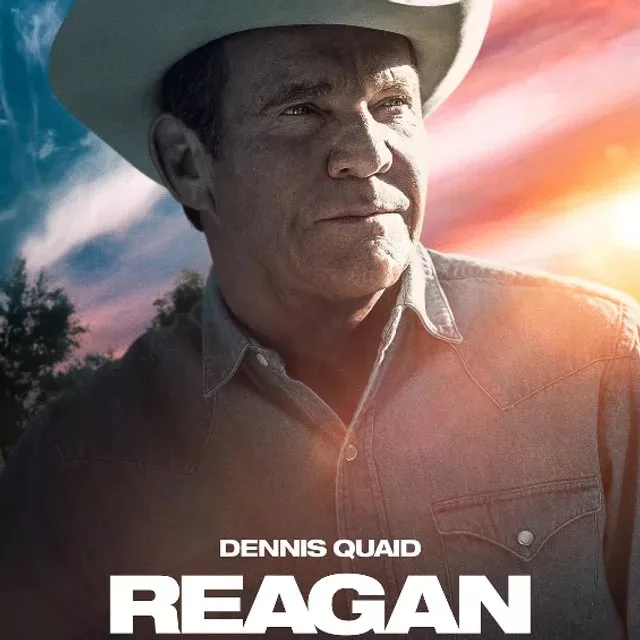
Liz and Ed Henderson, commentator on our sister station 560 KLZ, talk with Mary Jo Jacobi, former Special Assistant to President Ronald Reagan and member of his Advisory Committee on Trade Negotiations. Mary Jo was also the Assistant US Secretary of Commerce for the George H W Bush Administration and serves on the board of several committees and leads strategic business advisory consultancies. We will be talking about her experiences as Ronald Reagan’s Assistant and how she came to know him personally. As the Reagan movie (starring Dennis Quaid) hits theatres this weekend, she will be giving us insight
This is Liz Friendzell with Crawford Media Group and I’m joined by Ed Henderson, one of our commentators at the station. And we have the pleasure of talking with Mary Jo Jacoby, the former special assistant to Ronald Reagan and member of his advisory committee on trade negotiations. We’ll be talking about her experiences as Ronald Reagan’s assistant and how she came to know him personally right in time for the Reagan movie to hit theaters this weekend. Welcome to our program Mary Jo. Thank you so much Liz and Ed. It’s my honor to be with you all. Well hey Mary Jo I got to ask you one of the things you and I talked about off the air was a situation and obviously we know a lot about Ronald Reagan from the videos and the news and seeing his press conferences and what a wonderful man. But I wanted to ask you about a personal acquaintance or situation that came about when you were making your very first flight on Air Force One and President Reagan I believe suggested something to you. Walk us through that if you would. Yes it was it was my first flight on Air Force One and I was still relatively new on the White House staff. So this was in 1983 and the president came and visited with me for a couple of minutes as he did with most of the traveling staff and he asked me if I had called my parents and I said I beg your pardon and he said oh well it’s traditional you know for staff on their first time to call their parents and of course this was before we had cell phones and you know before they installed those pay phones on commercial aircraft but of course it was Air Force One. So the president took out the handset that was by my seat and talked to the communications officer in the cockpit and said Mr. Coby is going to call her parents and he handed me the phone and he placed the call and as he got my mother on the phone he said Mrs. Coby I have Mr. Coby calling you from the presidential aircraft to which my mother replied who is this really? [laughter] And of course it was us but it was a delightful moment and then the local newspaper because this was a very small town the weekly local newspaper subsequently wrote an editorial about it the headline of which is you know “Base St. Louis native calls parents from Air Force One and I thought oh God it’s going to be this critical waste of taxpayers money but it was basically a very nice puff piece saying how proud the town was that one of their daughters had made it to the White House. Did Ronald Reagan say anything on the phone to your dad? No, not to my parents at that point but he did later meet my father so that was very a very big moment. So you were with him quite a bit as his assistant. What are some of your favorite personal recollections of President Reagan? I think the thing that most impressed me about the President was that he was the same whether he was addressing a live audience of thousands or a televisual audience of millions or whether he was just talking to members of his staff in the White House. He was the same person. He had a very genial style. He had a tremendous ability to put you at ease in his presence and you know naturally in the presence of the President of the United States. It’s pretty daunting but he had a great ability to put you at ease and he was a lovely man but he was not a man like many people who have a very long fuse if you know what I mean. He was very slow to anchor but if he was angry you did not want to be the cause of that anger. I can assure you. So he was just a lovely, lovely man. Much more on top of his brief as President than the media certainly at the time would have had you believe. He knew what was going on, he knew what he was doing and most importantly he knew what he wanted to do. He had a very clear vision of what his presidency would bring about for America and I think he achieved that vision. Mary Jo, obviously the movie Reagan opening in theaters nationwide tomorrow. You and I have talked about the trailer. We both seen that and I wanted to ask you about your thoughts on that scene in there. We’re Dennis Quaid as President Reagan that famous quote, Mr. Gorbachev, tear down this wall. Tell us about that. Well I was no longer working for the President at the time. I was on the advisory committee on trade negotiations which is a part time role outside of the White House that’s rising the State Department and the Commerce Department and the U.S. trade representative. So I was gone by then but I was still in very close contact with my former colleagues. So I knew a lot of the background of what went into that speech and that line in particular in 1987. And the line was the subject of quite a bit of debate inside the administration. It was put in and taken out and put in and taken out several times and then finally on the way to deliver the speech the President put it back in and it was the President’s wish that that line be in that speech. The speech was written by Tony Doland and Peter Robinson and principally by Peter Robinson to wonderful former colleagues. And as I said I was no longer there but I did watch the speech as I watched all of President Reagan’s speeches with great interest. And I think that Dennis Quaid from what I’ve seen, I haven’t seen the film in its entirety, but from what I’ve seen Dennis Quaid did a really good job of portraying the President but I didn’t like the body language that he used in delivering that line. I felt in watching the trailer that the body language was a bit more aggressive than the President was. It was very forceful in his delivery and perfect in his delivery. But his body language was presidential but not aggressive. And I thought that in that brief few seconds Dennis Quaid’s body language was seen to be aggressive. But again I didn’t see it in context of that whole segment of the film. We know that Reagan had an attempted assassination on his life. Where were you on that day that John Hinckley took a shot at President Reagan? I had not joined the administration yet. I wasn’t in discussions but I hadn’t joined. But I remember very well getting a phone call from a friend of mine who was already in government saying the President has been shot, turned your TV on and I was at work working for a 3M company at the time. And I immediately because everybody had TVs in their offices, turned it on and I was appalled and horrified and absolutely delighted that he survived. Such a horrible, horrible incident. And of course we didn’t know immediately how close to death the President was. It was a nearly fatal attack on President Reagan. And so everyone who was a Reagan supporter and even people who weren’t Reagan supporters, you don’t want to see a President die. You don’t want to see a President get killed and some of us are old enough to remember when John F Kennedy was shot. So everyone was delighted that he came through it with such flying colors. A little background quip. The President had a brown suit that he loved and Mrs. Reagan did not like this suit. And when the President went to George Washington Hospital they had to cut the suit off of him to tend to him. Mrs. Reagan, I am told Mrs. Reagan said well at least they got rid of the brown suit but the President ordered a new brown suit from his tailor in California right away. So the brown suit, the original brown suit didn’t survive but it was immediately copied. There you go. Hey Mary Jo, I don’t know if there’s such a thing as a typical day in the White House but if there is tell us a little bit about it, your typical day in the White House. Perhaps what was your favorite moment of the time that you worked in the White House? Well there is no typical day and I want to be clear there were a number of special assistants to the President. I was not the only one there were many of us. So I was not in daily contact with the President. My job was as business liaison so I worked on the economic agenda and I was the liaison between the President and his very important business constituents. My day usually started at 6 am in the office because I had to read all of the newspapers. We still read newspapers in those days and we got news cuttings from the White House Communications Agency. So to be ready for my first meeting I had to be ready with what was happening not only in the United States but in the world. So there was no typical day but the days were very long because we all got into work very early and we all worked very late. I guess because you know we see everything through our own lenses, our own eyes. My absolute favorite moment was the day I was able to introduce my father to President Reagan and it was an accidental encounter in the West Basement of the White House. I was able to see where the President was coming through to attend a meeting in the situation room and I was taking my father to lunch in the White House mess. It was just before Christmas and the President came over and briefly spoke with us and I had the opportunity to introduce my father to him. So I will never forget that the President thanked my father for letting me work in the White House. I just can’t say enough how much I loved and valued the time I was able to spend working for President Reagan. It was not a career life plan event. It was something that just happened. I just can’t say strongly enough how much I appreciate all of those moments that I was working there. Some of them were quite unpleasant, some of them were quite difficult. It was an all smooth sailing but it was a privilege and an honor and a time that I will never ever forget. We’ve been visiting with Mary Jo Jacoby, former Special Assistant to Ronald Reagan and we’ve been talking about her experiences as his assistant both personally and professionally. Mary Jo is the new Reagan movie hit theaters this weekend. What would you like our listeners to remember most about Ronald Reagan? I think his humanity, he was a real person but he was authentic, he was real, the policies were his, the beliefs and the values were his. They were not orchestrated by handlers. It was the real Ronald Reagan. In a time when we see so many leaders who like to pretend to portray authenticity but it’s just not there, he was the real deal. He was a great American and I think a great President. Mary Jo, thank you so much for joining us today. It was a pleasure talking with you and about Ronald Reagan. Thank you very, very much. Thank you so much, Liz and Ed, for having me. It’s a privilege and an honor.