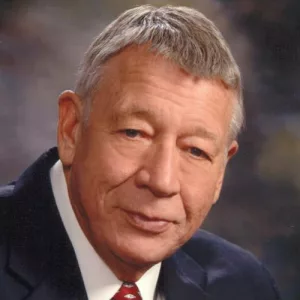

In this episode of Through the Bible, Dr. J. Vernon McGee tackles the question: Can one truly find happiness while living in sin? Join host Steve Schwetz as he introduces letters from listeners who are grappling with deep spiritual struggles, and discover how faith can reshape lives. Dr. McGee draws on scripture to provide profound insights into sin, redemption, and the transformative power of acknowledging and forsaking sin.
SPEAKER 1 :
How firm a foundation, ye saints, of the Lord is laid for your faith.
SPEAKER 02 :
Is it possible to live in sin and still be happy? Well, that’s the topic our teacher, Dr. J. Vernon McGee, addresses today here on Through the Bible. I’m Steve Schwetz, your host for this five-year journey through God’s entire word, and I’m so glad that you’re on the Bible bus today. To give you a little preview of where Dr. McGee takes us in our lesson, here’s a recording of a letter that he read from a listener here in Southern California.
SPEAKER 03 :
This party writes, I listen to your morning broadcast every single day. It is a great encouragement to me and makes the day just a little easier. Today I come to you with a very critical problem and hope that you will help me, for I’m desperate and have nothing left to try or anybody to turn to. To several Christians and to some non-Christian individuals, I’ve asked to help me without really telling what my problem is. And I always get the same answer, pray about it. They all said, well, I have. For over a year, I’ve been praying. I know that I’m a newborn again Christian, although many times I had doubts. But I know that I have been saved. Brother, I don’t know what you’re going to think when you find that I’m a homosexual. Perhaps you’d think that I’m living in false assurance of eternal life. But believe me, this is not the case. I know I’m saved, but I lost the joy of my salvation for a while. And I tried to live a Christian life, and I never was so miserable.
SPEAKER 02 :
Dr. McGee went on to say that anyone involved in a sinful lifestyle must first of all acknowledge what he’s doing is sin, and then he must forsake that sin. And then he added this, and I’m quoting Dr. McGee here, you must be willing to do God’s will. This idea today that you can engage in any kind of sin and then be a child of God, that’s a big mistake. The prodigal son can get in the pig pen, but he won’t stay there. Now, Dr. McGee will have further comments on that letter and what it means to be a carnal Christian in a moment. But first, I’d like to share this letter from a listener named James who wrote to us from his home in Georgia. Not long ago, I didn’t think I’d live to see another year, James wrote. But God, in his infinite grace and mercy and power, brought me through. I am a 79-year-old black man about to turn 80, the Lord willing. Isn’t that a great letter? You know, it’s never too late to give our lives to God. Here’s a similar one. This is from David. I was in a very bad place and I prayed that God would show me the truth. Through Dr. McGee’s plain talk and direct questions, I realized Christ died for me because I am a lost sinner. What a relief it was to know I can come to him and he will give me the strength and direction to live my life according to his will. I will keep listening until the day I die. Well, it’s true. We all need Jesus, don’t we? You know, Terry from Texas puts it this way. In my 20s, I was in a deep depression and out of desperation, I searched the radio listening to different preachers trying to find something helpful. Eventually, I stumbled on Dr. McGee’s Bible bus. I couldn’t stand his voice, but I couldn’t stop listening to it either. His distinctive voice, however, made it so easy to find him on the radio day after day. One day, he read and explained Ephesians 2.8, For by grace you have been saved through faith, and that not of yourselves it is a gift of God. The Lord opened my eyes, and I could finally see and understand and believe that Jesus loves me and died for me. It was amazing to me, as I had always thought he would die for anyone else, but no one could love me like that. I have been through troubles and fallen down in bad ways so many times, but in His timing, He has always found me, a pathetic sheep lost and wandering from the path. He will do whatever it takes to get me in a better place. I’ve learned to love His chastising hand upon me because I know His end will always justify His means, no matter how much it hurts at the time. I’ve wandered away from the Bible bus before too, but He brings me back every time. Thank you to all who keep the Bible bus going. May God bless you all. Well, thanks so much, Terry and David and James, for sharing your wonderful and encouraging stories. Now let’s open our Bibles to 1 John 3 at verse 1, and let’s bow our heads as Dr. McGee opens our study in prayer.
SPEAKER 03 :
Heavenly Father, we rejoice in your goodness and grace and mercy to us in these days in which we’re living. And we pray that we may be given a special insight that might be helpful to many needy hearts and lives of those that are listening in. For we do pray in Jesus’ name, amen. Now, I am following a new procedure, as you probably have noted, here in 1 John. The thing that I’m doing is to run ahead each time and plow up the ground. And then I come back the next broadcast and plant the seed. And today we want to begin by planting the seed here in this third chapter. And we got into it last time. There are two things that I would like to emphasize here that is very important, which I did not put a great emphasis on last time. I did give you my translation of 1 John, the third chapter, verse 1. And I’m going to read now from the New Scofield Reference Bible again, verse 1. Behold, what manner of love the Father hath bestowed upon us, that we should be called the children of God. Therefore the world knoweth us not, because it knew him not. Now, my translation is this. Behold ye of what sort of love, and probably I should say what a new kind of love the Father hath bestowed upon us, or given to us, that we should be named children of God. Now notice, and we are. That is in many of the manuscripts. And we are the children of God. And because of this, the world does not know. It doesn’t begin to understand us because it did not understand him. Now, the important thing to note here is that the child of God can say emphatically, I am a child of God through faith in Jesus Christ. We are. We don’t hope to be. We don’t expect to be. But the thrilling fact is that every believer can exult and rejoice and constantly thank him. And our boast is not in ourselves, as we made clear last time, but we’re boasting of the wonderful shepherd that we have. Now, the other thing that we need to note here, and before I leave that, I probably should add this, that John has made it perfectly clear that if you are a born-again child of God, you’re going to exhibit a lie. that conforms to the Father and that a child of God need not be in the false position of saying as an old hymn used to say, “‘Tis a point I long to know, oft it causes anxious thought. Do I love my Lord or no? Am I His or am I not?” Well, now are we the children of God. He says, right now we are the children of God. Here in verse 2, we are the children of God. And we follow on from that. He says here, now let me read. Beloved, now are we the children of God, and it doth not yet appear what we shall be. But we know that when he shall appear, we shall be like him. For we shall see him as he is. Now, the world won’t understand us. That’s for sure. Because they didn’t understand him. And it takes a spiritual insight. And that was the anointing that we talked about. He has given us an anointing. The Spirit of God is the thing that can make this real to us. And only the Spirit of God can do that, friends, until he confirms it to your heart. Why, of course, you have to say, well, I don’t know whether I’m saved. But the Spirit of God can confirm that and conform it to your heart, by the way. Now, he goes on to say here, and we’re told here, that when he shall appear, we shall be like him. Well, that is a wonderful prospect, you see. And he sees in you and me what he can make out of us. I’m thankful that God’s not through with me. If I thought he was through with me now, well, I’d be very much discouraged. But he’s yet to perform a work. I heard this story about Michelangelo. When they brought in that great big piece of marble, Michelangelo walked around it and looked at it. And he said, my, isn’t it beautiful? And his helper there looked at it. He says, well, all I see is just a great, Big piece of marble. That’s all. And Michelangelo said, oh, I forgot. You don’t see what I see. I see a statue of David there. And the helper looked and he says, well, I don’t see it. And Michelangelo says, I know you don’t because it’s now in my own mind, but I’m going to translate it into marble. And he did that, by the way. Now, God says it does not yet appear what we shall be. He sees what he’s going to make out of us someday, and what a glorious prospect that’s going to be for us. Now, I continue to move on here. What should this do for us? Do you notice what he says? And every man that hath this hope in him purifieth himself, even as he is pure. Now, we’re going to be like Christ, not identical, but like him. And because of that, it’s an incentive for holy living right here and now. There is nothing that should encourage holy living like the study of prophecy, for instance. And today, when you see all this careless slipshod, living. And that’s great emphasis now on prophecy that we hear. And people say, oh, I’m waiting for the Lord to come. Well, brother, that’s not my question to ask you. Are you looking for the Lord to come? How are you living down here? And how you’re living down here determines whether you’re really looking for the Lord to come. Now he moves on. And beginning here in verse 4, We see now the two natures of the believer in action. And as I said last time, here’s where we get down to the nitty-gritty. Now, he says here, “…whosoever committed sin transgresseth also the law, for sin is the transgression of the law.” Now, I’m going to give you again my translation, which I don’t recommend. Everyone that doeth sin doeth also lawlessness, and sin is lawlessness. Now, that means that sin is basically and fundamentally that which is contrary to the will of God. Anything that’s contrary to the will of God is sin. In other words, sin is insubordination to the will of God. Now, let’s develop that for just a moment. You remember the little girl was asked in Sunday school her definition of sin, what was sin. And she said, I think it’s anything that you like to do. And you know, she wasn’t far from it because this old nature that you and I have, it’s absolutely contrary to the will of God. Paul, in the eighth chapter of Romans, emphasizes that. For they that are after the flesh, the old nature, they do mind or obey the things of the flesh, but they that are after the Spirit, the things of the Spirit. Now, how are you living? In the flesh or in the Spirit? And now he goes on to say, for to be carnally minded is death. Now, that’s separation from God. The thing John’s talking about, you can’t have fellowship with him and be a carnal Christian. It’s impossible to do that. And I’m afraid that we’ve got too much. talking today about, oh, how I love God and how I am serving him and how wonderful he is and how pious some folk are. But my friends, they are not in fellowship with him because to be carnally minded is death, but to be spiritually minded is life and peace because the carnal mind is enmity against God. That is, you’re disobedient to God. It’s not subject to the law of God, neither indeed can be. Now, Paul also makes it very clear that before the law was given, that was sin. But it wasn’t transgression. And that’s the reason that we have here a statement in 1 John that doesn’t quite tell us, whosoever committed a sin transgressed also the law. That’s not a complete definition. It’s not a good translation. As I say, it is lawlessness. Now, you see, Paul had said in Romans 4, 15, for where no law is, there’s no transgression, but there is sin. Because he says in Romans 5, verse 12, wherefore is by one man’s sin entered into the world, death by sin, so death passed upon all men, for all have sinned. That is, we sinned in Adam. His sin was ours. For until the law, sin was in the world. But sin is not imputed when there’s no law. But man was still a sinner, and he was in subordination to God. But nevertheless, it was not transgression. Nevertheless, he says, death reigned from Adam to Moses, even over them that had not sinned after the similitude of Adam’s transgression, who is the figure of him that was to come. They sinned because why? They were sinners. And I think in the 53rd chapter of Isaiah, verse 6, and I’ve mentioned this many times, that this is probably the true picture of any unsaved man. All we like sheep have gone astray. We’ve turned everyone to his own way, and the Lord hath laid on him the iniquity of us all. Everyone’s turned to his own way. And those three words, tell our story his own way. What’s your problem? What’s my problem? We want to have our way. The little baby in the crib squealing at the top of his voice. What is the matter with the little fella? Well, he wants his way. We are born that way. We are born with that nature. And that nature is in rebellion against God. And as the poem has it, I was a wandering sheep. I did not love the foe. I did not love my shepherd’s voice. I would not be controlled. I was a wayward child. I did not love my home. I did not love my father’s voice. I loved afar to roam. But the child of God, now he has come to God and he’s been born. He calls these little children. He says, my little children here. And he talks about the little children. And let me read on down. And ye know that he was manifested to take away our sins, and in him is no sin. Two things there that are important for us to gather. And one is he takes away our sins. Plural. You see, God so loved the world that he gave his only begotten son that whosoever believed in him should not perish but have everlasting life. Now, he died for the sin of the world. He is the propitiation for our sin, not ours only, but for the sins of the whole world. Now, what’s the difference? Well, he died a redemptive death to pay the penalty of our sin. But he also died for our sins that he might deliver us right here and now from the power of sin. And he wants us to live for him. We’ve been given a new nature now. And in him is no sin. But if you want the literal of that, in him sin is not. In other words, he died a redemptive death, a sin offering. He was without spot and without blemish. And he offered himself for yours and mine, and that you and I might live for him today. Now, will you notice, I move on. Whosoever abideth in him sinneth not. Now, we’re dealing with something that’s very important. Whosoever abideth in him sinneth not. Now, what does he mean by that? Well, the believer who abides in Christ does not practice sin. He doesn’t live in it. The sinner lives in it all the time. The child of God’s got a new nature. He cannot live a sinful life. Again, I must say it. Pigs live in pig pens. Prodigal sons come home. Oh, they can get in the pig pen, but they’re not going to stay there. And while they’re there, they are miserable always if they’re God’s child. Now, if you can be happy in sin, then, my friend, you’re not God’s child. Because God’s children, they have the nature, they’re fathers, we’ve said. Now, I want to say this to this young man. The reason I read his letter, it’s encouraging. He says that he’s a homosexual and he is miserable in it. And he has no joy. He has no peace. Of course he doesn’t. I won’t question whether he’s a child of God. I want to say this to him, and I want to say it to him, and there are many others just like him listening in. My friend, he can give you a deliverance from it, and you need to claim that from him. Ask him to bring you to the place of peace and joy in your life. And if you are God’s child, you will never be content in that state. That’s the idea of the liberal churches today telling these folk that it’s sort of like the alcoholic, that you’re just sick. And the only disease that they peddle today is alcohol. If it’s a disease, they’re selling it today and advertising. But the same thing is true about this. This is not a disease. God calls it a sin. And God says there is a deliverance. Now, there may be an abnormality, which obviously there is. And I’m sure by consulting a Christian psychologist, he could help you a great deal. But make sure you go to a Christian psychologist. The other crowd will push your father into your problem, by the way, and you’ll never be delivered out of it. God can and will deliver you because you’re his child. Now, that’s what the Word of God says here. You either believe it or you don’t believe it. And if you believe it, God can deliver you. Listen, little children. He’s talking to his children now. He’s not talking to the world. Little children, let no man deceive you. He that doeth righteousness is righteous, even as he is righteous. Now, that’s the thing that reveals the child of God. And to abide in him doesn’t mean just positionally. That’s true. You have a position in Christ. Never be disturbed. But it’s also a practical consideration down here. If you are to abide him in fellowship and in service, these things must be given up. I talked to a young man over at Phoenix, Arizona the other day. Oh, he’s a fine looking young man. Came all the way out to the church. He says, Dr. McGee, I’ve been listening to you on the radio. I think you can help me. I’m an alcoholic. He said, I accepted Christ several years ago. And he says, I can go for a long time without drinking. And then I get drunk. And he says, I hate myself. And he told me a story. He began to weep despair. fine looking young fellow. He’s an executive. And he says, I know eventually it’ll affect my job if I keep this thing up. And I don’t want to because I am a child of God. And Dr. McGee, don’t tell me I’m not because I have accepted Christ. I’ve done exactly what you said on the radio and I’ve accepted. And I’ve driven 50 miles to get here this morning. I didn’t come to hear your sermon. I didn’t hear it. I’ve come to ask you. Is there a deliverance for me? And I told him there was. If he’s got the nature of his father, there’s one thing for sure. God will not let him be content and happy. That was an unhappy young man, the most unhappy young man I’ve seen in a long time. I told him, I said, every time you fall down, brother, go back to your heavenly father and tell him what you did and you don’t want to disgrace him again. And the day will come and he’ll deliver you from that because that’s the story of other man. And that’s the story of any sinner today who professes Christ and finds himself bound down by habit. God can and God will deliver you from it. And by the way, you happen to be talking to a fellow that knows something about that. Because God, in a very marvelous way, intervened in my life. One side of my family, my mother’s side, were German. And I want to tell you, they were heavy drinkers, the whole outfit. And my father was not an alcoholic, but he was a heavy drinker. And I want to tell you, I came up in that atmosphere and I started out that way. I thank God. And I was just a boy. I thank God for a deliverance friend. I know he can deliver you and he will deliver you from that. Now, let’s move on. This is important. This deals with living right where we are today. You just can’t go and take some little course and get the deliverance. You’re going to have to call upon God for this and have real contact with him. Little children, let no man deceive you. He that doeth righteousness is righteous, even as he is righteous. He that committeth sin is of the devil. That’s where sin began with him. For the devil sinneth from the beginning. He started out sinning. He lives in it. He’s in rebellion against God all the time. For this purpose, the Son of God was manifested that he might destroy the works of the devil. And only Jesus Christ can deliver you. And if you go to him, don’t even come to me because I can’t help you. And none of these others can help you either. But he can, the great physician. And I urge you to go to him with your problem. Whosoever is born of God doth not commit sin. Now, there’s a statement for you, and I got to it just as we have to go off the air. But somebody says, well, I guess you’re delighted of that. No, I’m not. I’m looking forward next time because I want to talk about that. That’s very important, and it’s along the same line we’ve been talking about. Until then, may God richly bless you, my beloved.
SPEAKER 02 :
That’s certainly a cliffhanger, isn’t it? Well, tomorrow is going to be another great study. Before we go, though, I want to take a quick minute to say thanks to those who’ve written about how you’ve benefited from our time in 1 John. If you haven’t sent us a note recently, it’s time. The email address is biblebus at ttb.org or by mail. You can always send your note to Box 7100, Pasadena, California, 91109. In Canada, Box 25325, London, Ontario, N6C 6B1. Or call us at 1-800-65-BIBLE if we can answer your questions about this ministry. We’ve got so much great ground left to cover in our five-year journey through the Bible. I’m Steve Schwetz, and I’ll see you tomorrow.
SPEAKER 01 :
Jesus paid it all, all to him I owe. Sin had left a crimson stain, he washed it white as snow.
SPEAKER 02 :
Today’s study with Dr. J. Vernon McGee is brought to you by Through the Bible, and it’s made possible by the generous prayer and financial investments from listeners like you on the Bible bus all around the world.