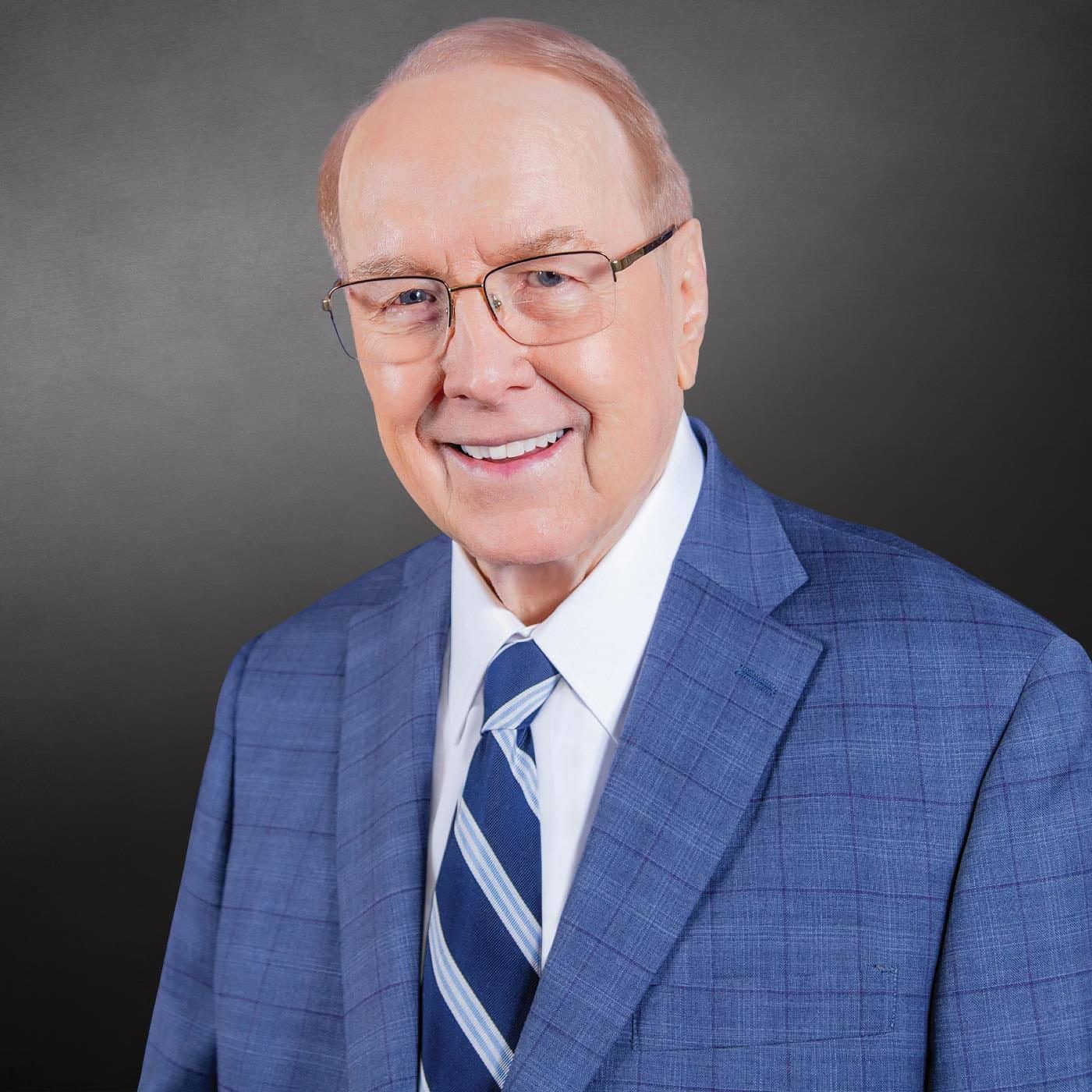

Join us as we delve into the legacy of Dr. James Dobson with his beloved children, Danae and Ryan Dobson, alongside treasured family friends. This episode lovingly recounts the pivotal decisions and everyday magic that defined Dr. Dobson’s life and career. Through cherished family anecdotes, we explore the heart of a father whose professional success was matched only by his dedication at home. Dr. Dobson’s journey is an inspiring reminder of the power of intentional living and the lasting influence of putting family first.
SPEAKER 01 :
Welcome everyone to Family Talk. It’s a ministry of the James Dobson Family Institute supported by listeners just like you. I’m Dr. James Dobson and I’m thrilled that you’ve joined us. Welcome to Family Talk, the broadcast division of the Dr. James Dobson Family Institute. I’m Roger Marsh, and on today’s program, we’re going to hear a special broadcast that honors the Dobson family legacy. As you know, on August the 21st, Dr. James Dobson entered eternity, and it’s with deep emotional sadness, and we are filled with gratitude to God for the life well-lived of Dr. James Dobson, in fact. Dr. Dobson was a once-in-a-generation leader. His name is truly synonymous with family values, and he often fought very bravely for the Judeo-Christian family, and sometimes when cultural elites tried to silence him, he spoke even louder. Beyond this cultural champion, though, was a family man. Oh, he loved his wife, Shirley, his wife of nearly 65 years, and their adult children, Danae and Ryan. And today’s Family Talk broadcast features a conversation with those two children, along with two longtime friends of Family Talk, a dear friend of the family, Robert Wilgemuth, and broadcast veteran and former member of the JDFI staff, Brian McNulty. Let’s jump right into this conversation. Now, the first question that you’re about to hear was posed to Ryan Dobson. And Ryan, what was it like in 1977? Your father had left his teaching role at Children’s Hospital and began his media ministry.
SPEAKER 05 :
You know, my memory isn’t as good as my sister’s. Danae has, it is a frustratingly impeccable memory. Details, page numbers, colors that you were wearing. I don’t remember my dad’s time at Children’s Hospital at all, really. The first thing I can remember about him working was during the 70s gas crunch. I was born in 1970, so, you know, six, seven, eight. In fact, I had to be, yes, around seven. Jimmy Carter is destroying our country. You’re buying gas on odd and even days. And my dad decided to ride his bike to work way ahead of the time. I mean, way ahead of the time of doing that. At that time, he was wearing a suit. I can remember him bungee coining a briefcase to the back of a bike, being in a suit. And I know how far his office was. It’s a long ride. But he was doing his part back in the day. They were saving money. We were in our house. And I can remember those times.
SPEAKER 02 :
I think exercise was a grand motivator too at that time.
SPEAKER 03 :
Yeah. And who could have imagined 40 years ago that we’d have what we have now in terms of worldwide reputations? Families by the millions transformed by his leadership, his creativity, his knowledge, his understanding, his sensitivity to the Holy Spirit and leading him through all that. Who could have ever imagined that?
SPEAKER 05 :
Well, Robert, it’s easy to look back in hindsight. It’s easy to be a Monday morning quarterback and go, yeah, but look, look how successful he’s been and he’s sold all the books, all these things that are going on. He was a professor of pediatrics at USC School of Medicine. He was a professor at Point Loma, which at the time was called Pasadena College. He was on staff at Children’s Hospital Los Angeles. That’s a big deal. And in the middle of all this, you’re going to quit?
SPEAKER 02 :
Well, I feel very fortunate because I had my dad before he became famous. The day that Ryan was adopted into our family was also the day that Dare to Discipline was released. It was a total coincidence.
SPEAKER 05 :
It had nothing to do with them. No, of course not.
SPEAKER 02 :
Yes, it was a coincidence. But what resulted was the tidal wave of exposure and notoriety. And all of a sudden, there were a lot of flights and speaking engagements. Well, I had those five years with my dad when he was just James Dobson, Joe Blow.
SPEAKER 03 :
And because I just plain old daddy.
SPEAKER 02 :
Yes, just daddy. And I have so many wonderful memories of my dad just being dad. And he really was a master at. making it all work, even when he did become famous in Christendom. But one of my memories that I remember so vividly, as though it was yesterday, was when my dad walked me up to the door of the preschool where I had been attending and I had a total meltdown. I recall the woman who ran the school, she was trying to console me and I was standing there just bawling, and my dad was walking away, and all of a sudden, he just wheeled on his heels and turned around and came back. And I thought I was busted. I really thought I was in trouble. But instead, he told the lady that he was taking me home. And as we drove away from the school, I remember seeing the Disney characters that were stuck on the fence out front. And as we drove away, he said, you will never have to go back. And he told me later that he knew that my response was not motivated by defiance, that I was experiencing trauma there. It was separation anxiety. It was also that I didn’t like that school. where I was attending. So he knew the motive behind it as a child psychologist. But I think the point here is that my dad managed to make it work. It’s important to note that not every mom and dad can do that. It’s not feasible for financial reasons. Certainly the single mom. But in this case, my parents were able to make that sacrifice and they made it work.
SPEAKER 04 :
Well, I see a theme today and it’s a life of service, a career of service. Ryan, would you agree? Do you have early memories of your mom and dad being servant heart centered people?
SPEAKER 05 :
Oh, of course. You know, it’s funny. It has come full circle in a way. When I was really little, my mom had neighborhood Bible studies for all the kids. And she had something that most of our listeners won’t know what this is. It’s flannel graph. And there are flannel figurines. And we had a big blue armchair that was my dad’s. And she would turn it around and put Bible characters and Bible stories on the back of that chair and tell stories to us as kids. She’s now doing it for my five-year-old. They did that in so many different ways. I’ll tell you for me, though, that it’s personal is when you get parents that become famous. And they did. They became famous. and are hugely famous, it is more difficult to show people how important they are to you. When you have that many people around you that are constantly pulling and asking and they need advice, and these are hurting people that need help, it’s hard to show those closest to you how much you care about them because your time is stretched very, very thin. My dad, to this day, does that for me in my love language. Gary Chapman wrote The Five Love Languages, and my dad will take my phone call no matter where he’s at, no matter who he’s with. If I need him for any reason, it doesn’t matter if he’s in a board meeting, a radio broadcast, he has come out of board meetings because his assistant said, Ryan says he needs to talk to you right now. And that is, it is an action. And the dads that are listening out there that says, I’m showing you with my actions. I don’t care who’s in the studio. They will know via my action that my kids are more important for me as a son. I have to know it.
SPEAKER 02 :
Don’t you? Yes. That’s a great role model message for the dads who are listening. Because as a kid, I associated my dad with airplanes because he was up in the air a lot. But although he was always busy, he… always made time for Ryan and me, 200%. He used to have a private line in his office just for mom and Ryan and and for me. And he’s always given priority. And honestly, no one could possibly be busier than James Dobson. No one could have worked harder. By his own admission, he’s a borderline workaholic. That’s how he’s made. That’s how he’s lived his whole life. But he’s always given priority to his family.
SPEAKER 04 :
I’m hearing that there was always time for the kids.
SPEAKER 02 :
Absolutely, yes. Working at home when… Dad was, let’s see, this would have been back in early 70s. I can recall just as a young child, you know, five years of age. Now I just gave away my age, but I would climb behind him on his chair and I would sit there for long periods of time playing with my toys. And he never told me that he was busy and go play somewhere else. He liked me being there. And when he was ready to take a break, he’d play wrestle with me on the floor or throw me in the air in the backyard. Always made time for me. And driving me to school in the mornings on his way to work. I was elementary school age and we would play these games that he came up with. And one of them was pilot to co-pilot. And we would pretend that the car was a plane. And dad would give me instructions and there were pretend knobs on the dash. And then we would start to take off after we had taxied. And he’d say, okay, you know, we’re on the runway now. And, oh, I love that. And counting the Volkswagen bugs, you know, back in the 70s, the VW bugs were everywhere in all colors. So we would take five or ten minutes and silently try to count as many as we could come up with and then declare the winner. And then a lot of Beatles music, too. The early Beatles. Abbey Road was a favorite. And on the way to school in the morning, Dad would put the 8-track in, and I would listen to Octopus Garden. I loved Octopus Garden as a kid.
SPEAKER 05 :
There was more than just the love of music, too. He would tell you things about it. Like, Danae remembers the music stuff. He did that with her a lot more than he did with me. With me, he would play speakers he was thinking about putting on the radio and then tell me why they were good, which is different. It’s not enough just to play you a good speaker, but to tell you why they’re good. Oh, do you see how he uses humor here, Ryan? It’s a really important thing because it gets you to remember. And you see how he’s using a story, he’s not telling a point. Those were learning experiences in so many different ways. And it wasn’t just us. I mean, you talk about a life of service. I don’t even know if they know it today. When we were in – Danae and I were in elementary school, my parents would write Christmas bonus checks for our teachers and not tell anybody.
SPEAKER 04 :
To frame this, Ryan, the early days, those were lean times. We recently heard a story at NRB about how – Your dad started the radio program in 1977. But then two years later, the money had run out. And so it was never a given and there was always faith in the Lord.
SPEAKER 03 :
You talked about busy dad’s. Life change begins with a single hard decision. So he’s teaching. He’s comfortable. He’s at the hospital. He makes a single hard decision. He wants to do something different with his life. His daddy was a great motivator for that, too. Yeah.
SPEAKER 02 :
Absolutely, yes.
SPEAKER 03 :
And so that was a hard decision. We look back on it and say, well, the Lord was in that, but he didn’t know that. He knew that he needed to be home with you guys, and so he walked away from all of that in order to love you and do a better job of being the dad, being home. So all those things fit together, but he didn’t have the perspective we have now looking back. That was the decision he needed to make in the moment, and he did it.
SPEAKER 05 :
Robert, his perspective, though, was that his dad did the same thing. Mm-hmm. When he was a young teen, he wasn’t a bad kid. He was just kind of pushing his mom a little bit, as all kids do. And she called her husband who was on the road. My grandpa was a traveling evangelist. He was gone a lot. And she said, Jim needs you. And he canceled his next four years of speaking engagements, took a pastorate, moved, and was home for my dad. Yeah. And then at about that time, my dad was considering either radio or TV. And his dad wrote him a letter saying, if you lose your kids, and it was Denae at the time. See, you remember him being on an airplane a lot. And I don’t. Because by the time my memory kicks in, in the late 70s, when I’m 6, 7, 8, that’s when he went off the road.
SPEAKER 02 :
Mm-hmm. He still flew around, though, because Mom, as I recall, we pushed Mom a little bit when Dad was away on different speaking events. But definitely not— Certainly not me, no. Yeah, I won’t expand on that, Rye. But, yes. So he still took off on business trips but nothing like he was doing before prior to the broadcast.
SPEAKER 04 :
So I want to ask you all. Things started to blow up and get really big really fast. Let’s talk about that era.
SPEAKER 05 :
I can tell you the day I found out we were famous, I’ll never forget it. I didn’t know, had no idea. I came to school, I think I was in the sixth grade. We had a substitute teacher taking role and she was going through the role and she said, Ryan Dobson. And I said, in fact, she may have said James Dobson because my first name is James. And I said, here. And she goes, oh, like Dr. Dobson. And I said, oh yeah, that’s my dad. And she said, oh honey, I know you wish he was. And she moved on. And I was like, really? What a weird thing to say. And then all my friends started yelling, it is, it is, it is his dad. And I was like, why does everyone know who my dad is? She got highly embarrassed.
SPEAKER 03 :
Okay, now let me say something really important here. It’s never affected your dad. He’s the same wherever he is. Yep. One of the things I love about your dad and your mom is their eagerness to play. That’s not what you thought I was going to say. Mm-hmm. But when you guys were little, your house, and I didn’t know you then, was filled with kids.
SPEAKER 05 :
All the time.
SPEAKER 03 :
You were the default house, right? Your mom and dad knew that if you’re going to play, you’re going to go to somebody’s house, it’s going to be your house. And so you guys have pictures by the thousands, and you’re hunting with your dad.
SPEAKER 02 :
Snow skiing.
SPEAKER 03 :
You’re snow skiing, big part of this.
SPEAKER 05 :
Robert, do you have any idea how loud we were?
SPEAKER 03 :
No, I have no idea. Well, actually, I know you, so I can imagine.
SPEAKER 05 :
My poor parents. All my friends were skateboarders. So it wasn’t just we were loud. We hurt each other all the time. We were constantly getting hurt. We ate all of their food. But in their wisdom, they said, listen, you could be out in a parking lot in the middle of nowhere doing who knows what, or you could just be messing up our house and breaking everything and eating all of our food. But at least we know who you’re with. Yeah. We know what kind of kids they are. We know who their parents are. We know what you’re doing.
SPEAKER 02 :
We also had a lot of family experiences where it was just us four. For instance, one of the things that we did that I really enjoyed was going up to this place called Wilderness Park. And mom would pack all the stuff for pancakes, including the skillet.
SPEAKER 05 :
How awesome is this? This is our outdoors family. We’re going to go rough it out there. We found a plug to plug an electric skillet in.
SPEAKER 02 :
We grew up in L.A., okay? So this was roughing it for us. We went to this place that had picnic tables with a covering and an outlet. And mom would make pancakes, and then dad would read from the Bible, teach us a principle from Scripture. And then we would play games, outdoor games, or we’d go hiking. You know, just the four of us.
SPEAKER 05 :
And there were times we went— That was so much fun.
SPEAKER 02 :
Yes.
SPEAKER 05 :
And bike riding. Honestly, parents listening, the intentionality of my parents is why my sister and I are where we are today. It really is. That’s right. We would bike ride. My dad’s got photos of me asleep on a bike seat riding. behind him. We would go to Taco Lita. We’d ride down there. Oh my goodness, the best beef and bean burrito in the entire world. We’d ride our bikes there. It was such a huge treat. Wilders Park, I’ll never forget that. I have so many funny memories from that place.
SPEAKER 03 :
As a busy father, you understand that that has to be on purpose because you’re busy doing other stuff that doesn’t relate to playing with your kids, right? So you’ve got to make a decision.
SPEAKER 05 :
Robert, this is the first time that I’m back on Family Talk since I quit.
SPEAKER 03 :
Right.
SPEAKER 05 :
You know, it’s a year ago, January, and I’ve got a startup. And I tell you what I think about so often. I called you. You did. I watched. The 1978 film series, Focus on the Family film series, fatherhood film. And it keeps reverberating. Because this is the busiest I’ve ever possibly been.
SPEAKER 03 :
You’re in that same moment right now.
SPEAKER 05 :
And I could absolutely lose the next five years of my kid’s life. Lincoln will be 15 and I’ll have no idea who he is. And Lucy will be 10 and I won’t know anything about her. And I’m juggling like crazy, but I had a good role model, and he had a good role model. We, Danae, had a good role model in that, and oh, it’s tough.
SPEAKER 04 :
Well, Robert, so you have a unique role, a unique relationship with Dr. Dobson. You’re his friend. You’re part counsel. A lot of things. So how did you help him juggle during this golden era?
SPEAKER 03 :
Our lives touched infrequently, but it seemed like there were crises in his life, and I was there. I showed up. And, I mean, he will remember the number of times we found ourselves on our knees in his office, at Focus, in their home, because there was something that was happening that was really very significant, including challenges with you guys as you were growing up. So I wasn’t back in the early days. So I didn’t know Dr. Dobson until he had become pretty well-known. And we connected. My late wife, Bobbi, they became very good friends. But his commitment to his family – and this is just language, right? We could say anything we wanted. But the truth is – and now with his children here as eyewitnesses – he was willing to sacrifice anything and everything for them. And sometimes we hear that and we say, yeah, but what was he giving up for that? And the truth is he was giving up a lot. And he didn’t know the end game. He didn’t know the way the story was going to finish out. So that’s the way we live our lives. We make each decision and we trust the Lord with the outcome. But he knew the right thing to do in terms of his decision about his career, his decision about spending time with you guys, his decision about speaking truth when you were a sophomore in college and coming and doing a very hard thing. He knew it was the right thing to do. And in the end, it turned out, but he didn’t know that then and you didn’t either. So there’s a certain eternal perspective that I think the Holy Spirit gives us to make hard decisions in the moment and trust him with the outcome. And that’s his story. Yeah.
SPEAKER 05 :
Here’s the plan.
SPEAKER 03 :
Right.
SPEAKER 05 :
Lord, where should I go?
SPEAKER 03 :
I have today.
SPEAKER 05 :
There’s a light unto my feet. Where should I go? There’s just a couple of steps ahead. When it doesn’t make any sense, I’m still going to follow the Lord. You know, what you were referencing, I screwed around in college. You want to talk about putting your money where your mouth is. I went to Olivet Nazarene University. It is a fantastic school. It is a great institution of higher learning. And I wasted time. my time there. And at 47, I can say this because it’s embarrassing and it’s all right to say, but I can remember the conversation with my dad going, Ry, this isn’t our money. This is the money the Lord has lent us. If I give it to you and I know you’re going to waste it, I’m wasting God’s money. Ry, you can’t let me waste God’s money. And I was like, okay, I get it. I get it. I get it. Ry, you can’t. Honestly, you wonder how bad I was? He said, just don’t get D’s. If you don’t get D’s, I’ll pay for your school. Please, Rye, please. I went out and got a bunch of D’s and I’ll never forget that call. He said, Rye, we’ve talked. He said, you can’t come home, but you got to find a place to live. You know, and now as more of an adult, can you imagine being in a board meeting and You know, hey, Jim, how’s Danae? Oh, Danae, oh my goodness, Danae wrote her 20th book. I mean, she’s doing fantastic. And she’s, you know, got all these things. She’s speaking. Well, how’s Ryan? I was working a dead-end job doing nothing, but he did what was right.
SPEAKER 03 :
So here’s the deal. The Lord gave your dad wisdom. He did a lot of counseling. He was obviously very professionally trained to write books that he himself could have read to counsel him to do exactly what he did with you. The reason why those books have sold so well is because they’re authentic. I mean, certainly they’re scripturally based, but they’re authentic. He was willing to live that. Before he wrote the book, but then after. So somebody could have said, oh, I see. You don’t let your son do what he’s doing at school. He wasn’t willing to do that.
SPEAKER 02 :
That’s right.
SPEAKER 03 :
He made the hard decision, came and got you from school. I can’t be a hypocrite. That’s right. That’s right.
SPEAKER 02 :
So you have to share with the people the happy ending to that story, Ryan.
SPEAKER 05 :
Well, I’m here. You know what? Honestly, I worked a horrible, horrible dead-end job. I struggled. I struggled mightily. I’ll tell you what changed. I worked with a 17-year-old and a 45-year-old, and I found out they made the same amount of money, and I could not believe it. This is so funny for me now because I remember going and telling my dad and him going, of course. And that’s when it dawned on me. That’s where you’re heading, right?
SPEAKER 03 :
This is Luke chapter 15, and this is the father loving the son so much that he let him go. You got it. And let the consequences of feeding the pigs speak for themselves. And he forgave him before he came home. But the kid came to his senses. One of my favorite moments in the scripture. This is what we pray for our kids, right? Lord Jesus, please bring my kid to his senses or her senses.
SPEAKER 05 :
You know what else he didn’t do? He didn’t rub my nose in it. He asked me, do you want another shot? I couldn’t believe, I never thought he’d send me back to school again. And he said, you got one shot, you get a deal. Never do it again, Rye. And I’m telling you, I went full force. I have never tried so hard. I got tutors. I did everything I could. Graduated Biola University. Dr. Todd Lewis, my lead professor. It changed my life. I tell you, I guarantee you, though, it wouldn’t have. Had he bailed me out, I would have gotten Fs the rest of my career. I knew it. If he had just bailed me out one more time, it would have ruined my scholastic career. He did the right thing. It’s so hard. Robert, you don’t have any idea where it’s going to go. Parenting is the worst. You never know how good you do until it’s too late. Because love must be tough in action.
SPEAKER 04 :
You got it. That’s right. You know, they say it’s a marathon, not a sprint, right? I think that we’ve run our time today. Would all of you be willing to come back tomorrow and join us to continue this? I look forward to it.
SPEAKER 05 :
Thanks, Brian. I look forward to it, too. Thank you, Brian. Robert, thanks for flying all the way in Michigan. Yeah.
SPEAKER 04 :
In your new place. Not a problem.
SPEAKER 05 :
Yeah, it’s been so fun being here.
SPEAKER 01 :
Love to be with you guys. Well, I certainly hope you’ve enjoyed the stories that you’ve heard from our guests today here on this special edition of Dr. James Dobson’s Family Talk. In case you joined us later into the program, we are celebrating the life and legacy of Dr. James C. Dobson. And of course, our guests that we’re featuring on today’s program are Dr. Dobson’s daughter, Danae Dobson, his son, Ryan Dobson, and dear family friends, Robert Wolgamuth and Brian McNulty. I’m Roger Marsh, and we know this celebration of Dr. Dobson’s life has certainly stirred up some fond memories for you. I encourage you to go to drjamesdobson.org and click on the link for our broadcast memory page that we’ve compiled a lifetime worth of ministry memories from Dr. Dobson dating all the way back to his founding of his first media ministry. and all the way up through these past 15 years here on Dr. James Dobson’s Family Talk. Again, you can go to drjamesdobson.org. You can leave a tribute for Dr. Dobson. We’ve heard from thousands of people over the past couple of weeks since his passing on August the 21st. If you would like to write to us as well, trust me, Dr. Dobson loved receiving your cards and your letters. Let me give you our ministry mailing address. It’s drjamesdobsonsfamilytalk, P.O. Box 39000, Colorado Springs, Colorado, the zip code 80949. You know, beginning back in 1977, when Dr. Dobson started his foray into media ministry, right up until his passing and beyond, he has been supported by a global audience of grateful friends just like you. The Dr. James Dobson Family Institute is postured to continue to reach moms and dads and grandparents, aunts and uncles, and children for decades to come. We encourage you to express your gratitude to Dr. Dobson for all of these years of ministry when you write to us. You can also include a gift of any amount in support of our ministry, a memorial legacy, if you will. Again, you can write to P.O. Box 39000 Colorado Springs, Colorado, the zip code 80949 you can also call a member of our constituent care team they’re standing by to take your call at 877-732-6825 that’s 877-732-6825 or if you prefer you can go online go to drjamesdobson.org you can click on the memorial page you can make a memorial gift you can reminisce quite a while about all of the many many years of memories that Dr. Dobson has created for families just like yours And trust me, hundreds of thousands of people have been checking out that website so far. We’re going to leave it up for a few days more so you can enjoy the memories as well. Well, I’m Roger Marsh, and I hope you’ll join us again next time for part two of the Dobson Family Legacy. That’s right here on the next edition of Dr. James Dobson’s Family Talk, the voice you can still trust for the family you love. This has been a presentation of the Dr. James Dobson Family Institute