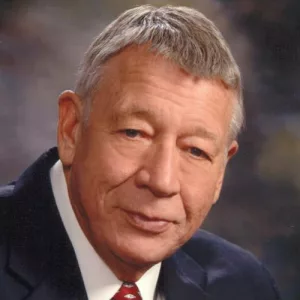

On 9-11 2021, Richard Arnold Beattie spoke to the curator or The 9-11 Museum for KLZ Radio. Listen to the stirring stories and audio of that tragic day. This is an Evergreen Public Affairs program that KLZ Radio Runs each September 11th. In 2001, Beattie covered 9-11 when he was a writer-producer at Focus on the Family. A native New Yorker Beattie discovered how many friends and classmates had stories of 9-11. Beattie reported that James Amato with The NY Fire Department was one of the firefighters that was lost that fateful day. Amato and Beattie were childhood friends
Hello everyone, it’s Richard Beatty with Crawford Media and Denver. Today I have on the phone with me Amy Weinstein, one of the curators of the 9/11 Museum at the site of the pile and of course the Twin Towers in Manhattan. People are asking where were you, what’s your story, when did you know, and how did it change you? Amy Weinstein, welcome to the program. Thank you for having me Richard. It’s been brought up recently that there’s a new generation who have only read about the events that changed the world on September 11th, 2001. As a member of the curator team, how is the educational experience, now the foundational focus of the museum? Richard, I would say that education has always been at our foundation at the core of our mission. We want everyone who comes to the museum to learn, to learn about what happened, to learn about who responded, who was killed and who came to help and to learn about the impact on the city. Today however, what’s different now, 20 years later, is that there are young adults who have no lived memory or only the vaguest memories of what happened and many more who were not alive who need to learn about this in a slightly different way than people who were alive in 2001. The 20th anniversary of 9/11 is even more poignant this year with a story of many fathers and mothers who were called into service in 2001, who now see their children call to service in 2021. So for many of these now adult children, how can the museum fortify that call to service? You know, museums think to educate and to inspire. So call to service could mean service in the military, it could mean service with the Red Cross as a paramedic service by becoming a teacher or service every year on 9/11 with organizations like my good deed that seek to encourage people to do good in the name of those who were killed. There’s something about how united we were on that day and for time after that and now where people want to serve, whether they serve their country in various ways as you so eloquently put it, it could be military service but it also can be to be a teacher. A lot of different areas that people can serve. Yes, I think so and in the museum toward the end of the historical exhibition, we give examples of ways in which people served immediately after 9/11 either by making quilts for all of the victims families or by serving as a safe space for responders and volunteers who have become exhausted because of their service and their mission has evolved. Many of the responders have become active in responding to natural disasters like hurricanes. New Yorkers remember how people all over the country and indeed all over the world came to help us immediately after 9/11. How does a museum inspire people to serve? I think that the museum inspires people to serve in many different ways simply by presenting the facts of what happened, of how people came from all over the country and indeed from all over the world to help the United States to help at each of the disaster sites but especially in New York and toward the end of the historical exhibition, we show some very large photos of people actually doing that, of people who made quilts for all of the victims family members, of people who created safe spaces for their responders and volunteers to relax, to let their hair down and admit to themselves and to each other that they were suffering and things. Ordinary people did to support the rescue efforts, young people who visit people of any ages who visit. Well maybe think about that and kick that home with them. The other way is one thing that we do know about is that many of those who gave so much of themselves at ground zero whether they were poor authority, police officers, construction workers, firefighters, or responders from all over the country, they wanted to give back the local uniformed responders and construction workers wanted to give back and so they founded their own philanthropic organizations, either building homes for disabled military veterans returning home without limbs and needing a proper home in which to live or helping to rebuild schools in areas where there were hurricanes or floods or rebuilding in the Bahamas in other places that had suffered devastating natural disasters. Now Amy, you are, you have a very specialized field as a curator and tell our listeners what that is. I am both a curator and oral historian for the National 9/11 Memorial and Museum. It is a very special job. I feel that there are not many people in the world who have such an amazing opportunity as I have had for the past 15 years to listen to help people share, to help people tell their story of where they were on September 11th, whether inside the North or South Tower or on an ambulance responding to the World Trade Center or 9/11 family members talking about their loved one. So it is my job to sit with them and to help them tell their story to help them explain who their loved one was, to help them explain why they responded, what they did and how it feels, how they feel looking back. Some people have survivor guilt which is sort of too easy a phrase to use but that is the best way of explaining how they feel. Others have post traumatic stress on various levels and I just give them an opportunity to talk to help them explain their story so that people down the road whether they are eighth graders working on history day projects, grade scheme, students or documentary filmmakers will understand what they saw, what they did, what they thought about it and how they felt. And the same is true for my territorial responsibilities which involves acquiring and interpreting artifacts from those very same people. What are some of the special artifacts that you have recovered and also curated within the museum? You know the museum collection holds tens of thousands of artifacts and photographs. So many things, only some of which are on view in the museum. I would feel unfair to engine company 21 if I told your listeners about latter company 3 but both of those, um, FDNY companies, their vehicles are in the museum. We have a large portion of the antenna that had once been on the north tower of the World Trade Center. And we have tiny things like, um, wristwatches that were found at ground zero and could be traced to a person who had been killed, women’s purses in which the outside is so covered with dust and the recelified concrete and dirt. But you unzip the purse and inside our lipsticks that you would be willing to use. It’s there that clean and inside those purses you can see a person’s entire life. Wow. That’s that’s that’s amazing when you when you do think about those those things. You brought up latter company number three and the trucks from Brooklyn that that were the first on the scene. I actually went to high school with with Jimmy Amato who lost his life at 9/11 as a firefighter from that that latter company. And so that that that speaks very deeply to me. And so I thank you for for sharing that. Thank you and you know, I think that’s fire truck in the museum because of where it’s positioned. You can see that vehicle whether you are walking towards or away from the South shower where we have our memorial exhibition or whether you’re about to enter a thinking about entering the North shower footprint where the historical exhibition, the events of the day and the months that followed. And that latter company that may have been such a storage company, but it stands in for absolutely every one of the firefighters who responded that day. So how do we always remember how closely we were united on that September day and Kenna museum really recaptured that feeling. That’s a very interesting question. I’m not sure I know how to answer it. I think we do our best. I think for me it’s the voices when you hear the voicemail messages left by people from inside the tower or from inside the planes calling home or the messages left on their home answering machines. I think to me that’s one way of remembering. I think we need to remember in our own way and there’s so much to remember whether it’s those who were killed, those who survived, those who came to help or the families of those who did all of those things. Amy Weinstein, oral historian, 9/11 museum. Thank you so much for being with us on this special day. Thank you for having. Where can people get involved and get in touch with with the museum and also the never forget organization? The never forget fund is a new part of our fundraising to support precisely those educational efforts that we have been talking about. Never forget dot org is perhaps the best place for people to start today. For those of us who remember we will never forget. Right here in Denver September 11th, 2001 was also a clear blue sky. It was what we heard and on television sets what we witnessed that day that changed the world forever. On our stations Mr Crawford announced that the starsfangled banner would begin each programmed hour. On our network we are the keepers of history reported accurately and pass that history on through broadcasting to the generations who are young adults today to tell the stories and remember our experience of 20 years ago and to generations to come. Thanks for listening. I’m Richard Bede Crawford Media Group Denver. [Music] In 1851 this date abolitionist skirmished with a Maryland posse in Christiana, Pennsylvania. And that’s it for today in history September 11th, 2001. It’s 845 now and forecast. On this date there’s history, American history. September 11th, a date when everything stood still. Reflect, remember and pray. [Music] [BLANK_AUDIO]