Dive deep into the belief systems of the first Christians regarding Jesus as the Messiah and explore the complexities of his identity. This episode unpacks the rich historical backdrop and the profound theological discourse that surrounded Jesus during his time. Discover the loaded questions he posed to the Pharisees and the theological implications therein, as understood through the lens of Matthew, Mark, and other New Testament figures.
SPEAKER 03 :
The CEM Network is pleased to present Ronald L. Dart and Born to Win.
SPEAKER 02 :
What did the first Christians believe about Jesus? He was the Messiah, of course, but more than that. Jesus himself laid the question out before the Pharisees one day. It’s in Matthew 22, verse 41. Now, I think everyone knows that the term Christ, it basically means the Messiah, the Anointed One. He asked, whose son is he? Now, the question is really loaded in this environment at this time, because messianic expectations had been running fever high for some time now. There was a clear expectation that the Messiah was coming soon. So he asked them, whose son is he? And they said, he’s the son of David. Jesus then replied, how then does David in spirit call him Lord, saying, The Lord said unto my Lord, Sit on my right hand till I make your enemies your footstool. If David then called him Lord, how is he his son? And no man was able to answer him a word. In fact, hardly anyone from that day forward would ask him any more questions. It was just getting a little bit too uncomfortable. Now, Matthew tells us about this encounter in the midst of quite a series of challenges that had been presented by the Sadducees, the Pharisees, the saying. They were just popping Jesus with what they thought was a zinger every time he turned around. This one was a showstopper because the Jewish theologians understood this Psalm of David to be messianic, which happens to be the same way the first Christians all understood it. They understood this psalm to be about the Messiah. But while the Pharisees and Sadducees expected the Messiah, they expected him to be merely a man, born normally of the union of a man and a woman. And who would be, as a descendant of David, would be lower in the chain of expectations. He would certainly not call his son, David would not, Lord. Now, it’s hard for me to imagine that none of the men who were questioning Jesus on this day had ever struggled with that psalm. Of course they had. Here’s the psalm in question. It’s the 110th psalm. You should always think of a psalm like this as performance art. You have a singer, a man standing up. Perhaps my guess would be a tenor would do this. And he will sing this. Now, the Jews firmly believed that David wrote these words and they in their mind, I could see him performing the psalm. The Lord said unto my Lord, sit at my right hand until I make your enemies your footstool. Now, I got to pause here to explain something. If you’re looking at this in your Bible, you will see that the first Lord is all caps, small caps. which is the way the most Bibles present the word Yahweh or Jehovah in the Old Testament. It is the name of God. So Jehovah said to my Lord, Adonai, sit at my right hand until I make your enemies your footstool. The Lord, Jehovah, shall send the rod of strength out of Zion. Rule thou in the midst of your enemies. Your people shall be willing in the day of your power. In the beauties of holiness from the womb of the morning, you have the due of your youth. The Lord has sworn and will not repent. You are a priest forever after the order of Melchizedek. Now, I don’t have any idea how the Jews interpreted that, how the Pharisees would have looked at that particular thing, because up until this point in time, the office of the king and the office of the high priest were two separate and distinct offices, and they really should be that way, because the priests, you know, they were actually, in a way, a counterbalance against one another, kept each other honest, as it were. Now we have one. that has been put in office, and God has sworn and will not repent. He is not only a king, he is a priest as well. The writer of Hebrews will actually identify this Melchizedek as the order of priesthood of which Jesus Christ would be a member. The Lord at your right hand shall strike through kings in the day of his wrath. He shall judge among the heathen. He shall fill the places with dead bodies. He shall wound the heads over many countries. He shall drink of the brook in the way, therefore he shall lift up the head. Now, like any piece of poetry, this psalm is rich in imagery, some of which are We just don’t get. It’s lost in the mists of history. I have very little idea that for the people who heard it the very first time, it was very meaningful. But we have to take that linguistic note. In the psalm, the name of God is used alongside the descriptive Adonai, or Lord. Jehovah said to my Lord. What Jesus said in citing this psalm, we only have in the Greek language. I don’t think the encounter between Jesus and the Pharisees took place in Greek, but Matthew renders it in Greek. And in Greek it reads, Kurios said to my Kurios, the Lord said unto my Lord. At the time, it was considered improper to to speak the holy name in public, and Jesus obviously did not. So he said, Adonai spoke to my Adonai, and so it went. But the Pharisees immediately saw the problem with the psalm in that David referred to the Messiah as his Lord, which implies divinity. Now our question is, how did the first Christians understand it? Well, take Mark as a case in point. As Mark tells the story, he records Jesus’ last words to his disciples. And then after he had spoken to them, this is Mark 16, 19. After the Lord had spoken to them, he was received up into heaven and sat on the right hand of God. Now, this knowledge had to come from Jesus to Mark, or he wouldn’t have known it. That Jesus ascended and sat on the right hand of God is in accord with the psalm. Mark understood it that way. Then there’s Peter’s great sermon on the day of Pentecost. Do you remember that day when the Holy Spirit fell on the disciples with power? Peter gives a long sermon, and he comes to the point in Acts 2, verse 32, where he says this. This Jesus has God raised up whereof we all are witnesses. Therefore, being by the right hand of God exalted and having received of the Father the promise of the Holy Spirit, he has shed forth this which you now see and hear. For David is not ascended into the heavens, but he says himself, The Lord said unto my Lord, Sit on my right hand until I make your foes your footstool. Therefore, let all the house of Israel know assuredly that God has made that same Jesus, whom you have crucified, both Lord and Christ. That’s how Peter understood the Christ. He said, noted well, both Lord and Messiah. Now, there seems to be rather more than just a Messiah as an identity of Jesus. What about Paul? What did he believe about the Messiah? Well, it’s hard to break into the middle of a letter of Paul, but sometimes you have to break a sentence if you don’t want to read the whole letter. What I want to read to you comes from the book of Ephesians, chapter 1, verse 15. Paul writes, “…wherefore I also, after I heard of your faith in the Lord Jesus, your love to all the saints, I cease not to give thanks for you, making mention of you in my prayers, that the God of our Lord Jesus Christ, the Father of glory, may give you the spirit of wisdom and revelation in the knowledge of him.” the eyes of your understanding being enlightened, that you may know what is the hope of his calling, the riches of the glory of his inheritance in the saints. Now, you know, you stop and realize, the God of our Lord Jesus Christ, who is the Father of glory, this is the one that Jesus said, when you pray, say, Our Father. That’s who you pray to. He is one whom, if we understand Christ correctly, people in the Old Testament never even knew of. In that period of time, Christ came to reveal him for the first time. But it is our Lord Jesus Christ that’s involved in this, not merely a Messiah. And what is the exceeding greatness of his power toward us who believe according to the working of his mighty power? which he wrought in Christ when he raised him from the dead and set him, where? At his own right hand in the heavenly places. Now listen to this carefully as to what he describes, that God wrought in Christ where he is, who he is, what he stands for, and what his power is. He set him at his own right hand in the heavenly places, far above all principality and power and might and dominion and above every name that is named, not only in this world, but also in that which is to come. He has put everything under his feet and gave him to be the head over all things to the church, which is his body, the fullness of him that fills all in all. Now, the wording varies in this particular letter from the 110th Psalm, but the allusions to it are right there. He is sitting at the right hand of God above all and with all things, including his enemies under his feet. Just how great did the first Christians think that Jesus was? How much power did they imagine that he had? Well, obviously, they believed he had it all, and that he was seated at the right hand of God. Listen carefully to this short break, and when I come back, we’ll go further into what the first Christians believed about Jesus.
SPEAKER 03 :
How did the Christian religion get off the ground? How did they find their way in a hostile, unbelieving world? How did they internalize the gospel? Write or call and ask for your free introductory CD titled Christian Origins. There is no cost or obligation. Write to Born to Win, Post Office Box 560, White House, Texas 75791. Or call toll free 1-888-BIBLE-44 and tell us the call letters of this station.
SPEAKER 02 :
I want us to understand that I’m not here arguing dogma or doctrine or trying to establish this or that dogma or support it. What I’m interested in solely is what did the first Christians believe? Because, in fact, church dogma, creeds and what have you, do vary from what the first Christians believed. They have to, because they’ve all gone off in a hundred different directions, so you know they must do that. But that’s not my concern. My concern is, what did these people believe? They’ve been called primitive Christians, which I don’t much like that, because it implies that we’re more advanced than they were. Well, we may be, but being advanced isn’t necessarily always the best thing. The question is, What did they believe? And then only when we understand what they believe can we ask ourselves the question, were they right, or can we figure out something that they didn’t know, which is problematic. In any case, Hebrews, the book of Hebrews, which tradition tells us was written by Paul, deals with the same issue. In chapter 12, for example, it says, after that long and beautiful 11th chapter of Hebrews, which we call the faith chapter, with all these examples of faith. He says, “…seeing we are compassed about with so great a cloud of witnesses, let us lay aside every weight and the sin that does so easily beset us, and let us run with patience the race that is set before us, looking to Jesus, the author and finisher of our faith.” who for the joy that was set before him endured the cross, despising the shame, and is set down at the right hand of the throne of God. There it is again, seated at the right hand in the words of the Psalms and in the words that Jesus cited to those Pharisees on this day, which they couldn’t answer. Because for the Messiah to be a son of David and yet be exalted above David was completely beyond any frame of reference they had. Peter will come back to this in his first letter. 1 Peter 3, verse 31. The like figure whereunto even baptism does now also save us, not the putting away of the filth of the flesh, but the answer of a good conscience toward God. Why? By the resurrection of Jesus Christ, who has gone into heaven and is on the right hand of God. Angels and authorities and powers being made subject to him. So here again, this belief of the church is pretty thoroughly expressed all the way through the New Testament. The first Christians believed that Jesus was Lord. They believed he was seated at the right hand of God. They believed he had all power in heaven and in earth over angels, over authorities, over powers, over you name it. It is a clear expression of the divinity of Christ. And then if you take a look at the book of Hebrews again, beginning in the first chapter, you find a remarkable advance in the way the church thought about these things and looked at these things. It gets laid out fairly clearly. I think it must have been written the way it is because of a problem or some confusion that had arisen among these people. Hebrews 1, verse 1, he begins by saying, I’m going to pause right here just for a moment. In the gospel accounts, where Jesus, in the presence of the Pharisees, the scribes, and so forth, referred to himself as the Son of God, they understood that to be making himself equal with God. In other words, to be a true son of God is to be like God. So he has spoken to us by his Son, whom he has appointed heir of all things, by whom also he made the worlds. Now, the first Christians, obviously, and the writer of Hebrews, obviously believed that Jesus Christ preexisted his human birth, that he had been there from the beginning. As John said, right in the opening part of his gospel, in the beginning was the Word, and the Word was with God, and the Word was God. And later he says the word became flesh and dwelt among us. So what are we going to make of that? Well, what the early Christians, the first Christians believed was Christ created the worlds. He was there at the beginning. Who being the brightness of his glory. Whose glory? The Father’s glory. And the express image of his person and upholding all things by the word of his power. When he had by himself purged our sins, sat down. Where? on the right hand of the majesty on high. So it’s pretty clear that the author of Hebrews, traditionally Paul, understands that Jesus is Messiah, but much more than that. He is the creator and the heir of all things, and thus the divinity of Jesus is established. being made so much better than the angels, as he has by inheritance obtained a more excellent name than they. For to which of the angels did he say, At any time you are my son, this day have I begotten you? Obviously the answer is none. And again, I will be to him a father, and he shall be to me a son. You know, I don’t know if you caught that, but it was not possible for Jesus to have been an angel who was exalted to become the Son of God. because he never said to any of the angels at any time, you are my son, this day have I begotten you. So Jesus was and is the Son of God, not a messenger, nothing of the kind. And again, when he brings the first begotten into the world, he says, and let all the angels of God worship him. Of the angels, he said, who makes his angels spirits and his ministers a flame of fire. But to the Son, notice how he’s going back and forth on this. But to the Son, he says, who’s speaking? Apparently, God is speaking, the Father. To the Son, he says, your throne, O God, is forever and ever. A scepter of righteousness is the scepter of your kingdom. You have loved righteousness and hated iniquity. Therefore, God, even your God, has anointed you with the oil of gladness above your fellows. Now, when you read something like this, it’s easy to understand why the Jews had a problem with Christ as Messiah. Because Christ did not merely see himself as the Messiah, and the first Christians didn’t either. They saw him as God indeed. Because we have here God speaking to God and addressing him as God. And there are two gods here. One God who has anointed the other with gladness above his companions. As for his companions, that’s a subject for another day. But there it is. This is what the first Christians believed. And you, Lord Jesus, in the beginning have laid the foundation of the earth, and the heavens are the works of your hands. Oh, really? Yeah, really. This is just as consistent as it can be. The first Christians understood Jesus as the Creator. Not apart from the Father, but with the Father. The Father perhaps being the architect and Jesus the builder, or however you want to put it. The fact is, they were both involved in it right from the start. The heavens shall perish, but you’ll remain. They shall wax old like a garment, like a vesture. You’ll fold them up, and they’ll be changed. But you are the same, and your years shall not fail. But to which of the angels did he say, at any time, sit on my right hand till I make your enemies your footstool. Bang, there’s a reference right back to the 110th Psalm again. That 110th Psalm, spoken of by Jesus, cited by Jesus, brought forward by Jesus, dominates the view of the Christian church. of who Jesus is and was. There’s more. Grab a pencil and a pad. I’ll give you an address and a phone number, and then I’ll be right back.
SPEAKER 03 :
For a free CD of this radio program that you can share with friends and others, write or call this week only. and request the program titled, About the Messiah. Write to Born to Win, Post Office Box 560, White House, Texas 75791. Or call toll free 1-888-BIBLE-44. That’s 1-888-242-5344. So here having established who Jesus is,
SPEAKER 02 :
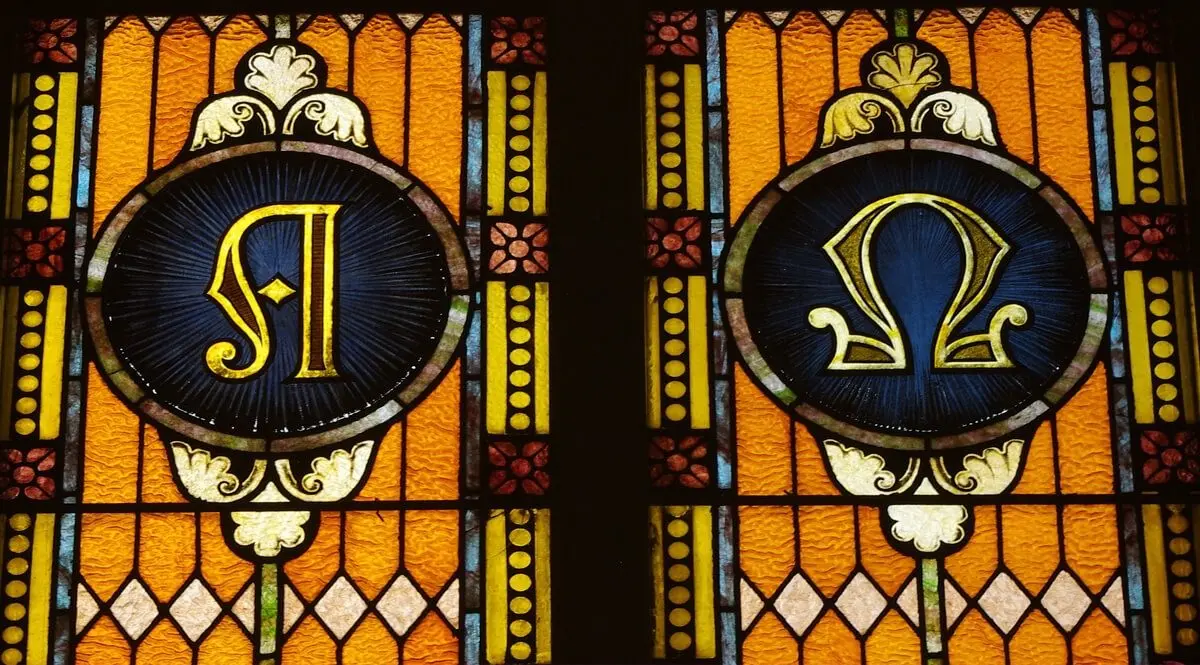
and where he is, his permanence and his power, and that he is the one that has been sent to us. He begins the second chapter of Hebrews by saying, that being the case, we ought to give the more earnest heed to the things we have heard, lest at any time we should let them slip. For if the word spoken by angels was steadfast, and every transgression and disobedience received a just recompense or reward, how shall we escape if we neglect so great a salvation, which at the first began to be spoken by the Lord and was confirmed to us by them that heard him? When you think about it, the identification of Jesus as Lord establishes his divinity in the eyes of the first Christians. He was the son of David? Yes. But he was also David’s Lord. Later in this second chapter, Paul will continue by saying in verse 14, For as much then as the children are partakers of flesh and blood, he also himself likewise took part of the same, that through death he might destroy him that had the power of death, that is, the devil himself. and deliver them through fear of death, who through fear of death were all their lifetime subject to bondage. For in truth he did not take upon himself the nature of angels. That’s an interesting statement all by itself. He took upon himself the seed of Abraham. By that he means he didn’t take on himself the nature of angels. He took upon himself the nature of human beings descended from Abraham. So in everything… It behooved him to be made like his brethren, that he might be a merciful and faithful high priest in things pertaining to God. And that’s a great deal of the point of the book of Hebrews, is that Jesus is our high priest. He is our king, he is our Lord, and he is also the priest who makes intercession to God for us. He is a merciful and faithful high priest in things pertaining to God. to make reconciliation for the sins of the people. For in that he himself has suffered being tempted, he is able to help those who are tempted. You know, the Christology of these first Christians is very high. There’s a statement that Jesus made in a confrontation with the Jews that John records. It’s in chapter 8, verse 52. The Jews said to him, Now we know that you have a demon. Abraham is dead. The prophets are dead. And you say, if a man seek my saying, he shall never taste of death. Are you greater than our father Abraham? He’s dead. The prophets are dead. Who are you making yourself out to be? Jesus answered, if I honor myself, my honor is nothing. It’s my father that honors me, of whom you say that he is your God. But you haven’t known him. But I know him. And if I should say I don’t know him, I should be a liar like you. But I know him, and I keep his saying. Now what he is about to say is going to really rock these men. He said, Your father Abraham rejoiced to see my day, and he saw it and was glad. And the Jews said to him, You’re not fifty years old, and have you seen Abraham? Jesus said, I tell you the truth. I say it. Before Abraham was, I am. They took up stones to cast at him, but Jesus hid himself and went out of the temple, going through the midst of them and passed by. You see, he was present with Abraham. Jesus apparently sat down and had a meal with Abraham. Jesus stood and talked with Abraham about the judgment he was about to make on Sodom and Gomorrah before he went on down to do it. Jesus had no beginning. He already existed at the very beginning. And so the first Christians understood him. One of the most dramatic illustrations of this comes at the very end of the Bible in the book of Revelation, where John, who was in the Isle of Patmos for the testimony of God, was in vision. And he says in Revelation 1, verse 10, I was in the Spirit on the Lord’s day, and I heard behind me a great voice as of a trumpet saying, I am Alpha and Omega, the first and the last, what you see, write in a book and send it out. And he turned around, he saw the voice that spoke with him, and he saw seven golden candlesticks. And in the midst of the candlesticks, one like unto the Son of Man. And I’ll tell you, you trace that concept of the Son of Man back through the Gospels, and you will see who it is. He was clothed with a garment down to the foot and girded with a golden girdle. His hair and his head was white as wool and white as snow. His eyes, though, were like a flame of fire. And he spoke and he said, don’t be afraid. I am the first and the last. I am he that lives and was dead. And behold, I am alive forevermore. Amen. I have the keys of hell and death. This is Jesus and no one else. He is the Alpha and Omega. He is the beginning and the end. And this is what the first Christians believed. Actually, he has no end, and he has no beginning. It was a manner of speaking.
SPEAKER 03 :
It was Jesus. The Born to Win radio program with Ronald L. Dart is sponsored by Christian Educational Ministries and made possible by donations from listeners like you. If you can help, please send your donation to Born to Win, Post Office Box 560 White House, Texas 75791. You may call us at 1-888-BIBLE44 and visit us online at borntowin.net.
SPEAKER 01 :
Stay in touch with the new Born to Win with Ronald L. Dart app. This app has all of your favorite Ronald L. Dart radio messages, sermons, articles, and it even has a digital Bible. Simply search on the iOS or Android app store to download it for free today.