



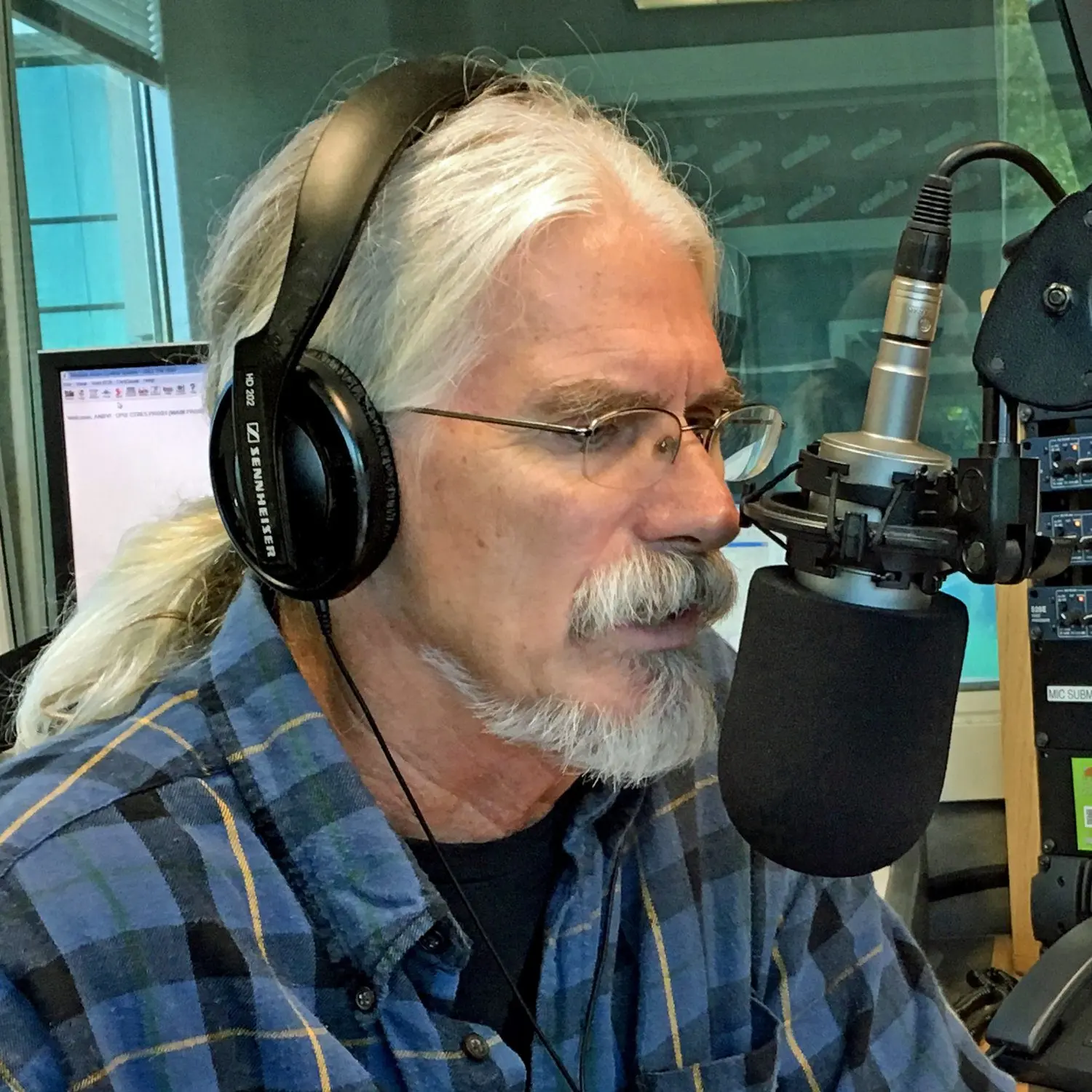
Join host Steve Gregg in this insightful episode as he navigates through intriguing discussions around biblical interpretations, particularly focusing on 1 Corinthians chapter 14. With upcoming debate announcements and passionate caller inquiries, Steve dives deep into the complexities of speaking in tongues, contrasting the experiences from Acts 2 and the Corinthian church. Listeners are invited to ponder the multifaceted nature of spiritual gifts and their application within the church today.
SPEAKER 09 :
Good afternoon and welcome to the Narrow Path radio broadcast. My name is Steve Gregg and we’re live for an hour each weekday afternoon. Taking your calls, if you have questions about the Bible or the Christian faith or anything related there unto, if you have a difference of opinion with the host and want to express an alternative view, feel free to do so. The number to call is 844- That’s 844-484-5737. Now, the one thing I need to start announcing, I have announced it before, but I need to start announcing it every day, at least until the event, is that in a little, about two weeks from now, I will be debating the on a weekend, on a Friday night, and a Saturday morning, and a Saturday afternoon, three debates with Dr. Michael Brown, who is a very well-known Messianic Jewish spokesman and scholar, Old Testament language scholar, and And he’s very well known. He’s got his own podcast. He’s written 40 books, I think, something like that, internationally known and widely respected, too. And we’re going to be debating this matter of Israel in Dallas, Texas now. Dr. Brown lives on the East Coast. I live on the West Coast. So I guess we’re going to meet in the middle. And that’s going to be November 7th and 8th. Now, the details of what times the specific debates are and so forth are posted at our Web site. And more than that, if you want to attend. You need to register. It doesn’t cost anything. There’s no admission fee. But they need to know how many people are coming because the venue is not the largest in the world. It’s a few hundred. And so you need to register. And if you want to do that, you can go to our website, thenarrowpath.com. And at announcements, you’ll find the announcement about the debate and the link to the church’s registration for the debate. And you might want to not delay. By the way, at our website, the Narrow Path website, we also have that link posted. They have on their registration page a running number of how many seats they have left. And it looks like they have a little less than 200 seats left. So I don’t know. I mean, Dr. Brown has quite a large following. I don’t know how large my following is, but they are all over the world and all over the country, though, of course, not all will want to fly into Dallas, Texas for a weekend. But maybe just our Dallas or our Texas listeners will want to be there. Still, there’s limited seating. And so I would suggest if you hope to go to this debate in Dallas, that you go to our website, thenarrowpath.com, look under announcements and find the link to the registration page and just put your name in there and how many people come, I guess. I haven’t looked at the page. I’m not registering because I’m not planning to sit while I’m there, at least not on the floor. So anyway, that’s the thing you need to know about if that interests you. We’re going to be talking about the status quo. of Israel, especially the modern nation of Israel today. Very controversial at this present time, but lots of people are curious about it. So that’s what’s going to go on. November 7th and 8th, that’s a Friday night, and two sessions on Saturday, Dr. Michael Brown and myself debating this Israel question. Anyway, we’re going to go to the phones now and talk to Rich in Everett, Washington. Rich, welcome to The Narrow Path. Thanks for calling.
SPEAKER 04 :
Oh, hey, Steve. Thank you so much for having me on. I really appreciate your show and I guess really your ministry. Thanks for all your hard work and what you do.
SPEAKER 09 :
Thank you.
SPEAKER 04 :
You make it sound easy, but I’m sure it’s a lot behind the scenes. Hey, I was wondering if I could ask you some questions on 1 Corinthians chapter 14. Sure. Specifically kind of verses 2 and 23 that are kind of connected. But as we approach it, I was wondering if we could kind of like, I could ask the question kind of like, what does it say? What does it mean? What does it mean to me? But let’s just approach it from like a cessationist view. I’m not a cessationist, but hey, Paul wrote to these people in the first century. What was he trying to tell them? Intended to them, applicable to them, right?
SPEAKER 06 :
Okay.
SPEAKER 04 :
And I’m just curious. In verse 1, it says, Pursue love, yet desire earnestly spiritual gifts, especially that you may prophesy. For one who speaks in a tongue does not speak to men, but to God, for no one understands. but in his spirit, or spirit, he speaks mysteries. Now, when I look at Acts chapter 2, it seems to demonstrate kind of the opposite of that. These people heard them speaking in their own language, Medes, Persians, Mesopotamians. What is Paul saying in verse 2 when he says no one understands him, he speaks to God, when the example in Acts chapter 2 seems to be that’s what tongues was, people were understanding them.
SPEAKER 09 :
Well, yeah, that’s right, that’s what tongues was in Acts chapter 2, and it perhaps is still that sometimes. Paul is not talking about tongues in that usage. I think he’s referring in verse 22 to that, where he says, therefore tongues are a sign, not to those who believe, but to unbelievers. So definitely in Acts 2, tongues was a sign to the unbelievers that God was doing something, and Paul was aware of that usage of it. But in the case of the Corinthians, he’s talking about what tongues does in the church. Now, the church, apparently, if tongues is spoken there, it’s quite a different matter. Because, as you say, he says no one understands him. You need to have an interpreter. That wasn’t the case in Acts chapter 2. That was not the case. There were no interpreters and there was none needed. Because the languages spoken were intelligible to the people listening. So he’s got something else in mind as tongues here. He’s talking about tongues in the church. Now, the church is not unbelievers. The church is believers. So he’s saying there is a use of tongues. Apparently, it’s a very different kind of use than there was on the day of Pentecost for the edification of the individual and of the church. Because he says… In verse 3, he who prophesies speaks edification and exhortation and comfort to men. He who speaks in a tongue edifies himself, but he who prophesies edifies the church. And at the end of verse 5, he says, he who prophesies is greater than he who speaks in tongues, unless indeed he interprets that the church may receive edification. So Paul believes that prophecy directly edifies the church. Tongues can edify the church if it’s accompanied with an interpretation. And otherwise, he says, you’re just edifying yourself. And later on in the chapter, he tells them, if you want to speak in a tongue, do it only if there’s an interpreter there. And he says in verse 28… In verse 28, he says, if there’s no interpreter, let him keep silent in the church and let him speak to himself and to God. So Paul indicates that speaking in tongues without interpretation, it can be used to speak to God. And, of course, that agrees with what he said in verse 2. You’re not speaking to men. You’re speaking to God. It also agrees with the fact that Paul talks about tongues as a prayer. He says in verse 14, if I pray in a tongue. My spirit prays. He says in verse 16, if you bless with the spirit, by that he means in tongues, how will he who occupies the place of the unlearned say amen at your giving of thanks, since he does not understand what you say. So you’re giving thanks, you’re praying. And he says in verse 17, for indeed you give thanks well, but the other is not edified. So speaking in tongues in the church, Paul says there’s something quite different than it was at Pentecost. It is speaking to God. It’s praying. It’s giving thanks. It’s blessing God, he says in another passage. And unless there’s an interpreter present, you shouldn’t do it in the church at all, unless you just keep it quiet to yourself and to God.
SPEAKER 04 :
Which implies it was happening in that church at that time.
SPEAKER 09 :
Well, I think all New Testament scholars would agree that that church was rather uniquely disorderly. And Paul’s principal concern in this chapter and in many other parts of 1 Corinthians is to address the disorderliness of the congregation there. Apparently, we can only read between the lines. It seems like a lot of people were speaking in tongues at the same time without interpreters just because they enjoyed it. And he said, well, that’s not for you just to enjoy when you’re in the church. In that church, you should be concerned about edifying everybody else.
SPEAKER 04 :
But it seems then… that 14 does establish that there’s a different view of the use of the gift of tongues other than just the example of Acts chapter 2. And that’s how they would read, even if it was just the first century, even then. Right? That’s interesting.
SPEAKER 09 :
Right. Yeah, I believe there were three different uses that Paul acknowledges. One is in verse 22 where it’s assigned to unbelievers. That would be what it was in Acts chapter 2. And then, of course, he does say it can edify the church with an interpretation. That’s a second use. Mm-hmm. And if it doesn’t have an interpretation, it can just edify yourself.
SPEAKER 04 :
Yeah.
SPEAKER 09 :
So it’s got three uses.
SPEAKER 04 :
And if I could, please, just one small follow-up question. Verse 22 and verse 23 almost seem like inconsistent.
SPEAKER 09 :
To contradict each other? Yeah.
SPEAKER 04 :
If you read it carefully, it says tongues are assigned not to those who believe but to unbelievers. But then the example, therefore, if the whole church assembles together and all speak in tongues and an ungifted man or unbeliever enter… will they not say you’re mad? Can you kind of stretch that out for me a little bit? Why do 22 and 23 seem to be inconsistent?
SPEAKER 09 :
Well, there’s been a number of explanations. One of them is that which was taken by J.B. Phillips in his Phillips translation, which is more of a paraphrase. But he just turned it right around and said tongues is a sign to believers and not to unbelievers. And then the example he gives is, would help uh but but he has an end note and he says in his end note and in his bible he says this is the only passage in where in translating i i deliberately departed from what paul said because he said it seems clear that paul contradicted himself and it was either a slip of the pen or copyist error. So he feels like, you know, the contradiction you’re mentioning, he feels is insoluble.
SPEAKER 04 :
Yeah, I know it is. I know it is.
SPEAKER 09 :
Exactly. And I’ve never done that with any passage and I don’t feel comfortable doing it. Now what I think it may be saying, and this is not certain because it is a notable difficulty, when it says, therefore tongues are for a sign, not to those who believe, but to unbelievers. But prophesying is not for unbelievers. But for those who believe, I think he may say in the next verse, therefore, if the whole church comes together in one place and everybody is speaking in tongues, it’s going to seem like a madhouse. And tongues is preferably useful for a sign to unbelievers. But if everyone in the church is doing it at the same time, they’re just going to think you’re nuts.
SPEAKER 04 :
But I think the simultaneous problem would be undone by verse 24 because he uses the same thing, but if all prophesy. if all speaking in tongues mean in sequence versus simultaneous, then the all prophesy would mean in sequence, not simultaneous, too. Because the same thing would happen even if you’re speaking a known language, but you’re all doing it at once.
SPEAKER 09 :
That is problematic. That is problematic. There’s no absolute agreement about how that’s to be understood. One thing I will say, though, you know, people who look for contradictions in the Bible sometimes point to this. There’s other places where similar passages people say are contradictions. Philippians… three, Paul says, you know, I’m not perfect. I’ve not yet attained neither am I perfect. But this one thing I do, forgetting the things behind and striving for the things before I press on. Then two verses later, he says, let those of us who are perfect think this way. Now, he’s just said he’s not perfect. And now he says, let those of us who are perfect think this way. Now, of course, there’s another one, too, in Galatians chapter six, where Paul says, bear one another’s burdens. and thus fulfill the law of Christ. And then, like a verse or two later, he says, everyone must bear his own burden. Wait, didn’t he just tell us to bear our brother’s burden?
SPEAKER 04 :
Those seem easier. I mean, that’s the tension between sanctification and justification.
SPEAKER 09 :
It’s also that in the two verses in Galatians, a different word is used. It’s just the King James translated both as burden. Likewise, in Philippians 3, the word perfect has multiple meanings. One means flawless, another means mature, and I think he means two different meanings there. But what I would say about it is those who think he contradicts himself in these three places have to assume that Paul was a very foolish or stupid man because you wouldn’t think he could say something quite plainly in one verse and within a verse or two say exactly the opposite. And the same thing in this case. I have to assume Paul did not contradict himself. There is, of course, the possibility of a scribal error that is a possibility because we don’t have paul’s actual handwriting anywhere and what we have are copies of copies of copies of his literature and once in a while i mean certainly textual scholars know that there are errors of various kinds usually not very significant in the bible but this could be a case of one it could be but that same argument can be made about the corinthians and the scholars they weren’t stupid either i mean they would
SPEAKER 04 :
Right. They reviewed new stuff. Somebody would have caught that, I would have thought.
SPEAKER 09 :
You’d think so. You’d think so. Yeah.
SPEAKER 04 :
All right. Thanks, Steve. I really appreciate it. At least it’s good to know that it’s not as simple as, I just thought, gosh, I’m reading this carefully, and I’m like, there’s a lot here that.
SPEAKER 09 :
If you’re seeing a problem there, that doesn’t mean you’re dumb. It means you’re paying attention.
SPEAKER 04 :
Thank you. Thank you. All right. Hey, be blessed in Dallas. That sounds like a super interesting and great debate. When you come to mine, I’ll be praying for you down there. Thank you.
SPEAKER 09 :
Thanks, Rich. All right. God bless you. Okay, Dan from Glencoe, Minnesota. I think we talked to you yesterday. Welcome back.
SPEAKER 06 :
We did, and very good. Can you hear me okay?
SPEAKER 09 :
Yes.
SPEAKER 06 :
I’m a plumber. I’m in a basement, so I’m going to sit here. I’m sorry about that. That’s okay. Yeah, I will come out so I can call you up. Hey, thanks for listening yesterday. I want to be brief because I want – go ahead.
SPEAKER 09 :
You’re breaking up a little, but mostly you’re strong. Go ahead.
SPEAKER 06 :
Okay. So thanks for letting me call back. And I don’t want to take other callers’ time, but I just wanted to qualify one thing I said yesterday. Okay. You asked me why this woman get healed, and I said because of her unbelief. And that probably wasn’t the right thing to say because I don’t know. Yeah. Only God knows the heart of man.
SPEAKER 09 :
That’s true.
SPEAKER 06 :
That’s true. But I think it’s important to, I mean, you have to look at results that people have, of course, in the real world. But I think we have to allow that kind of thing and let the Scriptures reign supreme because our experience may be contrary to Scripture and we don’t build doctrine around experiences.
SPEAKER 09 :
Yeah, yeah. Well, but we can certainly tell from experience whether a doctrine that we hold is working or whether maybe we need to go back to the drawing board and relook at it. Because, for example, I mentioned a couple of days ago, I think you said you weren’t listening back then, but this came up. And I mentioned that Hobart Freeman was a Word of Faith teacher who pastored a church for a long time. And it is estimated that 90 people in his congregation died because they didn’t believe in going to doctors. And these were people who could have gotten better with a doctor. But they believed that going to a doctor is proof that you don’t have faith in healing.
SPEAKER 06 :
Well, I mean… Yeah, I think he was engrossed there. In fact, a dear friend of mine from Indiana went to his church. Oh, wow. And now he’s rejected everything. In other words, he threw the baby out of the bathwater. Yeah, Hobart, he died of disease himself. That happens to a lot of people. Very bad disease. But I’m just saying, another thing too, if I may say, mercy versus judgment, or mercy versus justice. And now, if it was mercy that God shows people if they get healed and And what appears to me is no mercy if they aren’t healed. They just continue to suffer in pain, sickness, and early death, even though they have small children and a wife at home. Where would faith fit into that idea? I mean, if it’s mercy, faith should be irrelevant then, right? Wouldn’t mercy be independent of one’s faith?
SPEAKER 09 :
James tells us if we don’t ask in faith, we shouldn’t expect to receive anything from the Lord. Just because God requires faith doesn’t mean that he is forced, because I have faith, to do something that he doesn’t think is in the best interest of me, my family, or his kingdom. That is, God is still the sovereign one. I’m not the one dictating whether I’ll get well or not. He is. And so, I mean, many people pray in faith to be healed. I’m sure that, you know, Johnny Erickson Tata, I’m sure many people have prayed for her to be healed. I think when she was younger. just after her paralysis, I think she trusted God for healing. I don’t think she believes for healing now, but the thing is, it’s not like she’s ungodly, and I don’t think it’s that she lacks faith.
SPEAKER 06 :
It’s not based on godliness. It’s not based on godliness. But God has not chosen… I’m sorry, Steve.
SPEAKER 09 :
Go ahead.
SPEAKER 06 :
Do you know that Kenneth Hagin, Andrew Womack, I believe they used… scriptures correctly when they say that if it’s on the atonement and it’s been purchased like our salvation um you know i’m saying it it doesn’t matter it’s not an issue of getting god to do anything in his mercy he died and took wounds and bruises and suffered a naked shameless death on the cross to pay for to restore humanity and pay for our healing he doesn’t want us to live in pain and that’s what love does love you have a child that’s in pain You’re going to tell them, well, this is for your good, and I don’t know why, but just live with it or die with it.
SPEAKER 09 :
Well, I would say that if my child wasn’t healed, I’d say, well, hey, God’s got a purpose for this. Let me just answer that thing because you’re bringing up the mercy versus justice thing. My argument that I give in my lectures on this is that if God has purchased, if Christ has purchased my salvation and my healing, then it is a matter of justice. for God to give it to me. If I meet the conditions, which are faith, then it’s a matter of justice. Not that God owes it to me. He owes it to Jesus to forgive me. And he will. And we can count on that because God is faithful and we are told that Jesus did die for our sins. We’re not told he died for our sicknesses, and yet if he did, if he died for our sicknesses to be healed, then it’s equally a matter of justice that God must heal us if we have the faith. And only, of course, if we say that people who don’t get healed simply don’t have enough faith. that would mean we need an almost impossible amount of faith because some people who had incredible faith have died, you know, sick when they were trusting for healing. So, I mean, it raises, well, how much faith do I need to also get saved? I mean, maybe, see, I can’t see if I’m saved or not. I can see if I’m well or not. So if it takes that kind of faith, that is the kind that requires healing of cancer, you know, let’s say, to be healed. But it’s been purchased fully for me at the cross, as you say. Well, then, how come I don’t get healed of cancer? Now, if the argument is you don’t really have that good a faith, then I have to say, well, okay, I can see that then I don’t have enough faith to be healed. It must be then I don’t have enough faith to be saved either, which is something I can’t see. So I think this doctrine… erases any certainty of salvation to people who do not get well. But see, I don’t think the Bible says that Jesus died for our sicknesses to be healed. I don’t see it anywhere in the Bible. And, you know, I know the verses they use, and I can exegete them. The ones most necessary to their position are Isaiah 53, 4 and 5. And anyone can go to my Isaiah lectures or my Word of Faith lectures or whatever, and I exegete those from the context, from the context of Isaiah, from the context of the passage, and from the context of the New Testament’s quoting of these verses. So we can pretty well figure from three lines of evidence what they mean. And if someone says, yeah, but I just want them to mean something else, well, I mean, we might. If wishes were horses, you know, beggars would ride. But we can’t just take the verses the way we wish they meant. Now, the people who have gotten healed have often been people without much faith. I went to some Catherine Kuhlman meetings, and she called people on stage who felt that they got healed during the meeting. And many of them said, I didn’t believe in this when I came here. I was just sitting there, and while Catherine preached, I just felt my pain got better. I just felt it. And now I believe. Okay, so the healing came before the believing in their case. They did not believe they’d be healed, but they claimed that they did. Now, so I know people who did believe they were healed, and they weren’t. And now I know people… of people who didn’t believe they’d be healed, and they were. So it seems like there must be, Kenneth Hagin and these guys must be missing something, because it just doesn’t work. It just doesn’t work. People who expect to die and don’t confess their healing often get miraculously healed. And people who say, well, I would die except Jesus, by his stripes I’ve been healed, therefore I won’t die, and I’m healed, they die that way sometimes. So, in fact, I dare say, even in the Word of Faith churches, there’s not very many documentable healings, though they all believe they’re supposed to be healed. I remember, and I don’t follow Hank Hanegraaff that much, but I remember him saying that he contacted Benny Hinn, asking him to send him the three most convincing cases of healing that have ever happened through Benny Hinn’s ministry. And Eventually, he got those examples, and he looked up those people, and the people weren’t healed at all. So if those were the most convincing ones, in Benny Hinn’s worldwide ministry, when we hear that there’s a lot of healing going on, But really all we see is people falling over. We don’t see their medical records and we don’t see the obituaries, you know, a few weeks later in their town. So I’m going to say I’m not going by experience. I’m going by exegesis. But it just so happens that experience confirms my exegesis. And it doesn’t confirm the interpretations of the guys teaching that doctrine. So you and I may just disagree about that. That’s fine. But, you know, my lectures on this, I think, cover most of the bases. I appreciate your call, Dan, but we’ve been talking a long time and I have a break right now. And another half hour coming up. God bless. All right. We have another half hour coming up. At this point, we’d just like to let everyone know that we are a listener-supported ministry. And if you’d like to keep us on the air, I just want you to know some things. Our regular listeners know this, but you might not. We spend about $140,000 a month to radio stations to be on the air. We’re on the air on stations across the country, and it’s expensive. Also, we have no sponsors. We don’t take any commercial breaks. Also, we don’t have any expenses other than radio stations. We have no overhead, no payroll, no offices, no employees of any kind. No one is paid here. So it’s a pretty lean operation. If you’d like to help us stay on the air, you can go to our website, thenarrowpath.com, and you’ll see a donate link there. Check it out. I’m going to be gone for 30 seconds. Stay tuned. We’ve got another half hour.
SPEAKER 02 :
The Narrow Path is on the air due to the generous donations of appreciative listeners like you. We pay the radio stations to purchase the time to allow audiences around the nation and around the world by way of Internet to hear and participate in the program. All contributions are used to purchase such airtime. No one associated with The Narrow Path is paid for their service. Thank you for your continued support.
SPEAKER 09 :
Welcome back to the Narrow Path radio broadcast. My name is Steve Gregg, and we’re live for another half hour taking your calls. Our lines are full, but I’ll give you the number anyway if you want to try to call later. The number to call is 844-484-5737. Our next caller is John from Orlando, Florida. Hi, John. Welcome to the Narrow Path. Thanks for calling.
SPEAKER 05 :
Hey, brother. How are you doing today?
SPEAKER 09 :
Good.
SPEAKER 05 :
Good, good. Can you hear me okay?
SPEAKER 09 :
Uh-huh.
SPEAKER 05 :
Okay, good, good. Say a quick comment to set up my question. You know, it concerns the struggle that people have with being angry with God. You know, it’s something that I’ve never really been able to relate to at all. Me either. Because just, yeah, it’s kind of like my thought is like, well, wait a minute. Any kind of struggles or trials that I’m dealing with in life, there seems to be two options. A, it’s not by the hand of God. It’s just a part of life. Life is difficult at times, and so we’ve got trials. If it’s not from God, why would I be mad at God, angry at God? Or B, it is from God. Actually, it is his will what I’m going through. Hey, if it’s his will, then why would I be mad at him? Don’t I pray and seek his will?
SPEAKER 09 :
It’s got to be good. Yeah, if it’s his will, it’s got to be good because he’s all good. Yeah.
SPEAKER 05 :
Yeah. Amen. So having said that, I’m pretty sure I know what you’re going to say on this, and we’re going to be on the same page, but I’m curious to hear you articulate this. When someone will say, hey, it’s okay to be mad at God because, you know, look at the Psalms. All through the Psalms, David expresses anger towards God, and he’s just open with God about his anger, about that David is angry with God. What are your thoughts on that? How do you respond to that?
SPEAKER 09 :
Yeah, well, first of all, when I read the Psalms, I’m not sure I can read anger into David’s words. He’s got lots of disappointment. He’s got a lot of questions, you know. And, you know, whether they’re angry or not, I guess a person would read into it probably whether they tend to be angry or not. I mean, when there’s passages that don’t have to be understood as anger, But we’re angry about the same things that those passages are about. We may assume the psalmist is also angry. More often, the psalmist is despondent in asking God, why? Why is this going on? And praying for it to change. And then usually the psalm ends with him praising God that things are going to turn out well. So he’s got faith in God. He’s not angry at God, as far as I can tell. Because you can’t be angry at God unless God did something wrong. You don’t get angry at people, I hope, unless they do something wrong. Now, there are people who get angry at people who did nothing wrong. But the people who are getting angry are simply being infantile. You know, a mature person does not get angry at someone who doesn’t do things wrong. And since no one has ever proved that God did anything wrong… Now, they can say, well, I don’t like what God did. Okay, so you and God have a difference of opinion about what’s right and what’s wrong. Who’s more likely to be correct in their opinion about that, you or him? Anyone who thinks they can fault God is somebody who thinks they’re on God’s level or above him so that they can cast judgment on him. And this is the problem people have, is they are wrong. so full of themselves and so confident in themselves and so accustomed to putting their own opinion above that of everybody else, they bring the same attitude to when they’re thinking about God. Well, you know, he’d better have some good answers for me or he’s not going to earn my worship. Yeah, well, I don’t think God’s interested in earning anyone’s worship. He doesn’t have to earn it. He already is worthy of it. He already deserves it. So, you know, if you don’t want to worship him because you don’t like what he’s doing… Well, that’s up to you. There will be consequences someday. I mean, because your life will be a mess if you don’t put him first. But, you know, I think it’s all a problem with self-image and self-importance and narcissism, which is a very common thing among narcissists. people who aren’t Christians, and frankly, people who call themselves Christians sometimes. So that would be the main issue there. Now the Psalms, like I said, I don’t think David or the psalmist thought they were on God’s level or that they were above him to judge him. I think they were curious. God, what’s up? How come this is going on? And also they were in pain a lot of times. But most of the Psalms that begin with despair end in rejoicing and in confidence in God. And that may be one of the great functions of praying to God. Peter said, cast all your cares upon him for he cares for you. How do you cast your cares on him? Well, by praying about him. You’ve got some burdens on your heart. You pray and pray and pray until you’ve gotten your perspective right. Now, that’s not all that prayer is for. Prayer is for getting things done, too. But it’s certainly, if done right, it puts you back in the right mind again, that who’s God and who’s not. You’re not. So that would be the main thing. Job seemed like he was kind of at the edges of getting angry sometimes. He’s more like the psalmist. He’s wondering, curious what’s going on. There were a few statements that Job thought. He expressed some things about he’s not so sure that God’s doing the right thing. But in the end, he realized that he was the one mistaken. God did rebuke him for it. And Job said, well, I’ve heard of you with the hearing of the ear, but my eye now sees you and I loathe myself and I repent. And God restored him at that point. So, you know, you’ll find maybe people who kind of start to get a little angry at God, but I don’t really think that they go very far in that direction because emotion is one thing. It arises. and if we begin to express negative emotions, whether it’s lack of faith or anger or some other, you know, a godly person reigns that in pretty quick because they realize, wait, wait, wait, I’m talking to God here. I need to remember who I’m talking to.
SPEAKER 05 :
Yeah, right. Yeah. Yeah, Steve, your answer doesn’t surprise me. I appreciate you hearing that. It also kind of confirms what I was thinking because I was thinking, you know, when I was pondering that, I thought, you know what, I don’t know. I can’t really think of David really being angry, but your recall of the Psalms is greater than mine. So I thought, yeah, I wonder if Steve would agree with that. So I appreciate you answering that.
SPEAKER 09 :
All right, Todd. Thanks for your call. God bless you. Bye now. Okay, our next caller is Cody from Baytown, Texas. Hi, Cody. Welcome.
SPEAKER 07 :
Hey, good afternoon, Steve. Good afternoon.
SPEAKER 09 :
Yeah.
SPEAKER 07 :
Hey, keeping with the current, the last couple of days, I know you’ve taken calls about the subject of kind of word of faith. And I’ve never been that, you know, kind of like a Kenneth Hagin or those kinds. But a man, a family member in my life who was very formative, you know, in my Christian, you know, kind of discipleship, my early walk, he kind of used to… based from the scripture of like proverbs like a man shall eat well by the fruit of his lips so he used to kind of say don’t uh like if you say hey i have a bad memory he would say no don’t you know don’t don’t say that because your name you’re you’re claiming that he’s you know he’s like our words have power so you should say i struggle with my memory instead and just kind of made that a practice and now i find with my daughter she’s coming of age and i’m i kind of find myself kind of instilling those things too but is that I just wanted to ask your opinion as a spiritual, you know, you’re a professional. Is that going too far or is that a good principle?
SPEAKER 09 :
Well, let me just say the word of faith is called that, the word of faith doctrine, because they believe that your words express what you have faith in. They express what you believe, which no doubt is true. But they say you’re going to have what you believe, that when you believe something and say it, you are activating the law of faith that runs the whole universe. And in this, like I said the other day, because this has come up, I think, three times this week already, that it’s sort of like that pagan book that Oprah promoted called The Secret. There’s no God in that one, but the universe is paying attention to the way you’re talking. And if you say negative things, you’re manifesting bad results, which is, you know, if you say positive things, you’re manifesting good things. That’s just the same as the word of faith. It’s just that the word of faith has God in its story. But God behaves like the universe in this. You know, if you say things right, you’ll get what you want. If you don’t say things right, you won’t. And this has led to a couple of things that I think are really harmful in some people’s lives. One is They call it a positive confession. If you’re sick, you’re supposed to confess that you are healed. I am healed. Not that you will be healed. They don’t think that’s good enough. Because if you say I’m going to be healed, it means you’re not already healed and you’re supposed to confess that you are healed. You’re supposed to ignore sense knowledge and go with revelation knowledge is the terminology they use. And the revelation knowledge is that you are healed. Your sense knowledge tells you you’re sick. Go with the revelation knowledge and say, I am healed. And you have to keep saying that until it becomes what you experience. Same thing with prosperity. If you’re poor, just say, I am prosperous. Let the poor say, I’m rich, they say. And again, they’re seeking to manifest these realities in the universe, but they pretend that God is the one who is operating under his principles. But God doesn’t operate under that principle. But when they say that, they’re saying that God wants us to say things that simply are not true. This is what’s really difficult. The Bible does talk about the need to confess things like confess our sins. In fact, the word confess almost always refers to confessing bad things. You know, I don’t confess that I did the right thing. I confess I did the wrong thing. That’s what confession suggests. But they say, no, you have to confess all good stuff, even though reality isn’t all good. So you have to pretend. You can’t tell the truth. You have to tell a lie because it’s the lie that will work for you. Well, I think some people in court who are guilty of stuff, they tell lies that work for them, too, if they can be believed. But we’re not supposed to lie. If I say I’m sick and if that’s what the symptoms tell me, that’s telling the truth. And telling the truth is far more honorable in the sight of God. than trying to manipulate reality so that the truth doesn’t remain the truth. We don’t change the truth by confessing it. If there’s to be a change, it comes through prayer, not through our… See, if our confession, then we have the power, just like a magician has, to say the right words, say the right spells, and you can make things happen. Well, that’s in the occult that may be that way. But in God’s world, we let our requests be made known to God. And then he decides if it’s in our best interest and his to grant those specific requests. And if they are, he does it. If they aren’t, he doesn’t. That’s the way the Bible teaches it. And there’s not a word in there about positive confessions. But the other thing this doctrine does to people that I’ve seen who are very serious about this is, is it makes them nervous about what they say. Oh, is that a negative confession? I need to only say positive things. But a lot of things you can talk about in the world are really negative things. And we’re very strongly tempted to speak honestly about them. But if we do, we’re making negative confessions. And so when you talk honestly, you’re going to say some negative things because reality is negative sometimes. And yet people who have this doctrine are afraid if they say the negative truth, if they acknowledge it to be real, then it will remain real. But if they deny that it’s real and speak only positive things, even when things are negative, then somehow that’s supposed to change things. For about 99% of the people who practice it, it doesn’t work. Okay? And the people who are attracted to it, it may be partly because the people attracted to it aren’t really saved yet. I’m not saying they aren’t. I’m just saying there are people in churches who are not saved. And it seems to me the people who are attracted to that kind of church is are attracted to healing and prosperity rather than to Jesus. I mean, what if they had to go through tribulation? What if they had to be poor for Jesus like Paul and the apostles were? What if they had to have a thorn in their flesh like Paul did? And he had to just say, well, I’ll rejoice in my infirmity because when I’m weak, I’m strong. Well, these people, if the gospel was preached to them like Paul and the apostles understood it, these people might not be there, you know? You know, the churches that preach only that you’re going to be prosperous and well are going to attract a whole bunch of people who wouldn’t be attracted to the real gospel. And so you’re going to have a church full of people who aren’t really converted in many cases. And that might be why they don’t get results. But the other reason is because their doctrine is false. And the promises they think are there, they should study better. But very few of these people really are Bible students. In fact, I’ll just say, not even just referring to those people, very few Christians are Bible students. Relatively few read the Bible for anything other than promises and proof texts for their views. Exegesis is a rare thing among most Christians. And so, you know, they read something, it sounds like what they want it to be, and so they go run with it. And that’s one of their proofs of it.
SPEAKER 07 :
And would you say that in Proverbs, like, for example, that one that says, man shall eat well by the fruit of his lips. I know you’ve mentioned before Proverbs is kind of like not for sure doctrine. It’s just kind of like guideline, you know, which does make sense.
SPEAKER 09 :
Well, it observes cause and effect realities. But it doesn’t say you’ll be rich if you say you’re rich. The fruit of your lips. may be that which offends people or wins them over. And anyone who lives by interactions with other people, let’s say people who are in sales, Well, if you’re insulting people, if you’re offensive to people in what you say, you probably won’t make many sales. I mean, let’s face it, your customers will find someone else. So, I mean, you’ll eat well if you speak well. It doesn’t say if you say you’re rich, then the riches will pour into your bank account. That’s simply not true. But it is true that the way you talk can get you fired from a job. Or can get you hired. I mean, the way we talk to people is maybe the largest part, one of the largest parts of any relationships we have and the quality of our relationships. And relationships have a lot to do with our relationships. employment and our success in our employment. So I don’t see any support for a word of faith in that verse because it just doesn’t say what they say. All right, Drew in Beeville, Texas. Welcome to The Narrow Path. Thanks for calling.
SPEAKER 08 :
Hi. Before I ask my primary question, I wanted to see if we could briefly return to the conversation with the first caller. And I wanted to ask you what you thought about the interpretation of 1 Corinthians 14 and that suggests that when Paul says that tongues is a sign to unbelievers, that he’s actually alluding to the book of Isaiah where it says, I’ll speak to them by strange tongues. So could it be the case then that he’s alluding to the fact that tongues has been used as judgment before, therefore it could be unnerving to unbelievers who would come in and hear everyone speaking in tongues and think, oh, this place must be under judgment as in the book of Isaiah.
SPEAKER 09 :
Well, yeah, Paul does quote Isaiah there in verse 21, just the verse before the one we were talking about. And he is amplifying on it because, you know, he quotes the verse and then the next verse just says, therefore, tongues are. So he seems to be amplifying that verse or commenting on it. But still, you know, what he says is still not crystal clear. I mean, different people have come up with different ways to deal with it. But it’s presented a problem for most people. But you had another question.
SPEAKER 08 :
Right. Here’s the primary question. So I’ve recently encountered the interpretation of Revelation 19, 11 through 21, that the vision that John has there is not actually about the second coming of Jesus at all, but that it’s about other things. And so my question is sort of twofold. Firstly, it’s how plausible is it that that vision in 19 is not symbolic of the second coming? And secondly, how would interpreting it
SPEAKER 09 :
as something other than the second coming uh impact one’s view of the millennium well the idea that the man on the white horse who is jesus of course uh coming and waging war uh the idea that that’s not the second coming of christ has some support within the passage but but of course it’s pretty graphically bloody you know people are wiped out and the Vultures come and eat them and things like that. So it sounds like it’s an actual physical judgment. But actually it says he’s waging war with the sword that comes out of his mouth. And his name is called the Word of God. Now, what comes out of your mouth is the Word of God. And Christ’s word is like a sword, a two-edged sword. And that’s the very thing that is seen coming out of this writer’s mouth. So it is no doubt a reference to Christ. But he’s conquering the world with his sword. as the word of God, with the word of God, the sword that comes out of his mouth being his word. And so some have felt that this refers to the gospel going forth, being preached. Now, he’s on a white horse. And some people say, well, you know, Jesus is going to come back on a white horse because of this passage. It’s the only passage in the Bible that mentions Jesus on a white horse. And, you know, other passages indicate he’s going to come in the way that he went away. He didn’t go away on a white horse, so maybe that’s not the way he’s coming back either. But there’s also a reference in Zechariah 10, 3, that’s talking about how God is bringing judgment, I believe, on the Syrians. This is the Maccabean War, in my opinion. It says, My anger is kindled against the shepherds. I will punish the goat herds. For the Lord of hosts will visit his flock, the house of Judah, and will make them as his royal horse in the battle. Now here Judah, God’s people, is said to be like his horse in the battle. And some would say that the white horse that the writer is on in chapter 19 of Revelation is the church. The church is carrying Christ and his word, the word of God, to the world and to the nations and making conquests. Now the idea here would be then, that this is not describing the second coming. It’s describing the process by which the gospel is going throughout the world and winning people, as it has been for the past 2,000 years, and that it’s not about the second coming of Christ. That’s a possibility. I mean, frankly, it’s a very real possibility. It seems like one could go either way, depending on how they understand the surrounding material in the book. But you said, how would that affect chapter 20? Well, in chapter 20, it begins with Satan being bound. If I were a post-millennialist, I would definitely see chapter 19 as the conquest of the world through the word of God. And when the world has been conquered in that way, that Satan, essentially his power over the nations, would be temporarily eliminated until the end of the thousand years is over. And that there would be a thousand years of righteousness in the world. And that would be the millennium in chapter 20. I’m not strictly speaking post-millennials, I’m amillennial, but this is a way that they would understand it, I would think. If I were a post-millennialist, that’s how I would understand it. And I have encountered numerous commentaries on Revelation that were not pre-millennial, that saw chapter 19 as not the second coming.
SPEAKER 08 :
So wouldn’t it be the case then that If Revelation 19 does not pertain to the second coming, then premillennialism is impossible.
SPEAKER 09 :
Not impossible, but not very likely. Yeah, not very likely.
SPEAKER 08 :
The reason I say not impossible… It seems to take away the reasoning.
SPEAKER 09 :
It does. Yeah, it does. I mean, one thing is that it’s not always necessary to assume that the vision in one chapter is talking about things that chronologically follow the vision in a previous chapter. So… I mean, whether it was about the second coming or the conquest of the world through the gospel in chapter 19, it’s always possible that chapter 20 looks at a different time frame. But there’s no basis for seeing it looking at a different time frame. So, you know, it wouldn’t be impossible to do it. It just wouldn’t be the most rational way to exegete the material. I appreciate your call, Drew. And I need to take another call before we run out of time here, if I can. Let’s see here. Who’s longest here? It looks like it’s going to be Barbara from Roseville, Michigan. Hi, Barbara.
SPEAKER 01 :
Oh, hi, Steve. Thank you for taking my call. My question has to deal with outer darkness. He talks about the goats, outer darkness. This would be the saints or Christians that fall short. And I read about outer darkness in various places, and I go to a variety of churches of different denominations, and no one teaches on this, that this is a real place. Am I missing something?
SPEAKER 09 :
Well, it’s hard to know because outer darkness is mentioned as the fate of people who get into trouble with God in several parables. In the parable of the wedding feast in Matthew 22, those who came to the wedding without a wedding garment are cast out of the wedding into outer darkness. And there are other places that speak about people being thrown into outer darkness. Some people believe this is hell, which it might be if this is talking about post-mortem situations. Or it may be that they’re excluded from the church. I mean, there is such a thing as excommunication where the church is the light of the world. And if they’re cast out of the church, they’re cast away from the light and into darkness outside. It’s outer darkness outside the place of the light. But I don’t really know. I mean, it’s one of those many things in the scripture that could be about the afterlife. It might not be about the afterlife. and it’s only found in parables typically, so parables are usually not entirely literal, so it leaves us without certainty about perhaps its application. All we can be sure of is it is definitely talking about a judgment of people who are cast off because of the things they did in the parable. Eddie in Paradise Hills, California, you there?
SPEAKER 03 :
Yes, Steve, how are you doing? All is well?
SPEAKER 09 :
Yeah, we only have a couple minutes, though, so things will go better if you give me your question. Go ahead.
SPEAKER 03 :
Yeah, I have a quick question. And without going through the whole thing, am I able to at some point in time forgive Satan for the thoughts he’s putting in my head to separate me from God?
SPEAKER 09 :
No. There’s no need to forgive Satan. Even God doesn’t forgive Satan. God was in Christ first. you know, reconciling the world to himself. But that’s talking about the role of humanity. Jesus became a son of Adam so he could redeem the sons of Adam so we could be forgiven. But Satan is not a son of Adam. He’s not of the same species. And Jesus didn’t become whatever it is that Satan is in order to save him. So I would say if Christ doesn’t forgive him, I don’t know. I can’t see any reason why we would be required to do so. But I don’t think Satan needs our forgiveness. And I don’t think we’re supposed to have really many thoughts of Satan at all, except to be aware of him. He’s a roaring lion seeking whom he may devour. We don’t have to think in terms of… See, forgiveness is a function of reconciliation. When somebody does you wrong, it alienates you from them. And in order to restore that relationship to a friendly one, You have to forgive. That’s what forgiveness is for. That’s why God needed to forgive us so we could be reconciled to him. God was in Christ reconciling the world to himself, not imputing their trespasses against them. But we’re not supposed to be reconciled to Satan. We’re not cultivating a relationship with him. And so there’s no reason to try to end our alienation from Satan. In fact, the more alienated we are from him, the better. Thanks for asking. We’re out of time, so just need to let you know The Narrow Path is a listener-supported ministry. You can write to us at The Narrow Path P.O. Box 1730 Temecula, California 92593 That’s The Narrow Path P.O. Box 1730 Temecula, California 92593 Or you can do that at our website where everything is free. It is thenarrowpath.com. Thanks for joining us. Let’s talk again tomorrow.
