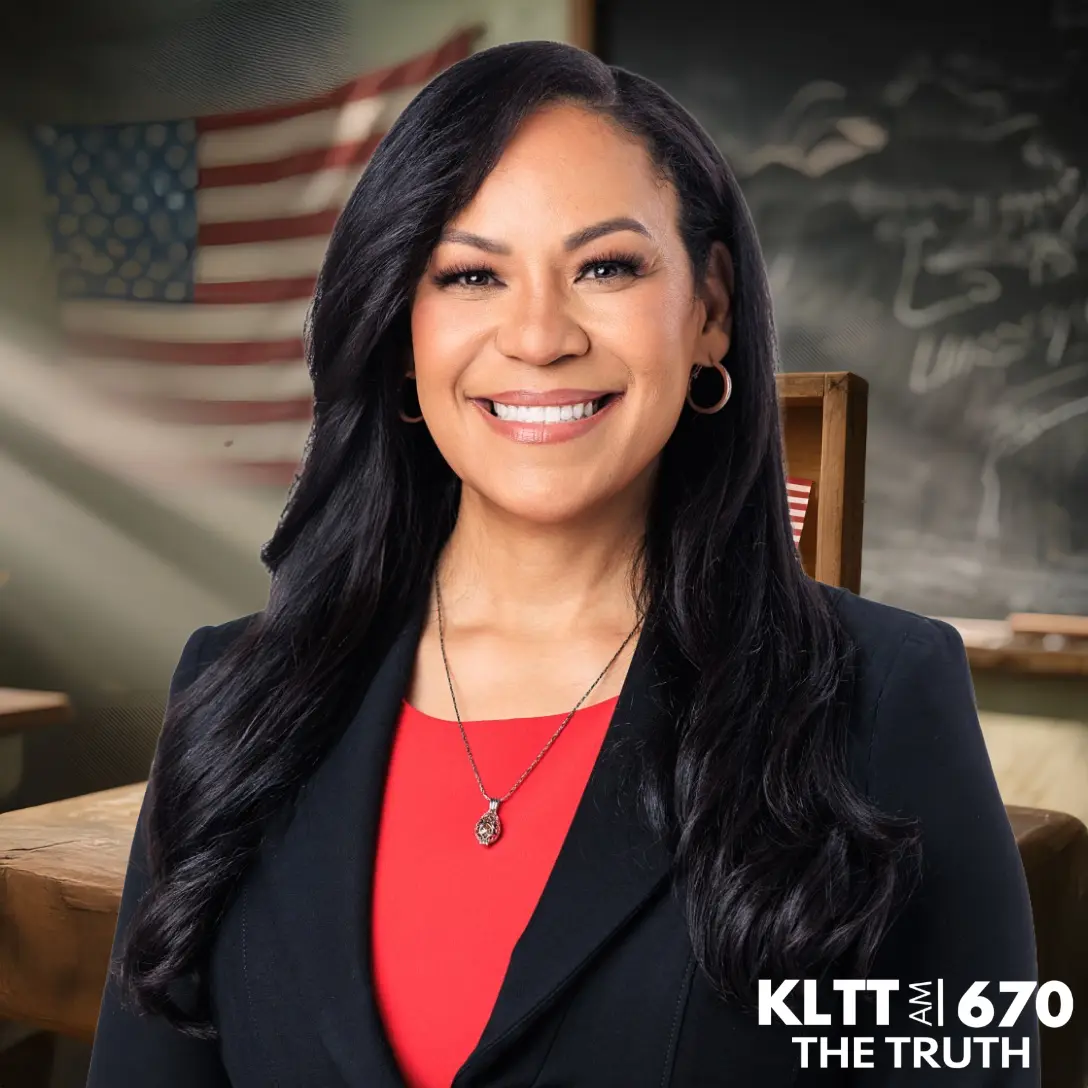

Dive into a compelling discussion with Priscilla Rahn as she hosts Bishop Garland Hunt on the pivotal roles of family and faith in education and society. Discover the mission of Excalibur Classical Academy and its dedication to instilling values and leadership in young minds. Bishop Garland Hunt, a prominent voice in public policy and justice reform, shares his insights on the legacy of Frederick Douglass and the vital importance of reinforcing the structure of Black families in America.
SPEAKER 04 :
Welcome to Restoring Education in America with Priscilla Rahn. She’s a master educator and author leading the conversation to restore the American mind through wisdom, virtue, and truth.
SPEAKER 01 :
Well, hello, everybody. Welcome to Restoring Education in America. I’m your host, Priscilla Rahn, and I’m so thrilled that you’ve decided to join the conversation today. We are opening a new private classical school this fall in the Centennial, Colorado area. It’s called Excalibur Classical Academy, and their mission and vision is restoring America’s heritage by developing servant leaders who are keepers and defenders of the principles of freedom for which our founding fathers pledged their lives, fortunes, and sacred honor. And if you have a young child that’s starting kindergarten through third grade, please go to their website to request more information or for a tour of the school. Their website is ExcaliburClassicalAcademy.org. Well, folks, we’re living in a day and age where families, fatherhood and faith really matter. And I’m going to bring a very, very special guest to the stage who’s going to talk all about it. fellow Project 21 ambassador and Bishop Garland Hunt. Hello, Bishop.
SPEAKER 02 :
Hello, how you doing, Priscilla? It’s a blessing to be here.
SPEAKER 01 :
Well, it is a blessing to have you for this short amount of time. I’m not going to keep you because I know you’ve got prayer meeting and that’s so important for you to be on time for that. But before we get into the conversation, I’m going to share a little bit of your bio with our listeners. Okay. Bishop Garland Hunt is a pastor, attorney, and national leader with more than three decades of experience in ministry, public policy, and criminal justice reform. He currently serves as senior pastor of the Father’s House in Norcross, Georgia. and as president of the Douglas Leadership Institute. Hunt previously served as president of Prison Fellowship, working with thousands of churches and volunteers across the country, and as the author of Crisis in America, A Christian Response. He has also served in key public leadership roles, including commissioner of the Georgia Department of Juvenile Justice and chairman of the Georgia State Board of Pardons and Paroles after being appointed by Governor Sonny Perdue. A graduate of Howard University and Howard University School of Law, Hunt began his legal career with the United States Court of Appeals for the Fourth Circuit and continues to advocate for religious liberty, racial healing, and justice reform. but your most important job is husband dad and grandpa that’s exactly right well i always like to ask bishop what’s your grandpa name it depends on which one which crank child you ask we we have actually eight grandchildren
SPEAKER 02 :
And the first four started with grandma and grandpa. So that’s where we started. But then if we got a little more sophisticated. So then it was for grandma, it’s tutu. And then for me, it’s pop-pop. So the last four have been tutu and pop-pop.
SPEAKER 01 :
Well, I love that. I love to ask grandparents that question because I get all kinds of different answers. And it just shows the diversity and the fun in families and the things that bring everybody together. So we have something in common. So you graduated from Howard Law School and my big sister and my brother-in-law both graduated from Howard Law School. That is amazing. And in our HBCU family, we know Howard is the creme de la creme. What was your experience like there?
SPEAKER 02 :
Oh, I loved it. That was my first choice, actually. I was actually accepted coming out of high school. for several different colleges, but I was focused on wanting to come to Howard because Washington, DC, it was the core of the, not only the capital, but at that point we thought it was chocolate city coming to Washington, DC. So we really enjoyed it. I really enjoyed it. And then, of course, Howard University has such a history. And I ended up, of course, being the president of the Undergraduate Student Assembly. I founded an organization called the National Organization of Black University College Students. We had national ministry going on. And I really enjoyed my undergrad time. And law school was more intense. But it was also a time when I spiritually got on fire for the Lord also. So it was a great time. I really enjoyed both undergrad and law school.
SPEAKER 01 :
That’s beautiful. So the first time I heard you speak was in Atlanta at DLI, Douglas Leadership Institute. And we know Frederick Douglass to be a man who was born a slave, freed himself, taught himself how to read, became the author of four autobiographies and the advisor to five U.S. presidents, Republican, by the way. He was born with nothing and died a millionaire, essentially. So we know our dear friend, Dean Nelson, who passed away, who started this, and you have taken up the legacy. What has that meant to you to continue to carry on this legacy, not only of our friend Dean Nelson, but of Frederick Douglass?
SPEAKER 02 :
Well, first, of course, Dean was almost like a spiritual son to me. He was a great man of God. He had a chance to really impart a lot to his life, even when he was a student at the University of Virginia. We had an organization called the New Generation Campus Ministry. He was one of our leaders. And so for him to pass on, and actually two days before he left this earth, He asked me, he said, would you take it on if I don’t survive this cancer? And I said, of course I will. And it’s been great because I feel like I’ve always been a part of it when he started it. And not only that, now I feel like it’s a part of my call because I really believe that we have to strengthen the Black family. Strengthen the Black family to me is the core of what needs to happen. Family is so very important and the attack on the Black family is significant. So they have an organization that I can oversee as president, and I’m honored to be the president, that talks about protecting the Black family in almost every capacity, even protecting the pre-born. So I can go into other components of the organization. But I think of all the concerns that Blacks have about poverty and all these other things, I think really more than Ku Klux Klan, the bottom line is fatherlessness in the black home. That’s really what the problem is. And that’s where we lack. And where we have literally three out of four black children are raised in a home with just one parent, a single black mother. That’s a real issue. Fatherlessness is a huge problem. And frankly, a curse that we have to break. and the Black community. So I’m honored that we have an organization that is structured to do that. And of course, Frederick Douglass, wow, wow. He’s a powerful abolitionist. And he was an activist, a writer, orator, internationally acclaimed. I mean, literally went from nothing as a slave to one of the most photographed heroes actually also of any American. But most of all, he had a powerful impact on particularly President Lincoln during the Civil War, you know, advocating for equality, for Blacks actually fighting. in the war, but as opposed, and now also a communicator. Now the North Star, he started North Star, and it communicated also. So I think that a large part of what took place during that time, which of course was a disgrace to families, when fathers were being auctioned off on an auction block, is very similar now because even now fathers are missing. And it’s so very important to have organizations that can advocate with the organization called Douglas Leadership Institute and also how Strength in the Family is one of the main pillars.
SPEAKER 01 :
I really love that that’s been an emphasis of the organization. I wrote a book, Restoring Education in America, and my very first chapter is about fathers and fatherhood. I was one of the very blessed and privileged young women to be raised by a Black father who was present at the time of my birth, was a provider, was married to my mom to the day of his death. And I am so blessed to have had that experience. And I think it really has transformed the way I view men and fathers because God has ordained this order. And it’s so important that not just men and specifically black men speak up about this. You need women to also say we honor God. how God has made the men the covering for us and as the provider, and that is the order. And when that order is there, everything, the whole community is in order and our children are healthier. So thank you so much for being a leader in this space to continue to encourage young boys. to step into their purpose that God has them for. Because for us as women, we need, the young, I’m married, but young women these days need to find strong men who know their purpose and will walk with courage in their purpose. But talking about that, Bishop, you were instrumental in the juvenile system for a very long time. You saw a lot. How did you, okay, well, what were some of the patterns that you saw with the young men that were entering into the juvenile justice system?
SPEAKER 02 :
Mm-hmm. Well, I tell you what, sometimes the left use the idea about the pipeline. And I tell you, it is true that you can see a lot of indicators from the family. And when you see this connect of the lack of fathers in the home, What happens is it causes problems in schools. And once they start acting up in schools, they begin to be considered as rebels and problem children. And then they get in trouble. They’re put out of school. They’re suspended from school. Eventually, they may even go to an alternative school. And before you know it, they start getting in trouble with the law. They may not finish school at all. And then once they start getting into the juvenile system, it’s just a precursor for the adult system. There are some of our kids that were literally, that have been at every different juvenile facility in the whole state of Georgia. I mean, because they are bounced around from one to one and they don’t care. You know, children sometimes can be a lot more detrimental to the society than even adults because they don’t have the experience of knowing how their actions will impact the rest of their life. and they think that they’re living for the now. And so in living for the now, they’re killed that they’ll steal, they’ll destroy, they may rape. I mean, things that are probably you would say, well, why would you do this? Why? It doesn’t make sense. But because they are so self-focused and so concerned about their self-identity and how they are viewed and how other people see them, and then they’re totally impacted by the acceptance or the rejection that appears, they’ll do anything for the sake of territory or to be important And so what happens is they end up getting into the juvenile system. And once they get into the system, I mean, usually they just continue. And matter of fact, I don’t know if most people even know because you are a focus on education. I don’t know if you knew that particularly in Georgia, but in most states, we also had a separate educational system just for the juveniles. In other words, every county of course has a school board, but we actually had to have our own school board just for the juveniles. So when they came in, they had to go to school and they had to learn. Many of them had failed out of school so much and had been so abstinent, it’s almost like they’re starting over. But for them to be able to start getting focused and be able to maybe even in some cases finish classes and in some cases get a GED, that was incredible for them because they’ve never succeeded. They’ve never been, had accolades. They never received certificates. There’s things that we would take for granted that we’re honored. When we would have our graduations, man, people would come and we would try to get their families, because sometimes even as a young person, sometimes their families give up on them. But when their families can come and they really can stand up and have on a cap and gown, And say, I’ve completed something. They are so proud because they have begun to have a sense of family and a sense of purpose. So these are some of the issues that we take for granted. But these young people need us. They need grown people, adults, that will believe in them. And fortunately, even the adults that look like them that will say, listen, no, don’t get in fights. No, you know, you’re going to get your life in trouble. And because it is a revolving door, in most cases, Those that are in the adult system, of course, come right back into the system, of course, with about 66%. And we call it our recidivism rate. Well, the same thing happens actually with the adult. Almost the same percentage of those same young people go on and graduate into the adult system. So they’re revolving a door in the juvenile system. And then it’s a revolving door once they get into the adult system. And that’s a very shame. Something hasn’t stopped. And quite frankly, as a man of God, I believe that they need God and they Archie Spencer, environments and God and mentors and those that can stay and you got to be patient with them. Archie Spencer, They need longevity they need people that will stay in there when they mess up they still say I believe in you, you can do this. Archie Spencer, So one of the greatest things for for a student and we call them students in this in the system is that you have to get them understanding the importance of education. And if they can understand that that’s one of the first things that they have to solve, sit up in the class, listen, be able to repeat things and begin to remember and study. And so for some of them it’s easy and some is not. But we have to take every child based upon their own situations. and help walk them through, hopefully, a successful time for the limited time they’re there, hopefully, or even if they’re there for longer term. But you have to believe in these young people.
SPEAKER 01 :
That is a great segue, Bishop, to the faith element. Because when we’re looking at a government-run system, where a lot of times we’re told, oh, separation of church and state, we don’t have time to go into how that term has been misused. I’m concerned about a lot of the things that I see from certain legislators who behave in ways that are godless or who behave in ways where they, it seems like they don’t really understand the constitution or our heritage. It’s one thing to know our history, but once we know our heritage, then we know how to stand up for these things. Okay, so let’s go back to the debate about whether or not we were founded as a Christian nation. I say at the very least, I believe, based on my understanding, that we were. And the reason why I say that is because in our declaration, it talks about our inalienable rights from our creator. And there’s only one creator because our rights don’t come from the government. Something really interesting happened in the Colorado State Legislature this past week. I’m going to play this for you. It’s super short. And I just want to get your reaction. Sure.
SPEAKER 03 :
Okay. Please join me in the Pledge of Allegiance. I pledge allegiance to the flag of the United States of America and to the republic for which it stands, one nation, indivisible, with liberty and justice for all.
SPEAKER 01 :
So, Bishop. He purposefully left out under God. He said that he is an atheist. And this is a state legislator who has sworn to uphold the Constitution. I’ll just share what I think. And I want to get your opinion as a man of God, because I feel like if you can’t acknowledge that God is the one that is the source of our freedoms, then you cannot make good legislative decisions that will protect my individual right. What’s your reaction legally and spiritually when you hear something like this?
SPEAKER 02 :
Well, let’s go back to, first of all, excellent question. I’m glad you asked. You mentioned a key word, and that’s the two words, inalienable rights. I was doing another interview actually yesterday, and I talked about civil rights. And civil rights is based on something that the Constitution can grant you. And typically speaking, most of us, and unfortunately even Black Americans, tend to look for what the government can do based on what is given from the Constitution. But inalienable rights come from God. The strength and the authority of a constitution of the United States of America is based on a God-given right and authority. So you have to submit to a greater God than the actual authority other than the constitution. The only way the constitution can work is that it’s based on the authority from God. Because rights have to come from God and eligible rights are that those authority that’s given by God to man. And then man basically is codifying what has already been given by God. So therefore, if a person looks at constitutional authority, actually they should be looking at that which is backed by god if it’s not backed by god then it’s just man so therefore when we talk about civil rights and fighting in the streets and we want our rights and women’s rights men’s rights black rights purple rights i mean whatever it might be gay rights those are not always those are not any eligible rights but but to live peaceably to be able to have the freedoms that God has given us, to be equally treated as not only just male and female, but black and white. All these things are inalienable rights. So therefore, the strength of any constitution is based upon its dependency on God’s authority. So when it’s not there, then it’s nothing but mere man trying to govern itself when we realize that we must have the backing of God. So a pledge of allegiance, of course, you pledge allegiance to a flag. A flag is just nothing but something that embodies stars and stripes of a country. But under God, it’s saying this is where we’re flowing. This is where we are participating in the United States. It’s our union. It’s based on a union with God. So it’s very, very key. An atheist goes against the very nature of godliness. So when you mentioned the founders, I mean, yes, the founders came here for seeking freedom of religion because they had been under a state-imposed religion. And they wanted to come here. One of the things they wanted to do was clearly say that there’s freedom of religion here. And so that freedom is one of the key things that we have in our country. So therefore, if you take this out, then you’re taking away the very beginning And of course, as being Black, people say, well, no, they had slaves and all. Yeah, I’m not saying these men were perfect. Certainly, they were not. Certainly, there were things that happened even in some of the accords and treaties that they had with Native Americans, all kind of things you can find to notify, to tell us that they’re men, because human depravity goes across the board. But still, they had the consciousness to dedicate this country unto God. They still wanted God to bless this nation. So absolutely. And I’m excited about 250 years that we can celebrate a patriotism. I love being American. And I’ll tell you something else. I know you didn’t ask this, but I want to just bring this up. One of the key things that we do, Priscilla, every year is Juneteenth. Now, Blacks and whites, it’s interesting now, people say, why you have to do the Juneteenth? Isn’t that liberal? Isn’t that bringing back slavery? We don’t want to talk about slavery. Are y’all talking about reparations? No, no, no. The fact of the matter is, this year we’re doing something very unique. Not only are we celebrating Juneteenth, but we’re also celebrating the 250th anniversary of the country and putting the two together. In other words, yes, as Blacks, we can celebrate Black achievement with people like Frederick Douglass. I mean, people like Collegey Woodson, the people that are Booker T. Washington, people that have been great heroes of the past, we can celebrate them even though we might have stains in our history, it doesn’t stain the flag. It doesn’t stain the birth of our nation. We have to say that coming here at least we still have America that we can serve and that we can be dedicated to and that we can be loyal to. So it’s interesting combination of Juneteenth and 250 years of celebration because clearly we’re not demeaning the nation. We’re celebrating what the Lord has done with us in adverse circumstances that we can still celebrate a nation that can receive all races, that we can work together, move together, live together in the pursuit of happiness and peace.
SPEAKER 01 :
Well, amen. And is it Selah? I got to show off I know a couple words in the Bible to a bishop. Okay. But that is a perfect segue, Bishop Hunt, to, you know, we know the famous speech by Frederick Douglass, what to a slave is the 4th of July. Fast forward 250 years. If Frederick Douglass was alive today because he advocated so many things, we’ve come a long way. They’re good and bad. What do you think his speech would encompass if he were here for this coming 4th of July?
SPEAKER 02 :
Well, I think that he would celebrate. But of course, he could not forget what we’ve been through. I think that probably one of the basic atrocities is to try to act as though those things didn’t happen. Sure, they did. But it’s not a demise to the whole history of the nation. But what it is, is that it’s just acknowledging what we’ve come through as Blacks in that regard. So even though there was a celebration of July 4th as the breaking from British control and that we fought for our freedoms and we celebrate our freedoms, I celebrate that too. We always celebrate the freedoms of our nation, but we also celebrate the freedoms that also Blacks are serving. I think it’s a dual celebration. So I believe that in that particular case, he wanted them to know that for Black people, clearly, we ourselves are still being free. We still understand freedom. But at the same time now, I do think that we would clearly celebrate being American. I don’t want to go back to Africa. I’m not, my history, Africa will not accept me. We say we’re African American, but I tell you what, they don’t, I can’t hardly tell you the tribe, even if you would to try to, you know, take your DNA and try to determine where you came from. The reality of it is, is I’m American and I’m proud to be American. I’m very proud, very patriotic. I’m very loyal to my country. Regardless of the adverse history, we’re here now and we’re working together. And I believe that Frederick Douglass will celebrate that also.
SPEAKER 01 :
Amen. I did my DNA. I found out I was from Cameroon and I felt like I had an identity. So now everybody I meet from Cameroon, I’m like, oh, you’re my cousin.
SPEAKER 02 :
And it’s funny because I have a prayer partner. We pray on Saturdays. One of them is from Cameroon. What I found out, one of the guys on the prayer, he actually did his DNA and he said it was Cameroon. What I’m realizing that a lot of Black Americans, particularly I guess on the East Coast, I don’t know if it’s geological in the country or what it is, have come from Cameroon. I said, that is amazing. So, hey, we’re probably cousins, too.
SPEAKER 01 :
That would be so fun. So, Bishop Hunt, where can people learn more about DLI and if they can follow you on social media? Do you have a handle?
SPEAKER 02 :
Okay, let’s talk about, first of all, if you want to follow me, the easiest way to follow me is actually I do have a website. So if you put GarlandRHunt or even GarlandHunt.com or GarlandRHunt.com, you can find My bio, you can get in contact with me and all that is there. And also within it, it also takes you straight to Douglas Leadership Institute, as well as even my church in terms of finding the church. Also, it’s called the Father’s House. And we’re in Peachtree Corners area here in the north of Atlanta, here in Georgia. So that’s one. So garlandrhunt.com or garlandhunt.com. if you want douglas leadership specifically it’s very easy it’s douglas leadership institute so it says dl institute dl institute.org if you can go to dl institute.org then you’ll go straight to our website at our website you can find out everything about the organization And I want to focus on one thing too, is that we’re building a momentum of people that are joining us. And really we want to call it a movement. So we have what was called the North Star Association. Of course, as I’ve spoken earlier, Frederick Douglass started a newspaper communication arena called North Star. And so it was an advocate for abolition. But in this particular case, we want the North Star Network to bring people together. So you can join the North Star Network. You can also communicate by giving, of course. And if you want to support us also on the website. But also there’s also our field because we are on Facebook. We are on Instagram. And so you can also find us there in that regard.
SPEAKER 01 :
Well, Bishop Hunt, thank you so much for your time. We have to land our plane. And to my listeners, thank you so much for tuning in and catch me next time. And remember, educating the mind without the heart is no education. So seek wisdom, cultivate virtue, and speak truth.
SPEAKER 04 :
Thanks for tuning in to Restoring Education in America with Priscilla Rahn. Visit PriscillaRahn.com to connect or learn how you can sponsor future episodes to keep this message of faith, freedom, and education on the air.