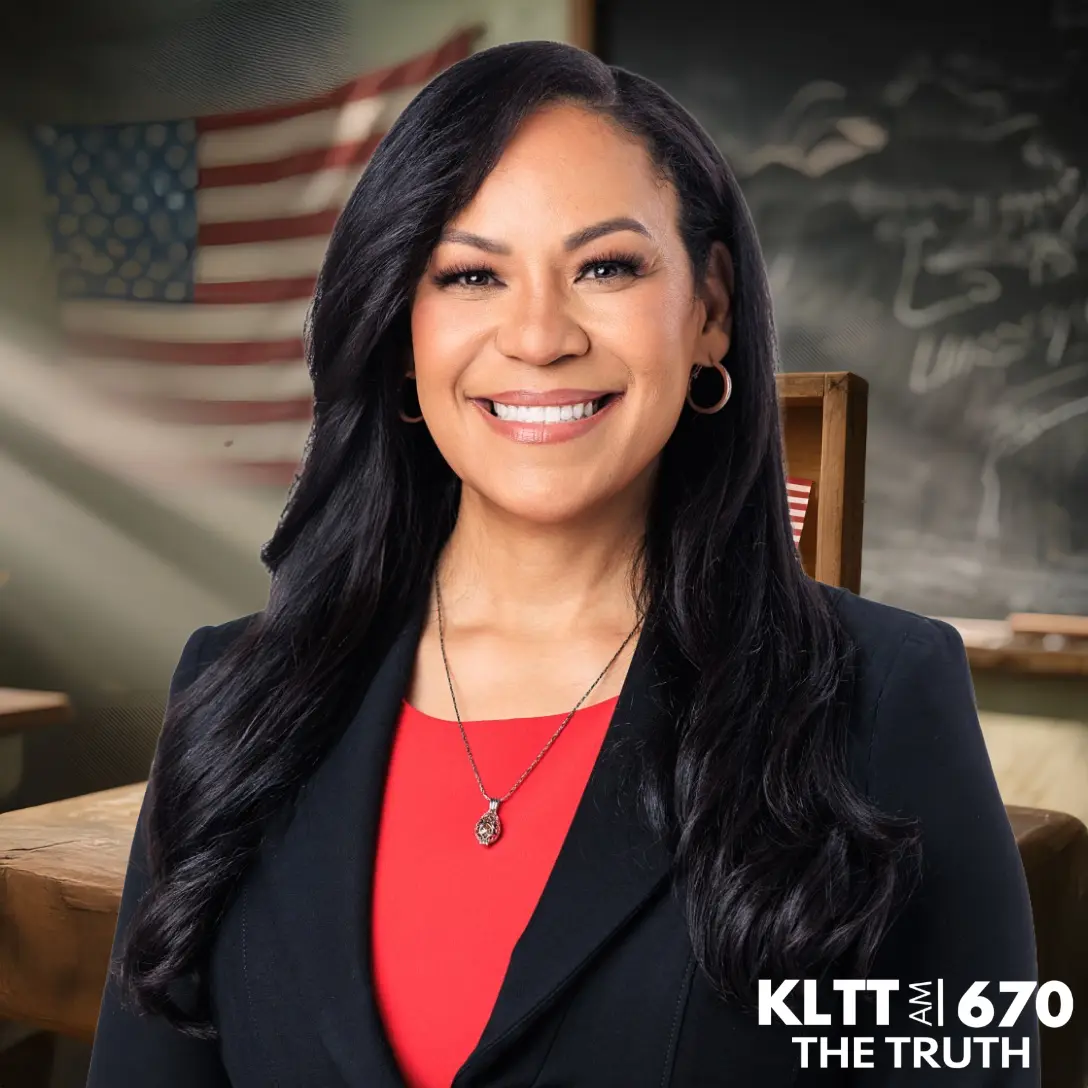
In this episode of Restoring Education in America, host Priscilla Rahn welcomes policy analyst and former educator Melanie Collette to discuss pressing issues in education today. Dive into Melanie’s decision to leave the classroom due to systemic mediocrity and explore how biases against conservative voices in education are often overlooked. Melanie shares her experiences navigating challenging educational environments, urging policymakers to consider alternate viewpoints in addressing educational reforms.
SPEAKER 01 :
Welcome to Restoring Education in America with Priscilla Rahn. She’s a master educator and author, leading the conversation to restore the American mind through wisdom, virtue, and truth.
SPEAKER 02 :
Well, hello, hello, everybody. Welcome back to Restoring Education in America. I’m your host, Priscilla Rahn, and I’m so excited that you decided to join the conversation today because I have an amazing guest. I know I always say that, but I really do. This is my good friend that I’m bringing up on the stage today. Welcome, Miss Melanie Collette. Hi. Thank you for having me. You are looking beautiful as always. We go back a little ways. We’ve been doing some media together. But for those people who don’t know you, I’m going to share a little bit of your bio. Thank you, sis. You look beautiful as well. Thank you. So Ms. Melanie Collette is a policy analyst for Committee for a Constructive Tomorrow. She comes to CFACT with a background in environmental energy policy work, especially in combating the offshore wind turbine groups and green organizations in their plans for northeast construction of wind farms up and down the Atlantic coast. As a policy analyst for CFACT and a host of the podcast How Money Works with Melanie Collette, she’s made it her mission to speak out against harmful or inadequate social and public policy issues, simplify economics and energy issues, and empower others with practical financial wisdom. Before stepping into the national spotlight, Melanie spent over 24 years in education and with 12 of those years dedicated to teaching business and technology. Her background as a former educator and current Cape May County Commissioner in New Jersey speaks to her deep commitment to serving her community. Beyond her local leadership roles, she’s also a former vice chair of the New Jersey Federation of Republican Women and now serves as vice chair of the Cape May County GOP. When she’s not analyzing policy or sharing money tips, Melanie is a regular face on television, known for her sharp, thought-provoking commentary on today’s hottest issues. With more than 400 on-screen appearances and adding three to five new segments weekly, her voice has become a trusted resource. on the intersections of media, education, and policy. Melanie’s public policy work and her passion for financial literacy has made her a sought-after speaker nationwide. And I got you today. That is embarrassing. Oh my, who are you? That is embarrassing to sit there and listen to that. I mean, I had to cut it down.
SPEAKER 03 :
You had like a five page, six page. You should have sent you the brief bio. Cause there are, I do have to, I have a brief bio for intros like that. And I have like a, like that one. Well,
SPEAKER 02 :
You know, I couldn’t, I couldn’t cut out any, like you, you’re so accomplished. And, and the reason why I wanted to have you on is because I know you were a teacher when we met, you were still in the classroom. Girl, I’m still in the trenches. Well, okay. Well tell, tell us the story. Why, okay. Why did you leave the classroom?
SPEAKER 03 :
Oh, so many reasons. Just a ton of reasons. The core reason was because of the mediocrity. Prior to COVID, I was already thinking about leaving the classroom. I’m just really big on intrinsic value. I went into the classroom to make a difference, and I wanted to teach kids. And kids were not learning, and nobody seemed to care that the kids were not learning. And I found that highly problematic. Additionally, you know, as a Republican and as a conservative, they are not very popular in the faculty rooms of public schools, generally speaking. Only about, I was looking up the statistics today, it’s 50-50 in any day membership. The candidates that they support with their money is 86% Democrat.
SPEAKER 02 :
I’m surprised that it’s… that low, 86%? I would have figured it was more.
SPEAKER 03 :
Well, 86% during the, I’m looking at the stats right now, at least during the 2021-22 cycle, which is the last kind of like recorded data that they have on it, it was 86% spending that went to Democrats and 8% went to Republicans. And this is very typical. And so I had several incidents while I was teaching that let me know that I was not welcome there as a Republican. And I think particularly as a Black Republican, I feel like they felt like they got a booby prize or some type of Trojan horse because I was a Black woman. And I worked in four schools, and in most of those schools, I was either the only or one of very few African-Americans, Black folks, period. So they really, really did not like me. And then on top of that, I’m a vocal one. So they didn’t like that. Like all the stuff and the things they didn’t like. And then when they would say crazy things, like during our professional development, I would raise my hand and say, absolutely not. I’m not having you tell this classroom full of white folks that Black kids can’t learn, that you can’t grade their grammar as harshly. Like, hey, maybe we should use a bionics. And, you know, I kind of, Saw some red flags I came in through what’s called the alternate route. I was in administration. I was an executive assistant in a private school before I went into the classroom because I felt like, why should it cost 30,000 dollars a year to get a good education? So I want to go into the front lines, go into the classroom. Always with the intent on working on policy, but. Because I’m like, something must be wrong with the policy. So, so I went through this thing called the alternate route, which means like, if in New Jersey, anyway, if you have a undergraduate degree, you can go in and take education classes. And you can become a teacher. So that’s what I did. But even during that course, the things that they were teaching, specifically the race based things, were really making me mad. And I just don’t know how to not say, I’m sorry, that’s unacceptable.
SPEAKER 02 :
Wow. Yeah, I know, because I don’t think people realize what the professional development had turned into, especially after the George Floyd protests and COVID hit. I mean, we started seeing the slow boil of, wait a minute, this isn’t really what I would consider professional development where you’re developing master teachers. This is even, we talk about indoctrination. It’s indoctrination of us as educators. And you’re 100% right, Melanie, that- You know, if you’re a teacher, you are just bred to be a vocal activist, period, whether you’re Republican or Democrat. We’re just vocal. And the fact that we are African-American and conservative just elevates our voices even more because it goes against the grain. And there was a time, remember that term BIPOC? BIPOC, Black Indigenous Person of Color. They were like, oh, we’ve got to elevate the BIPOC voices. Well, okay, here I am. Oh, yeah.
SPEAKER 03 :
Well, they want to use your lived experiences and diversity is their strength until you say something they don’t like. And I have had several incidents. You tell me which one, you know, if you want me to pick one where a white cisgendered male, I want to use, you know, the liberal speak, has looked me right in my black face and told me I was wrong about my black experience. Like what? I thought we were going by people’s lived experience that I’m sitting here telling you that that was not my lived experience. And you’re telling me that I’m wrong. The most egregious one. And it still gets me angry when I think about it. The most egregious one was I’d gone back to a school. I had gotten laid off, and then the position opened up. I went back to teach in a high school. At the school, happened to be the school that I graduated from circa 1988. My sister graduated from, my brother graduated from. I had taught there for a couple of years. I got laid off, and a couple of years later, a position opened back up. I went back. My very first faculty meeting, new principal. Granted, he inherited me. He didn’t know what he was getting. Came back tenured and all. Um, because I was senior when I left and in the 1st meeting, he’s talking about how we have to be careful and mindful of our numbers as far as disciplining and writing up African American students. And he says, you know, we have to really be careful about that. We have to be mindful of their environment and where they come from. I’m sorry what now understand. Understand I’m the only full time. black teacher in this room full of white teachers. And the reason why I keep pointing it out and the reason why that is relevant is because you have to understand the reason why liberals feel the way they do, you know, infantilizing African-Americans like they do, like they tend to do in their speech and how they talk about us and how they act like we need so much help and that we’re incompetent. That’s because that’s what they’re learning. That’s what they’re learning when they’re in school growing up and in high school. When they go to college, they get re-indoctrinated. And then it’s reinforced when they go back into teaching. So I am livid, furious, okay?
SPEAKER 1 :
Yeah.
SPEAKER 03 :
Furious. I leave the meeting. I’m on fire. I give myself 24 hours before I email this man and tell him, like, what? So… So I did the next day I emailed him and I was like, sir, you said this. And I was hoping that if he saw it in writing, he would realize the error of his ways. But instead he chose to retaliate. That’s what he chose to do. So for the next three days, I was coming to his office. Oh, you left five minutes late. It was for an emergency. And there were no administrators around. I asked his assistant if I could leave. And she said, yes, he’s going to bring me to the office for that. Like crazy stuff. So on the third day, When I got an email to come down with my union representative, I emailed him back and I said, so here’s what I’m going to do. I’m not coming down with the union representative. I’m copying my labor attorney. First of all, I don’t do unions. We had just gotten out of, the Supreme Court had just said that we didn’t have to be in a union anymore. So I said, I’m not in the union, but I do have a labor attorney who I’m copying on this email. whatever discipline you have for me um you can go ahead and reply to this email and attach it to this email and put it in my file but I’m done and I said I’m very surprised that this is how you’re choosing to handle this situation with the only full-time black faculty member that you have in the entire school but here we are so the next email I get is from the superintendent So, the next email I get is from the superintendent who asked me to come into his office. Would you be available to meet with me on Monday? Most certainly. Sure. Yeah. So, I did. And he’s like, Melanie, like, what’s going on? Like, I saw the email that you sent. I’m not going to say names. I’m going to be nice because these folks are still in the game. So… He’s like, you know, what’s up with the email? Like, why did you say that? You could have just talked to him. You’d have to put it in writing. I’m like, number one, I’m a business teacher. What I look like. Have you ever seen an episode of Judge Judy? But I look like not putting in writing. And also, that’s why I do attorney, sir. Got put stuff in writing. I’m a business teacher. Of course, I put it in writing. I definitely need to put in writing. But here’s the worst part. He said the way I understand it, the principal was. Advocating for African American students, I say, yes, that’s the problem. That’s the issue that I have. I said, because the way I see it is the way I heard it was. You know, don’t write African American kids up when they misbehave, because their environments are such that they can’t control themselves. They’re incapable of behaving themselves. So we’re just going to have to let that go. I said, and quite frankly, and you wonder, that one thing leads to another. If that lack of respect is not being addressed at home and it’s not being addressed in school, then how do you think respect for authority is going to go when they get to the workplace? And that’s part of our jobs as teachers. So this man is going to tell me that I’m wrong because of the data. And I was like, I’ve been in this black skin for over 40 years, sir. I went to that school. I teach at that school. I said, and that has not been my lived experience. I thought diversity was a thing. What are we doing? Now, this was like 10 years ago. And he was like, well, we’re going to have to agree to disagree. And I was like, well, that’s certainly fine. We can do that. And he was like, next time you can just go talk to him. And I’m like, no. No, because he chose to retaliate like a child. Instead of, now, the last time I was in that school, I brought to a principal’s attention that we were looking at some state data. And they literally had African-American kids, we look at testing data, in the same category as special ed, like melanin, like on the chart, like melanin is some kind of disability. Oh, my goodness. And afterwards, I said, sir, why are the black kids in the same category with special ed? What are we doing? I said, I find it highly insulting the way that was presented. And you know what that principal said? Mr. Folletta, shout out to Mr. Folletta. I’m gonna say his name because I’m saying something positive. But shout out to Mr. Folletta for saying like, you know what, I never looked at it that way. Which is what you’re supposed, which is what the whole diversity thing was supposed to be about, right? People’s lived experiences, not getting upset when a person of color says, I really don’t appreciate the way you’re, Articulating that. And you’re told, as you know, you’re told things like, you know, you have to let their grade half of their assignments. Well, the fact that it’s even color based at all is ridiculous.
SPEAKER 02 :
If you’re just tuning in, Melanie Collette is my guest. She is a policy analyst for CFACT and a former teacher. And she’s bringing the tea right now. You want to know why?
SPEAKER 03 :
I want to address this before we finish for sure. Because in the news here recently, they’ve been talking about how kids can’t do math, kids can’t read, this, that, and the other. I don’t think people know about the grading safety net. And I want to say this thing very loudly and very clearly. It’s not the teachers that make the rules. The teachers are forced to go by the rules. Now… Are many, many teachers card-carrying leftists? Absolutely, for sure. At least half, right? 50% of the NEA is Democrat, 50% Republican. But we don’t make the rules. It’s the legislators, it’s really the feds and the state governments that make the rules. And what they do is they hold the money over the heads of school boards and force them to do these things. And I’ll give you a quick story and a quick example. In one school that I was in, the first time I handed in grades, I had one kid who had like a 5%. For the marking period, if you understand math and cumulative grading that this was an average, and that’s going to be very important. And what I’m about to say next another 1 of my students got a 100 had a 101 average for the marking period. You have to in most schools, you have to turn in your grades to your supervisor so they can verify your grades. I got a note back on my grades that said. Dear Ms. Collette, we have a grading floor and a grading ceiling. So you’re going to have to give the student that had a 5% because I think he only took the test and did no other work. You’re going to have to give him a 55% average, okay, for the marking period. And this is what had, I’m so glad I picked that up. You can tell I’m still triggered and traumatized because I remember picking that spreadsheet up on my way out the door and I was glad because somebody was going to get in big trouble. They made me take that 1%. away from the student that had 101% because she had done beautiful work all marking period and even did a really simple extra credit assignment and ended up with 101% average. And they made me take that point away. I’m still mad. Listen, that was at least 10 years ago.
SPEAKER 02 :
Did you give it to the student that you had to give the extra 50%? Did you do socially? I had to give him 45 percentage points. For those people who are listening, this is called Grading for Equity, okay? This is the book that we as educators, I know in my school district, every teacher got this book. The district paid for what I consider a very racist, race-based education. Some would say, no, it’s not. But it is because when you think about it’s what was sent to city schools. Right. All the big city schools adopted this philosophy of if a student doesn’t turn in work, you must give them a 50 percent instead of a zero because it would traumatize them rather than supposed to be traumatizing.
SPEAKER 03 :
Listen, I have one principle. I have one principle. Tell me. He asked me, now why he asked me what I thought and didn’t like what I thought. He asked me how I felt about the no zero policy. And a no zero policy is when you literally can’t give kids zero even when they don’t do the work. The man asked me how I felt, okay? and i said well i feel like that that policy is a detriment uh to students i feel like it doesn’t build uh resilience or challenge them and i think it’s going to force the teachers to make upgrades i think that’s what’s going to happen i said and it’s not aligned with everything that we’re taught about grading and what your grades should look like in valid assessments which as i’m sure you know priscilla When you assess your assessments, the grades are supposed to be along a bell curve, right? You’re supposed to have a few As, a few Fs, and most people should be a little bit in the middle. And I said, and that messes that up. And so he tells me that, well, this helps out students, particularly students of color, who usually are on first base, while white students don’t. are on third base. So, you know, their single moms may not be able to go out and get, you know, materials for that project in the middle of the night when the kid lets them know at the last minute. And I said, well, I’m of the philosophy of, you know, the Booker T. Washingtons of the world who educated themselves on a dirt floor post slavery after working a 12 hour shift. I said, and I think that we should be teaching kids resilience. Instead, I said, if there are issues that kids are having where we need to fill in the gap to help them meet the mark, then that’s what public schools should be doing. Do you know this man looked me in my face and said, well, I want you to do more than that. But I told him, I said, if you look at the gradebook, I’ve been following the policy. You’re my boss. I follow the policy. And he said, I want you to believe in your heart that it’s the right thing to do. And this is the indoctrination. This is what he said to me. He looked me right in my face. Ms. Collette, I need you to do more to follow the policy. I need you to believe in your heart.
SPEAKER 02 :
Well, but the thing is, these policies are hurting children, right? They’re not treating our children like they’re capable. We’re looking at them with a deficit mindset when we say, oh, these kids can’t, we automatically just assume that they’re not able or capable to do the work. Now, it’s a lot harder for us as teachers to say, why didn’t you turn in your work? Do you need extra time? Do you need more information? Did something happen? You know, I can give you an extension versus saying, oh, you didn’t turn the work. I’ll just give you a 50 percent. I’m going to move on. Even if you don’t understand the content, you know, so it makes educators very lazy and it perpetuates a perception that. depending on your skin color, we’re just gonna assume that you can’t and I have to do for you. And this welfare mentality is beyond just giving money to single mothers with children. This welfare mentality extends into young Black boys and girls growing up having a perception of the world around them that they’re owed something for nothing. And we’ve got to address that. We have a few minutes left. Really quickly, I want to talk about what you do with financial literacy. Why isn’t that so important for our young people to learn about financial literacy?
SPEAKER 03 :
It’s so funny because there’s a perception out here in the world that financial advisors and financial coaching and education is for people with money. And my argument has always been that, no, it’s for people without money. In fact, I would argue the less money you have, the more you need to be strategic with your money. Do you know there are very the people who have the least amount of financial skill are people who make the most money. If you learn in high school, I wish I had learned in high school what I taught high schoolers. I’d be a millionaire and I promise you I would not be working. I’d be on the island somewhere. Because if you employ basic financial literacy as a young person, you can retire at 50 very easily. Just from knowing things like the rule of 72 and how interest accumulates, but also how the rule of 72 works as far as credit is concerned. It’s too much to explain.
SPEAKER 02 :
Tell us, what’s one, okay, something that’s chewable, bite-sized. What’s one tip you can give the listeners?
SPEAKER 03 :
Always put a little something away, even if it’s $5 a week. Always. And make it automated. and you’ll you’ll always have something for a rainy day keep it in there don’t touch it cumulative cumulative uh interest is real um and you want to make sure that you do that and start as young as possible start as early as possible i’m not going to say save half your paycheck no but just make sure you’re saving a little bit at a time it’s so very important and get yourself educated i highly recommend um a book called how money works You can get it off my website, the How Money Works website for free. If you email me, I’ll send it to you for free.
SPEAKER 02 :
Ooh. Well, but for free, I mean, how are you going to make money? I mean, capitalism, right? You got to.
SPEAKER 03 :
Listen, that’s how you have to do it. That’s how capitalism works. But even if the person never does any business with me or anything like that, I have helped someone. That’s how I say it. By giving them the book.
SPEAKER 02 :
Wow. I love that. Well, pay it forward. That’s that’s full. That’s very thoughtful. And you’ve been blessed in your your career. I always say get life insurance. That’s the new thing that I’ve learned about it and get it and get it early because it’s cheaper.
SPEAKER 03 :
If you get it, if you get it early, I would even say to people, get it, get it for your kids. And then you can convert it over to a big boy and big girl life insurance policy when they get older. And it’ll be cheaper. And just keep it. And, you know, there’s many different kinds out there. You can use it for a lot of different strategies, depending on what you do. Try not to get too detailed. But, no, get it as early as possible. A lot of people don’t think about getting life insurance until they have some kind of health care or something like that. That’s actually… the worst time to get it. But if you don’t have it and you’re like, wow, I should have always had it. If you didn’t do it yesterday, the best time to do it is today.
SPEAKER 02 :
Well, I’m looking at the time and we’re about to land our plane, Melanie, and the show is called Restoring Education in America. In about 30, 45 seconds, what do you think it will take to restore education in America? Restore meritocracy.
SPEAKER 03 :
that that’s what you need to do. I actually pitched a TED talk about restoring meritocracy in education. And during the interview process, they picked it up, but during the interview process, they told one of the people, which I assume was a card-carrying leftist, told me that it was an invalid subject matter, that it was an invalid subject matter. And for the same reason that the principal who told me that black folks start on first base while white folks start on third base, for the very similar reason.
SPEAKER 02 :
OK, for those who are listening, we’re all born equal. We’re all born in the United States. Talk about it. By the creator. We all have access to a free, quote unquote, free public education. There is no excuse. If you’re a teacher and you’re listening to this show. There is no excuse for any student to be able to access content if you approach it in the same way you approach any other student. Every educator needs to remember this. So when the system tells you, you have to treat black kids differently than you treat other students, you need to reject that mentality because it’s simply not true. So go in there, make sure that you’re seeing all kids is capable, identify your own biases, identify if you’re approaching students with the soft bigotry of low expectations, which is really not soft. It’s like, it’s heavy and it’s too much and kids know it and they pick up on it. By the time they’re in third grade, they know how their teachers view them, okay? So it’s okay to be tough on them. So Melanie, where can people find you? Where can they find your book?
SPEAKER 03 :
They can find it on the How Money Works forward slash Melanie Collette. They can find me on Twitter at NJGOPDiva. And feel free to follow me on Facebook, LinkedIn, wherever you want.
SPEAKER 02 :
All right. And to my listeners, thank you for tuning in today. Catch me next time. And remember, educating the mind without the heart is no education. So seek wisdom, cultivate virtue, and speak truth.
SPEAKER 01 :
Thanks for tuning in to Restoring Education in America with Priscilla Rahn. Visit PriscillaRahn.com to connect or learn how you can sponsor future episodes to keep this message of faith, freedom, and education on the air.