


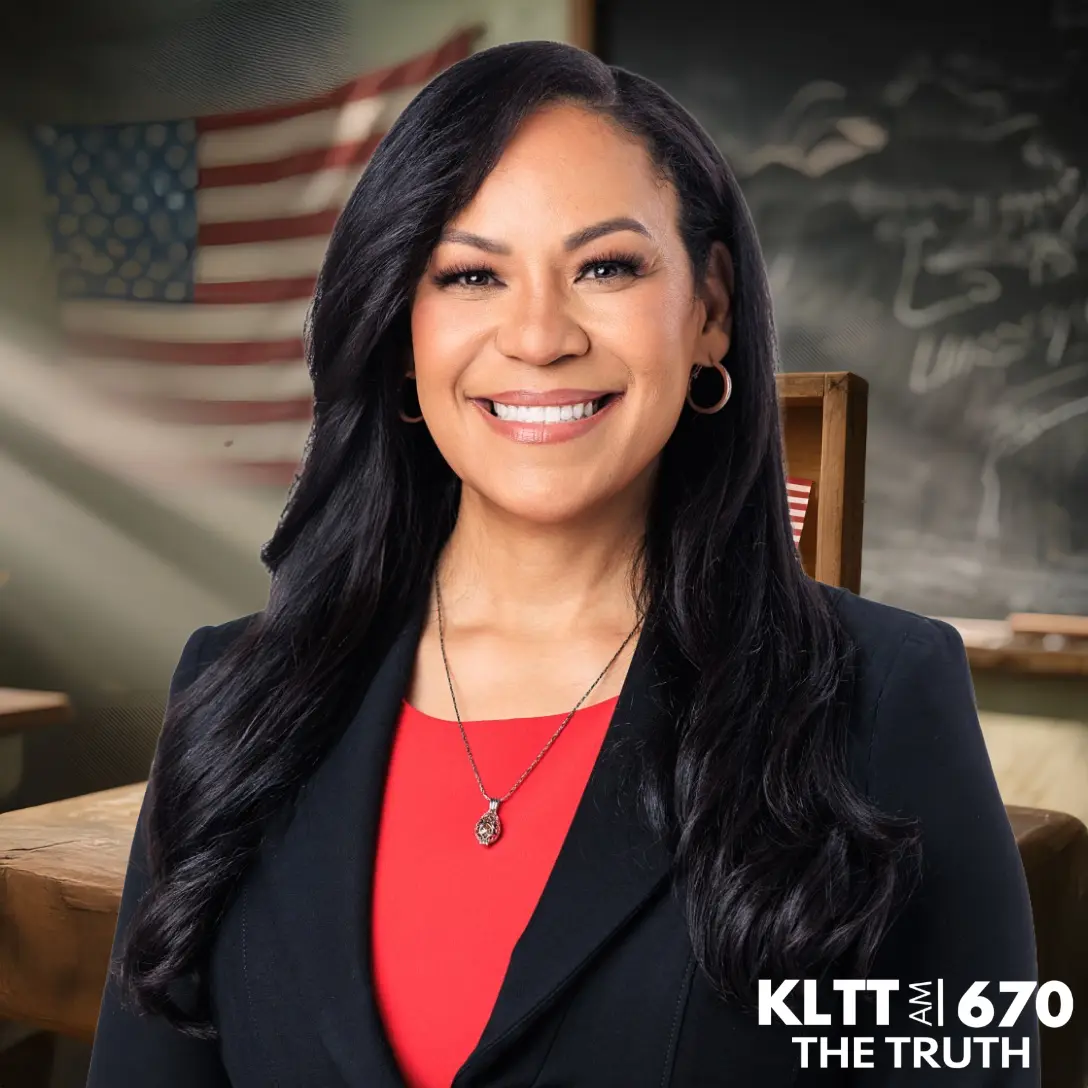
In this heartwarming episode of Restoring Education in America, host Priscilla Rahn sits down with her father-in-law Vic Ron, a retired and beloved educator, to discuss the significance of instilling values and morals in education. Vic shares insights from his wide-ranging experiences, including his tenure as a teacher and pastor. Tune in to learn how a passion for education runs through the Ron family, inspiring a legacy of servant leadership.
SPEAKER 01 :
Welcome to Restoring Education in America with Priscilla Rahn. She’s a master educator and author leading the conversation to restore the American mind through wisdom, virtue, and truth.
SPEAKER 02 :
Well, hello, everyone. Welcome to Restoring Education in America. I’m your host, Priscilla Rahn, and I’m so excited that you’ve decided to join the conversation today. We have a lot of exciting things happening in 2026, one of which is a brand new private school that’s opening. It’s called Excalibur Classical Academy. They’re opening up in the Centennial area, not too far from Maggiano’s Little Italy off of I-25. And their mission and vision is to restore America’s heritage by developing servant leaders who are keepers and defenders of the principles of freedom for which our founding fathers pledged their lives, fortunes, and sacred honor. And if you’d like to learn more about their school, you can go to their website at Excalibur Classical Academy dot org. They’re opening K through three. So if you have some youngins and they’re getting ready for school, please check them out. They’re a wonderful private school with a classical twist. So but today I have a very special guest. who has been in education for over 40 years, but he’s a retired teacher. I’m going to bring him up to the stage. My dear father-in-law, Vic Rahn. Hi, pops.
SPEAKER 03 :
How are you doing?
SPEAKER 02 :
I’m doing great. You know, this is kind of fun for me because we’ve had lots of conversations about education and you spent a lot of years in the classroom, didn’t you?
SPEAKER 03 :
Yes, I did. And it was a joy. And I never left it because I was tired of it. Left it because I wanted to see my grandkids.
SPEAKER 02 :
Well, that’s a great reason to retire. But before we get too far into the conversation, I’m going to share your bio with the listeners so they can learn a little bit more about you. Victor Rahn is the sixth of eight children and born in Alberta, Canada. He excelled as an athlete in basketball, softball, track and field at Mennonite Educational Institute and Abbotsford High School. He graduated from the University of British Columbia in 1968, with degrees in physical education and science. Vic taught and coached for 42 years. In 1981, Vic took a hiatus from teaching, pursuing a Master of Divinity degree at Bethel Theological Seminary in California. pastored a church for several years, and then returned to the classroom after completing a Master of Special Education degree at Adams State University in Colorado. From 1990 until his retirement in 2010, Vic directed the high school special education program at Onalaska High School in Washington, also teaching woodshop and actively volunteering for several sports programs. In addition to his long teaching career, Vic coached basketball, volleyball, track and field, receiving student all-star and coaching awards. Perhaps his proudest achievement is his three children and their spouses and five talented grandchildren. In 2007, his daughter Andrea was selected as the National Teacher of the Year. Both daughters-in-law are public school teachers, and his wife, Darlene, worked in education for over 30 years. That’s you, Pops.
SPEAKER 03 :
That’s me. Lots of memories.
SPEAKER 02 :
Well, I remember dating your son and finding out that the family was full of educators. And of course, for me, that was such a joy to find out that I was marrying into a family that really valued education. But you grew up in such a large family. How did growing up in a large family shape your perspective in learning and community?
SPEAKER 03 :
Well, I think the first thing is our parents were dedicated to Christian values and the Bible was sort of our first textbook and authority on everything. And I think more than anything that really shaped us as children.
SPEAKER 02 :
So you grew up going to school in Canada. For those who don’t know, you are German Mennonite.
SPEAKER 03 :
Yes.
SPEAKER 02 :
And that’s a lot of fun. We could do a whole show. We could have mom talking about ancestry and lineage and all the amazing food and borscht. Okay, I do have to say, I love when you come to visit because… Mom makes her plots and makes all of the noodles and everything, and it’s fresh. I love that. But what was the difference between the education you received in Canada and then you coming to the U.S. and teaching in America?
SPEAKER 03 :
I don’t think there was a whole lot of difference. I think people in general, wherever they are in the world, have sort of a universal nature. There’s the good and there’s the bad. And I don’t think that I felt there was much of a difference between the kids here and the kids back in Canada. Yeah, I think it’s pretty universal. People are what they are. I would say this. I think I sense maybe a little more chaos in the families here in the United States. My impression of Canada and of the United States was that Canada in many ways socially, and it pretty well in every way across the board, they were maybe five to 10 years behind US, but trending in the same direction.
SPEAKER 02 :
So Pops, was there a difference in Mennonite education? Because you grew up in a Mennonite community. What was that like?
SPEAKER 03 :
I think the premise behind many private schools regardless of religious background i think the premise is that they are going to do do it better and in a way they’re going to guard their kids from from the evils of life and i don’t think it works i think that it’s like i said before i think The whole good and evil thing that’s battling in our lives I think is universal and I don’t think it matters. I do think it matters what values you choose teach children and I think that for myself That was a big one. After I went to seminary and came back to teaching in public schools, I experienced a little bit of a change in my emphasis. Not a lot, but a little bit. And one of the things, we had 90 minute classes in the last teaching station where I was. And that was a long period to administer to high school kids. And where I changed the most was that I brought into the class I took the first 30 minutes of those. Periods to try and teach Christian values to those kids in the public high school. And it was very, very. Successful and my superintendent even came to me, like, I called it a life skills. That’s basically what I taught was life skills. And it was so popular that my superintendent came to me one day and he says, how can we administer that and apply it to our whole district? And I looked at him, and I thought about it for a minute, and I said, you would first of all have to have the right people to teach it. And he looked at me, and he says, well, he says, I can only think of one or two people in our district that would be the right fit. But that was sort of my emphasis. Like, I was their teacher. to free the kids from the bondages that they lived with. I felt like the parents were quite troubled compared to the first 13 years that I taught. I didn’t feel like the parents were really that troubled. I felt like most of the kids I had the first 15 years of my teaching came from stable homes, good marriages, Good upbringings. Can’t say that that’s the way I felt about the clientele of students and their parents in the second set. So my goal was probably more to try and help free them from the difficulties which they were struggling with.
SPEAKER 02 :
Now, Pops, and I call you Pops because…
SPEAKER 03 :
Because you do.
SPEAKER 02 :
Because I do. What did you see as Christian values? Because some people would say, oh, you can’t teach religion at schools, but you use the word values and character. What were those? Because you weren’t teaching doctrine, per se. No, no. But you were teaching values. What were some examples of those values that you were teaching?
SPEAKER 03 :
Well, I mean, lying, cheating. We would discuss examples of those things. I set out a lot of examples to kids and asked them what they felt about that. And it sparked many discussions, but basically all of the questions were, I wasn’t directly teaching the Bible. I wasn’t quoting a lot of Bible verses. I tried to find a way of introducing uh godly values to the kids through uh just common sense and reasoning and looking at what’s happening in our society we discussed a lot of the social aspects of society around us It doesn’t have to be that you whack them over the head with the Bible. That’s not the way, that’s not going to work in the public sector. I think if you go into the gospel, Jesus gave a parable about the wise man and the foolish man. And he said the wise man built his house upon the rock and the foolish man upon the sand. And then he goes on and he says, and this is what it means. it means that you don’t just tell people he basically he said you show them you practice what you believe and i think that’s probably what i tried to do i tried to practice godly principles and then you know discussing them with teenage kids It was very interesting and it was actually probably, it doesn’t matter what class I taught, I think that was their favorite part of the class.
SPEAKER 02 :
I can see that, that you were a great teacher, I know, because all of our conversations, I can just see how much you care about the students and how you talk about your students. So let’s go back. You had three kind of big segments of your life. You taught, then you took a break to become a pastor, and then you went back into teaching. So the first time you were in the classroom, what subjects did you teach?
SPEAKER 03 :
I taught physical education and science.
SPEAKER 02 :
So I saw pictures of you, Pops, when you were a young lad and you were an all-star basketball player. Didn’t you win some awards?
SPEAKER 03 :
Oh, many. But, you know, not that the… They became that the actual awards, the silver awards, the gold cups, et cetera, et cetera. They lost their value for me and I never even kept them. And now, as I’m getting older, I’m thinking that maybe I should have. But, like, I don’t have a trophy room. Even though I’m sure I could fill one with the words that I want, but. You know, to me, the awards aren’t that important. What’s important is how you lead your life. And I think more important is what kind of an example you can provide that hopefully matches some of the concepts in Scripture. That was sort of my goal. My goal was never to become… Well, I would say that when I was young, my goal was to become a great basketball player. As a matter of fact, the one thing from my childhood that I think shaped my playing performance at the high school level was when I was about six years old, We were very poor family and we didn’t have much money. So I managed to purchase a rubber basketball and we had a barn with a hayloft in it covered with wood. And I actually made my own basketball hoop and used bailing wire bailing cords to as a net for the basketball and I took an old piece of plywood and I nailed it all together and put it up on the And I decided that I was going to become a good basketball player. And I spent two hours every night by myself in that hayloft shooting baskets. And I became very efficient at it. So why tell that story? Because I think that it demonstrates a commitment to something that you really want to do. And I thought that basketball, at that time anyways, was one of the more healthy things that I could participate in. And that pursuit kept me out of the party world, kept me out of drinking, smoking, and all of that stuff. I had no interest in it. And I think it shaped my life. I think that pursuing that one activity, I do think that it shaped my life.
SPEAKER 02 :
So Pops, after you moved to California to go to seminary and then you became a pastor and then eventually you went back and got a master’s degree, why did you decide to get a second degree in special education?
SPEAKER 03 :
Actually, for a couple of years, I pastored a small church in Alamosa and I felt that my vision was people who were struggling. And so that’s what I put my energy into. And the church probably tripled in size, but I felt like they were the kind of people that came in that our congregation wasn’t comfortable with. And at that point, my heart’s desire was to serve the downtrodden kids in our society. So I thought, where can I do that? If not in the church, I’m going to go back and get my special ed degree and then I’m going to teach special ed the rest of my life, which is what I did. As I got further on into it, my superintendent, I think, could see that it might burn me out if I wasn’t careful. So he suggested that the school didn’t have a woodshop program. So he said to me, would you like to take half of your time and teach woodshop? And I said, yeah, I’ll do it. Because I enjoyed working with wood. And so I did that for 20 years. Like I split the special lead. But I had the same, I think the same emphasis in my woodshop classes as I did in the regular class. My goal was to help those kids express the desires of their heart through education and i think it worked out very well i think those kids enjoyed it and i think god blessed it if you’re just tuning in my special guest today is mr vic rahn he’s a retired teacher and he’s also my favorite father-in-law Why not?
SPEAKER 02 :
Yeah, I know. I don’t. Yeah, I’m stuck with you and you’re stuck with me. Yeah. But Pops, what were some of the biggest challenges and biggest rewards of working in special education?
SPEAKER 03 :
I think the biggest challenge was to try and free those kids from their label links and I got to the point very quickly where my goal was to get them out of special education back into the regular classroom. And at first, I think there was quite a bit of resistance from the regular education teachers, but that wasn’t the case at the end. When I retired, all of them were just so happy to be on board and they loved seeing the special ed students accomplish what they accomplished. I had one kid that was in grade 12. It was his final year and he had a hearing disability But he was very smart. So, for his senior project, he took a tractor apart and put it back together piece by piece. And when it got to the end of the year. Graduation time, the teachers would get together and they would say they would give out awards. So. For this young gentleman, his name came up in the staff room while they were talking about the awards and they felt, this wasn’t me, this was the teachers. They felt that we didn’t have an award at the school that could be given to him. So they created a new award and the award was student of the year And I can’t even remember his full name, but I think it was Tyler. He got that award. And it was a blessing for me to see how this wasn’t something that I pushed for. This was something that the whole staff, they loved this student. And he took… He excelled in many of the top classes that were offered at the school. They just loved him. And it was nice to see.
SPEAKER 02 :
That’s so beautiful. And to hear that the teachers and the staff rallied behind the student to make a difference in his life and to recognize what he did. Now, Pops, you have a lot to be grateful for and proud of. Let’s talk about your kids and your grandkids. You’ve got two twin boys, Jason and Darren, and an amazing daughter, Andrea. So Jason is a worship pastor in Oshkosh. Darren is a multi-Grammy nominated number one billboard artist. And Andrea was the National Teacher of the Year in 2007, which is an amazing accomplishment. And you have grandchildren in college with parents. scholarships and pursuing wonderful career paths. How does this make you feel?
SPEAKER 03 :
Just blessed and thankful. Like I remember when we went to the 2007 Teacher of the Year ceremony in the White House. And I actually spoke privately with President Bush at that time for about 10 or 15 minutes. And the whole experience at that point in my life, I was starting to think that maybe my work with my children was done. And then the Lord reminded me that I couldn’t tell them much anymore because they were adults and they had their own ideas about what life offered. And the Lord reminded me, he said, those kids are going to be watching you. So they’re still going to learn from you, but they’re going to learn by your example, not by your words. And that really has somewhat propelled me in my retirement.
SPEAKER 02 :
Well, you are the patriarch of the family. I, like I said at the beginning of the show, I’ve loved marrying into the Rahn family. I call us the Von Rahn trap family because everybody’s a musician. The two twin boys married public school teachers. Your daughter’s a public school music teacher. We’re all very much involved in our church. And that is part of your legacy. And you and mom pray for us. And you’re such great examples of, and you’re so loving and i i love every time that we get to be together and i know a lot of families don’t have the special relationship that we have and i’m just so grateful for all you do for us and how you continue to take care of your family and you’re still working and building in the wood shop and donating all the beautiful things that you make uh for goodwill and i i also would like to
SPEAKER 03 :
I’m very thankful and blessed by Andrea’s winning that award. There are other highlights, like when I think of your husband, Darren, I think of the time that we went to Sacramento to watch him play, do his gig in front of about 900 mostly black people in a community center. And I remember he introduced one of the songs that he’s written called The Healing. And I remember, I mean, these memories were just filled with tears on my, tears of thankfulness and blessedness from our Lord. And he began to play this, And before he was halfway through, I turned around and the whole audience was on their feet with their hands raised, thanking Jesus. And what better memory can a father have than his son praising the Lord through his horn? I’ve had that experience with Darren a number of times. He’s such a blessing, and I thank God for his gift. And then, like, I could tell similar stories about my son, Jason, and what a blessing he has been in the church that he’s worked in for 18, 20 years. So… And you… I mean, I look at all of you. I look at Stephanie and I think what a blessing God has filled our family with all these blessings. And it’s wonderful.
SPEAKER 02 :
Well, you know, Pops, like I said, this has a lot to do with you and mom. And, you know, you’re reaping the rewards and your fruit of how you’ve invested in your family. And none of us are perfect, right? But God doesn’t bless perfection. God blesses obedience. And thank you for being such an amazing patriarch to our family. I could go on and on and talk with you, but we’re actually out of time, Pops. So we’ve got to land our plane. And I want to thank my listeners for tuning in. And catch me next time. And remember, educating the mind without the heart is no education. So seek wisdom, cultivate virtue, and speak truth.
SPEAKER 03 :
Amen.
SPEAKER 01 :
Thanks for tuning in to Restoring Education in America with Priscilla Rahn. Visit PriscillaRahn.com to connect or learn how you can sponsor future episodes to keep this message of faith, freedom, and education on the air.
