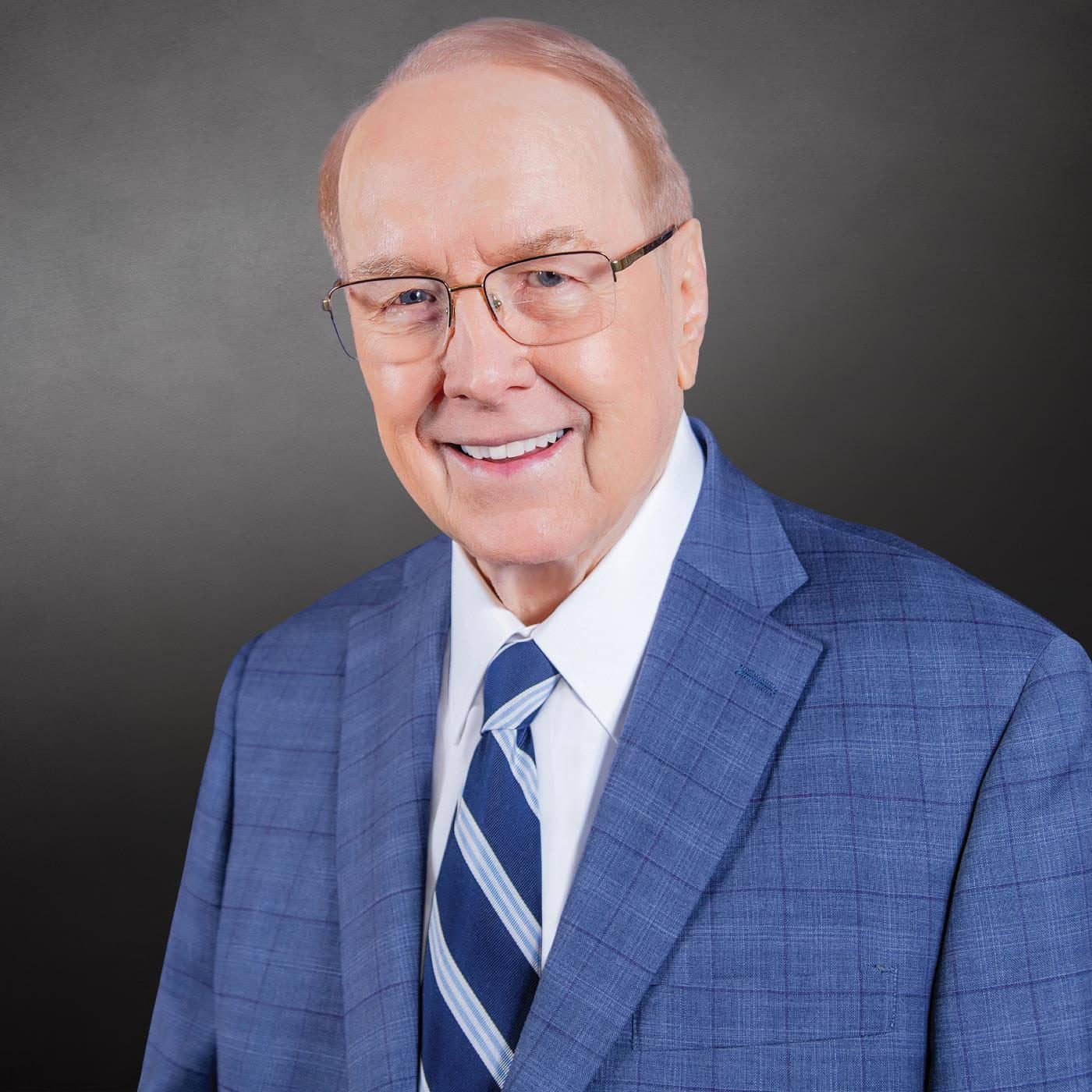

Small changes today can transform your health tomorrow! On today’s edition of Family Talk, Dr. James Dobson continues his conversation with Dr. Walt Larimore to discuss his book, Fit Over 50. They explore practical strategies for improving your physical, emotional, spiritual, and relational health—without fad diets or extreme exercise plans. Discover how intentional choices can lead to a healthier, happier you. To support this ministry financially, visit: https://www.oneplace.com/donate/707/29
SPEAKER 03 :
Hello, everyone. You’re listening to Family Talk, a radio broadcasting ministry of the James Dobson Family Institute. I’m Dr. James Dobson, and thank you for joining us for this program.
SPEAKER 01 :
Well, welcome to Family Talk, the broadcast division of the Dr. James Dobson Family Institute. I’m Roger Marsh. And in just a moment, you’re going to hear the second part of Dr. Dobson’s enlightening conversation with his good friend, Dr. Walt Larimore. They’ll be discussing Dr. Larimore’s book called Fit Over 50. Make simple choices today for a healthier, happier you. On the last edition of Dr. James Dobson’s Family Talk, Dr. Walt Laramore explained how we can achieve balanced health in all areas of our life. And on today’s program, Dr. Dobson and Dr. Laramore will dive deeper into specific challenges that people face in the health category. Now, before we begin, let me remind you of Dr. Walt Larimore’s impressive background. After four decades as a family physician, during which time he delivered more than 1,500 babies, Walt retired from direct patient care in 2021. Throughout his distinguished career, he’s received numerous honors, including the prestigious Thomas W. Johnson Award, recognizing him as America’s outstanding family physician educator. In 2019, Dr. Larimore was given the Lifetime Achievement Award by Marquis Who’s Who in America, a rare honor bestowed on fewer than 5% of their listees. Dr. Walt Larimore and his childhood sweetheart Barb have been married for almost 50 years, and they recently left their Colorado home to transplant to Georgia to be closer to their two grown children and their two beautiful granddaughters. Well, there’s a lot of ground to cover, so let’s join Dr. James Dobson and Dr. Walt Lurimore right now as they continue their conversation about living fit over 50 here on Dr. James Dobson’s Family Talk.
SPEAKER 03 :
You have the results of some research done on prayer in your book. And I think you wrote that only 50% of the people pray every day. Half the people don’t pray.
SPEAKER 02 :
We’ve got kids who say, what’s God’s will for me? Well, God’s will for you is that you rejoice always. Pray without ceasing. Pray without ceasing. That it becomes spiritual breathing for you as you go through the day. People say, well, I don’t have time to pray. And I’ll say, you do it as you go. You don’t have to necessarily – it’s nice to carve out time. And was it Charles Wesley who said in his busiest time of his life he didn’t have time not to pray and prayed an hour every day. But God waits to hear from us.
SPEAKER 03 :
Let me ask the question that some are thinking. I don’t know how to pray. You’re talking about walking into the presence of the God of the universe and making a little speech to him. I don’t know how to do that.
SPEAKER 02 :
Help him. Yeah. Jim, my encouragement to people is that prayer is not some sort of formal mystic activity. It’s just conversation. So however you imagine God, a father, a grandfather, a best friend, a mentor, a guide, a coach, just talk to him. And maybe that’s questions. Maybe it’s listening to him by reading his word. I use a little thing that I was taught by my mentor, and that was, you know, if today is the 30th of the month, then I read Proverbs 30. That’s my discipline for the last 45 years. And then I read Psalm 30. It’s the 30th of the month, so I read Psalm 30. And then I add 30. I read Psalm 60 and Psalm 90 and Psalm 120. And it takes 10 minutes, 15 minutes, Maybe it’s journaling for you. Even if you have never journaled. I have a young man I’m mentoring now. He doesn’t write. He doesn’t journal. And yet he’s begun. Just got a little tiny notebook. It’s real thin. And every morning he just takes a few minutes. Either writes God a question or two or a statement or two or a request or two. He’s an old, I call it the cats, you know, of confession in the morning just to confess anything where I’ve fallen short and The A of cats is adoration. It’s just, God, I adore you. And, Jim, we live in Colorado Springs. We can look out our window and just adore the Lord with the Rockies that we see. It is beautiful. Confession, adoration, thanksgiving. Lord, thank you for life. Thank you for what you’ve given me. Thank you for even giving me the desire to pray. And that S of cats is supplication. Just whatever your requests are. But write that down. And then visit it the next day and the next day and the next day. And Jim, that tiny little seed, that tiny little spark, God, haven’t you found God will honor that? You’ll want not to miss that time. It becomes an intimate, special time.
SPEAKER 03 :
You know, when I’m going out the door, even if we’ve already prayed yesterday, There are times when we will say we dare not leave this house this day without going in the spirit of the Lord. We don’t know what waits out there for us. It may be good news, bad news. We don’t know what’s there. He does. Just ask for his blessing on this day. Not that everything will go right because that’s not life. But knowing that he’s there and he’s with us and he understands. Yeah. It just puts a different cast on the entire day. Let me go back to what we were talking about before last time. Talk about sleep, especially as you get older. There is a myth, I believe, that you need less sleep as you get older. I don’t find that true in my life. Is that a myth?
SPEAKER 02 :
That’s a total myth. The research doesn’t show that at all. God has designed us. for rest. He’s designed us not only for the Sabbath rest, but he’s designed us for sleep. Those who have computer thinking, this is your time to reboot. So this morning I was doing some writing and things were kind of junking up and I knew it’s time to reboot. I just need to clean out some of those old files and restart with resting the computer, reboot it, and everything worked better. That’s how sleep’s designed to be. But I also believe that sleep, this is just my individual belief, is that sleep’s a time that God in our spirit communicates, that God in our spirit communicates with us subconsciously. Don’t you find there’s times that you wake up in the morning and you feel like the Lord’s reminded you of something? And I think that happens with sleep.
SPEAKER 03 :
Well, the book we’re talking about is Fit Over 50. Make simple choices today for a healthier, happier you. This book is loaded with practical advice. In the program yesterday, you said you don’t talk at all about dieting, and I understand that. But you do talk about diets.
SPEAKER 02 :
But nutrition, it’s critical.
SPEAKER 03 :
Yes.
SPEAKER 02 :
It’s critical. In our country, we’re the only advanced civilization in the world that does not regulate natural medicines, herbs, vitamins, and supplements. So much can be said in advertising and on the Internet. A lot of junk, too. Junk. That’s just not true. But what is crystal clear? is that good nutrition benefits us from our head to our toe. And so, every year, the US News & World Report gathers together between 60 and 90 nutritional and health experts, and they look at all of the literature on all of the nutrition plans, all of the diets, and then they rate them based upon the evidence of what’s the best diet for a diabetic or someone with cardiovascular disease, or someone who wishes to lose weight, for example. which is the best commercial plant. And they rate them all. I think they rate between 60 and 70 plants. And in the most recent year… Let me guess. It’s a Mediterranean diet. By far. By far. And it’s not that the Mediterranean diet is a particular, specific diet. It’s just that it is a diet from around the Mediterranean countries. And the Mediterranean diet in Italy is far different than southern France, which is far different from Spain, which is far different from northern Africa. But they have similarities. What is it? Well, the similarities are lots of fruits and vegetables, whole grains, dairy products, Most of them have a little bit of wine, but you don’t have to have that component if you’re not led that way. Not a lot of highly saturated meat, not a lot of red meat, but there’s freedom in that area. So it’s a good, nutritious, wholesome, natural diet. When I think of Italy, I think of pasta, but you don’t mention that. We don’t, because some of the pasta can be helpful, especially in the milieu of that entire nutritional plan. If it’s just pasta by itself, well, then you’ve got a lot of starch there. You don’t have more of the negative carbs, if you would. If you think in terms of protein, carbohydrates, and fat, there are good and bad forms of each. There’s good fat and there’s bad fat. And there’s good carbs and there’s bad carbs. And there’s good protein and there’s bad carbs. So, even with pasta, having a whole grain pasta is a little bit healthier than one that’s not. But the pasta’s not the main part of the meal. It’s a small part of the meal. It’s actually, in Italy, just a small part of one of the courses. And the pasta dishes in Italy are very small. It’s not like ordering a pasta dish here in America, where you can feed a family of five with it.
SPEAKER 03 :
How about the red sauces? Is that included in the Mediterranean diet?
SPEAKER 02 :
It is. That’s what I think of. Well, it’s because it’s the stewed and cooked tomatoes. And it’s interesting that tomatoes is a wonderfully healthy food, but in a stewed cooked fashion may even have more health benefits, some of the nutritionists tell us.
SPEAKER 03 :
This book depends a whole lot on discipline. You don’t talk about that, but that’s really what it is. In order to To maintain a healthy lifestyle, you do have to exercise discipline at all levels. Exercise, what you eat, seeing a physician regularly. There’s a lot of discipline involved here. How do you get that if you don’t have it?
SPEAKER 02 :
Let’s use you as an example. So when you and I first met, I think you had, at that day, just walked for the 2,900th day or something. What was your largest number? I don’t know, but it’s gone on for 26 years. Well, the first day you decided to start walking every day, you didn’t walk five miles. What did you walk?
SPEAKER 03 :
I had just had a heart attack, so I had to work my way up and out of that. Bingo. It’s amazing what that exercise did.
SPEAKER 02 :
Bingo. But you had to start with a small step. So the premise of this book is that look at these steps, and then pick one that’s simple, that you want to do, that you can do, and start it, and start slowly. And then when you have success with that step – Then out of the 200, pick the next one that you want to do. But don’t do it by yourself. If you live alone, pick a friend or an accountability partner that will join you in this journey to health. Or if it’s your family, maybe it’s your kids, or maybe it’s your grandkids. For me, it’s Anna, Kate, and Sarah who Skype Barb and I or FaceTime Barb and I every week. And what step are you taking now, Papa? They call barb honey. What step are you taking now? They’re our little accountability partners.
SPEAKER 03 :
My wife Shirley has a lifelong commitment not to sweat. She hates exercise. She hates it and she knows she has to do it. She knows she must and yet she fights it like crazy. And I’ve had great difficulty getting her to come down to our exercise place which is in the basement And I don’t like going down there by myself. I want her to come with me. And so I’ve kind of hounded her about it. Finally, one day she came down. And she was carrying her little white shoes. She has very small feet. And she said, okay, I give up. I’m going to do it. I’m going to do it. I’m starting today. This is the day. I’m going to put these shoes on. I’m going to get on the treadmill. And I’m going to exercise every day. But before I do, I’ve got a phone call to make. She ran up the stairs, and she didn’t come back. And one year later, those little white shoes were still leaning against the wall. She has now done it, and she is doing it. I’m very proud of her.
SPEAKER 02 :
It may have been a year ago, whenever it was, that that would not be the step for her to pick. It might be something else. Well, it wasn’t a whole lot she would have picked. In fact, we’ve got information about the research now, they call it bathing in nature, of the health benefits of getting outside. Even research in the urban cities of people who will go and just sit in a park or sit in a green space or even an empty lot. But to get outside, a little fresh air, a little green, and the health benefit that that has emotionally and the health benefit that it has physically. Well, can you combine a little quiet time with a little walking, with a little sitting outside or maybe walking? But how can you put some of these things together where you have a healthy meal, but you have it with a couple of friends or maybe a couple that you’re mentoring? So how can you find some steps you like, begin to do them with someone else that will hold you accountable and be a partner with you, and then begin to see these proven techniques blossom in your own life?
SPEAKER 03 :
What happens when you have a patient who plays by the rules? He’s not healthy, and he knows it, and he believes you. and begins to change his life. What happens to his demeanor and his emotional stability? There’s almost an inevitable consequence from doing that.
SPEAKER 02 :
Well, you know what’s interesting is a couple of feedbacks that people get as they begin to get healthier is people say they look younger. They’ll say, what vitamin are you taking? You know, what’s your simple technique? You look younger, you look better. But as really overweight people begin to lose weight, they can start getting negative feedback, because people say, what’s wrong with you? Are you sick? Because you’re actually getting to a normal weight. And it’s so uncommon in our society now that you begin to look abnormal. But it gives you a chance to testify, a chance to bear witness, if you would, that, no, I’m just eating better. I’m beginning to work out. I’ve lost weight. My numbers are improving. I feel better than I ever have. Now, where I thought you were going to go was, what about the person who begins this process and then hits a roadblock? They have that TIA or that stroke or something goes wrong. And we talked the last time about how I believe that when you had your stroke and when you had your prostate cancer, it was because you were improving your health that you did so well with those. And so there is benefit even in the midst of the storm. You think of the palm tree that’s healthy, that’s deeply rooted, and you think of the palm tree that’s not, and you think of the same hurricane winds hitting each, and one gets blown down, and one weathers the storm and comes back more strongly. I think that’s the picture of the health that God gives us in Scripture. is that we’re to start strong, continue strong, finish strong, to grow to know him more deeply and sweetly while making him known to others. We glorify him with our body. And Jim, that’s how you started us out yesterday. That isn’t just a suggestion, but that’s our commandment. You hear people say, don’t we in church all the time, they say, there’s the three T’s. You know, you need to steward your talent and your treasure, right, and your time. Well, let’s add a fourth T, and that is the temple of the Holy Spirit. God commands us to steward our time, our talents, our treasure, and the temple of the Holy Spirit. So what the research shows is that the more evangelistic a person is, the less healthy they are. The more conservative of us religious folks tend to be more overweight. Maybe it’s those potluck dinners. I don’t know. But church, it’s time to wake up and steward the temple of the Holy Spirit.
SPEAKER 03 :
Is this book written for those that have really got a lot of work to do and they need help in getting started? It is. We all want good health, goodness, and yet we don’t know exactly how to muster all that discipline we’ve talked about.
SPEAKER 02 :
And this book starts them on the right path. And it can be a gift to someone you know who’s over 50, someone you’ve been praying for, you’re thinking for, and you want to help them spiritually and you want to help them physically. What’s fascinating to me is – and we had so many wonderful endorsements for this book. I couldn’t believe how they came in. But so many people who endorsed the book said, could you change the name? Because everything you talk about here applies to younger people also. It’s not just over 50. So read it before you give it away.
SPEAKER 03 :
I think you’ll find benefit. Well, in the program yesterday, Walt, you talked about four wheels to health. Tell us what those four wheels are again. Summarize for us what we have just heard.
SPEAKER 02 :
Sure. Well, you know when people are lifting barbells, they’ll do reps, or they’re doing push-ups, and they’ll do reps. And so you can remember that exercise term, reps. And so they are as relationships. It’s being in healthy, non-toxic, accountable, loving relationships with family and with others. family, friends, your faith community. The R is reps. The E is for emotional and mental health, that we work to be as emotionally healthy as we can. And there’s not many people in this room are listening to this program that haven’t had emotional scars in the past, that don’t carry emotional burdens. And learning to heal from those and grow from those is the second of the four wheels.
SPEAKER 03 :
In the book, you refer to that arena with two words, avoiding anger and forgiveness.
SPEAKER 02 :
Two chapters, one on each. Anger, cynicism, bitterness eats at a person’s soul. Unforgiveness, as we’ve always heard the analogy, unforgiveness is trying to poison someone else by drinking dilute cyanide. You harm yourself. You eat out your own heart. Jesus commands us to forgive others as he forgives us. And so that doesn’t mean you forget. In fact, I don’t think we do forget. But it means forgiving. It’s an ongoing, active process. Spent a whole chapter talking about the health benefits of forgiveness and the health harms of unforgiveness. And the same thing happens with anger, cynicism, and bitterness. If we’ve got people listening that are angry people, They need to learn to deal with that. And that may actually require some pastoral counseling or even a Christian counselor to help you figure out how to overcome that. I think the easiest way I envision it is, in my mind, all anger comes from unmet expectations. That if you expect something mildly, and it doesn’t happen, you’ll be disappointed. If you expect something strongly and it doesn’t happen, you’ll be angry. So, if you get angry, to me, the simple thing is, what was I expecting? And then, Jim, the critical question is, is that expectation righteous or not?
SPEAKER 03 :
Dr. Arch Hart, who was a guest on this program many, many years ago, you know him. Wonderful man. And he had the best definition for anger and forgiveness in a simple phrase. He says, forgiving is giving up my right to To hurt you for hurting me. It’s letting it go. It’s not saying the other person was not wrong in what that person did. The chances are he or she was. And it is saying, I’m not going to hold you accountable for that. And I’m going to give up my right to strike back at you. for hurting me.
SPEAKER 02 :
Do you remember when you were interviewing R.T. Kendall from Westminster? Yeah, that was a wonderful program. Total Forgiveness was the book, and he looked at you, and he said, Dr. Dobson, if I choose not to forgive someone, I am not giving them what I’ve asked God to give me.
SPEAKER 03 :
It may not be an exact quote, but it was powerful. Yeah. That, when we were at Focus on the Family, that book and that interview was number one for the year. And no surprise.
SPEAKER 02 :
Forgiving is living. And I encourage you to explore the chapter on anger and forgiveness. And if you’re dealing with that or someone you love is dealing with that, it can be life-saving and life-changing. to help them begin to deal with that.
SPEAKER 03 :
Okay, I think we’ve covered two wheels.
SPEAKER 02 :
We’ve got about 30 seconds for the other two. So R-E-P-S wraps over the relationship, health, E is the emotional health, P is the physical health, and as we’ve talked about for two shows now, S is spiritual health. And for any of our listeners who are wrestling with that, who haven’t yet come to peace with God, the Gospels explained in this book Read it. Pray about it. Think about it. And if you will take that step of inviting him in, he will change your life, relationship, emotional, physical, and spiritual, starting that day and forever and ever. And Jim, you’ve preached that for how many years? Quite a while.
SPEAKER 03 :
We are going to close with this question to you. Dr. Walt Larimore, are you living up to your own standard?
SPEAKER 02 :
I practice what I preach, but only because I have a wife and two children and two grandchildren, an accountability partner and a mentor who hold me accountable. Jim, I don’t think I would alone. But the body of Christ isn’t designed to be alone. It’s designed to be a body. And so find folks that will walk this journey with you. Prayerfully, you’ll be successful.
SPEAKER 03 :
Thanks for being with us on these two days. I’ve really enjoyed talking to you. Thank you for being our guest the 81st time, maybe.
SPEAKER 02 :
And let’s do it again. Jim Dobson, I love you and I appreciate you. Thank you for this privilege. It’s mutual. Thank you.
SPEAKER 01 :
True health extends far beyond the physical, embracing our relationships, our emotions, and our spiritual well-being in a beautifully interconnected design. You’ve been listening to Dr. James Dobson’s Family Talk, featuring the wisdom of Dr. Walt Laramore, discussing with Dr. Dobson keys for staying fit over 50. Now, if you missed any portion of this enlightening conversation about achieving balance in all four health dimensions, go to drjamesdobson.org slash family talk. There you’ll also find a link for Dr. Larimore’s book. It’s called Fit Over 50. Make simple choices today for a healthier, happier you. You know, 15 years ago, God planted a vision that became the Dr. James Dobson Family Institute. And today we’re celebrating this milestone and we need your help. If Dr. Dobson’s ministry has touched your family, perhaps through a life-changing broadcast or a marriage-saving book, or perhaps even just timely parenting wisdom from one of the Dr. Dobson Minutes we feature online. Well, we would be honored to hear your story. Now, to share your personal memory or tribute, go to drjamesdobson.org. Let’s celebrate together how God has used this ministry to strengthen families all across America for the past 15 years and still more years to come. That’s drjamesdobson.org. Here at the JDFI, we are committed to defending these three pillars of society, faith, family, and freedom. These broadcasts directly support our mission to preserve and promote the institution of the family and the biblical principles upon which it is based. When you partner with Family Talk, you’re helping introduce even more people to the gospel of Jesus Christ while defending the sanctity of human life, religious freedom, and God-honoring values in our culture. Every donation, whatever the amount, helps reach families who need biblical guidance. So remember that when you make a secure donation online at drjamesdobson.org. That’s drjamesdobson.org. Well, I’m Roger Marsh. And from all of us here at the Dr. James Dobson Family Institute, thank you so much for listening today. Be sure to join us again next time right here for another edition of Dr. James Dobson’s Family Talk, the voice you trust for the family you love. This has been a presentation of the Dr. James Dobson Family Institute.