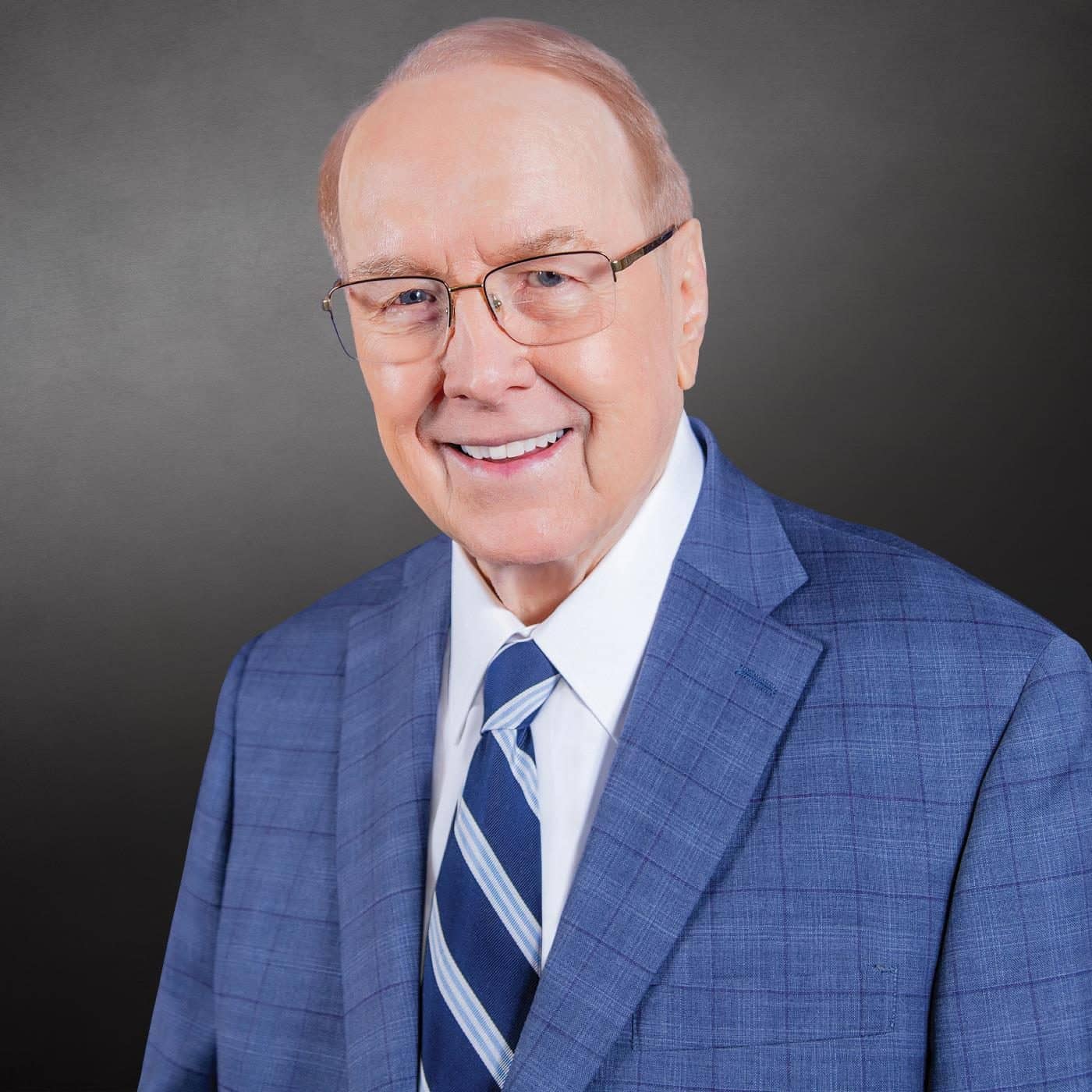

In this heartfelt episode of Family Talk, Dr. James Dobson welcomes the legendary musician Jonathan Cain to discuss the intertwining paths of faith, family, and music. Gary Bauer, Senior Vice President of Public Policy at the Dobson Policy and Culture Center, guides this profound conversation that touches on the vital impact of parental influence and spiritual guidance during formative years. Jonathan reflects on his roots, sharing how a father’s faith and a life-changing tragedy propelled him into his music career, leading to success with iconic songs and a prominent place in the music world.
SPEAKER 02 :
Welcome everyone to Family Talk. It’s a ministry of the James Dobson Family Institute supported by listeners just like you. I’m Dr. James Dobson and I’m thrilled that you’ve joined us.
SPEAKER 03 :
Welcome to Family Talk, the broadcast division of the Dr. James Dobson Family Institute. I’m Gary Bauer, Senior Vice President of Public Policy at the Dobson Policy and Culture Center. I’m also the host of Defending Faith, Family, and Freedom podcast. During the summer of 2025, we lost some incredible Christian leaders. In July, well-known pastor and author, Dr. John MacArthur, went home to be with the Lord, widely recognized, of course, as one of the preeminent biblical scholars of our time. And then, as all of us know, in mid-August, our friend and leader, Dr. James Dobson, went to his eternal reward at the age of 89. After many incredible decades, I started working with Dr. Dobson all the way back in the Reagan years when he reached out to me when I was in the middle of a political battle. And of course, I’m still working with him now. Not only did Dr. Dobson personally speak into the lives of literally millions of people worldwide with the message of the gospel, he also helped to launch and encourage the growth of hundreds of other ministries committed to kingdom service as well. And one of those ministries was Turning Point USA, an organization dedicated to inspiring and mobilizing young people of America to engage in the great task of restoring the United States. to its Judeo-Christian roots. Turning Point was the brainchild of Charlie Kirk, who launched this outreach shortly after leaving high school. He was raised in a Christian home, and initially, Charlie envisioned Turning Point as a political action group. But as he grew in public influence, biblical principles began to become the anchor of Turning Point USA, leading Charlie to meet his wife, Erica. We know that tremendous love story. Faith, family, and freedom fueled Charlie’s passion all over America. He went to college campuses and universities giving this message into the lion’s den in many ways. And it was at one of those universities, Utah Valley University, on September 10th, 2025, that Charlie was viciously murdered, assassinated by a hater. In the months that followed, it’s been inspirational to see how Charlie Kirk’s spirit continues to energize the lives of millions of young people. This generation is truly hungry for biblical principles to model their families on and to build a life around. Now, on today’s program, I know it’s trite to say, we are joined by a man who truly needs no introduction, but I’m going to give him an introduction anyway, whether he likes it or not. He’s got a tremendous career, a remarkable career. that shows no sign of slowing down. Jonathan Cain has been making music for more than five decades, and he has written some of the most memorable melodies the world of popular music has ever heard. He’s performed all over the world. releasing albums that have achieved gold and platinum status with regularity. He’s a Grammy nominee. He has a star on the Hollywood Walk of Fame. He was inducted into the Rock and Roll Hall of Fame. I’m not sure we’ve ever had anybody on Family Talk that was inducted into the Rock and Roll Hall of Fame. But aside from all the professional accolades, he is a man of deep faith in Jesus Christ. In fact, he has spent the better part of the past decade leading worship in his home church, writing and releasing numerous praise and worship albums, and serving in various other capacities in ministry. His latest project is a song inspired by the life and legacy of Charlie Kirk. Jonathan and his wife Paula were longtime friends of Charlie’s, and the new song, No One Else, honors not only Charlie Kirk, but really honors everyone who answers God’s call to serve and live for Him.
SPEAKER 04 :
No one else reached generations Could heal with truth and conversation Setting all differences aside
SPEAKER 03 :
Jonathan, welcome to Dr. James Dobson’s family talk. I know that you and Paula have crossed paths in the past with Dr. Dobson on various occasions. I know he had a lot of respect for your work. If he was still with us today and not with our Heavenly Father today, He would push me out of the way because he would want to do this interview. So welcome to the broadcast. We’re really honored and blessed to have you with us.
SPEAKER 02 :
Thank you, Gary. It’s my honor to be with you. And certainly, you know, Dr. Dobson and Paula and I spent… many great moments together, you know, discussing religious liberty, you know, the Bible and all sorts of things. So he was always at the roundtable when we were trying to get our president elected, put his neck out there and his name out there. And I’ll always remember him as being one of the bold ones, unafraid to stand for what he believed in, as we all did. And so, yes, good to be with you.
SPEAKER 03 :
Well, it’s our honor. You know, I think a lot of people, millions of young people, have some of their fondest memories from the music that you created. But I’m not sure many of our listeners know that much about music. your life and what brought you to where you are today. Can you tell us a little bit about growing up and when you first realized you had a knack for and an interest in music?
SPEAKER 02 :
Well, it was interesting because there was a triumph after tragedy. And that’s when the Holy Spirit is at its best. I was in a terrible school fire in 1958. In fact, I just commemorated the 67th memorial of that fire in Chicago in 1958, where 93 children were killed and three nuns. And with the horrific event, you know, unfolding, my father came home and he declared and prophesied that I was safe for music and that God wanted me to create music. And so he took me to music lessons the very next week. And I could pick out an instrument. I was just a little peanut at the time. My hands were really tiny. So the only thing I could really get a hold of was accordion. You know, so I got this little trainer accordion and And off I went. And with that, I was asked to be in the boys’ choir in church and sang Latin in a special choir where we sang Gregorian chants. That was my first real gig, I guess. Amazing. I was singing Latin. Gregorian chants an octave higher than the monks, of course. Yeah. And just remembering how music was almost like a redemption for me. I was stuck in a very shocked and damaged place witnessing the death of those classmates. I just stood there helpless and there’s not much we could do. The fire had consumed the building and Luckily, 700 kids got out of that place. But, you know, the unlucky ones were trapped and it was arson. No one really got prosecuted. But music became the next step for me. And I was able to overcome a lot of grief and trauma, I guess, playing, just playing. And I was going to be a priest at the time. I was eight years old declaring priesthood, you know. That’s how much I loved Jesus as a boy. And that was due to my father, who was a very prayerful man and told me I needed my own relationship with Jesus. And I couldn’t have his and his prayers wouldn’t matter unless I prayed to him. So he got me thinking about it at an early age. Nevertheless, my first communion was iconic and anointed. And I guess I never looked back. But I have to thank my father for that. leading me to the Savior and giving me, showing me the faith, you know, showing me what prayer took. And it took me a good year before I really felt like I was connecting, you know, because I kept asking, what does it feel like when Jesus comes? It’s like a warm glow, John. It’s right here. It’s a warm glow. Anyway, so music really was for me. Turned out I had close to perfect pitch. And the teacher said, you know, your son has got quite an ear for music. And I think you’ve made a good choice. Then I went on to piano. And then my father declared, I’m going to help you with this journey to fame and fortune as a musician. And this is in the 50s, you know, unheard of that a father would. commit to his son being a musician, you know, get a real job, right? But not my dad. So he did, he stayed with me and we mapped out, you know, I ended up in music college. When I was too young to be in places, you know, that served alcohol, he would come and I would play. So I was, you know, doing weddings and lounges and I went to rock bands. I played everything, went over to piano, studied piano and theory and composition at the Chicago University. So it That was during the 60s, so that was right around the Democratic Convention when they had the Yippies and all of that disruption.
SPEAKER 03 :
Yeah, one of the incredible events of American political history. It was sort of the beginning of all the things
SPEAKER 02 :
It really was. We’ve been experiencing it ever since, right? Yeah, the disruption was unbelievable. And Mayor Daley, our mayor, wasn’t having it. He was not having any of it. And he instructed the officers to be firm. And it wasn’t easy for the officers. And, you know, they were using TV as sort of a disruptive, you know, kind of protest thing. It was ridiculous. But I’m going to school during all this, you know, and I remember Wabash Avenue where I had to walk to school with kids. the guard with bayonets, you know, and they lined the street with rifles holding it. I’m like, Oh my gosh, what’s happened. Yeah. Um, but needless to say, you know, uh, I went on with my father continued to support me and I w I was just kind of restless. So I, I got out of school and I wanted to be a songwriter. And so they couldn’t teach me that in college. I had to, I had to do that myself. So, you know, I went about learning how to write songs, going in the studio with my group and, um, and starting to record songs. I got my first record deal when I was 19 in Nashville on Dial Records with Buddy Killen. That was a wonderful experience. Got to play with some of the greatest Memphis musicians while I was there and got a taste of the big time, what it really sounded like to work with a pro team. It’s funny, the first song that I wrote had the word God in it. It was very interesting. God made woman for man to love. That was my first single. Is that right? Uh-huh. Yeah. God made one woman for a man to love. And Buddy just loved, because he was a Christian. And so Buddy, the record company, he was a huge publisher, tree publishing. And he just had this belief in me and really started me off in this unbelievable way. And we didn’t really achieve a lot of success, but it was the start that he gave me that I’ll always remember. And-
SPEAKER 03 :
So during this time, Jonathan, you said you weren’t having all that much success. Did you ever doubt whether this was the road?
SPEAKER 02 :
Yes, I ended up in California. So I had this incredible opportunity. Somebody saw me in a club and said, come out to California. We think you could be the next Elton John or whatever, singer-songwriter. We’re going to manage you. We have a producer for you. We want you to write. He was, the manager was Wolfman Jack’s manager. So, you know, I found myself going to midnight specials and watching Wolf and, you know, really had the incredible, once again, God just, you know, putting me in the right place, teaching me as I learned, you know, looking at the business from the outside in all the while, you know, when’s it going to be my turn? Yeah. And I finally got a little break in L.A., ended up on The Dick Clark Show in 1975 with Natalie Cole. And I thought, well, I made it. Yeah, that’s huge. I mean, Dick Hart’s show is… But the phone never rang, and I ended up back in the bowling alley playing. I was playing the next week, you know, so so much for that. And so I went and auditioned for this band, The Babies. I did a solo album, a couple solo things, but not a lot of success. And then The Babies were looking for a keyboard player. So I joined The Babies, an English band on Chrysalis. And we opened up for a band called Journey in 1979. Wow. And so Journey was looking for a new keyboard player. They saw me. They loved my work on the album Union Jacks and said, you know, you’re our guy. So that summer of 1981, I was in Journey and I was in the studio making music. But before that, my father, you know, I was struggling, you know, obviously trying to make it before the babies. And I had a phone call at my dad’s. One late night, I said, should I just come home to Chicago and give this thing up? And he was being prophetic again. He said, don’t stop believing, John. So I wrote that in my lyric book as my mantra and my prayer. Don’t stop believing, John.
SPEAKER 03 :
It rings a bell, John.
SPEAKER 02 :
I’m going to hold on to that, Dad. I won’t. And so when I was in the studio finishing the Journey album, Steve Perry said to me, do you have anything else in that magic lyric book? Because I’m always writing lyrics, you know. I still, to this day, I’m writing lyrics. And so I said, let me look. So I went home and I saw Dad’s pep talk there. And I said, maybe he’ll sing this, you know. So I wrote that chorus, brought it in, and the rest is history, you know. And so my dad got to sleep.
SPEAKER 03 :
One of the most incredible songs. People hum it all the time. I think it’ll… Forever they’ll do it.
SPEAKER 02 :
And that’s a father’s prayer for his son. Yes. And I’ll always, you know, always grateful for his support and love and prophetic vision. He used to tell people when I was eight years old, I was going to be a big star and play for 10,000 people a night. And when we finally got to Chicago, I invited him to the big show and he got to see the 10,000 people and his son. Oh my goodness. you know, playing in this band. And at the end of the show, he said, good thing you didn’t stop believing, John.
SPEAKER 03 :
I said, it’s a good thing I have the best old man on the planet. You know, Dr. Dobson, right at this moment, would be telling you that his father took him aside at one point and said, Jim, God’s going to use you to bring the gospel to millions of people. I thought it was going to be me, He said, but it’s clear to me it’s going to be you. And that motivated Jim the rest of his life. The other thing that jumps into my mind, Jonathan, is one of the great tragedies of America is so many young Americans don’t have a dad you had or the dad that Dr. Dobson had. And without a mother or father giving that encouragement and guidance— Kids get lost. There’s lots of other places that they can be led if they don’t have a loving parent.
SPEAKER 02 :
It’s true. And we need parent manuals out there. They should have a license before they have kids. You know, we have a driver’s license. We should have parent licenses. It’s a lot of responsibility. I remember reading all the books I could read. I didn’t want to make any mistakes, you know, with them. And yet, you know, nobody’s perfect.
SPEAKER 04 :
Yes.
SPEAKER 02 :
But certainly having a father like that, when I talk to some of my friends, I go, wow, I was so, so blessed, you know, and my father loved music. He wasn’t a musician himself, you know, but he loved the Lord. He loved Jesus. He wasn’t a religious man. He was a prayerful man, a Catholic. And my mom actually was Lutheran and she converted to Catholicism to marry him. you know, because the church wouldn’t marry the two of them until she converted. And then her brothers went crazy at her, you know, how dare you become a Catholic of all, you know, I mean, it’s one church, one God, come on, what are we doing? So anyway, we had a really great parish growing up. It was just a tragedy that sort of, you know, just blew everything up and the neighborhood kind of fell apart. And so it’s an opportunity zone now. Really? Yeah. The church, though, I’m happy to report, has been restored to its original grandeur. And the school that they rebuilt is now a mission, and they’re feeding people in this Opportunity Zone. The Franciscan brothers took it over. Wow. And they were going to tear it down. The Catholic Church abandoned the building. It had a hole in the roof. And I went back for the 60th commemorative memorial. And it was so cool to see. They had taken the communion rail away. And I was bummed about that. But, you know. Other than that, it was totally restored. And it was just a sign of God’s grace and the evidence that, you know, we were all just under tragedy. There’s the triumph. So not only does Johnny, you know, get a career in one of the best rock bands in the world, but the church gets restored.
SPEAKER 03 :
It’s really amazing, isn’t it?
SPEAKER 02 :
Yeah. When I was a kid, I wondered, where was Jesus? And there was one scripture that leapt out. And when I was with Paula, she got me back into the Bible. And it said, Jesus wept. Two words. And that hit it. Powerful words. That hit it for me. I was like, wait a minute. He wept. And then I had a pastor, he was praying for me, trying to work out the deaths of all those kids. And he said, John, sometimes the great change requires great sacrifice. And those children changed the way school fire safety forever is accomplished. And they didn’t die in vain. That was the worst fire of what not to do, you know.
SPEAKER 03 :
When you were telling that story, I mean, the death toll, that has to be historic. I would think that was pretty.
SPEAKER 02 :
There’s only one worse fire than that one. But they all, you know, and then more perished in the hospitals. Can you imagine with no fax, no cell phones? At the end of the day, those parents are running from hospital to hospital looking for their child only to end up at the morgue. you know at nine o’clock at night standing in line waiting to see the remains what’s left in a body bag and um it was vicious uh and it was fast it happened very quick it started from the roof and this pyromaniac kid transplanted i guess the story is i wrote in my book i have a book uh The title, Don’t Stop Believing, and there’s a chapter I dedicated to the fire. And I understand a lot more now. I have friends in the Chicago Fire Department who were terrific, by the way. They actually got to the truth of it, you know, that it was set by human hands. And they were just relentless in pursuing what happened, where the church wanted to just forget it, you know. The fire department is still going over to Our Lady of the Angels and giving them a check every year for their little foundation. It’s just incredible how dedicated they are. And they still are. They brought a statue of the Virgin Mary back that had been somebody stole because they wanted to protect it. And then they brought it back and put it in its place where it was in the school. Just a couple of years ago, I was just blown away, you know, by the camaraderie. That kind of event, that horrific event, changed a lot of people’s lives, you know. Yeah.
SPEAKER 03 :
You know, we live at this time when, you know, there’s all this horrible hate aimed at police and at firemen. You know, I see stories regularly where firemen will show up in some neighborhood to put out a fire, and they’re taking gunfire. I mean, we live in a troubling time. So this tragedy forms your life in its own way. inspires your music and you’re with Journey and you’re having all of this success. And so the years go on. Eventually, you meet your wife, Paula. But I don’t want to leave anything out of other things you want to talk about on your career.
SPEAKER 02 :
You know, it was just a lot of work. Mm-hmm. and touring, and it all got to be a grind. You know, it was very tough. A couple failed marriages, and it’s hard being on the road, balancing road life with family life. And, you know, you had to learn how to come home and be a civilian after being gone for months and months. That takes its toll, not to mention, you know, your adrenal glands are shut. So it’s not a lifestyle for everybody. I just got swept up in it, you know, when you’re number one band in the land. You keep working. You put your head down. And so for many years, I just, you know, and my kids were born. I led them to the Lord. I felt good about that. They were baptized and confirmed in church. And, you know, so I found myself back in church. But I realized how much scripture I had missed being a Catholic, you know. Yeah. You know, they left half the book out. And so when I met when I met Paula on the airplane, I was writing my book and I couldn’t get over how, you know, well versed she was as a preacher and a talk show host and public speaker and a life coach and all this stuff. And I met her on the airplane in Southwest. And she had three words for me. And she said, there’s a book in you. And I see a couple important dates, you know, happening and a rebirth. And because my question to her was, I don’t hear from the Lord like I used to, you know, and I miss that. And is it possible, you know, I get to hear from God again. And she assured me that I just lost my way like so many of us do, you know. And she gave me some scripture and assured me that, you know, I could find my way back.
SPEAKER 01 :
Jonathan Cain’s story shows us how a father’s prophetic encouragement and unwavering faith can help shape a son’s entire destiny. I’m Roger Marsh, and you’re listening to Dr. James Dobson’s Family Talk, featuring a conversation with legendary musician Jonathan Cain in his dialogue with Gary Bauer, our Senior Vice President of Public Policy here at the Dobson Policy and Culture Center. Of course, Gary and Jonathan and Jonathan’s wife, Paula White Cain, are part of the White House Faith Office. If you missed any portion of today’s broadcast or if you’d like to share this with a friend, which I highly recommend you do, go to jdfi.net. You’ll find the complete audio there. And when the next edition of Family Talk launches, you’ll have part one and part two at your disposal. Again, you’ll find that information and more at jdfi.net. You’ll also find information about Jonathan Cain’s brand new song, a tribute to Charlie Kirk. It’s called No One Else. And we encourage you to hear it on his website, which we’ve linked up at jdfi.net. And while you’re on our website, be sure you also take advantage of a free helpful resource we’ve created for marriages, whether you’ve been married two years or 50. Every couple can benefit from practical wisdom about building a relationship that lasts. That’s why we put together a tip sheet called 10 Tips for a Long-Lasting Marriage. It’s drawing from Dr. Dobson’s decades of research and counseling experience. And best of all, it’s absolutely free and it can be yours in just moments. Go to jdfi.net and search for that title, 10 Tips for a Long-Lasting Marriage. The conversation you heard today and resources like the one I just mentioned, they exist simply because friends like you believe families need a trusted voice speaking biblical truth into their lives. The Dr. James Dobson Family Institute stands at the intersection of faith and culture, promoting biblical principles that support marriage, family and child development. Through daily broadcasts, articles, videos and practical resources, we are introducing people to the gospel of Jesus Christ while defending the sanctity of human life and religious freedom. But this mission depends entirely on God’s providence and the generosity of our listeners, just like you, who share this vision as well. Your gift today, whether large or small, helps us continue reaching families all across the country with hope and biblical wisdom. And you can make a secure donation online when you visit drjamesdobson.org or jdfi.net. You can also call a member of our constituent care team at 877-732-6825. That’s 877-732-6825. I’m Roger Marsh, and on behalf of all of us here at Family Talk and the JDFI, thanks so much for listening today. Be sure to join us again next time for part two of Gary Bauer’s conversation with Jonathan Cain, talking more about the special tribute song he’s written to honor the life and memory of Charlie Kirk. That’s coming up right here on the next edition of Dr. James Dobson’s Family Talk, the voice you can still trust for the family you love. This has been a presentation of the Dr. James Dobson Family Institute.