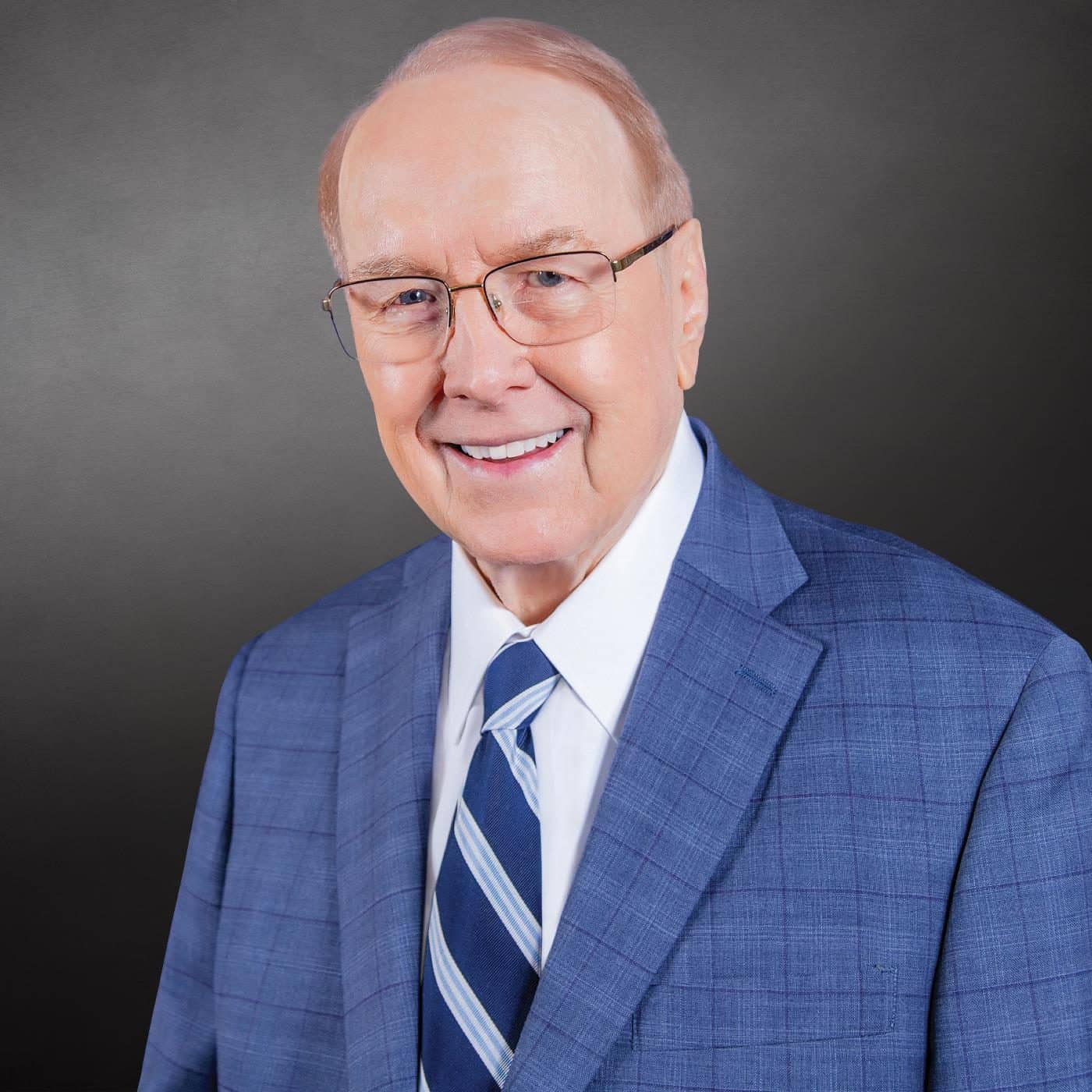

Join us on Family Talk as Gary Bauer hosts a captivating conversation with Heather Salveson about her father, Mike Tennant, whose life is a testament to the power of faith, family, and innovation. Learn how Mike’s passion revolutionized city planning and community development in the Pacific Northwest, creating award-winning communities with stewardship at their core. Heather shares intimate stories that reveal Mike’s unwavering commitment to his faith, his family, and his pioneering vision that has become a benchmark in the field.
SPEAKER 03 :
Welcome everyone to Family Talk. It’s a ministry of the James Dobson Family Institute supported by listeners just like you. I’m Dr. James Dobson and I’m thrilled that you’ve joined us. Welcome to Family Talk, the broadcast ministry of the James Dobson Family Institute. I’m Gary Bauer, the Senior Vice President of the Dobson Policy and Culture Center and host of Defending Faith, Family, and Freedom podcast. You know, in Proverbs 27.2, we read this verse, “‘Let another praise you and not your own mouth. Let it come from the lips of someone else and not your own.'” We’re going to hear today from another one of our everyday heroes of the faith, but we’re not actually going to meet him. Instead, we’ve invited his oldest daughter to the Family Talk studio to share with us about her father’s legacy. His name is Mike Tennant, and his love of the Lord and his passion to minister to others has essentially revolutionized city planning and community engagement in the Pacific Northwest. After moving from Portland to Bend, Oregon in 1979, Mike began selling real estate. He met and married his bride, Adele, a few years later. They began a family ministry, raised three daughters, and enjoyed a good life. But Mike felt called to do more for the Lord and his community. In 1992, Mike launched Tenant Developments. Now, I think 1992, pretty sure that was a year of a recession. And yet it says something about him that he thought that was a good year to start a new business. The goal was of creating communities. where families could grow and the business and faith communities could thrive. Just a few years later, by 1996, he established a construction company to help build out those communities. But his goal was not just profit-driven, it was also stewardship-oriented. He pioneered revolutionary changes in the way the laws are written that help shape community development, building projects, and so forth. By the year 2000, again, a really short timeframe, God had blessed Mike’s efforts to the point where he launched Northwest Crossing. Now, if you’re east of the Rockies, maybe you’ve never heard of Northwest Crossing, but if you live in the Pacific Northwest, you know all about it because it’s an award-winning community. in the Pacific Northwest that people have written about, have admired, and many have tried to copy, but nobody comes close. And now through the Tenant Charitable Fund, Mike and his wife Adele continue to steward God’s resources to help and inspire others. In the meantime, he’s established himself, this guy’s a Renaissance man, as a world-class athlete. He was a swimmer and an amateur boxer in his youth, but Mike re-entered competitive swimming in his 50s. Unbelievable. And he’s established a new world record in the Masters Division in the 50-meter long race, as well as having record times in some other competitions. I think it’s fair to say that at 72 years young, Mike Tennant shows no signs of stopping now. And he credits part of his success to Dr. James Dobson and the James Dobson Family Institute for playing a vital role in spurring on his spiritual growth. So that’s why we are honored today to hear more about this everyday hero from his daughter, Heather Salveson. Heather, welcome to Family Talk. We’re glad that you’re with us. We’ve been looking forward to this. And just pleased to be able to see you. I guess the last time we saw each other was a few years ago. My wife, Carol, and I were pleased to have dinner with you and your husband. I believe your dad was there, too, at one of Dr. Dobson’s events. We spent a few hours together, but later, Carol and I both agreed it felt like we had known you for years. So welcome to the show.
SPEAKER 01 :
Indeed. Oh, Gary, thank you so much. Thank you for having me. I’m humbled and honored to be reunited with you at last after that very endearing, memorable night. I don’t know that Twitterpated is the right word that one should use when they meet Gary Bauer, but being in the room with Dr. Dobson and sitting at the table with Gary Bauer really was the honor of a lifetime. I just kept telling my husband to pinch me because I couldn’t believe how What a blessing it was to get to sit with you and Carol and be a part of that incredible event at the gathering. And just so honored to be here with you today.
SPEAKER 03 :
Well, you’re too kind. But as I recall, Dr. Dobson always drew an incredible balance. group of first-class speakers, and we had some real stars there. And as I recall, that was the year I think we first had Charlie Kirk, and I believe he and Dr. Dobson had this exchange about how when you’re succeeding, don’t forget your family. And it was one of those special moments when Charlie and Jim both… had that conversation about family, which leads me actually to my first question. And it’s about family. You know, a lot of times when we’re children and we grow up in a home, you know, mom and dad are just mom and dad. And sometimes it’s a lot later when you realize, wow, My mother and father were incredible people. Do you have a recollection when in your life and as you were growing and maturing, it first hit you that your dad was just not an average guy?
SPEAKER 01 :
He is. That’s the understatement of the century, Gary. The dad is not an average guy. You know, I’d like to toot my own horn and say that I knew it from a very early age. And I was an angel through my teenage years and devotion of how wonderful of a father he was. But really, I gave him quite a run for his money. I think I shared in my notes that he accused me of being the inspiration for a strong-willed child of Dr. Dobson’s. But, you know, really, I think not until I became a parent and had children of my own, did I really understand and experience a deeper level of gratitude for the sacrifice that my parents made while raising us. Like I said, dad didn’t pursue his own hobbies or endeavors or athletic, you know, ambitions until we were out of the house. He was a… hard, hardworking, devoted dad. He never missed a swim meet. He never missed a dance recital. And somehow he managed to do more in a 24 hour period than the average person does in a week. And I don’t think I saw that as a child, the way that I do as an adult realizing, you know, the call of parenthood is a high one, right? As Dr. Dobson always says, it starts in the home. It must, it must start in the home. And my dad understood that. He was devoted to us on every level that a father and a husband can be devoted in providing and in working and his ethic, never complaining about long work hours and just sacrificing all of his own kind of desires and ambitions. He was in the word. He led us to church. He worked hard and he managed to pull off always being available to help with homework and to take us on walks after school and to be there for all of our performances. And as an adult, I realize now as a mother, that’s a tall order. And he did it really beautifully and effortlessly without ever complaining.
SPEAKER 03 :
Well, you know, there’s sadly, we have a lot of children today in America that don’t have a parent like that, or they’ve got a parent that’s so stressed by all kinds of issues, financial and otherwise. I remember when I was at the Department of Education in the Reagan years, I read this study that showed that what was most likely to cause children to come out of the family being capable and sure of themselves, having confidence, was if they had a parent that put them in front of everything else. I guess the phrase was adults that were crazy about their kids. And your dad certainly was that. Now, looking over the wonderful material you shared with us, I believe my recollection was that your dad himself did not grow up poor. But what jumps out when you read his life story is that he always had this passion for for those that were struggling financially. Tell us a little bit about where you think that came from and why it’s been such an important part of his life.
SPEAKER 01 :
It’s a great question, Gary. You know, it’s a beautiful thing that one of my uncles wrote a memoir of my grandfather because my grandfather passed when I was young. But diving into his story of how he came from immigrant parents from Ireland who were very poor and how my grandfather experienced did live through the Depression and World War II and served and experienced a lot of poverty and just had this moxie my grandfather had. He was an entrepreneur. There was no job that was beneath him. If he needed to attend high school classes and then go wash dishes and then do a night shift as a janitor, and then spend the wee hours of the morning delivering 300 papers, which is what he built his own paper route up to, he would do it. And I think that there was just a grit that came truly from that generation in general. But my dad witnessed his father have that work ethic and that he was self-made and built up what ended up becoming truly an empire of in the shipping industry, my dad witnessed the humility that my grandfather had and his work ethic. And again, working so hard, never complaining, putting family and faith first always. And that really inspired my dad. And I know that my dad would give a lot of credit to his father, even though he was a bit of an absentee father during my dad’s childhood. I think my dad’s high school buddies at Jesuit didn’t think he had a dad because he was never around. And it’s because he traveled and worked so hard. And my dad will even admit that it wasn’t until he was an adult that he realized this again, the sacrifice and the example and the leadership that my grandfather just so humbly led his family into and always, always was generous, always took the time to help others. And my dad had that instilled upon him. And that was through the Catholic faith. And so how much more so for my dad is becoming a born again believer and as an adult and following Christ into a personal relationship as a Christian, did he realize, Oh, look what my savior’s done for me. And who am I to not extend that with my hands wide open to everyone I come into contact with. And so the work ethic and the drive and the humility and the generosity, I know my dad would, would contribute in large part to his own upbringing, um, Like I said, my dad wasn’t given anything, though, by his parents who ended up really creating a lot of wealth and positive reputation through their hard work. My dad started from scratch with my mom. They had two pennies to rub together. I remember my mom saying that she got her wedding dress off of a secondhand rack that was three sizes too big and had to alter it the day before with her sister and had a backyard barbecue wedding. So my parents had a very, very humble start. And so my dad saw what that looks like and what it means to have that drive, determination, passion, sacrifice, and again, humility to build something from the ground up and how good that feels at the end of the day. And he’s instilled that in us three girls.
SPEAKER 03 :
That’s a great answer, Heather. You mentioned the humble beginnings of your mom and dad when they got married. They have an interesting courtship story. Dr. Dobson used to love hearing about how couples got brought together by God for that man and woman that God intended to be together. I remember at a retreat we used to go to, With Dr. Dobson, one of the first things he would do with the couples that were there was ask each couple to stand up and talk about how they first met. Was it love at first sight? And, you know, what did they how did they explain their strong marriages? So tell us about your mom and dad and how they first fell in love.
SPEAKER 01 :
I love that also about Dr. Dobson. And we can’t ever take ourselves too seriously, can we, Gary? And when we start thinking about the sense of humor God has when he brings two people together, we are reminded that he does indeed have a sense of humor. And my parents are no exception. That’s to be sure. My mom was raised in Malibu, California. And talk about humble beginnings. My grandmother was full-blooded Japanese. My grandfather was full-blooded Hungarian. They essentially had an arranged marriage after the war. And my mom grew up with a lot of prejudice because she was half Japanese. And this was in the very early 50s down in California after the war. And my grandfather was a gardener, and my grandmother was a housekeeper for Mary Pickford. If you remember Mary Pickford back in the 50s, an actress. Yes. So my mom was one of six children. They shared a one-bedroom house. The six kids slept in one bed, in the one bedroom of the house, and my grandparents shared the couch. And very, very hardworking, humble individuals. And my mom experienced a lot of tragedy young in life. She lost a sister in an accident. Her mother became very disabled because of that accident. And then a year later, lost my grandfather, who I was never able to meet. And she was raised Catholic. Again, very strong work ethic and a lot of grit, again, with that generation of all that they endured without complaint. Um, and so my mom kind of came to Oregon for a fresh start and her sister had moved to Bend and gotten involved in real estate and had met my dad. I’m so grateful she didn’t snatch him up for herself. She played matchmaker and, uh, my dad was quite a catch and thought that they would be a good pair or at least get to, um, explore Bend together since they were both so new to the area and they were both interested in real estate. So my aunt set my mom and my dad up back in the late seventies and they fell in love. They, uh, they have different versions of this part, Gary, but my dad, they are no exception in that. That’s for sure. My dad, you know, was very ambitious, though, and had a lot that he wanted to accomplish before settling down and having a family. He wanted to achieve a lot of his goals financially. He wanted to start his own real estate company. And he didn’t feel like it was the right thing to lead my mom on if he wasn’t ready to commit to marriage because she was very ready. And she knew in her heart that my dad was the one that God had brought to her as a and basically said, I’m not ready to get married. You know, it’s not you, it’s me kind of thing. And that didn’t go over great, but my mom, bless her, you know, she had wisdom and she, you know, blessed and released him as devastated as she was. I think she felt kind of God’s assurance and peace. She wasn’t walking with the Lord as a Christian quite yet. She, like I said, was from a Catholic background, but she was a woman of deep faith, deep humility, and was truly in love with my dad. And I know it really did devastate her when he broke up with her. And long story short, Gary, dad went on a men’s retreat at his new Christian church that he started attending in Bend. And It was at this retreat, I think it was the second night of a three-night retreat, where a weight just came upon my dad. The Lord just burdened his heart to be convicted that all his accomplishments, all his ambitions that he had would mean nothing if he didn’t have the right woman by his side to support and share all of that with him. And so he left the retreat early. He showed up at my mom’s doorstep at 5. 6 a.m. in the morning, I believe it was a Saturday morning at 6 a.m., knocked on her door. She comes to the door in her bathrobe, and he got down on one knee and proposed and said, I mean, who knows what? I wish I could have been there, right? Adele, I am sorry. God, God brought you to me. And who am I to think that my agenda, my goals, my dreams, my desires cannot be come in partnership with a life with you. Will you be my wife? And of course, my mom said yes, forgave him, brought him inside and made him a can of tomato soup because that’s, I think, all she had in the cupboard. And he was starving and he didn’t have a ring. He just had a heart full of humility and love for my mom. And that’s their very humble beginning. It’s a great story.
SPEAKER 03 :
You know, I’ve heard a lot of these stories over the years. I’m not sure I’ve ever heard one where the proposal took place at 6 a.m. in the morning and the future wife was in her bathrobe. You can’t make this up, Gary.
SPEAKER 01 :
You can’t make this up.
SPEAKER 03 :
Heather, when I gave the little introduction, we talked about the fact that first your dad was selling real estate, and then he got in the business of developing communities. And Developing communities around America can become a very controversial thing because a lot of the developments are really not an improvement. You know, they take away a lot of good things and use up land that had been reserved for nature or whatever, right? But when your father got into development, he brought a whole new approach or really, from what I’ve been able to read, an inspired approach to it. And that ran into a lot of bureaucrats today. that tend to be in every state when it comes to the regulations on building and so forth. So I’m sure that didn’t always go easily as your father confronted those rules. Tell us a little bit about how he overcame that. And did his faith play a role in being able to confront those roadblocks?
SPEAKER 01 :
Absolutely, Gary. I’m honored to help share part of dad’s legacy in the developing realm of things because, yes, he could have probably stayed in real estate and been quite successful. Yes, we’ve experienced some recessions here in Central Oregon. through the 80s, 90s, early 2000s. But dad’s vision was bigger and he had, you’re right, developers get a bad rap. However, my dad knew that we lived in a place that offered a phenomenal quality of life. And when you live in a place that is attractive to families to want to raise their children, you can’t not grow but you can grow well and you can grow wisely and you can steward the projects and the developments in the neighborhoods well and wisely to bless the community in a way that adds value and doesn’t take away from it and that really was his vision at that time gary a lot of developers were doing these big box developments where they were just clear cutting parcels of land and doing cookie cutter housing Taking down, you know, anything of character in a neighborhood that would make it appealing. And they just wanted the biggest bang for their buck and to cram as many, you know, identical houses onto a street as possible. And my dad came in and had, you know, this idea of this mixed use community, a place where you can live and work in the same place. a place where your kids can walk to school, you can walk to church, where there’s mixed use as far as light industrial, commercial, and residential in the same neighborhood with parks and schools and churches and commercial areas. And it was a brand new idea, and he did. He experienced a lot of pushback from the city and from other builders, and he persevered. He had this vision, and I know that he’d give credit to God for giving him just this this dream of, hey, you know, Central Oregon affords a phenomenal quality of life, as I mentioned, for families. I’m so blessed I got to be raised here in Bend. And he saw that and he wanted it to be affordable for everyone that wanted to call Bend home. And he wanted people to purchase homes that they felt proud of, that they could invest in and that they could do life in and that they could raise their children in and where you didn’t have to hop in a car or to drive to church or to get some groceries and the children could ride their bikes. And he put in tons of miles and miles and miles of bike paths so that kids could recreate safely. And he donated parcels of land to schools and churches so that he could create this community where people do life together. And he moved garages to the back alleys of these neighborhoods so that You didn’t walk down a street or drive down a street where you had constant cars pulling in and out of driveways, which is a safety issue as well for pedestrians and children on bicycles. He put all the garages in the back alleyways, and that just wasn’t being done back then. So he fought to change the setbacks of these developments to allow that. And so that porch, you know, front porches were in conversational distance to create community with neighbors and And so that people didn’t just get home from work and they weren’t gobbled up by their garage doors. They were able to be a part of a community that was aesthetically beautiful, that created friendship and relationship and cultivated a safe, healthy atmosphere to raise children in. And that was really his heart. And I’m just so proud that he persevered and fought through that. There are dozens of neighborhoods in the area of Central Oregon that have his stamp, his name and his vision all over it. And it continues to be a legacy gift to this community. And I’m so proud of him that he didn’t quit. He didn’t give up and he didn’t take no for an answer.
SPEAKER 03 :
Heather, this is really incredibly fantastic to hear more of the details about your dad’s life and all that he’s accomplished for the kingdom. Is there any chance, I know how busy you are with your own children and all the work that you do, but could we impose on you to come back for another day?
SPEAKER 01 :
gary i thought you’d never ask i’m all yours i’d be honored and delighted to join you again i feel like we’ve just barely touched the tip of the iceberg with my dad’s amazing story and his vision and what he’s uh still working on so i’d be honored fantastic we’ll see you tomorrow i’ll be here thanks gary
SPEAKER 02 :
Mike Tennant’s story reminds us that in our daily work, whether we’re in real estate, education, healthcare, or any other field, it can become a platform for kingdom impact when we surrender our ambitions to God’s greater purposes. You’ve been listening to Dr. James Dobson’s Family Talk and part one of Gary Bauer’s conversation with Heather Salveson about her father’s remarkable journey. Now, if you missed any portion of today’s broadcast, or if you’d like to share it with a friend, go to JDFI.net. And be sure to join us again next time when Heather returns to share more about her father’s legacy and the ongoing impact of his vision. Well, our mission here at the Dr. James Dobson Family Institute is to promote and teach biblical principles that support marriage, family, and child development. We’re also committed to introducing as many people as possible to the gospel of Jesus Christ while standing for the sanctity of human life, religious freedom, and righteousness in the culture. Through daily broadcasts like the one you just heard, along with articles, videos, and family resources, we are equipping parents to raise godly children and help couples build marriages that honor God. When you support the Dr. James Dobson Family Institute, you’re investing in a legacy that reaches beyond any single program. Every broadcast you hear, every resource we provide, every family we reach happens because friends like you believe that this work matters. Your partnership helps us continue to bring biblical truth and practical wisdom to families who need encouragement and hope in these challenging times. And to join us as partners in ministry, you can donate online at jdfi.net. That’s jdfi.net. Or call us at 877-732-9000. That’s 877-732-6825. Well, I’m Roger Marsh, and from all of us here at Family Talk and the James Dobson Family Institute, thanks so much for joining us today. Be sure to tune in again next time when Heather Salveson returns to share more about her father’s inspiring story. It’s coming up right here on the next edition of Dr. James Dobson’s Family Talk, the voice you can still trust for the family you love. This has been a presentation of the Dr. James Dobson Family Institute.