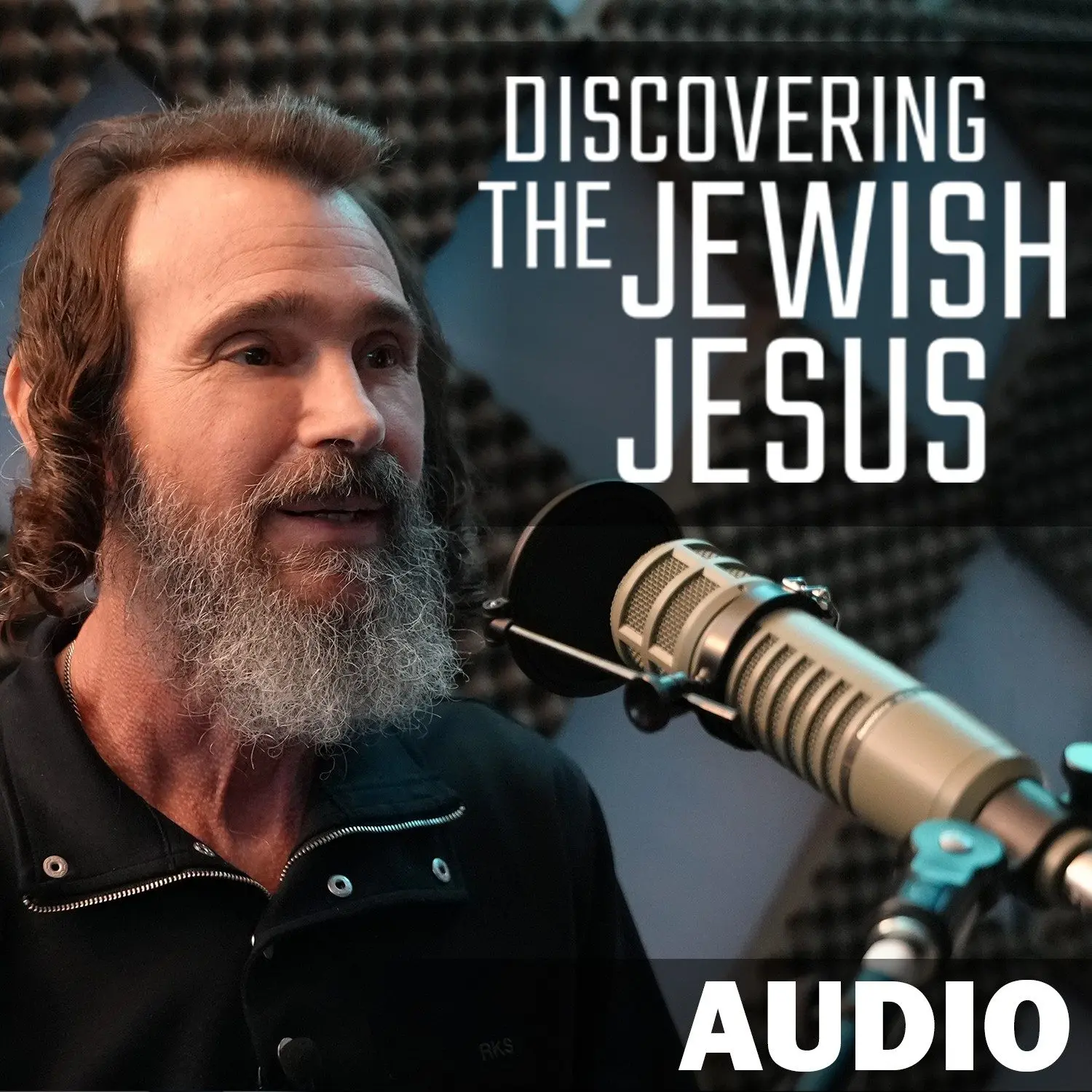


Dive deep into the book of Romans and grapple with the pressing issues of truth, faith, and holiness in this enlightening discussion with Rabbi Schneider. Witness the raw power of God’s word as we navigate through themes of apostleship, the understanding of living as bondservants, and the profound call to be set apart in our journey with Christ. Experience the moving testimonies from mission fields like Haiti, where the gospel’s truth breaks chains and sets captives free. This episode not only equips but challenges believers to embody their calling, to serve rather than to be served, and to partake
SPEAKER 02 :
I think every day I need to be asking myself, am I truly living in fidelity to God for the cause of Christ and for the gospel?
SPEAKER 03 :
I am super excited today because we have a really special treat for you on today’s program. Rabbi Schneider is actually right here in the studio, and we’re going to be going through the book of Romans today. This series is called Exploring Paul’s Epistle, the Book of Romans, and you can learn more about Rabbi in this ministry just by visiting our website, discoveringthejewishjesus.com. Well, I want to get started. So, Rabbi, thanks so much for being here live with us in the studio today to discuss the book of Romans.
SPEAKER 02 :
Master Dustin, my beloved brother and friend in the faith, I’m excited too because I love the book of Romans. It’s the most expansive theological treatise in the entire New Testament. It gives us information to help us know that our belief is in alignment with truth. Right. In an age where so many people are determining truth for themselves, where truth for many has become self-defined, even amongst Christian people that might not like to accept some of the doctrine of God’s Word, and as a result of not being able to receive God’s Word as it is written, they invent their own theology. It’s so critical that we’re grounded in truth, and the book of Romans really helps us understand, number one, why Jesus died, what the gospel is, which a lot of people are confused about. If you ask the general Christian population, what is the gospel? I wonder how many people, when asked that question, would have a bit of a question mark in their mind. They’ve heard the term a million times, but they don’t know what the gospel really is. And the way that the message of Jesus is being communicated to the world and the church today is often different than the way it was communicated to us through Paul in the book of Romans. And finally, Dustin, Paul said, if anybody comes and preaches a different gospel, let him be accursed. So by going through the book of Romans, as we’re going to do, line by line, I think we’re going to get a clear understanding of what the Word of God actually teaches about salvation and about how to walk with him.
SPEAKER 03 :
Wow, we’re really in danger, Rabbi. I mean, the Bible talks about how in the last days, many will fall away and turn away from the truth. And I think about churches today and some of the messages that you hear, and I think about that itching ears, people will gather people to say what they want. But today’s message, like you just said, is going to be so important because we’re going to go line by line, starting in Romans 1, verse 1, to understand the gospel.
SPEAKER 02 :
Exactly. And before we jump right in there, I think it’s worth saying that God, before sharing with us the message of salvation, before sharing the remedy, He first points out the problem. And that’s what we’re going to begin doing in the book of Romans. The Lord is going to address the problem of humanity so that people can be significantly and severely enough aware of the fact that they need a Savior. So with that said, Father, we just ask for your blessing on this time together, studying your Word. Father, we pray that it would be a pleasing aroma to this discussion that Dustin and I and our listening audience now that are joining in will all have together as we fellowship around your Word together. So we begin, verse 1. Paul, a bondservant… of Christ. I want to just draw attention to this term here, bondservant, because it’s a word that should not only be read about the Apostle Paul, it’s a word that we should ask ourselves, what does that term mean to us? Right, yeah, what does it mean? Yeah, bondservant is somebody whose life was completely sold out. to serving another. Paul was a bond. He was bonded to serve Christ, the Mashiach, or the Anointed One. And I think this is so important for us because a lot of times we’re trying to use God. Right. Being our magic genie, like, oh, if we get God in our life, he’s going to make our problems go away and make us happier. But that’s not really what the gospel is. Paul was not looking to God first to be the one that would make him happy. His relationship with the Lord, first of all, was spelled out in his own mind as him serving God. He was a bondservant of Christ.
SPEAKER 03 :
Yes, this is so opposite of our American dream perspective of the gospel of we get God and then we get everything versus Jesus said he that loses his life will find it. And Paul seemed to have the right perspective on that. He calls himself a bondservant.
SPEAKER 02 :
Yeah. Well, you know, I’m thinking, Dustin, before we move on, I’m thinking of Jesus and how Jesus, when he was on earth, he said to us that he came. to do the will of the Father. And he said he doesn’t do anything except what he saw the Father doing. And at the end of his life in John 17, he said, Father, I’ve completed the work that you gave me to do. So Christians, I’m speaking to you, my beloved brothers and sisters and friends, we need to get this biblical mindset about our lives. We’re not here to be happy. We’re not on this world to have a big vacation. We’re in this earth to serve God.
SPEAKER 03 :
This honestly, I think, requires a bit of a radical shift in our minds. I think about sometimes when I pray and how I can go to the Lord with a list of things of, Lord, can you check this? Are you able to help this? Oh, and I’d like to do this versus saying, Lord, what’s your direction? What are you wanting?
SPEAKER 02 :
Exactly, exactly. And then Paul goes on after he identifies himself as a servant of Christ. And many of you know that Christ is just the Greek word for the Hebrew Mashiach or Messiah. And it means anointed. Jesus, the anointed one. Some believers, and I know this is elementary for many of you, but some people actually think Christ was Jesus’ last name. But Christ is not Jesus’ last name. It’s a description of who he is. He is the anointed one. Mm-hmm. And so Paul says that he was called to be a servant of the anointed one as an apostle. And an apostle is one that is sent. An apostle is one that is sent to break up ground that has not yet been reached with the gospel, to lay a biblical foundation, and then to set government in place. The closest thing that many people associate with an apostle in modern times is a church planter or a missionary. They’re sent to foreign fields— or neighborhoods that have not yet heard the gospel or population groups that are not yet in a church. And the church planter preaches the gospel, establishes a local church in that geographical region, and then appoints leadership and elders in that local congregation. And so God is still sending people out today. And Paul, of course, was the greatest apostle.
SPEAKER 03 :
When I hear the word apostle, I think about all these people out there. I’m apostle so-and-so. I’m apostle Bob. And they call themselves apostle. And I mean, Paul called himself an apostle, but how do we know when someone really is an apostle set apart for the gospel versus someone who’s just given themselves a title?
SPEAKER 02 :
Yeah. I mean, hey, listen, we can all go get a business card, right? Put apostle on there. But I think the first thing that I would say is, An apostle bears fruit. I think, you know, Jesus said, you shall know them by their fruit. And so, once again, an apostle sent out to plant a local church is their fruit. That would be the first thing I would say. The second thing I would say is, and I know a lot of my listeners might not be fully aware of this or be in a position where they’re comfortable with what I’m saying, but biblically, apostles’ ministry was accompanied with signs and wonders.
SPEAKER 03 :
Jesus’ ministry was accompanied with signs and wonders.
SPEAKER 02 :
Everywhere Jesus went, everywhere he went, he did three things. He preached the gospel, he healed the sick, and he drove out demons. His ministry was accompanied with signs and wonders. And in fact, it was the signs and wonders that drew people to him. Jesus said, you’re following me because you saw the signs that I did. We don’t put the emphasis on the signs, but God uses signs to cause people to know that what is being spoken is truth, and you need to pay attention to it. So how do you know that someone’s an apostle? Number one, they’re performing the office of an apostle. They’re being sent to a people group. They’re laying the foundation of the gospel for the first time. They’re setting a local church in place. They’re appointing a government. And the apostles’ ministry is most often accompanied with signs and wonders because signs and wonders are oftentimes needed for there to be a breakthrough.
SPEAKER 03 :
They’re definitely not serving themselves. They’re a bondservant serving Jesus and others.
SPEAKER 02 :
Yeah, yeah. I remember I read an autobiography of a missionary to India, and they felt the great call, he and his wife, to India. And they went there with great expectation, full of hope. And they labored there for years and saw nothing but defeat. They felt like they made no inroads whatsoever. And after laboring there for a good length of time, they went back home, Dustin, crippled, meaning that their heart was broken. They were spinning in terms of, you know, what happened. Then when they got back to the States— after really leaving the mission field in defeat, they were exposed then to how God is still using signs and wonders in the modern missions field. And so after being trained and tooled and equipped to expect signs and wonders, they went back to India and their ministry exploded, not only in India, but worldwide. So the Apostle Paul’s ministry was accompanied with signs and wonders, and that’s one of the ways that we know that someone’s a true apostle.
SPEAKER 03 :
And honestly, Rabbi, we’ve experienced God do some things like this in this ministry. The fact is, when we travel overseas, I mean, I remember the first time, this is over 10 years ago now, I traveled with you to Haiti, And in the middle of your message, all of a sudden, this girl, this little girl, runs out into the middle of this open area in front of the stage. And she starts writhing around on the ground. Like, the best way I can say it is like a snake. And she’s going, ah! And screeching and making all these noises and stuff. And really, that was like my first experience seeing what I today know was a demon manifesting and coming out of someone.
SPEAKER 02 :
Yeah, that was a really cutting experience. As you know, she got delivered, tears flowing out of her eyes. I mean, she was a young girl, like a precious little girl, the age of my daughter, you know, at the time, just so young, a little girl, you know, 11 years old, whatever she was, tormented by a demon like that. And then to see her get set free and to see the tears come through her eyes. And then my wife, Cynthia, we have a picture of it, giving her a hug. I mean, it’s just like… It cuts to the heart. And, you know, in that same outreach to Haiti, we saw a pretty marvelous thing, and I should share with all our listeners right now. Many of you know that voodooism is still practiced in Haiti by many people. This is a region of the world where voodooism was the foundational religion. So we ask, why are there so many people in Haiti that are having problems with the demonic? I mean, we all, as human beings, are battling the forces of darkness. But in Haiti, we’re talking about not just oppression, but we’re talking about demons getting a foothold in individuals’ lives there so that their lives are out of control like that little girl that you just described. Why? Well, Haiti was really formed on a religious foundation and a large degree on voodooism, which is total witchcraft. It’s actually inviting Satan in to come and take possession. So this is why sometimes when we’re in Africa or other parts of the world, we see mass deliverances because they don’t have the foundation that we have in America, which is a Judeo-Christian country. That makes sense. Yeah, you know, another really strong illustrative example of what happened in Haiti for our listeners today to understand how real this is, is that we were doing this mass outreach. Probably about 5,000 people were gathered in St. Mark, Haiti. And it was a lot of people came to the event. They just sometimes don’t have a lot of other things to do. And so I’m preaching the gospel. I give an invitation to receive Jesus. And at the end of the presentation and my invitation to receive Jesus as Savior, a woman came forward just the day before. She had been the leader of a big parade in St. Mark, what was that called, Dustin? She was the Ra-Ra parade. She’s the Ra-Ra queen. And it was a, what was that parade about again? It was, I know, a really pagan, it was like Mardi Gras in New Orleans. Yeah, it’s exactly what it’s like. And they’re celebrating voodooism. They’re celebrating voodooism. And this woman that came forward to receive the Lord was, like you said, the queen of of this parade the day before. She came forward after hearing the gospel. She repented of being into voodoo. And remember, she said it never helped her one bit.
SPEAKER 03 :
She was like a slave to it. I remember she said she was like a slave.
SPEAKER 02 :
Yeah. And she never received anything. No peace. Wow. And here she was turning her life over to the Lord. And possibly the reason that she did was, in addition to hearing the gospel, she saw what happened to that little girl.
SPEAKER 03 :
Wow. It’s so amazing seeing the signs that God is doing through the ministry, Rabbi. And before we continue with the second part of our conversation today, to our listeners, we want to let you know, we’ve got a ton of resources available for you online. They’ll help equip your journey and your faith. Make sure to visit our website, discoveringthejewishjesus.com. And also while you’re there, explore our Messianic content. You’re going to find teachings and videos about the Feast of God, Hebrew titles and the names of God, and so much more. And personally, I really like our home Bible studies and our devotionals, Rabbi. That content is ready and available for you all today. Once again, that’s discoveringthejewishjesus.com. And we also just want to say, if this program has been a blessing to you, you can be a part of this ministry and help us multiply this blessing to others. All you have to do is become a monthly partner, or you can give a one-time financial donation today, whatever the Lord lays on your heart. Visit our website, discoveringthejewishjesus.com. And now we’re going to get back to our message. Rabbi?
SPEAKER 02 :
Well, I love the next words. After Paul says he calls us as an apostle, he says, set apart for the gospel of God. And I want to take that word for all of us right now. I want to just focus on these two words, set apart. Because we are set apart. When we hear the word holy, sometimes we don’t know really what it means. A lot of times when people think of holiness, the first thing that comes to mind is a moral impeccability, meaning that someone is morally perfect. And certainly God is holy and morally perfect. But the root meaning of the word holy is to be cut out. Hmm. to be different, to be set apart. That’s good. And that’s the call in all of our lives. When we were chosen in Jesus, we were called out of the world. We were chosen out of the world to be set apart unto him. But sadly, Dustin, many of God’s people, many of those that are naming his name and calling themselves Christians, and I’m not saying that they’re not, but sadly, many of us don’t understand that that we’re called to be set apart. We’re not called to look like the world. We’re not called to fit in. We’re called to be different. Jesus said, if you were of the world, the world would love you. But because you’re not of the world, I called you out of the world, therefore the world hates you. And so we need to accept that call.
SPEAKER 03 :
Wow. I’m feeling it today, Rabbi. A bondservant, set apart, holiness. I’m feeling called to come up to another level.
SPEAKER 02 :
Well, we have to. I mean, because to not say yes is to say no. You know, when we hear the truth, we have a responsibility to respond to the truth. This is why at one point in the gospel, Jesus said, if I wouldn’t have spoken to you, you’d have no sin. In other words, their sin was multiplied to the next degree because they heard the truth but didn’t respond to it. And God wants us to hear the truth, and he wants us to respond. And There is a price to pay to follow the truth. There’s a price to pay. And so, yeah, I think every day, and I’m speaking to myself, I need to be asking myself, am I truly living in fidelity to God for the cause of Christ and for the gospel?
SPEAKER 03 :
You know, you’re reminding me of something, and I see this in your life. Every time you come into the studio, I was just telling one of our radio producers the other day about you and how you come in and you say, what’s the good word today? Or what’s God speaking today? Something like that. You’re always bringing it back to God. And I absolutely love that you do that because it’s always keeping us focused on on what we’re really here for, being set apart, not just going about our day like we would on our own.
SPEAKER 02 :
Amen, amen. And sometimes this call that we receive to be set apart involves loneliness. In other words, Jesus said, the foxes have holes and the birds of the air have nests. But the Son of Man has nowhere to lay his head. Jesus said, don’t think I’ve come to bring peace. I’ve come to bring a sword. In other words, he is the Prince of Peace. But sometimes when we get in alignment with Jesus and receive the call to live for him, it results in division of relationship because we’re standing for one thing and people maybe that we were having fellowship with secularly in the past, they can go with us. So I just want all of us to understand that We can’t just choose the path of least resistance. We can’t just choose a path of comfort. We have to choose the path of the call, and that’s to be set apart, and there’s a price to pay. And sometimes it involves personal loneliness if it means that we have to lose family or friends because we’re being faithful to Jesus. And I just think we need to go into being his disciple with our eyes wide open. And then he continues that we’re set apart for the gospel of God. The gospel just means good news. And so we’re going to continue here next time. But I’d like to just pray together around some of these truths that we’ve seen in God’s word for us. Father, we thank you. We love you today. We thank you for your word. We thank you, Father. We say, like David, your word is a light unto my path. We give you glory today. And Father, we desire to be in full partnership with your will for our lives. And we think about the Apostle Paul and how he considered himself a bondservant. So, Father, I ask you to help us Help us, Father. Have mercy on us. Conform us to his image that we might consider ourselves as bond servants as well. And Father, we desire to be set apart to you alone. So we give you our hearts right now. We say, Father, take them, make them, mold them, have your way in our lives. We love you in Jesus, in Yeshua’s name. Amen. So thank you for tuning in. And if this ministry is blessing you and you feel a witness from the Holy Spirit to just present an offering to the Lord through this ministry, I want to thank you for that. It’s only because of you that I can be here even today doing what I’m doing, preaching the gospel. And because of you, the gospel is going forth to the ends of the earth. And one of the nice things to know when you sow financially into a ministry that’s preaching the truth— is that you are being a fellow worker with the truth. And so every soul that’s being reached through a ministry that you have sowed financially into, you’re going to have a reward because that person wouldn’t have been reached by that ministry without faithful listeners just like you. So thank you, my beloved friend, for your love and for your financial support.
SPEAKER 03 :
You can give a financial gift of any amount to Discovering the Jewish Jesus just by visiting us online. Our website is discoveringthejewishjesus.com. And if it’s easier for you, just give us a call instead at 800-777-7835. Or you can also send your financial donations in the mail. Our address is Discovering the Jewish Jesus, P.O. Box 777, Blissfield, Michigan 49228. And, you know, every week it brings new challenges to our lives. But with our weekly Seeds of Revelation email from Rabbi, we want to help equip you with timeless biblical principles that address real life struggles, whether it’s overcoming fear or maybe wanting to know more about walking in love, or if you’re simply wanting to understand God’s character better. Rabbi Schneider’s weekly devotional provides practical and scripture-based guidance for your journey. Sign up today for Seeds of Revelation online at discoveringthejewishjesus.com. Just click the Stay Connected button. And hey, while you’re there, you can become a monthly partner with this ministry by giving a donation each month that meets your needs and your budget as well. I want to encourage you, join a community of believers who are discovering the Jewish Jesus and helping make sure that this ministry can share the gospel with the world today and for years to come. So become a monthly partner by calling us at 800-777-7835. Or you can even text to give and become a monthly partner that way. Just text the keyword give to the phone number 88777. Now here’s Rabbi with God’s special and sacred blessing.
SPEAKER 02 :
The words from the Aaronic Blessing in the book of Numbers chapter 6 verses 22 through 27 helps us to realize how good God is to you and I personally. So receive his blessing into your life and then beloved one, go bless somebody else in Jesus’ name today.
SPEAKER 01 :
Yeah. Yeah. Yeah. Yeah. Yeah. Yeah. Yissa Yahweh panavei lecha ve’asem lecha. Shalom.
SPEAKER 02 :
The Lord bless you and keep you. The Lord make his face shine on you and be gracious to you. The Lord lift you up with his countenance. And the Lord give you, beloved one, his peace. God bless you and shalom.
SPEAKER 03 :
This program is produced and sponsored by Discovering the Jewish Jesus. And I’m Dustin Roberts. Be sure to join us next time when Rabbi Schneider explains the gospel of God. That’s Thursday on Discovering the Jewish Jesus.