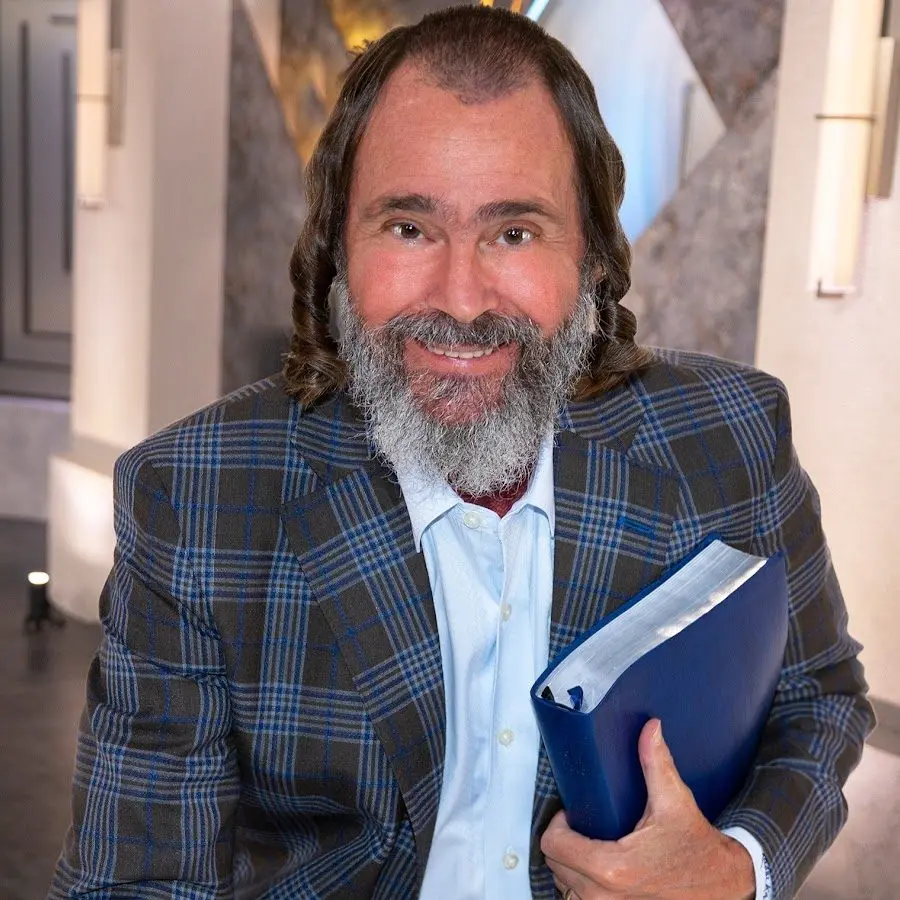

On this episode of In the Studio, Theresa speaks with Rabbi Kirt Schneider from Discovering the Jewish Jesus. Rabbi Kirt Schneider reflects on his Taking the Rainbow Back campaign and shares how he came to know Jesus Christ. He also discuses the importance of the Torah for Christians in today’s age and key takeaways from his recent book, “Decoding the Torah”.
SPEAKER 03 :
Hi, this is Teresa, and we’re in the studio with my special guest, our very own programmer, Rabbi Kurt Snyder, with Discovering the Jewish Jesus. He aims to transform lives by delivering the pure word of Jesus, Yeshua, with clarity and power, emphasizing the prophetic connections between the Old and New Testaments. By teaching the biblical Jewish roots of Christianity, the show empowers believers to deepen their faith and walk in greater union with God. Thank you so much for being here today.
SPEAKER 02 :
My pleasure, Teresa. I’m glad to be with your guest as well.
SPEAKER 03 :
Will you lead us in prayer before we get started?
SPEAKER 02 :
Father God, we come to you today and there are so many things that we could ask for, but Father, we ask first of all that you would give us the love for you that Jesus, that Yeshua has for you. Father, cause us to love you with the same fiery passion. that Jesus loves you with. You said that you predestined us to be conformed to the image of your Son. So Father, we ask that you would just overwhelm us today with your love, that you would break through everything in our hearts, anything in our soul, anything in our minds that’s preventing us from fully yielding to you. Father, we thank you that you’re the potter and that we’re the clay, and we ask you to form us into the image of your Son and that you would be glorified through our lives at the hundredfold fruit in Jesus’ name, in Yeshua’s name, Amen.
SPEAKER 03 :
Amen. So I’ve been here a few years now and I just started the show. Maybe it’s been, oh my gosh, like 10 months now, I think. And before I had the show, I used to take calls and do all that. One of the most memorable campaigns you did a few years back was called Taking the Rainbow Back. I promoted it on our newsletter that month because I was blown away by your boldness and love for God and our beautiful country. For our new listeners, could you please share how God called you to take the rainbow back?
SPEAKER 02 :
I remember the moment it happened. And my wife and I were driving down a street, I think it was on a Sunday or something. And I don’t know what sparked it, but all of a sudden, Teresa, something just rose up in me that I was not going to keep silent about what was going on in our country. It didn’t seem like anybody was talking about it, like the LGBTQ agenda. And I’m not talking about people now. I’m talking about an agenda That the LGBTQ agenda was rolling over the country like a tidal wave. And no one that I knew was speaking out about it. I didn’t hear any preachers preaching about it. I didn’t hear anybody standing up to it. And I just got sick and tired of it. And it was just like my bones were crying out with fire. I’m going to speak out against this thing. And I called my marketing director. And I said, we’re going to be in the studio tomorrow. We’re launching a movement. And he said, Rabbi, you can’t launch a movement on a dime. And I said, I don’t want any roadblocks. I don’t want any hurdles. We’re going to be in the studio tomorrow. I’m going on YouTube live. We’re launching a movement. And everybody, my whole team just got fully aboard. We were working so hard. We were running. The entire team, I mean, all our producers and editors and all the marketing people for six months with this. And it just was something that I felt like I couldn’t keep silent about.
SPEAKER 03 :
Absolutely. I remember when I first saw the rainbow and then your picture and I was like, did I miss something? What happened? And then I had to look into it. And that’s when I was like, oh, he’s taking the rainbow back. What a bold move. I love this because the rainbow is a significant sign for Jesus, for Christians everywhere. It’s not for what some people today are intending it for. So I love that you did that. It was a bold move. We were behind you all the way with that campaign.
SPEAKER 02 :
Thank you very much.
SPEAKER 03 :
Yes. As a rabbi, how did you come to know Jesus, our Lord and Savior?
SPEAKER 02 :
Well, it was over 40 years ago. It was 1978. I knew nothing about Jesus growing up at all. Never thought of him. He was as far away to me as the man on the moon. Wow. But I was lost in life. I was really searching. I was going through a huge identity crisis. I had wrestled all through school. And when it ended, I just like didn’t know who I was anymore.
SPEAKER 01 :
Hmm.
SPEAKER 02 :
And so I just was feeling vulnerable, feeling out of control, didn’t have purpose or direction. I started searching in the new age. I wanted to be able to levitate off the ground like one of the yogis from India. And in the middle of reading this new age book, I went to sleep one night. And the Lord awoke me from my sleep. And I want you to keep in mind, no one had ever witnessed to me. I had never read the New Testament. Again, I never thought about Jesus for a day in my life. But all of a sudden in the middle of this kind of new age quest, searching for an answer, I was awoken from my sleep. It was a hot August night. I was 20 years old. And Jesus appeared to me in a vision of the night. It was in color. He appeared on the cross. I could see some people around in the distance looking at him. And then a ray of red light, Teresa, and all our listeners right now, a ray of red light from straight above, from straight through the blue sky, beamed down on Jesus’ head. And when I saw the red light beam down on his head from heaven, I knew that it was coming from God and that God was showing me that Jesus was the way to him. As an American, I knew enough to know at least that Jesus was the one on the cross. And that’s how it all began.
SPEAKER 03 :
Wow, that’s incredible. That would be remarkable to have one of those dreams. I can’t imagine what that must have felt like. Very powerful, I’m sure.
SPEAKER 02 :
It would like radically, instantly change me forever.
SPEAKER 03 :
That is a radical encounter for sure. How do you incorporate both Jewish traditions and faith in Jesus into your life?
SPEAKER 02 :
Well, I would say, first of all, that beyond the traditions, it’s the revelation. It’s the revelation in the Hebrew Bible. A lot of the church doesn’t understand that the Torah, which is the first five books of our Bible, Genesis, Exodus, Leviticus, Numbers, and Deuteronomy, it is a self-revelation of God. A lot of Christians, they just look at the Old Testament as law. They think we’re not under the law anymore. It doesn’t have any relevance for me. And they just solely focus on the New Testament. But we have to understand that the first verse in the New Testament, Matthew 1, 1 is this. And it says, this is the genealogy of Jesus Christ, the son of David. the son of Abraham. So to recent our listeners today, the very first verse of the new Testament, Matthew one, one brings us back to the very first book of the Bible, the book of Genesis. So to disconnect the two, to disconnect the Hebrew Bible from the new Testament is a serious error. And this is why Jesus said in Matthew chapter five or 17 through 19, he said, Do not think I’ve come to abolish the law and the prophets, for I’ve not come to abolish, but fulfill. And everybody that teaches others, he said, to forsake the law and the prophets will be called least in the kingdom of God. But he that lives by the insight of the law and the prophets will be called greatest in the kingdom of God. And so to me, it’s not first about Jewish tradition. It’s about knowing God’s word in the Torah and the Hebrew Bible and how it relates to me today as a disciple of Jesus, not as someone that’s under the letter of the law, but as someone that recognizes that the law is a self-disclosure of God. And then I want to apply the principles of it to my walk with God as I’m following the Holy Spirit today.
SPEAKER 03 :
Amen. I remember you speaking about just how we shouldn’t be lukewarm. And this is kind of like one of those experiences. First of all, you’re such an amazing teacher. You break it down so clearly. And it’s so easy to follow. You’re very clear with your messaging. And although you’re passionate, you also are compassionate. So thank you for that. In your experience as a Messianic rabbi, why do you think so many Christians are unaware of the laws of the Torah? Is it no interest?
SPEAKER 02 :
Yeah. I think it’s really interesting because what happened was, remember, Yeshua comes and the first church was Jewish. The mother church was in Jerusalem. It was a Jewish congregation. The leader of that church was Jesus’ half-brother, James. And so the early church, it started out with a Jewish foundation. Remember, Jesus said, I’ve come only to the lost sheep of the house of Israel. So it starts out completely Jewish. But in a very short period of time, the church began to lose her connection to Judaism and the Jewish roots. And it happened for a few reasons. Number one, Most Jewish people did not receive the message that Jesus was the Messiah. So because of that, the population of the church was quickly more Gentile in demographic. In other words, as Paul began to preach the gospel, he would go into every city. He’d go to the synagogue first, but then ultimately, few Jewish people believed him. Then he would go to the Gentiles, and many Gentiles would. So the church demographically began to very quickly be composed mostly of Gentiles rather than Jews. And these Gentiles mostly did not have any concept of the Hebrew Bible, of the Torah, of the prophets. And so they believed in Jesus, but they didn’t have a foundation in the Old Testament. And then what happened was Constantine became the leader of the church, for all practical purposes, in the early 300s. He was the leader, of course, of the Roman Empire, and he made Christianity the state religion. And Constantine was anti-Jewish, and he sought to disconnect the church from everything Jewish, changing the word of Passover to Easter and other things as well. And this anti-Jewish mindset was picked up by osmosis by the church at large. And this is even evidenced in the King James translation of the Bible. And the King James, as many of our listeners know, has been the most influential version of the Bible for hundreds of years. And in John 1, in the King James, verse 17, we read there, and someone that has a hard copy, King James, you can look this for yourself. It’s translated, for the law was given by Moses. So I’m quoting now John 1, 17 from the King James Version. For the law was given by Moses, but… Notice the word but there. But… Grace and truth came by Jesus Christ. Now, if somebody has a King James Version, a hard copy, meaning, you know, not the online form, but, you know, a real book type, and they look this up, they’ll notice that the word but in John 1.16 is in italics. And the reason it’s in italics is because the translators are telling you this word but, it’s not in any of our manuscripts, our ancient manuscripts, but we’re adding it to help you understand. Ah. But in reality, they completely misunderstood because the verse right before that, John 1.16 says this, grace upon grace we have all received. How many graces too? Grace upon grace we have all received for the law came by Moses, grace and truth were realized from Jesus Christ. So the reality was that the law was the first grace. Grace upon grace, John 1, 16 says, we have all received. For the law came by Moses, grace and truth were realized through Jesus Christ. In other words, the law was an elementary form of grace that came before the ultimate demonstration of grace through Jesus. But the law is not anti-grace as the early church believed and as the King James translators effectively believed. And they influenced in their translation the church for hundreds of years. And so Christians think that the law is anti-grace. No. And that’s why Christians don’t appreciate the Old Testament. And that’s why I wrote my book, Decoding the Torah, to show every disciple of Jesus today, whether you’re Jewish or Gentile, how the laws in the Torah are a self-revelation of who God is. And when we understand the self-revelation of God in the law, not as those that are putting ourselves under it legalistically, but as those that are looking for spirit application, it will empower us to walk with Jesus and live holy lives today. It won’t distance us from God. It will help connect us to God.
SPEAKER 03 :
While writing Decoding the Torah, were there any revelations that the Holy Spirit imparted to you?
SPEAKER 02 :
oh yeah absolutely i mean completely i mean the whole experience i wrote i wrote most of it in jerusalem right outside the western wall so the whole experience was very immersive just in the sense of what i felt i just sent such an awe of god i just sensed you know the the anointing that came upon israel uh 3 500 years ago at mount sinai when the holy when the lord appeared on top of mount sinai in fire and glory and clouds and smoke and the mountain shaped and 3 million Israelites at the base of the mountain experienced this, that same anointing is still upon committed Jews today. Even though they don’t know Jesus, they still have a sense of the awe of God. So the first thing that happened to me was just a real sense of the holiness of God. And in terms of looking at the individual laws, I mean, there’s just so much there. It’s ridiculous. I mean, there’s so much that we’re missing as Christians by not understanding the Old Testament, because the Old Testament was given to us upon whom the end of the ages has come.
SPEAKER 03 :
In exploring the Torah, how can we transcend a legalistic approach to uncover deeper spiritual truths?
SPEAKER 02 :
Well, Paul said in the book of Romans, chapter seven, he said, for the law, he’s speaking of the Torah, he said, is holy, spiritual, righteous, and good. So we have to understand Paul, the New Testament writer, who wrote most of the New Testament, said the law is holy, spiritual, righteous, and good. And Paul went on to say that it’s good when used lawfully, not to put people in bondage, but to understand the self-disclosure of God in the law. And he said that the problem is not with the law, the problem is with human beings that are flesh. So… We need to understand that the law was not able to do what it promised to do, which is to elevate humanity to a place of blessing, because in order for the law to elevate humanity to a place where they could receive the blessing, humanity had to keep the law. But since humanity couldn’t keep the law, it became a curse. Jesus has delivered us from the curse of the law. In other words, he’s delivered us from the legal obligation of having to keep the law to be blessed. Jesus lived the law perfectly. Then he gave himself for us as our atonement. And now his righteousness is imputed to us. So we are righteous before the Lord all because of what Jesus has done for us. But the problem once again is that Christians make the mistake of thinking the law now has no relevancy. And that is absolutely a lie and total misinformation. I mean, Jesus expects us to live by the law. This is why he said in Matthew 5, 17 through 19, do not think I’ve got to abolish the law. I’m not going to abolish, but fulfill. And everybody that practices the revelation and the law and the prophets and teaches others to do so, he said, will be called greatest in the kingdom of God. So I just want to encourage everybody right now to get my book, Decoding the Torah. If it sounds like a sale I’m selling right now, I’m sorry, but everybody needs to read this book. Every disciple of Jesus needs to read this book, Decoding the Torah, because you’re going to discover something that you’ve never discovered before, and it’s going to rejuvenate and inspire your faith.
SPEAKER 03 :
Absolutely. I believe readers will deepen their faith, learn to apply these eternal truths to their modern walk with God, and it’ll be really helpful. I want to go into the commandments. There’s this random question out of the 613 commandments that I was researching of the Torah. As challenging as this may be, what would you say is one that you lean on the most?
SPEAKER 02 :
Well, this is a very important one, and it has to do with the devotion that was expected of the priest. It comes from the book of Leviticus. chapter 10 verse 7 and the scripture reads this way you shall not even go out from the doorway of the tent of meeting or you will die for the lord’s anointing oil is upon you so they did according to the word of moses and uh there’s a similar law taken from the verse right before leviticus 10 6 that law is the command for the priests to take care of their appearance What was going on here is that God had just struck dead Nahab and Abihu because they had offered up strange fire and strange incense. And when the Lord struck him dead, God commanded the priests there, they couldn’t mourn, they couldn’t grieve, and they couldn’t go to the funeral. And this sounds really, really hard. The devotion expected of the priest, they couldn’t even get the high priest could not even go to the funeral of one of his immediate family members. And what this speaks to us of is how our allegiance must be to God and God alone and not to allow our hearts because of human empathy, sympathy or compassion to to draw us out of our allegiance to God. In other words, today, many people become so empathetic. Let’s go back to taking the rainbow back because we have a loved one, a friend, a family member, somebody we work with, somebody that we love and we really care about. and we feel for, but they’re living a homosexual lifestyle. And oftentimes, it’s because they’ve been victims themselves. So I understand this is a very deep topic that there’s a lot to unearth here. Many people that are living homosexual lifestyles were homosexually abused as children. So there’s a lot going on here. But what happens is Christians, because they have such feeling for their friend that’s living an LGBTQ lifestyle, what they do is, They move outside of Scripture. They move outside of God’s revealed will. And they begin to bless their friends in their homosexuality.
SPEAKER 03 :
Right.
SPEAKER 02 :
See what they’ve done? They’ve put their connection to humanity. they’re feeling for humans above their connection and devotion to god the priests were not allowed to leave the temple even to go to the funeral of a loved one because overarching that and in greater purpose they had to function as the priest for all of israel they and in order for them to fulfill their call as the priest for all of israel they couldn’t contaminate themselves And so Christians today, we need to realize that we can’t contaminate ourselves. We have to stop compromising with the world because we’re afraid that we’re going to hurt somebody’s feelings. Because we’re afraid we’re going to shake the boat. Because we’re afraid we’re going to seem harsh. We have to stand with God and we have to stand with his word. This is why Jesus said, unless a man… Now these are Jesus’ words, everybody. These are Jesus’ words. Jesus said, unless a man hates… His own father and brother, brothers and sisters, and even his own life, he cannot be my disciple. Do you see how these two connect? It’s the same thing. We have to be more devoted to God than anything else. And so a lot of what these laws do is they amplify the revelation that we have in the New Testament.
SPEAKER 03 :
I think we’re called as believers to be bold and sometimes being bold isn’t the most popular thing to do, especially if it goes against the lifestyle of someone else. But the truth is the truth and the Bible doesn’t change. I think we can let them down nicely, if that makes sense. That message that you just said is we are to speak the truth and we can do it with compassion and love because that’s number one is to do all things with love. But that doesn’t mean that we’re supposed to lie. or nurture that lie, you know, so I agree with you 100%. You know, we’ve become somewhere along the line, a nation that just, you know, allows lies to seep in, and we’re almost afraid to speak up. And I don’t agree with that. So I’ve been on that train of bold, righteous truth, talking and speaking that way. So I’m all about that. Sometimes it’s hurtful and it’s painful. And I get that look when I’m saying something. I’m like, you know, I wish I could even say I’m sorry, but I’m sorry you’re feeling hurt. But this is the truth. And that’s kind of how I take it, you know. What is the most important takeaway you want readers to gain from Decoding the Torah, your brand new book that just came out?
SPEAKER 02 :
Well, what I’ve done is I’ve taken these laws and I’ve broken them down into two or three pages and giving application to each one. Here’s the last one on a positive note. Take it from Exodus 30, verse 7 and 6. I’m sorry, 7 and 8, where the Lord commanded the priest, and here’s the law, to burn incense of sweet spices unto the Lord every morning. And so what happened every morning in the tabernacle and later the temple, the priest had to burn a sweet incense unto the Lord. It didn’t matter, Teresa, whether they felt tired. It didn’t matter whether they weren’t feeling good. It didn’t matter if they felt disconnected to God. They began the day the same way every day. They burned sweet incense unto the Lord because he’s holy and he needs to be worshiped and praised. The application, you and I as believers, we need to start every day worshiping God, giving him the first part of every day, thanking him for what from what he saved us from for where he’s brought us to what would have happened to us if he didn’t redeem us and just blessing god every morning as a discipline because it’s the right thing to do regardless of what we feel like we rise above our emotions we rise above the flesh and we do what the priest did and we bless the lord every morning
SPEAKER 03 :
What a great glimpse of what to expect from your new book, Decoding the Torah. Thank you so much for joining me in the studio today here at Kaybright Radio. Any final words, Rabbi?
SPEAKER 02 :
Just that. Well, first of all, I appreciate you. I think you did a great job interviewing me. And I hear your passion for the Lord. A lot of times, Teresa, I can, you know, people interview me and it’s just like it’s a bit of a disconnect. But I really sense with you that we were we were on the same page. So thank you for having me. This is the most important book I’ve ever written. It’s groundbreaking. There’s never been a book like it written before.
SPEAKER 03 :
I’m so excited. I can’t wait to get my copy. If you haven’t, it’s already out so people can buy it right now today. Tell them where they can go.
SPEAKER 02 :
You can go to Amazon or you can go to discoveringthejewishjesus.com where all my resources are.
SPEAKER 03 :
And everybody should go check it out. There’s a lot of resources there. I’ve been there many times and I always find something new. He has new content all the time. His teachings are so amazing. They’re very clear and to the point. It’s easy to follow. I would recommend anyone who’s listening right now to go and buy his book. It is called Decoding the Torah, Applying Ancient Wisdom in a Modern World.
SPEAKER 02 :
If you just go to Decoding the Torah, you’ll find it. It’s an Amazon bestseller right now.
SPEAKER 03 :
Yes, Amazon number one bestseller. We love that for you. Thank you so much. I can’t wait to talk to you again next time. This was so amazing. I learned so much. I have all these notes. Matthew, John, Genesis, English. you know, translation for the Torah. So I’m learning a lot through you. I appreciate your teachings and I’m so grateful for you to be here today.
SPEAKER 02 :
Blessings to you, my friend. And thank you everyone that’s listening right now.
SPEAKER 01 :
This has been In the Studio, a public affairs presentation of the Crawford Media Group. Please email us your comments, suggestions, and ideas to publicaffairsatcrawfordbroadcasting.com. Again, that’s publicaffairsatcrawfordbroadcasting.com.