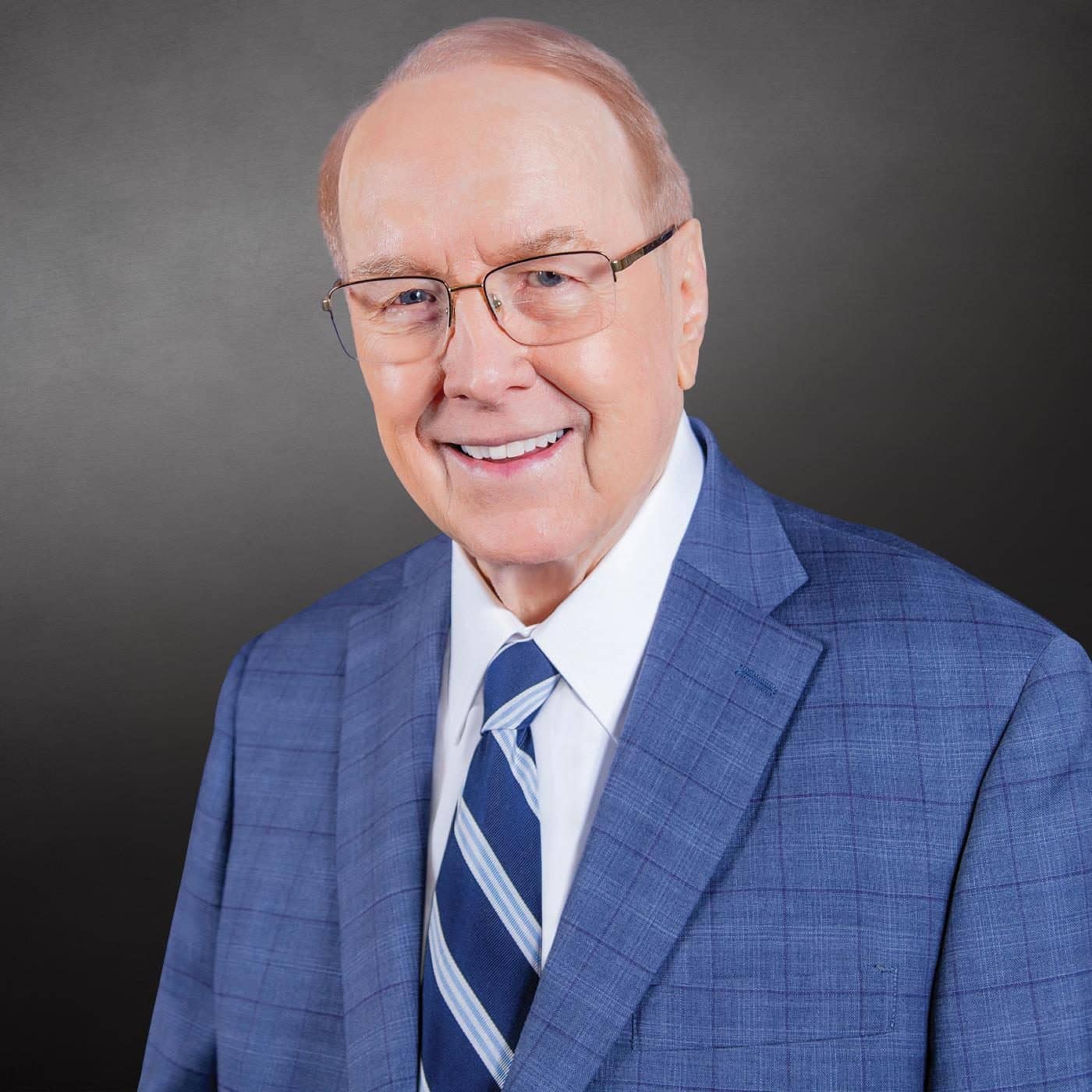
In this episode of Family Talk, Dr. James Dobson converses with Dr. Emerson Egerich, a distinguished author and founder of Love and Respect Ministries. They discuss the groundbreaking principles outlined in his New York Times bestselling book, ‘Love and Respect,’ which has sold over two million copies. At the heart of their conversation is a powerful biblical truth from Ephesians 5:33, emphasizing the necessity of love for wives and respect for husbands. Throughout the episode, they explore how these insights can transform marriages, spurred by the cultural and relational challenges faced by couples today.
SPEAKER 03 :
Welcome everyone to Family Talk. It’s a ministry of the James Dobson Family Institute supported by listeners just like you. I’m Dr. James Dobson and I’m thrilled that you’ve joined us.
SPEAKER 01 :
Well, welcome to Family Talk. I’m Roger Marsh. Have you ever found yourself in an argument with your spouse and at some point you begin to realize that you can’t even remember how it started in the first place? Well, on today’s edition of Dr. James Dobson’s Family Talk, Dr. Dobson sits down with Dr. Emerson Egerich, founder and president of Love and Respect Ministries. Dr. Egerich’s groundbreaking book, Love and Respect, has sold over, are you ready for this, 1.6 million copies. and it earned New York Times bestseller distinction as well. His message is built on a powerful truth from Ephesians chapter 5, verse 33, that husbands need respect and wives need love. On today’s edition of Family Talk, we’re going to hear Dr. Dobson and Dr. Egerich unpack this life-changing principle. So buckle up. It’s going to be a great conversation on today’s edition of Dr. James Dobson’s Family Talk.
SPEAKER 03 :
I have great love and appreciation for this man. I’m speaking of Dr. Emerson Egrich, who is the founder and president of Love and Respect Ministries. He and his wife, Sarah, hold Love and Respect marriage conferences all over the country. He’s a former senior pastor in at Trinity Church in Lansing, Michigan. And he’s a New York Times bestselling author of the book, Love and Respect. I want to talk to him about that. That sold more than 2 million copies, and it has been a phenomenon. Dr. Egrich. How nice to have you with us. You completed your PhD in child and family ecology at Michigan State University. Do they still play football there?
SPEAKER 02 :
The Spartans are still on the gridiron, yes.
SPEAKER 03 :
I’m a Trojan from USC, so that’s a sensitive subject.
SPEAKER 02 :
We can still be friends.
SPEAKER 03 :
We won’t talk about that anymore. His work academically has then gone on to have influence in the church and outside of it. His book, Love and Respect, has sold two million copies. It’s a wonderful book. I hope you’ll get it if you haven’t read it. And we want to talk about his new book today, but Emerson, if it’s okay with you, bring us up to date on that. Go back to the basic concept of love and respect. The Lord gave you that, didn’t he?
SPEAKER 02 :
Yes. Well, and just for your listeners, Sarah and I are indebted to you. It was in 2004, right about then, 2003, that you put this message on a two-day presentation. And I think we had something like 90,000 responses. You were instrumental in this message getting out there because people love and respect you. They trust you. And when you gave voice to this, it just went viral. as we now say, just exploded. So we are grateful to you, Dr. Dobson. So that message has continued to go. We’ve continued to try to use the social media with all the opportunities that are there to continue to get this message out. And we have that love and respect brand, HarperCollins would call it, where we have the family book, we have a devotional book, we have many resources that have built upon that central book, love and respect.
SPEAKER 03 :
Well, for people who don’t know, what’s the basic concept that you’ve built on? Because I said a minute ago that it’s inspired. It comes straight out of Scripture, and it is the foundation of a Christian marriage. Yes.
SPEAKER 02 :
Well, as a pastor who studied the Bible 30 hours a week for nearly 20 years, it gave me an awful lot of time to think. Now, that’s because I’m slow, and the elders knew I was slow, so I needed more time. But I came across Ephesians 533, and it’s the summary statement to the greatest treatise in the New Testament on marriage. And it’s a summary that says, “…a husband must love his wife, and a wife must respect her husband.” Now, I knew there wasn’t any controversy with the first part that husbands ought to love, but I realized, whoa, this isn’t particularly a welcomed idea that women ought to respect their husbands because women have said, well, Dr. Emerson, I don’t feel the respect for him. It’d be hypocritical for me to show it. He’s not superior to me. That’s the dictionary definition of respect. You show respect to your superiors. I’m not inferior to him. I’m not going to be treated like a doormat. I’m not going to give him license to do what he wants. I really think you’re trying to return to male patriarchy. And I’m not going to do that. I’m not going to lose a sense of self-identity. I’m not going to set the feminist team back, you know, 50 years. I’m not going to subject myself to emotional abuse. But other than these things. It sounds like you’ve heard that. Yeah. Well, they say other than these things, I’m really open to hearing what you have to say about this. So those were the landmines. But I say to men, we know that we serve and die for honor. So what you and I feel about honoring and respecting each other, women didn’t feel the same thing. And then I saw a parallel passage. Peter said you can win a disobedient husband, 1 Peter 3, verses 1 and 2, through respectful behavior. And I realized the Bible never commands a wife to agape love her husband. Only husbands are commanded to do this unconditional God-like love. So I began to sense that I was onto something because I had missed it myself as a pastor, and I realized, whoa, no one’s talking about respecting a man because that flies like a Led Zeppelin, right? I mean, no one really buys into that. But I then thought—
SPEAKER 03 :
In the heyday of the women’s movement, where there’s such anger between men and women, even husbands and wives, and to come along and tell a woman to respect her husband, like you just said, that was scary stuff.
SPEAKER 02 :
Hugely so. And women are not mean-spirited. Women want a… good, healthy, meaningful relationships. So fear is usually behind their negativity, not because they don’t want this. But what we always point out is we’re not talking about respecting things about him that are not respectable. He doesn’t respect things about himself that aren’t respectable. We’re talking about respectfully confronting things. The University of Washington studied 2,000 couples for 20 years. And when a woman is upset, her face sours, her eyes darken, she rolls her eyes, she sighs, she puts her hand on her hip, she points her finger. And When estrogen kicks in, the word choice of contempt is incredible, right? And they call these the gestures of contempt. So she appears very disrespectful when she’s upset trying to get a message through to him that she’s feeling insecure and unloved. She tries to motivate him to be more loving by showing him disrespect. And every woman says, but he should know I don’t mean it. I mean, I’m not trying to be disrespectful. I’m trying to awaken him to my deeper heartfelt need. And so once women began to realize we’re not talking about respecting things that aren’t respectable, we’re going to honor your fear because the last thing we want you to do is to be dismissed as a human being. But could it be that we share certain things with you that could actually motivate him to soften, move towards you, to connect, which is really the longing of your heart rather than him withdrawing in quietness and not talking. If I could show you how to do that, would you be game? Well, thousands of women said, I’ll try it. I’ll try it. But here was the discovery I made. I thought there must be a correlation between love and respect. And this is what exploded. I saw that when a wife feels unloved, she tends to react in a way that feels disrespectful to him. That’s never really her intent. So she misrepresents her deepest heart. Of course, then he misinterprets that. And when a man feels disrespected, he ends up reacting in a way that feels unloving to her. He’s not trying to be unloving. He’d die for her if she doesn’t kill him first. In fact, one man said, I love you so much I would die for you. She said, oh, Harry, you keep saying that, but you never do. Oh. But here’s what I discovered. It’s a crazy cycle. Without love, she reacts without respect. Without respect, he reacts without love. Without love, she reacts. And this baby starts to spin. And that was the thing that got a lot of people’s attention. And let me just insert one more thing. Women need R-E-S-P-E-C-T. And men need L-O-V-E. We believe that both need those equally. The true need is equal. What we’re talking about is the felt need. during conflict that’s different. We’ve asked 7,000 people this question. When you’re in a conflict with your spouse, do you feel unloved at that moment or disrespected? Doc, 83% of the men say they feel disrespected. 72% of the women say they feel unloved. So during a conflict, we always encourage people, does the shoe fit here or where? If you’re in the other percentile, I’m not trying to force you into some kind of corner. But if this could bring about mutual understanding, then let’s work together.
SPEAKER 03 :
Now, I’m sure you’ll agree that here’s the rub. Both the husband and wife want the other one to go first.
SPEAKER 02 :
Absolutely.
SPEAKER 03 :
You know, I’ll respect you if you’ll love me. No, I’ll love you if you respect me. The problem is who’s going to go first? Who’s going to take that first step?
SPEAKER 02 :
Yes. And I remember praying about that. I said, Lord. What do I say to people who feel that way? Because we’re all insecure. We all feel good. And we also know that if they do the loving, respectful thing, we’re happy. So why don’t they just waken up to this? And furthermore, when they love me, I want to respect them. And when they respect me, I want to love them. So this isn’t hard. So then our whole campaign is to change our smiles, to get them to move first. So I remember thinking, Lord, how do I respond to that? And I had this inaudible voice. I don’t hear voices. The Lord said, say this to the individual. The one who sees himself or herself as the most mature moves first. And part of the challenge for us, and we always get the oohs and the aahs, but quite often when we get on the crazy cycle and we see our husband shut down and just withdraw, the woman sees that as childish. And when the man continues to feel, she just keeps criticizing. Can’t we just drop this among men? We just drop it. We don’t keep arguing about this. He sees her as childish. So I said, if that’s your sentiment toward your spouse, then obviously if they’re as childish, then you’re the mature one. You move first.
SPEAKER 03 :
Give me an example of what it means for a woman to show respect for her husband. It’s easy to talk about that. How do you do it?
SPEAKER 02 :
Well, you can start with the easiest way and simply in a conversation where you’re upset with him, say, now, how do I say this in a way that you don’t think that I’m using this topic as an opportunity to send you a message that I don’t respect who you are? Help me. I’m upset. I’m not trying to dishonor you. You would literally die for me. How do I say this? I heard this guy, Emerson, say that men filter things through this respect grid. Help me say this in a way that doesn’t sound disrespectful to you. So I always say to women, just start there. That’s easy enough. Just say to him, I’m not trying to be disrespectful. Because quite often, as I point out, when we get into conflicts with our spouse, we begin to sense that there’s something deeper going on. The topic is real, but suddenly she begins to feel, well, the way you’re talking to me about money feels very unloving to me. Or the way you told me no again to be sexually intimate feels dishonoring, disrespectful to me. And we see the spirit of our spouse deflate. And when the spirit of our spouse deflates or is provoked, we’re probably stepping on what I call their air hose, and you’re going to get on a crazy cycle. Without love, she reacts without respect. Without respect, he reacts without love, and that baby spins. And when we sense that we’ve entered into that, and some couples say, fasten your seatbelt, we’re about ready to spin, that it’s going to get crazy here, then the mature one who has to believe that they can have influence. And we can talk about that. We don’t lose power in doing this. We gain power. We gain influence because every woman wants to come under the influence of a husband who has a loving demeanor. And every man wants to come under the influence of a wife who has a respectful demeanor. But in the answer to your question, the first thing is just to say as a husband, how do I say this in a way that doesn’t sound unloving? You know my family of origin. You know my old man and his anger issues. How do I say this in a loving way without hurting you? This is the third time you’ve backed into the garage door and you’re costing me money. If we just start with that, ask the question, you will see the spirit of that person get energized. It’s an amazing thing, Doc, and that’s the first thing that I tell you.
SPEAKER 03 :
It is an amazing thing, and it’s a powerful one. It’s interesting to me that it’s right there in Scripture, but it hasn’t been articulated in that way. I mean, every man has an ache to be respected. We all need that. It’s related to a sense of self-worth. and value. And every woman has this desire, this deep, deep longing to be loved and cherished and cared for. And if she doesn’t get it, her sense of value is diminished. I mean, it’s all based on the same basic concept, except it’s coming from two different directions. It’s a wonderful idea.
SPEAKER 02 :
It’s beautiful, and God revealed it to us, and it’s powerful. But what we’re up against is no one really argues with the unconditional love toward the spirit of a woman. But we have those voices in the culture that suggest that masculinity is toxic and that when we talk about respecting men, it’s rooted in their narcissism, that this is an egotistical thing. And so women are guarded because it doesn’t feel right to her. And that’s where she’s not trying to discount it. But one of the things that Sarah, my wife, put me on to when I went through that mantra, you know, he’s not superior to me, I’m not inferior to him, that whole thing. The crowds always laugh. And then Sarah said to me, ask the women out there, how many of you have sons? And, of course, everybody raises their hand. And then she said, say this to the women. That mantra that you just went through is how your sweet daughter-in-law is going to treat your precious baby boy. And she doesn’t have a mean bone in her body. But she will say every one of those things. You don’t deserve respect. You haven’t earned respect. You’re not superior to me. I’m not inferior to you. I’m not going to be treated as a doorman. I’m not going to do what I don’t feel. And he’ll just shut down. It’s like a deer in the headlights. And women have said across the country, when you talk to me about my son, the light bulb came on. Because she said, if my sweet daughter-in-law talked to my precious baby boy that way, hmm. But then she realized she’s married to someone’s son. So one of the things that we have to help women is not to fear this, but to do what you’re doing. What does this look like? How do you do this? Because it’s counterintuitive. It’s countercultural. But the real question on the table is, will it actually motivate a man to be more loving? Certainly, if you’re disrespectful to motivate him to be loving, it doesn’t work. You cannot use unholy means to achieve worthy ends. So the question is, has God revealed something? Coming back to what you’ve said, Abba Father who loves us and is telling us that we can trust him. And if you begin to meet that need for her to be loved, she will probably soften and be energized. The question really is, how do you meet a husband’s need to feel respected for who he is apart from his performance? And if you did that, Would he actually be energized to be more loving? And my dogmatic statement is absolutely, if he’s good-willed.
SPEAKER 03 :
When you speak on this subject and you continue to do so, do men and women get it? What happens when people really begin to play the role that the Apostle Paul was telling us to follow?
SPEAKER 02 :
Well, excellent question. And I have been amazed at just how positive the response has been. There are very few people that have come after me in a negative sense because I hope I’ve been able to discern those landmines and set people’s heart at ease. I think the pushback has come from the fear of the female. I mean, every husband knows he ought to love his wife. I mean, there’s no debate about that. But the idea of respect, the culture says it should be earned. And it should be deserved. So he isn’t as loving as I am. So he doesn’t deserve the respect. I think that’s the main concern that people have. The idea of unconditional love everybody gets. But the idea of unconditional respect is an oxymoron. It seems like a contradiction of terms. But even in psychology, we talk about that being that unconditional positive regard toward the spirit of a person, that it’s my demeanor toward that person more than it is their performance. In other words, God calls me to be a loving man toward Sarah, whether she’s lovable or not. And this is where I didn’t know if he would play in the churches, as we say, would it play in Peoria? But many of the Bible-believing churches that we’ve been in across the country, they get it because they suddenly realize, wait a minute, this is God’s command to me as a husband to put on love toward my wife regardless of her. And this is God’s command to me as a wife to put on this respectful demeanor toward my husband, even if he is undeserving. And then when they’ve tested that out, they’ve noticed the spirit of their spouse softening. And it’s made believers out of them because suddenly they realized this kind of works. Now, on any given day, it won’t. But if this is a pattern, it just works. God wouldn’t tell us to do something if it was completely ineffective.
SPEAKER 03 :
For many, many years, probably decades, when people like you and me and pastors and those that try to counsel men and women, the man has gotten the blame. I mean, he gets the short end of it. I have fallen into that trap in the early days of my own ministry of saying, men, if you just shape up and do it right, if you’d love your wife, if you would treat her romantically and then that would make your marriage work better. Well, it probably would, but it’s not enough because there’s another half to that story. It’s what do we expect of her? And men particularly, pastors included, speaking from the pulpit, are uncomfortable telling women much of anything. Most of them are male and they get a lot of heat when they start talking about what the woman’s responsibility is. But I’m telling you, it’s a two-sided coin. In order for it to work, it’s got to involve both dimensions to it. And that’s what your book and this concept does.
SPEAKER 02 :
Well, and this is what Scripture does.
SPEAKER 03 :
Have you ever been guilty of that?
SPEAKER 02 :
Failing to love my wife?
SPEAKER 03 :
No, being hard on men and let women get off with a pass.
SPEAKER 02 :
Well, and I think at first it feels very unfair. We might say to a woman, well, you have your part to play because she knows if he really does love her unconditionally, she’s probably going to respond. If it is true, the essence of masculinity is initiation and the essence of femininity is response. She knows if you love me, I’m going to probably out respond to you. I’m going to give to you. And that’s what you’ve preached. And there’s a great deal of truth to that. But here’s what happens. What if a husband doesn’t initiate to the standard that she wants? Then her campaign has to be to change him. And my point is, then that renders you kind of a victim. It renders you kind of hopeless and helpless. You have no influence. You have no power. You have no way of really doing anything other than telling him how he ought to live. And now you move into shame.
SPEAKER 03 :
And a man absolutely shuts down when that happens. He quits talking. He finds something else to do. He plays golf most of the time or whatever it is. And he just says, if this is the way it’s going to be, I don’t like it and I’m not going to play the game.
SPEAKER 02 :
Exactly.
SPEAKER 03 :
It doesn’t work if it doesn’t have two sides to it.
SPEAKER 02 :
And I say both couples are goodwill, but they’re confused now because she’s not mean spirited and making that request of him to change because she knows she’ll outlove him eventually. If he just did a little bit at the same time, she now reads his withdrawal as mean spirited and unloving when he’s just trying to, you know, he doesn’t know what else to do here. This doesn’t feel fair. It doesn’t feel just. And Pat Riley had me come speak to the Miami Heat. And I addressed the team there. And he and I talked for several hours before this, that when men feel unjustly treated. and dishonored, they are not going to respond. So if we say to a man, you’re unloving, when he doesn’t feel that he’s trying to be unloving, and when he feels dishonored in that, and this doesn’t feel fair to him, it’s all on him, the onus is on him, he’ll just shut down. So here’s the message that I’ve been giving. I believe Scripture empowers women. This idea of respecting the man, 1 Peter 3, verses 1 and 2, apparently the wife said to Peter, my husband’s disobedient to the word. That’s the statement. That’s the quote of the phrase. So he’s either a carnal Christian or an unbeliever. Peter doesn’t tell us. So he probably had both in mind. He’s disobedient to Jesus Christ. And the women are saying, what do I do? And Peter said, you can win him. In this quote, your respectful behavior. There it is. And Hosea, the prophet, was married to Gomer, who was an adulteress. And the Lord said, go love a woman who’s an adulteress. You win the heart of a woman through love. You win the man through respect. But this is who Homer was to be. He was to have that loving demeanor. And there’s tremendous power there. The question on the table is if a woman continues to demonstrate a respectful, dignified demeanor as she’s addressing issues and even saying, I’m not trying to diss you. You’re an honorable man. I think I believe in you more than you believe in yourself. I don’t know why these things are happening. I’m feeling hurt. I need your strength. How do I say this in a way that will honor you? But right now, I’m feeling very insecure about your love toward me.
SPEAKER 03 :
You know, there are a number of scriptures which, if you don’t understand the context of it, will leave you saying, you got to be kidding, Lord. The Lord is now telling the prophet to tell his prostitute wife, who’s being unfaithful to him, that he’s supposed to go love her. Exactly. You got to be kidding, Lord. But there’s a reason behind it, as is everything we find in Scripture.
SPEAKER 02 :
Yes. Well, and it’s not loving the adultery. And this, again, is why we instinctively understand unconditional love does not mean you love the adulterous act. You instead love her in spite of that. And one of the things that people stumble across, and this is a point that I make in our conferences, that unconditional means there’s no condition, no situation or circumstance that can get me to hate you. There’s no condition, situation or circumstance that can get me to show you contempt. That’s what unconditional means. Unconditional doesn’t mean you give another person license to do whatever. You don’t have a blind eye or a deaf ear. It means this is who I’m going to be. You know, years ago, there was a young African-American being sold on a block of wood. Before the bidding began, the slave owner came up to him and said, young man, if I buy you, will you be honest? And he looked at this slave owner and said, sir, whether you buy me or not, I will be honest. Doc, I wept when I heard that because here was a young man that understood who he was going to be as a person. And in marriage, the analogy is this. I have to come to a point where I make a decision. I’m going to be a loving man regardless because God commands me to be loving. And at the end of the day, I want to please him. And God commands Sarah to put on respect whether I’m respectable or not. Now, that doesn’t mean we stay in harm’s way. My dad attempted to strangle my mother to death when I was two and a half, and I have a vivid scene of that. It never surfaced until after my dad had died. My family came to Christ later in life. But I understand rage. I understand violence. So my frame of reference is this. I’m appealing to people of goodwill who are irritating each other, who are on the crazy cycle. They’re not violent, but we don’t like each other, and we’re not happy with each other, and we’re spinning on that crazy cycle. And this message will bring about tremendous change if you make a decision to be that kind of person.
SPEAKER 03 :
Dr. Emerson Egerich, it’s been a pleasure having you here today. We were going to talk about your new book. If you will stay with us, we’ll talk about that tomorrow. But I’m so glad that we started with a review of this concept because it is inspired and it will change homes, relationships, marriages, if people really grasp it and begin operating on it. And I hope we’ve reached some people who are out there just desperate because they’re in the crazy cycle. There’s an answer to it. And then you pray about what the Lord wants to do in your life. And it usually translates to love for the other person. Thanks for being with us and for what you’re doing and your entire ministry. This is just a piece of it. Next time, we’re going to talk about your brand new book, The Four Wills of God. I can’t wait to get into that. We’ll do it next time.
SPEAKER 01 :
Thank you. Understanding that simple truth that a wife needs love and a husband needs respect can stop that crazy cycle before it ever even starts spinning. You’re listening to Dr. James Dobson’s Family Talk and Dr. Dobson’s powerful conversation with Dr. Emerson Egerich. Now, if you’d like to hear today’s program again or share it with a friend, you can do so when you visit jdfi.net. I’m Roger Marsh. Be sure to join us again next time when Dr. Emerson Egerich returns to discuss his book, The Four Wills of God. You ever wish the Lord would just sit down across the table from you and tell you exactly what he wants you to do? Well, Dr. Egerich will share four powerful passages of scripture that can give you confidence and clarity as you seek God’s direction for your life. You will not want to miss this conversation that’s coming up right here on the next edition of Dr. James Dobson’s Family Talk, the voice you can trust for the family you love. This has been a presentation of the Dr. James Dobson Family Institute.