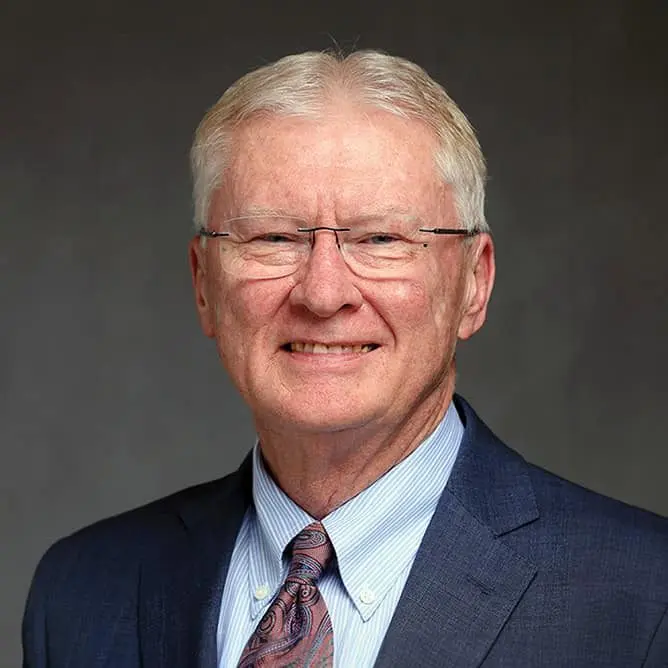

Liz talks with Judge Ginn, President of Southern Evangelical Seminary, to share the connection between freedom of religion and its direct impact on our freedom of speech and a strong democracy. Does religious freedom still matter in America? That depends. Do we prefer a subservient, heavily surveilled nation or do we want a vibrant, independent, prosperous nation? Free speech, as protected by the First Amendment, equally recognizes religious freedom. “A nation grounded in religious morality strengthens democracy, upholds responsible citizenship, and secures a stable future for all,” says Judge Phil Ginn, president of Southern Evangelical Seminary.
SPEAKER 02 :
This is Liz Franzel with Crawford Media Group, and today our guest is Judge Phil Ginn, president of Southern Evangelical Seminary. Today we’ll be talking about the freedom of religion and the direct impact on our freedom of speech and a strong democracy. Welcome to our program, Judge Ginn.
SPEAKER 01 :
Liz, always my pleasure to be with you, and I hope that we can do this more often.
SPEAKER 02 :
It’s good to have you back. So you were quoted as saying, a nation grounded in religious morality strengthens democracy, upholds responsible citizenship, and secures a stable future for all. So I guess the question is, does religious freedom still matter in America?
SPEAKER 01 :
Well, you know, absolutely. And I think our forefathers, forebears, understood that because if you look at the Bill of Rights, which are the first 10 amendments to our national constitution. So the very first Bill of Rights that came out was this freedom of religion, even prior to the freedom of speech that we talk about so much. But in reality, those two are tied together at the hip, because freedom of speech means to be able to espouse our religious beliefs in a civil way, certainly, but also in a way that does not confine it to the inside of a church building behind stained glass windows. And apparently that’s what a lot of our opponents, and with the election of Mr. Trump, I suspect, Liz, that many of us who are biblically-based Christians believe And there’s not a lot of us, by the way. George Barna would say that probably somewhere in the neighborhood of five to six percent of Christians in America have a biblical worldview. And so I’ve narrowed the term Christian to begin with in that regard.
SPEAKER 02 :
Yeah. Did you say five or six percent?
SPEAKER 01 :
That’s correct.
SPEAKER 02 :
Yeah, that’s not very high.
SPEAKER 01 :
And no, it’s not. But Liz, let me throw one other thing out there. 51% of our pastors have a biblical worldview. So is it any wonder that the sheep are a little bit off base when their shepherds speak? Don’t know where they’re going either.
SPEAKER 02 :
What comes to mind is the whole church and state issue. I think that’s been a little muddled.
SPEAKER 01 :
It’s been twisted and turned. Right now in America, the church has no problem. If we will go inside our church, close our doors, we can worship any way we want to, and they’ll be fine with that. But if we try in any way to come outside of the doors and the stained glass windows into the marketplace… then we’re getting pushback, even under Mr. Trump, who has certainly espoused during the campaign and in his early days of office a more openness to religious freedom, to allow the gospel to be spread. And we’re still afraid to do that. And we’re getting pushback, even in your own state there in Colorado. You know, there was the House Bill 1312 not long ago. Yeah. And it was a bill which called on courts to consider a parent using either the wrong pronoun or misusing their birth name. They could consider that as coercive control in a child custody case, which essentially means that the court could take your child away from you simply because you espouse biblical principles in your home.
SPEAKER 02 :
You know, also, as far as the pushback that you’re saying, I was involved and am involved in getting signatures on ballots, you know, just to get them. And, you know, you would think the church would be the first one. You know, we’re talking pro-life issues, things, you know, the one that you talked about. And we were not able to even be on the campus with these signatures because they said, oh, no, this comes against church and state. Well, I think they forget that the whole church and state is to protect the church from the state.
SPEAKER 01 :
Absolutely. Absolutely. And, you know, there’s this tendency, and I think it’s a false paradigm that on some pastors, oh, I don’t want to get involved in the culture. I don’t want to get involved in politics. I don’t want to speak out about biblical issues that are clearly biblical issues. Because I might run somebody away from my church, and they might hear the gospel if they come to my church. But I’m amazed at the number of churches that don’t even want to put a cross up because it might be offensive. And so we’re so afraid of triggering people. that we run behind our doors and hide and try to defend our lack of faith by calling it religion. And it just doesn’t work that way.
SPEAKER 02 :
No. You know, you mentioned earlier about Donald Trump’s religious freedom. So what comments or thoughts do you have about his efforts in this area and what we’re seeing on college campuses and nationally? Because he’s really doing a lot of the anti-Semitism things around college campuses.
SPEAKER 01 :
Well, I certainly applaud President Trump for what he’s trying to do in regard to the anti-Semitism because that is religious persecution. And so as a Christian, if I’m going to fight for religious freedom for Christians, I’m going to fight for religious freedom for Jews, certainly, for Islam. I’m not going to fight for any religious freedom for atheism because that’s not a religion. So why should I fight for that? And that’s what Governor DeSantis is doing down in Florida. He said that there’s no protection for atheism. There’s no protection for Satanists. They’re not religion. They’re anti-religion. So, you know, they have no protection under the Constitution. And so that’s where we’re coming from in this regard. And what I am saying is that Christians certainly need to be speaking into the culture with a biblical basis for the reason that they do. because LGBTQ, RS, whatever they are, plus.
SPEAKER 02 :
Plus, plus.
SPEAKER 01 :
I still have difficulty with my ABCs, and I certainly can’t get up with the LGBTQ list either. But, you know, the problem with that is not only is it errant sex related, but it’s also a direct attack on God’s plan for the family. and the raising of children, just as abortion is. And so the two things that are the two institutions in America that have been the backbone of America from its very formation are the ones that are God-ordained, and they are the ones who are now under such attack from, I think, satanic forces, and that’s the church and the family. And those two institutions are necessary. To be protected, and as I say, those are the ones where the force of Satan, I think, is coming in to forbear against them.
SPEAKER 02 :
Well, what’s sad to see is, you know, in churches, they have their signs out front where they can change the wording on it, you know, make announcements. And I see so many that have all are welcome, you know, and especially during Pride Month, which is, you know, just an abomination to God, period.
SPEAKER 01 :
You know, our church is… Pride in itself is a sin.
SPEAKER 02 :
Yeah, well, true. That’s true. But they’re, you know, yes, all are welcome. But once they get in those doors, they need to discuss about what God’s plan for life is, right? Plan for humanity. And they’re not.
SPEAKER 01 :
Liz, your listeners need to hear what I’m getting ready to say. And it is not original with me. I’m not going to claim any authorship of this. But it, I think, sums up. what the state of the church is in America in regard to this acceptance mentality that we have that, oh, just all come and we’re all happy and we can sing Kumbaya around the fire. Sinclair Ferguson is a pastor, and he said this. He said, it is misleading to say that God accepts us the way we are. Rather, he accepts us despite the way we are. He receives us only in Christ and for Christ’s sake. Nor does he intend to leave us the way he found us, but to transform us into the likenesses and the likeness of his son.
SPEAKER 02 :
So good.
SPEAKER 01 :
That’s where we’re missing the boat.
SPEAKER 02 :
Exactly.
SPEAKER 01 :
In America, in the American church.
SPEAKER 02 :
Yeah, you do hear that. What are some examples of religious discrimination that you’ve seen or heard of? And I think we all can attest to the persecution of the Jewish faith, but what are you seeing?
SPEAKER 01 :
Well, you’re still seeing it in Title IV. We don’t accept federal funds at Southern Evangelical Seminary for good reasons. But if you accept Title IV funds, which are Pell Grants and things like that, then you’re going to have to abide by the federal guidelines on hiring and firing and anti-discrimination. The bill that I showed you in Colorado is not an isolated event. That’s going on all over the country. In fact, probably two years ago, I wrote an article in Decision Magazine describing what could happen to a family simply because they’re biblically based. And there are many states who are doing that, though it is not nearly as rampant in the federal government. There are many, many states. Colorado is probably one of them, Liz, that is very anti-family and very anti-religion.
SPEAKER 02 :
Oh, yeah.
SPEAKER 01 :
Look at our governor. Your transgender issue, where you’re trying to force people into the acceptance of transgenderism, is certainly an attack on biblical Christianity. Because that is something that is foreign to us. And we certainly identify it as a sin. And we feel for those people who are caught up in it. But it is a sin. And it is not something that ought to be totally accepted and approved of within the church.
SPEAKER 02 :
Right. And you know what’s ironic is this actually is reverse discrimination, if you think about it.
SPEAKER 01 :
It is. Absolutely.
SPEAKER 02 :
Yeah. So they’re fighting for their rights, but they’re trying to take away our same rights.
SPEAKER 01 :
And you look in our school system, you know, maybe in our public school systems, I don’t know that every state is as bad as other states might be. But you see a pure indoctrination of sexual deviance being taught to our two- and three-year-old kids. And, you know, my argument is, why in the world would you want to even talk about that subject to two- and three-year-old kids?
SPEAKER 02 :
Exactly.
SPEAKER 01 :
Much less indoctrinating, but in this whole concept that they’re trying to raise a generation of people, and they’ve been very successful at it, Liz, who don’t really have a biblical worldview and no concept of it. And we’ve erased the God line in America. We literally have erased that God line, that morality God line. And so, Liz, what happens is, I’ll just use you and me, you may have an opinion about something and I have an opinion about it. And if we don’t have that guideline to back our opinions up to, to see how we stand against proof, if we erase that, then I’m going to try to get in power to enforce my opinion on you before you get in power to enforce your opinion on me. And that’s exactly, Liz, what we’re seeing in America today.
SPEAKER 02 :
Right. We’re visiting with Judge Phil Ginn, president of Southern Evangelical Seminary. And we’ve been talking about religious freedom and freedom of speech. Judge Ginn, where would you send our listeners to learn more about this topic or about SES and what they offer?
SPEAKER 01 :
Liz, I would ask them to come and visit us at ses.edu. And they will find there… some of the best academic endeavors that they could ever engage in. But not only that, this fall we are launching a training program that we call a virtual faith link that I think has the ability, has the promise of changing the face of the church in America. Because we’ve got a new initiative that’s only about 2,000 and some years old that’s based solely on the Great Commission, which tells us to go and make disciples. So we’ve got this initiative that’s designed as an executive certificate-type course where we are training people to make disciple-makers. Not make disciples, but make disciple-makers. We’re on the cutting edge of these issues. We intend to continue to speak out on cultural issues, Liz, and we continue to want to provide answers to Christians in America as to how they can strengthen their faith and how we can strengthen our culture.
SPEAKER 02 :
Judge Ginn, thank you so much for joining us today.
SPEAKER 01 :
Liz, always love to be with you.