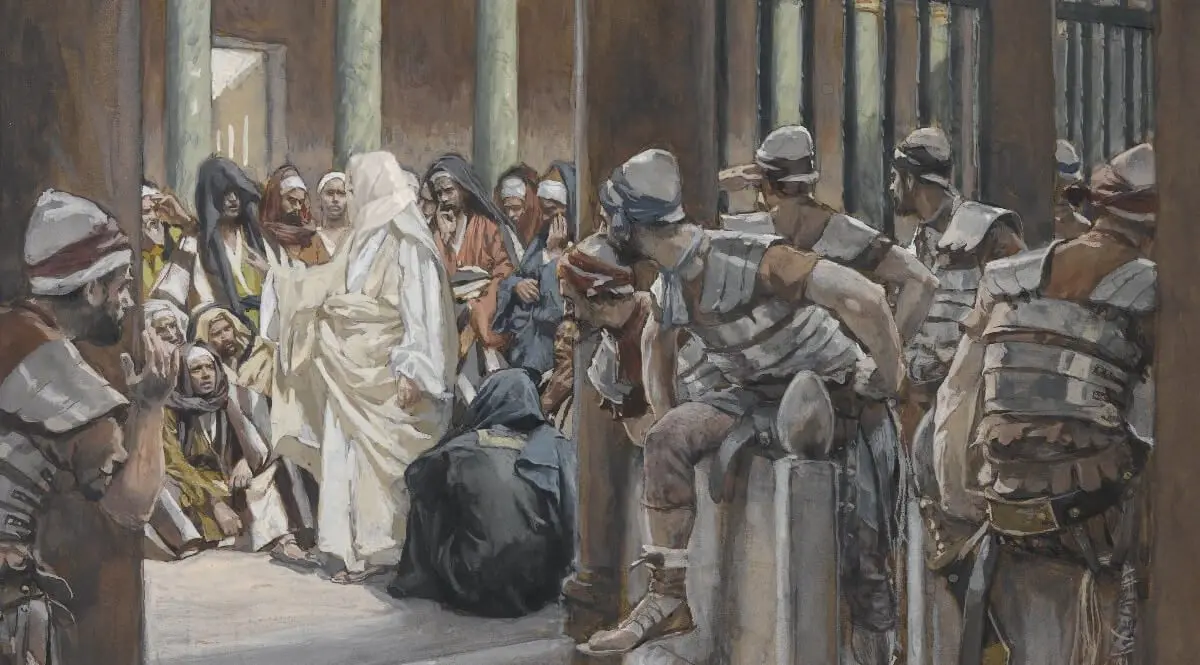
Dive into a profound exploration of one of the most challenging teachings of Jesus, as documented in the Gospel of John. This episode reflects on the moment when many of His disciples turned away because they couldn’t grasp the essence of Jesus proclaiming Himself as the bread from heaven. Join us as we analyze the significance of Jesus’ statements and the underlying metaphors of consuming His flesh and blood, reflecting on their spiritual connotations.
SPEAKER 03 :
The CEM Network is pleased to present Ronald L. Dart and Born to Win.
SPEAKER 02 :
Considering all that Jesus did and considering his personal charisma, does it strike you as strange that there was a point when many of his disciples turned away and didn’t follow him any longer? What could Jesus do or say that would come to the point where John says, from that time, many of his disciples went back and walked no more with him? Now, you know, having a religious leader lose some disciples is not any big deal, but we’re talking about Jesus. We’re talking about a man who healed the sick, who caused the lame to walk, who caused the blind to see, a man of great love and charisma. And for some reason, on this occasion, a slug of his disciples went back and never went with him again. It was not anything he did. It had to be something he said. This sentence comes late in the sixth chapter of John’s Gospel. It’s verse 66, actually. He was healing in the synagogue in Capernaum, not far from his old home, and something had caused his disciples to say, This is a hard saying. Who can hear this? What on earth could have offended them? Well, here’s what he had to say. The Jews murmured at him because he said, I am the bread which came down from heaven. And they said, Now hold on a minute. This is Jesus, son of Joseph, whose father and mother we know. What’s he doing sitting there saying, I came down from heaven? Jesus therefore answered and said, Don’t murmur among yourselves. No man can come to me except the Father which has sent me draw him, and I’ll raise him up at the last day. It is written in the prophets, They shall be all taught of God. Every man therefore that has heard and has learned of the Father comes to me. And the odd thing about this is what he’s telling these men in the synagogue, a whole bunch of them who were there, that they had not learned. And they had not believed the Father. They had not accepted the Father. They thought they did. They sat there and read the Scriptures and memorized them in many cases. But they weren’t listening. Because Jesus said, anyone who has learned of the Father comes to me. Not that any man has seen the Father, save he which is of God. He has seen the Father. I’ll tell you the truth. He that believes on me has everlasting life. I am the bread of life. Your fathers ate manna in the wilderness. They’re dead. This is the bread that came down from heaven that a man can eat it and not die. Now you would think immediately, okay, I want that. This is something I can do. I can eat this bread and I will never die. And then Jesus said the problem. Here it is. I am the living bread that came down from heaven. I don’t know what to do with that. Jesus plainly said, I am the living bread that came down from heaven. that a man can eat of it and not die. And I don’t know what to do. If any man eat of this bread, he shall live forever. And the bread that I will give is my flesh, which I will give for the life of the world. Most Christian people believe that Jesus Christ did come down from heaven, entered into human flesh, and it is that flesh that he gave for the life of the world, that was necessary. But the Jews who were there on that synagogue on that day argued among themselves, saying, Now how can this man give us his flesh to eat? And, of course, in the synagogue, argument was the staff of life. They did it all the time. It was a way of life. And Jesus said, Look, I’ll tell you the truth. Except you eat the flesh of the Son of Man and drink his blood, you have no life in you. Now, this is a long time before the Lord’s Supper, but the men listening should have realized that this is a metaphor. It’s a symbolic act he is talking about here, the eating of the flesh of the Son of Man and drinking his blood, because the idea of a blood covenant was totally familiar to these people. The idea of the sharing of blood, the sharing of a sacrificial meal, and symbolically the drinking of blood and the symbolic eating of flesh was a part of creating a new covenant. They shouldn’t have had a problem with that. Who eats my flesh and who drinks my blood has eternal life. I’ll raise him up at the last day. For my flesh is food indeed and my blood is drink indeed. He that eats my flesh and drinks my blood dwells in me and I in him. And that’s the whole idea of the blood covenant. You’re familiar with it from the old idea of blood brotherhood, which you’ve probably seen in Western movies, in cowboy movies, where one man cuts his hand, the other man cuts his hand, they let their blood flow together, and they become blood brothers. In the ancient Semitic world, the drinking of the other person’s blood put his blood in you and your blood in him, and therefore you became blood. Blood brothers. So Jesus said, He that eats my flesh and drinks my blood dwells in me, and I in him. We become blood brothers. As the living Father has sent me, and I live by the Father, so he that eats me, even he shall live by me. Now this is the bread that came down from heaven, not like your fathers did eat manna and are dead. He that eats this bread shall live forever. Now this is the sort of thing that people who do not and will not believe are prone to point out and even ridicule and make remarks about cannibalism or what have you, but they’re just completely missing the point. Now, Jesus said these things in the synagogue as he taught in Capernaum. Now, many of his disciples, when they heard him say this, said, This is a hard saying. Who can hear it? But it wasn’t the eating and drinking of Jesus’ flesh and blood that was the problem. That idea was not as foreign to them as it sounds. The real problem was that Jesus said he had come down from heaven, and that was just too much for them. It still is for some people. Because I think you’ll be surprised at how many Christian people do not believe that Jesus existed before his human birth, that he came into existence when he was born of the Virgin Mary. He did not come down from heaven. And that he became the Son of God when the Holy Spirit descended on him after his baptism. you would be surprised. Perhaps you should ask around to see who believes what. Now, this is a problem. When Jesus knew in himself his disciples were murmuring at him, he says, is this going to offend you? What if you see the Son of Man ascend up where he was before? Now, this sounds like it’s hanging out in midair, but it’s not at all, because the issue was that he came down from heaven. He says, you’re going to stumble over this. What are you going to do when you see me go back where I came from? And right here, we’re faced with a real difficulty. It was the identity of Jesus, where he came from, where he was going. That was the problem. It was the spirit, it is the spirit that quickens, Jesus said. The flesh profits nothing. The words that I speak to you, they are spirit and they are life. But there are some of you who don’t believe. For Jesus knew from the beginning who they were who didn’t believe and even who would betray him. And he said, therefore I said to you, this is why I told you, no man can come to me except it’s given to him of my father. From that time, many of his disciples went back and walked no more with him. Notice it isn’t just the idle hangers-on. It isn’t the happened person, casual listener who came by. It was disciples, students, followers who packed up their stuff, gathered up their things, and left Jesus and didn’t go any further down the road with him. And you know, this is why C.S. Lewis says of Jesus, you can’t argue that he was merely a great teacher. It’s no good. A lot of men have tried to solve the Jesus problem by saying, well, Jesus was a great teacher. He was a great moralist. He was a good man. And they go through all this rigmarole of trying to tell you how good Jesus was. And C.S. Lewis says, no, no, it won’t wash. Either Jesus was what he said he was, or he was a lunatic or a fraud or worse. Sorry, it’s just not possible. There is no middle ground, although a lot of Christian people these days are looking for it. Either Jesus, as he said he did, came down from heaven and ascended back up to heaven, or he’s a fraud or a lunatic, because he said he had and that he was going to. Then Jesus said to the twelve, Are you going to go too? And Simon Peter said, well, Lord, to whom shall we go? You have the words of eternal life, and we believe, we’re sure, that you are that Christ, the Son of the living God. Wow. And Jesus answered, I’ve chosen you twelve, and one of you is a devil. He spoke of Judas Iscariot, the son of Simon, for it was he that would betray him, being one of the twelve. And Jesus says, I knew it from the start. And that, you know, is one of the saddest, the strangest things that have the whole gospel story in a way, that this man, who eventually would betray Jesus, was known from the beginning to be the one who would betray him. And yet Jesus took him, accepted him, placed him in office, and loved him. Stay with me. I’ll be right back after this short message.
SPEAKER 03 :
Asking yourself, what would Jesus do, may not be the right question. It may be more important to ask, what does Jesus tell us to do? You can be sure of that. For a free introductory CD titled, The Words of Jesus, write to Born to Win, Post Office Box 560, White House, Texas 75791, or call toll free 1-888- Bible 44.
SPEAKER 02 :
That is free of charge. There is no obligation. It’s paid for just like this program by contributions from our listening audience. Get a pencil and piece of paper because we’ll be back and we’ll give you all that information, telephone number, address again in a moment. After these things, Jesus stayed up in Galilee, around the Sea of Galilee, because he wouldn’t go back down to Judea because the Jews wanted to kill him. Simple as that. Now, the Jews’ Feast of Tabernacles was at hand. These references, by the way, to the Jews’ feasts are one of the reasons we feel quite certain that John was writing with a non-Jewish readership in mind. He was a Jew. All the disciples were Jews originally. But by the time John wrote this, he was concerned about Gentiles who’d be reading it. So the Jews’ feast of tabernacles was at hand. His brothers therefore said to him, Depart hence and go into Judea so your disciples can see the works you do. If no man does anything in secret, you need to get on down there. He that seeks to be known openly, if you do these things, show yourself to the world. for neither did his brothers believe in him. I’m sorry to disturb you with this, but Jesus had brothers and sisters. They were all younger than he was, and it isn’t surprising that they didn’t believe in him. I mean, after all, whoever believes his brother on any real serious matter. Then Jesus said to them, My time has not yet come, but your time is always ready. The world can’t hate you, but me, it hates. Why? Because I testify that the works thereof are evil. We know exactly what the problem is. It wasn’t that they were mad at Jesus because he healed. It was because he testified that the works of these people were bad. You guys go on up to the feast. I’m not going up yet. My time is not yet full come. And when he had said these words to them, he stayed in Galilee. And when his brethren were gone, he went up also to the feast, not openly, but as it were, in secret. Funny, you know, can you imagine Jesus kind of covering his head and shielding his face and wandering into the Jerusalem and around the streets of Jerusalem, not all by himself, nobody knowing who he was. And it was basically because… they would kill him if they could find him. And the Jews were looking for him. They actually had people out saying, where is he? And there was much murmuring among the people concerning him, for some said, he’s a good man. Others said, no, no, he’s a deceiver of the people. And nobody would say much about him openly for fear of the Jews. Now about the middle of the feast, Jesus went up to the temple and taught. And the Jews who were there marveled, saying, How knows this man letters, having never learned? It was well known that he sat at the feet of no great rabbi. He didn’t go to the equivalent in that time of a university to learn letters. How is it he knows it then? And Jesus said, My doctrine is not mine. It’s his that sent me. I’m not making this stuff up. God gave it to me. If any man will do his will, he’ll know the doctrine, whether it’s of God or whether I speak of myself. Now, this is really not that complicated. What he’s telling these people is, look, if you people have read the Bible, if you’ve read your Old Testament, if you’ve read the Scriptures, the Tanakh, you will know that what I am saying is not my doctrine. It’s the doctrine of God. It’s the doctrine of the book. The man that speaks of himself, well, he’s seeking his own glory. He that seeks his glory that sent him, the same is true, and no unrighteousness is in him. Didn’t Moses, and here’s a really crisis point, looking at the people sitting around him and listening to him, he says, did not Moses give you the law, and yet none of you keep the law? Why are you going about to kill me? Must have been stunning to the people who were standing there, front row, back row, along to one side, who were looking at Jesus. And he looked back at them and says, why are you going about to kill me? And the people answered and said, You have a devil. Who’s going about to kill you? They were in denial about the matter, but they knew. And I think they were stunned by it. And Jesus said, I have done one work, and you all marvel. I just caught you in one of your little things, and you’re amazed. Moses gave you circumcision. Not because it’s of Moses. It’s of the fathers. It goes all the way back to Abraham. And you, on the Sabbath day, will circumcise a man. You’ll actually get the rabbi in. You’ll take a man-child, and you’ll cut his foreskin off, and you’ll listen to him yowl. You’ll do this. You’ll actually take something off, cut something off of a man on the Sabbath day. Now, if a man on the Sabbath day can receive circumcision, that the law of Moses should not be broken… Why are you angry at me? Because I make a man every whit whole on the Sabbath day. The rationale is absolute. It’s inescapable. I mean, if you’re going to have somebody in here and it’s okay to break the law, if it’s really we’re breaking the law, it isn’t. But to go ahead and snip off that little piece of foreskin on the Sabbath day. But for me to come in here and find a man who is sick and make him whole, that’s bad. I shouldn’t be doing that on the Sabbath day. And this is what the big argument was about with these people, but it wasn’t really. It wasn’t really about even the Sabbath day, and Jesus is underlining that in this case. What it was really about… was leadership, power. Who’s in charge here? Who are people looking to? And their fear, and they were deathly afraid of Jesus, their fear is that people would follow Jesus and forsake them. And Jesus said, don’t judge according to appearance. Judge righteous judgment. And the people who were there, lived around Jerusalem, began to wonder about this. They said, look, isn’t this he whom they’ve been talking about killing? But look, he is speaking boldly right up there in the temple, and no one is saying anything to him. Do the rulers know indeed that this is the very Christ? And that was terrifying to the rulers. But look, we know this man, whence he came from. But when Christ comes, no man knows whence he is or where he comes from. Now, I don’t know what ever gave them that idea, because it’s plainly in the Scriptures where he comes from. Then Jesus cried in the temple as he taught and said, Look, you know me, and you know whence I am. And you also know I am not come of myself, but that he that sent me is true, whom you don’t know. I know him. I am from him. He sent me. And then they tried to take him, but no man laid hands on him because his hour was not yet come. And the worst thing that could have happened as far as the rulers were concerned, many of the people believed on him and said, When Christ comes, will he do more miracles than this man has done? Look at what he’s doing. He must be the Christ. And the Pharisees heard this, and they sent officers to take Jesus finally. They said, Look, we’ve got to put a stop to this. And Jesus said to them, You know, I’m only going to be with you a little while, and then I’m going to go to him that sent me. You’re going to look for me, and you won’t find me. And where I am, there you cannot come. And the Jews talked to themselves, saying, Well, where is he going to go we can’t find him? Is he going to go to the dispersed among the Gentiles and teach the Gentiles? What is he talking about when he says, You shall seek me and not find me, and where I am you cannot come? Nothing happened. They sent men to take him. They didn’t take him. And then the last day, that great day of the feast, Jesus stood and cried, If any man thirst, let him come to me and drink. Now, there are people who believe that this was that day of the feast where there was a kind of a water festival, as it were, as a part of it. The whole temple mount was awash in water as they were pouring water on this and pouring water on that. And consequently, the allusion to water on this occasion, that’s not important. What’s important is that Jesus stood up in the middle of them all and said, look, if you’re thirsty, come to me and drink. He that believes on me, as the scripture has said, out of his belly shall flow rivers of living waters. But this he spoke of the Spirit, which they who believe on him should receive. The Holy Spirit was not yet given, because Jesus was not yet glorified. Now that in itself is an interesting story and aside. But the interesting part about this, in a way the most interesting part, the symbolism of the water is not merely that we receive the Holy Spirit, not merely that we drink in of Christ, but that we become a source ourselves. Out of our belly, out of our innermost being, flow rivers of living water. And the implication of this, I think, is as clear as it can be, is that we are supposed to become a blessing to other people as Jesus has become a blessing to us. We don’t just get the Holy Spirit. We become a source for the Holy Spirit. Well, many of the people, therefore, when they heard this saying, of the truth, this is the prophet. Others said, no, this is the Christ. And some said, can Christ come out of Galilee? He felt that he had to be a Jew. Well, of course he was. Has not the scripture said that Christ comes of the seed of David and out of the town of Bethlehem where David was? They all thought he was from Nazareth. And the truth was, he had been born in Bethlehem. So there was a division among the people because of him. And some would have taken him, but nobody laid hands on him. And when the officers came to the chief priests and Pharisees, they said to him, Why haven’t you brought him? And he said, Never man spoke like this man. And yet this man is the one that his disciples turned around and walked back and wouldn’t go with him any longer. And the man that they wanted to kill. Kind of hard to figure, isn’t it? Think about it for a moment.
SPEAKER 03 :
I’ll be right back. If you would like to share this program with friends and others, write or call this week only and request your free copy of The Gospel of John, number 5. Write to Born to Win, P.O. Box 560, White House, Texas 75791. Or call toll free 1-888-BIBLE44. And please tell us the call letters of this radio station.
SPEAKER 02 :
Jesus had managed to create a deep division among the Jewish people at that time. That’s the reason why it’s silly to say the Jews crucified Christ in a way any more than we all did. But the fact is a lot of people were believing on Jesus, but a lot of people weren’t. And the soldiers who they sent down to take him, the officers, they came back and they said, we didn’t arrest him because never a man spoke like this man. Then answered the Pharisees, Are you also deceived? Have any of the rulers or of the Pharisees believed on him? But these people out there, they don’t know the law. They’re cursed. The contempt of the ruling elite in Jerusalem for the ordinary man in the street is profound, but there’s nothing particularly new about that. That’s just the way people in power often are. And you and I should never forget it for a moment. But they were just basically saying, hey, nobody in the rulership or leadership has believed on Jesus. How come you people can’t just do what we tell you to do? But Nicodemus, who might have been pinched a little bit by this statement, because he was the one that went to Jesus by night and said, Master, we know that you are a teacher come from God. Nicodemus spoke to them and says, Wait, does our law judge any man before it hears him and knows what he’s doing? And they answered and said, Are you two out of Galilee? Search and look, because out of Galilee arises no prophet. And every man went to his own house. And they made one of the biggest stupid mistakes human beings ever make. They assume that God can’t find his man anywhere, anyhow. That he wants him, God can have him. And if God decides he’s going to bring a prophet out of Galilee, or for that matter out of Mesopotamia, everybody needs to set up and listen to the man of God. And all these guys went home, and they didn’t do anything about Jesus. In John the 8th chapter, Jesus went to the Mount of Olives, and early in the morning he came again to the temple. And all the people came to him, and he sat down and he taught them. Now apparently the Feast of Tabernacles is over. And the scribes and the Pharisees brought unto him a woman taken in adultery, and they sat here in the midst of the people gathered there. Poor woman. I mean, the embarrassment and the fear is unimaginable. And they said to him, Master, this woman was taken in adultery in the very act. Now Moses and the law commanded us that such should be stoned. What do you say? They thought they had Jesus on this. Because the civil law, the Romans did not allow them to do this kind of thing. And yet the law of Moses was explicit, they thought, on this sort of thing. And I guess in a way it was. But there was something in the law of Moses I think they weren’t quite considering. And Jesus is about to hit them with it. But it’s just so striking to stop for a moment and imagine the scene. And to think in terms of these guys who have, whether it was opportunistic or whether they planned it or whatever, had grabbed this poor woman right in the act of adultery and drug her out in the streets and over to Jesus and sat her up there and said, supposed to be stoned, what do you say? This they said tempting him that they might have something to accuse him of. But Jesus stooped down with his finger and wrote on the ground as though he didn’t even hear them. They continued asking him and pressed him, and he lifted up and said, He that is without sin among you, let him first cast a stone at her. And this is something which everybody kind of forgot, that for someone to be stoned to death, someone, the accuser, had to be there, had to testify, had to pick up the stone and cast the first stone. And Jesus said, Okay, who’s ready to do it? Which one of you is without sin and is able to cast the first stone? And he stooped down and began to wrote on the ground some more. And they that heard it being convicted by their own conscience went out one by one, beginning with the oldest, even to the last. I don’t think it’s any coincidence at all that the oldest were the quickest guys there to realize their status before God and that they didn’t have any business picking up a rock and throwing it at this poor woman. And Jesus was left alone, the woman standing in the midst, Nobody there, just Jesus and a woman standing there. And Jesus lifted up himself. He looked around. He didn’t see anybody but the woman. He said, Woman, what happened to your accusers? Did no man condemn you? She said, No man, Lord. And Jesus said to her what must be the sweetest word she ever heard in her life. Neither do I condemn you. Go and sin no more. You think about what this means. It means essentially that Jesus is not the least bit interested in condemning man. He didn’t come into the world to condemn the world. He came into the world to save the world. We don’t know much about this woman. We don’t know much about her heart other than the fact that by this moment, I’m sure she was very repentant and very sorry, at least that she had been caught and was hurting bad in the situation she was in. And she was afraid. She probably saw her life pass in front of her eyes. And because of this man, Nothing happened. And then when he looked at her, he said, I’m not going to condemn you. And he was the only man there who could. Go on home, but sin no more. Until next time, I’m Ronald Dart, and don’t forget, you were born to win.
SPEAKER 03 :
The Born to Win radio program with Ronald L. Dart is sponsored by Christian Educational Ministries and made possible by donations from listeners like you. If you can help, please send your donation to Born to Win, Post Office Box 560, White House, Texas 75791. You may call us at 1-888-BIBLE44 and visit us online at borntowin.net.
SPEAKER 01 :
Christian Educational Ministries is happy to announce a new full-color Born to Win monthly newsletter with articles and free offers from Ronald L. Dart. Call us today at 1-888-BIBLE44 to sign up or visit us at borntowin.net.