In this thought-provoking episode of Born to Win, Ronald L. Dart delves into the challenging concept of controlling our thoughts and the human tendency to revisit familiar evils. Through the lens of biblical teachings, Dart explores the metaphor of an unclean spirit’s return and how this applies to modern struggles with addiction and personal growth.
SPEAKER 02 :
The CEM Network is pleased to present Ronald L. Dart and Born to Win.
SPEAKER 03 :
It’s downright annoying when something is bothering you to have one of your good old friends say, well, try not to think about it. Right. Have you ever tried not to think about something? It’s pretty well impossible because all the time you are trying not to think about it, you are thinking about not thinking about it, so you’re still thinking about it, right? Well, right. It’s like somebody saying, well, try to forget it. Oh, sure. The effort of not remembering something automatically remembers it, and so that doesn’t work worth a flip. Nature abhors a vacuum. So when you empty your mind of bad things, they have a habit of coming right back. So how do you not think about something? Well, the answer is deceptively simple. You do it by thinking about something else. That’s all. It’s pretty hard, in fact, to maintain two strains of thought at the same time. A lot of us call ourselves polyphasic thinking, and we like to do two things at once, but we don’t do them well. By and large, when you’re thinking, concentrating on something, everything else pretty well gets out of the way. So, to get rid of something you don’t want to think about, you think about something else. At first, it may be hard, but I will tell you, the problem will yield to perseverance. If you failed it the first time, try it again. It will work. In the same way, you know, you would think… that once Jesus had healed someone of a terrible disease, or once he had cast a demon out of them, that their problems were solved. Permanently. You know, after all, when Jesus fixes something, he fixes it right. It’s fixed. It’s over. For good. But if you think that, you’d be wrong. Jesus, having cast out some unclean spirits on an occasion, gave this warning. It’s found in Matthew 12, verse 43. When the unclean spirit is gone out of a man, he, that is the unclean spirit, walks through dry places seeking rest and finding none. You know, it’s a really interesting description here. It’s something a lot of people wonder about, speculate about. But the implication is that unclean spirits can be disembodied spirits. That is, they can kind of wander to and fro in the earth with no permanent place, and they have no rest. They seem to find rest in the possession of somebody or something. And so Jesus describes this footloose and weary spirit wandering around in the earth looking for some place to rest. Then the spirit says, well, I haven’t found anything. I know what I’ll do. I’ll go back to my house from whence I came out. In other words, I was cast out of this gentleman. I’ll go back and see if I can get back in there. And when he has come, he finds his house empty, swept, and garnished. So, Jesus said, then goes he and takes with himself seven other spirits more wicked than himself, and they enter and dwell there, and the last state of that man is worse than the first. Even so shall it be unto this wicked generation. Now, there’s a really serious warning in this thing. It says essentially the process of conversion, while it can heal a man of many things, it casts out the demons of doubt and fear and heals the spirit and heals the life. But within every one of us, there is a latent desire to go back. I don’t know if you’ve ever thought of this, but emptying your life of the evil that has been there, that is so familiar, that you’ve lived with for so long, leaves a big hole in your life. It can leave you feeling empty, if not swept and garnished. And unless that void in your life is filled with something else, you’re very likely to go back to what is familiar and comfortable. It’s one of the reasons that it is so hard for people to break loose from drug addiction or alcoholism. They’ve got to have help, counseling, support, and constant vigilance, or else they’ll go back to it. The drugs when they’re gone, the alcohol when it’s gone, is like an old friend going away. And it leaves a giant void inside of a person. You know, in a way, we depend on our infirmities. We depend on our weaknesses. They give us excuses sometimes for not doing uncomfortable things. One would think that being given the chance to be healed of a disease or cleansed of an unclean spirit, you would think that we would leap at the chance. but not always. I remember the book Games People Play, and it’s not talking about Mumbledy Peg or Monopoly. It’s talking about the life games and the games that we play with our mates and our friends and the people we are with. He talked about one game in there called Wooden Leg. And I thought, what a strange title. And I read the story, or the description at least, of this psychological game called Wooden Leg. And I thought, of course, it’s completely compatible with the Bible. What the game postulates is this, that a person says, for example, if you’re asking them to do something, well, you can’t expect me to do that. After all, I’ve got this wooden leg. You want me to run the 100-yard dash? I can’t do that. I’ve got a wooden leg. You want me to run the hurdles? I can’t do that. I’ve got a wooden leg. Do the high jump? I can’t do that either. I’ve got a wooden leg. Don’t you know? And so whatever our wooden leg is, bad digestion, bad eyesight, fear, different phobias, whatever it is we struggle with, they’re all like wooden legs. And we can excuse ourselves from doing things that we really ought to do, from overcoming things we really ought to whip. from accomplishing things that we really are within our grasp. We excuse ourselves from not doing by saying, well, I can’t. I can’t. I’m not strong enough. I’m too weak. I’ve got a wooden leg. I’ve got a glass eye. I can’t do these things. I can’t. I can’t. His idea was, you know, we use our infirmities to avoid doing things that we don’t want to do. And if I have a wooden leg, well, you can’t hold me responsible for not jumping over six feet. So healing a person, casting out a demon, is not always successful. You have to really want to be better. You have to really want to be healed, to be whole, or the whole exercise is pointless. It’s futile. It goes nowhere. And there’s something more about it, something you need to understand, folks. You will have to work at being better. It’s just like a heart patient. You’ve been checked into the hospital. They’ve done the angiogram, and they’ve found you’ve got 95% blockage on the coronary artery. And so they go split you open and go inside and put bypass arteries or veins all around those coronary arteries. And they tell you you’re going to come out of there better than you were when you went in, a little sore and a lot of pain to start with, but that you’re going to have to work at being better. They put you on an exercise regimen and supervise you while you’re at it. They’ll put you on exercise machines and monitor your heart while you exercise. They put you on a diet, and you’re supposed to help out by sticking to that diet and avoiding fatty foods. So plainly, if you’ve had this open-heart surgery and you’re trying to recover from it, you are going to have to work at getting better. Well, at staying better, aren’t you? Now, why wouldn’t we understand that having been healed, cleansed, forgiven by Jesus, that we would have to work at staying better, at staying clean, at staying above it? You know, there was a lame man that Jesus encountered once. He lay daily at a pool called Bethesda in the Hebrew language. And he was hoping to be healed because tradition had it that at a certain season an angel came down and stirred up the waters. And the first person in was healed and nobody else after that was. When Jesus came to this man and said, would you like to be healed of your lameness? And the man said, well, Lord, yeah, of course I would. But how can I? Because every time I try to get there, somebody gets there ahead of me because I don’t have anybody to help me get to the water. And Jesus just reached out and took him by the hand and healed him, made him whole, restored his legs. Now, later, the rest of the story will have to wait for another time. But later, Jesus found this man in the temple, and he said to him, Look, you’ve been made whole. Sin no more, lest a worse thing come upon you. That passage is found in John 5 and verse 14. Sin no more, lest a worse thing come upon you. So the connection in Jesus’ teaching is made firmly between physical infirmities or things that need to be healed and sin. Otherwise, what does this mean? And perhaps the most important thing of all to you and I, after we have gone through the waters of baptism, after we have been forgiven of our sins, after we’ve been healed, after we have been cleansed, The word comes, look, sin no more, lest the latter end be a lot worse than the first. Clean up your life. Don’t you know you’re going to have to work at being better? Think about that. I’ll be back after these words.
SPEAKER 02 :
Join us online at borntowin.net. That’s borntowin.net. Read essays by Ronald Dart. Listen to Born to Win radio programs every day, past weekend Bible studies, plus recent sermons, as well as sermons from the CEM Vault. Drop us an email and visit our online store for CDs, DVDs, literature, and books. That’s borntowin.net.
SPEAKER 03 :
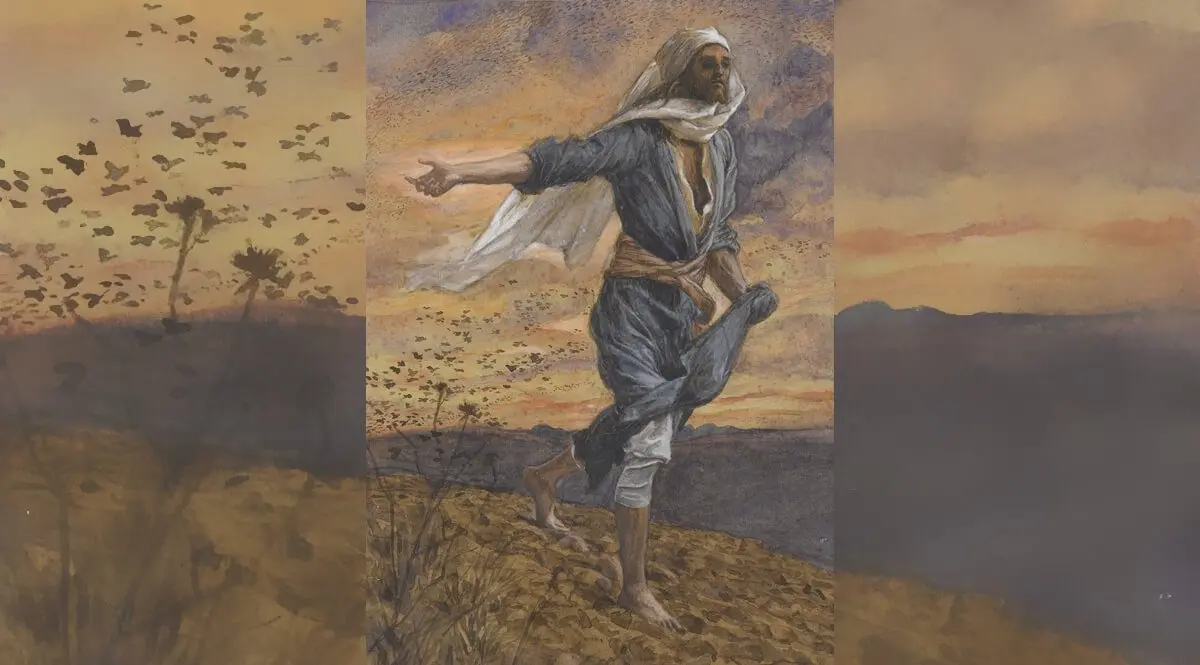
So, like the heart patient, we’re going to have to work at staying healthy. He has to walk his four miles a day, actually, four miles in an hour, three times a week, generally speaking, the doctors want from you. He has to avoid fats. He has to lose weight. He has to really live clean. And us, well, we have to build a holy life. The law convicts us of sin. We come to Christ to be made whole and forgiven of those sins. And when we are forgiven, cleansed, made whole, well, the law still serves to define sin, to make clear the difference between right and wrong, and to help us understand and to walk in the way of love for God and the way of love for neighbor. We need the law as much as ever. And this time we hope to use it to build a clean and righteous life, to build stronger spiritual muscles, to avoid pitfalls in life, to avoid coming under the condemnation that led us to Christ in the first place. Now while Jesus was talking to the people, behold, someone came to him and said, Look, your mother and your brothers are standing outside, and they want to speak with you. But he answered and said to him that told him, Who is my mother? and who are my brethren? And he stretched forth his hand toward his disciples and said, Behold, my mother and my brethren. For whosoever shall do the will of my Father which is in heaven, the same is my brother and sister and mother. Now, I hate to disillusion anyone, but Jesus had brothers. I’m not sure where the doctrine that Mary had no more children came from. But if there’s one thing that’s clear in the New Testament, it is that Jesus had brothers in the flesh, sons of his mother. Now, this short statement is interesting because I don’t think for a moment that Jesus was uncaring about his mother or his brothers. I think he loved them very much. But the point he tried to make to the people standing around him was, these, my disciples, these are as close to me as my mother and my brothers. But more than that, my mother and my brothers are the people who do the will of my Father in heaven. It isn’t enough to be born of blood. It isn’t enough to have a physical relationship to be able to say, well, I’m a son of God. No, no, no. It’s the one who does God’s will. And this is very much in keeping with everything that’s gone before. It almost sounds like a throwaway in this context. It doesn’t even seem to be related. But when you understand that one phrase, he that does the will of my Father which is in heaven, and you connect it back with what’s gone before, you realize that Jesus expects people who will be his disciples when they are forgiven, when all their sins are taken away. For it is by grace that we are saved. when all their sins are taken away, that they will still live by and try to follow the will of God as is described in His Word. Now, this short passage is a plain statement that nothing was as important to Jesus as His Father’s work, and that the relationship with God is not a natural one. It is created by the things we do and the things that we don’t do. Salvation, Paul said, by grace are you saved through faith. But a relationship with God must be built upon the foundation of salvation, and it is built by doing the will of the Father. The same day, Jesus went out of the house and sat by the seaside. And great multitudes were gathered to him, so that he got into a ship and he sat, and the whole multitude stood on the shore. By this time in his ministry, he had a very difficult time getting away from people. This is in Matthew 13, verse 1. And he spoke many things to them in parables, saying, Now brace yourself. I’m going to challenge something you may have believed all of your life, and you’re initially not even going to probably register what I’m trying to say. And when you do register it, you’re going to say, No, no, that can’t be right. I remember when I was just a kid in Sunday school, I distinctly recall the teacher telling us that a parable was a story Jesus told to help people understand His message. A parable was like an illustration. And us public speakers throw illustrations into our sermons or messages to make our meaning clearer. Our objective is understanding. That’s what’s going on right this minute. I’m giving you an illustration out of my own life gone by to try to clarify this particular issue. Okay, the Sunday school teacher told me that a parable was a story Jesus told to help people understand. Since I was a kid, I was into stories, and that made a lot of sense. In years gone by, I’ve learned that researchers tell us that one of the most effective ways the human mind processes information is through stories, and so Jesus told stories. They call them parables. Well, here comes a parable. Now, I don’t know if you can do this or not. I have great difficulty doing it because I’m already so familiar with the Bible. But try to imagine that you’ve never heard this before and see if you have any idea what Jesus is talking about. Behold, a sower went forth to sow. And when he sowed, some seeds fell by the wayside, and the fowls came and devoured them up. Some seed fell upon stony places where there was not much earth, and quickly they sprang up because there was no depth there. But when the sun was up, they were scorched, and because they had no root system, they withered away. And some fell among thorns, and the thorns sprang up and choked them. And other fell into good ground and brought forth fruit, some a hundredfold, some sixtyfold, and some thirtyfold. He who has ears to hear, let him hear. And I guess somebody put the paddle in the water, and that was the end of this parable. Not a thing more did Jesus say to these people. There was no further explanation. No, nothing. Now, my problem is that it’s almost impossible for me to put aside what I already know about this. And you may be having the same problem. One reason is that the parables of Jesus have kind of passed into our language. The King James Bible has been so influential for so many years and has affected our language so deeply that we have a lot of ideas in our mind, comparison similes and so forth, that we’re originally drawn from the King James Version and were passed on to us. through the process of time. But Jesus’ disciples knew that something was wrong with this picture. The reason we know that they knew is because they came to him shortly after and said to him, why do you speak to these people in parables? Now, if a parable were an illustration used to make the meaning plain, why would the disciples have asked that question? They would have understood, right? Why do you speak to them in parables? Well, to make the thing plain. We understand it. They understand it. The question would never have been asked. But the fact is that a parable is not an illustration, as you and I were told, as kiddos. They’re not illustrations. They are riddles. And the disciples are coming to Jesus saying, why are you speaking to these people in riddles? Why are you using these images that if you don’t know what the symbols are, you can’t figure out what you’re talking about. We don’t understand what you’re saying. Listen to Jesus’ answer to the disciples. It’s a shocker. They ask, why are you speaking to the crowd in parables? He answered and said to them, because it is given to you to know the mysteries of the But to them, the crowd, it is not given. I want you to understand. I don’t want them to understand. Now, maybe that’s not shocking to you, but it is to me. Because we have Jesus right here admitting that he preached the mysteries of the kingdom of heaven, but that he deliberately did so in a message his audience would not understand. Now, why would the Lord of salvation do that? Why would the one who came to save mankind do that? Why wouldn’t he step up to the plate and make it real plain to all of us? Well, I’m going to let Jesus explain himself when I come back after these words.
SPEAKER 02 :
For a free copy of this radio program that you can share with friends and others, write or call this week only. And request the program titled Matthew number 23. Write to Born to Win, Post Office Box 560, White House, Texas 75791. Or call toll free. 1-888-BIBLE-44 And tell us the call letters of this radio station.
SPEAKER 03 :
So Jesus spoke to the multitudes in parables because he wanted his disciples to understand, but he did not want the crowd to understand. He went on to explain himself now in Matthew 13 verse 12. For whosoever has, to him shall be given, and he shall have more abundance. But whoever has not, from him shall be taken away even what he has. Therefore I speak to them in parables, because seeing they see not, hearing they hear not, neither do they understand. And in them is fulfilled the prophet of Isaiah who said, Hearing you shall hear and shall not understand, seeing you shall see and not perceive. For this people’s heart is waxed fat. and their ears are dull of hearing, and their eyes they have closed. Why? Lest at any time they should see with their eyes, and hear with their ears, and should understand with their heart, and should be converted, and I should heal them. That’s hard to understand, but it’s what Jesus said. And this is sobering, because I would have thought that Jesus would have wanted to break through that dullness and speak the truth plainly. But it suggests that in doing so, he might have even made them more guilty that their minds once made up were not going to change. The people had closed their own eyes, and they did not want to see, not really. And so he, with an obligation to preach the gospel to them, preached it. But preached it in a way that, should they choose to do so, they could ignore it. Then he said to his disciples, Blessed are your eyes, for they see. Now what is interesting, though, about this parable is that Jesus had to interpret it even for his disciples, because they still did not really understand the significance of it, maybe in the broadest possible terms, but not really. And so he continues in verse 18 to say, Hear you, therefore, the parable of the sower. Now, you know, when I think about this, it’s rather striking, and I should have thought about it when I read the parable in the first place. What farmer in his right mind is going to be so blasted indiscriminate in the way he scatters his seed? I mean, who’s going to scatter it in the ditch? Who’s going to throw it on the rocks? I mean, who’s going to put it in the middle of the pavement? Why we get out in the field and we plow furrows and we dig up the ground and be sure it’s moist and then we put our seed in and we cover it up carefully. Seed’s expensive. We manage it carefully. And so we’ve got a very, very different situation with this sower. He scatters indiscriminately. He puts it anywhere and everywhere. And so consequently, it may take root in the oddest and the strangest of places. That’s the way things work sometimes in nature. But Jesus goes on to explain then that you’ve got some people who it just falls on rocks and birds come along and they eat the seed up before it has any chance to germinate and it’s gone. A lot of people are like this. They are so hard that the word takes no root and that the wicked one comes and catches it away before it takes root. But he that received the seed into stony places, the same as he that hears the word and anon with joy receives it. His problem is that he has no root in himself, and he endures for a while. But when he is challenged, whenever something comes along that gets in the way, well, he’s offended and falls away. It reminds me, in a way, of the other parable Jesus gave of two men who built houses. One built it on the rock. The other built it on sand. And the thing that was so striking to me about that parable was that both those houses were just fine until they came under stress. It was only when storm came about, it was only when the rains began to beat down and waters began to flow, that the difference between these houses became apparent at all. And so two Christians can stand right alongside of one another for years, and you never know the difference. It’s only when they are stressed that the difference becomes apparent. And so this person hears the word, receives it happily, and sprouts up and says, oh, I’m a Christian. But there’s no depth. And whenever trouble arises, well, he’s just gone. And he that receives seed among the thorns is he that hears the word and the care of this world, the deceitfulness of riches, choke the word, and he becomes unfruitful. You know, there is care that must be taken of a crop in the process of it growing up. You can’t just let it sit out there and be choked out by weeds, briars, thorns, anything else. That’s not good enough. And the suggestion of this is that even if you’re a good soil and even if you receive the Word and even if you are growing, unless you take care to cultivate, and in a sense it is to cultivate yourself because no one else is likely to do it, And to weed out the things that should not be there. Unless you do this yourself, you’re at risk. Because the cares of this world, the problems, the deceitfulness of riches, the pursuit of wealth, paying off the mortgage, even sending your kids to college, is going to become another kind of stress that eventually shoves God, the Bible, and Christ into the backwaters of your life. He continues to say, But he that receives the seed into good ground is he that hears the word and understands it and bears fruit and brings forth, some a hundredfold, some sixty, and some thirty. You know, if I can return to the initial premise of this broadcast, that it’s really not just enough to be forgiven. It’s not enough to be healed. It’s not enough to have the unclean spirit cast out. that there’s a certain amount of work and preparation and maintenance that’s got to go into a Christian life. If you’re going to bear fruit, if you’re going to produce, if you’re going to grow, Christianity is not automatic. We all kind of start out the same. We all receive the same word. But it’s very clear from what Jesus said that the outcomes are different for many of us. And those outcomes are determined in some measure by what we do or what we don’t do. Until next time, this is Ronald Dart reminding you, you were born to win.
SPEAKER 02 :
The Born to Win radio program with Ronald L. Dart is sponsored by Christian Educational Ministries and made possible by donations from listeners like you. If you can help, please send your donation to Born to Win, Post Office Box 560 White House, Texas 75791. You may call us at 1 888-BIBLE-44 and visit us online at borntowin.net.
SPEAKER 01 :
Stay in touch with the new Born to Win with Ronald L. Dart app. This app has all of your favorite Ronald L. Dart radio messages, sermons, articles, and it even has a digital Bible. Simply search on the iOS or Android app store to download it for free today.