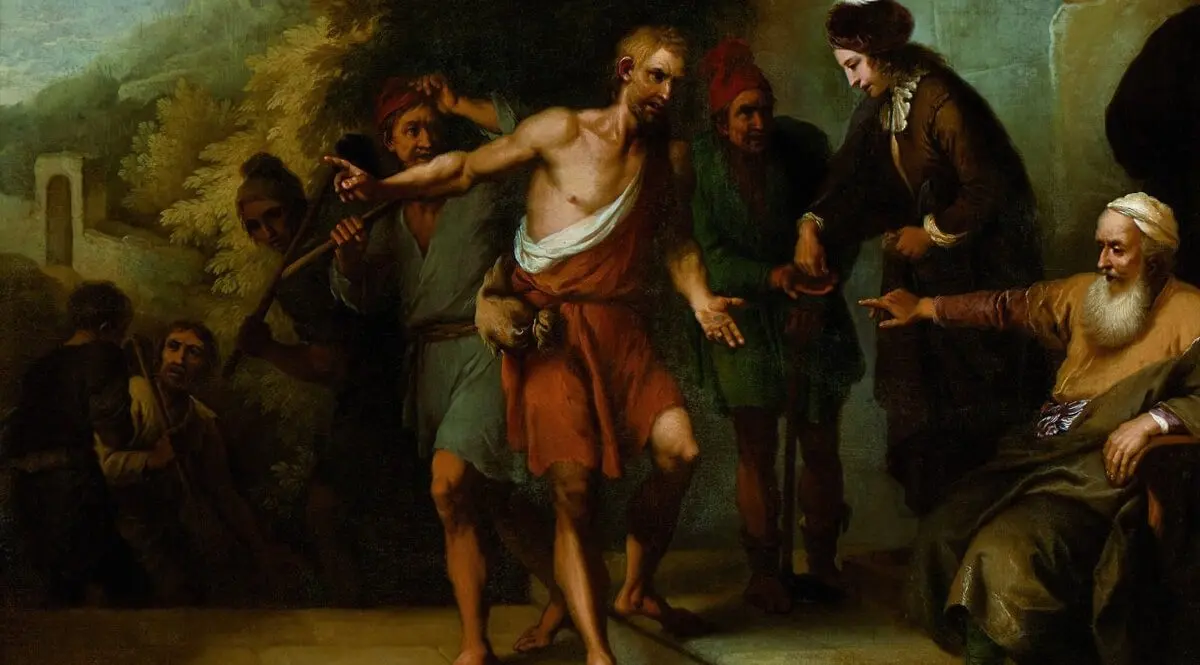

Dive into the exploration of what the Kingdom of Heaven truly represents. Many grew up with idyllic images of streets of gold and eternal joy, but Jesus painted a picture that was much different from our childhood imaginings. Through parables and teachings, He revealed a kingdom where divine justice and mercy reign supreme. Come with us as we explore the meaning behind ‘the kingdom of heaven is like,’ and discover the expectations set by the teachings of Jesus.
SPEAKER 03 :
The CEM Network is pleased to present Ronald L. Dart and Born to Win.
SPEAKER 02 :
What is the Kingdom of Heaven like, really? Listening to preachers when I was growing up, I was under the impression that the kingdom of heaven was heaven itself, that it was a city with streets of gold where we dined on milk and honey and spent all of our days looking up into the master’s face. There was a river there where we could get together with loved ones and renew old acquaintances and shed copious tears while we embraced people we had not seen in so very long and whom we had worried about. But you know, Jesus’ disciples started out with a rather different view. They were looking for a messianic kingdom. They thought the kingdom of heaven would be Jesus leading a revolt and throwing out the Romans. We’re going to get the mob together. We’re going to arm the people. We’ll get swords, and we will assault the Roman palace and throw them out of Israel. It will reestablish the kingdom of David, and things will be like they were back in the good old days. But as the disciples listened to Jesus, They became a little confused about the kingdom because when Jesus said, the kingdom of heaven is like, the parable that followed did not fit their presuppositions. It was not what they expected at all. Now, the funny thing is, it doesn’t fit ours either. There was a day when a rich man came to Jesus and wanted to know, good master, he said, what shall I do that I might inherit eternal life? Jesus said, oh, well, if you want to have life, go sell everything you have, give it to the poor, and come follow me, and you will have treasure in heaven. That’s an interesting concept. You will have treasure in heaven. One really wonders in heaven why one would need any treasure, but we have to assume that Jesus is speaking metaphorically, as it were. The rich man then turned and went away from him, and Jesus turned to his disciples and told them, You know, it’s easier for a camel to pass through the eye of a needle than for a rich man to enter the kingdom of heaven. Well, the disciples heard that, but all it did with them is just raise more questions for them. And Peter probed for more information. He said, Lord, we have forsaken everything. And we have followed you. What will we have then? And Jesus said, Well, I say this, You who have followed me in the regeneration, when the Son of Man shall sit on the throne of his glory, you shall also sit upon twelve thrones judging the twelve tribes of Israel. Now, wait a minute. Judging in this context means ruling over. So he’s talking about something that’s very much like what the disciples thought should happen. That is a kingdom with the throne of David established and the 12 tribes of Israel there and people ruling over the kingdom of God. But the funny thing about this is that Jesus said this would happen in the regeneration period. What does that mean? Well, the word regeneration that Jesus used really means rebirth. He’s talking about that time when men really are born again, born spiritually, who are spirit, and about the time of the literal, real kingdom of God, which is out there ahead of us somewhere, where the tribes of Israel exist again, all 12 of them, and where these 12 disciples of Jesus would actually be responsible for them. Then he said, So any sacrifice one makes now… is going to be paid back many, many times over in the kingdom of God. And he went on to say, but there are many that are first that will be last, and the last shall be first. Now, what did he mean by that? What do you mean when he says the first shall be last and the last shall be first? Well, he comes along with another one of these kingdom parables, and he says, for the kingdom of heaven is like. And this one really poses an interesting problem. The kingdom of heaven is like a man who’s a householder who went out early in the morning to hire laborers into his vineyard. It’s time for the grape harvest. There are vines all over the place with ripe grapes hanging on them, and it’s time to get out there and get them out. So he goes down to wherever it is that you get your laborers, down to the union hall, as it were. And he found the guys that were there and agreed with them for a penny a day, and he gave them instructions and said, get out there and get to work. So the men left and went on their way. Well, he went home, and about the third hour, he went out there again, and he saw some more people who had finally come idle in the marketplace. They were standing there doing nothing. They were the guys that had slept in a little late in the morning, hadn’t gotten around, but they came on down to the Union Hall a little late. And he says, you guys get on out there in the vineyard and get to work, and whatever is right, I will give you. And they went their way. Now, that’s some kind of deal, isn’t it? Whatever is right, that’s what I’m going to give you. And these guys, I guess, considered his reputation sufficiently that they were willing to take that chance. Well, he went out again at the 6th hour and again at the 9th hour and did precisely the same thing. He just picked up the loose labor that was there. And it’s amazing that all the way down to the 11th hour, he went back to the Union Hall and found some people standing around without anything to do. I figured the guys that got down there that late really didn’t want much to do, but they were there. And I gather he really needed to get this crop in. I don’t know whether it was threatening or what have you, but he – All day long, gathered up every spare man he could find and sent him out there, and he just told them. He says, get out there, get to work, and whatever is right, that’s what I’m going to give you. Well, they went. So this fellow has men sprinkled all throughout his vineyard picking grapes. Some who have been there one hour working right alongside men that have been there all day long. Well, evening came. These guys, by the way, worked a 12-hour day, none of this eight-hour shift type stuff for them. They worked hard in the fields for 12 hours. So when the evening came, the lord of the vineyard said to his steward, go get these guys and bring them in and give them their hire beginning from the last to the first. That’s odd in a way because, you know, the guys that have been out there all day long, you would really think if it was anybody you’re going to make wait, it would be the guys that came on last. But no, uh-uh. He actually paid the guys who came last first and sent them away. So they that were hired about the 11th hour came in, and they received every man a penny. Now, put yourself in the position of the fellow who’s been working out there all day long, who whenever you came and hired him, and the first thing in the morning, You said, you go out there and pick grapes all day. At the end of the day, I’ll give you a penny. Don’t worry about the penny. That’s a different matter of currency. He said, I’ll give you a penny if you work out here for me all day long. Now, you’re standing there. You’ve been working all day long, and you were promised a penny this morning. And you see this guy that’s been working one hour right alongside of you. He comes in, and he gives him a penny. Well, if that’s the case… I really ought to get 12 times that amount because I worked for 12 times as long. So when the first guys came in, they supposed that they should have received more. And they likewise received every man a penny. The same reward for the work, whether you worked a 12-hour day or whether you worked a one-hour day. And when they got it, they murmured against the good man of the house, saying, Now wait a minute, these last have worked one hour, and you made them equal to us who have borne the burden and the heat of the day. And he answered one of them, and he said, Friend, I did thee no wrong. Didn’t you agree with me for a penny? Take what is yours, and go your way. I will give to this last the same amount of money I’m giving to you. And then he makes this astonishing statement. He says, is it not lawful for me to do what I will with my own? Well, not anymore, I guess. I think you’d run into a lot of problems in labor relations in the modern world because in the modern world, it’s not lawful for you to do what you want to with what’s your own. I guess government doesn’t really think it is your own. But here is this particular landowner saying, hey, this is mine. I can do what I want to do with it. I am keeping my contract for you, and I decided because I wanted to, to give these last guys the same thing. Now, is your eye evil, he said, because I am good? So shall the last be first, and the first last, for many are called and few are chosen. There’s a remarkable, I don’t know, a remarkable parallel in a lot of ways between this and the way Christian people are. We’ve managed to divide ourselves up into enough denominations, sects, churches, organizations, or what have you, to spread ourselves all over the landscape. And as each of us does that, we all assume that we have a special relationship with God, I guess. I guess that’s why we do it, because we feel that our sect is better than the other sect. And so there will be a natural tendency, I suspect, on all of our parts to look around ourselves where we find ourselves in the resurrection, in the regeneration, as it were, standing on the sea of glass in front of God and offended because someone is standing next to us who ought not to be there. Now, I don’t know what criteria God’s going to judge by. Of course, isn’t the point here that he is God and he can do what he jolly well pleases? That if he wants to bring someone into the kingdom, he can do it. If he wants to leave someone out, he can. And you hearken back to that moment when Jesus is hanging on the stake. And there’s a thief off to his side. And he’s railing at Jesus. And the thief on the other side says, why don’t you shut up? This man doesn’t deserve to be here. We’re thieves. We deserve what we’ve gotten. But he hasn’t done anything wrong. Jesus looked at that man, and he said, Today I tell you the truth. You will be with me in paradise. Now, this poor guy hadn’t been able to do anything. He wasn’t going to be able to be baptized even. He wasn’t going to be able to live a righteous life. He wasn’t going to be able to do good to his neighbor. He was going to be up there and die. Well, after all, if you’re the boss, you can decide. There is also a remarkable mercy and generosity with God. And when payoff time comes, it is almost certain that someone is going to get their nose out of joint because of who else is getting paid and how much. Stay with me. I’ll be back after these words.
SPEAKER 03 :
Will God heal the sick today? Really? We know he can heal the soul, but what about the body? And when you have prayed and have not been healed, is it because you have no faith? Write for a free copy of a presentation called Does God Heal Today? Write to Born to Win, Post Office Box 560, White House, Texas 75791. Or call toll free 1-888-BIBLE44.
SPEAKER 02 :
Knowing that the disciples were still not quite clear on the kingdom, Jesus wanted to be sure they understood some aspects of what was coming because they had their ideas and they faced some disillusionment unless he prepared them. And so as they were going up to Jerusalem, he took the twelve disciples off to one side in the road there, and let the others walk ahead, and said to them, Look, we’re going up to Jerusalem, and the Son of Man shall be betrayed unto the chief priests and to the scribes, and they’re going to condemn him to death. And they’ll deliver him to the Gentiles to mock, to scourge, and to crucify him. And the third day he shall rise again. The puzzling thing to me, and it probably will be to you too, It’s why these men didn’t seem to get it. They did not seem yet to understand that he was going to suffer and that he was going to die or that he was going to be raised from the dead. Because as it came right down to the question of his being captured and all these things actually coming to pass, they were still deep in denial. And after he had died and been buried, they really felt totally defeated. They still did not understand what he was saying, that he was really going to rise again. And there was still an enormous amount of confusion about the kingdom among them. Because there came to him next the mother of Zebedee’s children with her sons who worshipped and bowed to him and said, I want a certain thing of you. And he said, What do you want? And she said, Grant that these my two sons may sit, the one on your right hand and the other on your left, in your kingdom. She is still thinking of a messianic kingdom. She’s still thinking that Christ is going to throw out the Romans, and she is asking for the two top positions in his kingdom for her sons. Astonishing amount of gall you would think to ask that question. And Jesus said, well, you don’t know what you’re asking for. Are you able to drink of the cup that I shall drink of and to be baptized with the baptism I’m baptized with? They said, Yes, we’re able. Well, notice that they said, that suggests that not only was it Zebedee’s children’s mother, but that the two boys were there as well. They said, We’re able. And he said, Well, you shall indeed drink of my cup and be baptized with my baptism. They didn’t know what that meant. They didn’t know that that meant that he was going to be tortured and die. That’s what he meant. He said, You’ll go through that all right. But to sit on my right hand and on my left hand is not mine to give. It shall be given to them for whom it is prepared of my Father. Now, when the other ten disciples heard of this, they were moved with indignation. They were furious about this. They saw it as a bald-faced power play, and it just really stirred them up. And Jesus called everybody in and said, Look, You understand and know that the princes of the Gentiles exercise dominion over them, and they that are great exercise authority upon them. You know how this works, don’t you? Everybody nods their heads that the Gentiles have somebody in charge, and he’s got his lieutenants. He’s got somebody on his right hand and somebody on his left, and then you’ve got the hierarchy that gets all built in down below. So you know how the princes of the Gentiles work. They exercise authority. Then he says this, but it shall not be so among you. It’s not going to work that way. Whoever will be great among you, let him be your minister. Whoever will be chief among you, let him be your servant. Just like the Son of Man came not to be ministered unto, but to serve and to give his life a ransom for many. Now, you know, in all Jesus’ ministry, He said so little about how his church would be governed. He said he would build his church. Made it very plain. He said, I’m going to build my church upon this rock and the gates of hell will not prevail against it. But what is odd is he doesn’t say a word about how that church is to be governed. He doesn’t say who’s going to be in charge. He doesn’t say who’s going to be lieutenants under them. He just says this one thing. You know how the Gentiles do it. You know how they structure their authority. I don’t want you to do it that way. The only thing he gave them was, in a sense, a negative. No instructions about cardinals, no instructions about bishops, pastors, deacons, and the like. Just, I don’t want you to set up the authoritarian, Gentile-style structure in my church. He told them what not to do and what their basic attitude should be, that of servants, and he left the rest to them. Continuing in Matthew 20 and verse 29, as they departed from Jericho, a great multitude followed him. I mean, by this time, he has crowds with him no matter where he goes. And behold, two blind men were sitting by the wayside, and they heard that Jesus was passing by. They cried out, saying, Have mercy on us, O Lord, you son of David. Now, they actually were tossing out in this a messianic claim themselves. When they identified him as the son of David, they thought this man is the Messiah. And they cried out, Have mercy on us. And the multitude rebuked. All the crowd says, Oh, shut up. But they cried out the more, saying, Have mercy on us, O Lord, you son of David. And Jesus stopped still. And he called them. He says, What is it that you want me to do? You’re asking for mercy. What do you want? And they said to him, Lord, that our eyes may be opened. So Jesus had compassion on them. He felt sorry for them. And he touched their eyes. And immediately their eyes received sight, and they followed him. When I read things like this, I think that oftentimes when we pray for healing or we ask God to heal us, we ask God for whatever it is we want, a lot of times we’re thinking in terms of reasons. And why should God do this for me? And maybe that’s one of the reasons why we lack the faith that we otherwise would have. But what’s striking about this to me is that the only reason that Matthew gives us for Jesus actually healing them was that he felt sorry for them. He looked at them. He considered their plight. He felt sorry for them, and he was moved to do something for them. And he did it. It was in his power, and he did it. It goes all the way back to the parable of the men who worked all day in the vineyard for a penny, and they’re fussing about the guys who got a penny for working one hour. He just felt sorry for those guys. He just wanted to do it. It was his, and he just did it. God is sovereign. He can do whatever he wants to do.
SPEAKER 03 :
Think about that, and I’ll be right back. And tell us the call letters of this radio station.
SPEAKER 02 :
I never cease to be amazed at what people can find in the Bible to argue about. One of those little things is found in Matthew 21, beginning in verse 1. When they drew near to Jerusalem and they came to Bethphage, to the Mount of Olives, Jesus sent two of his disciples ahead of him and said, Go over to the village opposite you here, and you’ll find an ass tied and a colt with her. Loose them and bring them to me. And if any man says anything to you, you just say, The Lord has need of them, and he will send them right along with you. Now all this was done, Matthew tells us, that it might be fulfilled which was spoken by the prophet, saying, Tell you the daughter of Zion, behold, the king comes to you, meek and sitting upon an ass, and a colt the foal of an ass. What is there to argue about there, you say? Well, there are some people who think that they make a big issue out of the fact that one of the other gospel accounts – two of them, I think, in fact – simply say that Jesus rode into town on one animal. Matthew, on the other hand, they say, tells us that Jesus rode into town on two animals. So the Bible contradicts itself, and you can’t believe the Bible. Now, if you think that’s a bit much, I’m on your side. That is getting, I think, a little bit far out. Matthew is citing an old prophecy out of Zechariah. It’s in chapter 9 and verse 9 where Zechariah said, just simply, that your king will come to you meek, sitting upon an ass, and a colt to fall of an ass. Now, that doesn’t mean that he’s going to be riding into town on two animals at once, which is a very neat trick, I think you can imagine. The only way I’ve ever seen that done is Roman style, where the cowboys stand up with one foot on one animal and another foot on another horse and go bounding around the pasture that way. But this is a simple example of Hebrew parallelism. It basically says he’s going to come to you sitting upon an ass, which is the colt, the foal of an ass. It’s just a poetic expression, that’s all. It’s saying the same thing in different words. Now, the point of this whole thing, It’s really not the animal. The point of the whole thing is that Jesus is coming to Jerusalem not as a conqueror. Because, you see, if he had ridden into Jerusalem on a horse, it would have been a sign that he had come to lead an army. Because a horse in those days was, well, you know, today they speak of armored cavalry because tanks serve the purpose of cavalry. Well, the real cavalry, horses, they were the tanks of ancient warfare. And a horse was an instrument of warfare. So a king arriving on a horse is coming to fight. A king arriving on an ass is coming in peace. How hard is it? And so Jesus, you know, Matthew makes the point that Jesus is fulfilling the prophecy out of Zechariah that your king will come to you not to conquer you, but he will come meek and lowly riding upon a donkey. How hard can it get? So the disciples went and did what Jesus told them to do. They brought the ass and the colt, and they put their clothes on them, and they set him thereon. I presume that the one he rode, there were two animals to be sure, but I presume that the one he rode was the colt. A very great multitude spread their garments in the road. Other people cut down branches from the trees and strode them in the way. This thing really started becoming big fast. And the multitudes that went before and followed, crying, Hosanna to the Son of David! Blessed is he that comes in the name of the Lord! Hosanna in the highest! And when he was coming to Jerusalem, the whole city was moved, saying, Who is this? Now, in our day and time of television, where everybody’s picture is plastered all over the place if they’re famous, a lot of people had heard about Jesus, but had not yet seen him. I suppose in a way this entry into Jerusalem was a natural climax of all the things he’d been doing because of all that he had taught, his personal charisma, because of all the people he had healed. He was beginning to get an enormous following among the people, even among people who didn’t really understand who he was or even understand the implications of what he was doing. He was a pretty famous figure. The multitude then said, well, this is Jesus, the prophet out of Nazareth in Galilee. Now, Jesus does something at this point that is really remarkable, to say the least. He goes up to the temple, and he finds himself some cords, and he weaves them together and makes a small whip out of them. and walks into the temple area and looked around and saw what was normally there. What was normally there were tables of money changers all over the place, bleeding sheep and different animals, all of them having been brought down there, goats here, sheep there, because they were being sold and bought for sacrifice in the temple. They had got this stuff so close inside that it had turned the temple into a, well, as Jesus would call it, a den of thieves or a house of merchandise, anyway, at least. So what Jesus did was walk over to the nearest goat and smack him across the backside with that scourge of whips and send him right through the tables of the money changers. And he walked over to a couple of them himself and turned them over and sent coins rolling all over the place and created total chaos among these people and said, get out of here. Now, you really wonder at this time how he got away with that. I think there are two factors involved in it. One is there was probably a fairly widespread revulsion with what was happening there. I can only imagine what it was like, but I have little doubt that a lot of people, whenever they came to the temple, found the smell and the noise very distracting when the temple of God was supposed to be a place where one came for prayer, a place for communing with God and knowing God. I think one of the reasons was that a lot of people felt it ought to have happened before now. And the second reason was… that Jesus carried within himself a kind of authority and a kind of charisma that just simply drove these men before him. And he said to them, It is written, My house shall be called the house of prayer, and you have turned it into a den of thieves. As the place began to clear out, the blind and the lame began to come to him in the temple, and he healed them there. And when the chief priests and the scribes saw the wonderful things that he did, you know, they’re standing there, and they see a man that they knew was blind, and now he can see. They see a man who came in all crippled up, and now he’s walking and kind of dancing around. When they saw all that, and they saw the children crying in the temple and saying, Hosanna to the Son of David, they were sore displeased. Sore, displeased, really angry. And they said, don’t you hear what these children are saying? How can you allow them to say that to you because they understood the messianic implications of what these children were saying? And Jesus just said, yeah, yes, I’ve heard it. Haven’t you ever read? Out of the mouths of babes and sucklings, you have perfected praise. Children are so uncomplicated. Children standing by who saw a man who walked up to Jesus, barely able to get to him because he was so lame, and saw that man healed before their eyes and walk around, what were they to think? They said, Hosanna to the Son of David. Well, what would you say if you saw a blind man see? Until next time, this is Ronald Dart.
SPEAKER 03 :
and you were born to win. The Born to Win radio program with Ronald L. Dart is sponsored by Christian Educational Ministries and made possible by donations from listeners like you. If you can help, please send your donation to Born to Win, Post Office Box 560, White House, Texas 75791. You may call us at 1-888-BIBLE44 and visit us online at borntowin.net.
SPEAKER 01 :
Stay in touch with the new Born to Win with Ronald L. Dart app. This app has all of your favorite Ronald L. Dart radio messages, sermons, articles, and it even has a digital Bible. Simply search on the iOS or Android App Store to download it for free today.