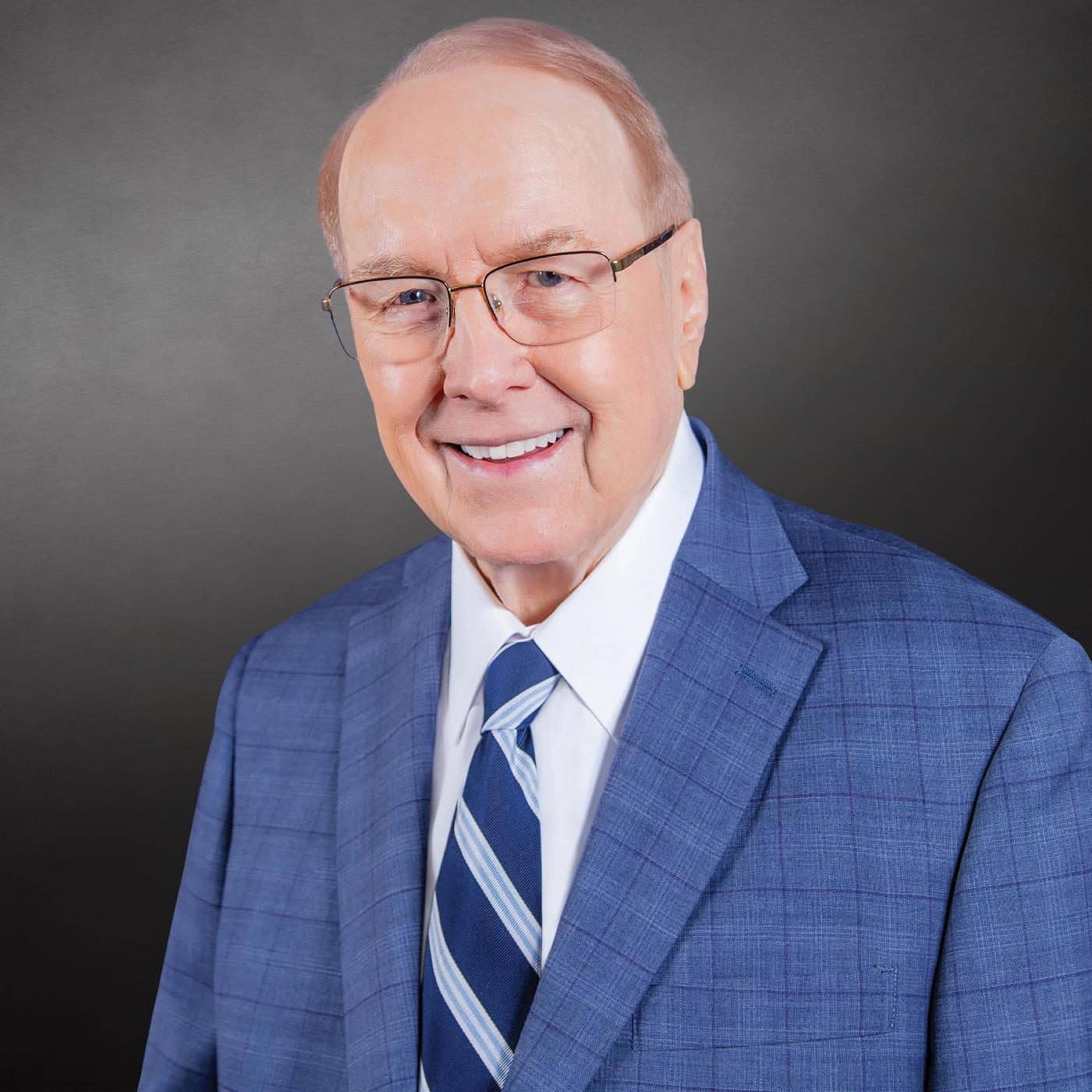

In today’s episode of Family Talk, Dr. James Dobson is joined by author and speaker Cindy McMiniman to discuss her latest book, The New Loneliness. As a seasoned Bible teacher and national speaker, Cindy shares her personal experiences and insights on how to nurture meaningful connections in a world increasingly driven by screens and social media. Together, they explore the profound impact of loneliness on our mental and spiritual health.
SPEAKER 04 :
Welcome everyone to Family Talk. It’s a ministry of the James Dobson Family Institute supported by listeners just like you. I’m Dr. James Dobson and I’m thrilled that you’ve joined us. Well, welcome to another edition of Dr. James Dobson’s Family Talk. The Family Talk program is the broadcast division of the Dr. James Dobson Family Institute. And I’m Roger Marsh in the co-host seat once again, talking with Cindy McMiniman, author, pastor’s wife, and she has a great new book out called The New Loneliness, Nurturing Meaningful Connections When You Feel Isolated. Cindy is an award-winning writer and a national speaker who has ministered to women for nearly 40 years and She’s the author of 17 books. You’ve probably read one or more of them, including When Women Walk Alone and When a Woman Overcomes Life’s Hurts. As a Bible teacher, her passion is to help women strengthen their walk with the Lord and in their relationships. Cindy and her pastor husband, Hugh, have one grown daughter, and they make their home in Southern California, specifically in the northern San Diego County area. And Cindy, welcome back to Dr. James Dobson’s Family Talk.
SPEAKER 01 :
Thank you. It’s good to be talking with you again.
SPEAKER 04 :
Well, as we were talking about in our previous program, the new report out from the U.S. Surgeon General, it’s a health alert for loneliness. In conjunction with that health alert, there was a document released that was called the U.S. Surgeon General’s Advisory on the Healing Effects of Social Connection and Community. And then it defines social connection and why it matters. And this is the type of conversation that a lot of Christians especially thought, how in the world did we ever get to this point? Share with us again your aha moment as to when you realize this is more than just something that we feel on occasion. This is really epidemic level stuff we’re talking about.
SPEAKER 01 :
Well, I’ve always been an extrovert and a people person, and I never really thought that I felt alone. And when I was alone, I liked those alone times with God. But my daughter came into my office one day. She’s a millennial. And she said, Mom, I’m concerned about you because you don’t have any friends anymore. And I said, what do you mean I don’t have friends? I have tons of friends. She said, no, I’m not talking about your writing clients. I’m not talking about people you network with through business or your editors or even church people involved in ministry. She said, who are the people that you just go out and have fun with or that you meet together with one on one who can pray with you, who you can share your heart with? She said, because it can’t always be me, you know, an important thing for mothers and daughters to know as well. And I started thinking, you know, she’s right. I work from home. I’m on a laptop most of the day. I do things through screens. And I really haven’t prioritized getting out and being among people anymore. There was another time, just even as I was writing my book, as I got to the 10th chapter of my book, which is called The Loneliness of Independence, and the subtitle on that chapter is Embracing the Beauty of Community. As I sat down to write that 10th chapter, I learned my mother was dying. And immediately I thought, I am going to need my sisters in Christ. I am going to need the body of Christ around me. For one thing, I texted a bunch of friends that had lost their mothers recently in recent years. And I said, hey, be praying for me. I’m going to be going out to Virginia to spend what could be my mom’s last week with her. Don’t know how to get through this, but I know you’ll be praying for me. And I got the emojis and different things like that. But I also went that evening to a service at our church. And with my travel and speaking as an author, I hadn’t been there in a while. You know what I mean? Busy in ministry, but not around the body of Christ that much. And there was a woman there that we had surrounded and prayed for. When she first walked into my Bible study, she had been diagnosed with stage four cancer and told she had a month to live. And this was two years later. We surrounded that woman and prayed for her and she’s still going today. And I put my arm around her and I said, Susie, I just found out that my mom has stage four cancer and I need to go be with her and I don’t know what to do. And she immediately grabbed four or five other women in that same study where we had originally prayed for her. And they surrounded me, their arms around me, and they prayed for me and they prayed for my mom and they prayed that God would be powerful in this time together. And just remembering that still gets me through today. Yesterday was a year since I lost mom. Some of that stuff was very traumatic in the moment. But there is something about remembering human touch, remembering the sound of their voices, remembering that place where we were as they prayed with me and lifted me up. And we need that in our lives, not just the texts and the emojis in the praying hands.
SPEAKER 02 :
Right.
SPEAKER 01 :
We need the body of Christ surrounding us. And many times that starts with us reaching out to them saying, hey, I need to get back in touch.
SPEAKER 04 :
You know, Cindy, it’s interesting you write about in your book, The New Loneliness, that’s something you just talked about. The fact that for a lot of people, there’s the loneliness of busyness. You know, the fact that you’re doing something and you’re contributing and your schedule’s packed and you’re around people. I’m sure, you know, you’re speaking to thousands of women every year. So when your daughter said, I’m worried about you, you don’t have any friends. You’re like, I have lots of friends because wherever I go, they love me. This quote really took me from your book. You wrote, there is an intentionality that’s being lost in the midst of our busyness. the convenience of text messaging, the quote unquote normalcy of isolation, or quite frankly, the desire to stay somewhat less transparent for the fear of the emotional energy and possible rejection of going deeper with who we are and how we feel. Do you think that in this time that we’re living in, Cindy McMiniman, where so many people are being so quote unquote transparent online, you know, kind of baring their souls, if not spilling all their guts, that that creates that false intimacy to where you really don’t have the capacity anymore to pull a friend aside and say, look, I’ve got to be honest with you. Things aren’t right in our home.
SPEAKER 01 :
Yeah, I think when we think we’re being transparent online, I think there’s still that image management and that polishing. We don’t honestly say everything. We don’t really post it when we have a fight with our husband. We don’t really post it sometimes when our kids aren’t talking to us or different things like that. And so I think that for one thing, we might feel that we’re being transparent if we just write something on a post. But those times that we get together one-on-one with a friend, And we talk with them and say, you know, I have to be honest about what’s going on with me. Those are the times we can grow spiritually in our relationship with God. Those are the times we can grow with that person. I also talk in my book about those situations where when there’s a problem with a friend, it is too easy now to cancel that person. We can block them online. But we tend to do that personally, too. I’m just not going to talk to that person. I’ll never have to worry about seeing them again. I won’t email them. I won’t text them. And that is not godly living. That is not showing forgiveness, extending grace and mercy. In the times when I’ve had to do that, it’s tough. It hurts. To go one-on-one with somebody and say, you know, I’m sorry I gave you that impression that this was, you know, or I’m sorry that it was constantly on my phone when we were together. I didn’t mean to make you think you were less important. I’m sorry for how I messed up. Would you forgive me? Because I want another chance to be able to make this right and live in a better friendship with you. It’s humbling, but wow, we can come out of that friendship so much stronger when we’re intentional and take the effort to do that.
SPEAKER 04 :
I love the fact in this book, Cindy, that you talk about the new loneliness. You connect it to technology and you do more than just say, I think technology is all good or all bad, because sometimes we do fall into those categories. We just we do. But you describe something in your book. You call it real assault, R-E-E-L, assault.
SPEAKER 02 :
Mm hmm.
SPEAKER 04 :
Talk about the fact that there are a lot of people who would think, OK, well, I like my social media pages because I know all my friends. I control the news feeds. I keep stuff out. Like you mentioned, I block out and cancel the things I don’t want in there. So I’ve kind of created this little perfect bubble where I could just kind of peacefully coexist. But the studies show that. that doesn’t always necessarily lead you to healthy connection. It actually sometimes speeds up the anxiety and depression levels and makes them rise even faster.
SPEAKER 01 :
Yes. And part of that’s that comparison thing, or, you know, we look online and then we only have our certain friends that we follow and something really wonderful happened in their life. And maybe it was something that you were hoping would happen in your life too. And it didn’t. And sometimes there can be the feelings of jealousy or resentment or more depression. I had a friend who, At one point before she had any grandchildren, she thought she would never have grandchildren. She said, you know, every time I go on to social media to connect and I’m trying to be happy for everybody, but I just can’t stand seeing it, seeing them have what I think I’ll never have. It’s a part of I’m going to look at what one of the young girls I interviewed said, the highlight reels. Those are the highlight reels of somebody’s life. And we can be assaulted with those reels of this is everything that’s happening in everybody else’s life. What about me? One of the things I’ve tried to do in my own life is what if you when you go on to social media, you seek to encourage? What if you aren’t there for something you can get or how you can feel better? Because it’s not going to happen that way. Looking to build others up. I’m often telling women, too, who tell me, well, I’m lonely and, you know, I don’t go to church anymore because every time I go to church, nobody talks to me or I tried that church and nobody talked to me. And I’ve often said, how about you go to be that person who can help somebody else who might feel lonely? What if you looked for somebody who maybe feels lonely themselves and you extend to them? Because what goes around comes around in the name of Jesus. And that’s often when God then brings somebody else around to encourage us or grows us and nurtures us through that relationship in which we started out just trying to help somebody else. And they ended up helping us.
SPEAKER 04 :
That’s really great counsel from Cindy McMiniman today here on Dr. James Dobson’s Family Talk. We’re discussing her new book called The New Loneliness, Nurturing Meaningful Connections When You Feel Isolated. And the link is up on our website. Cindy, we would be remiss if we didn’t take a look at what happened starting in March of 2020. We’ve all lived through now a pandemic. which maybe it was a real health crisis. Maybe it was kind of a political stunt. Maybe it was combinations of the two. Anybody who had COVID knows that there was a real virus. No one’s arguing that. But there were so many things that happened. I was reading a study in a business journal the other day that 60% of small businesses that were shut down because of the pandemic didn’t reopen. We see churches that have seen it. We’ve seen the decline in enrollment and participation. How did the pandemic, from your vantage point, how did it warp our relationships with our screens and the people around us? Because I’m sure there are a lot of people who might have just gone on Facebook every now and again who kind of became addicted to their phones or their tablets during the pandemic and they haven’t changed back.
SPEAKER 01 :
The pandemic changed all of us, whether we realize that or not. It changed the way we do life. Teleconferencing, it’s just all of a sudden it’s more convenient. You save gas money having to drive in. I’ve talked to, again, a few interview hosts who said, you know, I realized it’s easier to do it from home. But at the times that we actually take the time to drive across town, let’s meet in person. Something happens again in that dynamic. We’re encouraged. We’ve kind of lost some of our social skills because of so much online. When we have to go, what do we do? We shut off our camera or we just leave meeting. Right. You don’t do that personally in a meeting. Now, all of a sudden, there’s kind of this awkwardness of do I just say goodbye? Do I? Right. We’ve kind of lost our people presence. Eye contact is not what it used to be. Because when you text somebody, you can also be multitasking. So I’ve heard a lot of people say, especially younger ones, it’s awkward not knowing how to make that conversation. My daughter is a manager for an entertainment company. And when people come in, she says, I’m seeing this post-COVID situation. isolation stuff that continues into the workplace where people kind of don’t know how to act professionally. They don’t know how to keep their phone away from them. You don’t pull out a phone when you’re at work. You don’t pull it out and look at it when you’re talking with somebody. Different things like this. We’ve gotten so intimate with our phones that we’ve lost so much intimacy with other people. And that’s unfortunate.
SPEAKER 04 :
It really is. And one of the factors that we’ve seen, not just because of COVID or a pandemic, but or even with the advent of social media, but the fact that there are a lot of people now who when you’re ending something, you know, you mentioned the cancel culture earlier, it’s like, well, I don’t like your political views, you voted for him or her, so cancel, you know, or block or, you know, whatever it’s going to be. But when we see what happens, I mean, the gray divorce phenomenon is real, you know, where people who’ve been married 25, 30, 35 years wind up finding themselves divorced and starting over again. And that is kind of a failure because that usually winds up on social media. And then there’s the whole issue with friendships. I mean, friendships do kind of come and go, but it’s interesting to see that people who go through that kind of breakup, if you will, and it plays out online. And then all of a sudden you begin to realize, well, maybe I’m healthier because that person’s not in my life, but I’m also lonelier because I don’t have, you know, as many friendships. Talk about how that’s impacted you personally and what kind of effect does losing a friendship, whether you’re the one who ends it or somebody else says, sorry, no mas. What kind of impact is that having on the loneliness epidemic right now?
SPEAKER 01 :
Well, as you said, some friends are for a season. We sometimes move to different places or we’re in different places in life, and that’s okay. But sometimes friendships end because of misunderstandings that we simply don’t take the time to work out. We are conditioned, I think. Like you said, push the cancel button or the block. And you know what? That is not Christian living as we’re called to live. Rubbing up against… Other people, especially believers, there’s warfare that goes on in the church. The enemy of our soul wants nothing more than to divide us, to divide us, isolate us, get us out there on our own so he can then tear us down. So we truly need one another. In my own life, it’s humbling to admit to somebody that you were wrong. It’s humbling to take that first step and say, hey, I kind of feel like there’s something between us. Can we talk about this? We so often don’t pick up the phone. And a lot of misunderstandings happen through text message because we can’t hear tone of voice. We can’t see the smile. I was texting a friend of mine and she complained. completely misinterpreted what i said and then when i responded with the lol she goes oh good you’re laughing i thought you were serious and finally we just picked up the phone hey this is stupid let’s just talk to each other because that’s so much better and it repaired a lot it takes time to do that it takes energy to do that the enemy of our soul wants us to go they’re done Move on. Again, how are we going to grow spiritually? How are we going to grow among our brothers and sisters in Christ? God can do so much in our lives when we’re depending on him to be the mediator. In my life, there were situations where, you know, I’m a talker, but I found the more I was talking to this friend, the more I was trying to repair things. Kind of the worst it got. And I had to just step back and say, God, I don’t know what else to say. But I know she prays and listens to you too. Would you touch her heart and have her soften her heart? And would you somehow bring us back together? He is the God of reconciliation. Yes. He is the God that can mend those unseen things that are going on between us. And sure enough, as I decided to just pray about it and seek God first, she ended up contacting me and saying, hey, can we talk on the phone? Can we kind of straighten this out? And. A, that told me, God, you heard, you listened, you cared. And we were able to go through that. And it improved my prayer life. It taught me some things about how to be more careful with other people. And it grew me through it. Difficulties can grow us. So let’s just embrace them and that opportunity for God to work through it.
SPEAKER 04 :
Amen. I had to chuckle to myself, Cindy, when you were talking about that whole concept of, you know, God, we’ve got this problem in our friendship here and you need to do this and you need to do that and she needs to, whatever. And forgetting, well, wait a minute, if this is another child of God, obviously they’re probably praying the same type of prayer. And what a concept to be able to just say, God, I’m going to put this at the foot of the cross. I’m going to put it on the altar. I’m going to trust that you’re going to put this back together. But the key, I think the underlying theme through all of our two days worth of conversations here on Dr. James Dobson’s Family Talk, talking with Cindy McMiniman about remedies for this new loneliness is community, is basically saying, look, God created us for community with each other. And it’s more than just saying, well, if you’re lonely, go find friends. That’s not what we’re saying at all. But Cindy, talk about the role that community plays and why it is important for us, as you mentioned, to kind of be able to rub elbows with people every now and again and kind of, you know, be in the warmth of their presence and let God do what he does.
SPEAKER 01 :
Well, as I often say, God didn’t intend for us to isolate. He created us for community and we need one another in the body of Christ. And when I say that, I don’t mean observing a sermon online. That is great if you’re a shut-in and you can’t get out there. Absolutely. But if you can… As far as it depends on you, be at peace with all people. As far as it depends on you, be with those people there in the church. So you’re participating instead of observing. We’ve observed too much of life and not participated in it. In order to participate in life, we have to get beyond that screen and be in the presence of other people. And, you know, Philippians 2, 2 and 3, Paul wrote that, that he wanted the Philippians to make his joy complete by being of the same mind, maintaining the same love, being united in spirit, intent. on one purpose and we can do that one-on-one as well as corporately but first we have to show up we have to be there we have to make that effort as busy as we think we are we cannot afford to not be closely connected with the body of Christ. I didn’t get a chance to put this in the book because it happened afterwards, but I was visiting my brother in North Africa and he had pointed out to me when we were walking in a park What looked like a snake on the ground, it was several little caterpillars that were linked together so closely that was their protection and that was their means of survival. So from a predator, a snake, even an animal on the ground, it would look more threatening like a snake when it was really these little… Helpless caterpillars linked up together. And my brother said, that’s what the body of Christ needs to be linked up because we are stronger together. We can defend against the enemy when we’re together. He said, when one of those caterpillars decides to go off and do its own thing, that’s when the enemy grabs it. And I keep thinking of that picture in my own mind when it comes to my own life. I can think, you know, me and God, we’re good. I don’t need other people. Other people hurt you. Other people drain you. And yet I do need those people to sharpen me. to pray for me to lift me up and i need to be lifting them up as well if i’m going to grow in the fruits of the spirit how can we serve if we aren’t among the body of christ where do we give if we’re not among the body of christ and how can we grow and display those fruits of the spirit and as well use our gifts of the spirit if we are not linked up and building up the body of christ
SPEAKER 04 :
Cindy McMiniman, there’s a woman who’s listening to us right now. We’re talking about your brand new book, The New Loneliness, Nurturing Meaningful Connections When You Feel Isolated. And she says, OK, you got me. I realize that I am experiencing a season of loneliness. I don’t know what to do. I’ve always had places to go. And I’ve kind of entertained myself into thinking that my phone is my connection point. And I’m realizing I can’t rely on that. What’s a good first step for her to say, I want to let God heal me from this loneliness that I’m experiencing, but I realize I’m going to have to put the phone down and actually get out in the open here and start talking to people.
SPEAKER 01 :
I would encourage you to first go to God and pour out your heart. He knows it, but He wants the relationship in which you trust Him. And then ask Him to give you that courage to reach out and extend to others. Don’t wait for them to come to you. If there’s a friend that you just were so close to, but just time has slipped away, get over the guilt of, I haven’t extended. They might be feeling that same thing. Pick up the phone, call them. If it’s possible, say, can we meet together? Invest in the trip to go see that person. And also connect with your local church. There are so many resources there. There are so many people there that want to love you. Yes, in every church, you’re going to find problems because people are problems and people are everywhere. Amen. The Spirit of God wants to give you that unity and that sense of oneness. One of the young moms I interviewed in my book, she said, find your sameness. Get involved in a church and find that mom’s group if that’s where you are in life and need support. Or find that grief support group. Or find that place where there are others like you. Sometimes you find it when you just get in a small group with other believers and And you find that sameness, what they’re going through, what they’ve gone through that can help you. There are so many dynamics in which God can help you as you get out of that isolation and you get among other believers. God has somebody appointed already to help you. You just need to go out and find them and look for them and extend in that way and trust that God’s got your back and he’ll get the way.
SPEAKER 04 :
And even if you find yourself sitting in the back row in the back corner for the first couple of weeks, go get somewhere where at least you can experience and be around people because someone eventually will come over and extend that handshake of fellowship to get you back off of the loneliness track and onto healing and restoration and real relationship as God ordained them and requires us to do. Cindy McMiniman, what a great book and a great conversation too. Again, it’s called The New Loneliness, Nurturing Meaningful Connections When You Feel Isolated. And we have the book linked up at drjamesdobson.org. Cindy, thank you so much for the ministry that you have and for sharing so vulnerably about how loneliness has impacted your life and what you’re doing to help others to overcome it. Thanks for being with us today here on Dr. James Dobson’s Family Talk.
SPEAKER 01 :
You’re welcome. Thank you for this opportunity. Thank you.
SPEAKER 04 :
Loneliness is one of those things we don’t always want to admit we’re feeling, but ignoring it doesn’t make it go away. As Cindy McMiniman reminded us today here on Family Talk, we really do need each other. On today’s edition of Dr. James Dobson’s Family Talk, we wrapped up an encouraging conversation with author and speaker Cindy McMiniman about her brand new book called The New Loneliness. nurturing meaningful connections when you feel isolated. If you missed any part of today’s broadcast, or if you’d like to go back and listen to part one, once again, visit drjamesdobson.org forward slash family talk. That’s where you’ll also find information on how you can secure a copy of Cindy’s new book and the new devotional, the new loneliness devotional, 50 days to a closer connection with God. Every day, the Family Talk ministry goes out over the airwaves and is streamed on digital platforms because folks like you believe families need encouragement rooted in biblical truth. If you’d like to make a secure donation in support of our ministry, visit drjamesdobson.org, or you can give us a call at 877-732-6825. That’s 877-732-6825. Well, I’m Roger Marsh, and from all of us here at the James Dobson Family Institute, thanks so much for listening today. Be sure to join us again next time right here for another edition of Dr. James Dobson’s Family Talk, the voice you can still trust for the family you love. This has been a presentation of the Dr. James Dobson Family Institute.