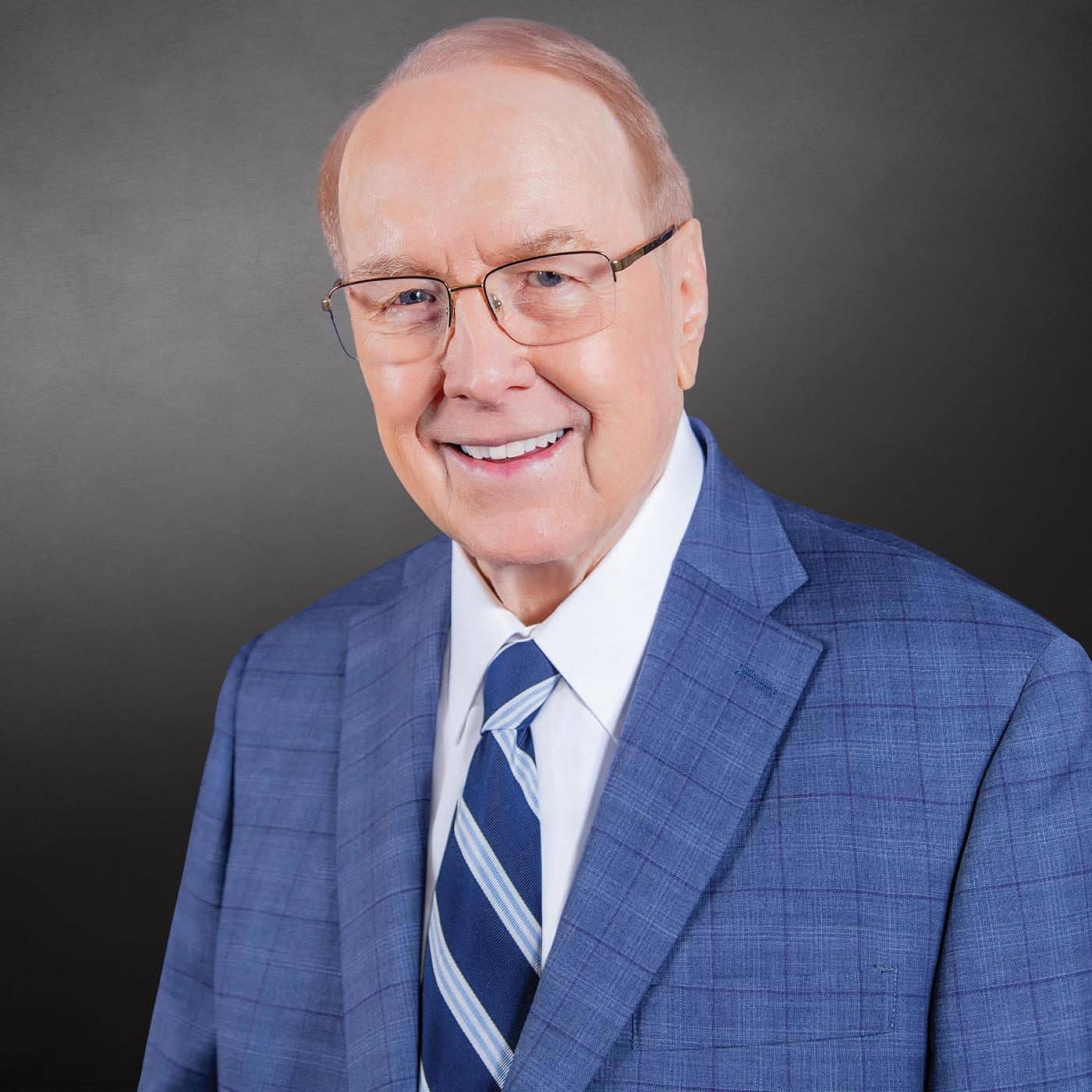
Join Dr. James Dobson as he revisits an enlightening conversation with his good friend Chuck Colson, a former aide to President Nixon who turned his life around after embracing faith. Together, they explore the complex dynamics of power in various contexts, from political arenas to personal relationships. Through reflections on Chuck’s time in prison and his subsequent work with Prison Fellowship Ministries, this episode sheds light on the insidious nature of power delusion and the redemption that comes with servant leadership.
SPEAKER 02 :
Welcome everyone to Family Talk. It’s a ministry of the James Dobson Family Institute supported by listeners just like you. I’m Dr. James Dobson and I’m thrilled that you’ve joined us.
SPEAKER 01 :
Well, welcome to Family Talk, the listener-supported broadcast division of the Dr. James Dobson Family Institute. I’m Roger Marsh. You know, it’s no secret that every human being on the face of planet Earth and every human being who’s ever walked the face of planet Earth has at one point or another struggled with power. Maybe it was in the workplace. You’re competing for that promotion or trying to control a difficult situation. Or perhaps you’ve experienced it in your home in those tense moments when you and your spouse just can’t see eye to eye and someone has to back down. The truth is power dynamics shape every relationship we have from the boardroom to the living room. And today on Dr. James Dobson’s Family Talk, we are continuing a fascinating conversation that Dr. James Dobson had with his good friend Chuck Colson about this issue of power, specifically the use and abuse of it. The program you’re about to hear is the second part of a three-part conversation that Dr. had with Chuck Colson back in 1984, and we’ve included it in this year’s Best of Broadcast collection as we are remembering the spectacular legacy of Dr. James Clayton Dobson Jr. Now, if you would like to get a copy of our 2025 Best of Broadcast collection that features everything from the first Family Talk broadcast all the way to the last words Dr. Dobson spoke in studio, I’ll have information on how you can receive a copy at the end of today’s program. When you think about truth and when you think about power, you can’t help but think about Chuck Colson. After all, Chuck served as a senior aide to President Richard Nixon during the Watergate scandal. He knew firsthand what it meant to wield power, and he also knew what it meant to abuse it. But after encountering Jesus Christ in 1973, everything changed. Chuck pleaded guilty to obstruction of justice and served seven months in prison. And from that experience, God birthed Prison Fellowship Ministries, a movement that has touched countless lives around the world more than 50 years after its founding. In part one of this series, Chuck Colson shared his journey from the corridors of power in Washington, D.C. to the prison cells where he spent seven months. Today, Dr. Dobson and Chuck Colson will tackle an even more personal question, and that is, how does the lust for power play out in our everyday lives? If we’re honest, it’s a bigger struggle than we might want to admit. Chuck Colson went home to be with the Lord in 2012, but his legacy lives on through the Colson Center for Christian Worldview. And with Dr. Dobson having gone home to be with the Lord earlier this summer, well, what a reunion that has been for Chuck and for Dr. Dobson to be together once again. And now let’s join Dr. James Dobson and his guest Chuck Colson for part two of their conversation about the use and abuse of power on today’s edition of Family Talk.
SPEAKER 02 :
I want to continue our conversation today, which we began last time, about power in its various contexts, how there’s a lust and a thirst for power in the human spirit. Now, we were talking about that in the political sense, referring to your years in the White House. and even in the sense of what you and I are experiencing now as leaders of Christian organizations. There’s a lust for power in that context too, and everyone who’s in a position of leadership has to deal with that. But what I’d like to do now is to apply that a little more specifically to where the listener is. Let’s talk about the lust for power for a businessman or a businesswoman, that person who’s facing stiff competition. And there’s this intense desire to move those people around that would compete with you and take business away from you and to manipulate them at your will. Or even talk about power from the perspective of the wife and mother. What are the dangers there? Is it the The same story?
SPEAKER 03 :
It’s exactly the same story. And it’s very, very insidious. It’s the power delusion. It’s the idea that we can impose our will upon another, which, by the way, is gratifying to the individual. This is what Nietzsche wrote about, that we impose our will upon others, and that is gratifying to us. Much of the sexual lust comes from that basic root, in my opinion. And I deal with this, of course, in the prisons where I minister because the power structure is so intense among the convicts. And I think the worst part about it is that we don’t see it in ourselves. It’s almost impossible to see it in ourselves. And so we really have to rely upon the intimate relationship with loved ones. And we have to be obedient to Christ. Jesus gives us the answer. When he was tempted by the devil, there were three temptations in Luke 4. And you see all the temptations we’ll ever be faced with were Jesus experienced. Right. As you pointed out so well last night, it was in his humanity. He had to really have been tempted. He had to have wanted those things, which of course he would. If he didn’t want them, then he wasn’t tempted. They weren’t temptations. But he resisted each one. And interestingly enough, he resisted them by saying, it is written, it is written, it is said. That is, he referred back to the Word of God. And I think the Word of God is our only defense. I think as we soak it in, as we read it, as we absorb it, as it begins to have meaning to us, we then understand. are protected against, to some degree, against the temptations of power. And I don’t know any other way out. I mean, Jesus said, he who would serve, he would lead, let him serve. Now, to the businessman who’s trying to get authority, he can order his people around. He can scream and shout at him. But remember that one day he may be out of that job, and he hasn’t earned their respect. But the businessman who walks in in the morning has got a subordinate who isn’t quite making it, and he walks in and says, Jim, can I help you? Is there something I can do today to help you? Wow. I mean, that’s what Jesus teaches. And he has then earned that man’s respect. I’ve often found that the best way to lead is by example. I learned that in the Marine Corps. In the Marine Corps, you were told you never went into the mess line to get Your food, I was an officer until all the enlisted men had eaten. And if somebody was down, you showed them how to do it. You led them. And the great command of a Marine officer was follow me. It was never you go do this. It was come after me. I’ll go first. It’s exactly the words Jesus uses to his disciples. Follow me. He set the example. So that a leader sets the example by being willing to do anything he asks his people to do. And not only is there spiritual truth in what Jesus says about he who would lead, let him serve, but there is great wisdom in that because you earn the respect of the people around you. And you can, in human relations, you can force people to do things. If somebody is coming to fix your refrigerator, you can force them to do certain things or you can make them feel that you really appreciate it and you really are interested in them as human beings. And I think what you begin to discover is that you can gain people’s respect. And you will then have authority, moral authority.
SPEAKER 02 :
And that’s exactly what Jesus, of course, is teaching. Let me ask you the best question of all. This is fantastic. Apply all of this now to husband and wife relationships because I see most marital struggles right at this point.
SPEAKER 03 :
Well, now, this would be like my asking you, Jim, to figure out how to evangelize in a prison. I’m sitting here with the one man in America that knows more about marital relationships than anybody else, and you’re asking me to sum it up? I have an idea you can handle the question. As a rank amateur and as one who has to struggle. To do this in my own life, I feel that if you are always looking out for the interest of your mate ahead of yourself, which is really one definition of love, to will the best for somebody else even at your own expense. If you’ve got open communication and if you are looking at your relationship with your partner as one of serving their needs, that you will have a magnificent relationship. It is when you are trying to get the other person to constantly – fill your need rather than you’re being interested in filling their need that the relationship begins to break down not just husband and wife it’s true with your kids I mean I’ve seen parents who want to sit and lecture their kids well a lot better if you ask them things and sort of draw them out and you’re really interested in their welfare and then suddenly they realize you care And I find this with prisoners. I find it in all human relationships. I can do an awful lot more listening, and I can do an awful lot more saying, tell me about what I can do to help you. And suddenly you discover that you’re then able to influence that person in a way that you couldn’t if you’d walked in and said, let me tell you what the answer is. And I think most husbands and wives try to manipulate each other by getting them to do the things for them rather than try to do something for them.
SPEAKER 02 :
The great struggle of the first two years of marriage, and especially the first year, is determining the power structure. It’s deciding who controls, who leads. And in many cases, the woman will say, I don’t want to control this family. I yield to the leadership of my husband. And yet she has all of the reins of authority in her hands, and she undermines him every time he attempts to make a decision. And the real key to who’s in charge is what happens when they disagree. As long as they are in harmony with one another, they both want to live here and they both want to work there and they both want to have this number of children at this time and they both want to get up at this time and know who’s going to make the coffee. As long as all those issues are resolved, there’s no power struggle. But it’s when they come nose to nose in confrontation and one cannot compromise because he sees it so strongly and she can’t compromise because this is not something that she’s prepared to yield on. What happens in those moments? And the power struggle involves who predominates. And that whole first year is a settling in of power. And if it’s not handled properly, if one has all the power and the other has none – then the relationship may survive, but it will be a damaged relationship. And I wish that I had an opportunity to talk to every newlywed couple just about this subject because it can either make or break a marriage. And often they get off on the wrong foot right here on how they use power And it results in a divorce 25 years later.
SPEAKER 03 :
That’s fascinating. The only thing I can say, Jim, is that I hope my wife is not listening to this broadcast. Having just said that it is wanting to serve the other person and having a wife who supports me so much in the ministry and subordinates your own… She’ll take you literally there. She’s going to tell me I don’t practice at home what I’m preaching over the air.
SPEAKER 02 :
And, you know, my views… I probably don’t. My views on this subject… are a little bit unconventional in Christian circles because the characteristic message that is given in conservative Christian circles I disagree with, which is one of total powerlessness in a relationship. And when you have that, you have the same thing you saw in international relationships where one imperfect country led by sinful, imperfect people – We’ll dominate another one if that opportunity is available. And what makes for the healthiest international relationships is a balance of power in a context of love. And what makes for the best marriage is a balance of power. Where both sides respect the other one and there is a – not that there is not masculine leadership. I believe in that. But that there is a mutual respect that results in a balance in the decision-making process and input from both sides. It would take me another 30 minutes to explain what I’m trying to say. But love must be tough is really an expression of what happens when one side has all the power. That’s right.
SPEAKER 03 :
Well, there’s no worse tyranny than anarchy. It’s the vacuum of power that will create the greatest turning.
SPEAKER 02 :
Even in a Christian home? Yes. Chuck, let’s turn a corner and apply all this to the prison fellowship ministries that you’re working in and those who are perhaps possessing the least power in our culture. I know you just came back from Latin America and you visited some of the prisons down there. Talk for a minute about those who are completely devoid of power.
SPEAKER 03 :
Well, I had some very sobering lessons in my recent trip to Colombia, Costa Rica, and Peru. In Colombia, I had a meeting with the minister of justice. It was a courtesy call. I was simply going in to thank the minister for his cooperation with our ministry. And I walked in his office and I was immediately struck by him. He’s a very powerful man with a great presence about him, a young man, less than 40. And we sat down and I had all of the prison fellowship trustees with me and he had many of his aides with him. And I told him what prison fellowship was doing in the prisons and I told him I’d just come from his central prison. And the moment I did, his eyes flashed and he leaned forward in his chair and he said, tell me about the conditions in the prison. And so we started talking about the prison and he called in two of his subordinates and he said, I want this stopped. I want that changed. This man is absolutely right. There’s corruption in that prison. We’ve got to do something about the rights of the prisoners. He surely knew that, Chuck. He didn’t need an American to tell him that. No, he didn’t except I think some of the things I said really triggered a reaction on his part. It was very spontaneous. This was a very courageous man, Minister Larabanea. And he was cracking down on the mafia at the time, a much heralded campaign against drug traffic out of Columbia, one of the first Colombian political officials to do that. And I did tell him some things I had seen in the prison, and I’m not sure he realized. And I knew it just from my perspective as a prisoner. In any event, within minutes, the idea of a courtesy meeting dissolved, and the most animated conversation. I’ve met with many of the world’s leaders. I’ve known them personally, and I’ve sat across the table from many of them. This was one of the most impressive men I’ve met in government. He was keen and sharp and honest, full of enthusiasm and integrity and a real desire to do the right thing, and bright and quick. And we had a marvelous, just a friendship that developed spontaneously. How long were you in there? Almost an hour. He called in his photographer and we took some pictures. And as I was going out, he had a huge crucifix on the wall. And I I just sensed he was a believer and I turned to him. I said, I’d like you to take a copy of my recent book, second book, Life Sentence, translated in Spanish. And then he embraced me and he said, please come back and send a man back. We want you to work with us in the prisons. Well, we walked out of his office to make a long story short. The trustees of Prison Fellowship, their feet weren’t hitting the ground because here and all of A couple of years, several years, we’d been working in Colombia. We’d never had the access to the most powerful man affecting the prisons in the criminal justice system. He was endorsing what we were saying. He wanted to end corruption. I went back to the hotel, changed clothes because I was speaking at a dinner that night. And two hours later when I arrived at the dinner, everyone was huddled around television sets and radios listening to the reports. And someone turned to me ashen-faced and said, Minister Lara Bonilla has been assassinated on the way home in the car. I was the last person to see him alive. No. As a matter of fact, the extraordinary thing was the next morning the newspaper, the radio that night said he was reading a book, Life Sentence, when he was shot, murdered by two mafia gunmen who came up on either side of the car and machine gunned him to death. There was a picture in the newspaper the next day in Columbia that was absolutely striking. It was the backseat of the car all covered with blood and glass splattered about. And there was my book opened and sitting on the backseat covered with blood. He was reading Life Sentence when he died. There were some lessons in this, as you can well imagine. First of all, our mortality. I preached that night to a group of non-believing people on peace with God. After the assassination of the minister and there were a lot of government officials at the dinner that I was speaking at, I tell you I had their attention. They were interested in what it meant to have peace with God and to know Jesus Christ and to be assured of eternal life because they realized how life can be snuffed out in a second. And the second thing that really struck me, however, was for the two hours that the trustees of Prison Fellowship of Columbia were floating on air. Because they had access to the place of power. And we’ve been working in the prisons there for a long time. And suddenly the minister of justice was on our side. And just as suddenly his life was snuffed out. And you look all over Latin America and you see the same thing. You see progressive leaders come in and take over a country. And they’re killed or they’re deposed or the army takes over the revolution. And I saw in Central America just a microcosm of what is to me an epidemic problem worldwide. There is no political solution in Latin America.
SPEAKER 02 :
Or anywhere else.
SPEAKER 03 :
Or anywhere else. And if you look at the times in which we live, the great paradox of these times is that so great is the power that we’re basically powerless. We have a paralysis of power. We have so much power, we’re paralyzed. And I think when people look back upon this era of the latter part of the 20th century, they will say – It was marked by this extraordinary contrast, this remarkable paradox. All the power in the world and we can’t solve our problems. And we’re paralyzed by it. The world is actually paralyzed at a time when there’s so much power. That’s one of the things I saw. And that’s why the power delusion is such a dangerous thing. We think there’s all this power in the world. We can’t cope with the human problems that are erupting in violence and tragedy in every corner of the globe. They’re fundamentally spiritual problems. And they’ll only be solved in a spiritual way. Through the gospel. And that’s why Rios Montt, the former president of Guatemala, said he’s not going to run for office again because he can’t do any good as the president of Guatemala. What he’s going to do is go preach the gospel through Central America. He said there’s no hope in Central America. Now, you see, at the same time that I saw this paradox in Central America, I saw the answer. In the prison in Costa Rica, the men were languishing with nothing to do. And the prison fellowship volunteers started going to the prison and they saw that there was all this land around the prison. And so they started a prison farm and got some money from World Vision and got some seed and planted sugar cane. Now, most of the inmates in that prison work in their own cooperative prison farm started by the ministry and managed by volunteers and Bible studies going on in the farm camps and a great spiritual movement in that prison. And in the place of powerlessness… I saw a vision of the invisible kingdom being made visible at a time when all the governments with all of their power are powerless. It’s part of the same historical pattern we see all through the Bible. God dealing with the power structures through the powerless, sending a powerless peasant to speak to the powerful kings. Amos, Hosea, oh, but look at the Bible. The Bible is basically written by powerless people. After David and Solomon, the authors of the Bible are all powerless. They’re all a bunch of scruffy peasants. They’re all the kind of people we’d turn our back on if they walked into church today. If Hosea walked in, everybody would start mumbling to one another, his wife is running around with someone. Can you imagine we’re going to let him in our church to speak to us? The man smells bad. And the man smells bad, sure. Or the original disciples, the 12 who followed Jesus. I call them the dirty dozen, the fishermen. They had no power, influence, money. They were nothing. Right. And yet they wrote the Bible. Much of what we read today of the Word of God is revealed to us through the eyes of the powerless, you see. And I saw in Central America and in South America the work of the powerless in the prisons as a glorious testimony to the invisible kingdom at a time when the visible kingdoms are paralyzed.
SPEAKER 02 :
Chuck, what does it do to you personally to look into the face of one of these absolutely powerless people in Latin America and to look into his eyes and tell him that he’s worth more than the possessions of the entire world and that Jesus Christ died for him? and to have him respond emotionally in that way, does that give you a greater kick than sitting in the Oval Office and making decisions that will be in headlines the next day?
SPEAKER 03 :
Oh, my. I look back on those days. Honestly, in the depths of my heart, I can tell you, people often say to me, well, you’re just posturing to go back into politics. I couldn’t go back into politics. I’d find it dull and uninteresting and unfulfilling and unrewarding. There’s nothing I ever did. I mean, you could play Hail to the Chief on the Marine Corps band and come off of Air Force One of the crowd cheering, and it meant nothing compared to seeing the transforming power of Christ, the reality of Christ in the faces of those people.
SPEAKER 02 :
You know, a lot of Americans view inmates as the ones responsible for the fear that keeps them locked behind their doors. And there’s a great deal of anger, I think, expressed at those in prison, maybe for good reason.
SPEAKER 03 :
Well, to some extent, there is good reason. But the fear is based upon crime. And what you need to remember is that the inmates in prison have committed 2% of the crimes committed in the United States, 98% go unpunished. And so You may have somebody on your block you’ve got more reason to be angry at than the guy in the prison. Plus the guy in prison, if we believe in our system, is taking his punishment and being punished. And I believe in punishment. I believe in accountability for our own sins. I believe that we need to be held to account. But at the same time, we should be compassionate and be looking for ways to rehabilitate those people and bring them back into society in a meaningful way, which is what the gospel does. So I get the joy and the fulfillment of seeing their dignity and their personhood and their respect given back to them by the gospel. That’s what it does. At the same time, I feel a renewed determination to do something about the conditions which many of those people live in.
SPEAKER 02 :
Chuck, you and I spent three hours in my office, and the conversation never lagged. And we have now gone through two programs here talking about power, and I feel like we could talk forever. Would you let us continue one more day? Oh, I’d be honored. I’d love it.
SPEAKER 03 :
I will take any time of fellowship I can have with you, Jim.
SPEAKER 01 :
What a special friendship Dr. James Dobson shared with his good friend Chuck Colson, and what a wonderful reunion they have had in heaven earlier this year. You know, Chuck Colson’s words earlier here on this Family Talk broadcast really cut right to the heart of the issue. And he said, and I quote, “…there’s no worse tyranny than anarchy. It’s the vacuum of power that will create the greatest tyranny.” You’re listening to a special edition of Dr. James Dobson’s Family Talk, where we are revisiting a compelling conversation Dr. Dobson had with his good friend Chuck Colson about the use and abuse of power. If you missed any part of today’s discussion or if you’d like to share it with a friend, go to drjamesdobson.org forward slash family talk. Chuck Colson discovered that true power comes not from controlling others, but from serving them. And that same spirit of servant leadership is what drives everything we do here at the Dr. James Dobson Family Institute. In fact, thanks to a group of dear friends who deeply believe in Dr. Dobson’s vision, we now have the Dr. James Dobson Memorial Matching Grant in place. It provides matching funds dollar for dollar for every dollar you donate between now and December 31st, up to $6 million. This remarkable grant is an incredible memorial and a statement of confidence for the only organization entrusted by Dr. Dobson to carry out his legacy and expand his work to new generations and geographies in 2026 and beyond. Now, what does this mean for you? Well, it literally means that every gift you make to the JDFI between now and the end of the year will be doubled in size and impact. Your gift of $50 becomes $100. Your gift of $5,000 becomes $10,000. Now, just imagine the difference your multiplied gift will make. And here’s something special we’d like to send you as our way of thanking you for your gift of any amount in support of our ministry. That is the Dr. James Dobson Family Institute 2025 Best of Broadcast Collection. This is a special six-CD collection that’s been carefully curated to feature the very best conversations not only from the past year, but also to include the first Family Talk broadcast, Dr. Dobson’s final program that he recorded here in the studios of the JDFI this past spring, and and the final words Dr. Dobson ever spoke. And boy, when they were played at the memorial service earlier this year, there was not a dry eye among anyone here. Now, when you make a donation in support of the ministry of the JDFI today, your gift will be doubled, and we will thank you for your tax-deductible contribution by sending you a copy of the 2025 Best of Broadcast 6 CD Collection. So give us a call at 877-732-6825. If you prefer to give by mail, you can write to Dr. James Dobson’s Family Talk, P.O. Box 39000, Colorado Springs, Colorado, 80949. And keep in mind, you can also give a gift through our secure website. Go to drjamesdobson.org forward slash broadcasts. Well, I’m Roger Marsh, thanking you for being with us today. And on behalf of all of us here at Family Talk and the JDFI, we truly appreciate your prayers and support. Be sure to join us again next time right here for the conclusion of Dr. Dobson’s powerful conversation with Chuck Colson discussing the use and abuse of power. That’s coming your way right here on the next edition of Dr. James Dobson’s Family Talk, the voice you can still trust for the family you love. This has been a presentation of the Dr. James Dobson Family Institute.