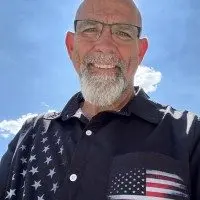
In this conversation, Joe Massa interviews Tom Broadbent, a pastor and veteran, about his mission to create Camp Treehouse, a trauma camp designed to help veterans and first responders unpack their trauma and build community. Tom shares his military background, the inspiration behind the camp, and the various therapeutic activities planned, including equine therapy. He emphasizes the need for funding and community
support to bring this vision to life, highlighting the importance of awareness and collective effort in addressing the mental health crisis among veterans.
SPEAKER 01 :
Hello and welcome, everyone, to another edition of Crawford Media Group’s Public Affairs Radio Broadcast. My name is Joe Massa, and today I’ve got a very special guest, somebody that’s doing a really cool job in a really amazing mission, something I never would have thought about. But we’re going to get into that in just a moment. But first, this gentleman is Mr. Tom Broadbent. He’s a pastor. He is a former U.S. Army combat tour veteran. He’s working in the ministry space, and he is also the founder of Camp Treehouse Foundation. trauma camp. Pastor Tom, how are you today, sir?
SPEAKER 02 :
Fantastic. Thank you for having me on your show. It truly is a pleasure, and I look forward to a long-lasting relationship moving forward. You’re pretty awesome. I’ve listened to a lot of your stuff, and you got your finger on the pulse for sure.
SPEAKER 01 :
I appreciate that. Yeah, it’s always about trying to create great content. And that’s something we thrive on here at Crawford Media Group. And when you reached out to me originally and told me just a brief background of your story and your mission, I knew instantly that we had to have you on the show because it’s so unique, but it’s also a very underserved industry. So as an individual that also served in the Army, you yourself, so thank you for your service. Tell me a little bit about how this idea came to be and what exactly is the Camp Treehouse Trauma Camp?
SPEAKER 02 :
Yeah, it’s a fantastic story. You know, I started in the military March 17th, 1989. And I started out in the California National Guard. I was a combat engineer. We had some humanitarian efforts that we did with fighting forest fires in California, helping with the homeless, part of the L.A. riots with Rodney King back in the day. And when I finished up with the National Guard, I thought, I’m done with the military. And lo and behold, 9-11 happened, and that changed the world for a lot of folks in myself included. Uh, and so I enlisted active duty. And, uh, so I’ve done, I’ve done everything in the military, uh, from, uh, combat engineer, cab scout, infantry men, and eventually, uh, moved over into, uh, criminal investigations for the military doing felony level investigations. I did personal protection for the sec def and sec army and joint chiefs and, uh, very interesting career, but, uh, Towards the end of my career, two things happened. Number one, I was at home watching a television show. It’s the first time I’ve ever seen this show. Some of you may have seen it. Some may not. If you haven’t, I encourage you to go and look at the show. Check it out. Pete Nelson in The Treehouse Master. This guy, Pete Nelson, he builds tree houses all over the country, these very elaborate tree houses. It’s like nothing you’ve ever seen before. And for me, when I was in the National Guard, I spent 10 years in camp ministry in Southern California, a place called Verdugo Pines Bible Camp. And so I know firsthand the impact that camp could have on somebody’s life. And a lot of the friendships that we make at camp as a kid, we carry on into adulthood. And so when I saw an episode of the treehouse master, Pete Nelson himself, building these very elaborate treehouses, immediately I thought, man, this is cool. We need to have an entire camp in the trees with suspension bridges and zip lines and everything else. And of course, you know, the big kid that I am, I’m thinking, you know, this is obviously my flesh speaking. And but the interesting thing about it is God has a way of taking things, planting seeds and then developing those and growing ministries out of those seeds planted. And and so with my experience in the military, when 9-11 happened, obviously I went active duty. I was an infantryman. I deployed three times for a year plus at a time. My first tour was 13 months and then I had another one 13 months. I had one that was 18 months. And and I had a couple of small tours in between. And for me. My first tour was the worst. In 2004, we had 36 guys in our brigade that we lost, 19 in our battalion that we lost. And I knew every one of them and watched a few of them die. And it was very traumatic. And then when I went from combat arms into CID, yeah, the trauma I experienced was a lot different. It wasn’t combat trauma, but responding to crime scenes. I’m going from one traumatic event to the next, to the next, to the next. And so what the military does very well is they teach us how to compartmentalize. And so when we go through a traumatic event, once that event is over, we pack it up in a nice little box. We put it up on the shelf. We tend to forget about it because we’re real quickly moving on to the next traumatic event. We don’t have time to process or deal with it. And just to be clear, when we think about traumatic events and what they are, in the Bible, Romans chapter 1, it says that God writes the knowledge of right and wrong in our hearts. And so when we see or experience anything that it goes against what we know to be right or wrong, anything that is morally objectionable, that becomes a traumatic event and that becomes a source of post-traumatic stress.
SPEAKER 01 :
So this particular mission is a way for people that have gone through that, particularly military members, to unpack that trauma and to sort of address it. And you do that in multiple ways. It’s obviously the camp is the way you’re expecting it to be, but there’ll be like equine therapy, which is working with horses and agricultural self-sufficiency and other things where they can sort of process and sort of relieve some of that PTSD and stress, correct? Correct.
SPEAKER 02 :
That’s correct. What we’re looking at, Joe, is we are focused in on taking the best practices from a couple of different nonprofit organizations where it’s been proven to be successful and we’re trying to combine it into a camp environment. Because what it does is it allows us, number one, to take tried and proven methods of teaching folks the truth behind their trauma. But then we isolate them in an environment to where they can really kind of engage in both high intensity activities and low intensity activities together. to build, to encourage a sense of community within a community of other folks that are like-minded. And so like your high intensity activities would be like playing, you know, paintball or dart tag, you know, something like that, where you’re forced to be on a team, you’re forced to communicate, you’re forced to trust each other, you’re forced to really work together Uh, and that forms a bond, uh, and that forms community. And then your low intensity of activities like going fly fishing or, uh, working with wood or reloading ammo or going for a hike, you know, these are low intensity, lousy time to really think about some of the material we’ve talked about. Some of the material we teach allows you to build those intimate relationships with other men, uh, that are like-minded. And, and so that’s, When you leave our camp, you’re leaving with the truth behind your trauma, which can help you on your road to recovery. But then you’re also leaving with a community of like-minded folks that have been where you’re at, that understand what you’re going through. And so when you go home, you’re not going home by yourself. And that is huge when you talk about the family, when you talk about your community back home, because when people go through trauma, they don’t go through it by themselves. It affects everybody around them.
SPEAKER 01 :
Absolutely. So obviously, to put together something of this magnitude, a couple of quick questions before we let the listeners know how they can get involved and contribute. Obviously, the biggest prohibitive issue here is going to be the cost. Now, I know you’ve mentioned in our previous interviews that to build, to raise the initial seed funding, to sort of make this all come to life. Somewhere in that 20 to 22 million dollar range. So obviously funding and seeding is a big part of this. But if this comes to fruition the way you expect it to, where will the camp be located? And then where can they find you online and learn more on ways that they can get involved with the mission?
SPEAKER 02 :
Yeah. Thank you for asking that. It’s a fantastic question. So to begin with, this mission started as a vision in 2013. 2023, it finally got some legs under it. We got our 501c3 status with the state of Colorado, and we’ve been building it since. We currently, more recently, got some land donated, about an acre, where we’re going to build out our headquarters campus. So we can start doing on a small scale what we hope to do on a larger scale once we obtain, you know, the land to build our main campus. We’re looking currently in the market, looking to acquire 100 plus acres to build the main campus. But what we’re trying to do, what God has kind of shown me through this process is that there’s specific goals that we’ve come up with to reach where we’re going. You know, whenever you try to do the right thing, Satan likes to attack. And so God told me we need to raise up some prayer warriors, people that would be willing to pray for Camp Treehouse and its leaders. And so if you’re interested in that, please, by all means, reach out to us and we’ll get you hooked up with that. We’re looking for what I call campaign warriors, people willing to donate on a monthly basis. The dollar amount is not important. That’s between you and God. What I ask people is to look at our website. Camptreehouse.net. Pray about it. And then whatever God puts on your heart, if you’re obedient to that, then God will bless. He’ll bless you and he’ll bless Camptreehouse and he’ll bless the folks that we’re trying to help. The third goal we had out of five is to create some strategic partnerships with other organizations like your churches, for example, other veteran organizations, first responder organizations. If we can partner, if we can create these strategic partnerships, other organizations willing to help raise awareness of what we’re doing and to help raise support for what we’re doing, that’d be fantastic. Obviously, we’re also looking for additional subject matter experts to sit on our board, and we’re looking for other people to serve as ambassadors who can do what I do, be the mouth of the organization, to be able to share with folks within their networks and leverage their networks to try and help us build Camp Treehouse. The reality is this, Joe, is if you read the book of Nehemiah, He was able to build the wall of the temple in record time of just 52 days simply by doing one thing. He went around and he talked to everybody that lived around the perimeter of the temple, and he got everybody to build a small little piece of wall that was right in front of their house. And when everybody did their small little part, they was able to build the entire wall, perimeter wall to the temple in record time of just 52 days. And so that’s why, you know, God kind of spoke to my heart and says, Tom, we’re going to raise $22 million simply by getting everybody to do their small little part. And here’s the reality, Joe. If you think about all the adults in our country, I’d be willing to venture that every single adult in our country knows either a veteran or a first responder. And the reality is we have two first responders and between 20 and 22 veterans that commit suicide each and every day because they don’t get the need they want, need or desire. They need our help. And it’s not that there’s great. There’s not it’s not like there’s not good organizations out there. helping our nation’s heroes. You’ve got people like Wild Warrior Adventure, Wild Ops. You’ve got Operation Tabletop, Operation Project Purple Heart, Reboot Recovery, all these organizations. But the problem is, number one, people don’t know about them because they’re small organizations trying to do their part. Number two, and this is the important part, the need is so much greater than the available help. We need organizations like Camp Treehouse that can be a unifier of effort in this particular space where we’re helping veterans and first responders and their families. Amen.
SPEAKER 01 :
Amen, brother. And you know what? I love the example, the Nehemiah story, because it’s all about awareness and getting your community to contribute. And that’s what we’re going to do. We’re going to do our best part here at Crawford Media Group to share this message. Again, guys, you can help Pastor Tom and his mission by visiting CampTreehouse.net. You can find him on social media. You can reach out to me, Joe Massa, online, as well as Crawford Media Group to get more information. but please become a prayer warrior. You can also consider becoming a campaign warrior. Pray on this mission. You probably are absolutely right. There’s a lot of veterans, first responders, and people in this space that span every community. So you probably are either related to one, know one personally, And they could desperately use your help to sort of break free and unpack that trauma that they have in their hearts. So, Tom, I really appreciate you coming on to Crawford Media Group’s Airwaves today, sharing this really important mission. Again, we’ll put links to CampTreehouse.net. And, sir, we would love to continue to update our audience as you get a little more into the developmental stage of this. And we’ll be sharing links to get in touch and help with you as well.
SPEAKER 02 :
Fantastic. I appreciate you and your ministry, Joe. Fantastic. Thank you again for having me on. Anytime, sir.