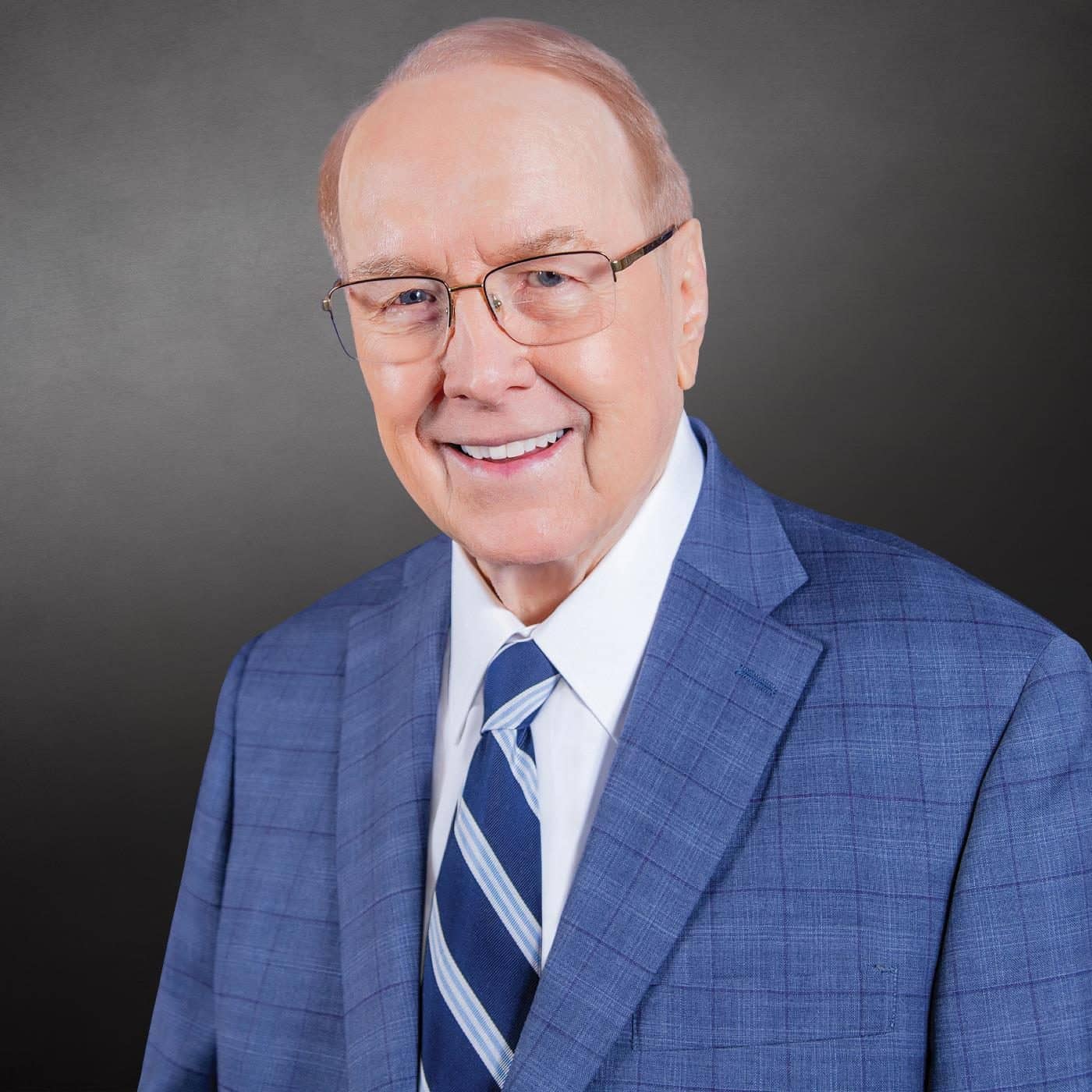

The modern feminist movement promised freedom and equality, but has it delivered on those promises? On today’s edition of Family Talk, Dr. James Dobson and his longtime colleague, Diane Passno, discuss her book, Feminism: Mystique or Mistake? They explore how a movement that began with Christian principles evolved, negatively affecting marriages, families, and women’s choices. To support this ministry financially, visit: https://www.oneplace.com/donate/707/29
SPEAKER 04 :
You’re listening to Family Talk, the radio broadcasting division of the James Dobson Family Institute. I am that James Dobson, and I’m so pleased that you’ve joined us today.
SPEAKER 02 :
Well, welcome to Family Talk. I’m Roger Marsh. You know, few topics in our culture generate as much heated debate as feminism. You know, in fact, the very mention of the word can spark a passionate response from both sides. But what does feminism actually mean in today’s world? Has it stayed true to its original mission of equality or has it evolved into something entirely different? These are important questions to consider because the answers profoundly affect how we understand marriage, family, and the role of women in society. Dr. Dobson has some thoughts on why this conversation matters so much.
SPEAKER 04 :
It is true that many people, male and female, can become very emotional and maybe even angry when the issue of feminism is raised. Just what does that term mean anymore? Does it refer to equality or to the legality of abortion and the right to contraception or abortifacience? Is feminism truly about freedom or is it about forcing women into a certain mold that feminists have created? Thank you. think, and therefore all of civilization is dependent to some degree on whether or not we can get this issue straightened out because the role that women play is critical to the stability of the culture because of the importance of the family. So I invited my great friend, Diane Pasno, to come to the studio to discuss her book, Feminism, Mystique
SPEAKER 02 :
or mistake. Well, today on Family Talk, we’re going to be revisiting Dr. Dobson’s classic conversation with the late Diane Pasnoe, who passed away earlier this year at the age of 79. For over 27 years, Diane served as Focus on the Family’s first female vice president, where she helped shape the ministry’s theological direction and correspondence department. A graduate of UCLA and a gifted author, Diane brought both personal experience and biblical wisdom to these challenging questions. In her book called Feminism, Mystique or Mistake, Diane traces how a movement that began with Christian principles gradually shifted away from its biblical foundations. Her insights remain remarkably relevant today as families continue wrestling with these same issues. So let’s listen in now as Dr. Dobson welcomes his longtime friend and colleague for this important discussion.
SPEAKER 04 :
Diane, all I can say, it’s about time you came by for a visit. Thank you. It is a pleasure to be able to talk to you. We’ve sat in meetings together hour upon hour upon hour, and now you’ve written this book, and I’m very proud of you and glad to have you here. Thank you, Dr. Dobson. You graduated from UCLA, which is the only bad thing that I know about you. Everything else is positive.
SPEAKER 01 :
A source of ongoing tension between us.
SPEAKER 04 :
Ongoing tension, right, especially during football season. And then you became a social worker for the city of Los Angeles County. Yes.
SPEAKER 01 :
Yes, I was a protective services worker for a number of years in Los Angeles County, and that involved investigating child abuse cases and taking those cases through dependency court hearings and into placement.
SPEAKER 04 :
I have heard you say that you’ll never really get over that experience, that it was highly emotional, very difficult, and you saw family situations that you’ll never forget.
SPEAKER 01 :
I still have nightmares about some of the cases that I handled years ago. I was in my 20s when I was a caseworker, and I still have nightmares about some of those children and the tragedy involved and the families.
SPEAKER 04 :
Child abuse.
SPEAKER 01 :
Child abuse cases. does not just impact children. It impacts parents horrifically as well. And that was what was so difficult, is the whole family was so damaged.
SPEAKER 04 :
Yeah. Well, the years have flown by, and we have been over a lot of ground together. And now you’ve written this book, Feminism, Mystique, or Mistake. What’s behind the title?
SPEAKER 01 :
Actually, I love that title, and I think you need to get credit for it.
SPEAKER 04 :
I’ll take it. I’ll take the credit for everything.
SPEAKER 01 :
That title was the brainchild of Dr. Dobson. Feminism as a movement is such an incredible story of history gone wrong, and I think this title is perfect. One of the Most well-known tomes in feminism is Betty Friedan’s book, The Feminine Mystique. And so this title plays right off of that, thanks to you.
SPEAKER 04 :
And you’re questioning many of the things that she wrote about back in the middle 60s, I guess it was.
SPEAKER 01 :
Mm-hmm.
SPEAKER 04 :
Diane, you were attracted to feminism in the beginning. Did Betty Friedan make sense to you in those days?
SPEAKER 01 :
She made absolute sense to me. I was a student at UCLA in the 1960s, and I don’t think there was a woman on campus who was not a feminist or who would not have called herself a feminist. And I actually was… pro-choice for almost a decade and very much interested in the issues that the leading feminists of the day were making popular. And I think it was a very freeing thing for women of my generation. We didn’t have the career opportunities that are available now. We didn’t have the educational opportunities that are available now. And so to have these very verbal women tell us that everything was possible for us and that we did have choices was a very attractive message.
SPEAKER 04 :
And they were addressing some very real problems, the lack of equality and equal pay for equal work and so on.
SPEAKER 01 :
I don’t think anyone would deny that those issues needed to be addressed. They’re important. They’re important to human beings.
SPEAKER 04 :
Well, it began by addressing, as I said, those very real problems and needs. But, Diane, you very quickly began to ask questions about what you were being told, and it began to kind of unravel for you.
SPEAKER 01 :
It unraveled when I was a young homemaker, and I had more time to read, and I had more time to study what was actually being said by the feminists in the 60s and 70s. What most people don’t understand is that the feminist movement began as a Christian movement at the turn of the century.
SPEAKER 04 :
That was a shock to a lot of people.
SPEAKER 01 :
Yes, it was a wonderful thing. And the women who were involved in early feminism were Christian women. And what they talked about and what they promoted publicly were wonderful things. Women didn’t have the right to vote. There were no laws against rape. If your marriage dissolved for any reason, even if it was the desertion of your husband, you could not have custody of the children. The custody reverted to the husband. You could not own property, things that we don’t even think about today. And the early feminists at the turn of the century were addressing those issues. From a Christian perspective. And what’s so tragic about the feminist movement today is that what started as a Christian movement based on Christian principles and the wonderful examples that Jesus gives in Scripture, I think there’s so many women that are mentioned specifically in Scripture whose lives he touched and whose lives he changed for the better. And a movement that started in that way has become so distorted and is now completely antagonistic to the Christian faith.
SPEAKER 04 :
With a lot of either unintended consequences or consequences that were hidden. The National Organization for Women and the what I would call radical feminist movement really boils down to two issues today. You got them on the tip of your tongue?
SPEAKER 01 :
Yes. You can define feminism today really as having two foundational issues. And one is abortion. And of course, this is a result of their love affair with abortion. And so many of our listeners know that and understand that. What is less understood is that The fact that what the feminist movement has done is it’s gone from wanting equality with men to being a movement that doesn’t think men are really necessary at all. And it’s been my observation that very few Christian women… and men have taken the time to look at what’s being said publicly and being written by feminists. Every day in the newspaper, you see it every single day, something in the newspaper on the issue, and they don’t filter that through Scripture. And so what you have are Christians raising boys, Christian moms who… say they love the Lord with all their heart and soul, and they’re Christians, and yet they live as the world lives, and they raise their children as the world raises its children. And so we have a generation of boys who really are confused about their role.
SPEAKER 04 :
Diane, you have said that the modern feminist movement, as it’s now expressed, is both illogical and inconsistent. Explain what you mean by that.
SPEAKER 01 :
I think I was probably the most disturbed about the movement. And actually, one of the reasons that was behind writing the book was the scandal in the Clinton White House. And some of the audacious statements made by… Feminist spokeswomen, during that time of national turmoil where we were examining the morality of our president and so much of what came to light, his affair with a 20-year-old staff member, you would think that the feminist spokeswomen would have… given the women in America some meat to chew on and how they responded to that crisis. And yet some of their remarks were absolutely atrocious.
SPEAKER 04 :
Diane, I have that quote that you’re talking about in front of me. This was expressed by Betty Friedan, the mother of the feminist movement. She said, referring to Clinton, even if he, meaning Clinton, did what he’s alleged to have done, what’s the big deal? To have our will overthrown by a bunch of dirty old white men trying to use sexual issues wrongly to impeach a president, this is really a disgrace to Washington, to the Congress, and to the United States. So instead of dealing with this fundamental issue of a person in power even if it was consensual, the fact of it, I mean, in corporate world, even if it’s consensual, the man with the power had better not do what he did.
SPEAKER 01 :
I’ll give an example of the abuse of power here. And perhaps this will explain what I’m trying to get at here. My husband is a professor. If he ever ever had a relationship with a student like President Clinton did with a White House intern, he would be dismissed because it’s accepted in education, it’s accepted in the corporate world that that’s wrong. A boss does not Act in that manner with an employee.
SPEAKER 04 :
Diane, what do you say to people who say that you’re kind of a feminine chauvinist, that you’re kind of a woman hater, that you’re against your own sex? And ask, what’s with you, Diane? Why are you taking on people who are your sisters?
SPEAKER 01 :
I think my response would be that I’m terribly disappointed in women today. And I’m terribly disappointed that they’re so quiet about some of the nonsense that’s being shoved down their throats. And they swallow it, never question it. And as a result, women, feminists today, are an exact replica of male chauvinist pigs today. As they were 30 years ago, because women today thinking that men are not necessary are the same as men 30 or 40 years ago saying that women were mindless ninnies who belonged.
SPEAKER 04 :
And the family itself is what is suffering. And children are suffering.
SPEAKER 01 :
That is probably the most heartbreaking aspect of the movement because children, really since the 1960s, and I’ve traced it back to the platform for the National Organization of Women and their 1966 platform. It was an anti-homemaker, anti-children platform. Women were criticized if they stay at home and raise children. Children were viewed as a constraint to career goals. And women were viewed as actually lazy if they did not contribute to the family income.
SPEAKER 04 :
It’s either a career or it is disrespect and a wasted life.
SPEAKER 01 :
And when children are constrained, of course, the horrific expression of that was enacted into legislation with Roe v. Wade. Children were not only a constraint to a career before abortion was legalized, but they became non-humans if they were not wanted. If they were viewed as an impediment to a career, impediment to a person’s self-actualization, they were just a blob of tissue that could be removed without remorse. And legally, with the sanction of our government behind it,
SPEAKER 04 :
And with such power and such influence, you mentioned the politically correct philosophy that’s out there and how you feel when you’re in contradiction to that. Can you imagine how a young woman would feel on the university campus at the junior or senior year who goes in to talk to her advisor and say, you know, I’ve really enjoyed being here. I’ve learned a lot. It’s opened the world to me. I want to be a wife and mother. That’s what I plan to do with my life. What do you think the typical answer would be from either a man or a woman to that student?
SPEAKER 01 :
She’s laughed at. I’ll put it very simply. She’s laughed at. Because women today are told that a career is more important than being a homemaker. Men are raised to expect their wives to work, to bring in the bacon. And children are a constraint. So when a woman, a young woman, says, you know, all I ever wanted to be was a wife and mother, she’s laughed at because that’s not politically correct.
SPEAKER 04 :
Yeah.
SPEAKER 01 :
To stay home and want to raise your children is not politically correct.
SPEAKER 04 :
You don’t believe every woman has to be a homemaker.
SPEAKER 01 :
No.
SPEAKER 04 :
You don’t believe every woman has to bear children or get married, right?
SPEAKER 01 :
I would be a hypocrite if I said that every woman should be a homemaker because I’ve worked for 18 years or longer. But what feminists don’t tell the younger generation is that you don’t have to do everything at once. Their message is, yes, you do. Women can do it all. And you can work 8 to 12 hours a day. You can go home and you can raise those children. You can be the best wife in the world. You can maintain a home. You can do it all. I have seen very few women in my life who can do it all and do it well. And mom comes home. She’s dead tired. And there’s dinner to fix and homework and PTA meetings and all sorts of things to add to her day. And she has this incredible guilt trip because she can’t do it all. And yet feminists never, never do. admit that they’ve given a mistaken message, that there are seasons of a life and you don’t have to do it all at once. You can raise your children, enjoy your children. You can work. You don’t have to do it all at the same time. But young women don’t hear that message. And there is life after child rearing, isn’t there?
SPEAKER 04 :
And you’re enjoying it now. Well, I would like you to speak to these young women. You’ve been the root now. You have had a profession. You’ve had a career. You’ve raised children. You’ve been a wife and mother. And you have been on both sides of the issue here. What would you say to them?
SPEAKER 01 :
I think what you have to understand as a Christian woman is that the Lord will orchestrate the days of your life if you submit to Him. But that means disregarding some of the loudest messages you will get in culture, not only from your professors, but from your moms, your dads, your friends, because if you choose to marry and be a homemaker. Feminists consider that as being resigned from culture. And that is absolutely ridiculous. As a homemaker, you can impact not only the next generation of children. I mean, what’s more important? then the next generation of children, but you also can engage in all sorts of wonderful things that impact culture as a volunteer that people who work never have a chance to do. So being a homemaker is a wonderful option. It’s not preached to you often. All of you are on a career track, I would imagine. Every single one of you has a major, and you’re on a career track. You’re going to be a teacher. You’re going to be an engineer. You’re going to be an airline pilot. whatever track you’re on, you know that because that is how you’ve been raised. You’re going to have a career track. But in your heart… And what I’m hearing from young women today, that in their heart, they want to be moms, wives and moms, and they want to be good wives and moms. And that’s where the church comes in, because there’s such a need for mentors within the church to give you those skill sets that have been absent for the last three decades.
SPEAKER 04 :
You know, Diane, we started to talk earlier about the contradictions and the illogical aspects of feminism. One of them is that in the beginning— It defended the right of women to do anything they wanted to. Who should tell them they can’t be telephone linemen or whatever it is, physicians, lawyers, whatever it is. So it wanted to open all the doors to women so they could choose. But there’s only one choice that they’re not entitled to make, and that’s to be a wife and mother. And it almost insults the movement. If a woman chooses to do that. So you can make every choice except the traditional choice.
SPEAKER 01 :
Exactly.
SPEAKER 02 :
You know, I love how Dr. Dobson wrapped up that conversation, reminding us that we shouldn’t criticize women for the paths they choose, whether that’s working outside the home or dedicating themselves to raising children. You’re listening to a special edition of Dr. James Dobson’s Family Talk, featuring a classic conversation between Dr. Dobson and his good friend Diane Pasno about her book called Feminism, Mystique or Mistake. Now, if you missed any portion of today’s broadcast, or if you’d like to share it with a friend, go to drjamesdobson.org forward slash family talk. There you’ll find the complete program, along with information about how to get a copy of Diane’s book. That’s drjamesdobson.org forward slash family talk. You know, the questions raised in today’s conversation about women’s roles, family priorities, and cultural pressures continue to shape the next generation. And that’s why the work of the Dr. James Dobson Family Institute remains so crucial. Every day, we are equipping believers with biblical principles to navigate these complex issues. And here’s incredible news. Thanks to the historic Dr. James Dobson Memorial Matching Grant, every gift you make will be doubled through December 31st, up to $6 million. Now, this remarkable gift is an incredible memorial and statement of confidence for the only organization entrusted by Dr. Dobson to expand his work to new generations and geographies. Together, we can honor Dr. Dobson’s vision, preserve his teaching, and and multiply the mission he championed for nearly five decades. Now, to make that secure donation online, go to drjamesdobson.org. If you’d like to make your contribution over the phone, call 877-732-6825. That’s 877-732-6825. Or you can write to drjamesdobsonsfamilytalk.com. PO Box 39000, Colorado Springs, Colorado, the zip code 80949. Once again, our ministry mailing address is PO Box 39000, Colorado Springs, Colorado, 80949. Well, I’m Roger Marsh, inviting you to join us again next time for part two of Dr. Dobson’s conversation with Diane Pasnoe. That’s coming up right here on the next edition of Dr. James Dobson’s Family Talk, the voice you can still trust for the family you love. This has been a presentation of the Dr. James Dobson Family Institute.
SPEAKER 03 :
With today’s Dr. Dobson Minute, here’s Dr. James Dobson. Today I want to address those mothers and fathers for whom the kids are the only important thing in life. They can’t spare the time for recreational, romantic, or restful activities because to do so would make them feel guilty. Now I don’t question the motives behind this commitment to children, but super parenting can cause several serious problems. First, it may not be in the best interest of children, leading in some cases to overprotection, permissiveness and prolonged dependency. Second, it can also be destructive to a marriage, especially when only one parent is so inclined. A father may come to resent the children for taking his wife away from him, or a mother may think the father is selfish because he won’t match her commitment. Either way, a wedge is driven between them that could eventually undermine the marriage. Moderation is the key to healthy family life, even in one’s approach to parenting.
SPEAKER 02 :
For more information, visit drdobsonminute.org. This is Roger Marsh from Family Talk. The freedoms we enjoy today were hard won by those who came before us and it’s up to all of us to protect them. Here at the Dr. James Dobson Family Institute, we’re committed to defending religious liberty and the timeless values that shaped our nation. Through our broadcasts, articles and resources, we equip you to stand for godly principles in your own community. So thank you for partnering with us to protect faith, family and freedom for future generations.