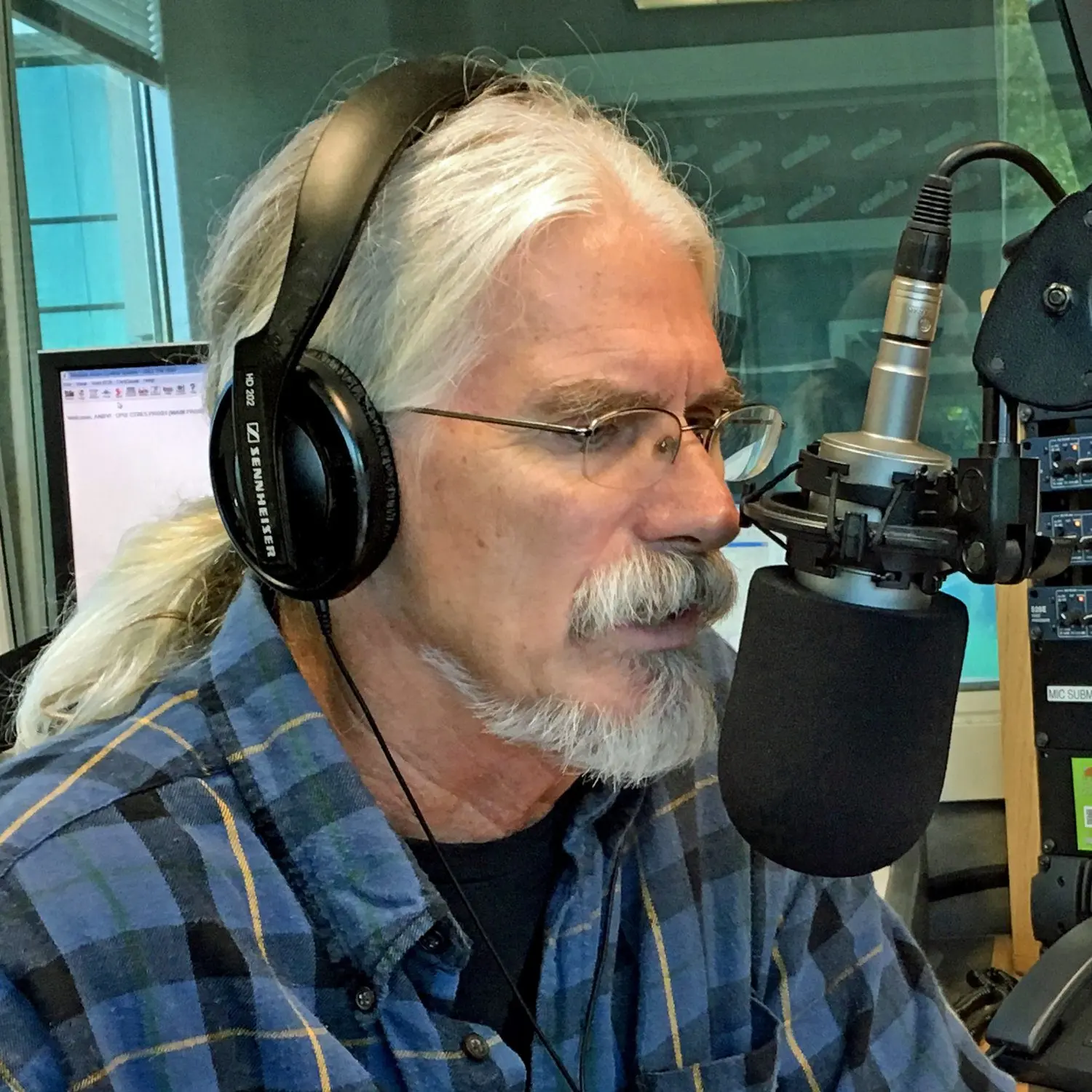

Join Steve Gregg on The Narrow Path as he engages listeners with thought-provoking discussions on biblical paradoxes and Christianity’s most perplexing questions. In this episode, Steve invites calls from listeners, tackling topics from the cleansing power of the blood of Christ to the meaning of prophecy in contemporary times. With appearances scheduled across Southern California, listeners are encouraged to engage in community discussions and deepen their understanding of scripture and faith.
SPEAKER 1 :
Thank you.
SPEAKER 03 :
Good afternoon and welcome to the Narrow Path Radio Broadcast. My name is Steve Gregg and we’re live for an hour each weekday afternoon. Taking your calls so you can call in and talk about the things that you wonder about with reference to the Bible or Christianity. There are perplexing things, confusing things, mysterious things, things that appear contradictory upon first glance and, you know, make you scratch your head. Or maybe more than scratch your head, maybe you think the Bible is just ridiculous and you’d like to tell me why. I’d love to hear from you. If you have questions about the Bible or disagreements with the host, feel free to make use of this number. We have some lines open right now. You could get right through. The number is 844-484. 5737. That’s 844-484-5737. Well, I’m going to be kind of busy this weekend in Southern California, but if you’re in Southern California, you can take advantage of some of the opportunities. This Saturday morning, well, sooner than that, this Thursday night, This was just arranged for I heard from some brothers who live in Covina, which is where I grew up And I haven’t been to Covina probably for over a decade and but there’s some brothers who listen to the show who meet together on Thursday nights and They asked if I’d come speak to them this coming Thursday night at 630 now I asked if that would be open to others who aren’t regularly part of the group. They said yes so if you’re a guy and and living in or around Covina, and want to join us this Thursday night at 6.30. I’ll be teaching on why it’s important to study the Bible, I believe is what they asked me to share about. And you might say, well, I don’t know anyone there. Well, neither do I, so we’ll be in the same position if you show up. I’d love to meet you. It’s a meeting at a Starbucks, and that particular Starbucks, you know there are more than one, is at 611 South Citrus in Covina. 611 South Citrus. That’s this Thursday night at 630, a men’s Bible study group. We’d love to see you there. Now, this Saturday morning, I’ll be speaking, as I normally do, in Temecula. We have a men’s Bible study Saturday mornings once a month, and that’s this Saturday in Temecula. And then that evening, I’m speaking… at the Village of Hope, which, you know, we usually don’t advertise that. That’s the Orange County Rescue Mission, and they have a chapel service, and once every few months they have me come and do a Q&A for the people. They don’t, you know, it’s not necessarily a public gathering, but if someone really wanted to go, they probably could get invited. It’s not a totally locked-down situation at all. And that’s in Tustin. So all around Southern California this weekend, I’ve got a number of things going on. You can see where and when those are by going to our website, thenarrowpath.com. That’s thenarrowpath.com. There’s a tab that says Announcements. Whenever you check there under the dates, you’ll see the locations where I’m speaking and the times and so forth. So several opportunities in Southern California this weekend. Well, even before the weekend, on Thursday, this Thursday night. Check it out. Okay, we’re going to go to the phone lines and talk to Alex in Kent, Washington. Alex, welcome to The Narrow Path. Thanks for calling. Hello, Steve. How are you? Good, thanks.
SPEAKER 02 :
Hey, so I was reading today in Hebrews 9, verse 14, and it says that the blood of Christ cleanses our conscience from dead works to serve the living God. And then that got me thinking about when Jesus washed the disciples’ feet, Peter asked him to wash his body also. And Jesus said, he who is already clean has no need to be washed but only his feet. So I’m wondering, could you kind of relate the conscience from those two passages, the conscience kind of being the feet and then your whole body being – you already being saved, and then kind of the feet being the conscience that just needs to be cleansed.
SPEAKER 03 :
Okay, okay. Well, yeah, we have to remember what the conscience is. The conscience is the capacity to register good and evil. It’s like a sixth sense, you know. Our eyesight can register light and images. Our ears can register light. sounds i mean it’s a sense um even a sense of humor is a sense that you notice something is funny that maybe someone who doesn’t have a sense of humor doesn’t notice is funny uh well a sense of right and wrong is also a sense an innate sense uh well like the other sorry uh i just wanted to i forgot to add another thing just that i was also on that mind kind of relating to this um
SPEAKER 02 :
uh wouldn’t like since we’re already covered by the blood of christ we’re covered uh by the grace of god we are saved um so even if we do like sin once our conscience is uh convicting us but we are still saved um however we just need to cleanse our conscience we need to repent so that our conscience would be clean
SPEAKER 03 :
But I’m not sure that is an additional point. I think that’s the point you were making initially, and I was going to comment on that too. But just so we understand, humans have a conscience, which is a sense of right and wrong. This conscience can be corrupted so that we no longer correctly recognize what’s right and wrong. The Bible warns of the conscience becoming cauterized, like a bit of flesh that’s been burned. And you know it’s insensitive and so it’s possible to have the conscience go Askew but the the conscience before it goes askew is mindful of the fact that we have done wrong things when we do something wrong it registers and it sticks and we feel guilty and These are not just guilt feelings that have no basis in reality. We really are guilty of doing things that are wrong and So, how do you get rid of that? How do you cleanse the conscience and? Well, the Bible says the blood of Jesus does that. And we know that, for example, over in 1 John 1, verse 5, it says if we walk in the light as he is in the light, we have fellowship one with another, and the blood of Jesus Christ, his son, cleanses us from all sin. And two verses later it says if we confess our sins, he is faithful and just to forgive us our sins and to cleanse us from all unrighteousness. So the blood of Christ, is that which covers and cleanses from sin. Now, if my sin is cleansed and I’m aware of it, then my conscience is clear. My conscience has been cleansed by what Christ has done. That doesn’t mean that when I remember the bad thing I did that I don’t feel badly about it. I just don’t feel condemned about it. I regret it. I wish it hadn’t happened. I hope to avoid doing those things again, but I don’t carry the weight of guilt because I am aware that through what Christ has done, through his blood, I’ve been cleansed in the sight of God, and I’m not held responsible anymore for that. I might be held responsible for some of the consequences of my actions, but I’m not going to be held as a criminal before God for those actions. So that’s what the blood of Christ does. Now, you mentioned the washing of the disciples’ feet, which is in the 13th chapter of John. And Jesus kind of spoke of this washing as if it was symbolic washing. of moral cleansing. Washing people’s feet was a normal habit in those days because people came in from outdoors with dirty feet. Usually a servant would meet them at the door and wash their feet so they could walk around in the house without defiling things. Jesus washed his disciples’ feet, as you mentioned. And yet it was the action that was normally reserved for the lowest servants. And Peter, among the apostles, seems to be the only one who verbally objected and said, Lord, you can’t wash my feet. and Jesus said, if I don’t wash you, you have no part in me. And then Peter, of course, being the pendulum swinger that he was, he said, well, then wash my head, my whole body, and everything. And Jesus said, well, he who has been bathed has no need except to wash his feet. Now, that’s the part you mentioned. Now, he made another statement right after that where he said, and you are clean, but not all of you. And John tells us that not all of you is referring to Judas. So he’s obviously, though Jesus is washing physical dirt off physical feet and talking about bathing and so forth and being clean, he’s using it metaphorically because, you know, Judas, you know, among us is not the clean one. He’s not clean, and that means, of course, morally clean. So Jesus has in this cleansing of the feet a moral lesson that he’s teaching. Now, what is that lesson? Well, I think you got it, and you mentioned it. You just wanted me to comment on it, that Jesus said if you’ve been bathed, you don’t need your whole body washed again, but you do need your feet washed from time to time. Now, why is that? Well, because your feet are in contact with the world on a regular basis and pick up dirt and defilement. And so if this is spiritualized, as Jesus seemed to imply it should be, then he is saying that we have been cleansed. We have been washed in the blood. When you become a Christian, you’ve been cleansed. You don’t have to get saved over and over again. You don’t have to get that forgiveness over and over again. On the other hand, in daily life, in your daily walk, you come into contact with the world and sometimes pick up some defilement. You may actually… sin in various small ways just by carelessness in the world and pick up some of that dirt on your soul. And so he says, well, you need to be cleansed from that. You just don’t need to be cleansed completely again. So what I think Jesus is saying is there’s just the maintenance of our holiness and It takes place as Christ cleanses us day by day from the smudges and the dirt, morally speaking, that we may accumulate living in the world. But just because our feet get dirty, it doesn’t mean we are dirty. It doesn’t mean that we have to take a bath all over again. So that, as I believe this is what you were saying, and I agree, Jesus seems to be saying, you know, you’ve been cleansed. You don’t have to get cleansed over and over again completely. You just need to maintain the general cleanliness, and that means that the parts of you that get morally dirty have to be dealt with individually. As I said when I quoted a moment ago, 1 John 1.9, if we confess our sins, he’s faithful and just to forgive us our sins and to cleanse us from all unrighteousness. And in case we wonder, is he talking about individual sins on a daily basis? I believe he is because two verses later he says, these things I write unto you that you do not sin. This is 1 John 2.1. But if anyone does sin, we have an advocate with the Father, Jesus Christ the righteous. So, in other words, he’s writing to the Christians that they would just live a clean life, a sinless life. But he says, assuming you don’t, assuming you do sin, Well, there is cleansing for that. There is an advocate for that. He is the propitiation for our sins. So, in other words, all is not lost. When you first come to the Lord, you do come in a lost condition and filthy with your sin. But Christ forgives. God forgives. And you are regenerated. You become a child of God. And therefore, you are bathed. You’re cleansed. But when you do sin, let’s say, in other ways, day by day, Which John says he doesn’t want us to. He says, I’m writing to you so you don’t. But if you do, okay, so let’s face it. Sinning is not really the norm. It’s the average. The norm for the Christian life is to live a holy life. The average Christian doesn’t do that perfectly. Maybe none does. And therefore, we fall subnormal. But that subnormal condition can be cleansed on a day-to-day basis by sinning. coming to Christ and confessing our sins. So that’s what I understand to say. And therefore, our conscience, which is what you brought up initially from Hebrews 9.14, is cleansed. The reason we confess our sins is because our conscience registers that we’ve done something we shouldn’t do. And the response of a child of God in a case like that is to confess it and to seek forgiveness and to receive forgiveness and to have that conscience cleansed. And therefore… although it requires some maintenance day by day, we can live in a life of essentially unbroken clearness of conscience before God. So that’s how I would harmonize those two passages. I think you were already doing so, but maybe you just need someone to agree with you. I appreciate your call. Bruce in Albany, Oregon. Welcome to The Narrow Path.
SPEAKER 07 :
Yes, Steve. I had a question or a head scratcher on… Matthew 27, 52, verses 52 and 53. A common problem. I haven’t heard of this before or taken note of it, and I never hear about people talking about it.
SPEAKER 03 :
It tells us that when Jesus died, there was an earthquake. And some of the tombs, which were, of course, caves carved out of rock, the earthquake caused some of these caves to crack open. And this was not an accident of nature. It would seem that God deliberately used the earthquake to open up some of these tombs. And then it says that when Jesus was risen on Sunday morning, some of the people in those tombs were brought to life and came out and were seen and observed. Now, the people who came out were said to be saints. In verse 52, the graves were opened and many bodies of the saints, which means holy people, who had fallen asleep, which means dead. Falling asleep is a euphemism in the New Testament for being dead. So some of the saints who had died, they were raised, they came to life. And coming out of the graves after his resurrection, they went into the holy city, that’s Jerusalem, and appeared to many. Now you’re right, this is a many people read through the Gospel of Matthew and don’t really pay much attention, don’t notice that, and then when they do, it just looks strange. What some people think is really strange is that it’s not mentioned in any other Gospels or anywhere else in the Bible. They say, well, how could this not be mentioned everywhere? Well, you could easily ask, why wasn’t the raising of Lazarus mentioned in any other Gospels? Or why was the raising of the widow’s son in Nain mentioned only in Luke and nowhere else? You know, there’s Each gospel has its own individual things it includes and excludes from what John tells us would be an almost infinite number of miraculous things that Jesus did, which the gospel writers have to choose their favorites from. And this was something that Matthew wanted to not leave out. Others had other things they included and didn’t include this. Now, you might say, well, this should be mentioned, if anything. Well, it’s really, I mean, it is remarkable when a number of people come alive from the dead at the same time. I’m not really sure if it’s any more remarkable than when Lazarus or the widow of Sunday came out. Because, I mean, the rising of one person from the dead is about as remarkable as a thing can be. You know, add a handful more, and it’s, you know, I guess it’s slightly more remarkable. But… Some people have read into this things that it doesn’t say. First of all, some people think the saints in question were Old Testament saints. Well, this could hardly be the case. If they were people who had died generations ago, no one living would have recognized them. They didn’t have photographs in those days of people who lived before them. They’d have no idea what their ancestors looked like. Secondly, if they were people from generations earlier, they would have to be reconstituted from dust which is what will happen at the resurrection. Now, Jesus raised a number of people from the dead, but he didn’t resurrect them. And we know this because the Bible says Jesus rising from the dead was the first resurrection. He was the first fruits of the dead. He’s the first to experience the new creation in his coming back to life. Now, he’s the first fruits, and the rest of us who die in him will also be resurrected and glorified as he was, but no one was before him. So anyone who rose from the dead before him, and that would include the ones that are raised in the Gospels by Jesus’ own ministry or even before that by Elijah or Elisha or anyone else who raised the dead, they were not resurrected in the sense Christ was. They simply came back to life without being reassembled from scratch. This was, in other words, a case of people who had not yet decomposed, but life came back into them and they were able to get up and walk out, just like Jesus did. on the third day. But Jesus had not done it yet. These ones did at the same time he did. Now, there’s also this matter of many saints who had died. I’ve heard people represent this. Apparently, they don’t read very carefully. They say there were multitudes of people who came out of their graves. This certainly would have been noticed by everybody. No, it doesn’t say multitudes. It said many. Now, many is, of course, a relative term as opposed to few. If one or two or three people were raised from the dead, that would be very many when you think about it, because generally speaking, not even one person does. I mean, how many people expect to see in their lifetime one person literally rise from the dead? This happens extremely rarely, even in the Bible it’s extremely rare. So if there were three or four or five, that would be really a lot of them. That would be a lot of people rising from the dead compared to what you’d expect. So it’s not talking about multitudes necessarily. It could be half a dozen. I don’t know. It could be more or less than that. The point is it doesn’t have to be such a large number of people that everyone would see them. they were seen and recognized by people in Jerusalem. So I have to assume these were people who had died not very long earlier, maybe only a few days earlier, like Lazarus had died four days before Jesus raised him. And people, of course, who were his friends and family recognized him because they’re his family. I just have to assume that what happened in this passage is, in principle, not different than what happened when Lazarus rose from the dead or Jairus’ daughter rose from the dead. Someone had died not too long ago. They were brought back to life, recognized by the people who had known them. Only on this occasion, it wasn’t just one here and one there. It was several of them, and several could be a handful. We don’t know. It could be two hands full. There’s no suggestion of how many there were. But their rising from the dead would be no more bizarre than any of the people that Jesus had raised from the dead during his ministry. It’d just be more unusual because there were more than one at a time. But, yeah, we read that it happened. And Matthew, of all the Gospels, he and John are the ones written by people who were actually there. And we’re eyewitnesses. So, you know, I trust him. And if some said, why didn’t Mark or Luke mention it? Or John? I don’t know. You know, lots of things that were mentioned in one gospel aren’t mentioned by the other. So they’re all pretty amazing things.
SPEAKER 07 :
Okay. Well, thank you very much.
SPEAKER 03 :
Okay, Bruce. Thanks for your call. Dave from Indianapolis, Indiana. Welcome to The Narrow Path. Thanks for calling.
SPEAKER 05 :
Thanks, Steve. God bless. I’ve got two questions for you, and I’m going to take them off air if you don’t mind. Okay. Have you ever heard of the international, or not, the literal Bible?
SPEAKER 03 :
I don’t know. Maybe. Maybe I’ve heard of it. I don’t have one on my shelf that’s called that.
SPEAKER 05 :
Okay. And then the second question is… We have, within the Ten Commandments, we have one of the commandments that say we are supposed to keep the Sabbath holy, the seventh day. Why is everybody going to church on the first day of the week?
SPEAKER 03 :
Well, because they’re not Sabbath keepers. There are people who go to church on Saturday because they want to keep the Sabbath. But keeping the Sabbath is not a Christian obligation. It’s not found anywhere in the New Testament, our command to keep the Sabbath. Now, I realize that some have just assumed that the Ten Commandments apply to Christians, though the New Testament and, frankly, the Old Testament don’t say that at all. The Ten Commandments were given in Exodus chapter 20 on the occasion when God told Israel that he wanted them to be his special people among all nations. That is different from other nations. And they would keep his covenant, as others did not, and they’d obey his voice, as others did not. This was not a set of commandments given to everybody. This was given to Israel as a special nation of people who had come out of Egypt as slaves and were now free people setting up. They would be setting up a national entity, a political entity, a religious entity. It was going to be a theocracy. And he gave them commands. Some of them were the kinds of commands that God would give everybody, like don’t kill people, don’t commit adultery, don’t steal. Those are the kind of commands that actually are found in law codes around the world at that time. The laws of Hammurabi were older than the law of Moses, and they also did not allow people to murder, steal, commit adultery. Those are kind of the general things that all decent people need to know. You don’t hurt people that way. It’s unjust. But there was only one law. Well, the first four laws in the Ten Commandments were specifically… directed toward worshiping Yahweh. Don’t make any idols. Don’t have any other gods before me. Don’t use Yahweh’s name, you know, emptily. And keep a special day holy for Yahweh. Now, those are the things that God told Israel to do, especially. And, in fact, he said later on in Exodus 30 that keeping the Sabbath would be the special sign between him and Israel. In other words, he didn’t expect anyone else to do it. Israel had a special relationship to him. Actually, not chapter 30 of Exodus, Exodus 31. Exodus 31, verses 12 through 17. God is reminding them to keep the Sabbath. He says, now this is a special sign between you and me. Who? Israel and him. That means it wasn’t something he expected anyone else to do. If they did, it could hardly serve as a sign between Israel and him specifically. So this Sabbath keeping, along with circumcision, were two things that were signs, special signs, that only Israel was commanded to do and no one else was expected to. Now, that covenant that God had with Israel came to an end when God made a new covenant with the house of Israel. In the upper room, Jesus, the Messiah, fulfilling Jeremiah chapter 31, made the new covenant with Israel, the house of Israel. And the old covenant, according to the book of Hebrews, cancels or renders obsolete The other covenant, so the covenant God made at Mount Sinai is rendered obsolete. The Christians are not under that covenant. That means when we read the Ten Commandments, we’re reading a moral and ritual code that God gave to Israel as a special covenant nation. Now, the church are God’s covenant people today under the new covenant, but we’re not a specific political nation with enforceable laws like Israel and other nations have. We’re a spiritual company, a spiritual society. We follow our master. We follow Jesus. And so we have to do everything he said. But we don’t do anything anyone else said, including Moses, because Moses wasn’t speaking to us. He was speaking to Israel under the first covenant. Hebrews 8.13 says the first covenant is now obsolete because there’s a new covenant. And that new covenant is what we follow. Now, that does mean, of course, we don’t commit adultery or steal or bear false witness or murder. But not because it’s in the Ten Commandments, but because it’s also in the New Covenant. Obviously, it would be hard to make any kind of covenant that didn’t have some basic rules of decency. And Jesus does command his disciples to love one another and do no harm to each other. So that would cover a lot of those commandments. But the Sabbath is not covered by that. Sabbath was a sign of the Old Covenant. We’re part of the New Covenant. That’s why we don’t have to keep the Old Covenant. All right, we’ve got to take a break. You’re listening to The Narrow Path. Our website is thenarrowpath.com. There’s lots of resources all free at thenarrowpath.com. We have a 30-second break. We’ll be back for another half hour. Don’t go away.
SPEAKER 01 :
Small is the gate and narrow is the path that leads to life. Welcome to The Narrow Path with Steve Gregg. Steve has nothing to sell you today but everything to give you. When the radio show is over, go to thenarrowpath.com where you can study, learn, and enjoy with free topical audio teachings, blog articles, verse-by-verse teachings, and archives of all The Narrow Path radio shows. We thank you for supporting the listeners supported Narrow Path. This is Steve Gregg. See you at thenarrowpath.com.
SPEAKER 03 :
Welcome back to the Narrow Path radio broadcast. My name is Steve Gregg, and we’re live for another half hour, taking your calls. If you have questions you’d like to raise for conversation about the Bible or the Christian faith, I’d be glad to hear from you. The number is 844-484-5737. Our next caller is Michael from Effingham, New Hampshire. Hi, Michael. Welcome. Michael, you’ve got to talk to me. Going once, going twice. All right. Sorry not to hear from you. Jason in St. Francis, Minnesota. Welcome.
SPEAKER 04 :
Hi, Steve. Thank you for taking my call. I am My question is about Old Testament and New Testament differences. The Old Testament prophets are a lot how God’s word was delivered. My understanding is, I mean, like, there’s people that still profess to be prophetic, and when they’re talking about plagues coming or wars coming here or there, there’s people that believe that that’s still from the Word of God and the prophets these days are the same as they were before. What’s your feeling on that?
SPEAKER 03 :
Well, I don’t see any reason in Scripture to deny that there are prophets for the simple reason that the Bible says there is a gift of prophecy. And that that gift of prophecy, like all the gifts, will remain with the church until Jesus returns. We have that in 1 Corinthians 1.7, where Paul told the Corinthians that they would lack in none of the gifts while they’re waiting for the return of Christ, the revelation of Jesus Christ, he said. Paul said also in Ephesians 4 that God gave apostles and prophets, evangelists, pastors and teachers for the building up of the saints, for the work of the ministry. which still is a work that needs to be done. And so, you know, I can’t imagine that God thinks the church is mature yet, and yet we’re told that these ministries are going to go on until we all come in the fullness of the stature, the measure of Christ to a mature man. So that hasn’t happened. So to suggest that any of the gifts of the Spirit are simply outdated, is to deny what the Bible says about how long they will be around and what they’re for. Now, on the other hand, not all the gifts of the Spirit are seen with equal frequency throughout history. Obviously, some gifts of the Spirit are needed at all times, probably about equally. For example, evangelism and teaching and exhortation and showing mercy and giving and helps. I mean, these are gifts that you know, the church will always need in every place and every time. Prophecy, maybe. I mean, it certainly is a great gift. Paul said we should desire the best gifts, especially that we might prophesy. But he didn’t say how frequently, you know, prophets would have something indispensable to say. Paul did tell the Corinthians to allow the number of prophets in the church to speak to be limited, two or three. He said the same thing about people speaking in tongues, though. he’s just trying to tamp down on their enthusiasm to everybody speak up kind of chaotically, I think, and everyone wanted to grab the floor and get the attention. So he’s telling them how to get more structured and how to avoid the confusion. But prophecy is a very hard gift to define. We think of the Old Testament prophets, and perhaps we think mostly of them, As people who told the future. And there are, of course, lots of predictions found in the prophets of the Old Testament. Even the prophets of the New Testament have some predictions of them. One of the few people in the New Testament that is called a prophet is Agabus. And he’s mentioned a couple of times in Acts chapter 11 and later on around, I think it’s Acts 20 is the second time in it. And both times he predicts things that will happen. In one case he predicts a famine, and in the second case he predicts that Paul will be bound with accords when he gets to Jerusalem. And both of these things came true. So here we have Old Testament prophets and New Testament prophets predicting future things. However, when you read the Old Testament prophets, you’ll find that most of what the Old Testament prophets have to say or at least half, if not more than half, is not predicting anything, but complaining. God is complaining about their sins. He’s rebuking them. He’s exhorting them to repent. He’s warning them that disaster will come upon them. That’s kind of predicting something. But as far as specific predictions, specific recognizable events, these are a portion of the prophetic ministry. But there’s a lot in the prophetic ministry that isn’t that. It’s just preaching, what we call preaching. Now, I believe that all aspects of prophecy can be found in the church at various times throughout history. I believe that prediction is not a thing of the past. But I also know that prophets often were… Sometimes a person was called a prophet simply because he spoke through the power of the Holy Spirit. And it’s not… specifically referring to the content of what he said. You know, for example, when Paul listed the gifts of the Spirit, he sometimes listed one place, he listed one called the gift of the word of knowledge. Many people assume this means that this is having a revelation from God about some information about somebody that you haven’t learned about. And, you know, Jesus did that with the woman of the well. He said, you’ve had five husbands, and the man you have now is not your husband. She said, I see you’re a prophet. Now, prophets like Elijah and Elisha And Jesus and others, Peter in the book of Acts and so forth, had this function of sometimes declaring things about people that he had no natural way of knowing, but God revealed. We call that the gift of the word of knowledge, but she recognizes what a prophet does. I think even when the people were speaking tongues on the day of Pentecost, which, of course, Paul… between the gift of prophecy and the gift of tongues. But when they were speaking in tongues, Peter said, this is what the prophet Joel said, in the last days I’ll pour out my spirit on all flesh and they’ll prophesy. Peter indicated that they were fulfilling that prediction that the spirit would be poured out and people would prophesy. And yet we don’t read of them prophesying per se, but speaking in tongues. My understanding is that While prophets in the Bible sometimes preached, sometimes predicted things, sometimes they knew stuff that other people wouldn’t know. But the main thing about being a prophet is that you’re speaking through the guidance and power of the Holy Spirit. And, you know, Moses was a prophet. And he spoke by the power of the Holy Spirit. And then he complained that he had too much on his plate. And God said, get 70 elders over here. I’ll put some of the spirit that’s on you on them, and they can share that load. So he got 70 of these guys. And the Holy Spirit came upon them, and they prophesied. Now, they didn’t prophesy again. They just did that one time. And there were a couple of guys that were prophesying without authorization. And Moses was told, these people are prophesying in the camp without being under your supervision. And he said, well, don’t be jealous for me. I wish that all the Lord’s people were prophets and that he’d put his spirit upon them. That’s in the book of Numbers. I think it’s chapter 12. But in any case, he said, I wish God would put his spirit on all his people and they’d prophesy. And Joel, the prophet, later said, well, he will. And in Acts, Peter said, he has. This is what he’s done. Every Christian has the Holy Spirit and every Christian might speak Christ. under the guidance of the Holy Spirit. It might be in private conversation, as Jesus did with the woman at the well. It might be an utterance given at the church in the meeting, as Paul regulates those kinds of things in the church in 1 Corinthians 14. It might be, I don’t know, it could be almost anything. But I will say this, not everyone who thinks they’re prophesying is. And probably not everyone who is knows that they are. You know, it says in John chapter 11 that Caiaphas, who was plotting to kill Jesus, said it’s better that one man die than that the whole nation perish. And John, who recorded this statement in John 11, said he didn’t know it, but he was prophesying that Jesus would die for the whole nation. Now, Caiaphas was a bad man. But he prophesied without even knowing it. So there are people who think they’re prophesying and aren’t. There are people who don’t know they’re prophesying but are. But a person who’s walking in the Spirit, led by the Spirit, and seeks to, as Peter said in 1 Peter 4, speak as the oracles of God whenever he has something to say. that person is going to, at least on occasions, be speaking the words the Spirit gives them. I’ll tell you this. I’ve known many people who, and myself on occasion, I’ve never done a thus saith the Lord kind of prophecy. I’ve been in charismatic circles for 50 some odd years, and I’ve never prophesied in that way. But there have been times after I taught that someone said that, you know, God just spoke right to me through that thing you said there. Or they say, you know, I was just having a conversation with this other person this afternoon wondering about this, and God spoke and answered my question through you. Now, I wasn’t aware of that. I’m just teaching the Bible. But I can’t say that God isn’t, through his spirit, taking something I’m saying and speaking to them. I think prophecy is a very generic term for anyone who speaks through the power of the Holy Spirit, though there are, of course, specific terms. prophecies that we recognize as such, especially if someone says, thus saith the Lord. Now, here’s the thing. You talk about people predicting earthquakes or predicting things like that. Well, that’s not unheard of in the Bible. But for someone to prophesy that and it come true in modern times is kind of unheard of in my experience. I’ve known many people who prophesied that God was going to destroy Los Angeles in an earthquake on a particular weekend or destroy Portland in an earthquake on a particular date, and they didn’t come true. And both of these people who prophesied, they thought they had a word from the Lord. They were just mistaken. I have to say that whenever I’ve known somebody who thought they were prophesying and prophesied some specific disaster, in my experience, they’ve never been right. Now, that doesn’t mean they can’t be. It doesn’t mean that someone won’t be right sometime. I’m just saying. I do believe in the gift of prophecy. I also believe in people mistaking themselves for having it or for prophesying. I think people should be very cautious when they say, thus saith the Lord. And I’m not sure what to say. If someone really strongly feels that God showed them, hey, this thing is going to happen and it’s going to be a disaster, we need to be forewarned, it’s really hard to know how to test them. Agabus, who did this in the Bible, was a tested prophet. He was a guy. He’s called a prophet. They recognized that was his office. He apparently had a track record of reliable prophecy. And, uh, and the things he predicted did come true. Uh, I suppose if you find there’s someone in the church who reliably predicts future things and they always come true, that’s a person who you could probably trust them when they come up with something else that they predict and believe it’s the Lord’s sin. But, uh, Yeah, this is a pretty tricky business is predicting future things. I’ve had a few people predict specific, well, I should say not, I don’t know if they’re really that specific. They predicted things to me about my ministry, which did come true. Now, you know, these things were not so specific that you could have a date and time and explained what it was going to be, but they’re more generic. But they were also things that might not have come true, but they did. And there’s a few people I’ve known. who struck me as possibly having this kind of a true, genuine ministry. But not many. So I would just say the Bible says to test all things, hold fast which is good, and not despise prophesies. When people think they’re speaking in the name of the Lord and by the Spirit of the Lord, they may be or they may not be. But if there’s much at stake, you have every reason to vet them and say, now, why am I supposed to believe that you really are the person that God is using to say this? If they say, well, I predicted this, this, and this, and this, and they happen on these particular dates, and there’s all these witnesses, I’d say, okay, I think you’ve got some credibility here. Otherwise, I’m just going to take a wait-and-see kind of attitude, in which case I won’t know that it’s going to happen until it actually does. But on the other hand, if you’re living in such a way that if something does happen, you’re okay with it, you’re ready for it, then all is well. We don’t have to know the future in order to cope with the future when we’re walking with God. All right, let’s talk to Tom in Largo, Florida. Tom, welcome.
SPEAKER 06 :
Hey, Steve, I like the show a lot. Thank you. Question for you. What is your degree in? Where did you go to university? I didn’t.
SPEAKER 03 :
I have a high school education only.
SPEAKER 06 :
Yeah, okay. Your comments the other day about evolutionary biology were stunning. You profess to know it’s not true. Do you realize that’s a senior level course in college with three years of prerequisites of physics and chemistry?
SPEAKER 03 :
Well, no, actually, it isn’t, because I know people who have that… No, it isn’t, because I took it.
SPEAKER 06 :
I took it.
SPEAKER 03 :
No, no, I know. What I’m saying is, I know people who have taken that, just like you have, who don’t agree with it, okay? In other words, you don’t learn whether evolution happened at college because there is no proof of evolution. There is a theory of evolution, which is broadly held, and which is the standard orthodoxy of modern science education. Uh… But let’s face it, they don’t have any proof of it. Now, if you mean that it is provable that some things have undergone slight variation and changed, no one disputes that. No one’s going to call that evolution if they know what the word means. Darwin’s general theory of evolution is not only that, you know, finches in the Galapagos Islands have undergone some changes in the shapes and sizes of their beaks. No one has any problem with that. I don’t have to believe in evolution to believe in variation. I can see that there’s 200 different breeds of dogs, which almost certainly came from one original pair. But breeding and the mixing of elements of the gene pool often bring out varieties. That’s fine. What Darwin’s theory was, was that these minor variations will accumulate to a degree that whole body structures will change. A lizard will evolve into a bird over time. Now, there’s no proof of that. If someone says, well, we have fossils, we have fossils that are not connected by transitional fossils. And you say, well, you have to study that in university. No, I can I can read the people who have. Do you know there’s thousands of people who’ve studied this in universities? And I’ve got I’ve read scores of them. And by the way, the ones I’ve read have been evolutionists as well as some who are not. I’ve read both sides. And even the evolutionists admit there is not the transitional form documentation in the fossil record that you would desire to have. Now that’s, to my mind, you can take any number of data and interpret them through a paradigm that you’ve already accepted. For example, let’s just say we have found some creatures that are like reptile-like amphibians. There’s a whole class of extinct creatures that are called reptile-like amphibians or mammal-like amphibians. And they have some characteristics similar to amphibians and some similar to mammals or some similar to reptiles. Fine. Okay. Now, if I have a paradigm that tells me something that no one has ever really seen, but we just assume to be true, namely that all creatures evolved from earlier creatures, and they did so through a series of transitions that were small at the time but accumulated into big changes, well, then I can interpret that data through that lens. Or if I hold a view that, well, I don’t know that creatures evolved from one another. The Bible says that God created things, and he could have created amphibians, and reptiles and mammals and reptile-like amphibians and mammal-like amphibians. You know, there’s a wide variety of things he created. To say that one came from the other is a philosophical statement, not one that has been observed. And that’s the thing. Science, at least empirical science, is based on observation. And no one has observed this taking place. So what it does, it takes the same data that I would look at and reads it through a paradigm that I’m not reading it through. And, by the way, there are people of equally expert scientific education, such as you have and such as the best of scientists have, who do not believe in Darwin’s general theory of evolution. So the fact that I don’t have the education is not really very relevant because I could have it and still disagree with you, as many people who have that education do. Having education… doesn’t mean you’re right. Having education means you’ve read the arguments, you’ve looked at the data, and you put some kind of interpretation on the data. Well, I’ve done that too. Maybe, probably not as much as a person who’s spent many years studying, you know, a scientific curriculum. But you don’t have to study everything there is to study to know that there are two paradigms through which you can read the data. And you don’t have to be formally trained to know what the significant data is that people call it. You only have to read the evolutionists themselves. I’ve read Dawkins. I’ve read, you know, guys. I’ve been reading different guys, especially evolutionists, since I was in junior high. I’m 73 years old now. I’ve read a lot of these people. I’m looking at a bookshelf that’s got a lot of their books on it that I’ve read. But, you know, the difference is I don’t have to dispute the data. I can say I can agree with the data you’re using, but you’re imposing an assumption on this data that I don’t assume and which nothing compels me to assume. Because when these creatures came into existence, whether they were created by special fiat from God or whether they developed from earlier, simpler creatures, as evolutionary theory would suggest, well, either way, no one was here to watch it. So we have the data. And we can read the data through whichever lens we wish to. Now, I will say this. A few centuries ago, the smartest scientists believed in creation. They didn’t believe in evolution. It was obviously, you know, less than 200 years ago that Darwin’s theory was published. He wasn’t the first evolutionist. There were evolutionists of various sorts before him. But he was the one to come up with his theory. his methodology of, you know, natural selection and to make it a common thing. But, you know, a century before Darwin’s time, the greatest scientists in the world who studied, you know, much of the same phenomena, they didn’t agree. They had no problem with believing the biblical account. So we might say, but we’ve studied more. We know more than they did. But the more we have studied… the more we have fitted into the paradigm we’ve chosen. Science has its prejudices just like non-science does. Some people mistakenly think that scientists are completely objective, robotic things that analyze data without any preferences, without any prejudices, without any moral preferences, without any ideological worldview. This is not true. All human beings have a worldview and they read the data through their worldview. That includes me. I read the data through mine, and you read it through yours. And people are entitled to do that. But when one person says, well, the data proves my worldview, that person is showing that they’re not thinking through very well. They simply are not acknowledging that people who know all that same data have often placed a different interpretation on it. Now, the ones who do so might be in the minority at this present moment in history, but scientists go through their vows. You know, science has its fads. This evolutionary fad has been going on for some time. But even in that time, just the last 150 years or so, even in that time, there are people like Richard Dawkins who hold to the old Darwinian gradualism, And there are people like Stephen Jay Gould, the late Stephen Jay Gould, who believed in punctuated equilibrium, which is a totally contradictory theory to Dawkins’ gradualism. And that being so, we can’t say that, well, Dawkins knew science better than Stephen Jay Gould did. No, Richard B. Goldschmidt, a few generations earlier, was one of the greatest zoologists in the world. And yet he believed in what he called the hopeful monster mechanism, which is an earlier version of the punctuated equilibrium, where he actually said the first bird hatched from a reptile’s egg. Now Dawkins would never agree with that. No gradualist would. And yet Goldschmidt was not lacking in scientific knowledge of the data. He was probably a greater expert than you are. He’s at least more recognized in the scientific community. But he had his own worldview. And a worldview colors the way that data is interpreted. I don’t doubt it. I mean, I don’t deny that. I have a worldview. Fortunately, my worldview has been based upon something testable, and that is the resurrection of Christ, that Jesus rose from the dead is a testable historic claim, just like any historical claim is. And it tests out pretty convincingly. And if he did, as I believe is true, then he is the Son of God, and he has knowledge of these things that we are only guessing about otherwise. And he actually believed in Adam and Eve. He quoted from Genesis 2.24 and said that the reason divorce… is immoral, is because of how God made things in Genesis 2.24. So, I mean, now if Jesus, you might say, well, Jesus was just a man of his time. Well, that’s your theory. My theory is men of their times don’t generally raise themselves from the dead three days after they’re dead, and after predicting that they would do so in advance. So, I mean, I’m just coming from a different worldview. I believe there is such a thing as a God. I believe Jesus is God. God’s manifestation of himself among us and spoke the truth. And so that’s my worldview. If somebody says, no, that worldview is wrong, well, feel free to think so. I’ll take my chances with mine. I’ve at least got evidence for mine. Anyone who says that the Christian worldview is not true doesn’t have any real evidence to say so. Because even if evolution were true, God could have used that. God could have used evolution, and there are people who are called theistic evolutions. They believe God used evolution. You can’t, by proving evolution, if that were possible, you can’t disprove Christianity, because Christianity isn’t primarily a set of statements about how God created things. So, anyway, this is, I know you’re probably upset that I cut you off, but I’m watching the clock. This is obviously going to be our last call, and And you were saying, well, you don’t have an education, so you can’t talk about these things. I’m telling you why a person with or without a formal education can talk about these things. Because they can read them. I’ve read what the evolutions themselves say. And, you know, if you read what they say and you say, I agree with them, well, feel free to do so. But if they can’t prove what they say, but they only assert it, Well, then a person’s at liberty to think of alternative ways of looking at it, and I do. Anyway, I didn’t mean to be rude in cutting you off. I just had to get to the end of the program in time. I had to explain in time before the program ended. Feel free to call back and bring up, you know, if you want to discuss that very thing with me back and forth, maybe something very specific. I’d love to talk more about this, but I’m out of time today. Thank you for calling. You’re listening to The Narrow Path. We are listener supported. If you’d like to help us out, you can write to The Narrow Path, P.O. Box 1730, Temecula, California, 92593. Or just go to our website, thenarrowpath.com. Everything’s free there, thenarrowpath.com. Thanks for joining us.