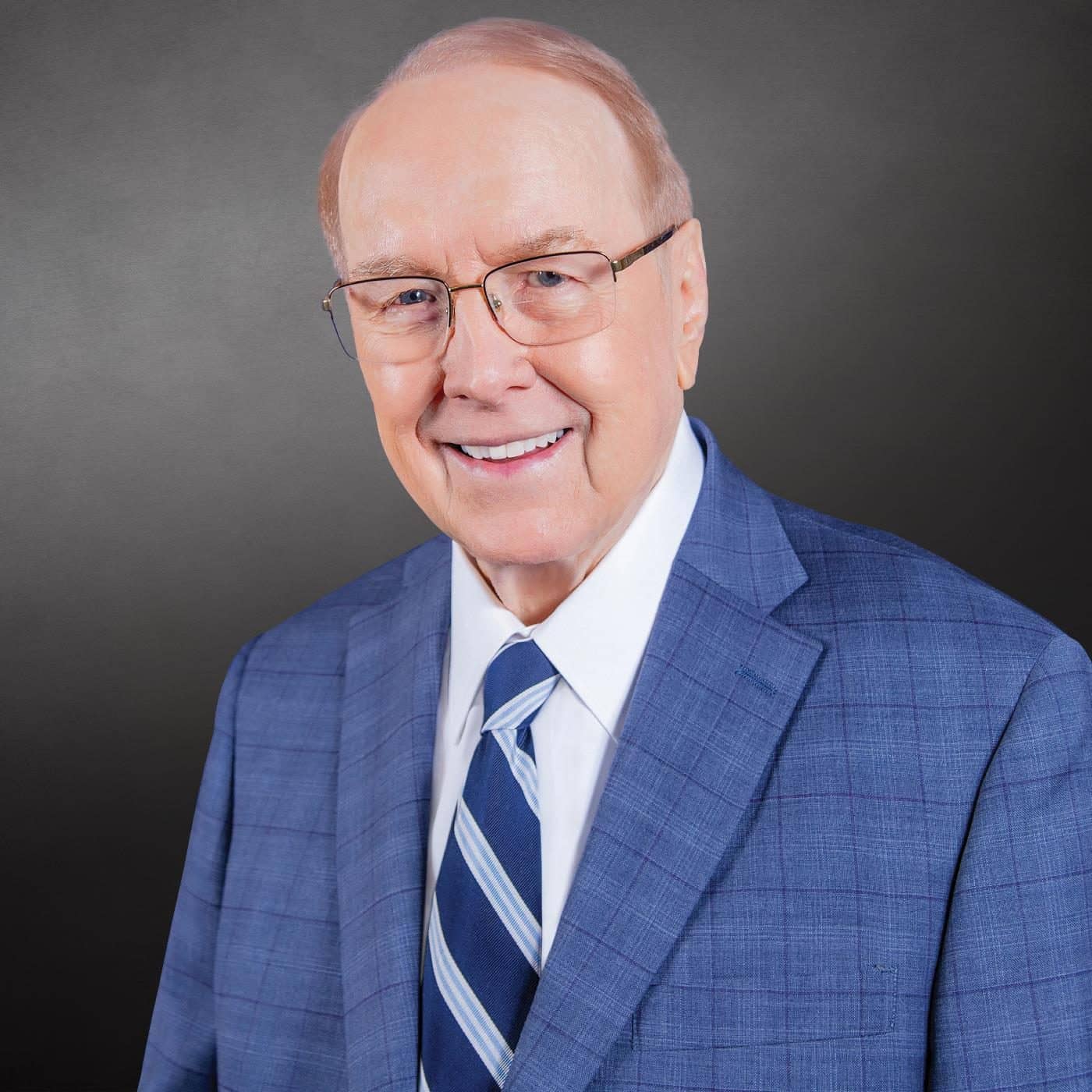
In this profound edition of Family Talk, Dr. James Dobson is joined by Stuart Epperson Jr. and Ryan Dobson to delve into the final words of Jesus Christ from the cross. This poignant discussion uncovers the depth and nuance behind each statement made by Jesus as he bore the world’s sins, highlighting their eternal significance for believers then and now. Stu Epperson Jr., a notable broadcaster and author, shares insights from his book, exploring the timeless relevance of these words. Listeners are invited to contemplate the weight of these divine declarations, reflecting on their own lives and faith. With
SPEAKER 02 :
Hello, everyone. You’re listening to Family Talk, a radio broadcasting ministry of the James Dobson Family Institute. I’m Dr. James Dobson, and thank you for joining us for this program.
SPEAKER 01 :
Well, welcome once again to Family Talk, the broadcast division of the Dr. James Dobson Family Institute. I’m Roger Marsh. When Jesus hung on the cross, he had very little physical strength left and very little time. So every word he spoke carried the full weight of eternity. On today’s edition of Family Talk, Dr. James Dobson continues his conversation with author and radio broadcaster, Stu Epperson Jr., the son of Salem Communications co-founder, Stuart Epperson Sr., and owner and operator of The Truth Network. Stu has written a powerful book about the final seven statements that Jesus made from the cross and what they mean for each of us today. Joining the conversation is Dr. Dobson’s son, Ryan, a good friend of Stu’s, who brings his own perspective to this rich discussion. So let’s get into it now as we commemorate Maundy Thursday with this special edition of Dr. James Dobson’s Family Talk.
SPEAKER 02 :
Stu Epperson, who’s the founder and president of the Truth Network, he has, I think it’s 12 radio stations in how many states? We are in four states right now. And growing.
SPEAKER 03 :
And growing, just trying to reach folks with the good news.
SPEAKER 02 :
One of them or several of them are in central Iowa and Salt Lake City and, of course, in North Carolina. And Stu also is a coach and mentor for others playing the game of basketball. You’re about 6’4″, aren’t you?
SPEAKER 03 :
Well, I’m 6’6″, same height as my dad. But, you know, I tell everyone I’m 6’6″, 240 pounds, mostly muscle. But then everyone smiles at that part, you know. Yeah.
SPEAKER 02 :
Well, I’ve known your dad for a long time too. He is one of the founders of the Salem Network, Salem Communications, I believe they call themselves. And that’s the largest Christian conglomeration network. I think, in the world. And I have worked with them for many, many years. You know, I just watched that network grow. I remember telling Ed Atzinger one time, don’t bet the farm. We need you. They were buying all these additional stations. But anyway, you’ve got good stock. You come out of a fine family. And I love your mom, too. She is a Bible scholar. And I’m telling you, she has memorized most of the Bible, hasn’t she?
SPEAKER 03 :
She’s been quoting the verses from the Bible for years, and it’s really an impact on my life, an impact on my ministry to this day. Yes, sir.
SPEAKER 02 :
And Stu is married to Julie, and they have four kids, Hope, Grace, Joy, and Faith, all four girls. Yes, sir. And I got a book for you. Yes, sir. I don’t think you need it. I need all your books at this point. Well, I’m really glad to have you here. And in addition to everything else you’re doing, including basketball, Stu, you have written a very provocative book here, one that will be a blessing. I said this yesterday, and after talking to you about the book, I’m absolutely convinced of it, that this book has all kinds of theological implications that all of us need to hear about. Because those last seven things he said on the cross have such import for us. And we were talking last time about the fact that you don’t waste words when you’re dying. If you’ve got any strength left, you will make your best statement at that time. And we can’t afford to ignore any of the things that Jesus said on the cross. But before we get to the other six, we talked about one of them yesterday, and I was blessed by hearing what you had to say. We talked a little bit about Job. I mentioned the fact that Job— express these unbelievably articulate questions to God. I mean, when you think that that may be the oldest book in the Bible, and many of the peoples of the world didn’t even have a written language And for Job to have that cogent, articulate expression to God, he had every right from a human point of view to say, God, what are you doing here?
SPEAKER 03 :
He lost all his kids. He lost his fortune.
SPEAKER 02 :
He lost his health. To serve you. But there’s one thing I want to ask you about. There is – I wish I could say what the scripture verse is. But at one point Job said – I can’t find him. I look for him in the north and he’s not there. I look for him in the south and the east and the west. I have looked everywhere for him and I can’t find him. If I could just find his throne, I could make him understand my need, my frustration. And God didn’t answer him. That’s really interesting. His words bounced off the ceiling. and came back at him. Then the Lord did answer him and said, who are you to ask me these questions? You know, that is troubling for all of us who go through hard times. Nothing like that, but we go through hard times. We spent our time yesterday, as I said, talking about that phrase where coming out of the darkness, three hours of darkness on the cross, Jesus said, my God, my God, why hast thou forsaken me? We talked a little yesterday about what that really meant, what was going on there. But let’s go back to the first thing that Jesus said, and let’s work our way through the others if we can.
SPEAKER 03 :
It’s fascinating that after all of the flogging and the abuse and the torture, inhumane torture of the crucifixion detail, these men trained to really destroy a human life, but just to drag it up, protract out the suffering and the agony. After all of that that Christ went through and all of the rejection and all of that, he’s hoisted up on the cross in the very first words out of the Savior’s mouth. were words of prayer. He prays. In history’s darkest moment, Jesus Christ finds himself in prayer’s familiar light. And this is a place where Jesus Christ was the most comfortable. This is where he lived in prayer. He spent all night in prayer before picking the disciples. And he had this intimate relationship with his father. Of course, that’s the first thing out of his mouth is the word father. Father. Isn’t that something? And then it’s father, forgive. Now those two words alone are just packed, chock full of sermon, because think about our culture. Think about the final promise in the Old Testament from the prophet Malachi, that God would bring together the hearts of the sons, right? And the hearts of the father. Father, forgive. Think about all the unforgiveness between sons and father and all the wounds and all the devastation and the trail of pain and sorrow, right, that the fathers have left in scarring their sons. And Jesus says, Father, he says, forgive. And then he says, Father, forgive them. So who are they? So I just discussed all this.
SPEAKER 02 :
Who are they indeed? It’s the Romans that put him there. I mean, that’s the most dastardly deed ever done in human history. And he looks down at these men who did it. And said, Father, forgive them. Don’t hold us against them. And then he said, why? What’s the next phrase?
SPEAKER 03 :
They know not what they do.
SPEAKER 02 :
That means that there is an element of will and intention there. in the way we are weighed on the scale, on God’s scale. Forgive them because they don’t know. And he also said that all of us who are teachers, supposedly we do know, are held to a higher standard because we do have an understanding. So, you know, I’ve given the illustration, Ryan, of when you were three years of age and I would look down at you and I’d say, Ryan, go shut the door, which was open. Flies are coming in. I’d say, Ryan, go shut the door. And you would try to obey me and go over to the door and do the opposite of what I said. You would open it further. Would I come up and club you on the head? Yes.
SPEAKER 03 :
Okay. I’m not going to get in the middle of this now.
SPEAKER 02 :
I’m just against it. Obviously not because you tried to obey me and you did the opposite. But you knew not.
SPEAKER 04 :
Right. You’ve talked about that. It’s immaturity versus outright rebellion. It’s mistakes. You don’t punish for mistakes. You don’t punish because a kid spilled something on accident. It’s not his fault. It’s intentional. It’s the intentionality that’s the big deal. That’s right.
SPEAKER 03 :
Well, and there’s a sense to which do we really have any idea what our sin did to the Savior? Yeah. Do we have any idea that I, Stu Everson, drove the nails through those hands? That my sin—think about the scene of the cross. It’s a party. There are spectators over there just having a good time. It’s like a tailgate party, like a big show. These crucifixions, this was a big exhibition to say, hey, this is what happens. And they’re walking by, and most of the folks at the scene are absolutely clueless that that man on the middle tree— is hanging there bleeding to purchase their eternal redemption. And so he says, forgive them. They know not what they do. Now, David knew what he did. He said, against thee and thee alone have I sinned. And when I start to realize that my sin… implicates me, and I was involved, you know, this whole, remember this whole debate? Who killed Jesus? It’s easy to blame. Oh, well, the Jews did, you know, and that led to a lot of anti-Semitism. Well, it was those religious leaders. Well, it was, you know, when all of a sudden I realized, wait a second. It’s all of us. Yeah, and when it becomes personal, then all of a sudden that changes things. That changes everything.
SPEAKER 02 :
You know, we had the Supreme Court decision with regard to same-sex marriage. And my reaction to that has been one of remorse, almost despair, some anger, because that decision was not rooted in the Constitution. It came out of nowhere. And also because of what it means for all of us in our religious liberty. We’re all on the defensive now, trying to protect humanity. Our rights to believe what we believe. So my reaction to it was one of agitation at the court. And I was riding along with Shirley the other day, and she said, imagine what that decision did to Christ, our Savior. Because in the scripture, in Paul’s writings, marriage is a metaphor for the relationship between God and his church. And what these five justices did was to sanction the mockery of that relationship. And to make something unholy and filthy and sinful out of it. And we’re all sinful, so I’m not pointing at. anybody. I’m just saying that decision put a wedge right down the middle of the relationship between Christ and His church. I wish I had thought that through more so I could explain what I’m saying, but that’s what it surely meant.
SPEAKER 03 :
Let me tell you what the Holy Spirit just gave me through that just now in my heart. This is just from God. You just said that, Dr. Dobson. Two of Christ’s words of the seven words from the cross were met with mockery. Two of his words in the same verses right there in Luke chapter 23, verse 34, when he says, Father, forgive them. In that same, very same verse, you know what it says? It says, and they gambled with his clothes.
SPEAKER 02 :
Yeah.
SPEAKER 03 :
The Supreme Court is gambling. They’re playing. They’re making a joke, a blasphemous joke with the very Savior Jesus Christ with his clothes. Here Jesus Christ is dying, shedding his blood for the sins of mankind, loving us to the very last drop of blood. And they’re gambling with his clothes. And in the fourth saying, my God, my God, right after that it says – and they said, oh, he’s calling for Elijah. Go get some – maybe Elijah will save him. And they mocked him in that. So it’s interesting that our culture, the reality of Jesus, more evidence for – Jesus Christ, his resurrection, it’s everywhere. His handiwork is everywhere. I’m in here in Colorado Springs. Dr. Dobson, I’m about to wreck my car looking at your beauty out here. And the heavens are declaring the glory of God in our culture at the highest level. Those that are supposed to defend the laws of God, they’re accountable to him. They’re speaking against him when they make these atrocious decisions. They are playing. They’re playing with fire, and they’re in the same boat that those soldiers were and really that I was before Christ. You know, before he saved me, that’s where I was. Even growing up in a Christian home, a lot of this, I made fun of the real Christians around, you know, until that love broke through, until he saved my soul.
SPEAKER 02 :
There’s so much in here. When I’m going to get through, if we don’t keep going, what’s… Next.
SPEAKER 03 :
Well, the next thing is – and this I talk about in my book. He says forgive them. Well, of course the obvious is the soldiers there and then we talk about fortunately me because he forgave me and I didn’t deserve it, right? But right just a few feet away was a man hanging in like fashion, a notorious member of ISIS. Now let that sink in. These guys were bad dudes, these terrorists. And I did some research on this, and it’s in the book. These guys were bad. And of all the people at the scene of the cross that the Son of God would save, it was this notorious. It wasn’t the religious guys. It wasn’t the people with the pedigree. It wasn’t the wealthy. It was this awful crowd. Brutal, evil thief. Two of them.
SPEAKER 02 :
Yes, sir.
SPEAKER 03 :
There were two.
SPEAKER 02 :
Christ was numbered with the transgressors. And Christ forgave one of them because he asked for forgiveness. But what a metaphor of the human experience. We’re all on one side of that cross or another. We’re all over here, you know, sinful with no remedy, no hope, and eternal punishment awaiting us. And on the other side, we have everything that Christ has given to us as a gift.
SPEAKER 03 :
I got a question for Ryan. I’m going to put him on the hot seat. Here’s a trivia question for today for a family talk today. Are you ready?
SPEAKER 04 :
I’m getting this one right.
SPEAKER 03 :
Okay. How many people at the scene of the cross asked Jesus for salvation?
SPEAKER 04 :
Just one.
SPEAKER 03 :
Okay, he’s right, but not completely right. And this is in my book. Two people, because the first thief, the first thief said, if you’re the Christ, save yourself and save us. Isn’t that something? But he didn’t want the bloodied. crucified Christ. He wanted out of his fix. He wanted, you know, to have a nice, comfortable life, which would mean he would come down from that cross and he would end up dying his sins anyway. See? So he had this haughty, he had the prayer of the Pharisee. Lord, thank you. I’m not like that guy. He had the offering of Cain, and I wrote a poem about this. I couldn’t find something in ancient literature to articulate the two different prayers, you know, the one of pride, the one of humility. So I actually wrote a poem. It’s in chapter two. Yes, sir. To try to articulate this, the Lord just gave it to me. Made it to us. Well, I’m not a poet, nor the son of a poet, but I’ll read it to you. “…two brothers a sacrifice made. One brought a lamb, the other his effort, the toil of his spade. The younger killed a lamb and was accepted by another. The older murdered his brother and was marked by death like no other. Two men went to the temple to pray. The righteous stood proud, disgusted by the sinner at his side. The other lowly bowed with barely a word to say.” No salvation to the haughty man, but the sinner joyously was saved. Two brothers sought the father’s heart to please. One praised himself, his own righteous condition. The other begged for mercy with a heart of contrition. No peace for the elder son, but the younger found salvation. Two criminals ascended to Calvary condemned to die. One joined the hateful throng. The other listened humbly, his heart to the middleman drew nigh. A greater death met the first thief’s wrong, while life everlasting came to the second from on high. One man poor in spirit, another high and pious. One man low and humble, another proud and pompous. Which man are you?
SPEAKER 02 :
And which man am I? We’re all required to answer that question. And they both asked for salvation.
SPEAKER 03 :
That’s good, Stu. So though the second thief was high and brutally bleeding on his own cross, his heart was humbly bowed before the Lord of glory. And listen to this prayer. This is the worst sinner’s prayer in history. Dr. Bright, who is in heaven with God right now. This wouldn’t have been in the four spiritual laws. This wouldn’t have been a prayer I would have suggested. Moody, Graham, all the great evangelists wouldn’t lead in this prayer. His prayer was, Lord. Remember me. But that’s a great start. Lord, if you confess with your mouth, Jesus is Lord. And remember, I mean, that saved an entire nation. Remember in Genesis when Joseph simply said to the baker and to the cupbearer, remember me? See? So when it has to do with life and death, it’s kind of significant. Remember me when, not if. When you come into your kingdom, he recognized him as king. He saw that rough hewn shingle above his head, king of the Jews. And he recognized that this man is coming out of that grave. If you believe, if you confess through your mouth, Jesus is Lord and believe in your heart that God has raised him from the dead. Thou shalt be saved. And so in that simple prayer, calling out to Jesus Christ, he had nowhere to do. His great quote from Pink is in here, how his hands are nailed to the cross. He can’t work good deeds. His feet are nailed. They’re impaled to the same cross. He can’t walk in the ways of righteousness. All he can do is call out for salvation.
SPEAKER 02 :
If there ever was an illustration that you don’t have to earn it. All you have to do is accept it and believe it. And that’s what he did. What’s next?
SPEAKER 03 :
Well, the next is this idea, well, Jesus Christ turns to his mother. And the beloved disciple, John, and he makes a statement. I call it a word of paternity. And I call it social justice from the cross where he takes care of the widow, Mary, and the orphan is really pictured in John. And so what a great statement of Christ’s care for as the firstborn Hebrew son should. You know, if you follow the Old Testament, he took care of the widow. He took care of his mom and left her with another care for him.
SPEAKER 02 :
What a compassionate thing for him in that moment of agony to think of his mother. Yeah.
SPEAKER 03 :
Most kids cry out, Ryan, when you were hurting, you screamed out, Mama, where are you? But here’s the opposite. Here Jesus Christ is calling out to give her comfort. And it’s a great picture, I believe, of the body of Christ. John wasn’t her son. She wasn’t his mom. But here they are as Christ’s physical body was being destroyed. His spiritual body was being formed right there in front of him. And so when we say, hey, Brother Dobson, hey, you know, and I only have to say that once because you’re both in here, right? Hey, as we say that, we are really brothers in Christ. We are bound by a greater blood than the physical bloodline, the blood of Christ. We are family, see? And so there’s a powerful picture of the body right there and really some of the early formative stages in the church where it’s true care, where John truly took her into his home. And he truly made her his mom. And he cared for her. And she became a great figure of wisdom in his life. And so I talk. I really talk a lot. My dad has this mentoring ministry where he goes into Section 8 housing. He’s been here to talk about it. you. Yes, sir. And it’s quite remarkable. He takes his big SUV, you know, Mercedes into the worst neighborhood in town, and he picks up as many kids as will fit in there, takes them to get ice cream, gives them jobs around the yard, and tries to instill in them some mentoring and things like that. And that’s really the body of Christ. That’s what social justice should be emanating from the church. And we see it demonstrated right there at the cross, modeled for us by Jesus himself.
SPEAKER 02 :
It really should.
SPEAKER 04 :
It needs to start there.
SPEAKER 02 :
Well, I don’t know whether I would have been able to withstand having been there and watched the Christ on the cross. But I would like to have heard that comment about Jesus’ mother. And what it did to her. I bet you there were tears flowing down her face. And she looked at her son that she loved so much and knew who he was. Because the angel, Gabriel, had told her that he was coming. That the child within her would be the Messiah.
SPEAKER 04 :
You know what I bet she felt at that time? I bet she then wanted to comfort him.
SPEAKER 03 :
Well, she was there to offer that. And the one who bore him… in Bethlehem’s manger is watching her only son bear her sin and the sins of the whole world. And that’s something right there at the cross. So then I’d never really thought about that much until really studying that.
SPEAKER 02 :
I can’t believe how fast that clock goes by. I mean, we could talk for a week or two about this subject because there is so much of relevance to all of us. And I’m bursting with – I’m going to write my own book. My thoughts about the last seven things that Jesus wrote. But I’ll leave that to you, Stu. You’ve done a great job here. And I do hope that our listeners will go out and get a copy. It’s a little book and it’s packed. It’s loaded. But we’re not finished. How can we stop? I mean, our time’s gone, but we’re about to come up on the fifth thing that Jesus said.
SPEAKER 03 :
Well, the fifth thing he said was a word of passion, I thirst. We talked about that a little bit earlier, just this graphic blow-by-blow account of his Christ execution.
SPEAKER 02 :
All right. Well, we will pick up there and then go on to the next two. There were seven things that Jesus said, and we must address them. So let’s do it next time.
SPEAKER 01 :
The last seven words from Jesus Christ from the cross aren’t just history, they’re an invitation, an invitation to receive forgiveness, to extend it to others, and to trust the Savior who loved us to his very last breath. You’ve been listening to Dr. James Dobson’s Family Talk and Dr. Dobson’s rich and layered conversation with Stuart Epperson Jr. and Brian Dobson. Now, if you’d like to hear this program again, visit jdfi.net. And if today’s discussion sparked your interest in Stu’s book, The Last Words of Jesus, you’ll find a link for that book on our website as well. You know, Easter is just a few days away. Today is Maundy Thursday, the introduction of communion, if you will. And if you’re looking for meaningful ways to prepare your heart and your family for Resurrection Sunday, we have resources awaiting for you right now at jdfi.net. Whether you’re searching for something to read, something to listen to, or simply something to anchor your soul in the truth of what Christ accomplished on that cross, head over to our website and take a look. Again, you’ll find all that information for Easter at jdfi.net. Well, I’m Roger Marsh. Thank you for joining us today here on Family Talk. And from all of us here at the James Dobson Family Institute, we are grateful for your prayers and your faithful support. Be sure to join us again next time right here for part three of our conversation on the last words of Jesus. It’s coming up on the next edition of Dr. James Dobson’s Family Talk. The voice you trust for the family you love. This has been a presentation of the Dr. James Dobson Family Institute.