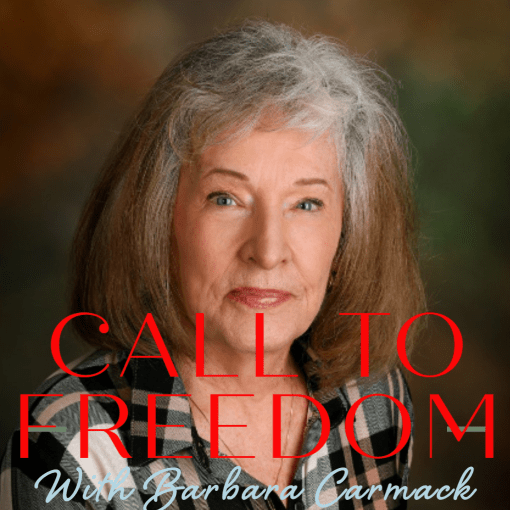

In this episode of Call to Freedom, Barbara Carmack and her co-host Kimberly focus on the biblical principle of seed time and harvest—what it means, and how it plays out in everyday life.
The conversation begins with encouragement from Scripture, reminding listeners not to grow weary in doing good, even when the world feels harsh or discouraging. From there, Barbara shares a powerful historical story about Navajo peach orchards—once destroyed, now being restored—illustrating how God brings renewal even after loss and devastation.
The discussion expands into practical faith: how the “seeds” we plant—through our words, actions, generosity, and attitudes—shape the harvest
SPEAKER 01 :
Welcome to Call to Freedom with Barbara Carmack. This is Jimmy Lakey, and I’m delighted that you are joining us for this half hour. You can reach Call to Freedom at Box 370367, Denver, Colorado, 80237, or by going to the website at www.freedomstreet.org. If you want to leave a message or order a Word Power Daily Reading Bible Guide or a Freedom Street Express newsletter, you can call us toll free at 1-877-917-7256 and leave your name and address, including your zip code. If you want to talk to Barbara right now, she is expecting your call. You may call that same toll-free number, 1-877-917-7256 to speak to her. And now, let’s join Barbara in the studio.
SPEAKER 02 :
welcome to call to freedom if we love one another god lives in us and his love is made perfect in us that’s such a beautiful quote from first john for the disciple who really loved jesus if we love one another god lives in us and his love is made complete in us i hope that you’re experiencing a growth and a love for Jesus Christ and letting it go out to your loved ones and those people that you meet on the street. So I want you to know that his love will go through you and out to all kinds of different people. Oh, I’m so grateful for that. Let’s do the Monday Bible slogan. This is my Bible. I am what it says I am. I have what it says I have. I do what it tells me to do. This is my Bible. It has given me new life. It is the Word of God. And pretty soon you won’t be hearing the 1 o’clock program and you won’t be hearing the slate from the 1 o’clock program because it’s going away. Well, but we’re not going anywhere.
SPEAKER 04 :
No, we are not. We will still be on the air with KLTT at 9 o’clock at night, at 2.30 in the morning, 5.30 in the morning. And… At 11 o’clock in the morning, we will be on 1220 KLDC. So those times are still all available. And most of all, we just want to put a plug in there for getting onto Spotify. We are on Spotify. You can find us there if you look for Freedom ST Radio. Freedom Stradio. Freedom Stradio. You will find us there.
SPEAKER 02 :
Lowercase or lowercase?
SPEAKER 04 :
I don’t know that it matters. But if you’re looking for Freedom Street Radio, you should find us on Spotify and be able to hear any of the programs. So, yeah, we’re looking forward to this move. It’s going to be good. Yes.
SPEAKER 02 :
And if you need to write that down, it’s freedom. S.T. Freedom S.T. Radio. So we’re still on the radio. It’s just that we’re changing a few little things.
SPEAKER 04 :
And it’s we’re just changing the one thing. One o’clock time. We won’t be on the one o’clock time.
SPEAKER 02 :
Yes. But for me, thank you, Kimberly. I appreciate so much you’re adding to that. But as for a person who’s been on the radio for 30 years, it’s a change for me. I got to admit, it’s just really a change for me. But I am willing to do what God wants us to do. And I believe this is the time to do that. You are blessed to dispense for in him you live and move and have your being. And I don’t know how you pray for our president. I know that there was an attempt on the lives of the administration this last weekend at the correspondence dinner. I don’t know how you pray for him. But as we get older, and I know a lot of you listening are getting older. I mean, even Kimberly, you’re getting older. It’s true. It’s true. Yes. Even though you’re young, we’re getting older.
SPEAKER 04 :
You know, but you know what I like to say about that. We’re not really time beings. We are eternal beings. And it’s good to stay focused on that.
SPEAKER 02 :
That’s right. We’re not getting older. We’re getting better. I like that, too. I like that phrase. Well, it’s sometimes a drastic change we need to go through. And I know that some of you have experienced that. You’ve had to go live with your relatives or change the place where you’re living. That’s drastic. It really is. Moving is right down the list from death and divorce. Moving. And we need to manage those changes in our lives through Jesus Christ. There’s no other way we can do it through Jesus. So I want you to begin to pray for our president. And like I said just a few minutes ago, I don’t know how you pray for him, but I pray specifically for him. I have specific prayers for him. And I pray that as I was listening to him last night on 60 Minutes, he needs to realize that as he gets older, He needs to take a breath and manage what he has on his plate right now. When he was younger and a real estate tycoon and mogul, he could juggle all kinds of activities and organizations under the Trump name. Now I pray that someone around him will encourage him to relax. and give the ball to someone in his circle around him, those who are very knowledgeable and gifted in the areas that President Trump appointed them. And I want to say a prayer here, because I’m praying that he will also be gentle with his language. And I know some of you have mentioned that. I wish President Trump would just downplay some of the words that he says. So Father God, in Jesus’ name, I ask that you gently let our president know that he doesn’t have to prove anything to anyone, that what he has done so far is beyond anything we ever imagined. And Father, let him know that a kind word is so much better than a harsh, demeaning word, even to an opponent. Allow his circle of counselors and pastors give him advice in the spiritual realm that kind words are like honey, sweet to the soul and healthy for the body. I pray that in Jesus’ mighty name. Amen.
SPEAKER 04 :
I like how that prayer, Mom, is kind of folding right into your scripture memory verse of this week, because we can grow really tired and discouraged, very weary of hearing the world’s language. And we don’t want to grow weary or be discouraged for doing the right thing.
SPEAKER 02 :
That’s right. We’re not adopting the world’s language. And we don’t want members of the Christian circle to be adopting that kind of language. That’s right. And I know that President Trump is born again. Don’t ask me questions about that. I know that he’s born again. But he is at a level where some of you started out. And so we’ve got to be gentle and patient with him as well. But praying… that somehow Holy Spirit will get a hold of him through counselors or even by himself, gently realizing that what he has said to these reporters and some of the people that have been asking him questions, that he doesn’t need to be so harsh. So I hope that you take that prayer and introduce it into your own daily prayer for him. He needs it. And I’m sure that Melania would really appreciate it.
SPEAKER 04 :
Well, I’m wanting to give you a good segue right into your memory verse. The Galatians 6 verse 9 is talking about not losing heart. Don’t become discouraged. Don’t be weary in doing good. For in due time, we will reap if we do not grow weary. You have some other translations there, too.
SPEAKER 02 :
I know one of the most basic and beautiful verses that I received, Kimberly, after we had a traumatic change in what we were doing in 1980. And a lady came, we were at a banquet in Boulder, and a lady came up to me with this verse. And I have just kept that verse in my heart all these years. And in the Living Translation, Galatians 6, 8 through 10, says, will harvest decay and death from that sinful nature. But those who live to please the Spirit will harvest everlasting life from the Spirit. So let’s not get tired of doing what is good. At just the right time, we will reap a harvest of blessing if we don’t give up. Therefore, whenever we have the opportunity, we should do good to everyone, especially those in the family of faith. But even our opponents, Kimberly, those that we know are against us.
SPEAKER 04 :
It says especially those in the family of faith, but that’s not… discounting the others in our circles of life. That’s right. So this is for everyone. This is not just for our brothers and sisters, our family members. This is for everyone that we come in contact with.
SPEAKER 02 :
Oh, that’s right. So I hope you’re praying for our president, for the whole cabinet and his administration. They are being surrounded. But I’m not going to say that for very long. God is changing the hearts of the reporters and those who have opportunity to talk to the president every day. He’s giving them opportunities. That’s right. It’s going to be a great, great restoration and renewal all the way around. Now, this weekend, I was caught up. with the word seeds, because I heard a wonderful story. And it started horrible. This story was destruction and catastrophe and failure and all that we think of. And it was a beautiful story about renewal and restoration. And I just want to read a little bit about this story of… Americans trying to destroy the Navajo heritage in the southwest U.S. And for centuries, the Navajo people of the Four Corners region, that’s Utah, Arizona, New Mexico, and where Colorado meet. They meet in a Four Corners area. I love that area. And they cultivated peach orchards as part of their cultural and agricultural life. Kimberly, I did not know that the Navajo Indians planted peach orchards. Peach trees. Yeah. Yeah. I was just really amazed. And peach trees were introduced to the canyon areas in the 1700s from the Hopi Indians who had adopted them earlier. By the mid-1800s, vast orchards dotted the desert landscape. Now, you know that peaches need water. and they need to be at a lower elevation like they are in Grand Junction. Not these peaches. They were producing fruit for the local diet, trade, and ceremonies. Peaches were more than food. They were a trade good, a ceremonial purgative, and even used in traditional crafts like polishing stone griddles. This is so good. Their vibrant colors, yellow, pink, orange, amber, rose, and coral, were said to reflect the hues of the canyon walls. making them a symbol of the land itself. Oh, that’s beautiful. That makes me want to go down there and check out these orchards. Because in 1863, these precious people were forced to walk 200 miles during the U.S. government’s forced removal of the Navajos. Now, this reminds me of the Bataan March during World War II, where Darren lost his uncle, Dee, during that march. A lot of men died. And here in this walk, this long walk by the Navajos, many of them died, especially the older and the little children.
SPEAKER 03 :
Right.
SPEAKER 02 :
And orchards were targeted, livestock were slaughtered, crops burned, and thousands of peach trees cut down, with some reports citing over 3,000 destroyed in a single day. This devastation nearly erased centuries of cultivation, including the destruction of the Navajo history. But something happened.
SPEAKER 01 :
Something happened.
SPEAKER 02 :
And today, Navajo horticulturalist, Regan White Salushi is working to restore traditional peaches. Her research blends scientific horticulture with traditional knowledge, aiming to reintroduce heritage varieties. to the canyons and other Navajo areas. She documents stories from elders, studies natural growth practices, and collaborates with the National Park Service to preserve cultural and ecological heritage. While modern varieties dominate, some Navajo orchards still use traditional methods, planting from seed. That’s where I got my little seed concept. Okay, Holy Spirit, you want me to talk about seed, I can talk about seed forever. Because that’s what my dad, your grandpa, Kimberly, did every spring after plowing and harrowing and disking, got the ground ready for that seed, and then he planted it.
SPEAKER 04 :
That’s right. And our family continued to do that with my children, my husband and children. We would go out because my husband is from a line of farmers as well.
SPEAKER 01 :
Yeah.
SPEAKER 04 :
And we would go out to the farm every spring and fall to help with the planting and to help with the harvest. Yes.
SPEAKER 02 :
Now, he had huge fields of wheat, thousands of acres of wheat. Yes. So that involves some absolutely different planting. But still, seed sown. Seed sown. Yes. Absolutely. Absolutely. And so planting from seed, protecting trees from pests, and growing in alluvial terraces that collect runoff from cliffs. Now that’s a whole different procedure, but they were planting trees close to the cliffs so that the runoff from the water would irrigate them. And these volunteers and community members continue to plant and care for these trees, keeping the orchard tradition alive. In short, Navajo peach orchards are a living link to a rich agricultural and cultural past through White Salushi’s work. They are being restored not just as a food source, but as a cultural and ecological legacy. And I’m going to have this story in the June Express. It’s just too good to just forget about because we hear stories. And then two or three days later, because of all that’s going on, we forget about those wonderful opportunities to listen. So I began thinking about now, where did God talk about seed time and harvest? And I went to Genesis 8 verse 22 that tells us that God made a covenant with Noah by saying, I will never curse the ground on account of man, for the intent of man’s heart is evil from his youth, and I will never again destroy every living thing as I have done. So while the earth remains, seed time and harvest. Seed time. You’ve got to plant a seed to get a harvest, folks. You’ve got to give to get a harvest. And so many times Darren says, are you eating your seed? Because if you’re eating your seed, you do not have anything to give into the kingdom of God. So we’ve got to make sure that we’re generous in our giving.
SPEAKER 04 :
And the seed is not just giving. It’s not just money. It’s not a monetary seed that we’re always talking about. It is in giving, though.
SPEAKER 02 :
But giving smiles, giving clothes, giving.
SPEAKER 04 :
Giving of our time. Yes, giving. Is big. It’s huge. And the Lord sees all of that giving as seed sown. Yes, he does.
SPEAKER 02 :
Not just monetary. So it’s in giving that we receive. It truly is. We’ve got to give. We cannot be a Dead Sea. And Kimberly, you were talking today about, we were talking about the salt content of some creams that I order from you, and they’re from the Dead Sea. And you said now people go out there and they float in the Dead Sea, but you can’t stay there for long. Right.
SPEAKER 04 :
No, you cannot. And they have clocks. They have large digital clocks on the shore, on the beaches, so that people can keep track of the amount of time they’ve been in that water.
SPEAKER 03 :
That’s amazing.
SPEAKER 04 :
Because it’s important to get out. And then they have all these stations where you can rinse off with fresh water.
SPEAKER 02 :
Yeah.
SPEAKER 04 :
Now, I’m sure that they plant peach trees also out there. Not by the Dead Sea, no.
SPEAKER 02 :
Well, no, in Israel.
SPEAKER 04 :
Yes, Israel has so many different crops. And their crops are also in very arid places, just like what we’re talking about with these Navajo peach trees. Real wilderness, rocky places. Very dry places. And it is the Lord that provides water and gives them really unique ideas on how to irrigate and how to provide water for those crops. It’s fun. It’s really fun to watch how the Lord blesses that. And again, that’s about seed being sown. Israel, the people of Israel and the Jewish people in general are kind, very kind to their neighbors. And that is seed sown, being kind and not wanting to always be in conflict in a way that is harsh or belittling. And that’s what our memory verse is talking about in Galatians 6, 9. It’s encouraging us to not grow weary or discouraged in doing good to one another because it will produce a great harvest. So sometimes it’s easier to give money and remain harsh and bitter and resentful than It’s easier to do that and think, oh, I’ve done my job. I’ve sown my seed. I’ve put the dollar in the offering plate and that’s good enough. Yeah.
SPEAKER 02 :
And it’s not.
SPEAKER 04 :
No, it’s not. So we’re not talking about money. We’re talking about allowing your life to be changed. Sowing seed the way God wants to see seed sown in other people’s lives through the fruits of the spirit. Love, joy, peace, patience with one another. Hmm. kindness toward each other, goodness, faithfulness, gentleness, and allowing yourself to be controlled by love.
SPEAKER 02 :
Amen. That’s right. And I was listening to Eric Steckelbeck. I don’t know if you listen to him, but he had a former hostage and he was interviewing him. And this man lived through 484 days of of imprisonment under underground 184 meters underground i don’t know how well you know what they used the money that was supposed to be given to the people of gaza for all these tunnels he said as he watched and they had different prisoners especially women who were tortured and beaten in front of them and he was also tortured and beaten And yet he said, as I watched, I realized that in 50 days, this one woman who was especially picked on by the Hamas, she was released. And he said, I was so grateful. I was thanking God that this woman was released. And others had been released before. I was released after 484 days. So this is a man. that gave his love even while he was tortured and put into such dire positions and handcuffed and shackled.
SPEAKER 04 :
You know, we talk about these tortures and we might even watch movies that involve a lot of violence. And I don’t know if we’re just becoming callous to that and being able to talk about that. I actually start… I feel like I’m shaking right now just hearing that because… That is not the kind of seed God would have us sow. And how are we able to watch that or hear about it with a callous heart and just go on with our life? Yes. And how are they able to even watch it happen and not want to turn it around and change it?
SPEAKER 02 :
That’s right. This hostage was forced to watch this. And when he came out, he’s more loving now because he was praying that these people would be released. I don’t care, Father God, if I am here for a long period of time or if I die here. But thank you for releasing these people. That’s the kind of love that John is talking about in 1 John. And so we’re going to talk more about losing our life for God’s sake. While here, though, in Genesis 8, verse 22, while the earth remains, seed time and harvest and cold and heat and summer and winter and day and night shall not cease. So we see here that God uses every season and every seed planted for his good because he’s a good God. And after Adam and Eve fell to the temptation of Satan, God said this in Genesis 3, 15. I will place great hostility between you and the woman and between her seed and yours. Her seed is Jesus. I capitalize that. Her seed is Jesus. Her seed will crush your head. And they’re talking to Lucifer here. Will crush your head as you crush his heel. And then God said to the woman, I will cause your labor pains in childbirth to be intensified. With pain, you will give birth to children. You will desire to dominate your husband, but he will want to dominate you. And we see that in the earthly marriages, in the marriages that are fleshly marriages, how the dominations and manipulations take over, but not in a God-centered, Christ-centered marriage, Kimberly.
SPEAKER 04 :
Not when we’re planting the seeds of goodness and patience and kindness. And that’s what it takes, is planting those seeds and not growing weary, not growing discouraged. Continue to plant the good seeds and don’t snap. Yeah. That’s right. Don’t let yourself snap and decide that you’re just going to go off on the whole world. If you need to go off, go off on a pillow. I’m serious about that. You know what I did? I did used to buy large packages of the large marshmallows. And I if the kids were frustrated, I used to let them throw the marshmallows. We would throw the marshmallows, or when they became teenagers and marshmallows were not enough for them, I used to let them have cans of soda, cans of pop, and I would buy the cheapest ones, the yucky ones that they didn’t want to taste. And they would shake it up. We had a brick wall in our backyard because our home is made out of bricks. And I would let them shake it up and throw it as hard as they could at the brick wall so they could take it out on the bricks. They could take it out on marshmallows and on pillows. But snapping and taking out your aggression, your anger on other human beings is only harming yourself because all of us are the body of Christ. And when you start sowing seed like that, that is angry and hurtful, you are only going to reap an angry, hurtful harvest.
SPEAKER 02 :
That’s right. I remember a time when we were parking in downtown Denver, and that is a place where you don’t want to park very often. And this woman comes along and hits our fender, and she did not have insurance. And Darren got off. He was saying, why do I have to pay for it? She’s the one that hit me. And he calls our agent in Greeley. You know him, Mike. And Mike said, Darren, take a baseball bat, go around the backyard and just swinging that bat and just forgiving that lady. And it’s going to be OK. Your insurance is not going to go up. So, Kimberly, sometimes we’ve got to do that kind of thing. Hopefully not when you are in Christ Jesus. You can just thank him for the gentleness of spirit that he’s given to you. But sometimes you just want to. Go off on somebody. And we’ve got to forgive, friends. We’ve got to forgive. Oh, that is so important. Psalm 89, verse 4, God says to David, I will establish your seed, that’s Jesus, forever and build up your throne to all generations forever. Build up your throne. Jesus is called the son of David in the New Testament, Kimberly. And this was the seed that God was telling David, your seed is going to last forever.
SPEAKER 03 :
That’s right.
SPEAKER 02 :
That’s right. Praise the Lord. So when this promised seed arrived on the earth, Jesus gave a parable in Luke 8, verses 11 through 15, about seeds sown beside the road. on rocky places and thorny patches, which are all descriptions of hard conditions of human beings.
SPEAKER 01 :
That’s true.
SPEAKER 02 :
There’s only four kinds of soil, and you’re one of them, either one of them. You’re rocky soil, roadside, or thorny. And when he began telling the people… Or good. Or good. You have to get the fourth one in there. Yes, fourth. 30, 60, 100 fold. Yes. When he began telling the people of the heart conditions, he proclaimed that in that parable, the seed is the word of God. The seed is the word of God. He was talking about himself because he is the word of God. That’s right. In the beginning was the word of God. And it’s just wonderful to know that we’re going to be talking more about this seed. Yes. That is planted.
SPEAKER 04 :
Yes. And if you are usually listening at 1 o’clock, just remember that we are going to be making a change pretty soon here and only be on at 9 o’clock at night, 2.30 in the morning, 5.30 in the morning, and also at 11 o’clock in the morning on 1220 KLDC. So be looking for us when we make that change and also join us on Spotify. Look up Spotify. There’s an app for that. And all of our radio programs will be uploaded to Spotify. So we’d love for you to listen in there.
SPEAKER 02 :
All right. They’re still on at freedomstreet.org. So you can go there to our website, go to resources and click on radio shows and listen to any of those radio shows, including the Encore show on Fridays with Darren. God bless you and keep you. I pray that you will absolutely be at peace with God and take joy.
SPEAKER 01 :
Thank you for listening to Call to Freedom with Barbara Carmack. Call to Freedom is a listener-supported radio ministry. Barbara and her power partners invite you to come on board with us and become a network of hands holding up Call to Freedom ministry. Power partners support Call to Freedom with prayer and monthly financial support. You will be blessed supernaturally. We invite you to visit Call to Freedom’s website, www.freedomstreet.org, where you can hear Barbara’s daily radio broadcast 24 hours a day or order materials. You may share your praise reports and heart cries by mailing them to Call to Freedom, Box 370-367, Denver, Colorado, 80237. Or you may email us at barbracarmack at freedomstreet.org. Until next time, remember, Jesus loves you, Barbara loves you, and take joy.
SPEAKER 1 :
Thank you.