



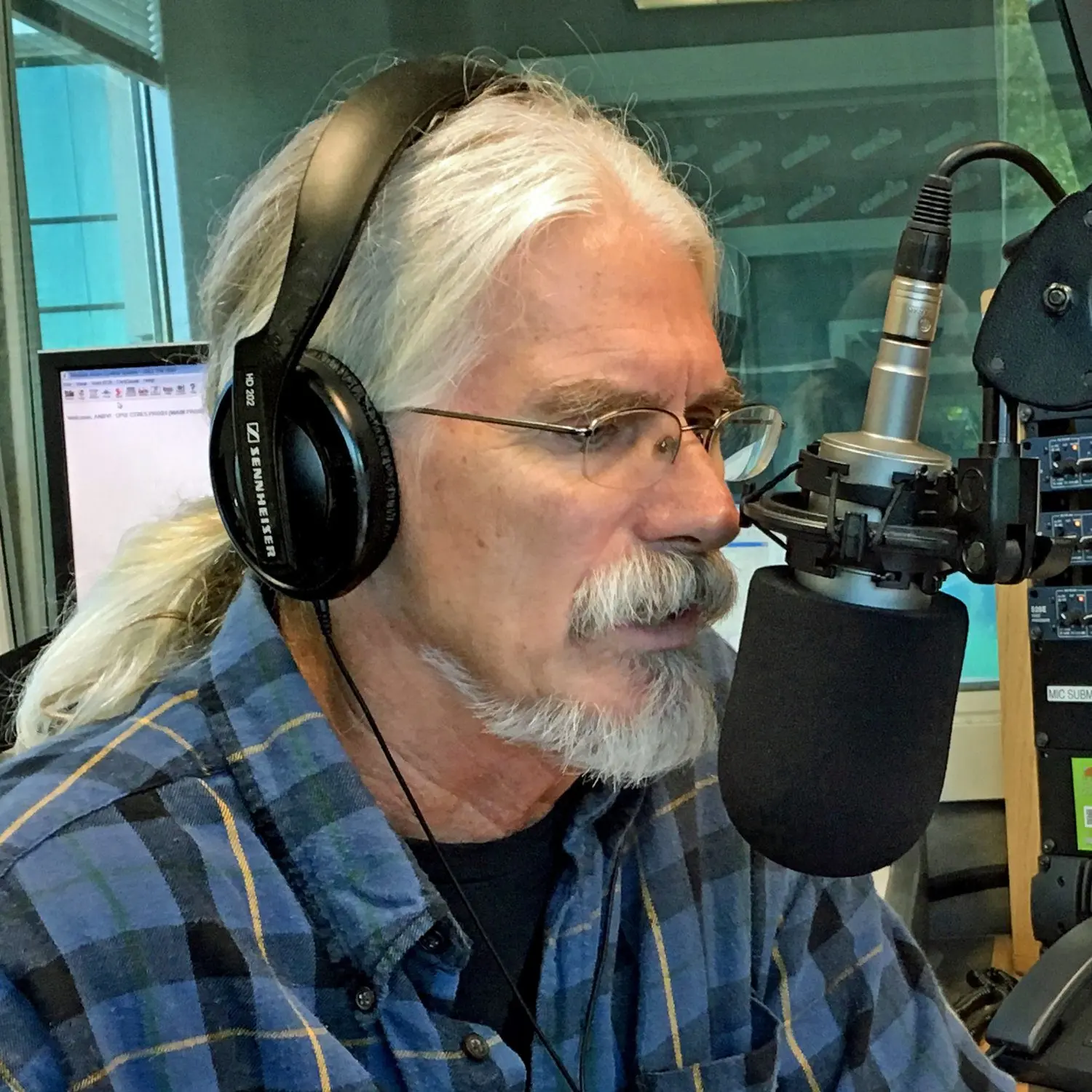
In this episode of The Narrow Path, Steve Gregg navigates through the intriguing and often controversial discussions surrounding spiritual gifts, prophecy, and the cessationism debate. As caller questions illuminate the conversation, Steve provides insights into Paul’s writings on the gifts of tongues, prophecy, and knowledge, dissecting their role in the church today versus the apostolic age. Delve into a thorough examination of 1 Corinthians 13 and its implications. Additionally, the session traverses through Old Testament prophecies and their fulfillment, exploring the alignment of New Testament happenings with ancient texts. As listeners reach out with questions about the role of
SPEAKER 06 :
Good afternoon, and welcome to the Narrow Path Radio Broadcast. My name is Steve Gregg, and we’re live for an hour each weekday afternoon. I apologize for yesterday. It’s usually live and right around broadcast time when I was setting up. I’m away from home, by the way. I’m in Oregon. I’m teaching for a number of places for the next week or so here in Oregon, and I have my remote equipment, which usually works. Sometimes does not, but… It wasn’t the equipment’s fault. It was my fault. I had forgotten to bring along a simple little adapter to plug my headphones into the unit. And I picked one up at the store today, so we’re good. But it’s crazy absent-mindedness on my part. When I pack for a time away, I’m always nervous I’ll forget something. And yesterday I forgot something important. Anyway, we’re beyond that problem, I think, now. And so today we’re taking your calls, as we always do. If you’d like to give me a call, the lines are full right now, but if you call in a few minutes, this is where you can call to ask questions if you want to discuss them on the air about the Bible or the Christian faith, or maybe differences of opinion you might have. Feel free to give me a call at this number, 844-484-5737. And remember, my lines are full now, so don’t call right now, but call in a few minutes. Lines will be opening up all through the hour.
SPEAKER 1 :
844-
SPEAKER 06 :
484-5737. Our first caller today is Kerry calling from Fort Worth, Texas. Welcome, Kerry. Thanks for calling.
SPEAKER 05 :
Hi, Steve. Steve, I’m not a cessationist, but I’d like to get you to comment on some scripture and some teaching that people might be using to indicate that there could be the passing away of some gifts and especially tongues, and that’s found in 1 Corinthians 13, verse 8, and I’m reading from the New American Standard. It says, love never fails, but if there are gifts of prophecy, they will be done away. If there are tongues, they will cease. If there is knowledge, it will be done away. Now, the teaching that I’ve heard, and these are supposed to be experts in the Greek language, are saying that both the verbs used for prophecy and for knowledge about being done away indicate that it will be done away by an action taken upon it. And then they indicate that for tongues, where it says they will cease, that they say that the Greek indicates that this is something that will pass away by itself without any action taken on it. And so, some people are saying that, well, at least the gift of tongues, may have passed away and they tried to use some evidence and that tongues kind of was not used very much after the first century. I’d just like to get your comment on the passage, please.
SPEAKER 06 :
Sure. Well, first of all, whether it’s speaking of tongues or prophecy or knowledge, and no matter what verb they use, it is predicted that all of them would cease, all of them would pass away. There would be a time when there would be no more of these gifts around. The question is not how did they pass or what verbs were used, but what is the timing of this? When would they pass? When would they cease? And to understand that, we have to read the verses first. Following that, because he’s not finished talking there, he says in verse 9, For we know in part, and we prophesy in part. But when that which is perfect has come, then that which is in part will be done away. He says, When I was a child, I spoke as a child. I understood as a child. I thought as a child. But when I became a man, I put away childish things. For now we see in a mirror dimly, but then face to face. Now I know in part, but then I shall know just as I’m also known. Now, there’s now and then there’s then. What’s the then? Well, obviously, the only anticipated then that he’s mentioned is when these gifts pass away. When tongues cease, prophecy ceases, passes away, knowledge passes away. Okay, at that time, we will see Christ face to face. Now we see through a glass dimly. But then we will see him face to face. Now we know only partially, but then we will know as we are also known. Now, I dare say that those who are cessationists would not agree that we yet see Jesus face to face or that we know even as also we are known by him. Now, some might say that, but they’d have to go a long way to convince me of that. I don’t see Jesus face to face either. But we see him as it were through a glass starkly. Now, Paul said in 2 Corinthians 3.18 that we are beholding as in a glass, that is in a mirror, the same word, the glory of the Lord. We’re being changed from glory to glory into that same image. So we’re in the process of sanctification and glorification, being made more like Christ as we behold Christ as if through a glass. Or as through a mirror. The word means a mirror. So… Paul says we now see through a glass. Someday we will see differently. However, even seeing Christ as it were through a glass, we are still being changed from glory to glory into his image. But when we reach his image, I suppose that’s when we will see him face to face. And that’s when we will know as also are known. It seems to me that if the gifts of the Holy Spirit were supposed to pass away in the first century, that the second century Christians and third century Christians didn’t get the memo Because you still find in the Dedicae and also in Irenaeus and Tertullian and other church fathers, reference to the prophets that came to the churches. They still had prophets that came to the churches. They make reference to the gifts sometimes. Even in the days of Martin Luther in the 16th century, in the song, The Mighty Fortresses Are God, he said the spirit and the gifts are ours. This idea that the gifts passed away in the apostolic age didn’t even exist in the church until Calvin. As far as we know, Calvin was the first to come up with the idea that the gifts were supposed to pass. Now, I’m not sure where he got that because this passage doesn’t teach that they pass in the apostolic age. What Paul says is we know in part, we prophesy in partners, we’re not perfect yet. We’re not comprehensive in our knowledge. We haven’t reached a place where we don’t make mistakes. But he says when that which is perfect is come, then that which is in part will be done away. Now the word perfect, of course, some people think it refers to the coming of the New Testament. That’s what cessationists usually believe. They say Paul’s anticipating the completion of the New Testament. But to suggest that is to say that Paul is here alluding to something that he never mentioned elsewhere. Paul gave no indication in any of his writings that he anticipated time when his letters and the Gospels and Acts and Peter’s letters and John’s and so forth, many of which weren’t written yet when Paul was writing or alive. he had no idea that there would be a collection of these letters called the New Testament. So for him to allude to that without explaining it, it makes it very unlikely that he’s thinking of that. And if he did, someone might say, well, he’s inspired by the Holy Spirit, so even though he wouldn’t, as a man, know this, the Holy Spirit knew it. Yeah, but his audience were not necessarily inspired by the Holy Spirit, and he expected them to know what he’s talking about, too. It just seems very unlikely that the completion of the New Testament would be what causes the gifts to pass away. Why would it? After all, the last book of the New Testament was written perhaps by 70 A.D. or at the latest by 95 A.D. And then the church didn’t have all these books in one collection. In fact, the decision about which books belonged in it went on for two more centuries. It wasn’t until three centuries. It was like 395 A.D. when the final decision was made about which New Testament books belong in it. So it would not be the apostolic age when the church had the complete New Testament, even though all the books of the New Testament were written in the apostolic age. They weren’t recognized by everybody until much later. So the idea that he’s talking about that which is perfect is the New Testament completed. It’s just, I mean, it’s an interpretation of convenience for people who want to say this doctrine. But the doctrine is not taught anywhere in Scripture, nor even… the anticipation that there would be a complete New Testament. Now, when Paul said, when that which is perfect has come, the word perfect can refer to complete. Of course, Jesus is perfect, and some people say, well, let’s talk about Jesus’ return. And it could be, although it doesn’t say when he who is perfect is come, but when that which is a neuter pronoun, when that which is perfect is come. So it seems unusual that he would speak of Christ with a neuter pronoun. But perfect means complete or mature. The same word in the Greek means perfect, complete, or mature in different contexts. Now, I think here… It probably means mature because he gives the illustration immediately afterward. He says, when I was a child, I spoke and acted and thought in a childish way. When I became a man, I put away those childish things. Now, I didn’t put away the activities. I put away the childish way of doing them. When I was a child, I thought as a child. When I became a man, I didn’t stop thinking. I just stopped thinking like a child. I started thinking like a man. When I was a child, I thought, acted, and spoke as a child. But when I became a man, I didn’t do that anymore. But I did do all those activities. I just didn’t do them the way a child does. I now do all those same things as a man. And I do it in a mature way. Now, when Paul said, we’re just children. We’re just developing here in our understanding of these things. But when that which is mature comes, then the immature will pass away. That is, childish things will pass away. What’s childish things? It’s doing these things in a childish way. Just like I spoke and acted and thought in a childish way at one time. But when I became a man, when that which is mature came, it replaced the childish way. And Paul is definitely… already committed himself to saying the church of Corinth is indeed childish. He said in chapter 3, when I was with you, I couldn’t speak unto you as to mature people or spiritual people. I had to talk to you as babes, as carnal. He did say in chapter 2, verse 6 of 1 Corinthians, when I’m with mature people, I speak differently than I did to you. So he’s making it very clear that the Corinthians are carnal and immature. No doubt the way they were talking, the way they were speaking in tongues, the way they were knowing and prophesying, reflected their own spiritual immaturity. But he says, yeah, but that will stop when those things are done maturely. When that which is mature comes, the immature will pass away. Now, so Paul might not even necessarily be talking about the second coming of Christ there. He might simply just say, when you grow up, you won’t act this way anymore. On the other hand, there will always be immature Christians until Jesus comes. And so the ultimate fulfillment of this would seemingly be the coming of Christ. And Paul had said to the Corinthians earlier, the same book, chapter 1, verse 7, that they will come behind in no gift while they’re waiting for the revelation of Jesus Christ, which I take to be his second coming. So he says the second coming will be the point at which they will cease to have the gifts. So, yeah, Paul does predict a cessation of the gifts. But already in chapter 1, verse 7, he said it would come at the revelation of Jesus Christ. And in this passage, he didn’t say it will come when the apostolic age ends, but when maturity comes. But the church’s maturity coincides with the time that Jesus will come because Paul said in Ephesians 4 that God gave to the church apostles and prophets and evangelists and pastors and teachers for the equipping of the saints. for the work of the ministry, for the building up of the body of Christ, so that we would not be any longer children tossed to and fro by every wind of doctrine. So, in other words, these gifts of the Spirit are given to the church to build up the church, to edify the church, until we’re not babes anymore. And then they will pass away, apparently. So I believe that there will always be babes in the church until Jesus comes back. And since Paul said we will lack no gift until the coming of Christ, I’m going to just say anyone who says the gifts have ceased prior to that, like I said, nobody seemed to get the memo until Calvin. Calvin came up with that doctrine. And my suspicion is that Calvin, like many theologians, interprets the scripture in line with what their normative experience is. If a church isn’t very spiritual or doesn’t manifest spiritual gifts, they can either say, what’s wrong with us? Let’s seek God. Let’s seek why we’re so deficient. Or they can say, we’re not deficient. We’re normal, of course. We’re the norm. We’re the baseline for what every church should be. And therefore, you know, this disappearance of the gifts must have been predicted. We’re not supposed to have them because we don’t have them. Now, the church does have gifts. But I will say this. Some of the gifts are not as… prominent as others. I’m not really sure that public speaking in tongues with interpretation has quite the same importance in the church that prophesying does or that teaching does or preaching. I mean, there’s things… There’s things that edify the church more, Paul said. And for that reason, it may be that some of these gifts are not given quite in the same profusion as others. And so if we say, well, people didn’t speak in tongues as much after the first century, I’m not sure that’s true. There were revivals throughout church history, and in some of them, people did speak in tongues. In some of them, there were healings. In a lot of them, there were prophecies. But again, it’s not necessary to assume that every time Christians meet, there will be all these things happening there. They are a gift to the body of Christ at large. I think I’ve seen all of these gifts functioning properly in my lifetime, but I… I will say this, we hear a lot more about this kind of thing in third world countries, on the cutting edge of missions and things like that. A lot of these things are, you know, things that God manifests more in places that are less developed spiritually. And, you know, when you grow mature, I’m not saying that you get to a place where you don’t have the gifts anymore but you might not depend on them as much you depend on the Holy Spirit just as much but maybe these kinds of manifestations aren’t as necessary to your Christian life as they were in the earlier days that’s a speculation on my part I could be wrong about that but I believe all the gifts are intended to be with the church until the church is no longer in its immature state that’s how I understand it well
SPEAKER 05 :
As far as verse 8 goes, you know, he talks about prophecy. I know that’s a gift. I know tongues is a gift. But he mentions knowledge. Is that a gift?
SPEAKER 06 :
In the previous chapter, Paul had listed nine gifts, and one of them was the word of knowledge. And it’s whatever the word of knowledge is. I mean, I have an idea what it is because charismatic people have a definition for that. And if that’s the correct definition, then it’s a special gift, and it’s not just generic knowledge. However, Paul doesn’t say the gift of word of knowledge will pass away. He says knowledge will pass away. But it may be, again, he said, I knew as a child, but I put away childish knowledge. Now I know as a man. So it may be he’s saying… the way you guys do these gifts, the immature way that you are doing it, we know in part, we prophesy in part, that those things will be replaced with mature forms of the same thing someday. But if we’re talking about absolute disappearance of these things, then knowledge does seem to throw a wrench in the works for the cessationists, because they’d say, well, yeah, tongues is gone, prophecy is gone, but by the same argument, you know, knowledge is gone. And if knowledge is gone, how can they know that these things are gone, since knowing is a part of knowledge? Hey, I need to take another call. My lines are full. I appreciate your call, Kerry. Those are my answers to your thoughts. Jason in Salem, Oregon. Welcome.
SPEAKER 03 :
Hey, Steve. Great to talk to you. I really appreciate your ministry. Thank you so much. My question is about Old Testament prophecy. Did I hear you say the other day that there is no Old Testament prophecy about the second coming? Is that what you believe?
SPEAKER 06 :
That is my impression, yes. And I say that not just because I don’t tend to make sweeping remarks about the Bible saying there’s nothing in the Bible about this without having checked. I did for 16 years ran a Bible school where I taught verse by verse through all the prophets. And so I’ve gone through them with a fine tooth comb, and I can’t think of anything in them that’s about the second coming of Christ. Now, I can think of a lot of passages that I once thought were about the second coming of Christ. Certainly, Zechariah chapters 12 through 14, I once thought were about that. Quite a few passages in Daniel, I used to think were that.
SPEAKER 03 :
So would you say that all Old Testament prophecy has already been fulfilled?
SPEAKER 06 :
Well, either has been finally fulfilled or was inaugurated in the past and is still going on. A lot of the prophecies about the church, the church age, which began in the first century and, of course, is continuing to this time. So, you know, it’s not as if they have no relevance to what’s going on now. It’s just I don’t know of any prophecy about any event that is supposed to happen in the end times. The whole church age is the end times, I think, as far as the Bible is concerned. And here’s something Jesus said when he was talking about the coming of the Romans to destroy Jerusalem in AD 70. This is in Luke chapter 21. He predicted to his disciples that the temple in Jerusalem would be destroyed. And we know it was in AD 70 when the Romans burned it down. That was 40 years after Jesus said it. And the disciples came and asked, when will this happen? And what sign will there be that it’s about to happen? When will the temple be destroyed? And what sign, what warning will there be that’s about to happen? Now, he answered both. One of his answers was, this generation will not pass until all these things are fulfilled. So when will it happen? It’ll happen in this generation. He got that dead right. I mean, it happened 40 years later. It was in that generation that it happened. The other thing was, he said, and Matthew and Mark render it this way, when you see the abomination of desolation standing where it ought not, then know that the time is near. But Luke, who’s writing to a Gentile man named Theophilus, who he was pretty sure wouldn’t understand the the Hebrew expression abomination, desolation. Luke paraphrased it for us. And we see the paraphrase in verse 20. Now, he is talking about the Romans coming to destroy the temple. That’s what the subject is of this chapter. And he says in verse 20, he said, when you see Jerusalem surrounded by armies, then know that its desolation is near. So the Romans coming was that. Then he said, let those who are in Judea flee to the mountains, which the Christians did. They fled from Jerusalem. They went to Pella across the Jordan in the mountains, in the hills. He said, let those who are in the midst of her, that is Jerusalem, depart, and do not let those who are in the country enter her, for these are the days of vengeance that all things which are written… may be fulfilled. Now, he’s talking about the destruction of Jerusalem in 70 AD. He says, these are the days of vengeance. Now, Isaiah had spoken of the days of vengeance, for example, in Isaiah 61-2 and some other places. Isaiah 63 also mentions the days of vengeance. And Jesus said, yeah, 70 AD, when the Romans come and destroy the temple, that is the days of vengeance. He said, so that all things that are written, he must mean the Old Testament prophecies, may be fulfilled. So, he sounds like he’s saying… that all of the prophecies that had not yet been fulfilled in his day would be fulfilled in the destruction of Jerusalem, all the Old Testament prophecies. Now, I’m not a full preterist. A full preterist would say everything that ever was supposed to happen happened in 70 A.D. Jesus didn’t say that. He said all things that are written. Well, at the time he spoke, only the Old Testament was written. There’s no New Testament yet. And the New Testament does contain prophecies of the second coming of Christ. So you’ve got prophecies of the second coming of Christ in Jesus’ own teaching in Matthew 25, 31 and following. You’ve got his teaching about his second coming in Acts 1, 11, where the two angels said, You men of Galilee, why do you stand gazing into heaven? The same Jesus whom you saw go away from you will return in like manner as you saw him go. You’ve got, of course, 1 Thessalonians and 2 Thessalonians have references to the second coming of Christ’s still future. Now, of course, they wrote before 70 A.D., but we don’t have to assume that their predictions were fulfilled in 70 A.D. because Jesus didn’t speak about those predictions. He spoke about Old Testament predictions. Jesus said in Matthew 5 that he didn’t come to abolish the law and the prophets, but to fulfill them. The law and the prophets means the Old Testament. So he said that he came to fulfill the law and the prophets. And so I assume that unless he failed in his mission, he did fulfill the law and the prophets. But that doesn’t mean there were other processes given later.
SPEAKER 03 :
But another way to say that would be the New Testament fulfills the Old Testament, basically.
SPEAKER 06 :
Yep, yep. The New Testament is the fulfillment of the Old Testament. Jesus in particular. is the fulfillment. But, yeah, the things about salvation, about the Messiah, about the renewal of creation, and many things in the Old Testament do have a fulfillment in the New Testament. And the New Testament writers identify their own times as the time of fulfillment because they quote these passages from the Old Testament, which many people today, many teachers say quote those passages as if they’re talking about the end times. The New Testament writers quote it. Yeah, they quoted the whole, you know, all these passages, or many of them, and identified them with their own time 2,000 years ago. So I think that, you know, I don’t, when you ask, was all the Old Testament prophecies fulfilled in the first century? I think they were. I mean, I don’t plan to suggest I know everything. I never did know everything and never will. But I would say I don’t know of any Old Testament prophecies, and I’m pretty familiar with all of them.
SPEAKER 03 :
Like I said, I taught verse by verse through all the prophecies.
SPEAKER 06 :
Well, I mean, some people may know them. Certainly some people know it better than I do. But I know it pretty well, you know, having taught verse by verse through the prophets 16 times. You know, I’m pretty acquainted with them. Can I ask you one more super quick question?
SPEAKER 03 :
Yeah, go ahead. You probably already answered this. I don’t know. I’ve never heard. Have you watched The Chosen? And if so, what did you think of it?
SPEAKER 06 :
I’ve watched the first season and maybe a few other episodes. I didn’t hate it.
SPEAKER 03 :
Okay.
SPEAKER 06 :
You should keep going. Yeah. I’ll tell you this. I’m generally not fond of television and movie representations of Christ. It’s very rare for a modern actor to portray Christ exactly the way I think he was. And when they began to write plot lines and teachings and stuff into the TV series that aren’t in the Bible, I’m not saying they’re getting it wrong. I’m just saying they’re guessing. And I don’t like to guess. I don’t like to guess about what Jesus is like. I like to know what he’s like. So I’m not really very fond of the whole genre of television depictions of Christ. But as such depictions go, I think from the parts I’ve seen, Jonathan Rumi does a good Jesus. The only Jesus I liked better in a movie was the actor whose name I forget who did The Gospel of John. There’s a movie called The Gospel of John. There may be more than one. What I’m referring to is Christopher Plummer narrating, and there’s nothing in it except the scriptures.
SPEAKER 03 :
And the guy who goes along with the Bible?
SPEAKER 06 :
Yeah, it just only has Bible in it. And the guy who played Jesus was in the series Lost, and he does a great job, in my opinion. Now, I need to take a break. You’re listening to The Narrow Path. We have another half hour coming. Our website is thenarrowpath.com. I’ll be right back. Don’t go away.
SPEAKER 02 :
In the series, When Shall These Things Be?, you’ll learn that the biblical teaching concerning the rapture, the tribulation, Armageddon, the Antichrist, and the millennium are not necessarily in agreement with the wild sensationalist versions of these doctrines found in popular prophecy teaching and Christian fiction. The lecture series entitled, When Shall These Things Be?, can be downloaded without charge from our website, thenarrowpath.com.
SPEAKER 06 :
Welcome back to the Narrow Path radio broadcast. My name is Steve Gregg, and we’re live for another half hour, taking your calls. It looks like my lines are full again, so I’m not going to give out the number yet. If we get some lines opened and we have time, I will give it out again. You can call in. Otherwise, you can listen in, as the majority of people do, to the calls that will come in. I should say, if you are in Oregon, I am currently in your state, and it’s possible that I’m going to be in your neighborhood, because I’m going to be all over the place. The next 10 days, I’ll be teaching. Tonight, I’m in Brownsville, by the way, all of our Albany area people and stuff. If you don’t know that, you might want to find that out tonight. I’m in a home in Brownsville, and that’s, I think, at maybe 6 o’clock. I’m not sure. You have to look at our website. TheNarrowPath.com under announcements. And you’d have to look there anyway to find the place. But Brownsville tonight, tomorrow I’m speaking three times on the Kingdom of God in Philomath area. It’s not actually Philomath, it’s some little town. Petey. Petey is the name of the little town. And then, let’s see, I’m going to be teaching in Salem, and I’m going to be teaching in Malala, I’m going to be teaching in Portland. I’m going to be teaching, I’m even going to be in Rockaway Beach, I think is the name of it, one night. I’m going to be all over the place. So if you’re in Oregon, you may be close to one of these places. If you want to find out, we’d love to see you. Go to thenarrowpath.com at your web. is on your browser, thenarrowpath.com, and there’s a tab that says announcements, and you’ll see over the next 10 days all the places that I will be speaking in Oregon, and love to see you people there, of course. Okay, we’re going to go to the phones again and talk this time to John from Orlando, Florida. Hi, John. Welcome to The Narrow Path. Uh-oh, I hit the wrong button. Now you’re on. Hi, John.
SPEAKER 04 :
Hey, there we are. How you doing, brother?
SPEAKER 06 :
Good. Good to talk to you.
SPEAKER 04 :
Yeah, good to talk with you. I’m calling about Romans chapter 11. For years we’ve been on the same page concerning verse 26 where it says that in this way all Israel will be saved. Just to kind of bring the listeners up to speed who might not be familiar with what we’re talking about here. When you say that all Israel will be saved, earlier in Chapter 9 says that not all are Israel who are of Israel, but rather when the Gentiles are grafted into the Jews in one tree, we’ve got this one tree that is Israel, and that all of Israel will be saved. So we’ve long been on the same page on that. My question to you is this. I don’t recall you ever really mentioning this, but I forget things, just like you’re forgetting your little adapter thing. It gives me comfort. Historically, have you drawn on chapter 14 or verse 14 in support of this? Because it seems pretty darn clear that he’s not talking about natural Israel. He’s magnifying his ministry that by any means he may provoke to jealousy those who are of his flesh to save some of them. Is that something that you’ve drawn on to support that?
SPEAKER 06 :
Well, not to support the specific meaning of verse 26, but yet to refute the false meaning of 26. See, some people think verse 26 of Romans 11 is saying that all the Israelites, all the Jews will be saved. As you know, I mean, you know this. I’m talking to my audience here now because you know what I think. So, you know, the whole discussion of Romans 9 through 11 is on the subject of why do the prophets say that the Messiah will come and save Israel? And yet Christians say that Jesus is the Messiah, but he came and went and Israel still isn’t saved. So how could that be? And this is the objection Paul’s answering. And I just want to say that the most popular answer is the wrong one to this. Many people think that Paul is saying this. Yeah, it’s true. Jesus came and went and Israel wasn’t saved. But don’t get ahead of your skis here. Actually, he’s going to come back and Israel will all be saved in the end times. So, yeah, he didn’t do it yet, but he will. So they think that Paul is talking about when is Israel going to be saved, but Paul’s not talking about that. He’s talking about how Israel is saved. And that is how Christ is the Messiah, and he has saved Israel. But we have to realize that they are not all Israel who are of Israel. That’s what he says in chapter 9, verse 6. That is, the people that Christ saved are Israel. And the people who Christ has not saved are not Israel. Just because people are Jewish doesn’t mean they’re part of the Israel that Christ the Messiah saves. That’s what they are not all Israel means, even though they may be of Israel, that is, descended from it. So Paul is saying, stop thinking of Israel in terms of ethnicity and, you know, parents going back to Abraham, Isaac, and Jacob. Think of Israel as the people of the Messiah. And the Messiah has called the remnant, the faithful remnant of the Jewish people did come to Jesus and still do. But Gentiles come too. And you’re right. He then has the olive tree image where the olive tree, of course, is an image of Israel in the Old Testament, especially in Jeremiah 11, 16. Israel is called an olive tree with branches broken off. And he says, yeah, well, the olive tree does have branches broken off. These are the natural branches, meaning natural Jews who don’t believe they’ve been broken off the tree, which means they’re not part of Israel anymore, which affirms what he said in chapter 9, verse 6. They are not all Israel who are of Israel. There are people who are of Israel. But they’re not on the tree. They’re not Israel because they don’t believe in Christ. And he said, and then, of course, there are branches that are Jews who do believe. And then Gentile believers have been added, too. And we have, of course, what we normally refer to as the church, believing Jews and Gentiles on one organism. Jesus called it a vine. And we’re the branches. Paul refers to the olive tree. But that’s Israel, the olive tree. And it’s made up of believing Jews and believing Gentiles, Paul says. And that’s how all Israel will be saved. He says will be because it’s still happening. I mean, every part of Israel in previous generations has been saved. And every part of Israel in the future will be saved. Because we’re not talking about Jewish people. Racially, we’re talking about people of the Messiah. That includes Jews and Gentiles. And anyone who’s not embracing the Messiah, Paul is saying, is not one of those Israelites that’s going to be saved. And he said back in chapter 9, verse 27, he quotes Isaiah 10. He says, though the children of Israel be as the sand of the seashore. I mean, very numerous. He says, only the remnant will be saved. So Paul can’t be saying in chapter 11, 26, that all the Jews will be saved. He’s just quoted favorably Isaiah, who said, no, all the Jews will not be saved. Only the remnant will be saved. And he’s saying, yeah, that’s it. The remnant are the faithful Jews who are the branches that were not broken off. Now, you’re asking at verse 14, chapter 11, where Paul says, you know, I magnify my ministry as an apostle to the Gentiles to provoke to jealousy my kinsmen, the Jews, And with the mind of saving some of them. And I think it’s this word, some of them, that you’re referring to. Does this support our basic thesis? I think it does. Paul doesn’t indicate that he thinks all of them will be saved. He thinks that some of them will be saved. And that’s what he’s aiming at. He’s not aiming any higher than that. So, yeah, I think in verse 14 where he says, I’m hoping to save some of them, I have to say it sounds to me like he’s not expecting to save all Jewish people since he’s already told us only a remnant of them will be saved. So, yeah, that verse I have used. I haven’t focused on as much as some of the other verses, but you make a very good point. That adds to the case. I appreciate it. God bless you, man. Good talking to you. Let’s see. David in Scottsdale, Arizona. Welcome to The Narrow Path.
SPEAKER 08 :
Hi, Mike. Steve, this is in regards to having a marriage license to get married.
SPEAKER 09 :
Uh-huh.
SPEAKER 08 :
And this has to do with a prerecorded call I was listening to this morning.
SPEAKER 09 :
Okay.
SPEAKER 08 :
Isn’t it kind of a Creating tax fraud if you don’t get a state-licensed marriage to keep from incurring any tax liability on that marriage?
SPEAKER 06 :
Yeah, some people, Christian and non-Christian, probably more non-Christians than Christians, but some people live together unmarried, though in their own lives.
SPEAKER 08 :
Yes, I heard that.
SPEAKER 06 :
In their own minds, they plan to stay together, but they don’t want to get married legally because, like you say, there are tax penalties on being married or some other financial penalties for it that they can avoid those if they just stay unlegally married. Now, you’re saying, isn’t that tax fraud? I would say, yeah, if people are doing something in order to defraud the government, I don’t think Christians should do that with those intentions. Now, if the government has wrongfully decided to penalize legally married people in their tax code in a way that they don’t penalize people who just live together, well, then that would be, I mean, if Christians who, let’s just say Christians got married in church, as I think Christians should. I think Christians should have a wedding ceremony before the congregation that they belong to. I think their family should be there. I believe all that is. normative marriage. But the next step, you know, I just performed a wedding a couple Saturdays ago, and I signed a paper, but that doesn’t make them legally married. They have to take that to the courthouse and get it licensed, you know. And, you know, that’s another step. It seems to me that if people have said their vows and The minister has pronounced them man and wife. Their families have approved and heard the vows and so forth. They are married in every sense that people in biblical times were married. Having a license from the state was never given as a necessary part of it. And so I would say if they do that and they also happen to have a tax advantage from it, well, but that’s not why they did it. If they just didn’t get married legally because they just felt like by conviction, you know, the pagan state doesn’t have any competence to determine who’s married and who’s not. And by the way, the state has demonstrated that because they will marry people who are same sex. Well, obviously, the state doesn’t know what a marriage is then. They’ll marry people who are divorced without grounds and are not free to remarry, but they’ll stay to do anything. And they won’t protect the marriages they’ve licensed. They’ll let you divorce for no reason at all. In other words, the state doesn’t have any interest or competence or knowledge of marriage. Why should the Christian church think that the state’s approval has any weight in the sight of God on that? So, I mean, some people might just say, we’re going to do this through the body of Christ, we’re going to do this through the church before God, take these vows before witnesses, solemnize our relationship. But, yeah, we just don’t think the state has any role to play in this. Now, again, it may turn out that they have some kind of tax advantage as a result of that. but I would hope that that’s not what they’re thinking of. People should not get married or not get married because of some financial interest merely, especially a tax interest. But I don’t think it’s a crime. In fact, if they want to be completely honest with the state, they can file as a married marriage. married people, even though they’re not married inside of the court. I don’t know much about the laws. I don’t know much about taxes. Most of my life I lived below the taxable level, so I never became an expert on tax dodging or things like that. Never had an interest in it. But, yeah, I do know people. who say the only reason they don’t get married legally is to avoid tax consequences. And, yeah, that always bothered me a bit. I don’t think that would be a good reason. I think if you have convictions… Christian convictions against the state license, then that’s one thing. If you don’t have those convictions, but you just want to save money, not give so much to the state, I’m not against taking legitimate tax breaks. I mean, I’m not fond of giving the money to the state either. But I think Christians should be above reproach. And should be able to answer for their actions in a way that’s entirely based on Christian conviction, not on financial considerations. It’s a good point you raise. I appreciate your call. Warren in Clipper Mills, California. Welcome.
SPEAKER 07 :
Hello. I’m glad to be listening to your program again. I had a question about the whole idea of marriage and marriage. remarriage and divorce, and particularly when you have one of the spouses that was abused. What does the Scripture say about that historically?
SPEAKER 06 :
Well, the Scripture is obviously against abuse, though the Bible doesn’t name spousal abuse as a separate category from other bad behavior. It’s obvious that abusing any human being is evil. I mean, the Bible also doesn’t mention child abuse as a category of sin, because you’re not supposed to abuse anybody. It would be redundant to say you should never abuse anyone, and you also shouldn’t abuse your wife or your kids. I mean, it’s a given that, you know, you shouldn’t be abusive to people. You shouldn’t harm people. And then when it comes to marriage, of course, and children, We’re specifically told a husband should be like Christ, should love his wife as Christ loves the church and should nourish and cherish her and so forth. And obviously a person isn’t doing that if they’re abusive. Likewise, the wife shouldn’t abuse her husband. Paul says the wife should respect and revere her husband. She’s not doing that if she’s abusing him. And it also says that we shouldn’t provoke our children to wrath. So. Certainly someone who abuses their children. Any abuse of any human being, and particularly of family members, is a violation of our duty as Christians and as family members. Now, if you’re asking, is it grounds for divorce? I would have to say it is not listed as a ground for divorce. The only grounds for divorce I know of in the Bible are sexual infidelity, which Jesus mentioned in two places, Matthew 5, 32 and Matthew 19, 9. And the other is what Paul mentioned. And Paul’s instructions, he said, refers not to people who are married within the faith, which is what Jesus was talking about, Jews married to Jews or people married within their faith. But Paul had evangelized among the pagan Gentiles. And sometimes a wife or a husband got saved, but their spouse did not. And now they’re married. They were previously married to their spouse before they got saved. And now only one of them got saved. And so you’ve got a Christian and a non-Christian. Paul had to address that because Jesus never faced that situation. And Paul said if the unbeliever wants out of a marriage, you should let him go. But if they don’t, you should stay in the marriage if you’re a believer. Now, a matter of interpretation is possible here. Because a man who, let’s just say a man who’s abusing his wife, let’s just say he’s physically abusing her, one could argue he doesn’t really want to be in a marriage. He wants to be the big boss of someone he’s strong enough to beat up. That’s not the same thing as wanting to be married. Being married means you’re protecting and providing for and nurturing your wife. And if a man who doesn’t have that as his aim, but he stays in the home, one could argue he doesn’t want to be in a marriage. He just wants to be in the house where he can abuse this person. And they may be right. And if that is true, then I suppose steps could be taken to justify the ending of that marriage on the grounds that Paul gave in 1 Corinthians 7, verses 12 through 15, that the unbeliever doesn’t really want to be married. And Paul said, well, then let him go. The brother or sister, in that case, is not under bondage. I myself would not recommend using abuse as a grounds for divorce simply because the word abuse is so vague. I’ve known women who divorce their husbands. I’ve heard them share in small groups that they’re going to divorce their husband because he’s emotionally abusive or verbally abusive. Well… Nobody should be emotionally abusive or verbally abusive, nor physically abusive or sexually abusive or anything. No one should be abusive. But what does this really mean? What is he actually doing? In what way is he verbally abusive? Does he get angry and say harsh words? Well, a lot of women do that to their husbands, and I wouldn’t say that the husband has grounds for divorce for it. Is the husband emotionally abusive? What does that mean? Is he cold?
SPEAKER 01 :
I don’t know.
SPEAKER 06 :
What does that actually mean? I really think that if we start saying, yeah, abuse on the part of the spouse gives the other spouse grounds for divorce, before we talk that way, we’d better start talking about some specific definitions of abuse. Because any time somebody snaps at me when I’ve been nice to them, that’s abusive language. They shouldn’t do it. But if my wife did that, which fortunately she does not do, but if my wife did that, I would not see it as grounds for divorce. So, you know, I think every effort should be made by Christians to preserve their marriage, no matter how difficult it is and no matter how imperfect their spouse is. There are times, though, of course, when a woman is physically in danger or her children are physically in danger because of her husband. Or conceivably, a man might be physically in danger from a wife who does crazy things and throws kitchen knives around the house. I knew of someone who did that, a woman. And, you know, I think in that case… without desiring to break the marriage up, the endangered party should move out to a safe place, take the kids and stay there until their spouse’s behavior becomes reformed. And maybe it never will, in which case they just stay single. That’s what I’d recommend, simply because we don’t have any scripture that says it’s okay if you interpret your spouse’s behavior as abusive to you. It’s okay if you just get out of your marriage vows. When you made marriage vows, you said you’re going to be faithful for better or for worse, for richer or for poorer, in sickness and in health, as long as you both shall live. I don’t know how much worse we’re committing to there, but I would say this, no matter how abusive my spouse was, if I had an abusive spouse, I would not end the marriage, though, if I was in danger. I’d leave the home, but I’d stay married and hope and pray and seek reconciliation, hope for reform for my spouse. In the meantime, if the abusive spouse ends up taking up with another partner, well, then the innocent partner has grounds for divorce because that’s adultery then. These things need to be, I think they need to be handled by wise elders or wise parents or wise Christian friends who are very committed to the marriage, very committed to doing what God wants, but also who recognize there are times when you really have to take desperate measures. So every case is quantitatively different. and therefore I can’t just give a general term, but I say if the person’s in danger in the home, they should get out of the home. That doesn’t mean they should file for divorce. There may be times they should do that, too. Anyway, that’s how I would treat that subject rather broadly rather than too specifically. Doug in Minneapolis, Minnesota, welcome to The Narrow Path. Thanks for calling.
SPEAKER 01 :
Yes, thank you. I appreciate all your answers. Today you’re seeing all this talk about Christian Zionism and over the years I’ve had different views about how I see the current state of Israel and there’s a lot of Christians right now that are very cozy with Israel in its current form and I’ve been looking at the verses in Revelation 2 and 3 that speak about the synagogue of Satan and these Jews who say they are but are not and And I’ve been looking at this sort of globalist world order that seems increasingly controlled by people who are of said Jewish descent. It seems there’s a tie to this sort of Ashkenazi Jews. The Qasarian Mafia, you go back into like, you know, the 1100s, and you begin to see this sort of globalist order that has this sort of a Jewish strain to it. And then you look back to the formation of Israel with the Rockefellers and the whole British, you know, movement that sort of established Israel in its current form. and how many Christians are sort of using this whole, you know, if you bless Israel, you’ll be blessed.
SPEAKER 06 :
I hear you. By the way, we only have a few minutes left. I’ll need to hear what your question is before long because we’re going to be out of time here.
SPEAKER 01 :
Well, my question is, can you just kind of unravel that? Because when you look at the current state of Israel, you know, should a believer, you know, align with Israel in its current form? And how do we see the synagogue of Satan?
SPEAKER 06 :
Yeah. Well, I’ll tell you this. The synagogue of Satan, which is mentioned in Revelation 2.9 in reference to the church of Smyrna, and in Revelation 3.9 in the message to the church of Philadelphia, I think all scholars pretty much agree what’s been happening there is in those towns, the Christians were being persecuted by members of the synagogue. This we see in the book of Acts frequently happens. The synagogue Jews persecuted the Christians in their area. And so that apparently was happening in Smyrna and in Philadelphia. And Jesus said, I know the blasphemy of these people who say they are Jews but are not, but they’re a synagogue of Satan. Now, this sounds very much like what Jesus said in the Gospel of John, chapter 8, which, by the way, Revelation was also written by John. So we’ve got the same author of these two books. where Jesus said to the Jews, I know you are descended from Abraham, but if you were Abraham’s children, you would do the works of Abraham, but you are of your father, the devil. and the works of your father you want to do. In other words, you want to kill. The devil is a killer. You want to kill me. Therefore, you’re of his seed. Now, in other words, these are people who are descended from Abraham, but they were also spiritually more aligned with Satan than with Abraham. And I think that’s what Jesus is also saying in Revelation 2.9 and Revelation 3.9. These people call themselves the synagogue of God, and they are Jewish in one sense. They’re physically Jews, but they’re not Christians. Remember, Paul said in Romans 2, 28, he is not a Jew who’s one outwardly. Neither is that circumcision which is outward and of the flesh, but he’s a Jew who’s one inwardly and that circumcision which is of the heart. So he’s saying, yeah, it’s not enough just to be outwardly a Jew. You’ve got to be a Jew inwardly, too. And these people call themselves Jews, but they’re not Jews inwardly. They’re more followers of Satan. So I think that’s what he’s saying to those two churches about that. He’s not talking about some Illuminati or some global conspiracy run by Jews. He’s just talking about the local synagogues are behaving more like the devil than they are like Abraham. Now, there’s been these conspiracies about some… Jewish cabal, you know, run by the most powerful and wealthy Jewish people in the world who are controlling all the nations and so forth. I’ve heard these theories since I was in my early 20s. I’m in my early 70s now, so about half a century. Most of the people who were allegedly running the world back then are probably dead now. But, you know, I remember when Rush Limbaugh was alive, people used to call and ask about this very thing. He’d say, you know, if these conspiracies are true, these people must be incredibly patient because supposedly they run the whole world. Yet, for hundreds of years, they’ve been running the whole world, and they still haven’t gotten things done the way they want them done yet. I don’t know about that. I’m not saying there is no such conspiracy. I don’t have any inside knowledge about that. But I can say, if there is, it doesn’t concern me because I know who runs the world. And it isn’t them. And I would suggest you maybe check out Isaiah chapter 8, where Isaiah said, the Lord said to me, don’t say a conspiracy about everything that these people call a conspiracy. Because there was a conspiracy in Isaiah’s day. Not the one you’re talking about, but a different one. And he said, just trust the Lord. Let the Lord be your fear and your dread. Don’t worry about these so-called conspiracies. We can’t change it anyway, so why worry about it? Let’s just go on, serve God, promote the kingdom of God, and we’ll be on the winning side. I’m out of time. You’ve been listening to The Narrow Path, our website, thenarrowpath.com.
