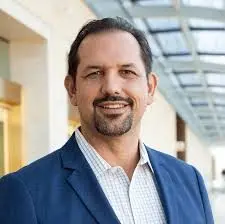
In this compelling episode, we explore the remarkable journey of Abdu Murray, an accomplished author and speaker who transitioned from Islam to Christianity. Listen as Abdu shares how his search for truth led him to Christianity after nine years of philosophical, historical, and theological exploration. With a focus on cultural understanding, Abdu discusses the transition and challenges faced while reconciling his beliefs with his cultural identity.
SPEAKER 01 :
It’s Mike Triem, Crawford Media Group. Today I’m joined by Abdu Murray, an author who speaks internationally about the intersection of Christian faith and the question of culture. You’ve written several books, Abdu, Saving Truth, Grand Central Question, and More Than a White Man’s Religion. You were a Muslim for most of your life. What in the world happened?
SPEAKER 02 :
Well, a funny thing happened on the way to the mosque, Mike. I was actually a Muslim who was very engaged in trying to get other people to become Muslims, especially Christians. You know, Christians were sort of low-hanging fruit in the area I grew up in. So I was an equal opportunity face knocker out or other, but it was Christians who I picked on the most because they were around the most. Well, along the way, some Christians challenged me back and showed me that this gospel that I thought was not worth believing actually was worth considering. And so it took nine years, but I looked into the philosophical, historical, theological, biblical, and ultimately the existential and personal reasons behind the Christian faith and found all the answers it gave to be extremely compelling, far more than any other worldview, including the worldview of my birth. And so when I realized that the things I was hoping was true in Islam were actually true, In the gospel, I had essentially no choice but to have my intellect and my heart meet and meet at the foot of the cross. And that’s when I became a Christian. So it took nine years. But it took nine years, not because the answers were easy to find. The answers were easy to find, but they were hard to accept. And there was a part of that that fits right into, you know, identity issues and, you know, religious identity and that kind of stuff. So that’s why it took so long. But the answers are there, but they’re often tough to accept.
SPEAKER 01 :
Abdi, you wrote the book, and your most recent book is Fake ID, How AI and Identity Ideology are Collapsing Reality, What to Do About It. So with that said, it sounds like that’s part of your journey. Talk to us about how this book took shape.
SPEAKER 02 :
Yeah. So when I first noticed that there was a cultural moment right now where Reality seems to be collapsing before our very eyes. Now, reality itself can’t collapse. Truth is truth, and it does not sway with culture. But our perception of it does. And so what I saw was we were immersing ourselves in a schizophrenic cultural moment where we were willingly giving up our sense of reality through the adoption of artificial intelligence. I’m not anti-AI. I actually think it’s a good tool when it’s used properly. But we’re so given to fakes and interpersonal, sorry, non-personal interaction with the digital, I’m starting to lose our grasp of what it means to be human. But couple that also with the fact that there were deep fakes and these kind of things that were running around and people were actually celebrating all of that, like a fakery of reality. And now we’ve gone from a post-truth society to a post-trust society. And couple that with the fact that at the same exact time that we’re not able to believe our own eyes because of the digital world, we’re actually not able to believe our own eyes because of the cultural world, the social world that tells us that if someone says by their divine, their sort of personal divine fiat, that they’re not a man or a woman and they can be whatever they want. Well, then that… Trump’s biological reality. So I saw that there was a reality collapse happening around these two phenomenon of identity ideology and our uncritical adoption and use of artificial intelligence. And so our worlds are becoming artificial. So that really got me thinking, how do we diagnose the issue? How do we find out what’s going on in culture? But then what do we do about it? Because the book is not just a critique. It’s really… an effort to provide hope and an anchor so we can ride out these cultural tsunamis.
SPEAKER 01 :
We’re speaking to author Abdu Murray. His book is called Fake ID, How AI and Identity Ideology are Collapsing Reality and What to Do About It. And Abdu, you write that you believe AI and gender ideology are two cultural tsunamis shaping and distorting truth today. That’s interesting because I haven’t heard people really put those two together. So you have a very unique take on this. So what do we do with this? How do we understand truth?
SPEAKER 02 :
Yeah, you know, when I was talking about this idea for the book, people would give me like a furled brow and say, wait, how are those two things related? I said, well, think about what’s going on right now is that these cultural tsunamis of what I call AI mania, which is just the uncritical adoption and use of artificial intelligence, and then what I also call bioclasm. And bioclasm is a word I coined based on the word iconoclasm. An iconoclast is someone who takes… the icons of our shared traditions, and then destroys them in favor of a new paradigm. You know, they take the American flag or they take whatever, and then they destroy it in favor of something new. Well, what we’re doing now is we’re taking biology and we’re destroying that idea in favor of something new. So what these two tsunamis of AI mania and bioclasm have a root in is the sea quake of a post-truth culture. And a post-truth culture elevates feelings and preferences above facts and truths. So that doesn’t mean that truth doesn’t exist. What they say is if the truth happens to line up with what I feel, then great, I’ll embrace it. But if the truth happens to clash with what I feel and prefer, well then I’ll reject it and I’ll call anybody who embraces the truth to be a bigot. So it creates this sovereignty, this desire to shape the world according to how we want it to be. Now, what that means then is that if we have this ultimate sovereignty over reality, then we are the gods of our own skull-sized worlds. And along come these two phenomena, artificial intelligence and this identity ideology, which tells us, well, we now have the power to shape our own reality, or at least it seems like we are. We have that power. So those are the cultural tsunamis that are really stemming from the same earthquake in the sea, which is that post-truth thinking, that desire for sovereignty. So It subordinates truth to our preferences. Now, the problem is that we’re amidst in what I’m calling a cultural schizophrenia as a result. And what that means is… Our culture is telling us two completely opposite things. The first thing it tells us is that we are mere machines. There’s no immaterial soul. There’s no immaterial consciousness. We’re just biochemical machines. That’s all we are. But it also tells us that we’re the gods of our own universes and we can dictate reality if we want it. Well, both of those two things can’t be true. Now, we’re told they’re true. We’re forced to believe in the identity ideology, and we’re seduced to believe in sort of an AI ideology. But how do we reconcile the idea that we’re just machines and that we’re gods? Well, we can’t. Well, artificial intelligence goes from the bottom up. It says, hey, we made a machine that can do math better than you. It can write better than you. It can create art and make songs just like you can. So this soulless machine can do what you can do. So that means you don’t have a soul either. So don’t worry about it. But don’t worry, you can elevate yourself to a godlike status because there’s a godlike machine. Once we figure out how to merge with tech technology and the transhumanists are trying trying to get us there will become gods. Now the identity ideology doesn’t go from the bottom up, you know, where it says we’re machines and, but we can become God. No, the identity ideology says you’re already a God. Your preferences are the only things that matter. And our bodies are mere machines. Like there are other prisons where we’re trapped, you know, a man trapped in a woman’s body or their play things. I can do what I want with it. Like a Mr. Potato head. And so that elevates us to godhood status as well. So these two tsunamis are trying to make sense of a cultural contradiction. And what I argue in the book is that one, the Bible predicts that cultural contradiction. And two, the Bible provides a way out. It provides us with an anchor so that we’re not tossed about by these cultural tsunamis. that we can actually anchor ourselves and we can offer the credibility of the gospel message to those who are being tossed about by artificial intelligence in terms of the mania behind it and the identity ideologies as well. There’s a way to do this compassionately and truthfully.
SPEAKER 01 :
Abdu, it reminds me of some of these theological speakers that we’re seeing where they say, you know, what you learned about the Bible all these years is not really true. Let’s talk about how this fits today and what it means for today. And you start to see this whole bending of Scripture. Sure sounds like the same thing or close to it. Yeah.
SPEAKER 02 :
it’s really ironic mike because they’re half right which makes them all wrong because the bible does speak to today but it doesn’t have to change in order to do so and our interpretations don’t have to change in order for it to apply you know there was the theologian leslie newbigin who wrote a book and it was called christ our eternal contemporary And I love that title because what it means is that Jesus, this figure of ancient history, somehow always applies to our current cultural situation. No matter how modern we think things are, no matter how novel the problems we face, somehow the biblical wisdom applies. and the biblical record and the person of Christ seems to be applicable to everything we’re facing now in a way that stays faithful to what the Bible really means without subjecting it to human interpretation. but also means that it applies to the current human situation. So in this example with identity, ideology, and artificial intelligence, if you look at the Garden of Eden story, the Garden of Eden story tells us that we’re made in God’s image. There is something indelible in us that cannot be changed. And that’s the central idea of my book is that being made in God’s image is is the transcendent objective reality. And I go about in the book about how to prove that we’re made in God’s image. We’re made with this indelible thing, this infinitely valuable aspect of us, that we’re made in the image of the one who created everything. And yet we’re placed in this garden and we’re told, you can do anything you want, you just can’t eat this one fruit. And we are okay with that. We don’t give in to the temptation until the serpent comes and then says, Basically, God knows that when you eat of it, you won’t die. You’ll become like God. And that is when the fruit becomes desirous for food. Not before that. Right when we get the offer of divine sovereignty. And that’s when we imbibe and we become post-truth people. We elevate our feelings and our preferences to become God over the truth, which is that we were supposed to be with God, not become him. And that causes all of our problems. So that’s the baseline story of humanity in the Bible. Now translate that out millennia and millennia later to now. where we’ve created artificial intelligence, this godlike thing, or supposedly godlike thing, that knows everything, can do anything, and eventually will take over and will merge with it and enter into this eternal bliss, where we can’t die and our bodies won’t decay and all these things. It’s very eschatological, you’ll notice. What we are in currently now is a digital Eden. Where we’re looking at a fruit, and it’s a digital fruit. And that’s also a cultural fruit where we can change our identities. We’re back where we were before. We’re trying to become the sovereign of the sovereign. And what ends up happening when we give total control over to these things of our own creation is that we begin to worship the creature rather than the creator. And that does us harm. When you look at the gender ideology issues, all of the studies that have come out recently that have now been allowed to come out show us that when we give in to these gender sort of these treatments, so to speak, that people are worse off, way worse off. It does tremendous harm. And then also when we engage too much uncritically with artificial intelligence without really thinking through how we’re doing it, people end up lonely and in despair, and they wonder, what does it mean to be human? Am I just a machine too? Well, if we have a biblical wisdom about us, in the way that it’s justified to believe in that biblical wisdom, we will be anchored away from these calamities that face us, and reality won’t collapse. Rather, reality will be fortified.
SPEAKER 01 :
Well, Abdu, this is a must-read, I think, for our listeners. There’s so much confusion and lack of clarity. This will help them to read Fake ID. How do our folks, how do our listeners get a copy of the book?
SPEAKER 02 :
Oh, it’s available everywhere books are sold. On February 3rd is when it comes out. It’s available everywhere books are sold. And you can also go to embracethetruth.org, and you can look it up there on our website, embracethetruth.org. But anywhere else, books are sold.
SPEAKER 01 :
And embracethetruth.org connects people with you for all of your resources and books, correct? All of your work.
SPEAKER 02 :
That’s right. That’s right.
SPEAKER 01 :
Abdu, you bring an intelligent approach to this and a clarity that honestly few, if any, people we talk to have done and do in the past. So it’s embracetruth.org. Do I have that correct? Embracethetruth.org. Embracethetruth.org. Abdu Murray. Abdu, thank you for taking the time with us.
SPEAKER 02 :
Real pleasure. Thank you so much for the honor.