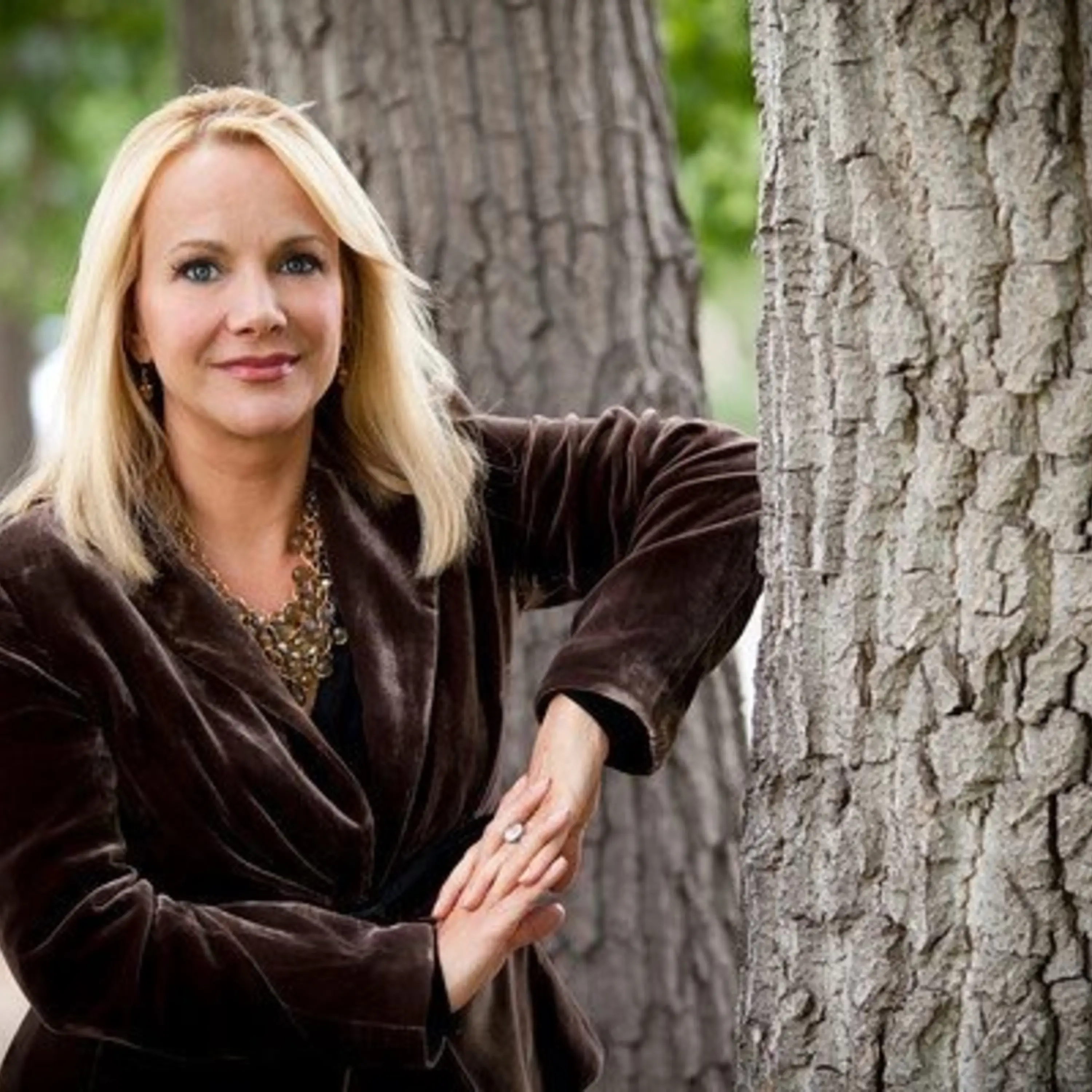

In an inspiring chat with Dr. Scott Adzik, we explore the transformative world of fetal surgery at the Children’s Hospital of Philadelphia. As more than just groundbreaking medical procedures, these surgeries offer hope and radically improved lives for children diagnosed with debilitating conditions before birth. Discover how these life-affirming interventions are shaping future prospects and the exciting advancements lying on the horizon with gene editing and artificial intelligence.
SPEAKER 04 :
welcome to the good news with angie austin now with the good news here’s angie hello there friend angie austin and jim stovall we’re talking about his winner’s wisdom column and this week it is titled the art of elimination oh i need to be eliminating some things in my life what’s this all about jim
SPEAKER 06 :
Well, you know, we have too much of everything in our world today. Too much information. Our schedules are over full. We just have access to everything. Our closets are over full. The fastest growing industry among them is… is the mini storage building. I mean, people have so much junk, they can’t get it in their house. So they have to pay for storage to put it in. And, you know, and in our life, we need to eliminate as many things. And the weekly columns that our radio shows are based on is read around the world. And a lot of people will write to me, and I encourage that. And that’s where I get a lot of the ideas for columns. And there is a gentleman in India, Ashar Babesh, And he wrote to me, and one of his quotes I used in the column, you know, they’re really big on growing gardens. Everybody has a garden at their home in India. And he said, your garden is never complete until there’s nothing else you can eliminate. You know, it’s a process of getting rid of everything you don’t need. Or as Sir Arthur Conan Doyle wrote in his great character Sherlock Holmes, he said, well, When all possibilities have been exhausted, that which remains, no matter how absurd, must be true. And you just peel away all the layers until you, you know, life’s a huge multiple choice question. And if you get rid of enough of the choices, it becomes really apparent what you ought to do in that thing. You know, that’s so much of where we need to be in our lives is, you know, getting down to the minimal. And then I, as we’ve talked about many times, Angie, you become like the five people you hang around with. The five people you spend the most time with is who you will start to emulate. You know, their values, their speech. success or lack thereof, you’ll start to become like those five people. And when those that I speak to or they read my writing start to understand that, you know, they make some choices. They eliminate people. I’m not saying you cut people off and never see them again. I’m saying that, you know, you need to spend your core serious time with people that are feeding you. You know, everybody we meet, personally or professionally, they either make a deposit into our account or they make a withdrawal. There are people that every time you’re with them, you feel energized, upbeat, wow, I can do anything. And then there are people you spend time with and you feel like you need to lay down and take a nap. I just can’t take it anymore. You know, and we all have people like that. And, you know, you need to… There are people in my family and others that don’t necessarily make deposits into my account. I still see them. I go to reunions. I hang out with them. But when I’m in the middle of a writing or a creative project or I’m getting ready to go on stage, I will not talk to them. I can’t keep my attitude where it needs to be with certain people. And so that’s what we’re talking about is eliminating all of those things out of your life.
SPEAKER 04 :
Now, when you talk about your work with the Stovall Center for Entrepreneurship, which I know was one of your big goals when you were broke and going blind, that you wanted to eventually make money to give money, and you donated money for the Stovall Center for Entrepreneurship. And you talk in the column about training college students from around the world in how to run their own business. So tell us how you incorporated that into the article.
SPEAKER 06 :
well i’m glad you asked it today we have a group that came in over the weekend and i’m going to be meeting with them again today a group from africa and we have sent people over there and we call it the frontier entrepreneurship where you go and you actually help people create small businesses and things in their communities and it’s just amazing what a game changer it is for these people all over africa in asia and south america and it’s so much fun to do But I always tell your entrepreneurs, you don’t fail because you can’t do the big things right. You fail because you don’t get rid of the little things you shouldn’t be doing anyway. Everybody wants to fill up your calendars. and I refuse to let people write in my calendar. I have to decide what should I be doing today. And, you know, and you get all these people, hey, Jim, I just need 30 minutes of your time, or watch this hour-long video and let’s discuss. No, you don’t get to do that, guys. You don’t get to do that. I only have so many hours in a day, and I’m responsible for them, and I’ve got to spend them wisely. And, you know, that’s the important thing, and I’ve – You know, it’s funny. I remember in my first movie, I was trying to get Paul Newman to come play the lead role. And I had interviewed him for television, and I called him up. And I said, Mr. Newman, I got this book. I’d like you to do the movie. And he said, you got one minute. I said, well, you’re my first choice. It’s like prom week, and you’re the prettiest girl. He said, okay, you’ve got five minutes. I want to hear about this. And, you know, and then we talked about it, and it turns out his health wouldn’t allow him to do it. So we were blessed. We got James Gardner, and it was fabulous. But, you know, he had this great way of, you’re not going to waste my whole day here. You know, you get a minute, and I’m not kidding you. um you know and that’s important when you reach out to important people in your lives or whatever you know can you give me 15 minutes well you know unless they ask me to stay i’ll be walking out the door in 14 minutes i you really need to honor people’s time and you know and people have asked me all the hundreds of celebrities i got interviews with how did you get the interviews with them well You know, I got turned down over 90% of the time, but hundreds of people I got because I said, look, I need 20 minutes of your time anywhere in the next four months. I mean, you know, four in the morning at the Arctic Circle, I’ll be there. Whatever you want to do. Give me 20 minutes anytime, anywhere in the next four months. And, you know, make it easy for people to help you.
SPEAKER 04 :
Yeah, make it easy for people to help you. It’s a good point.
SPEAKER 06 :
So, you know, those are the things that, you know, and you need to eliminate the things that don’t feed your soul, your spirit or whatever. Or realize that, okay, I’ve made a decision. I’m giving my time, effort, and energy to somebody else. But just to let somebody take that away from you, you need to eliminate a lot of those things in your life.
SPEAKER 04 :
You know, you had told me… On one occasion, many people will call you and ask for advice on something. You put your number in there. You put your address in their books. If you’re talking about finances, you say don’t believe or take advice, financial advice from people who don’t have what you want. So you’ll put information on your finances in there as well. But somebody called and wanted some kind of business advice, and you told them to, I think, read one of his Zig Ziglar books. Was that the book that you – Yeah, I tell people to read –
SPEAKER 06 :
I tell everybody, you know, read Think and Grow Rich by Napoleon Hill and call me back. Because when I got my mentor, Lee Braxton, he made me read that three times. And he said, this will be the basis for what I teach you. And I try to do, well, a lot of people, you know, no, I just want the quick, easy, you know, give me the pill. I don’t want to, I don’t want to like read a book or learn anything. I just tell me the magic secret, you know, and now read the book and call me back. And, uh, And, you know, and that gets rid of the vast majority of them. They never call back again.
SPEAKER 04 :
Yeah. You said that you tell them this one case. You said that you said, you know, read that and then call me back and we’ll have a discussion and that people don’t read it. And then they don’t call you back. They don’t want to do any of the work, which is astounding to me. I mean, they’re talking to a great businessman who’s written over 60 books, working on his ninth movie, started the Narrative Television Network, all of this while either going blind or being blind. And then they can’t take that little bit of time to do that. I mean, don’t you read like a book a day?
SPEAKER 06 :
Yeah, I do every day. And that’s become such an important part of my life. But, you know, I, you know, if they knew what I earned for an hour on stage or an hour consulting with corporate CEOs or Fortune 500 people. And reading a book is a pretty small price. And, you know, by the way, this is a book I think everybody ought to read anyway. I’ve never met a successful person that hasn’t read Think and Grow Rich. It is unique and different among, you know, when you’re around mega successful people. They don’t ask if you read it. They’ll ask you, when did you first read Think and Grow Rich? And that’s, well, you don’t want to be the one that didn’t read it. But I just, yeah, you find ways to eliminate people. Or, you know, better yet, they eliminate themselves. And that’s a good way to do it. But, you know, once you get rid of the garbage in your life, that which remains is… you know, pretty amazing. I remember Michelangelo, he was talking as he was creating David, that magnificent marble sculpture of David. And, you know, he was explaining to a group of onlookers how you do it. They said, well, how do you visualize it, whatever? He said, no, you take a big piece of marble and you just get rid of everything that’s not David. And then what’s left is David. He’s inside there. And he really visualized it that way. Well, I think we need to look at our lives. Our best, highest calling, our most significant life is there for us if we’ll get rid of all the other stuff. We’ve got what we need to be successful. You’ve just got to get rid of the static and the noise.
SPEAKER 04 :
You know, and there’s no excuse either to the book. I mean, you can get it at a library. But I was looking at how you can read it for free because I haven’t read it in a while. And it was written, I think, in the 1930s, if I recall correctly. So some people say, oh, it’s old. It’s old information. But what’s amazing to me is how relevant – what he teaches you is to now even though you can tell by the language etc that it is you know from the 30s it’s obvious that it’s not you know written recently but that the information is so relevant but anyway i was looking at free ways to grab it again you know to read and they actually have an app and it’s um an app and it you it’s a think and grow rich offline and it’s a little app and then you read that’s all it is is an app that has that book on it
SPEAKER 06 :
Yeah, and it’s totally unique. I mean, everybody, including myself, that’s written personal development books owes a debt of gratitude to Napoleon Hill. And it’s not a success theory. It’s not some ideas or a formula. Because he had a relationship with Andrew Carnegie, the founder of U.S. Steel, the richest man in America at that time. Carnegie introduced Napoleon Hill to 500 of the most successful people of that era. I mean, Henry Ford, Alexander Graham Bell, J.C. Penney, Helen Keller, on and on, 500 of these people. interviewed every one of those and synthesized their findings, their actual experience, not their theories, their thoughts, actual experience into what he calls the science of success. So it’s not some kind of an idea or a theory that might work. This is what the 500 most successful people of that era did to become successful. And so it’s unique in that way.
SPEAKER 04 :
Now, when you’ve read it many times, I’m sure, are there any two or three things that really stand out as things that have helped you a lot?
SPEAKER 06 :
Yeah, it changed my life. One of his 17 success principles is every heartbreak, every setback, every adversity is endowed with the seed of a greater good. So what he’s telling us is when something bad happens, There’s something on the other side of that that is a greater good, and you’ve got to go find it. And, you know, for me, I mean, losing my sight was not great. But when I look on the other side of it in the life I have, and I don’t know that I’d trade places with anybody. I don’t know that I would have gotten to this point without that. And, you know, I was talking to a woman not that long ago. She called me. Her life’s a disaster. She had a horrible marriage. Not one good thing came out of my marriage. And I said, well, go back and tell me, you were telling me before, tell me about those three little kids you got. Because if not one good thing, I mean, you know, and, you know, there’s always, but every, you know, and Angie, we’ve talked about it, the opportunities come disguised as problems. Ideas or solutions are the disguise of the problem. So every adversity is endowed with the seed of a greater good. And when I read that the first time and I was losing my sight, I thought either this guy’s crazy or somebody owes me a lot bigger good.
SPEAKER 03 :
They owe me a lot bigger good. Love it, Jim. JimStrobel.com. Thank you, friend. Thank you. Be well. You too.
SPEAKER 02 :
We’ll be right back. the holiday shopping at arc thrift they now need your donations as long as your items are gently used arc thrift will take them and give them a new home you may have gotten some new clothes and now you need to clear out some room in that dresser or closet just donated at one of arc thrift’s 38 locations or their 15 donation centers They always need donations, so why not start out the new year with downsizing the items you no longer need? You can find any Art Thrift store or donation center on their website at artthrift.com.
SPEAKER 04 :
Colorado Springs is listening to the Mighty 670 KLT. Hello, friend. This is Angie Austin with the good news. And this interview is actually one of my favorite interviews of the year. Dr. Scott Adzik is joining us again. He is the surgeon in chief of Children’s Hospital of Philadelphia, known as CHOP, and founder and director of CHOP’s Richard D. Wood Jr. Center for Fetal Diagnosis and Treatment. Welcome back, Dr. Adzik. Thank you. It’s nice to speak with you again, Angie. You know, what I find fascinating, I just love what you do. What I find fascinating is that you’re operating on babies before they’ve been born, and you’re saving lives and improving the quality of the lives of these babies, you know, while they’re still in their mother’s womb. So fascinating. Let’s first talk about how common are birth defects. I was a little bit surprised by this stat.
SPEAKER 05 :
Well, January is Birth Defects Awareness Month, so this is very topical. Birth defects are common. In the U.S., one in every 33 babies is born with an anatomic or genetic birth defect. So common, common, common. Birth defects are also costly. Billions of dollars are required for medical treatment. Birth defects are also merciless. No parent is immune. They’re mysterious. Those causes of birth defects are unknown. In my view, are overlooked and that I believe research is underfunded. And birth defects, serious birth defects are deadly. They’re the leading cause of infant mortality. So if you look at the entire U.S. on a yearly basis, about close to 150,000 babies are born with birth defects. And unfortunately, many are so rare that even doctors may not recognize them before birth. And too often families never hear about specialized treatments available at centers like ours at the Children’s Hospital of Philadelphia or CHOP and are left feeling overwhelmed or alone.
SPEAKER 04 :
Angie, you and I are going to fix this. Every year we try to, don’t we? All right, so in terms of what you can do inside the womb and what you can fix, can you talk about the different types of birth defects that you work on in the womb?
SPEAKER 05 :
Well, I’ll give you two common examples that we most frequently do here. So we’ve, I don’t know, we’ve done, it was 1995 when we started evaluated, I think, more than 35,000 pregnant mothers carrying babies with birth defects, all 50 states, more than 70 countries. We’ve done close to 3,000 fetal surgery operations, and the most common two I’ll explain. One is spina bifida. Well, what is that? Spina bifida is a birth defect where the spine and the spinal cord don’t form properly before birth, leaving a gap or hole in the backbone that leads to Before birth, nerve damage to the exposed nerves from the amniotic fluid, which is basically fetal urine. Mobility problems. These are children, if not treated before birth, are often wheelchair-bound for life. It also leads to hydrocephalus and brain damage and the need for a shut tube to drain fluid from the brain to the abdomen. We can fix this condition before birth. We repair it. and ameliorate or prevent or mitigate many of these complications so that through the operation, usually between 23 and 25 weeks gestation, her term is 40 weeks. So the fetus is about the size of my hand. We do a delicate repair in utero and then keep the mother out of preterm labor. And the results are pretty astonishing. Although this is not a complete cure for spina bifida, these children on average are able to walk. I have a markedly decreased rate of requiring one of those shunt tubes and a bunch of other. We did the first one of these in the world in 1998, and now we’re about to do our 500th fetal surgery.
SPEAKER 04 :
Unbelievable and this one I think I’ve told you really touches my heart just real quickly because my girlfriend’s daughter has spina bifida and when she found out she was very young she was 19 and the doctor said now when do you want to schedule the procedure and she said what procedure she said well we’re going to terminate the pregnancy. And she did not do that. But here she is 19, and she knew nothing but what the doctor was telling her. She was devastated and thought that she had to abort her baby. And this kid wears leg braces, walks around, functions just like a normal kid. She’s had a wonderful life. So I really love what you’re doing now with these kids. Okay, the next one. What’s the next one?
SPEAKER 05 :
The next one is twin-twin transfusion syndrome. So what’s that? It goes by the acronym TTTS for short. It involves identical twins. In separate amniotic sacs in the uterus, the usual arrangement is the fetus is hooked up to the mother’s circulation through the placenta via the umbilical cord, and then the placenta is like a disc on the inside of the uterus. In twin-twin transfusion syndrome, these identical twins, they share the same placenta, such that the problem is that one twin gets too much blood from the mother and goes into heart failure.
SPEAKER 07 :
Ugh.
SPEAKER 05 :
has an increased amount of amniotic fluid volume, and the other twin doesn’t get enough blood, it goes into kidney failure, and it doesn’t produce any fetal urine or amniotic fluid, and it’s shrink-wrapped in the membranes inside the uterus, and these twins will go on to die unless we form fetoscopic laser therapy. So what does that involve? That involves putting in a two-millimeter diameter fetoscope through the mother’s abdominal wall, through the uterine wall, visualizing the placenta, and using a laser fiber to occlude or photocoagulate the culprit, crossing blood vessels from one side of the placenta to the other. And the results are pretty astonishing. Greater than 90% of cases, both twins will survive.
SPEAKER 04 :
Wow. I’ll say. All right. So in terms of like the future of what you’re doing, what are you seeing for the future of fetal medicine and fetal surgery?
SPEAKER 05 :
Well, I’d like to just mention three things that might be of interest to you and your listeners. First, Dr. William Peranto, a pediatric surgical scientist and fetal surgeon here at CHOP, is working on gene editing using CRISPR technology to essentially treat single-gene disorders diagnosed before birth, such as cystic fibrosis, muscular dystrophy, sickle cell anemia, a whole long list of things. And he’s worked in fetal animal models as proof of principle, and eventually this will be applied clinically. And when that’s applied, if you have the right technology, it’s going to be transformative. That will transform thousands and thousands of unborn children’s lives, because we believe that in utero gene therapy is going to be superior to gene therapy after birth.
SPEAKER 04 :
My goodness. All right.
SPEAKER 05 :
Dr. Alan Flake, another pediatric surgical scientist here at CHOP and fetal surgeon, has been working for the last decade in the artificial womb. So babies born at 23 to 25 weeks gestation, a very premature baby’s term is 40 weeks, they don’t have a very good outlook, high mortality, and if they do survive, a lot of complications. So Dr. Flake working in a fetal sheep has shown that he can support in the artificial womb through the umbilical vessels for four to five weeks, these lambs, fetal lambs, and with normal growth and development. So the idea is to apply this clinically and get a baby born at 23 weeks or 25 weeks out to 30 weeks where the odds of survival, a good survival, and decreased complications is much better. And so this is being followed on the FDA fast track, and we hope to do the first clinical trial By the end of this year, when we talk next year, perhaps that trial will be. Third area, artificial intelligence, big data. Artificial intelligence, big data. So we created the Clinical Outcomes Data Archive, known as CODA, C-O-D-A, a first-of-its-kind database that combines real-time medical records with carefully reviewed clinical information to improve prenatal diagnosis and care. So since 2013, over the last 12 years, CODA has tracked every mother and every fetus treated in CHOP’s Center for Fetal Diagnosis and Treatment and now holds more than 15 million data points from over 15,000 patients to help clinicians make earlier, better-informed decisions. So one current application of this very powerful artificial intelligence technology is in the delivery room of the future. Dr. Natalie Rintoul, one of our neonatologists and her team, are working on the golden hour, the first hour after a baby with a serious birth defect, say, complex congenital heart disease is born. We can use all this powerful real-time data and algorithms to maximize efficient, helpful care, and that’s extremely exciting. So those three things, in utero gene editing, artificial womb, and CODA, artificial intelligence.
SPEAKER 04 :
Well, I can’t wait until our interview next year. I want to make sure that people can get more information and maybe they can even read about that party you have every year to celebrate all these kids and the lives you’ve saved. Where do they go for more info, Doc?
SPEAKER 05 :
Website for CHOP, Children’s Hospital of Philadelphia. So it’s fetalsurgery, that’s one word, fetalsurgery.chop.edu. So fetalsurgery.chop.edu. Thank you.
SPEAKER 04 :
Dr. Scott Azick, thank you for all you do for others. Really appreciate you. You’re welcome. Always a pleasure. And vice versa, thanks. Always a real, I don’t know, I feel like privileged to talk to Dr. Scott Adzik. You know, he talks about this party that they have every year where they have kids come back that were operated on before they were even born. And he said to see them throw the baseball around and, you know, have this party and be, you know, doing so well after all these years and all these advancements. I mean, when he first started doing these surgeries, it was something that was like unheard of, right? And so to have just a huge party of kids, young people who are healthy, who were, you know, patients of his while they were in their mother’s womb. I mean, it’s he said it brings a tear to his eye. Well, now I even understand even better because I was looking for some of his amazing work. For this celebration that they have every year. So it says at Palm Beach Lakes High School in Florida, there’s a speedy baseball player named Roberto Rodriguez. That’s who Dr. Azick is standing next to, who aspires to play in college and then perhaps professionally. At the Children’s Hospital in Philadelphia, CHOP, there’s a surgeon-in-chief named Dr. Scott Adzik who played college baseball at Harvard. I had no idea that Dr. Adzik played college baseball at Harvard. And he’s handsome. So he’s like a world-renowned surgeon with all these awards, and he played baseball at Harvard, and he’s handsome. It’s like he’s got it all going on for him, right? Well, Dr. Adzik keeps a signed Sandy Koufax bonus office, and his son, Dr. Adzik’s son, was drafted by the Philadelphia Phillies. I’m going to have to look that one up. Their love of baseball aside, there seems to be little that would connect these two men, the high school baseball player in Florida and Dr. Adzik at CHOP up in Philadelphia. But when Adzik, the C. Everett Koop professor of pediatric surgery at CHOP and a professor of pediatric medicine at the Perlman School of Medicine, talks about the high school baseball player Rodriguez, he turns into the high school baseball player’s biggest fan. Dr. Adzik, after all, has a lot invested in this young high school baseball player because young Rodriguez was his first fetal surgery patient at CHOP in 1996. And since the operation, young player Rodriguez, he had a tumor that was removed from his lung when he was just a fetus. So the tumor was removed from the fetus’s lung when his mom was 22 weeks pregnant back in 1996. Since then, fetal surgery has grown from a new and risky endeavor into a far more commonplace practice. And led by Dr. Adzik, who founded and directs CHOP Center for Fetal Diagnosis and Treatment, the hospital has corrected debilitating or life-threatening birth defects on more than 1,000 babies still in the womb, which represents about a quarter One-quarter, one-fourth of all fetal surgeries performed worldwide. That’s how advanced CHOP is. I just thought that was such a cool story because I didn’t know Dr. Azick played ball at Harvard, and I didn’t know that his son was drafted by the Phillies, and I didn’t know that his first fetal surgery in 96 was done on a young man who is now a high school baseball player who’s an aspiring athlete. A college baseball player. So this actually, interestingly enough, I got a follow up on all of this because Roberto Rodriguez is now older. This is a little bit older article, but I just thought it was very interesting that tie in and that it was his first patient and he plays baseball, too. And I don’t know, the whole thing is just really neat. So you’re listening to The Good News. Always a pleasure to talk to Dr. Scott Adzik. Just wanted to share a little bit more about him with you. Super cool, isn’t it? I mean, this whole thing, fetal surgery is just fascinating to me and the lives that are saved. Thanks for listening to The Good News.
SPEAKER 01 :
Thank you for listening to The Good News with Angie Austin on AM670 KLTT.