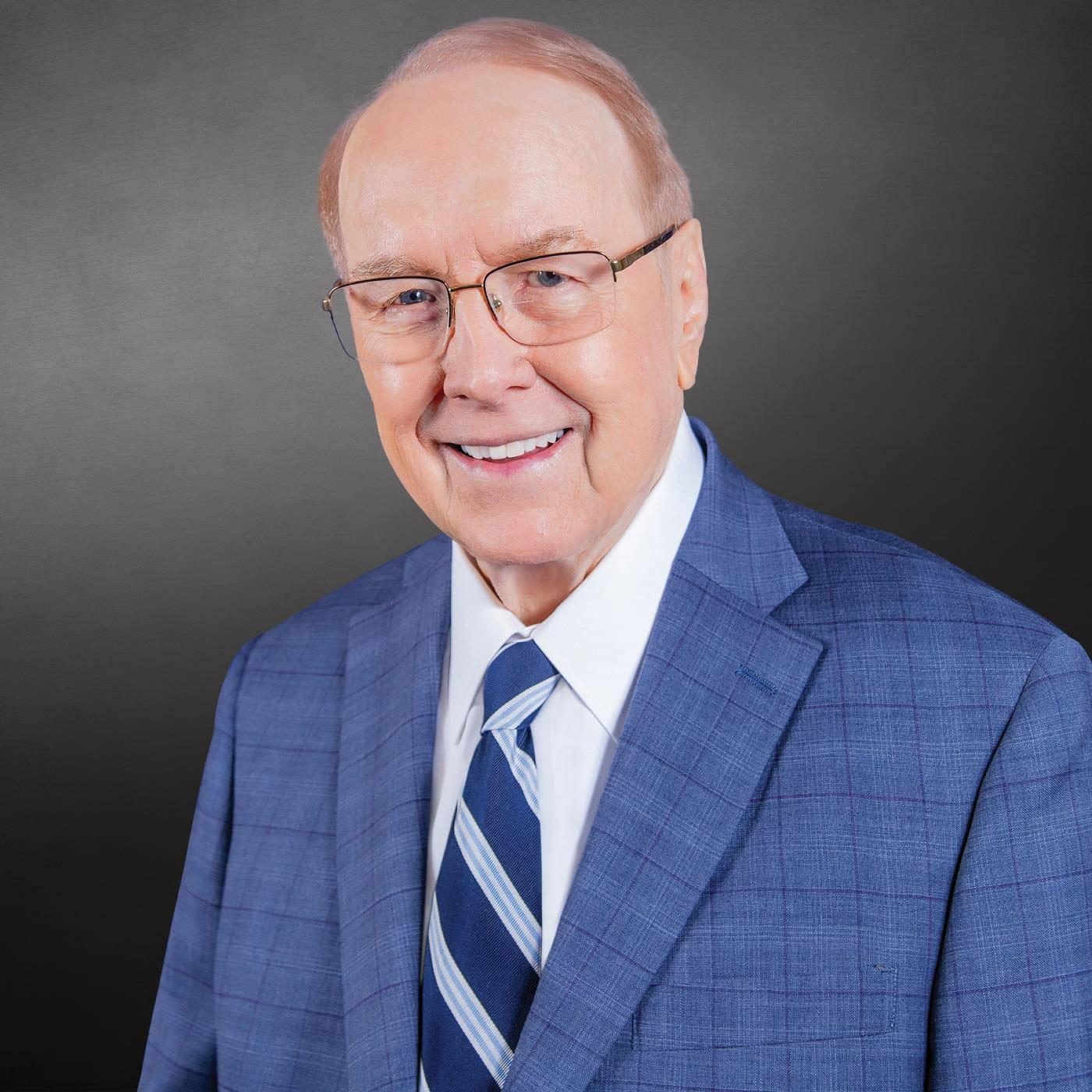

Join James Dobson and guest Lee Strobel in this enlightening episode of Family Talk as they delve into the profound meaning behind Christmas. Discover how Strobel’s investigative journey from atheism to Christianity was inspired by an unforgettable encounter with a family from Chicago. As they unpack the newly revised and expanded edition of The Case for Christmas, listeners are invited to deepen their understanding of this season’s significance and the miracles that define it.
SPEAKER 02 :
Well, hello, everyone. I’m James Dobson, and you’re listening to Family Talk, a listener-supported ministry. In fact, thank you so much for being part of that support for James Dobson Family Institute. Well, welcome to Family Talk, the broadcast division of the Dr. James Dobson Family Institute. I’m Roger Marsh, and happy December. We are only a few short weeks away from celebrating the birth of our Lord and Savior, Jesus Christ. It’s a date that changed the course of human history, an event that changed the course of human history. In Isaiah 9, verse 6, we read these words, Well, we have a special program for you today here on Dr. James Dobson’s Family Talk, featuring a guest whose name you will definitely recognize. As someone who has been on the Family Talk broadcast several times throughout the years with Dr. James Dobson, our guest today is Lee Strobel. Lee is a New York Times bestselling author. He’s written more than 40 books and his books and curricula combined have sold more than 14 million copies. Now, if you are not familiar with Lee’s story, just a brief synopsis. He was a journalist at the Chicago Tribune for 14 years. His wife became a Christian, and so he went investigating and started probing the evidence for and against Jesus Christ for nearly two years, and famously became a Christian in 1981. He currently serves as founding director of the Lee Strobel Center for Evangelism and Applied Apologetics at Colorado Christian University. A recently reissued and updated and revised expanded edition of his book, The Case for Christmas, has just come out, and that will be the topic of our conversation for today. Lee Strobel, welcome back to Dr. James Dobson’s Family Talk. It’s good to see you again.
SPEAKER 01 :
Great to see you, Roger. So glad to be able to be with you and your listeners.
SPEAKER 02 :
Well, we appreciate the work that you’ve done. And I know that Dr. Dobson loved the work that you did and talk about your relationship just briefly with doctor, because I know it’s a, it’s kind of an interesting time now to be on family talk and doctors with the Lord.
SPEAKER 01 :
Yeah, it goes way back. I mean, I met him many, many years ago and did his show countless times with him. I often did it in studio there in Colorado Springs, which was great. And his wife had her office right there, so that was wonderful to be able to interact with her. Just a great man, great organization and a great message that he put out to America and beyond.
SPEAKER 02 :
Yeah, we are so privileged to be able to carry that torch on into the new year as well. And Lee, as we are here on the first day of December, Christmas, of course, is rapidly approaching. Are there any Strobel family traditions that you’re looking forward to partaking in or have you actually gotten some of the Christmas stuff already kicked off at your home?
SPEAKER 01 :
Well, we always decorate the house, and the grandkids come over with my daughter and her husband on Christmas Eve and Christmas Day. We go to church on Christmas Eve, and that Christmas Day, we get together, open presents, and have a little prayer time to kind of usher in the new year coming up.
SPEAKER 02 :
Just a great family time. Now, Christmas for you, I’m sure, was kind of a cultural phenomenon prior to becoming a Christian. And in the introduction of the newly expanded edition of The Case for Christmas, you go into detail about during your days at the Chicago Tribune, there was an encounter with a family in particular that changed your perspective on Christmas. Talk about that.
SPEAKER 01 :
Yeah, here I was an atheist, and I was assigned to do a 30-part series on the poorest families of Chicago. So each day I would profile a family, and the first family I did was a Delgado family. It was a woman, perfecta, 60 years old, but crippled by arthritis. She had two granddaughters. She was raising a 13-year-old and an 11-year-old, and they were absolutely destitute. I mean, they lived in a hovel. They had nothing. I mean, no furniture, no bed. The girls had one thin dress between them, no coat to go the half mile to school together. They had to share a thin gray sweater along the way. They had nothing. And yet they were, there was no sense of being a victim or depressed. They were joyful because they had faith in God and that God had not forgotten them and that they had a relationship with him and they were alive with that. And it really struck me. So I wrote the article that appeared on Thanksgiving and I went back to visit them on Christmas Eve and they opened the door to their place and it looked like Macy’s. I mean, the readers of the Tribune had showered them. They had furniture. They had appliances. They had food overflowing. They had Christmas tree with unwrapped gifts underneath it. They had coats. They had scarves. They had gloves. They had a bed. I mean, it was—and cash in the bank. And yet what I interrupted was them packaging up a lot of their stuff in boxes to give it away to their neighbors. Wow. And I said, what are you doing? Because to me as an atheist, man, I would have sold anything extra. And they looked at me and said, no, this is wonderful. This is so generous. But, you know, we cannot have plenty while our neighbors have nothing. This is what Jesus would want us to do. And I said, well, are you grateful for what the Tribune readers did? Oh, this is wonderful. This is a gift from God. We don’t deserve this. But she said, that’s not God’s greatest gift. That comes tomorrow. That is Jesus. And I was so blown away by that because here I’m thinking, here people had nothing, and yet they had joy, they had faith, they had hearts that were full. I had everything I needed materially. I was successful in my career, but my heart was as barren as that. their hovel had been. And it just was, it was a wake-up call. Suddenly something in me wanted to know who they knew, this Jesus that they knew. And it planted a seed in me, kind of a link in a long chain of events that ultimately brought me to faith many years later.
SPEAKER 02 :
I love to hear that story from Lee Strobel today here on Dr. James Dobson’s Family Talk. We’re discussing the newly revised, expanded, updated edition of Lee’s classic book called The Case for Christmas, and we’ve got it linked up at drjamesdobson.org. Lee, one of the things that I know our listeners really appreciate about the work that you’ve done over these past four decades plus is the fact that you have a passion, obviously, in the case of you exploring Christianity. Your wife, Leslie, had become part of this group of people, and you’re thinking, well, what have they done to my wife? You know, you’re trying to keep your marriage together. But at the same time, though, you really did the due diligence, did the homework, did a lot of study. And there was one part of that that still continues on today is the fact that you still keep studying and still keep learning how to share this. There was a study of one Greek word, I understand, in this new book that shed some new light on the traditional Christmas story. Talk about that revelation.
SPEAKER 01 :
Yeah, this is really fascinating. You know, the story you typically hear at Christmas is that Mary and Joseph went off to Bethlehem because he was with the house of David. He had to go to their register for a census. She’s pregnant. As they’re arriving in Bethlehem, she begins to give birth. They go to an inn, a lodge, and the innkeeper says, sorry, no room, turns them away. So they go into a stable or a cave and she gives birth among the animals. and puts the newborn Jesus in the clean hay of a manger. That’s kind of the story we hear. It all hinges on one Greek word, katalima. And the question is, what does that word mean? Because the King James Version, going back to what, 1611, translated it as an inn. And so it says there was no room for them in the katalima, the inn. But that’s probably not the correct translation of Catalima. And the reason is that Luke had another word when he wanted to talk about an inn. He used the word Pandoheion in the Good Samaritan story. So a commercial establishment for him was a Pandoheion, not a Catalima. And you have to understand how houses looked in first century Bethlehem in Jewish culture. Right. They were one large room divided into two parts. The larger part was the living area. This is where people would eat and sleep. And then there was a couple of steps down into an adjacent part of the building where the animals were brought at night because they were like pets. They may have a couple of sheep, a couple of goats, and they would bring them in to this area. It had a slanted floor so they could clean it in the morning. And there was a manger there, but there was also a manger in the living area because often the animals would come up the stairs and hang out in the living area because they were like pets almost. So they had mangers in both places. Now, the wealthier families had a katalima. That’s a guest room, a separate room that had a separate entrance. And so I believe that, and most scholars would say, that when Mary and Joseph arrived in Bethlehem, they went to the home of a relative, House of David, but there was no room in the guest room, the katalima for them. And so Mary apparently gave birth in the living area. And you know what? Some animals probably wandered up the stairs to see what was going on. And guess what? There is a manger there, and the baby was laid in the manger. Later, Luke also uses the word ketalimon when he describes the setting of the Last Supper, which again was not a commercial establishment. It was an upper room of a home. So even going back to the year 1395, John Woodcliffe in his translation translated it as a guest room. And nowadays in the New International Version, which is a very popular, accurate version of the Bible, they translate it as a guest room. So, you know, I don’t want to pop any bubbles, but there was probably no innkeeper. And by the way, scholars say that the value of hospitality was so strong in that culture that if there were an innkeeper and he had turned away a pregnant Jewish woman, he would have been ostracized. He would have been driven out of business. He would have been driven out of town on a rail. I mean, you could not do that in first century Jewish culture. So it’s probably a guest room that we’re talking about.
SPEAKER 02 :
Well, you know, that’s helpful to know because when you think about the story, the way that we’ve been told, the way we tell it traditionally, and you think about some of the modern debates that we see about Old and New Testament with regard to, well, was it this sin or that sin or was it this action or that action? Getting the story straight and understanding the fact that this is more of like a casita, if you will, or an ADU or something like that that’s attached to the home. Yeah. You can see how that part of our Christian faith really is accentuating the fact that home is where our faith begins. Home is where it grows. And the fact that sometimes we get wrapped up in the, well, if we can’t go to a physical church building, well, you can still, I mean, do what the early church did. They met wherever they could, you know, and this is… I think this is helpful and hopefully, like you said, didn’t shatter too many preschool pageants and things like that that are happening.
SPEAKER 01 :
The other aspect that’s often misunderstood is people think that Mary was on the verge of giving birth as she arrived in Bethlehem. We don’t know that to be true. says in his account in the gospel is while they were there in Bethlehem, she gave birth. We don’t know if it was five minutes or five days or five weeks. Where this came from was there was a later writing in AD 200. So this is almost a couple of hundred years later, not a historical writing. It’s called the Proto-Evangelism of James, but it had no connection to James. It was a fictional account. And in that fictional account, Mary and Joseph are three miles away from Bethlehem. They So that’s where that idea of the cave came from. And it’s not from a historically reliable document.
SPEAKER 02 :
Well, this is very interesting. And I commend Lee Strobel, and I know all of us do here at the James Dobson Family Institute, for writing a book first like The Case for Christmas, as he did many years ago, but then revisiting it with new research and updating it. The fact that the mercies of God are new every morning and you continue to learn and grow. And I think this is very interesting. It’s helpful for us, even though, like Lee mentioned, we might see different Christmas pageants at our preschools coming up in the later years with regard to this new discoveries. You also mentioned some of the Greek mythology that was surrounding the birth of Christ and even Dan Brown and the Da Vinci Code. Why was it important for you to look into that text and talk about that in this new updated version of The Case for Christmas?
SPEAKER 01 :
This is a very common objection you’ll hear from skeptics. They’ll say, oh, and this was popularized, as you say, by Dan Brown in his book, The Da Vinci Code, his movie, and so forth, which said that Christianity is just a copycat religion. This idea of the virgin birth and so forth, this all came from earlier mythology and was copycatted by Christians. Well, that’s just not true. The example he used and is very commonly used is the myth of Mithras. Mithras, according to Dan Brown’s account, Mithras was born of a virgin. And he was born on December the 25th. And he had 12 disciples. And he died for world peace. And he was resurrected from the dead. So Christianity just copied those ideas in the story of Jesus. It’s not historically true. Well, when you do the research, you know what you find? Mithras was not born of a virgin. Mithras, according to the ancient myth, emerged fully grown, naked, wearing a hat, fully grown from a rock. So he came out of a rock. That’s the myth. Secondly, was he born on December the 25th? Yeah, but so what? We don’t know the date that Jesus was born. It’s not in the Bible.
SPEAKER 02 :
Exactly.
SPEAKER 01 :
Yeah. And then third, did he have 12 disciples? No. According to one version, he had one disciple. According to another, he had two. Did he die for world peace? No. He was known for killing a bull. Was he resurrected? No. There’s no account of him having died, and so therefore no account of a resurrection. So all of these parallels dissipate when you investigate the actual evidence.
SPEAKER 02 :
You know, you mentioned the birth of Jesus, the timetable as to whether or not Mary was about to give birth or, you know, when she went to the inn, which is now, you know, someone else. Talk about the, this is a big topic of conversation now I’m seeing on social media, especially as people of the Catholic tradition, Christian evangelical traditions, things like that go back and forth over who’s right about certain things. And one of the issues is the virgin birth of Jesus. And then, you know, getting into a deeper conversation about Mary. Yes. In the book, the new book, the updated version, you discovered some things about the plausibility of the virgin birth. Talk about those, if you would.
SPEAKER 01 :
Yeah, you know, one of the most famous defenders of the faith is Dr. William Lane Craig, who has 200 PhDs. And he used to be a skeptic about the virgin birth. And the reason he said is, no, he said the only way Mary could give birth to a male child is if she had in her ovum the Y chromosome. Males have an X and a Y chromosome. Females have two Xs. And he said she wouldn’t have had that in her ovum. Therefore, she could not have given birth the way that the Bible describes it. But then he realized, wait a minute, we have good evidence that God created the universe. I mean, whatever begins to exist has a cause behind it. We know the universe began to exist, so there must be a cause behind it. And when you look at what kind of a cause can bring a universe into existence, it must be transcendent, spirit, eternal, powerful, smart, personal, creative, caring, and unique. Well, that’s a description of the God of the Bible. And so he realized that based on cosmology, the science of the origin of the universe, God, there must have been a divine creator. And then he said to himself, well, wait a minute. If God can create a universe, then for him to create a Y chromosome in Mary would be child’s play. Yeah. And I think that’s true. I think it just says, you know, that would be very simple compared to the creation of the entire cosmos.
SPEAKER 02 :
And it does help us as believers to listen to some of the criticisms, if you will, of modern era where they’re talking about, you know, the role that Mary played and was she, did she have to accept this happening instead of saying, how is this happening to me? You know, basically she’s, asking rhetorically, which is light years above where a lot of people are. And I think that’s the fact that you’re digging deeper into this too, Lee Strobel, is very helpful. There’s another part of this book, and this is one that has kind of intrigued me for years because I have a couple of friends who are more progressive, if you will, in their faith in Christ. And I love them and pray for them. And they love me and pray for me too, because they think that I’m too far behind. But whenever Christmas rolls around, They go out of their way to wish people a Merry Xmas instead of a Merry Christmas. Yes. And I know a lot of Christians look at that and say, why are you using the letter X? That’s so disrespectful that keep Christ in Christmas. Taking Christ out of Christmas. Exactly. Exactly. But you discovered some things about that. And I would love for you to kind of expand on this for us. Should we be concerned when we see as Christians, when we see the letter X abbreviating the word Christmas?
SPEAKER 01 :
Well, I’m sure there are atheists like I was who put XMAS as a way in their effort to take Christ out of Christmas. But I got to tell them, you’re not succeeding. And the reason is, in the Greek language in which the New Testament was written, the word Christ, Christos, began with an X. It was pronounced chi. And then the second letter of Christos was like a P, and it was pronounced Ro. And so the first two letters of Christ were an X and a P. Well, in the year 1021, a scribe was transcribing some writing, some Christian material on some parchment. He was trying to save parchment because it was expensive. So he was abbreviating some things. And he came to the word Christmas. And he decided to abbreviate it to save some parchment. So he abbreviated it XP MAS. Well, this Cairo XP was a recognized way of pointing toward Christ. In fact, the earliest Christians, because they were oppressed by the Romans, when they had a meeting place, they would write in the dirt XP as an indicator to say, hey, this is where we’re going to gather. So it became known as the Cairo, the first two letters of Christ. And in fact, Constantine, in his big battle in the third century, I believe it was, had the Cairo, the XP, put on shields of his troops. So this guy in the year 1021 abbreviates Christmas as XPMAS, to save parchment. Well, later that got abbreviated even down further to just XMAS. But the X stands for the first letter of Christos, which is Christ. So you’re not taking Christ out of Christmas if you use an X-M-A-S. And by the way, it was really interesting, you know, a couple hundred years ago, whenever it was, when we had that big influx of immigrants coming into, was it Ellis Island in New York? A lot of Jewish people immigrated to the United States. A lot of people were illiterate. And so the customs officials would say, okay, you’re welcome here. Sign this document. And they said, we don’t know how to sign our names. They were illiterate. And they said, well, just put an X. And the Jewish people would not do that because they knew the X stood for Christ. And so they put an O, which represented something in the Yiddish that they were more comfortable with. But even they understood that the X represented Christ. And by the way, Christmas, the word itself is an abbreviation of Christ’s Mass. So it’s an abbreviation in and of itself. So we can put XMAS, God knows our heart, if we’re not trying to take Christ out of Christmas, but just represent him by this ancient symbol.
SPEAKER 02 :
Well, and I love the fact, too, that that little sidebar that you mentioned in about the immigrants coming into Ellis Island and whenever we see someone signing with an X, sometimes we think, well, what’s the matter? They can’t really handle the language or whatever. But I mean, if you’re going to sign anything, maybe we should all, you know, X marks the spot takes on a whole different significance. It does. When you have this conversation with Lee Strobel, Lee Strobel, my guest today here on Dr. James Dobson’s Family Talk. I’m Roger Marsh. The newly expanded edition of The Case for Christmas is out. It’s up at Dr. James Dobson dot org. And we highly recommend it. Lee, we got a couple of minutes left in our time together. And I wanted to make mention of the fact, too, that there’s a special event coming up on December 15th through the 18th.
SPEAKER 01 :
Yes.
SPEAKER 02 :
about your book and now the film called The Case for Miracles. Can you give us a couple minutes synopsis as to why this film was so important and why you’re releasing it right before Christmas time?
SPEAKER 01 :
Absolutely. Christmas is a great miracle. The infinite becoming finite, becoming time bound. I mean, God coming into our world as Jesus Christ and so forth. I mean, that is a miracle in and of itself. I did a book a few years ago called The Case for Miracles, looking at the evidence for contemporary miracles. Is God still in the miracle business today? And so we created this film that’s coming out nationwide on December the 15th called The Case for Miracles. It’s in movie theaters across the country, December 15th through the 18th. And it’s a movie that explores the evidence that God is still supernaturally intervening in his creation today to do the miraculous. We have cases we document that are not something you just read on the internet. Many of them are cases published in peer-reviewed medical journals, confirmed by medical researchers. This is solid stuff. And I think it’ll be an encouragement to Christians, but it’s also a movie that you can invite someone who’s spiritually curious to. And then you get a great opportunity on the car on the way home to have a conversation. Hey, what do you think of that? And then invite them to Christmas services at your church. So we hope people will make use of it as an evangelism tool, but also to enrich their own faith and to see that, guess what? God is still active in our lives today.
SPEAKER 02 :
We so appreciate the research that Lee Strobel does for all of his works, whether it be the books like The New Case for Christmas. or this movie, The Case for Miracles. And we’ve got that linked up at drjamesdobson.org. And I would imagine as you’re driving home from the Fathom Events event, whether it be December 15th, or hopefully it’ll extend beyond December 18th. I know the initial one’s just for a couple of days, and that would be wonderful. Then, you know, you could have a nice gift wrap copy of The Case for Christmas and hand it to him as a Christmas present. I mean, is this, do you see it more as an evangelism tool, or is it to help us who’ve been walking with the Lord for a while appreciate the Christmas season on a much deeper level? Accommodation of both, maybe?
SPEAKER 01 :
It’s really both. And that’s why we kept the price very low. It’s an inexpensive book. I call it a spiritual stocking stuffer. I personally bought 300 copies that I’ve been giving away already to people in, you know, wherever I travel. I serve at a restaurant, a clerk in a hotel. I had my doctor’s appointment and I gave it to the doctor. So I’m trying to get it out because the gospel is spelled out very clearly in the book. People, I pray, will come to faith reading The Case for Christmas. Yeah.
SPEAKER 02 :
Well, Lee Strobel, this is a wonderful book. It’s our privilege to have the conversation with you to let our listeners and constituents know the brand new revised and expanded and updated edition of Lee Strobel’s book called The Case for Christmas. It’s out in stores everywhere, and we’ve got a link for it up at drjamesdobson.org, as well as information on how you can see the movie, The Case for Miracles, which is a Fathom Events event, which means it’s got a limited run. It starts December 15th. It’s scheduled to run through the 18th. But We know that Lord willing, if the demand is there, it’ll carry all the way through the Christmas holiday and hopefully lead thousands of people to a saving faith in Jesus Christ. Lee Strobel, thank you for the work that you do continually to edify believers and nonbelievers alike as to the truth of salvation through grace and faith in Jesus Christ. And thank you so much for being with us today here on Dr. James Dobson’s Family Talk. It’s been an honor. Thank you so much, Roger. God bless you. You’ve been listening to a special edition of Dr. James Dobson’s Family Talk featuring my conversation with Lee Strobel as we discuss the brand new updated and expanded edition of his classic book called The Case for Christmas. Now, if you missed any part of this conversation, remember you can listen to it again at drjamesdobson.org forward slash family talk. Once you’re there, you can also share that audio with a friend, and you can also find information about that newly updated and expanded edition of The Case for Christmas while you’re online with us. Again, go to drjamesdobson.org forward slash family talk. Well, throughout the month of December, we have an extraordinary opportunity before us. Thanks to some generous friends who have created the Dr. James Dobson Memorial Matching Grant, Every gift you give to the Dr. James Dobson Family Institute this month will be matched dollar for dollar, up to $6 million. This is a special opportunity that’s going on now through December 31st. And this remarkable grant honors Dr. Dobson’s legacy and ensures his teaching continues reaching families for generations to come. Now, to participate in this historic matching grant, go to drjamesdobson.org forward slash broadcasts. And speaking of broadcasts, when you make your donation today, we will thank you for your gift by sending you a copy of the 2025 Best of Broadcast Collection. Now, we have gathered the most impactful programs, not only from this past year, but also going all the way back in the archives through our 15-year history here at the James Dobson Family Institute. It’s a memorial in honor of recognizing the the many years of ministry that Dr. James Dobson gave to so many people, nearly 50 years in all. You can request your copy of the 2025 Best of Broadcast Collection when you donate online at drjamesdobson.org. You can also make your contribution over the phone when you call 877-732-6825. That’s 877-732-6825. Well, I’m Roger Marsh, and on behalf of all of us here at the JDFI, thanks so much for listening today. Be sure to join us again next time right here for another edition of Dr. James Dobson’s Family Talk, the voice you can still trust for the family you love. This has been a presentation of the Dr. James Dobson Family Institute.