
Step back in time to explore the profound, initial encounters with Jesus as observed by John the Baptist and his early disciples. In this episode, we delve into the intriguing moments that laid the groundwork for the rise of Christianity. Listen as we recount the mesmerizing charisma of Jesus, and the bold proclamation by John: ‘Behold the Lamb of God.’ Discover the skepticism and curiosity surrounding Jesus of Nazareth and the witnessing of his first miracle at Cana where water turned into wine.
SPEAKER 02 :
The CEM Network is pleased to present Ronald L. Dart and Born to Win.
SPEAKER 03 :
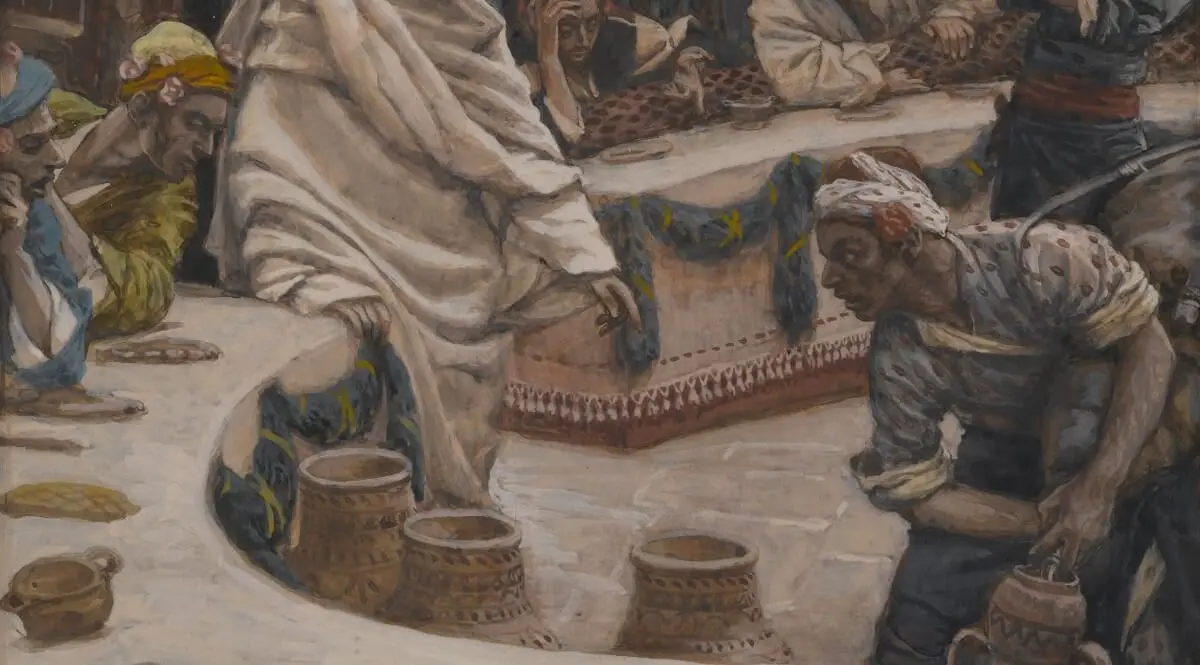
From here, it’s hard to imagine what those first encounters with the mature Jesus were like for the people who saw him for the first time. I have no reason to imagine that Jesus was in any way remarkable to look at, but I know by any human standard he must have been a terribly charismatic person to be around. John the Baptist knew who he was. John the Baptist knew how important he was. He also understood Jesus’ mission. And there’s only one way he could have known what he’d known. He was told. And when Jesus came walking along the bank of Jordan where John was baptizing, John said for anyone nearby to hear, look, the Lamb of God, which takes away the sin of the world. Christian readers take that for granted. I mean, we all know what that means. We all know that Jesus is the Lamb of God. But I can’t think of anything John could have said that would have been more astonishing to the people who were standing around him and heard him say that. Because it assumed, John’s statement assumed, the sacrifice of the person of whom he was speaking. Everyone knew the significance of a lamb that took away sin. That was not a surprise. But to look to a human being and say, look, look there, look at him. He’s the lamb of God that takes away the sin of the world. John the Baptist recognized the necessity of a suffering Messiah, and not only a suffering Messiah, but of a Messiah who would die. No one seemed to have grasped what John was talking about until much later. John said, This is he of whom I said, After me comes a man who is preferred before me, for he was before me. I didn’t know him, but that he should be made manifest to Israel. That’s the only thing I knew. Therefore I came, baptizing with water. We’re in John 1, verse 32. And John bare record, saying, I saw the Spirit descending from heaven like a dove, and it abode upon him. And I didn’t know him. I just didn’t know this one thing. He that sent me to baptize with water. Now, we don’t know who that was, but we can presume it was God. The same said to me, upon whom you shall see the Spirit descending and remaining on him, the same as he that baptizes with the Holy Spirit. And I saw, John said, I saw that happen. And I bear record that this is the Son of God. Now, that’s an important statement because to be a son of God is tantamount to being God. That’s the way the Jews understood it. And when Jesus suggested it of himself, they were ready to stone him for blasphemy because he made himself out to be God. Again, the next day after that, John stood with two of his disciples standing by and he looked at Jesus walking nearby and he said, look, the Lamb of God. And the two disciples heard him speak and they followed Jesus. Jesus turned around and saw them behind him and said, what do you want? And they said, Rabbi, where do you dwell? He said to them, come and see. So they went and saw where he was staying, and they stayed with him that day. It was late in the day. One of these men was named Andrew. We’ll come to know him later. And his brother, though, we’ve all heard of. His name was Simon Peter. The first thing Andrew did was go find his brother Simon and say, We have found the Messiah, which is being interpreted, since John is writing to Gentiles, the Christ. And he brought him to Jesus. And when Jesus saw him, he said, You are Simon, the son of Jonah. You should be called Cephas. By interpretation, a stone. Now, by itself, this is all unremarkable. We have nicknames for all of our friends. But this particular man, his nickname becomes important in his life. The day following, Jesus would go forth into Galilee, and he found Philip, and he said to him, Follow me. Come on. Philip was at Bethsaida, the city where Andrew and Peter were from. And he found Nathanael, and he said to him, We have found him, of whom Moses and the law and the prophets did write, Jesus of Nazareth, the son of Joseph. He’s so excited. He has to tell everybody, but particularly this one. And Nathanael said to him, Can anything good come out of Nazareth? Now, I don’t know what kind of reputation Nazareth had at the time, but we can read between the lines on this and see pretty quickly that Nathaniel didn’t think much of the town. The whole thing is so down to earth. The skepticism is natural and it is healthy. And Jesus’ response to it really was gentle and even a little bit funny. Philip said to him, Come on and see for yourself. And Jesus saw Nathanael coming to him. And as he walked toward him, he said, Look here, an Israelite indeed, in whom there is no guile. He’s basically recognizing the honesty of this man who wasn’t going to get suckered in by some false Messiah. And Nathanael said to him, Where do you know me from? Jesus answered and said, Before Philip called you, when you were standing under the fig tree, I saw you. Now the combination of Jesus, his manner, who he was, the approach he took, and the fact that Nathaniel knew that no one else would know that he was standing under a fig tree when his brother called out to him. And so Jesus, having known that, had to be pretty special. And Nathaniel answered and said, Rabbi, you are the Son of God. You are the King of Israel. Now, when you consider the fact that the Jews will take great umbrage with Jesus when he says that he is the Son of God or makes God his Father, they understood it as a claim of divinity. And this recognition by an ordinary Israelite of the time that he was the Son of God becomes really remarkable. How did a simple farmer, as it were, already know this of the Messiah? Jesus answered and said to him, Because I said I saw you under the fig tree, do you believe? You’re going to see bigger things than that. And he said, Verily, verily, I say unto you, sometime after this you’re going to see heaven open and the angels of God descending and descending on the Son of Man. Well, the third day there was a marriage in Cana of Galilee. This is a very short little time space here, long from the time of the initial comments by John until this happened. The third day there was a marriage in Cana, and the mother of Jesus was there. And both Jesus and his disciples were invited to the marriage. And they wanted wine, and they didn’t have any. So the mother of Jesus said to him, They have no wine. plainly, she expected him to do something about it. And I think the NIV is right here in the way they translate Jesus’ response. He said, Dear woman, why do you involve me? My time has not yet come. Now, the implicit in all of this was he didn’t really intend to get started doing this kind of thing right off the bat, but it was his mother. and he just doesn’t seem to have been able to say no. His mother said to the servants, taking him for granted, whatever he says to you, you do it. You know, it’s interesting to think, what in the world had he done before? What did she know that we don’t know? What was it that gave her such confidence in saying, you need to do something about the fact that these people don’t have any wine in the wedding? So she said to the servants, whatever he says to do, do it. There were six water pots of stone. After the manner of purifying of the Jews, they contained two or three firkins apiece. Now these are large. These are big. Jesus said to them, fill the water pots with water. He filled them up to the brim. And he said to them, now draw out and carry it to the governor of the feast. And they did. Well, the ruler of the feast tasted the water that had been made wine and didn’t know where it came from. Now, the servants knew. They knew precisely what they had done. They knew what they put into those water pots. They knew nobody else had come near them. They knew that whenever they put the cup in and drew it out, they had something entirely different. The governor of the feast called the bridegroom. He says, well, every man at the beginning does normally set forth good wine, and then when we’ve all gotten pretty well snockered, he brings forth that which is worse, the cheap stuff. But you have kept the good wine until now. Jesus not only made wine, he made good wine, and a lot of it. This beginning of miracles did Jesus in Cana of Galilee and showed forth his glory. His disciples really began, I guess now, to believe on him. Interestingly enough, they seemed to have believed before, but this type of thing beginning to happen, of course, sealed it. After this, he went down to Capernaum, he, his mother, his brothers, his disciples, and they continued there for not that many days. And the Jews’ Passover was at hand, and Jesus went up to Jerusalem. Now, this is one of the reasons we think John wrote his gospel to a non-Jewish readership, with a non-Jewish readership in mind, because he calls it the Jews’ Passover. Writing to Jews, he would have never used that expression. And Jesus found in the temple those that sold oxen and sheep and doves and the changers of money sitting. And he went over and found himself some small cords and he made a whip out of them. And he came in there and he whacked across the backside some of the oxen and the sheep and sent them charging off through the money changers temple and created absolute chaos in there. And Jesus himself apparently went up and grabbed some of their tables and threw them over. And he said to those that sold doves, take these things out of here. Don’t make my father’s house a house of merchandise. Basically, he’s telling them to get this stuff outside. If you’re going to do it, do it somewhere else. Don’t do it here. You can imagine. If you’ve ever seen pictures of or experienced or been in a Middle Eastern market, you’ll know pretty much what this was like. His disciples remembered when he did this that it was written, The zeal of your house has eaten me up. Now, there are two references in the Psalms that speak of this, and I think the one intended is found in the 119th Psalm, beginning in verse 137. Righteous are you, O Lord, and upright in all your judgments. Your testimonies that you have commanded are righteous and very faithful. My zeal has consumed me because my enemies have forgotten your words. And this seems to have been the core of the matter. Jesus’ zeal just ate him up because those people out there had completely forgotten God’s word, that they should not make his house a house of merchandise, that God’s house was holy. Your word is very pure, and therefore your servant loves it. I am small, I am despised, yet I am not going to forget your precepts. Your righteousness is an everlasting righteousness. Your law is the truth. Trouble and anguish have taken hold on me, yet your commandments are my delights. The righteousness of your testimonies is everlasting. Give me understanding and I shall live. Marvelous psalm. Well, the Jews, after Jesus did this, said, what sign do you give us seeing that you do these things? I mean, where do you get this? I mean, what’s your authority? And Jesus said, destroy this temple in three days. I’ll raise it up. And the Jews, naturally perplexed, said, 46 years it took to build this building, and you’re going to raise it up in three days? But he was speaking of the temple of his body. He was already making references to his resurrection, which will be raised in three days. So when he was risen from the dead, his disciples remembered that he had said this to them, and they believed the scripture and the word which Jesus had said. Stay with me. We’ll go further into John when I come back after this brief message.
SPEAKER 02 :
Asking yourself, what would Jesus do, may not be the right question. It may be more important to ask, what does Jesus tell us to do? You can be sure of that. For a free introductory CD titled, The Words of Jesus, write to Born to Win, Post Office Box 560, White House, Texas, 75791. Or call toll-free, 1-888-7000. Bible 44.
SPEAKER 03 :
There were a lot of people in Jerusalem at this time, and a lot of them believed on the name of Jesus when they saw the miracles he did. But John says something curious about it. He says in verse 24, Now, I kind of understand that. I mean, knowing people the way I know them, I’m kind of reluctant to ever commit myself to anybody either. But, you know, later on, Jesus will commit himself to his disciples. We’ll come to that later in the book of John. He definitely makes a complete commitment to them. He says, whatever you ask me, I’ll do it. But not yet. Not until we’ve actually gotten down the road and found out some things about these people. He didn’t need anyone to testify about man to him, because he knew what was in man. Now we come to chapter 3 of John’s Gospel. There was a man of the Pharisees named Nicodemus. He was a ruler of the Jews. The same came to Jesus by night and said to him, Rabbi, we know you are a teacher come from God, for no man can do these miracles that you do except God be with him. Now, it’s hard to know what to make of Nicodemus. He was an important man. It’s also clear that he was afraid. He was afraid to come to Jesus in the daytime. I can’t take John’s he came to him by night reference any other way. The burning question in Nicodemus’ mind was whether Jesus was the Messiah. Perhaps he hoped that Jesus was only a teacher come from God. But Jesus’ reply to him at this point, I think, is very revealing. Jesus answered and said to him, Verily, verily, I say unto you, except a man be born again, he cannot see the kingdom of God. Now, what on earth did Jesus mean by this? And perhaps more to the point, what did Nicodemus make of it? I’ve always wondered about this scripture because it seems like it’s a complete non-sequitur. I mean, along comes Nicodemus and says, we know you’re a teacher coming from God because nobody can do the miracles that you do unless God is with him. And Jesus says, Verily I say unto you, no man can enter the kingdom of God unless he’s born again or can’t see the kingdom of God. How is that related to the other one? Well, if you think about this for a moment, when Nicodemus came to Jesus, his opening statement is, I think, revealing, and I think what happened is that Jesus interrupted him before he was finished. He said, We know you are a teacher come from God, for no man can do the miracles you do except God be with him. I think if Jesus had just sat there and waited and said nothing, the question that was following from Nicodemus, Are you then the Messiah? The Messiah question was on everybody’s mind. And Nicodemus, by his coming, was implying that question, even in opening this up, that we know you are a teacher who has come from God. But you see, in addition to this, the Messiah was the one who was to bring in the kingdom of God. And the hope that beat in every Jewish breast at the time was the Messiah would come, that he would be their king, that there would be a new kingdom of Israel set up, the Romans would be thrown out, that God would reign through his Messiah here on earth. So the question that was implicit in all that he was saying, are you the Messiah? Is the kingdom right behind you? Are you come to establish it? And Jesus said, I’m going to have to tell you something. Unless a man is born again… He cannot see the kingdom of God. Nicodemus said, well, how can a man be born when he’s old? Can he enter the second time into his mother’s womb and be born? Now, whatever the linguistics you may want to argue about at this point, and some people do, Nicodemus understood Jesus to be talking in terms of real birth from the womb. In other words, let’s go in here again and be born, that is to come out again. And Jesus clarifies. He says, I’m going to tell you the truth. Except a man be born of the water and of the Spirit, he cannot enter into the kingdom of God. That which is born of the flesh is flesh. That which is born of the Spirit is spirit. And we will learn that flesh and blood cannot inherit the kingdom of God. So consequently, the implicit question, are you the Messiah? Is the kingdom coming? Are you going to establish the kingdom? It had to be made plain to this man that the kingdom we’re talking about here at this time is not throwing out the Romans and establishing a new king on the throne of Israel, at least not now. Jesus went on to say, that which is born of the Spirit is spirit. He’s talking about a spiritual rebirth, but it’s far more than a metaphor. It is spirit. Flesh is one thing. Spirit is quite another. He said, marvel not that I say unto you, you must be born again. The wind blows where it wants to, and you hear the sound, and you can’t tell where it’s going. So is everyone who is born of the spirit. Now, I don’t want to pick an argument with born-again Christians. There is a sense in which a man has a new beginning at life. He repents. He is baptized. He is forgiven. He is a new creature in Christ. But he is still flesh and blood. He can’t blow through the trees like the wind. Metaphorically, baptism is a rebirth. I’ve had that rebirth myself. But that is not what Jesus and Nicodemus are talking about. Jesus is telling him, you have to be born from the dead into the spirit and into the kingdom. You have to be spirit to see the kingdom of God, for it is not merely an earthly kingdom. And Nicodemus answered and said, well, how can that be? And Jesus answered and said, you’re a master in Israel and you don’t know these things? Now, I have to conclude from this that Jesus felt that that from the Scriptures that this man knew quite well, that he should clearly understand that there is a resurrection from the dead. He should clearly understand the kingdom of God to come is not merely a mortal kingdom, not just a kingdom of flesh and blood people. And Jesus said, I’ve told you these things. We speak what we know, we testify what we have seen, and you don’t get it. If I have told you earthly things and you don’t believe, how are you going to believe if I tell you heavenly things? And no man has ascended up to heaven, but he that came down from heaven, even the Son of Man, which is in heaven. As Moses lifted up the serpent in the wilderness, even so must the Son of Man be lifted up, that whoever believes on him should not perish, but have eternal life. You’ve got to understand we’re not talking about a kingdom here now where you will live, grow old, and die. It’s not something where you get to sit under your own vine and under your fig tree and see your children and your grandchildren and grow old and gather your feet up into your bed and expire like anybody else. We’re talking about a kingdom where people will not die. For God so loved the world that He gave His only begotten Son, that whoever believes in Him should not perish, but have everlasting life. For God sent not His Son into the world to condemn the world, but that the world through Him might be saved. You know, I really get the feeling sometimes that people think God is looking for an excuse to whack people, that he is a condemning God. And, you know, it’s an easy mistake to make, frankly, as you read through certain parts of scriptures, if you don’t understand the history and you don’t understand the background. But the fact of the matter is that God didn’t send His Son to condemn the world. The problem was the world was condemned. It’s through the Son of God that the world might be saved. He that believes on Him is not condemned. He that believes not is condemned already because he has not believed in the name of the only begotten Son of God. The construction of this is kind of funny in a way. If you don’t understand the principle, I just told you. That is, the world is already condemned. It isn’t that God has to do something to condemn us. And then he goes on to say, he that believes not is condemned already. And the only salvation is the only begotten Son of God. And this is the condemnation. Light is come into the world, and men love darkness rather than light, because their deeds were evil. And I guess that’s normal. When your deeds are evil, you want to stay out of sight. For everyone that does evil hates the light. They don’t come to the light, lest his deeds be reproved. But he that does truth, the honest man, comes to the light, so his deeds can come out and be made manifest that they are wrought in God. After these things, Jesus and his disciples came into the land of Judea, and he waited around there for a while and baptized people. Stay with me. When we come back, we’ll talk more from the Gospel of John. station don’t forget all of our tapes and and offers on these programs are free of charge without any obligation whatsoever they’re paid for by contributions from our listening audience just like this radio program jesus and his disciples then came into the land of judea he stayed there for quite a while baptizing and john was baptizing not that far away because there was a lot of water there and people came and were baptized Then there arose a question between some of the disciples of John and some of the Jews about purifying. And they came to John, and they said to him, Rabbi, he that was with you on the other side of Jordan, to whom you bear witness, he is now baptizing, and everyone is following him. And John answered and said, A man can receive nothing except it be given to him from heaven. You yourselves bear me witness. You know what I said. I said, I am not the Christ. I am sent before him. He that has the bride is the bridegroom, but the friend of the bridegroom, which stands by and hears him and rejoices greatly because of the bridegroom’s voice, this is my joy, therefore is fulfilled. All you’re doing by telling me this is making me happy. You’d almost think that somebody came there to see if they couldn’t provoke him a little bit and make him jealous. Ha! Look here. Jesus is getting all the disciples, and yours are leaving you in droves. And John says, hey, it makes me happy. He must increase. I must decrease. Now, this is a very unusual man, because not too many men really think that way. He that comes from above is above all. He that is of the earth is earthly and speaks of the earth. He that comes from heaven is above all. John had absolutely no question. Jesus came from above. He was not an ordinary man who was endued with power from above. Because you see, very early in the Christian church, this was a heresy that entered the church, that Jesus was born of Mary. He was an ordinary man. He was not the Son of God. He was just simply the Son of Man. He became the Son of God when the Holy Spirit came on him when it fell down on him after his baptism. That’s not what he is saying. John is saying that Jesus came down from heaven and he is above all. The difference is everything. And what he has seen and what he has heard, that he testifies. And nobody seems to want to listen to his testimony. He that has received his testimony has set to his seal that God is true. For he whom God has sent speaks the words of God, for God gives not the Spirit by measure unto him. Wow, what John is saying is that we human beings who may receive the Spirit receive a measure of it, but to Jesus it was poured out without measure. The Father loves the Son, and the Father has given all things into his hand. He that believes on the Son has everlasting life, and he that believes not the Son shall not see life. But the wrath of God abides or remains on him. Now, it isn’t just that because you’re a skeptic, the wrath of God abides on you. The truth is that the way this world is living and going and the way we live our life, we are under the wrath of God anyhow. But because those of us who believe believe, in the Son of God, we are going to see life. The wrath of God does not abide on us. When therefore the Lord knew that the Pharisees had heard that Jesus was beginning to make more disciples than John, although Jesus himself did not baptize, by the way, his disciples did all that. But when all this word was going around, he left Judea and went back up to Galilee. In the process, he had to go through Samaria. And he came to a city in Samaria called Sychar, near to the parcel of ground that Jacob gave to his son Joseph. We’re casting way back into the Old Testament, looking at the history of all the things that happened in those days. Well, Jesus came to a well about the sixth hour of the day, and there was a woman of Samaria who came out at the same time to draw water. And Jesus, for reasons of his own, decided that we would engage this woman in conversation. And he said to her, Give me something to drink. His disciples had already gone away, and he had nobody there to do it. And the woman of Samaria said to him, How is it that you, being a Jew, ask drink of me, a woman of Samaria? And so one of the oldest problems known to man arises, racial problems.
SPEAKER 02 :
Why would you speak to me? And visit us online at borntowin.net.
SPEAKER 01 :
Stay in touch with the new Born to Win with Ronald L. Dart app. This app has all of your favorite Ronald L. Dart radio messages, sermons, articles, and it even has a digital Bible. Simply search on the iOS or Android app store to download it for free today.