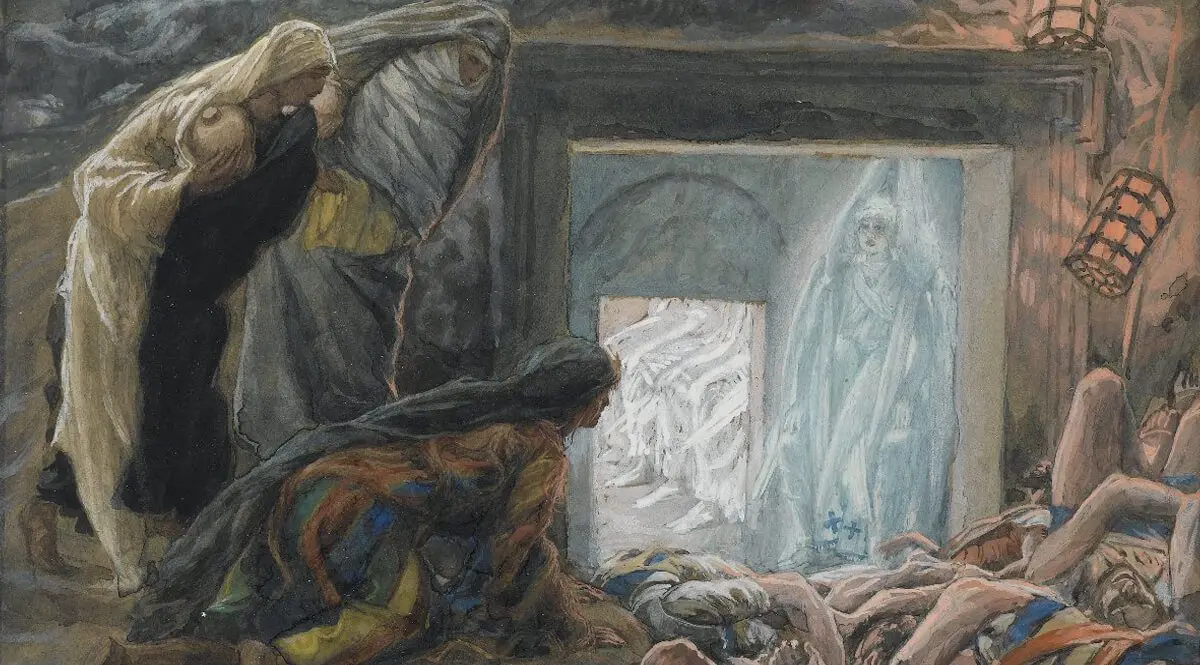

In this profound episode, we dive into the enigmas surrounding Jesus’ death on the cross. Was His heart broken by humanity’s sins, or was His death the result of a brutal crucifixion? Through the lens of various gospel accounts, we unravel the dramatic events leading to His final moments and examine the contradictions that have puzzled theologians for centuries.
SPEAKER 03 :
The CEM Network is pleased to present Ronald L. Dart and Born to Win.
SPEAKER 02 :
Did Jesus die of a broken heart? Or was he brutally and violently killed? Now, you have to understand something about us preacher types. Sometimes we get carried away with our own rhetoric. And so in the process of preaching a sermon and talking about how disappointed God is in us for our sins and how Jesus’ heart was broken because of the sins of mankind and the seeing of the way we have lived our lives and all that, it’s easy to say, well, Jesus on the stake just died of a broken heart because of us and our sins and our mistakes. But all that is is rhetoric, because the truth, the facts, which are written in the pages of your Bible, are somewhat different from that. He didn’t die of a broken heart. He was killed, murdered, violently, painfully. Not very long before Jesus actually died, he lifted up his voice and he said, Eli, Eli, lama sabachthani. The crowd standing around thought he said, well, he’s calling for Elijah. But he wasn’t. What he said was, My God, my God, why have you forsaken me? At that moment, God left him entirely alone. Something that you almost get the impression Jesus did not expect. Immediately when he pried out, someone ran and took a sponge and filled it with wine that was there and put it on a reed and gave him something to drink. The rest said, let him alone. Let’s see whether Elijah will come to save him. And Jesus, when he had cried again with a loud voice, yielded up the ghost. And into our language passes the expression, well, he gave up the ghost, which means he died. Perhaps one of the other gospel accounts mentions that a soldier came and pierced his side with a spear, and blood and water came out. And this suggests that what really happened was that Jesus passed out when he gave up the ghost, his heart still beating. and that it was actually the piercing with the sword that allowed his heart to pump the rest of the blood out of his body that actually finally took his life. So he was pierced, cut to bleed to death, just like the lambs about the same time in the temple were being cut and allowed to bleed to death. At that moment, the veil in the temple was rent in two from top to bottom, and the earth split, and the rocks tore, and graves were opened. And many bodies of the saints that were sleeping in the graves arose and came out of the graves after Jesus’ resurrection and went into the holy city and appeared to many people. Now, I don’t know. This is one of the most asked questions that I encounter as a minister. What about all these saints that rose? And my answer is, this little passage right here is absolutely all we know about what happened. There’s no comment anywhere else. There doesn’t seem to be any significance to it. It just happened. Now, when the centurion and the people who were with him watching Jesus saw the earthquake and everything that happened right at that moment, they were scared to death. And they said, really? This must have been the Son of God. Well, many of the women who were there, standing way off, who had followed Jesus from Galilee and ministered to him. It’s interesting. There was a cadre of women who followed Jesus and basically took care of all the things that he needed to have done. I guess they cooked. I guess they took care of his clothes. All I’ve got to say is God blessed the women. Some of these women even were the financial support, primary financial support of Jesus’ ministry. Among them was Mary Magdalene, one apparently out of whom Jesus cast seven demons, and Mary, the mother of James and Joseph, and the mother of Zebedee’s children, was also over there. Finally, when the evening came, there was a rich man of Arimathea named Joseph, who was also a disciple of Jesus, and he went to Pilate and asked if he could have the body of Jesus for burial. And Pilate commanded the body to be delivered. And when Joseph had taken the body, he wrapped it in a clean linen cloth and laid it in his own new tomb, which he had cut out of a rock. And he rolled a great stone to the door of the sepulcher and left. This happened by the other accounts, the other gospel accounts, at the very last moment of the day before the Sabbath began. In fact, they were hurrying to get him in the tomb to beat the Sabbath day. There was a great stone that had to be rolled. It was work, and so was the work of getting the body into the tomb. All of it was done and finished so the bodies would not remain on the stake or the tree over the Sabbath day. I’ve actually been to a place called the Garden Tomb in Jerusalem. There are some who believe it is the place where Jesus was actually buried. It’s certainly empty. At the same time, other scholars say, no, it’s not possible that that could have been the place, so I guess you can take your pick. All I know is I went there, and I looked at it, and it really conveys to the mind the impression of what the place was like, because there is a channel there in which a large round stone could be placed, rolled up a slight incline and maybe blocked in with a little piece of rock or wood, The body could be placed inside, then the block of wood knocked out, and the stone would roll naturally over the grave and seal it. It would be quite a job for anybody to move it back. I went inside the little tomb and sat there for a long time and thought about the two places, the two stone couches, as it were, that were at the level of my feet as I sat on a little bench there. and thought that it might be in this very place, and if not, it was in a place exactly like this, that the body of Jesus had lain. And I knelt down and looked at it, and nobody had told me this, but the one on the right where I sat, the one that was closest to the entrance to the tomb, had actually been chiseled out and made a little larger than it had been originally intended to be. Hastily, for the rest of the tomb was done very carefully, methodically, good workmanship. This little thing had been done very, very quickly. When Joseph tapped out the little piece of wood and allowed the stone to roll in place over the door, Mary Magdalene and the other Mary were sitting across and watching what he did. Now, the next day that followed the day of the preparation, there’s an important point here. The preparation day is normally thought of as Friday, but we’re going to also see in the Gospel of John that there was a day called the preparation of the Passover. We should hold our judgment on this for the moment. The next day that followed the day of preparation, the chief priests and Pharisees came together into Pilate and said, “‘Sir, we remember that deceiver said while he was still alive, “‘After three days I will rise again.'” What we want you to do is to command that the sepulcher be made sure until the third day, lest his disciples come by night and steal him away, and say to the people, Oh, he’s risen from the dead, and the last error would be a lot worse than the first. Pilate said, Okay, you have your watch. Go your way. Make it as sure as you can. I like that last word, make it as sure as you can. Almost, I think, suggests some trepidation on Pilate’s part. So they went and they made the sepulchre sure, sealing the stone and setting a watch. Now the section that follows has been studied as intensively as any other section of the gospel accounts, maybe as much as any other part of the Bible. because it is the one area where some attempt to compare the accounts of the four Gospels is really of special interest. You should know that the four evangelists, Matthew, Mark, Luke, and John, did not anticipate our difficulty with their work. I don’t even know that they were sitting there thinking about people 2,000 years later who would have no cultural or linguistic ties to the land or the time and therefore would have great difficulty understanding some of the things they were trying to tell us. What these men were doing, I suspect late in their lives, because they realized that they weren’t going to live forever and they realized that Jesus had not come back yet and might not for some little time, finally decided it was necessary to put their testimony down on paper. And so they independently sat down and did just that. And the problem that comes along from that is that each of them was writing from a perspective. He was approaching his task in a certain way and from his point of view. And each of them was telling his story. He was telling or giving his testimony. In a sense, what you have is their depositions given relative to what they witnessed. And that is the death and the burial and the resurrection of Jesus. Some of their testimony is what they saw with their own eyes. Some of it is testimony they elicited from others on the spot right after the events. And some of the confusion that you get reading different gospel accounts can easily be attributed to the excitement of the moment. Jesus had been dead. Now he was alive. Even the people who saw him alive doubted their own eyes. They said they doubted. I know it looks like Jesus, but it can’t be Jesus. He was dead. You should also know that the seeming discrepancies that you run into in these accounts from time to time, and you’ve probably heard people say, oh, well, the Bible contradicts itself. Well, you’ll find some examples that look very much like it does in the latter part of the gospel accounts about the resurrection. These little things, though, are vitally important. They establish the fact that the witnesses you are hearing were not in collusion. Suppose for a moment you’re in a jury in court, and they parade four witnesses across the stand, and each of them sits there and gives you his testimony, and all of their testimony is absolutely identical without variation. What would you conclude? Well, most people I ask this say, well, I would conclude that they’ve been carefully coached by the lawyers. And they’d been woodshedded, as one person puts it, which is taken to the woodshed and got their story straight. Now, the differences that these men have establish the fact that they were not in collusion and that their testimony is independent. It’s of vital importance that we read this and understand this and that their testimony be established because if their testimony of the resurrection of Christ is false, then nothing else matters at all. So, what actually happened?
SPEAKER 03 :
We’ll talk about that when I come back. The Apostle John was that disciple who was closest to Jesus. His gospel offers the greatest insight to the teachings of Jesus. Write or call for a free introductory program from the Gospel of John album. Write to Born to Win, Post Office Box 560, White House, Texas 75791. Or call toll free 1-888-BIBLE-HOUSE.
SPEAKER 02 :
When you look at the four gospel accounts, the whole picture of what happened at the death, burial, and resurrection of Jesus gets just a little bit confusing. So what really happened? Well, we run into some translation problems as well as a few cultural problems we have to address. By cultural, I mean things like the fact that the days ended at sunset, not at midnight, according to what we’re used to. The translation problems come a lot from idioms in the Greek. By an idiom of speech, I mean something like what we mean when we say, well, my granddad kicked the bucket. Tell that to a Greek. At the amateur, dad was milking the cow and happened to kick the bucket and knock it over. In our language, it means he died. Well, the account in Matthew continues by saying, In the end of the Sabbath, as it began to dawn toward the first day of the week, came Mary Magdalene and the other Mary to see the sepulcher. Chances are what this means is after the Sabbath and as it began to dawn toward the first day of the week. And behold, there was a great earthquake, for the angel of the Lord descended upon it from heaven and rolled back the stone from the door and sat on it. His countenance was like lightning, and his raiment white as snow. And for fear of him, the keepers did shake and became like dead men. All these guards they had put out there to protect this place, when the earthquake came, and the stone went rolling back up that slope, and an angel sat on it, well, they passed out. I think I might. There’s a presumption here that some people make that the earthquake is the moment of Jesus’ resurrection. But that’s not the case. The stone was rolled back, not to let Jesus out of the tomb, but to let the witnesses in. One piece of information you should make note of so you don’t misunderstand. No one saw the resurrection take place. There is no account in the Bible that tells you exactly at what moment Jesus opened his eyes, sat up, folded up the face cloth that was over his face and laid it aside, and walked out of the tomb. No one knows when that actually happened. The earthquake apparently was on toward dawn, but that doesn’t settle the time. It’s always been assumed that Jesus rose on Sunday morning, and this has influenced Christian thinking for a very long time. But Jesus had said something very important that tends to get discounted in this. He said, as Jonah was three days and three nights in the belly of the great fish, so shall the Son of Man be three days and three nights in the heart of the earth. Now, that’s an awfully specific period of time. And you try counting Friday evening to Saturday morning and see what you get. You get one day and two nights. Now, I know that in Hebrew usage they may speak of three days in which only a part of the beginning of the day or the concluding day is included. In other words, parts of days are included in the description. But if you get your little concordance out or get your computer generating concordance out and look this all up, you won’t find very many expressions of three days and three nights. It’s rare. And the reason why it’s rare is because it’s a very specific way of putting things. How can you be specific to mean? So I really mean 72 hours. I don’t just mean sort of parts of three days, maybe. Well, apparently what you do is you say three days and three nights. Now, there’s also a puzzling series of events in here that only becomes apparent when you study all the accounts in parallel. Matthew says simply that Joseph of Arimathea took the body of Jesus down off the tree, wrapped the body in a shroud, and laid it in his own new tomb, rolling a stone across the opening. Okay. Now, Mark’s account of this passage is interesting. He says, beginning in Mark 15, verse 47, in the New American Standard Bible, “…Mary Magdalene and Mary the mother of Joseph were looking on to see where he was laid. And when the Sabbath was over, Mary Magdalene and Mary the mother of James and Salome bought spices that they might come and anoint him.” Now, take note of the fact that they were there at the tomb until the stone was rolled closed, and there was no time at all between the time that Jesus was buried and sunset. So consequently, there was no time when they could go out and buy spices. And Mark’s account says, when the Sabbath was over, Mary Magdalene and Mary, the mother of James and Salome, bought spices. Are you with me so far? Now, if you take a look at Luke’s account, in Luke 23, verse 53, it says, “…he took the body of Jesus down, wrapped it in a linen cloth, and laid him in a tomb cut into the rock where no man had ever lain.” And it was the preparation day, and the Sabbath was about to begin. Now the women who had come with him out of Galilee followed after and saw the tomb and saw how his body was laid. And they returned and prepared spices and perfumes. And on the Sabbath day they rested according to the commandment. You see what we’re dealing with? It says, on the one hand, the women, and it’s the same women we’re talking about, who had followed after, saw the tomb, saw how his body was laid, that were described in Mark’s account. He says, Mark says they went out and bought their spices after the Sabbath. Luke says they prepared their spices and perfume and then rested on the Sabbath. What have we got? A contradiction? Well, not at all. The day of Jesus’ crucifixion was a preparation day. It’s long been assumed that because it was a preparation day, it had to be a Friday. The idea of the preparation day means you’re getting ready for the Sabbath day, which is about to come. And Sabbath, of course, is on Saturday. The problem is that John, in his gospel, calls it the preparation of the Passover. What you need to know is that the Passover was the 15th day of the first month on the Jewish calendar and was a high day, a festival day, and a day of rest, a Sabbath. And they made the point that the Sabbath that was approaching when Jesus was being buried was a high day, not just an ordinary weekly Sabbath. Now, in some years, that high day could fall on a Thursday. And this would create a situation where Jesus could have been crucified on Wednesday, the preparation of the Passover. Thursday would have been a Sabbath after which the woman bought their spices and prepared them before resting on the weekly Sabbath that followed. This would allow three days and three nights from Jesus’ entombment until the moment of his resurrection, just as the Sabbath was ending on Saturday evening. Now remember, there are no eyewitnesses at the moment of the resurrection, only the empty tomb the next morning. Now this really shouldn’t be threatening to anyone. Some people say, well, wait a minute, I thought we observed Sunday because Jesus rose from the dead on Sunday morning. Well, I think that is a fairly wide assumption on many people’s part. But I know Seventh-day Sabbath keepers who believe in a Friday crucifixion and a Sunday resurrection. And I saw a Sunday-keeping preacher on television just not many nights ago. In fact, it was on Good Friday evening who was preaching to his audience. And although they all observed and worshipped on Sunday, was teaching his audience that Jesus was crucified on a Wednesday and that he rose from the dead on Saturday evening. There’s one interesting little ceremony, though, that adds some pretty significant understanding to this. It’s a part of the culture I talked about that sometimes we don’t understand when we’re trying to deal with these. I’ll explain that to you when I come back.
SPEAKER 03 :
For a free copy of this radio program that you can share with friends and others, write or call this week only and request the program titled Matthew No. 40. The festivals of Israel were all oriented around the harvest seasons. At the beginning of the Days of Unleavened Bread, or at Passover time, the barley harvest was in the field. It was ripe.
SPEAKER 02 :
But there was a commandment in the law that said that they could not eat any of that barley harvest at all. until an offering had been made in the temple. In other words, the first sheaf of grain had to be cut, processed, and taken into the temple and waved before God. The King James Version of the Bible calls it the wave sheaf offering. Now, there’s an interesting little ceremony that’s connected with this wave sheaf offering. After the Sabbath was over, there was a noisy little band of people who wound their way down from the temple mount to a field that had been prepared ahead of time. Several shocks of barley had been actually tied together and prepared for cutting. And the group got down around there, and I’m sure with this little gang, that time of year, there were probably a few wineskins being passed around as well. And one of them went over to one of the sheaves that were there. And he had a little ritual that he went through. And he would ask them the crowd questions, and the crowd would answer back. And I expect it got a little raucous. And he would ask them, you know, is this the place? And they would all answer yes. And he would then pick out one of the sheaves and hold it and say, this sheave? And they would all yell yes. And then he would say, is the sun down? And they said, yes. And then he says, shall I reap? And he said, yes. And at that moment, his arm came down and he cut that sheaf of grain from the ground. Through the night, it was prepared because in the morning it had to be presented to God. Now, what’s significant about that? I’ll come back to that in a moment. I just want you to know that that happened just a second after sunset on Saturday evening. Unfortunately, the gospel writers just didn’t think there was any need to explain all this to us or to be more specific, so they left us with a lot of gaps to fill in. They even left us with some things that looked like discrepancies. As I said earlier, most of them are culture and language. But one thing is certain from their accounts, even with all their difficulties, Jesus rose from the dead. Well, these women, in Matthew 27, verse 8, once they had actually seen what has happened here, departed quickly from the sepulcher with fear and with great joy. They were so excited, and they ran to bring the disciples word. And as they went to tell the disciples, it says, Jesus met them saying, All hail! And they came and held him by the feet and worshipped him. And he said, Don’t be afraid. Go and tell my brethren that they go into Galilee, and there they shall see me. Now, something odd has happened here. There’s something missing in this story, and I’ll explain it to you. In John’s version of this account, beginning in verse 11, Mary, who really seems to have come by herself to the sepulcher, is standing on the outside of the sepulcher weeping. Somehow, she looked inside the sepulcher. She thinks Jesus is still dead. And she saw two angels in white sitting, one at the head, the other at the feet of the body where Jesus had lain. And they said, Woman, what are you crying for? And she said, Because they have taken away my Lord. She thought these were men. And she said, I don’t know where they’ve taken him, and I don’t know where they’ve laid him. And when she had said this, she turned herself back and saw Jesus standing and didn’t know that it was Jesus. And Jesus said, Woman, what are you weeping for? What are you crying about? Who are you looking for? And she, supposing him to be the gardener, said, Sir, if you’ve taken him away from here, tell me where you have laid him, and I will take him away. And then Jesus said to her, called her by name, Mary. And she turned around and suddenly realized it was he. And she said, Master. And then Jesus said, Don’t touch me. for I am not yet ascended to my Father. You go to my brethren and tell them I am ascending to my Father and your Father and to my God and your God. Sometime after this, and before this other group of women met him and held him by the feet, something had happened. Jesus was presented to the Father. Throughout the New Testament, Jesus is called the firstfruits. He’s the firstborn of God. He is called the firstfruits from the dead in Revelation. He is the first of the firstfruits in Paul’s writing. And that wave sheaf that was cut from the ground late Saturday night, it was the first of the firstfruits. One wonders if the moment in which that wave sheaf was supposed to be cut was the moment that Jesus Christ died. opened his eyes in the tomb. Sometime after Mary saw him, he was presented to the Father. At about the same time, the wave sheaf of the firstfruits was presented in the temple. When the soldiers came to and realized he was gone, they had to report. And so whenever they got everyone together with the chief priests and the elders and they took some advice, they gave a lot of money to the soldiers saying, we want you to say his disciples came by night and stole him away while we were asleep. If it comes to the governor’s ears, we’ll persuade him and we’ll secure you. So they took the money and did what they were told. And that saying, he said, is commonly reported among the Jews to this day. Well, you’ve got to have some kind of explanation for it, don’t you? The body wasn’t there. The body’s gone. We can’t possibly believe in the resurrection, can we? Well, the eleven disciples, verse 16 of Matthew 28, went away into a mountain where Jesus had appointed them. And when they saw him, they worshipped him. But some doubted. And Jesus came and spoke to them, saying, All power is given to me in heaven and earth. Go ye therefore and teach all nations, baptizing them in the name of the Father, the Son, and the Holy Spirit, teaching them to observe all things whatsoever I have commanded you. And lo, I am with you always, even to the end of the world. Amen. They call this the Great Commission. And I suppose this commandment is why I have done this series. For what he commanded the apostles is incumbent upon all those who were taught by the apostles. It was incumbent upon me. In the end, the apostles of Jesus were not a group of losers. They were jailed and beaten and killed. But in the end, they won. Their gospel has gone everywhere. Until next time, this is Ronald Dart. and you were born to win.
SPEAKER 03 :
The Born to Win radio program with Ronald L. Dart is sponsored by Christian Educational Ministries and made possible by donations from listeners like you. If you can help, please send your donation to Born to Win, Post Office Box 560, White House, Texas 75791. You may call us at 1-877-7000. 1-888-BIBLE44 and visit us online at borntowin.net.
SPEAKER 01 :
Christian Educational Ministries is happy to announce a new full-color Born to Win monthly newsletter with articles and free offers from Ronald L. Dart. Call us today at 1-888-BIBLE44 to sign up or visit us at borntowin.net.