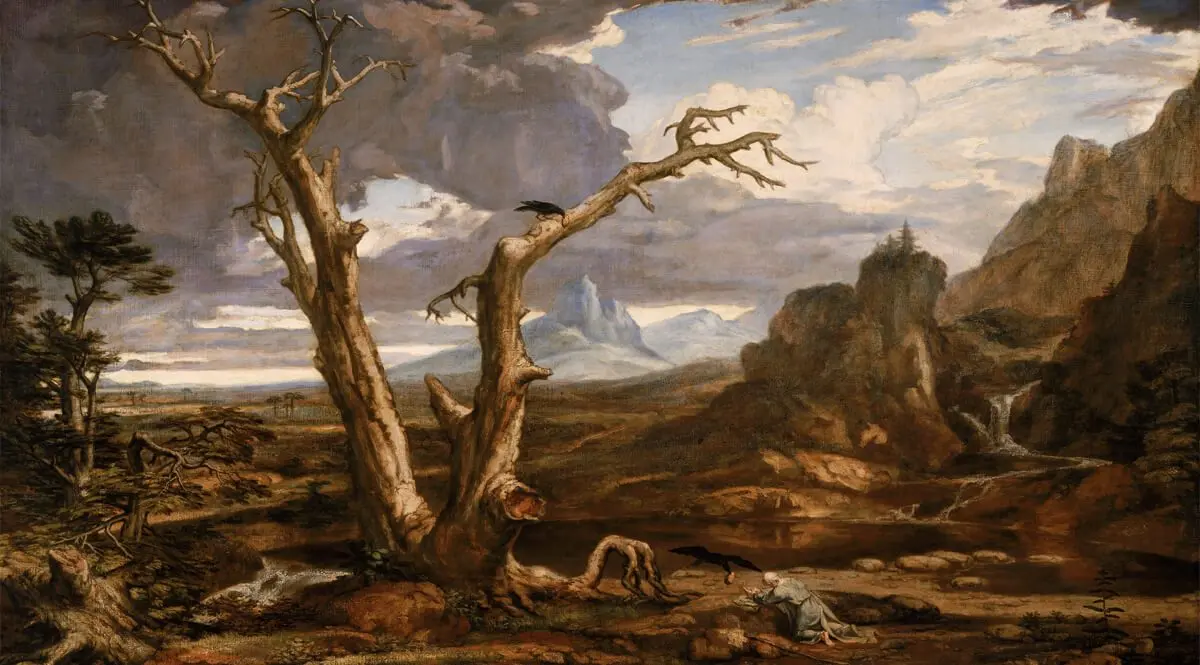

Join us in this episode as we delve into the compelling world of Elijah, a prophet whose actions and words reverberate through the millennia. The impactful song ‘Days of Elijah’ serves as our guide as we explore what it truly means to live in times reminiscent of Elijah’s era. From the exuberant gatherings filled with enthusiastic worship to the deep-seated corruption that plagued society, Elijah’s story is a narrative of stark contrasts and enduring faith.
SPEAKER 02 :
The CEM Network is pleased to present Ronald L. Dart and Born to Win.
SPEAKER 03 :
If you happen to enjoy contemporary praise music, you more than likely have heard These Are the Days of Elijah. It happens to be one of my favorites. It’s very singable. I can really get into it. I happened onto a video of a performance of the song done before a large, enthusiastic group who also were really getting into it. And it was an elaborate production with a procession carrying large banners and people dancing in the aisles and the performer on the stage laying it out. But as I watched, I wondered a little how it might differ from a pep rally during a football season at a major university. The words were different, of course, but for a person who spoke no English, it would have merely been a show. The intent of the people there, though, I’m sure, was worship. But I couldn’t help wondering how much God was on their mind and how much the performance was on their mind. Now, God forbid that I should criticize that short of display, but I recall something C.S. Lewis said about what he called the liturgical fidget. When he went to church, he said, he wanted to have his mind on God, not the latest innovation in service or performance of the people who were there. And all this conspired to call to memory for me the words of the song, These are the days of Elijah. And I wondered how many of the performance and the singers knew what that was all about. What exactly are the days of Elijah, and why are we singing about them? Elijah, for those who don’t know, was the archetype of all prophets. He wasn’t the first, he wasn’t the only, but he was major. The song begins, These are the days of Elijah declaring the word of the Lord, and these are the days of your servant Moses’ righteousness being restored. And though these are days of great trial, of famine and darkness and sword, still we are the voice in the desert crying, Prepare ye the way of the Lord. Now what does all this mean? Why Elijah? Why Moses? It’s clear to me that the chap who composed this song was driving at something important. But what exactly? Well, the place to start is, naturally, the days of Elijah. He may be not only the archetype of all prophets, he also may be the most blunt. He’s described in the Bible as a hairy man, wearing leather. I guess if he was to come to your town today, he might come riding in on a Harley. He was a man of few words. He’s introduced to us this way in 1 Kings 17. And Elijah the Tishbite, who was of the inhabitants of Gilead, said to Ahab, As the Lord God of Israel lives, before whom I stand… There shall not be dew nor rain these years but according to my word. And he left. I mean, that must be one of the most brief to the point prophecies in the entire history of the Bible. And it comes out of the blue for most of us, I guess, but not if you had read the context that led up to this. This was the last time anyone in Israel heard from the man for three and a half years. And more important, there was neither dew nor rain for three and a half years. But where did this come from? Why such a dire prophecy? Well, Ahab, to whom it was directed, probably knew. But for the rest of us, we’ve got to go back and read the story. What Elijah is on about has to do with the governance of the nation of Israel, the leadership. Ahab was king. And for anyone who knows the history of the house of Israel, that says it all. The story is in the previous chapter, 1 Kings 16, verse 28. Amri slept with his fathers and was buried in Samaria. Ahab, his son, reigned in his stead. And in the 38th year of Asa, king of Judah, Ahab, the son of Amri, began to reign over Israel. He reigned over Israel and Samaria for 22 years. And Ahab did evil in the sight of the Lord above all that were before him. And believe me, that is saying a lot. The kings of Israel are just a bad lot from beginning to end. That’s all one can say about them. Ahab, though, appears to have been the acme. He is the highest point of evil that ever existed in the northern tribes. And so he did evil in the sight of the Lord above all that were before him. And if it came to pass, if it had been a light thing for him to walk in the sins of Jeroboam, he took to wife Jezebel, the daughter of Ithbaal, the king of the Zidonians, and went and served Baal and worshipped him. He made an altar to Baal in the house he built in Samaria, and he made an Asherah pole, and he did more to provoke the Lord of Israel to anger than all the kings of Israel that were before him. Baalism and Asherahism, if I may call them that, I started to call it Baal worship, but what they did really wasn’t worship in any definition of the term. It involved child prostitution and even child sacrifice. Now, this was part and parcel of the worship invented by humans in the first civilizations over in Mesopotamia, and it died hard. It permeated the Middle East in ancient times. And King Ahab, who ought to have provided leadership to the contrary, married into that and became wholly absorbed in it. He was a weak man, and Jezebel was the wrong woman. Well, there came a time when God had had enough of this louse and his wife, so he sent Elijah. And Elijah, I think, was selected because of the kind of man he was. I have a toolbox theory of God. He’s got this toolbox down here full of people that fit the job at hand. So what about Elijah? Well, he was a man who never used two words when one would do. He was a man who didn’t dress to kill. He dressed roughly. He was a hairy man. He wore leather. And I can got a vision in my mind about what that man looked like. Now, if these are indeed the days of Elijah, what should we be expecting to see in society at large? Well, moral corruption at the highest level, child abuse, even child sacrifice on an appalling scale, for that was rampant in Israel. Now, you know, I don’t know how much those people of old really believed in God and how much they just enjoyed killing children. I honestly don’t know. And in our case, we do it a little differently. We call it abortion, and we try, we do it before the child actually gets born. But nevertheless, we’ve got child sacrifice in a way. Elijah didn’t address the sins of the nation directly. He merely said that the coming disaster was from God. and just dared them to ask, well, why would God do that to us? Because the truth is, they knew. Are these then the days of Elijah? Well, if so, the song goes on. These are the days of the harvest. The fields are as white in your world, and we are the laborers in your vineyard declaring the word of the Lord. Well, if indeed we are the ones declaring the word of the Lord, what does the Lord have to say to a society like ours? The story of Elijah is important. It’s part history, and partly it’s something that is to be repeated again in the future. Well, it came to pass, 1 Kings 18, after many days, three and a half years in fact, The word of the Lord came to Elijah in the third year of the drought, saying, Go, show yourself to Ahab, and I will send rain upon the earth. Now, it isn’t that anybody had repented over there. It’s just that God had administered his punishment, and now we’ve got to go forward from here to see if we’re going to really change. So Elijah went to show himself to Ahab, and there was sore famine in Samaria. Meanwhile, back at the palace, King Ahab called in a man named Obadiah, who was the governor of his house. Obadiah was a good man. He feared the Lord greatly. It happened that back when Jezebel cut off the prophets of the Lord, that’s a polite way of saying she was killing them off, that Obadiah took a hundred prophets and hid them by fifty in a cave and fed them with bread and water. That’s chilling. People in power, you know, don’t cotton to being criticized. Jezebel was apparently not above killing a few of her critics and did not a few of them. The parallel with what happened to John the Baptist cannot be overlooked because John the Baptist is, in a sense, Elijah before Jesus came. And guess what happened? A woman saw to it that his head was taken off just like Jezebel did to the prophets in her own time. Well, Ahab said to Obadiah, okay, let’s go looking for water all over this place. You go one way, I’ll go the other. They divided the land and took off. Well, as Obadiah was in the way, Elijah met him. And Obadiah recognized him and immediately fell on his face and he says, are you that my Lord Elijah? He answered him saying, I am. Go tell your Lord, behold, Elijah is here. Normally, this would be good news. It meant maybe some rain. But Obadiah was nobody’s fool. When a prophet of God shows up, it’s not to tell us how well we are doing. I’ll be right back with the rest of the story. But meanwhile, grab a pencil and a pad. I want to give you some information you’re going to want to write down.
SPEAKER 02 :
The Real Prophets series, which includes the entirety of the prophet Jeremiah, is available in album form. If you would like to get out of the story from the beginning, write or call and ask for your free introductory CD titled Real Prophets. Write to Born to Win, Post Office Box 560, White House, Texas 75791. Or call toll free 1-888-BIBLE-44. That’s 1-888-242-5344. And tell us the call letters of this station. Poor Obadiah. Elijah scared the daylights out of him.
SPEAKER 03 :
I can visualize him this next part if you read all his speech that he makes, walking around, pacing, waving his hands in the air. He is afraid. He said, what are you trying to do, get me killed? That’s essentially, in modern vernacular, what he was saying. He says, I’ll go tell Ahab that you’re here, and then we go looking for you and we don’t find you. You know what’s going to happen to me. He’ll take my head off. So Elijah swore with an oath. He said, as the Lord of hosts lives before whom I stand… I will surely show myself to him today. So Obadiah went to meet Ahab and told him. And Ahab went to meet Elijah. It would have been something to see, this confrontation. And just as Elijah came into sight, Ahab probably put out his hand and pointed at him and says, Are you he that troubles Israel? Isn’t that the way of it? It was Ahab’s leadership that had brought this nation to ruin. And he blames Elijah for it. Never crossed his mind that Elijah couldn’t have stopped the rain on his own without God’s hand being in it. It was a miracle. And God had spoken to him through that. But Ahab didn’t get it. Elijah answered and said, I haven’t troubled Israel. But you, your father’s house, in that you have forsaken the commandments of the Lord and you have followed Baal. Now send and gather to me all Israel into Mount Carmel and the prophets of the Baal 450, the prophets of the Asherah 400 who eat at Jezebel’s table. So the confrontation on Mount Carmel with 850 prophets to one. Elijah seems to have thought that was about fair. The amazing thing is Ahab did what he told him to do. So everyone bidden gathered at Mount Carmel. And Elijah came to the people and said, How long are you going to halt between two opinions? If the Lord be God, if Jehovah is God, follow him. If Baal, then follow him. And the people didn’t answer a word, which in itself speaks volumes. This is all fascinating. These people hadn’t let go of Jehovah entirely. But serving Baal was more fun, sexually speaking. So there was a kind of mixed religion. Jehovah had been their national god all their history, but other kinds of worship had crept in and corrupted not only their worship, but society right to its very roots. And they wouldn’t answer. What were they going to say? Then Elijah said to the people, I, even I only, Remain a prophet of the Lord. Baal’s prophets here are 450 men. Let them give us two bullocks. Let them choose one bullock for themselves and cut it in pieces and lay it on the wood and put no fire under it now. I’ll dress the other bullock. I’ll put it on wood and I won’t put any fire under it. And you call on the name of your gods. I will call on the name of Jehovah and the God that answered by fire. Let him be God. And all the people said, okay, fair enough. We’ll go along with that. So Elijah told the prophets of Baal, you pick one of these, whichever one you want. You get to dress it. There are lots and lots of you. You should be able to do this quickly. Call on the name of your gods, but now don’t put any fire under it. So they took the bullock. They dressed it. They called on the name of Baal from morning even till noon, saying, Oh, Baal, hear us. This is the famous Baal chorus in Mendelssohn’s Elijah. What a rip-snorting chorus it is. I don’t think I ever could have brought myself to sing it. So they said, Oh, Baal, hear us. But there was no voice and none that answered. And they danced around the altar that was made. Man alive, what a spectacle they were putting on. And it came to pass at noon… Elijah made fun of them. And he said, cry louder. He’s a god. Maybe he’s talking. Maybe he’s gone hunting. Maybe he’s on a journey. Or may I know, he’s taking a nap and you need to wake him up. Well, now, that’s not very nice, is it? That’s not making fun of someone else’s religion. But he did it. These are the days of Elijah. Well, they cried aloud, and then they began to cut themselves. They had a fashion of cutting themselves and bleeding all over their offerings and so forth. That was a part of their religion. It came to pass, when midday was passed, they prophesied until the time of the offering of the evening sacrifice, and there was no voice, nor any answer, nor any that regarded. And finally, at the time of the evening sacrifice, Elijah said to all the people… Gather around. And he repaired the altar of the Lord that was broken down. He took 12 stones, according to the number of the tribes of Israel. And with these stones, he built an altar in the name of Jehovah. He made a trench around it. And he put the wood in order and cut the bullock in pieces. He laid him on the wood and said, Now fill four barrels with water and pour it on the sacrifice and on the wood. They did. Do it another time. They did it again. He said, Do it again. And they did it a third time. And the water ran all around the place, and he filled the trench with water. Just to demonstrate to everyone what I’m doing here is no trick. This is not an illusion. I’m not some magician. We’ve got to show that what’s happening here is real. So it came to pass at the time of the offering of the evening sacrifice that Elijah the prophet approached and said, Jehovah, God of Abraham, Isaac, and Israel, let it be known this day that you are God in Israel and that I am your servant, and that I have done all these things at your word. Hear me, Lord, hear me, that this people may know that you are Jehovah God and you have turned their heart back again. Man, that’s a short prayer. How long did it take me to read that? And then when he said again the word, then the fire of the Lord fell and consumed the burnt sacrifice and the wood and the stones and the dust and licked up all the water that was in the trench. And when all the people saw it, they fell on their faces and they said, Jehovah, he is God. Jehovah, he is God. And I think this is where the conclusion of these are the days of Elijah comes in as the people sing, there’s no God like Jehovah, there’s no God like Jehovah. They are playing that role at that time. And Elijah said to them, take the prophets of Baal, don’t let any of them escape. And Elijah brought them down to the brook Kishon and slaughtered them there. Now these are the days of Elijah. What do you think about them? And why do we sing saying that ours are the day of Elijah? Are we anticipating a great revival, a whole people turning to God and saying, there’s no God like Jehovah? How did it all turn out in the original days of Elijah? Well, in a very short time, Elijah was fleeing for his life from the woman Jezebel. Listen to this short message, and I’ll be right back with the remainder of the story.
SPEAKER 02 :
For a free CD of this radio program that you can share with friends and others, write or call this week only. And request the program titled, The Days of Elijah. Write to Born to Win, Post Office Box 560, White House, Texas 75791. Or call toll free 1-888-BIBLE44. That’s 1-888-242-5344. I don’t know what Elijah expected.
SPEAKER 03 :
I doubt if he had much in the way of expectations of these people because he was a realist. And when word came to him that even in spite of all the things people said that Jezebel had sworn to kill him, he took off. He went a day’s journey into the desert, and he came and sat down under a juniper tree, and he asked God that he could die. And he said, it’s enough. Oh, Lord, take away my life. I’m not better than my father’s. Mendelssohn pulled that out and made that a part of Elijah. It’s a great error. I did it once myself in recital. In the days of Elijah, it was rough going. Elijah thought he was the only one that served God left, and they were trying to kill him. He, I think, came to the place where he figured, well, the jig is up. I think the worship of God is just about gone, and we’re headed for something worse than the days of Noah were. But God spoke to him, and he said, No, I have reserved for myself 7,000 men in Israel who have not bowed the knee to Baal. So there were people out there that he didn’t know about, and that may or may not have known about him. And even that, if these are the days of Elijah, as the composer of the song seems to have grasped, he grasped what perilous times the days of Elijah were. For example, the first verse concludes this way, Though these are days of great trial, of famine and darkness and sword, still we are the voice in the desert crying, prepare you the way of the Lord. But boy, if these are the days of Elijah and we are that voice, then it isn’t going to be easy for us. It wasn’t easy for Elijah. He went on foot all the way down to Mount Sinai to get his message from God. Do you ever feel a little lonely in the world? maybe sort of like a persecuted minority. Well, the days of Elijah were like that for the people of God. But the voice crying in the desert is a necessary part of the story. But where do we get off thinking that these are the days of Elijah? Well, there’s a funny thing about that. The last prophet of the Old Testament, long after Elijah was dead and buried, brought him back into the story. It’s the last chapter of the last book down to the last verse in the Old Testament. Malachi 4 reads this way, Surely the day is coming. It will burn like a furnace. All the arrogant, every evildoer will be stubble, and that day that is coming will set them on fire, says the Lord Almighty. not a root or a branch will be left to them. Boy, if I ever read an incentive not to be arrogant or to do evil, I read it right there. He said, Then for you who revere my name, the sun of righteousness will arise with healing in its wings, and you will trample down the wicked. They will be ashes under the soles of your feet on the day when I do these things. Remember the law of my servant Moses, the decrees and laws I gave to him at Horeb for all Israel. Don’t forget the law of Moses. See, I will send you the prophet Elijah before that great and dreadful day of the Lord comes. He will turn the hearts of the fathers to the children and the hearts of the children to the fathers, or else I will come and strike the land with a curse. So, I have to assume the composer of These Are the Days of Elijah knew this. And he knew the prophecy that God would send Elijah again. And frankly, it has been something, it is a theme that has persisted remarkably down through all generations today. that Elijah is going to come again. You may recall that a group of people came to John the Baptist once and said, Are you Elijah? What did that mean? Well, they assumed that Elijah, in some form or another, would come prior to the coming of the Messiah. And there were strong expectations of the Messiah coming in their day. John says, No, I’m not. Later, Jesus would say, Oh, yes, he was. Well, what Malachi could not have seen was that Elijah would be sent not once more, but twice more. Twice? Yes. The first time he was sent in the person of John the Baptist. John said he wasn’t Elijah. Jesus said he was. But then, on the Mount of Transfiguration, Jesus appeared glorified before his disciples, talking with Elijah and Moses. How are those two going to play out in the last days? Well, remember how the song begins. These are the days of Elijah declaring the word of the Lord, and these are the days of your servant Moses, righteousness being restored. Now, I tell you, not much righteousness was restored in the days of Elijah, nor in the days of Moses, for that matter. And the only restoration of righteousness in Jesus’ time was what he himself accomplished by the shedding of his blood, by his death, by his burial, and his resurrection. Well, when Elijah shows up the next time, Moses will be there again. You want to know where to find him in the Bible? In Revelation chapter 11, they are the two witnesses that stand before the God of the whole earth. They’re not named there. So how can I say one’s Elijah and the other’s Moses? Well, because of what they do. One is to strike the earth with plagues as often as they will, which is what Moses did in Egypt. And the other one is to call down fire from heaven and destroy their enemies, which is precisely what Elijah did when the king sent men out to bring him in. He said, if I am a prophet of God, let fire come down to destroy you and your company. And it did. So, when Elijah shows up the next time, Moses will be there again, and they will be on the cusp of a new world. Are these really the days of Elijah? Behold, he comes, the song goes, riding on the clouds, shining like the sun at the trumpet call. Lift your voice. It’s the year of Jubilee, and out of Zion’s hill salvation comes. These are the days of Ezekiel, the dry bones becoming as flesh. These are the days of your servant David, rebuilding a temple of praise. These are the days of harvest, the fields are as white in your world, and we are the laborers in your vineyard, declaring the words of the Lord. Okay, I guess that’s the job.
SPEAKER 02 :
And we had best get about it, don’t you think? The Born to Win radio program with Ronald L. Dart is sponsored by Christian Educational Ministries and made possible by donations from listeners like you. If you can help, please send your donation to Born to Win, Post Office Box 560, White House, Texas 75791. You may call us at 1-877-7000. 1-888-BIBLE44 and visit us online at borntowin.net.
SPEAKER 01 :
Christian Educational Ministries is happy to announce a new full-color Born to Win monthly newsletter with articles and free offers from Ronald L. Dart. Call us today at 1-888-BIBLE44 to sign up or visit us at borntowin.net.